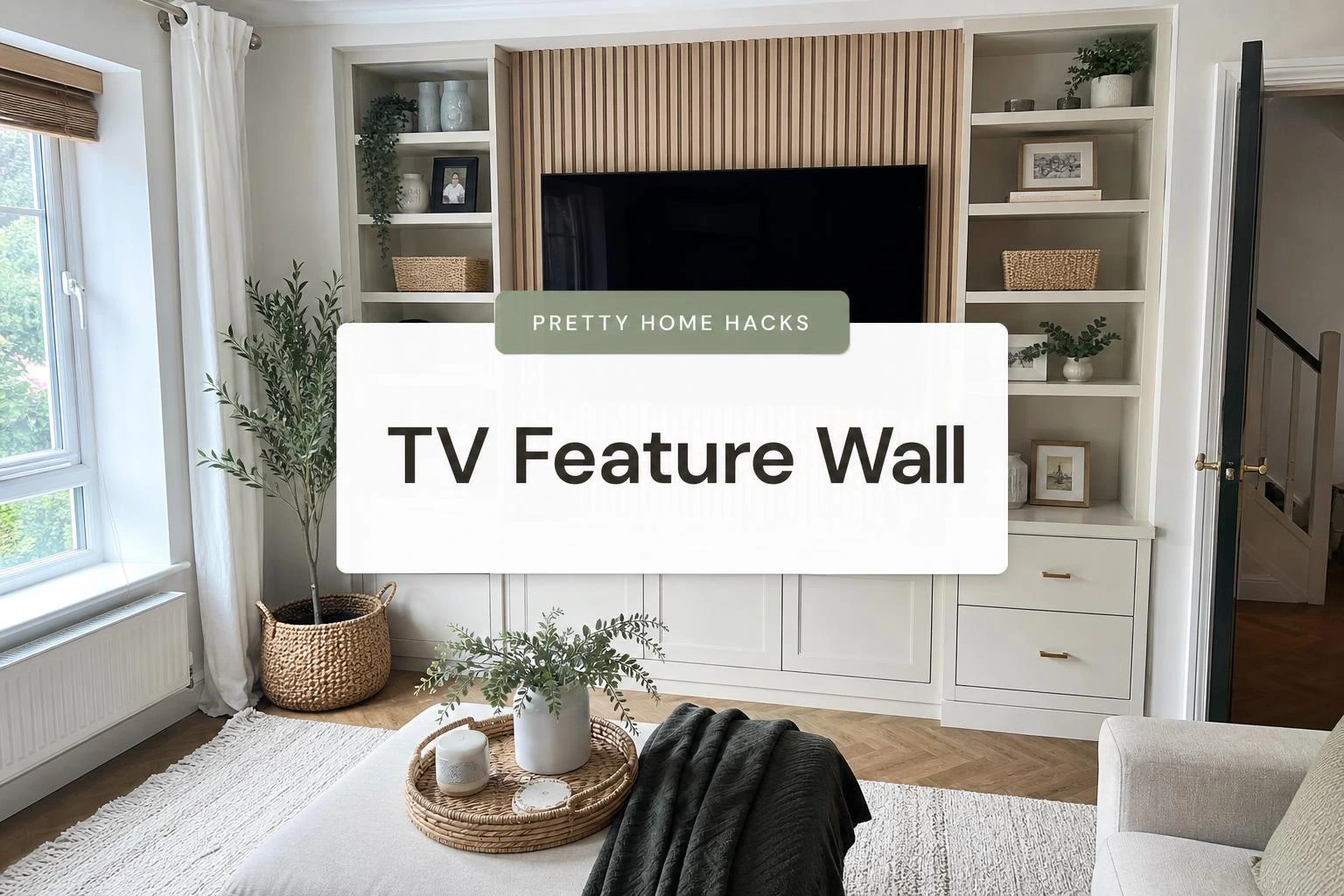
11 TV Feature Wall Ideas That Actually Work in Real Living Rooms
The wall behind the TV is one of those spots that just sits there doing nothing for way too long.
Most people get the TV up, run a power cord along the baseboard, and tell themselves they will deal with the rest later.
Later never really comes, and the whole area ends up looking like a temporary setup that somehow became permanent.
The thing is, a TV feature wall does not need to be a renovation project or a big budget commitment to look intentional and finished.
A few of these ideas work with what is already there, and the ones that do require materials are more approachable than they look on Pinterest.
1- Timber Slat Panel Wall Behind the TV
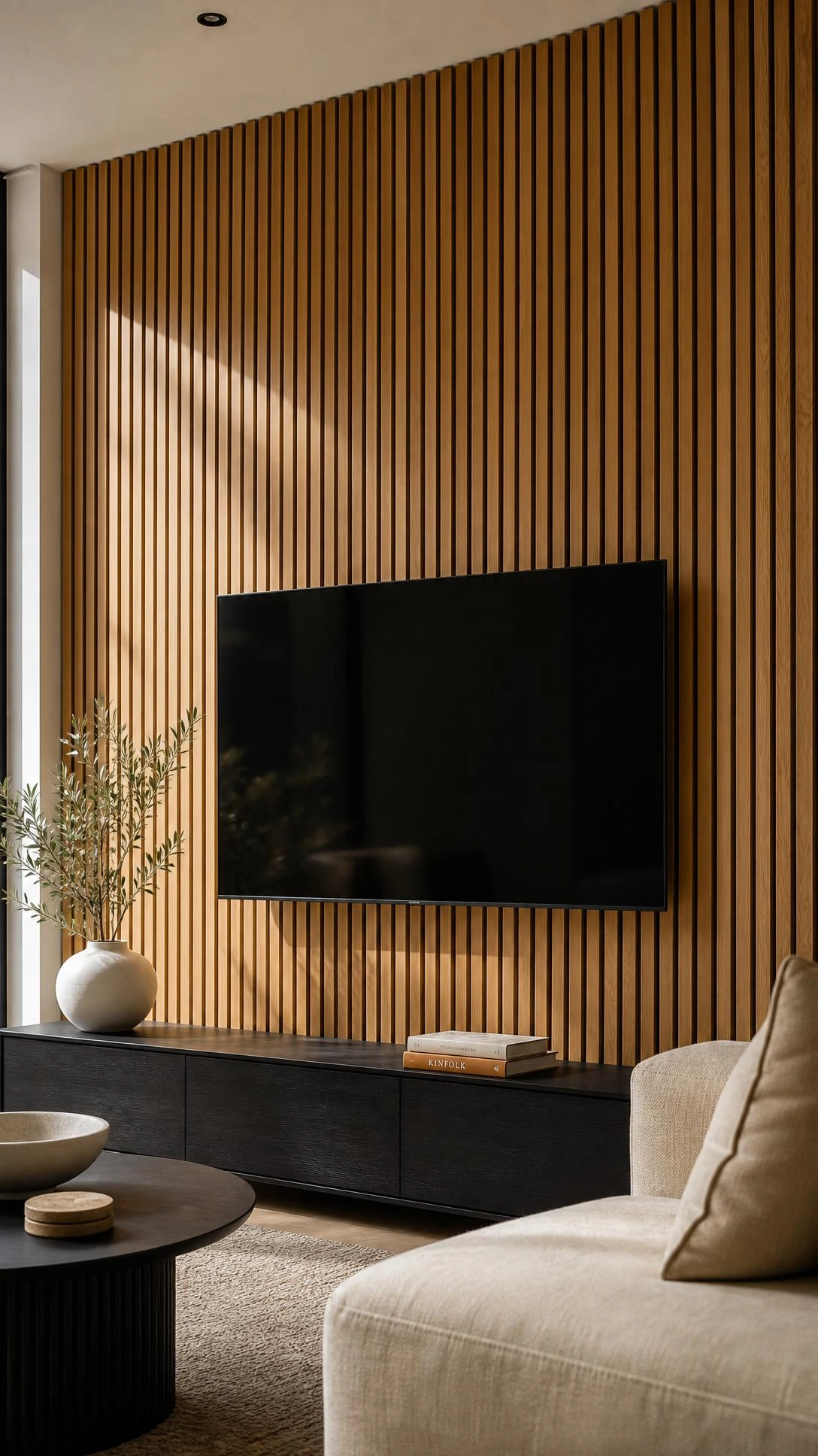
Timber slat panels are probably the most popular TV feature wall option right now, and it is pretty easy to see why once you look at a finished photo.
The vertical lines they create draw the eye up, which makes a room feel taller without doing anything structural at all.
Most slat panels come in pre-made sections around 2400mm tall and install directly onto drywall with construction adhesive and a few screws, no trade skills required beyond a drill and a spirit level.
Natural oak finish is the most searched shade, but a darker walnut stain reads more dramatic and works especially well in rooms with warmer existing tones.
The light catching the edges of each slat at different times of day adds a subtle 3D texture that a flat painted wall just cannot replicate.
2- LED Strip Lighting Behind the TV
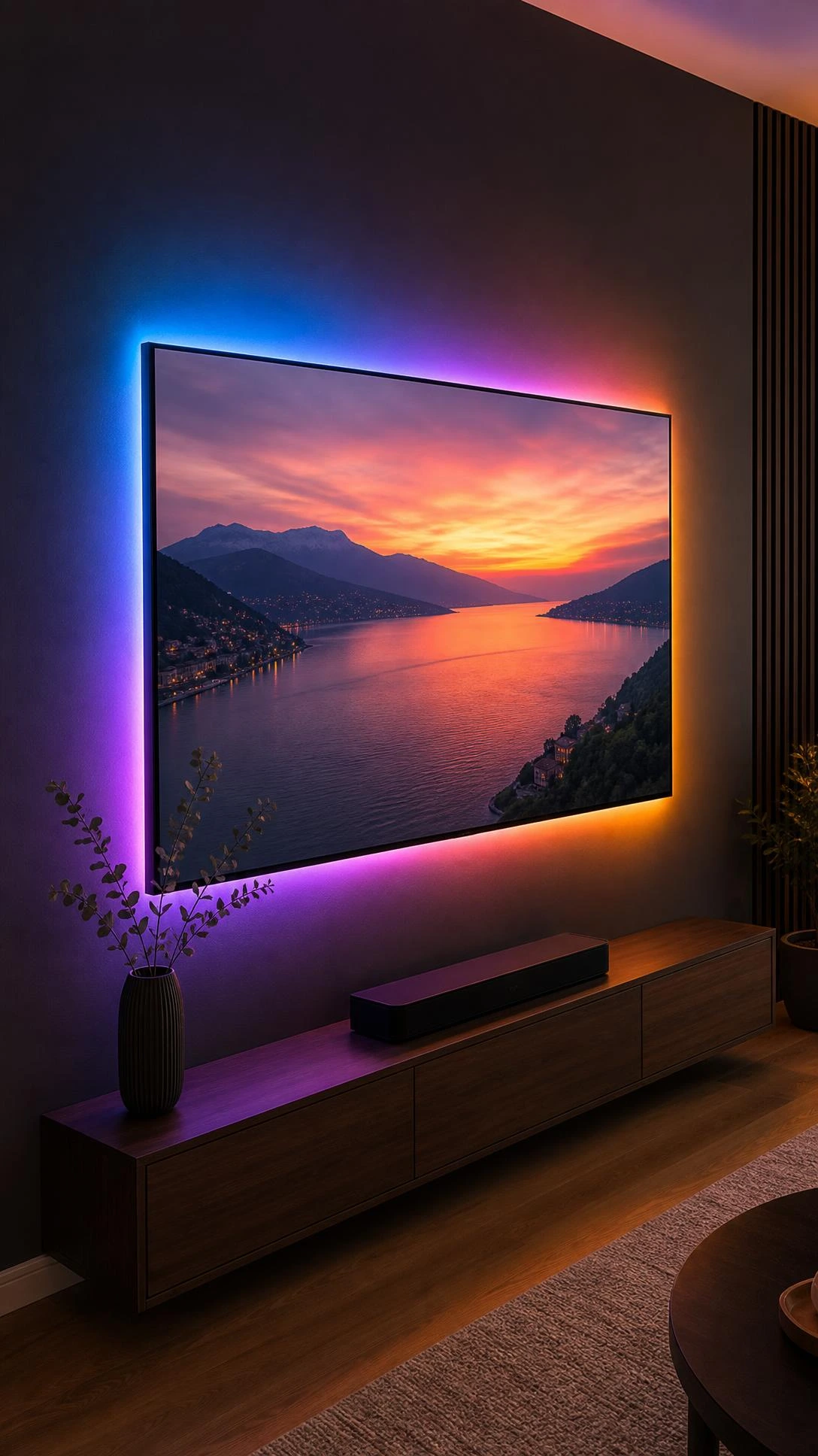
Most people assume the glow behind a TV is just a style thing, but it actually reduces eye strain significantly during evening viewing.
The halo effect it creates softens the contrast between the bright screen and the dark wall, which is the thing that causes that tired, strained feeling after a long watch session.
A basic Govee or Philips Hue gradient LED strip runs between $40 and $120 and sticks directly to the back of the TV frame in about fifteen minutes.
Warm white at around 2700K looks the most natural and avoids that gaming-setup vibe if that is not the aesthetic people are going for.
It is a genuinely small change that makes the whole wall feel more considered without touching anything else in the room.
3- Dark Feature Wall with Recessed TV Mount
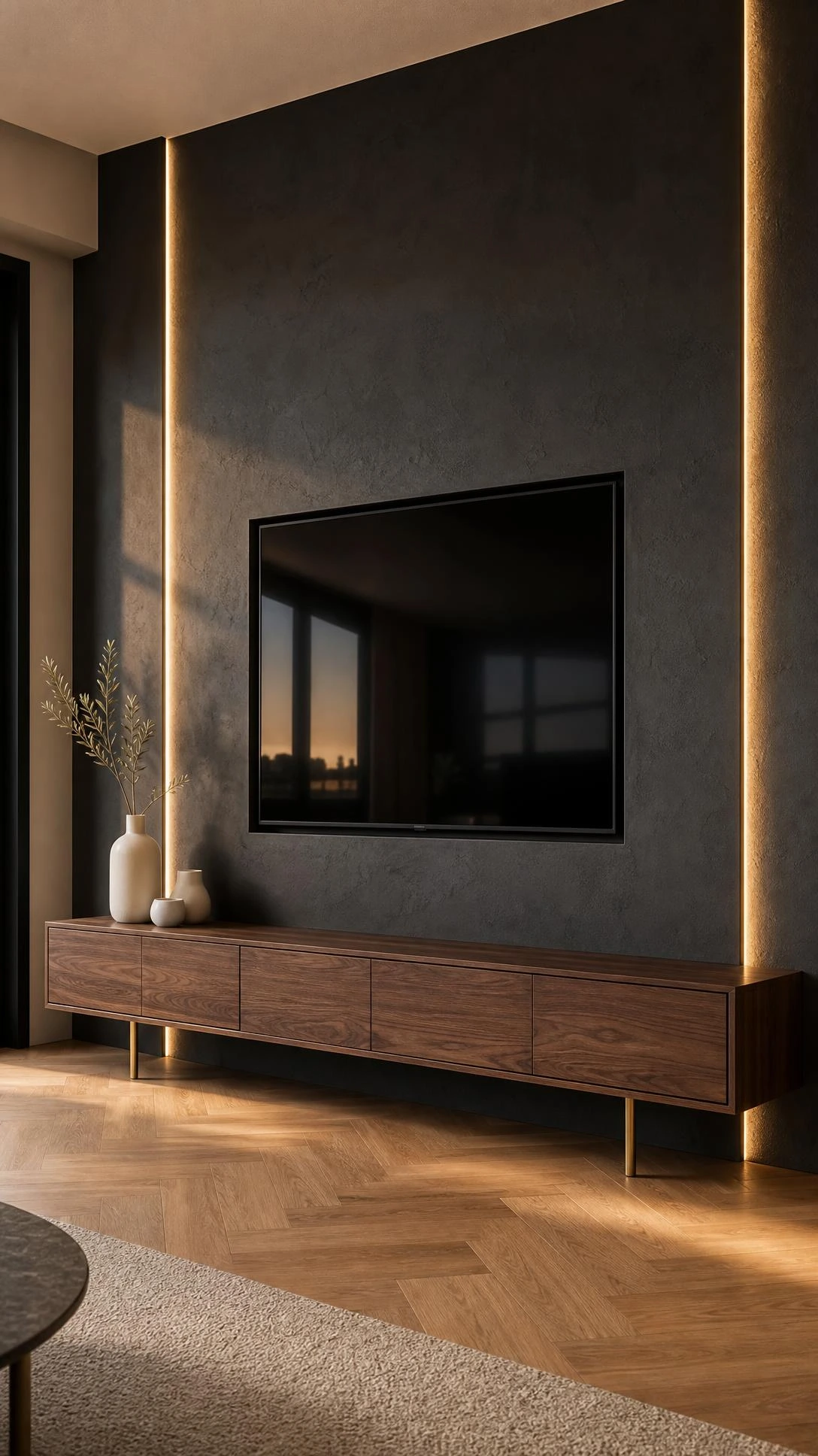
A deep charcoal or slate-colored feature wall is one of those ideas that sounds risky until people actually do it and cannot imagine why they waited so long.
The dark background makes the TV essentially disappear when it is off, which eliminates that big black rectangle problem that plagues lighter walls.
Dulux Domino or Taubmans Ironstone are two specific shades that hit that deep charcoal tone without reading purple or blue in artificial light.
Pairing it with a low-profile flush mount keeps the TV tight to the wall so the whole setup looks intentional rather than just hung there.
One wall painted dark in a room with lighter furniture reads balanced, not heavy, which is the concern most people have before they commit to the color.
4- Floating Shelves Framing the TV
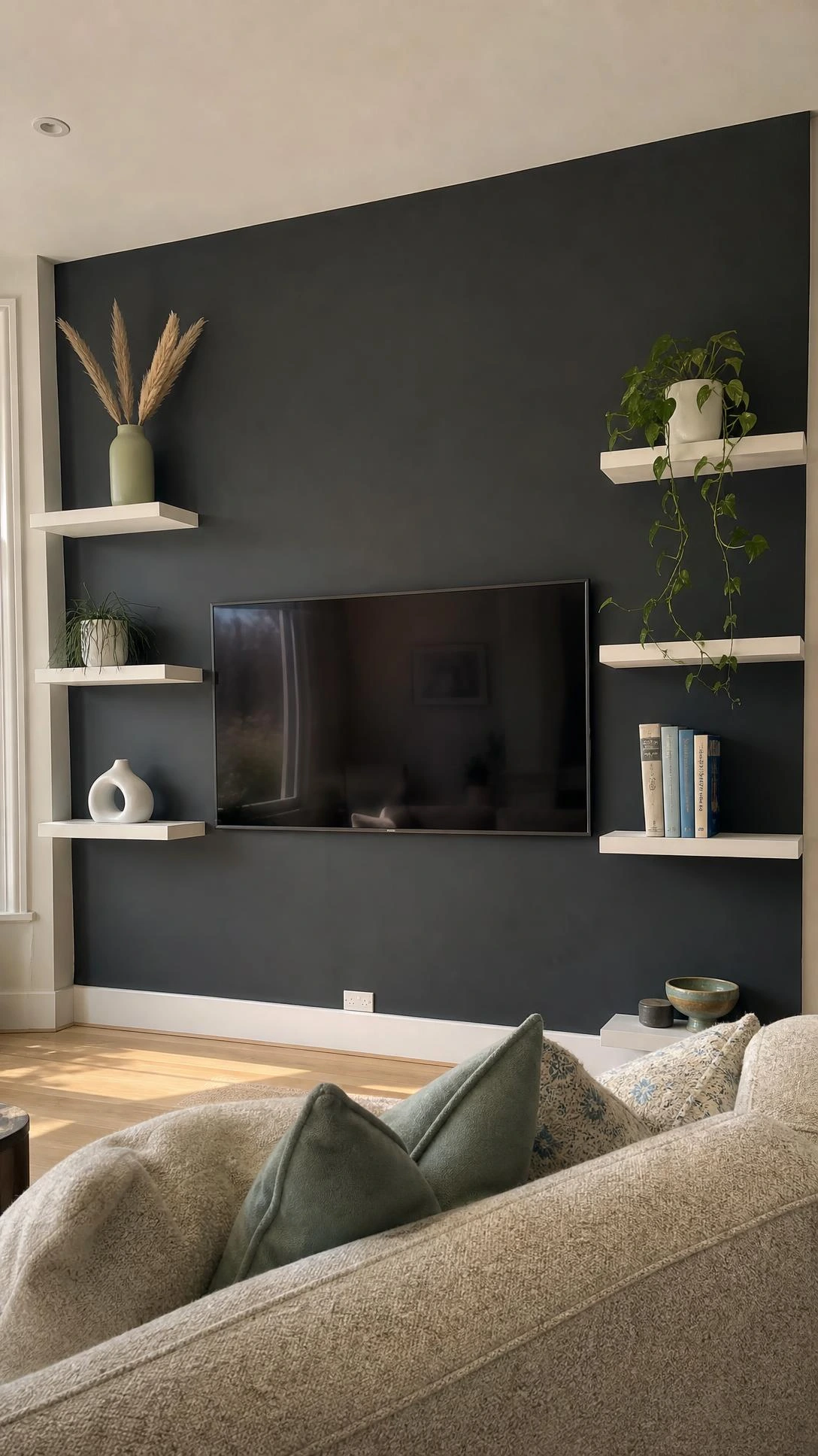
Floating shelves on either side of the TV solve two problems at once: they give the wall some purpose and they create actual storage without adding furniture to the room.
The key is keeping everything on the shelves edited down, because a shelf crammed with random objects next to a TV just creates visual noise rather than a feature.
Three shelves staggered at different heights on each side, in a finish that matches or complements the wall color, tends to look the most cohesive.
White oak or natural pine floating shelves from IKEA’s LACK or Billy range work well for this and land somewhere between $15 and $40 per shelf depending on the size.
The goal is just to frame the TV so it feels like part of a considered arrangement rather than a screen sitting in the middle of an empty wall.
5- Venetian Plaster TV Feature Wall
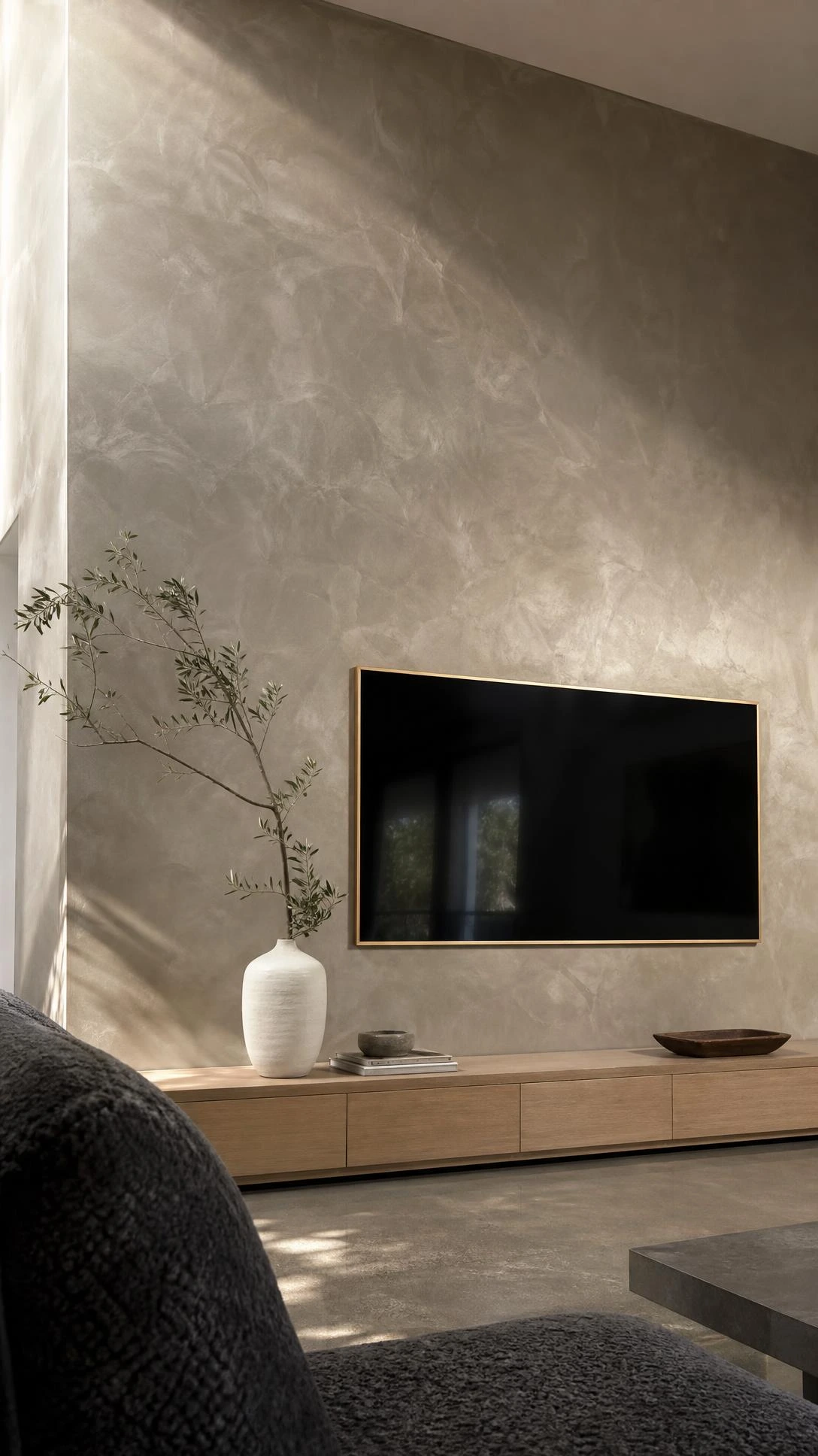
Venetian plaster has been around for centuries, but it is having a real moment in living rooms right now specifically because of how it looks behind a TV.
The multi-coat finish creates a subtle variation in tone and texture that makes the wall look alive in a way flat paint never does, especially in changing light.
It is typically applied in two to three coats with a steel trowel, burnished between layers, and the whole process for one wall takes around a day of actual work time.
Hiring a plasterer to do it runs roughly $800 to $1,500 for a single feature wall depending on the room size, which is more than paint but far less than a full renovation.
I think this one works best in living rooms with natural light, because that is when the texture really shifts throughout the day in a way that feels almost like art.
6- Stone Look Panels for a Textured Feature Wall
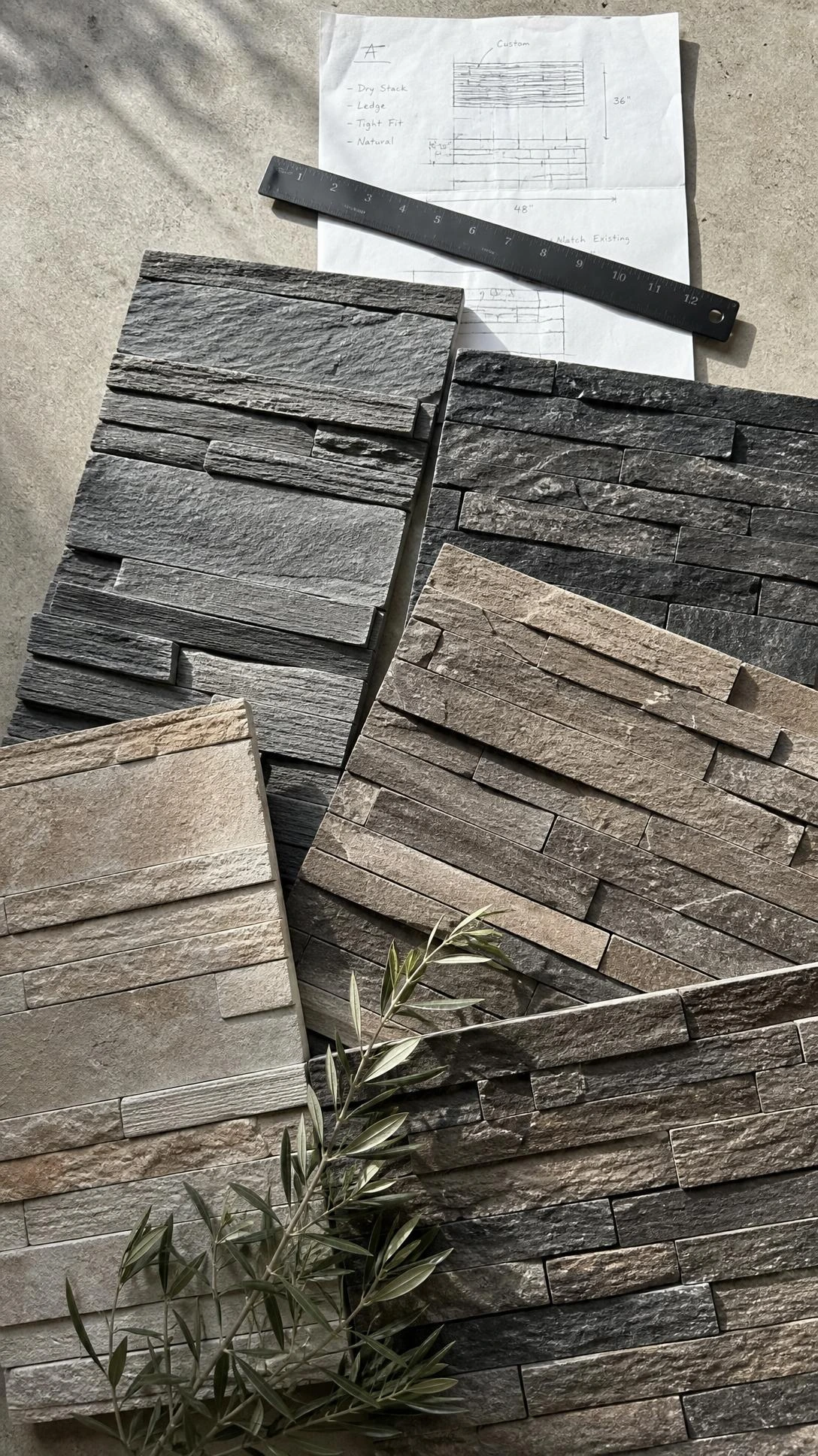
Stone-effect panels give a room that solid, architectural feel that actual stone delivers, but without the weight or the structural requirements.
Most of the good ones are made from high-density polyurethane or compressed resin, so they are light enough to install directly onto drywall with panel adhesive and finishing nails.
A Carrara marble look or a grey stacked stone finish are the two that show up most often in living rooms and tend to complement both modern and Mediterranean-inspired interiors.
The panels typically come in interlocking sections that hide the seams once installed, so the finished wall looks like one continuous surface rather than a tiled pattern.
This one requires a bit of patience when cutting around power points and cable exits, but a jigsaw handles it without much trouble.
7- TV Mounting Height and Eye Level Placement
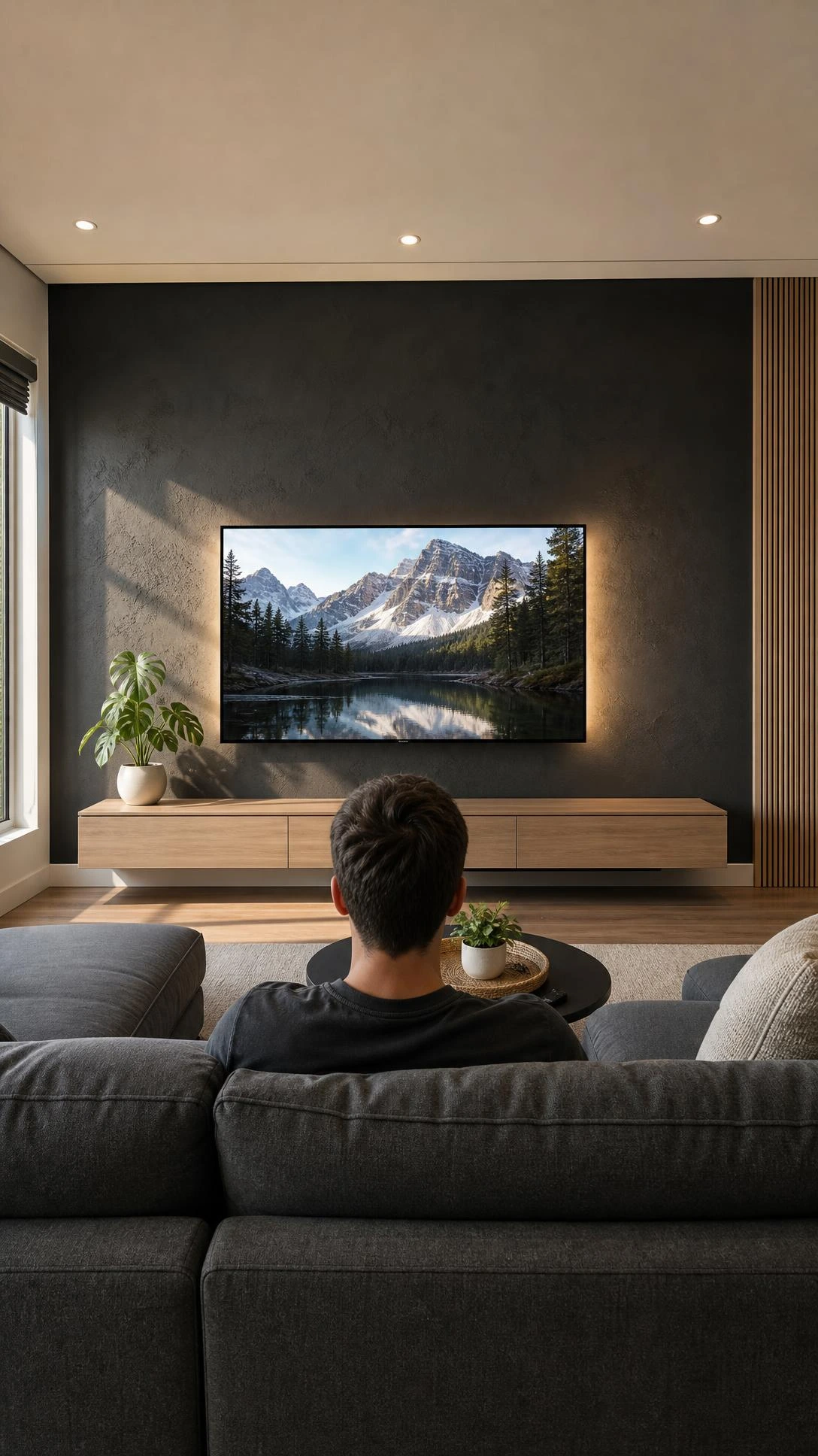
Getting the mount height wrong is probably the most common TV feature wall mistake people make, and it is one that bothers people every single day once they notice it.
The general rule that actually holds up is positioning the center of the screen at seated eye level, which for most people and most sofas lands somewhere between 100cm and 110cm from the floor to the middle of the TV.
Most people hang the TV too high because it looks balanced when standing in the room, but that neck-craning viewing angle from the sofa gets uncomfortable within about twenty minutes.
Using a tilting or full-motion mount means the height can be set a little higher if furniture placement forces it, because the angle can be adjusted down to compensate.
For a 65-inch or larger screen, the bottom edge of the TV sitting roughly at the height of a standard console table tends to look proportional and feel comfortable to watch.
8- Backlit Floating Shelf TV Wall
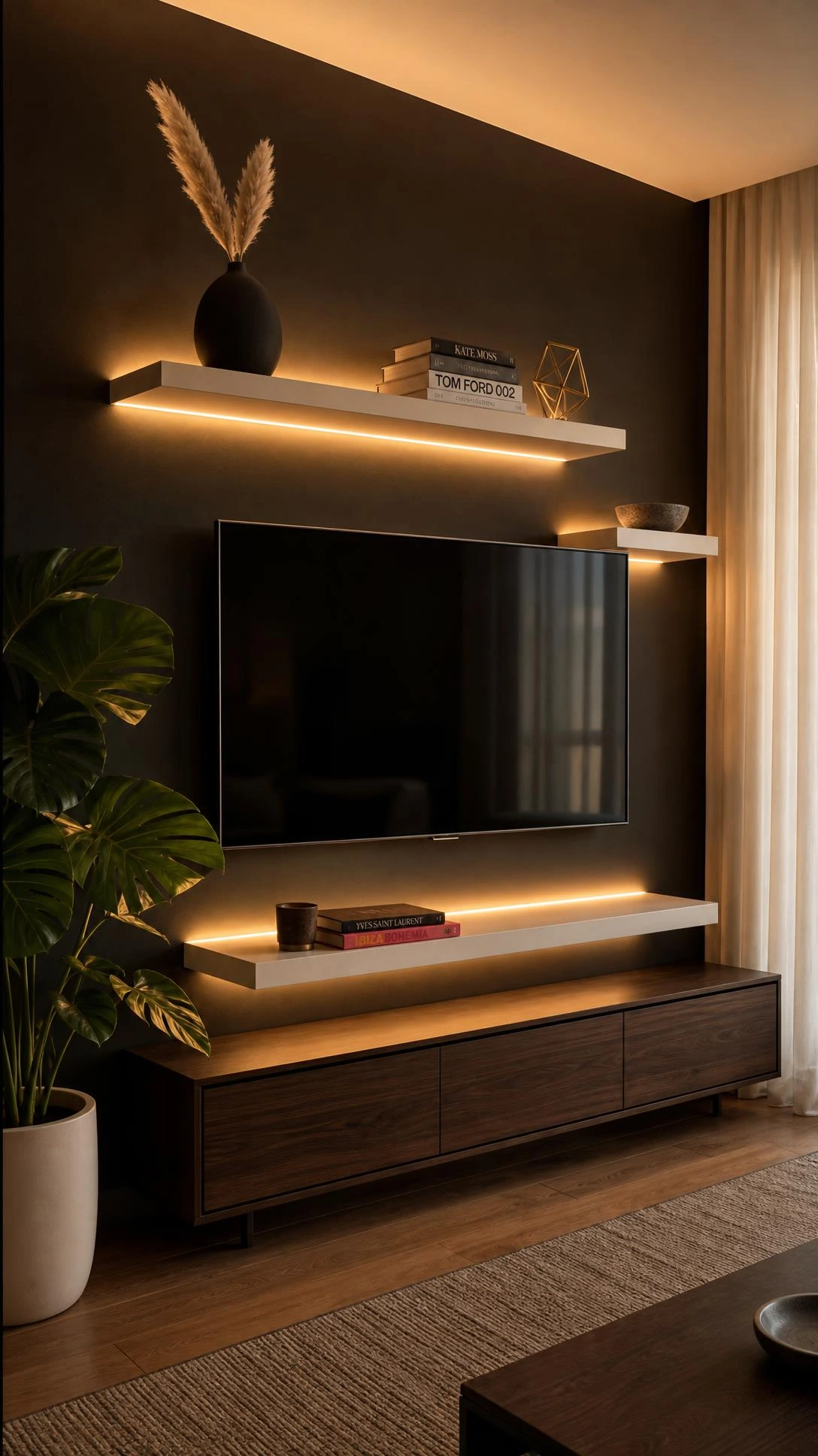
Backlit shelving takes the floating shelf idea and adds the kind of atmospheric lighting that makes the whole wall feel considered rather than just functional.
LED strip lights fitted to the underside of each shelf throw a soft wash of light down the wall behind and beneath the TV, which creates layers of depth that a single overhead light never achieves.
Warm white or amber LEDs at 2700K look the most natural here and avoid anything that reads too nightclub.
The shelves themselves work best in a matte white or concrete-effect finish so the light reflects softly rather than bouncing off a high-gloss surface.
This setup looks the most polished in rooms where the overhead lights can be dimmed separately, because that is when the LED shelf lighting really earns its place.
9- Forest Green Feature Wall Behind the TV
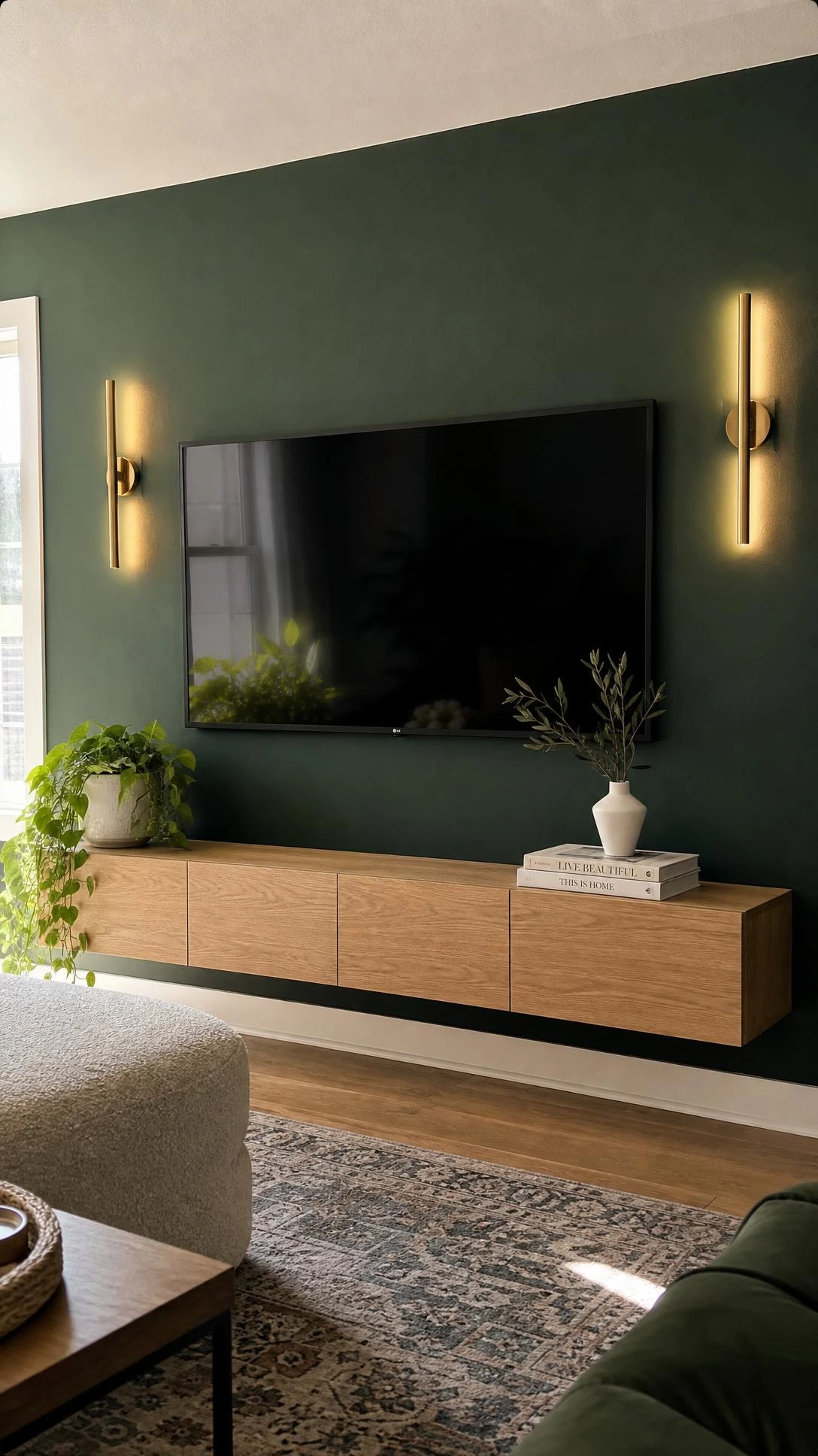
Forest green is one of those colors that people hesitate over for months and then paint and immediately wonder why they waited.
It reads dark enough to make the TV disappear when switched off, but it has enough warmth compared to charcoal or black that the room still feels livable and calm rather than dramatic.
Dulux Bush Walk or Resene Nero are both in that deep, muted green range that works behind a screen without competing with it.
This shade works especially well against natural timber furniture or rattan pieces, because the combination reads very grounded and current without trying too hard.
Painting just the one feature wall behind the TV and leaving the remaining three walls a warm off-white keeps the room from feeling too enclosed.
10- Acoustic Slat Panels for Sound and Style
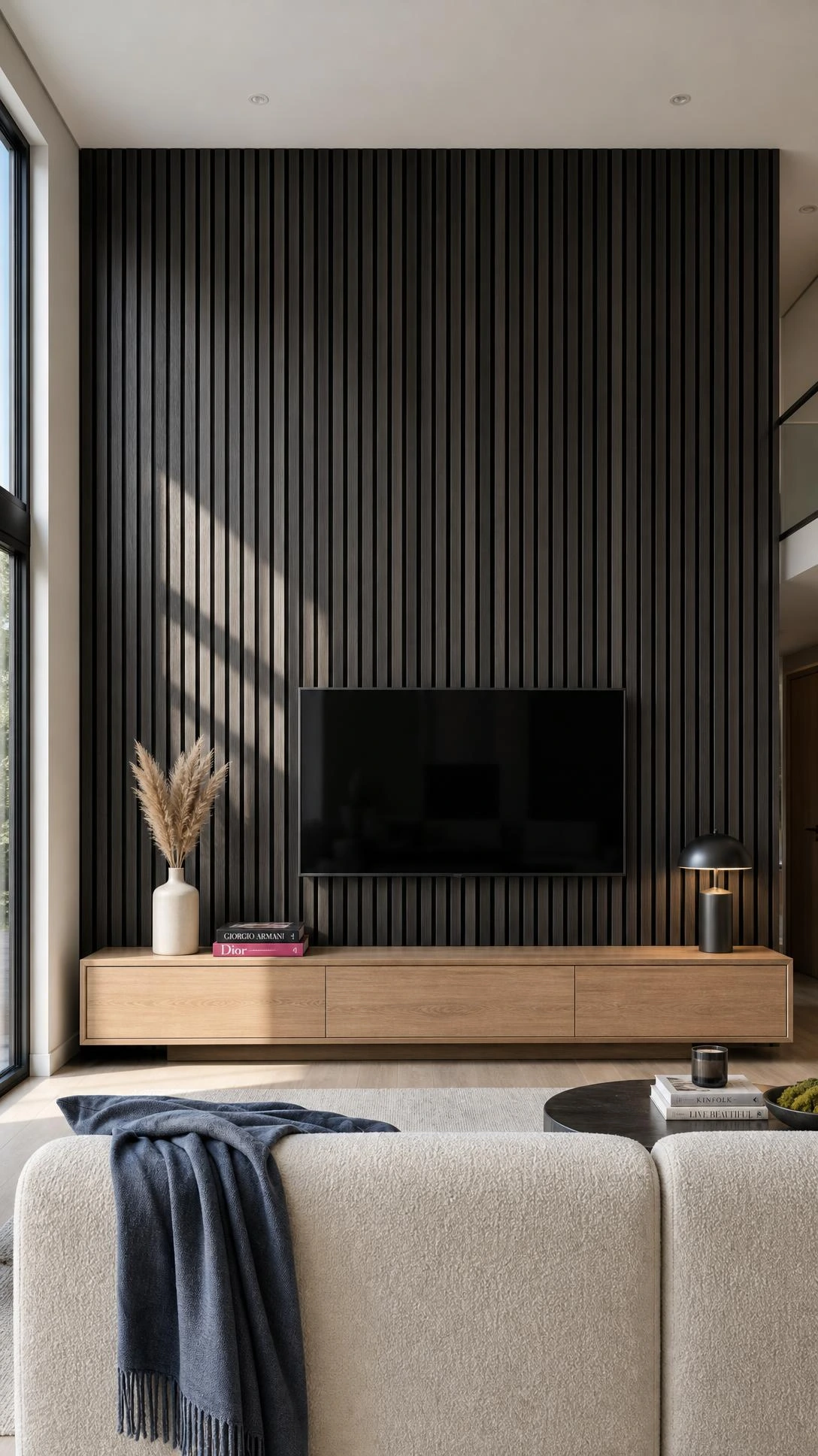
Acoustic slat panels do something that standard decorative panels do not, which is actually absorb sound and reduce the echo that a lot of living rooms deal with, especially open-plan ones.
The felt or fabric backing on acoustic versions is what handles the sound, and most people notice the difference in room echo within the first day of installation.
Brands like Wonderwall or Autex make residential acoustic slat panels that look identical to the decorative timber versions but perform noticeably better in rooms with hard floors and high ceilings.
They install the same way as standard slat panels, so the process is no more complicated, but the price point sits a little higher at around $80 to $150 per square metre installed.
For anyone who watches a lot of movies or uses the TV for music, this is probably the one version of the TV feature wall that quietly pays off every single day.
11- Minimalist TV Wall with Concealed Cable Management
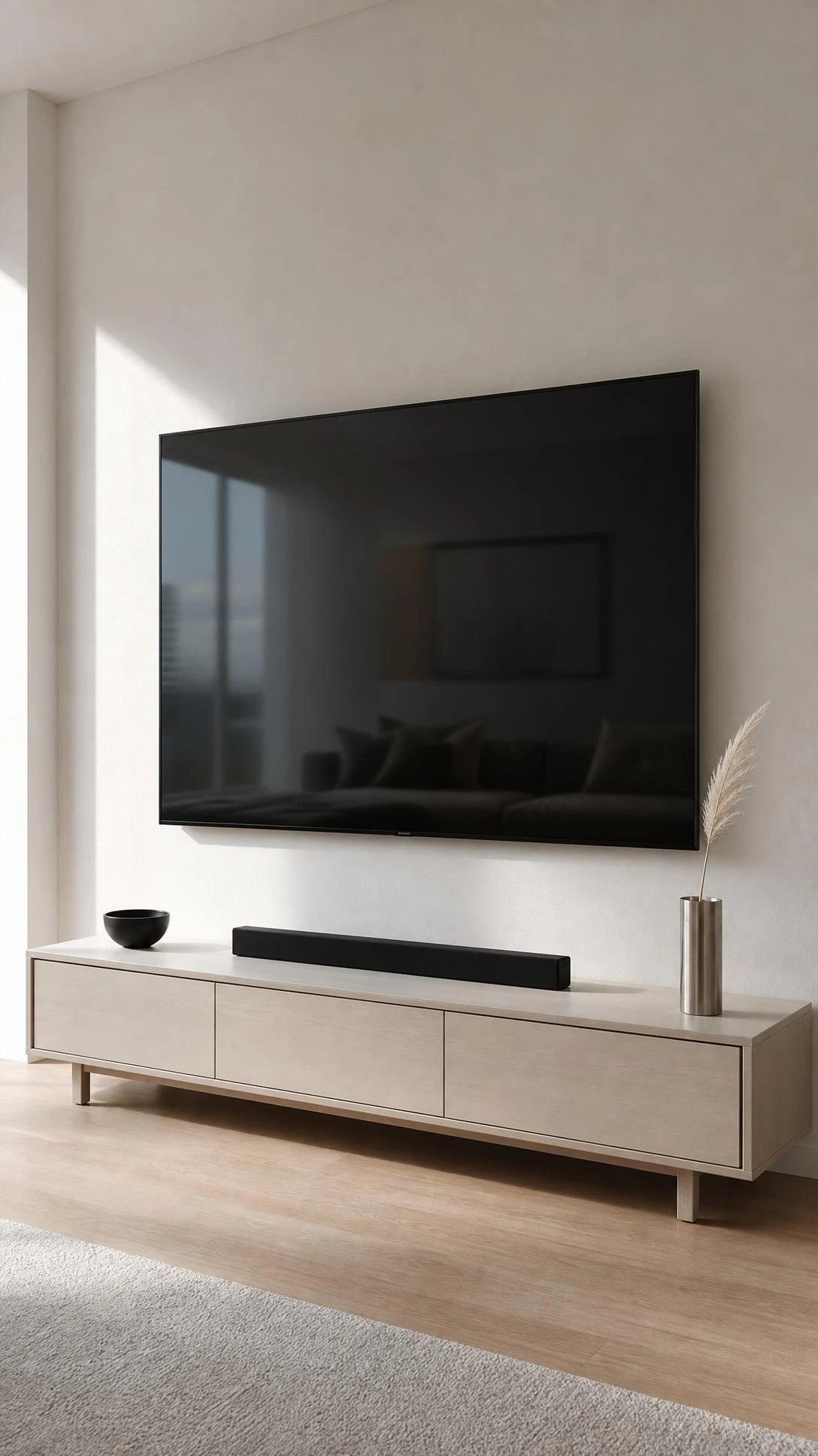
Nothing undermines a clean TV feature wall faster than a trail of visible cables running from the screen down to the console below.
An in-wall cable management kit runs the HDMI, power, and audio cables through the drywall so nothing shows on the surface, and most kits come with the wall plates included for around $30 to $60.
The installation involves two small rectangular cutouts, one behind the TV and one at the console level, which takes about thirty minutes with a drywall saw and does not require an electrician in most cases.
Pairing hidden cables with a slim flush-mount bracket and a matte or textured wall finish is really what makes the TV look like it is floating rather than just mounted.
It sounds like a small thing, but cable management is genuinely the difference between a feature wall that looks finished and one that still looks like a work in progress.
The TV Feature Wall That Actually Gets Done
Most of these ideas work independently, but even just picking one and doing it well makes a bigger difference than people expect before they start.
The timber slat wall or a dark paint color are probably the two easiest starting points for anyone who wants the visual payoff without a complicated install weekend.
Getting the mounting height right and hiding the cables costs almost nothing and immediately makes whatever wall treatment is already there look more intentional.
A TV feature wall does not need to be a statement moment, it just needs to look like someone thought about it, and most of the time that is genuinely enough.

Hi, I’m Alizabeth, the creator of Pretty Home Hacks. I share practical home decor ideas, easy DIY projects, organization tips, and budget-friendly ways to make your home feel more beautiful and functional. From small room updates to everyday home hacks, my goal is to share approachable ideas you can actually use in your own space.