
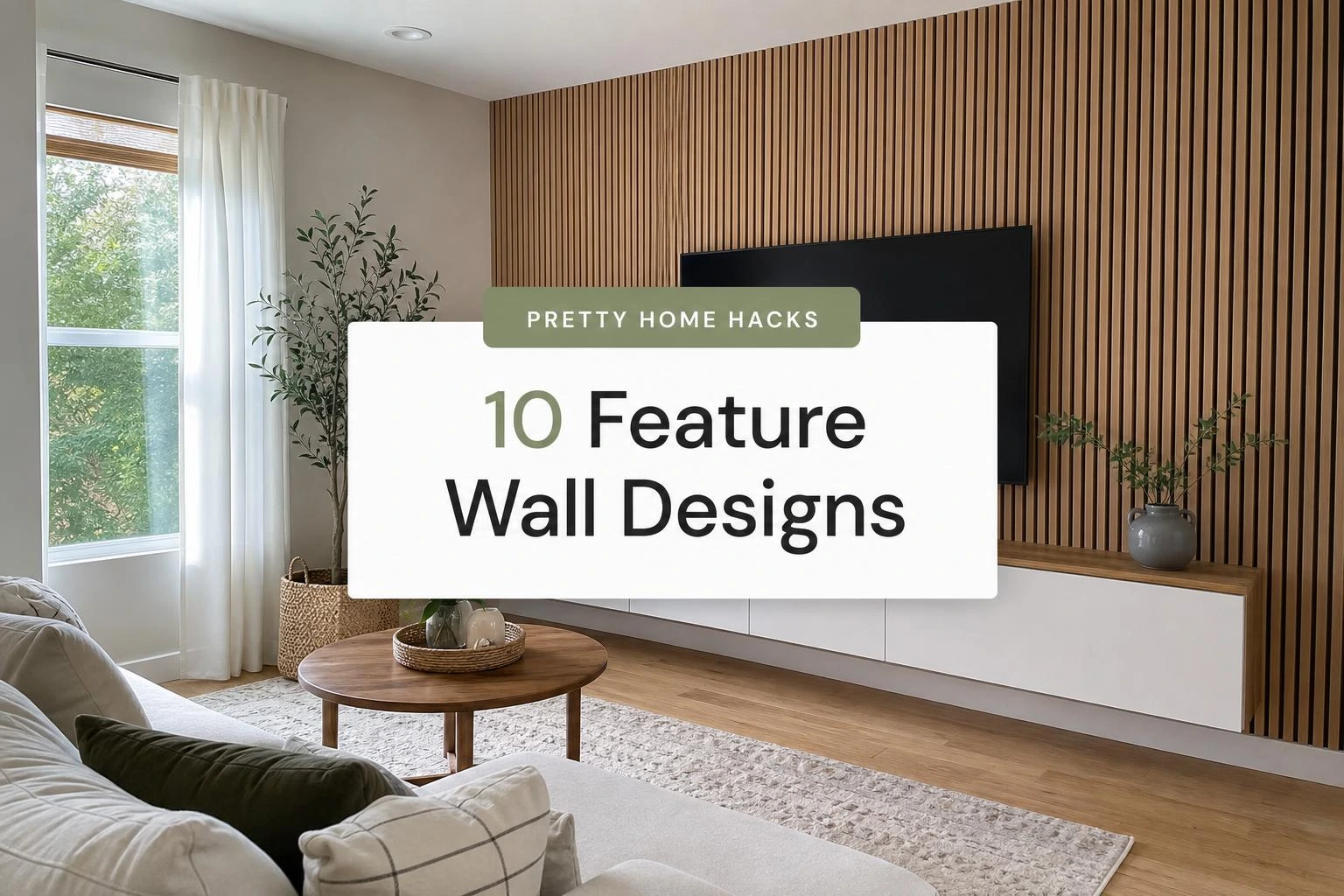
10 Green Home Office Ideas That Make Your Workspace Feel Fresh and Productive
Feature walls are one of those things that look effortless in designer homes and somehow feel completely out of reach in a regular living room.
Most people assume pulling off that kind of look requires a huge budget, a contractor, or at the very least a very specific vision that they definitely do not have yet.
The other thing that happens is people go hard on a trend, geometric patterns being the big one, and then two years later the wall feels dated and removing it is a whole project nobody signed up for.
The ideas that actually hold up are the ones that lean into materials, color, and texture rather than shapes that have an expiration date.
These three directions are the ones worth knowing about if the goal is a feature wall that looks intentional and expensive without being either of those things.
1- Limewash Paint Feature Wall
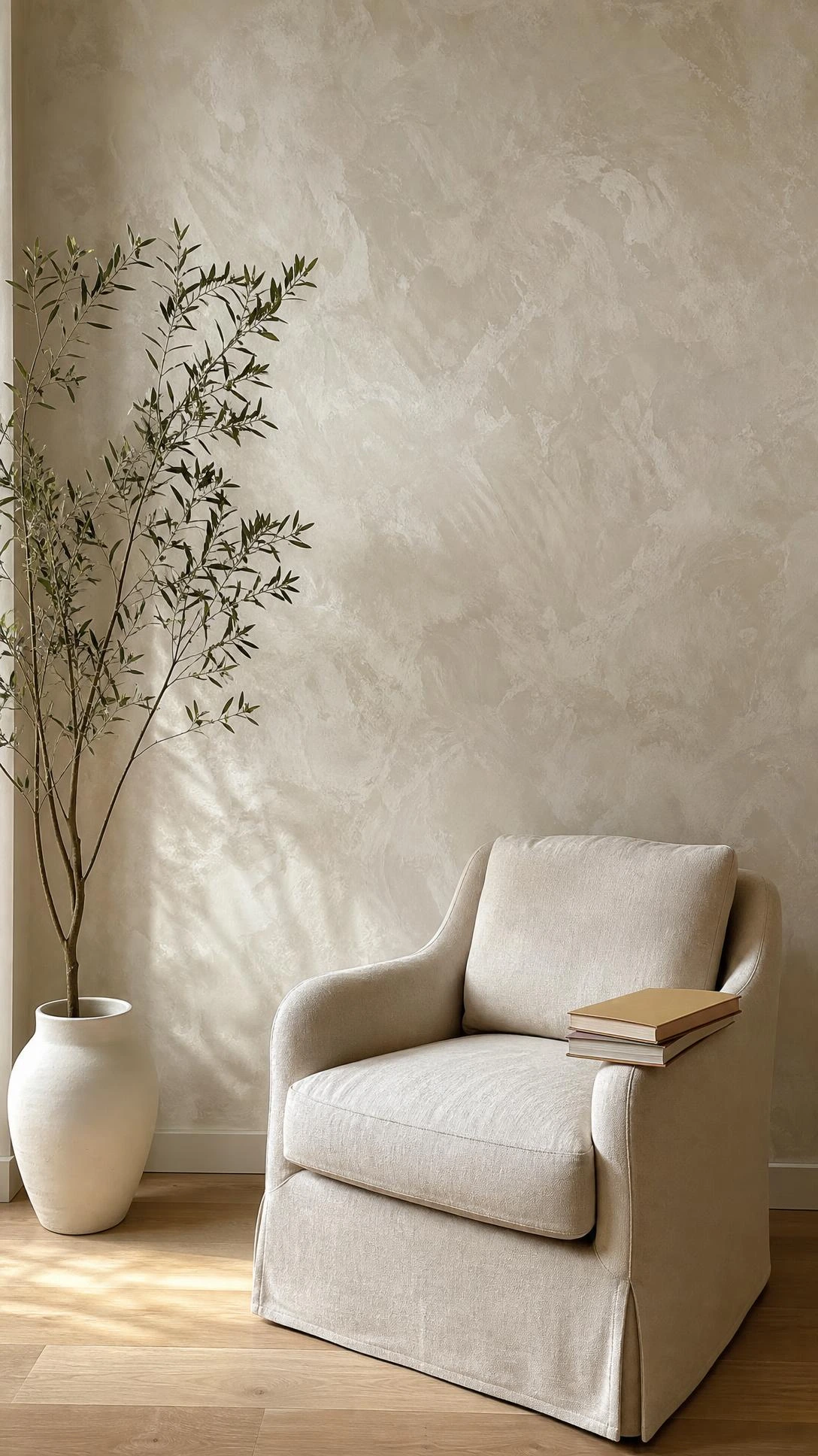
Limewash paint is one of those finishes that looks like it belongs in a Tuscan villa and somehow also works in a modern apartment bedroom.
The way it works is the paint builds up in uneven layers, so the wall ends up with this soft, aged, slightly textured look that regular flat paint just cannot replicate.
Brands like Portola Paints sell limewash in ready-to-use formulas for around 60 to 80 dollars a gallon, which covers a standard feature wall with enough left over for touch-ups.
The color that keeps showing up in well-styled rooms is a warm off-white called Antico, which reads almost terracotta in low light and pale linen in bright afternoon sun.
It is also one of the more forgiving DIY finishes because the organic variation in the texture means small mistakes just blend right in.
I think this is the one finish that photographs better in person than it does online, which is always a nice surprise when the room actually comes together.
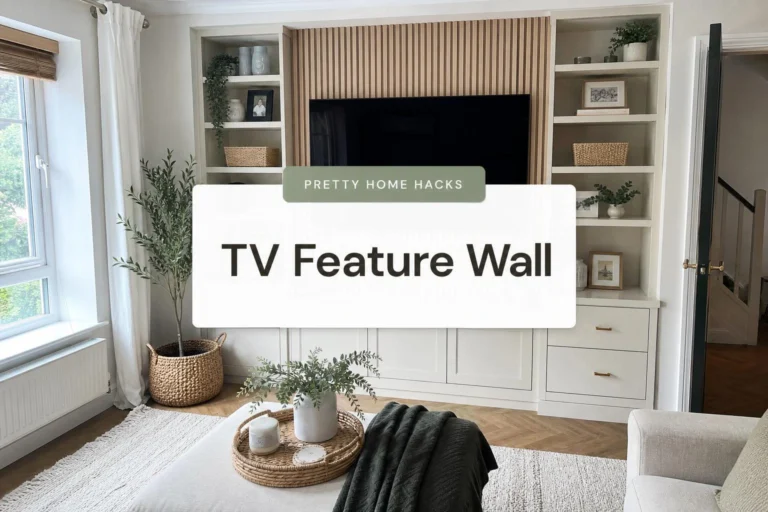
2- Fluted Wood Panels Feature Wall
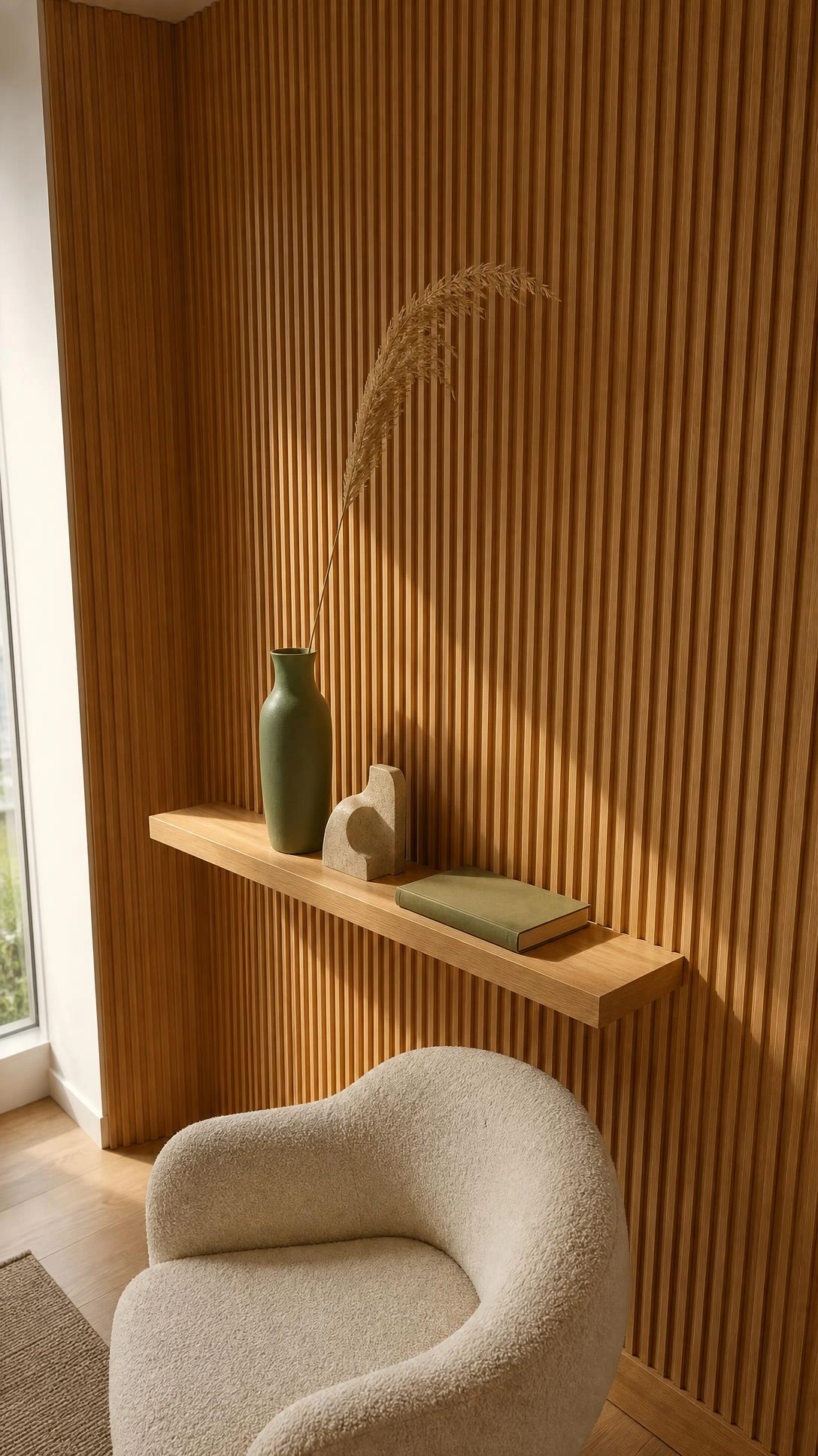
Fluted wood panels are what people are seeing in every high-end hotel lobby right now, and the reason they work so well is the vertical lines make any wall look taller and more considered.
The panels themselves are usually MDF with a real or faux wood veneer on top, and they come in pre-cut sections that mount directly onto drywall with construction adhesive.
A standard 8-foot wall in a living room takes roughly 20 to 24 panels depending on the width, and most home improvement stores carry them in natural oak, walnut finish, and a painted white version that suits more minimal spaces.
The walnut finish version reads the most expensive in person, especially against warm white walls and soft lighting.
One thing worth knowing is that these panels do not love very humid rooms, so a bathroom feature wall is fine but a steam-heavy ensuite is pushing it.
Once the panels are up and the gaps are filled, most people cannot believe how much the room shifted with just one wall done.
3- Dramatic Dark Paint with Integrated Shelving
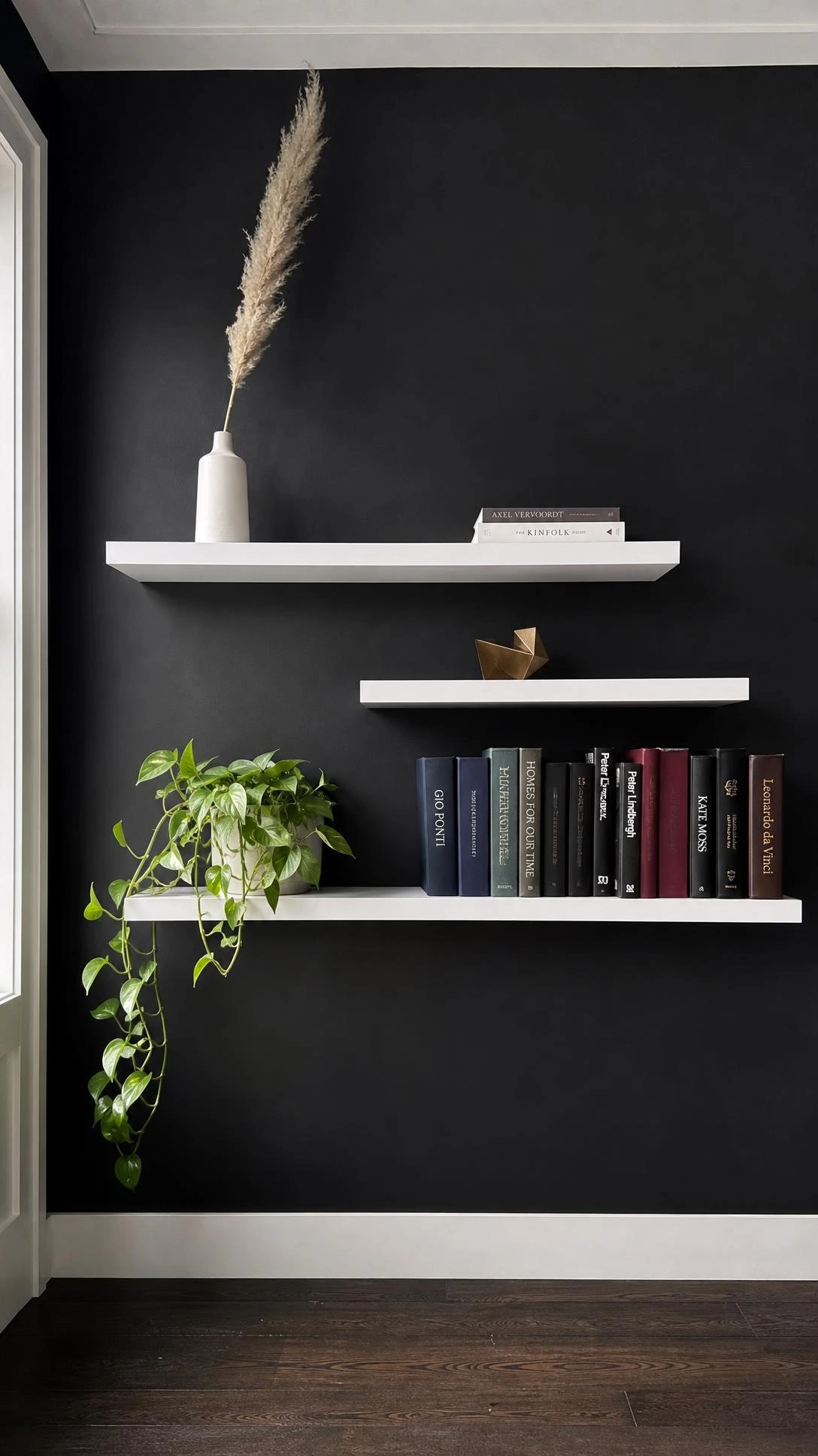
Painting one wall a genuinely deep color and then mounting shelving directly onto it is one of those combinations that looks like it took a designer to plan but actually just takes a committed afternoon.
The reason it works is the dark wall makes the shelves and whatever sits on them pop forward visually, so even basic white floating shelves look intentional against something like Farrow and Ball’s Railings or Benjamin Moore’s Black Panther.
Most people assume dark walls make a room feel smaller, but a single feature wall in a deep charcoal or inky navy actually makes the room feel more layered instead.
The shelf spacing that looks best is three shelves staggered at roughly 14 inches apart, which leaves enough room for books upright alongside smaller objects without everything looking crammed.
Keeping the shelves themselves in a natural oak or light pine creates just enough contrast against the dark wall that the whole setup reads very curated.
The goal is not to fill every inch of the shelf space because the gaps between objects are doing just as much visual work as the objects themselves.
Feature Walls That Actually Last
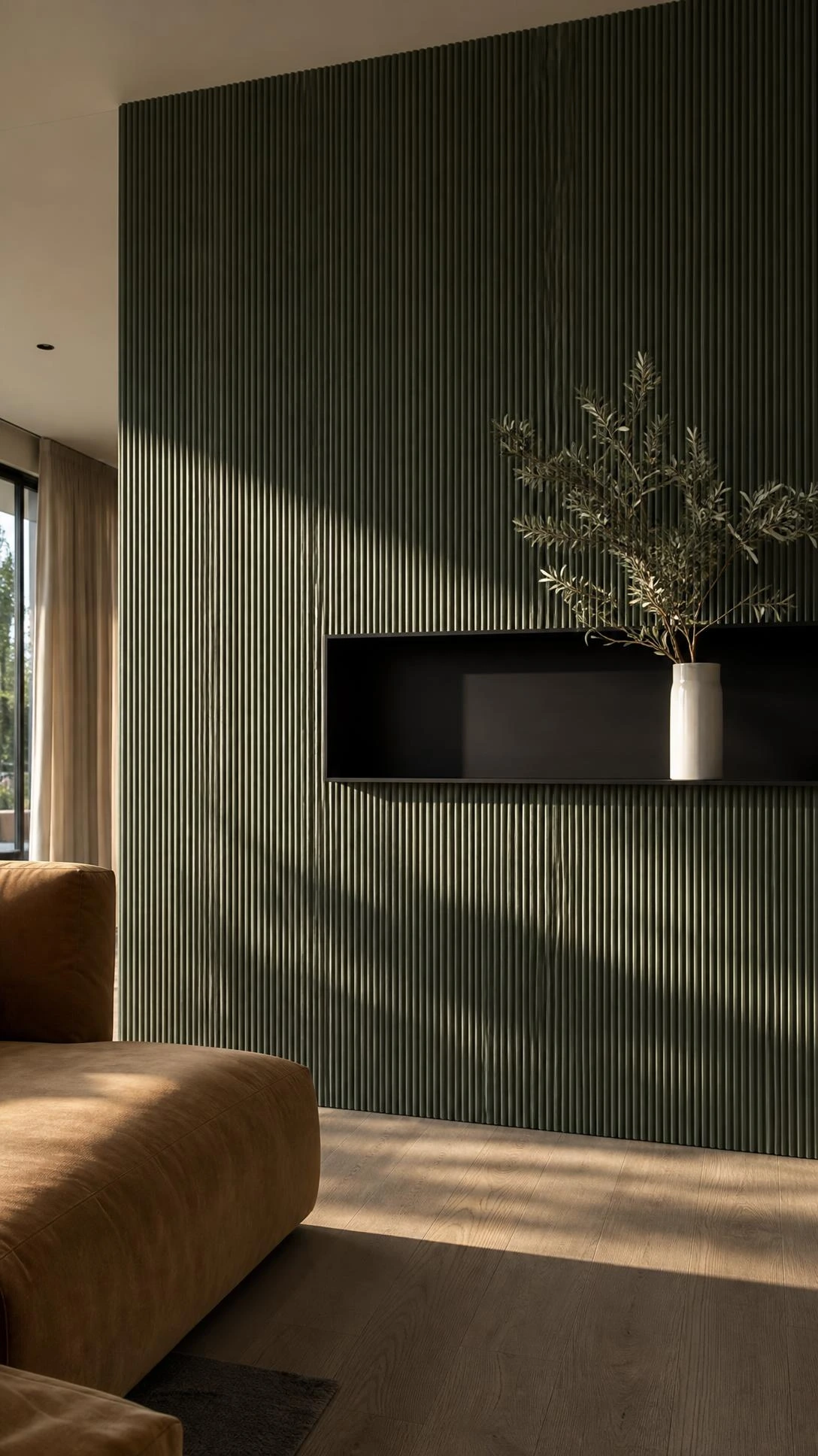
The common thread with all three of these ideas is that none of them rely on a shape or a pattern that will feel dated in three years.
Texture, depth, and tonal contrast are what make designer feature walls look expensive, and those things do not go out of style the way geometric tape designs do.
Starting with just one wall and living with it for a few weeks before doing anything else is a good way to make sure the direction feels right for the whole room.
One well-chosen wall done properly will always do more for a room than four walls done in a hurry.

Hi, I’m Alizabeth, the creator of Pretty Home Hacks. I share practical home decor ideas, easy DIY projects, organization tips, and budget-friendly ways to make your home feel more beautiful and functional. From small room updates to everyday home hacks, my goal is to share approachable ideas you can actually use in your own space.