


25 Small Space Living Room Ideas That Make Tight Spaces Easier to Use
A sofa blocking the doorway can make even a tidy living room feel cramped.
Small space living room ideas work best when furniture leaves useful routes open.
The challenge is fitting seating, storage, lighting, and everyday electronics without crowding the floor.
Good proportions and clear access usually matter more than adding decorative pieces.
These practical arrangements suit ordinary homes, including narrow rooms and compact open-plan spaces.
1- Slim Sofa for Small Living Rooms
A deep sofa can quickly consume the walkway in a narrow living room.
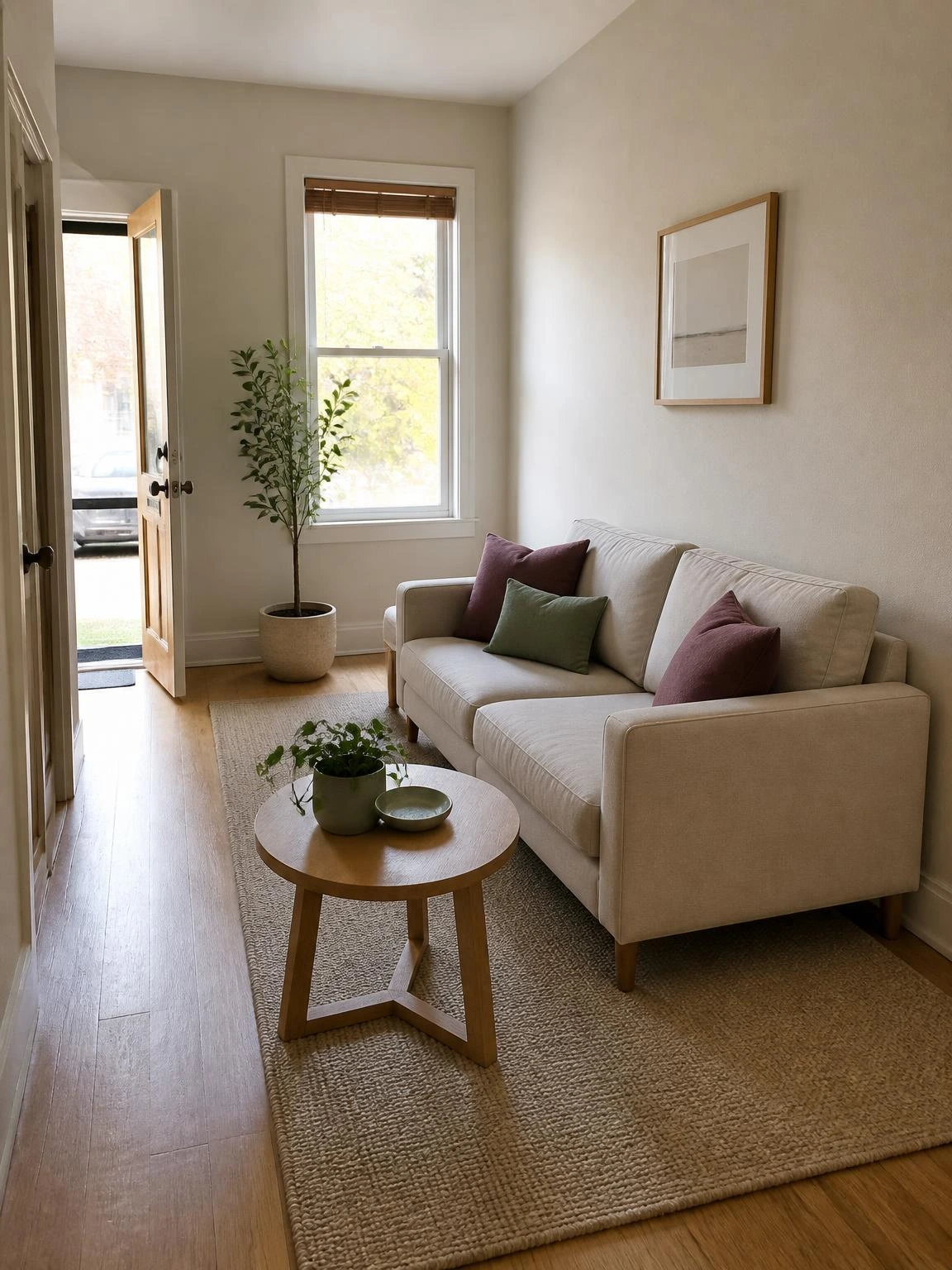
Choose a compact two-seat sofa with a shallow frame, then place it against the long wall.
Leave a direct route between the entry, sofa, and window whenever possible.
Cotton upholstery in stone, muted plum, or soft green keeps the piece adaptable.
A smaller sofa sacrifices some lounging space, so it suits households that value circulation first.
2- Armless Chairs for Flexible Seating
Separate chairs can work better than a sofa when the room needs flexible seating.
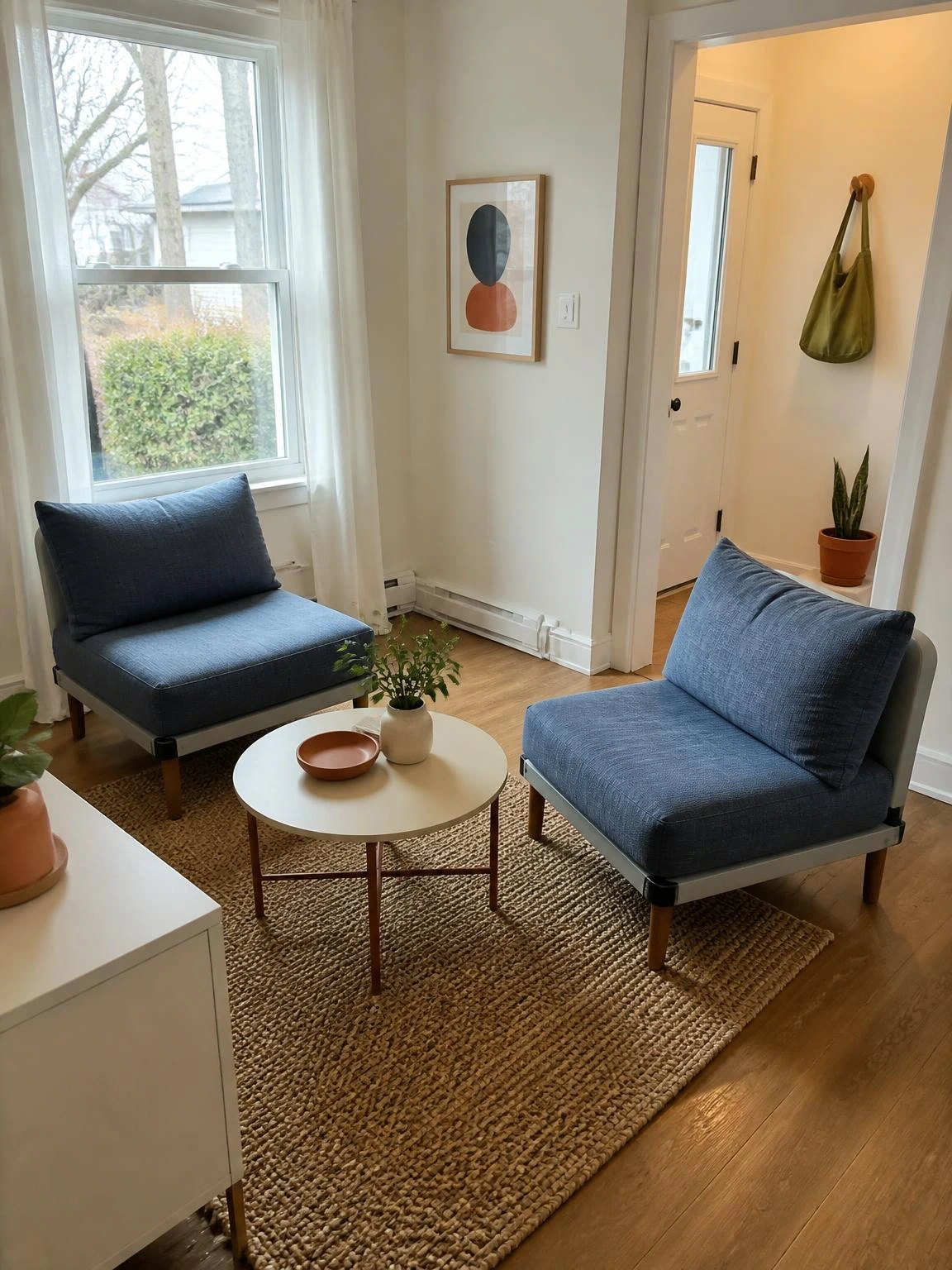
Two armless lounge chairs take up less visual and physical width than bulky upholstered arms.
Angle them slightly toward a small circular table, while keeping the central route open.
Woven cotton, painted wood, and powder-coated steel provide practical everyday finishes.
Chairs are less useful for stretching out, so another room may need to handle longer lounging.
3- Wall-Mounted TV Storage
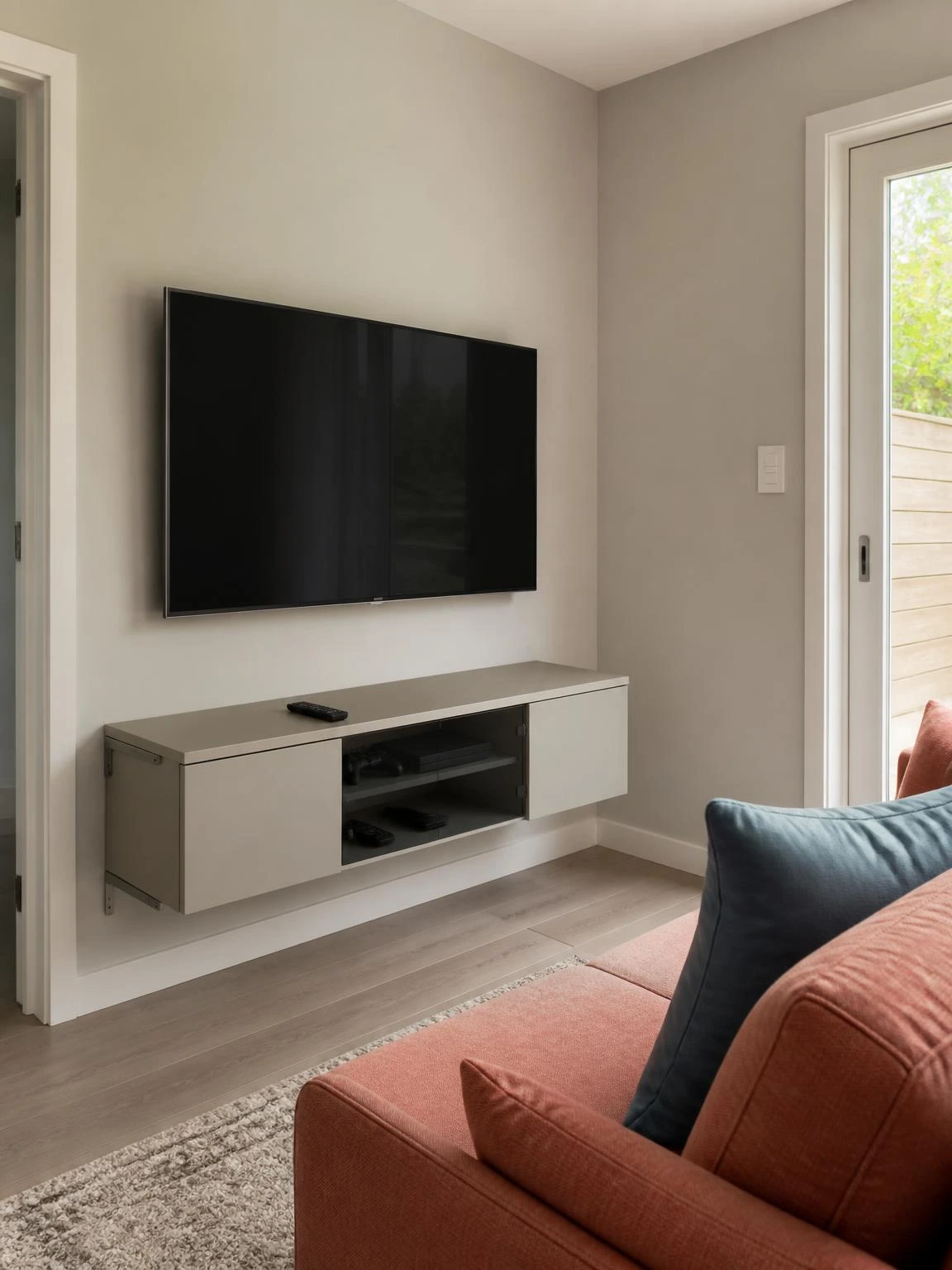
Televisions and media equipment often create an awkward floor-level pile.
Mount the television on the shortest wall above a slim wall-hung cabinet.
Use enclosed compartments for remotes, consoles, and spare cables rather than leaving them exposed.
Keeping the floor visible beneath the cabinet makes cleaning and movement easier.
Check the wall construction and use suitable fixings before mounting either the television or cabinet.
4- Narrow Console Behind a Sofa
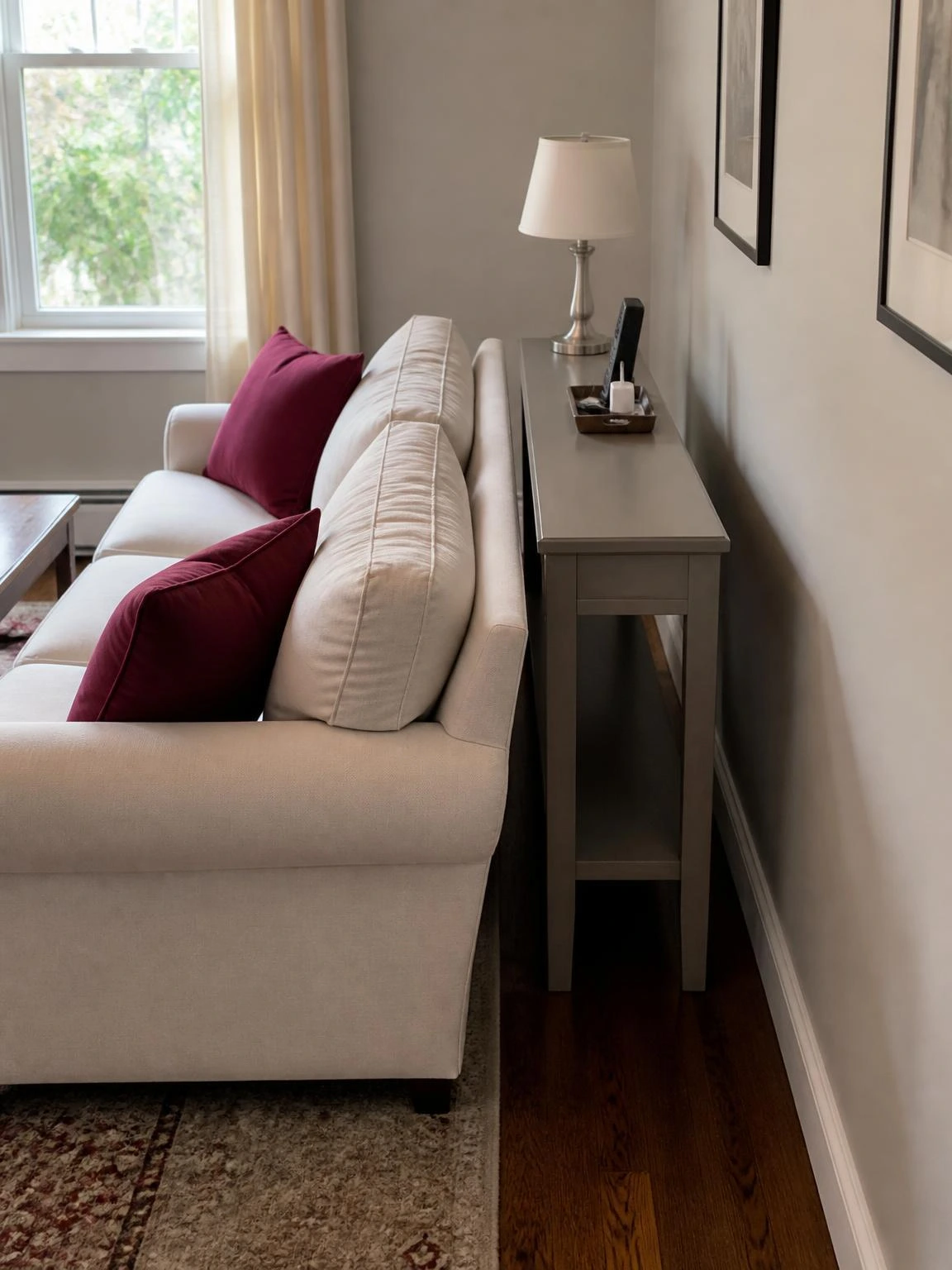
A sofa placed slightly forward can create useful space for a shallow console.
Choose a console narrower than the sofa depth, so it does not project into the walkway.
Use it for a small lamp, charging station, or a tray for daily items.
Painted wood and brushed metal suit compact rooms without adding bulky visual weight.
This arrangement needs comfortable clearance behind the sofa, so measure the passage before buying.
5- Storage Ottoman Coffee Table
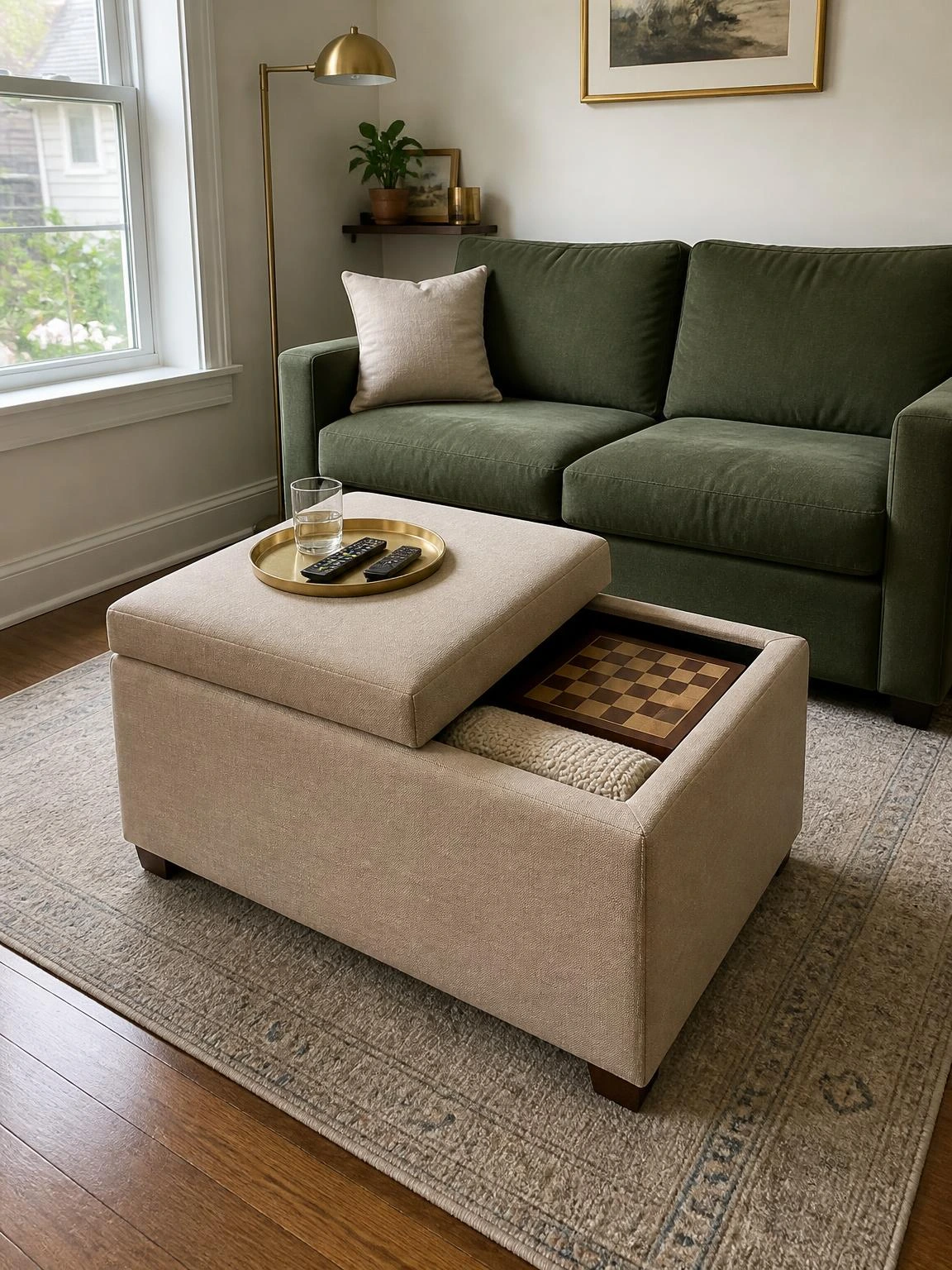
A coffee table can serve two jobs when storage space is limited.
Place a rectangular upholstered ottoman in front of the sofa, with its lift-up lid facing the seating.
Store spare throws, board games, or seasonal cushions inside the compartment.
Add a firm metal tray for drinks, remotes, and items that need a stable surface.
Performance fabric handles regular use well, though soft upholstery can show marks more easily.
6- Nesting Tables for Flexible Floor Space
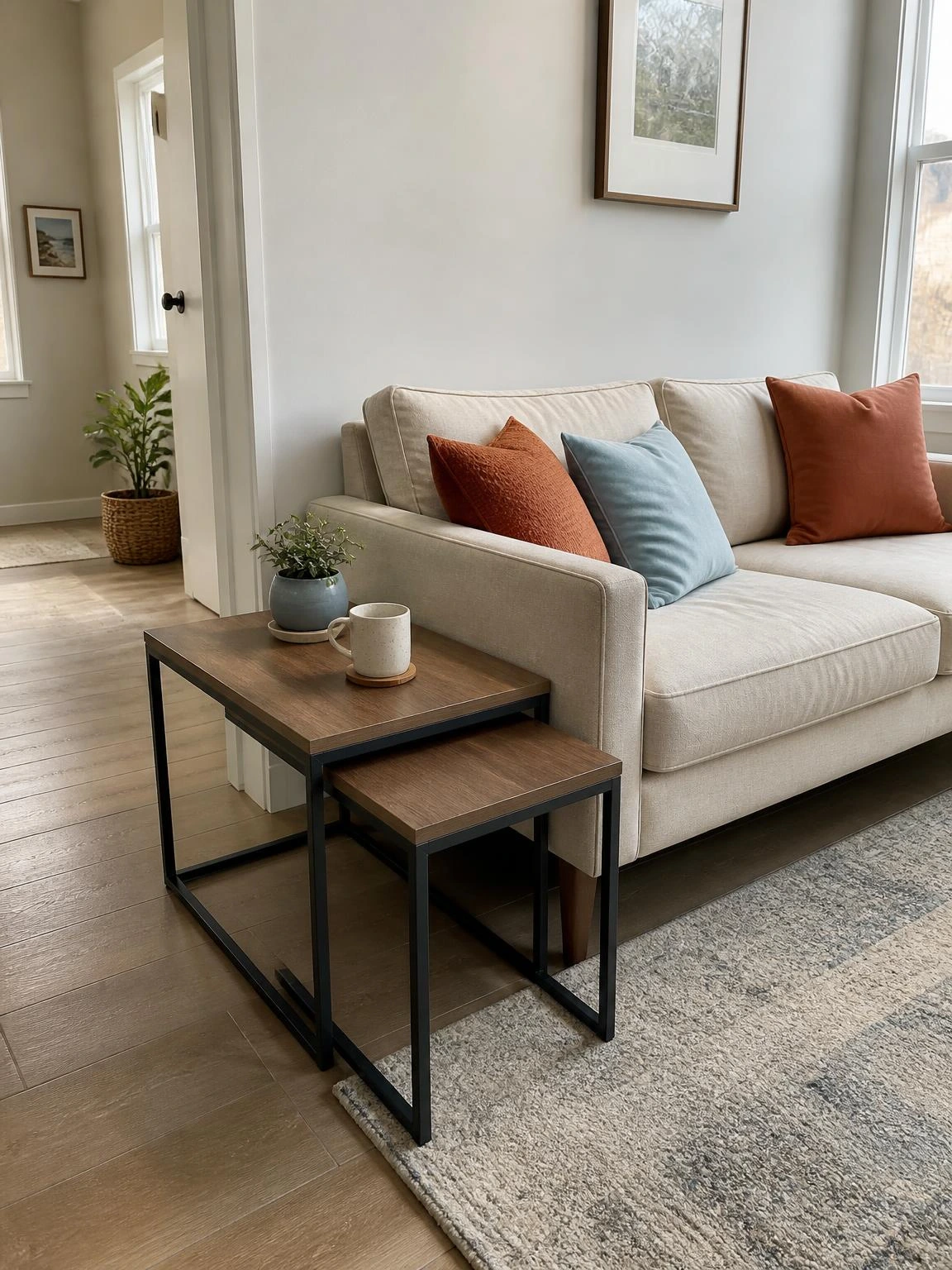
A fixed coffee table can make a tight room feel permanently occupied.
Nesting tables keep the smaller surface tucked away until guests need extra space.
Place the larger table beside the sofa or in front of it, depending on the walkway.
Pull the second table out for drinks, games, or a laptop, then return it afterward.
Lightweight designs are easy to move but should not be used as stools or leaning supports.
7- Corner Sectional for Small Rooms
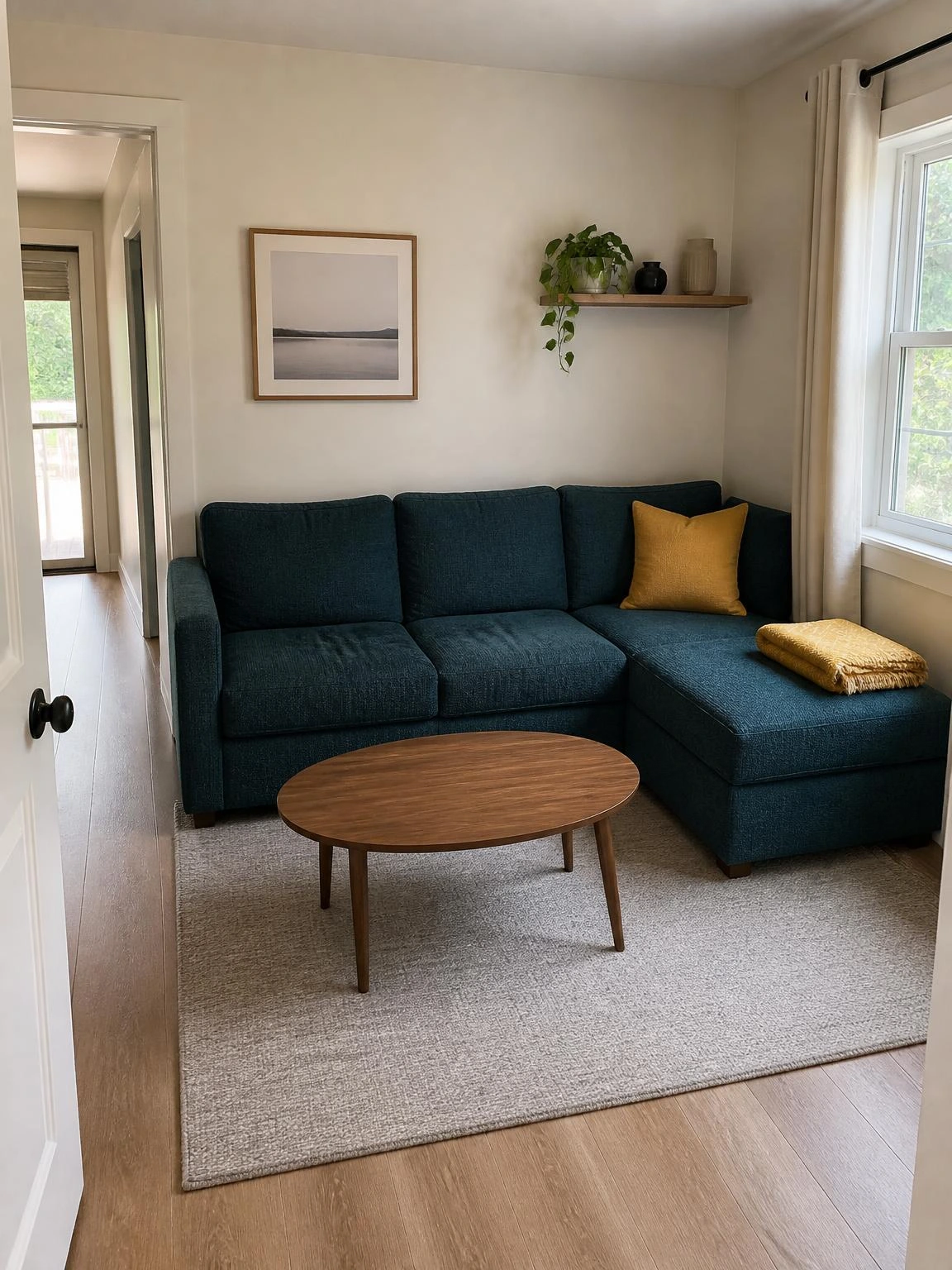
An L-shaped sectional can use a neglected corner more efficiently than separate pieces.
Fit a compact sectional tightly into the far corner, keeping the entry-side edge open.
Place the chaise along the least-used wall so the main route remains available.
An oval coffee table leaves fewer sharp corners around the seating area.
Sectionals offer generous seating but are harder to rearrange when the room’s needs change.
8- Floating Shelves Above the Sofa
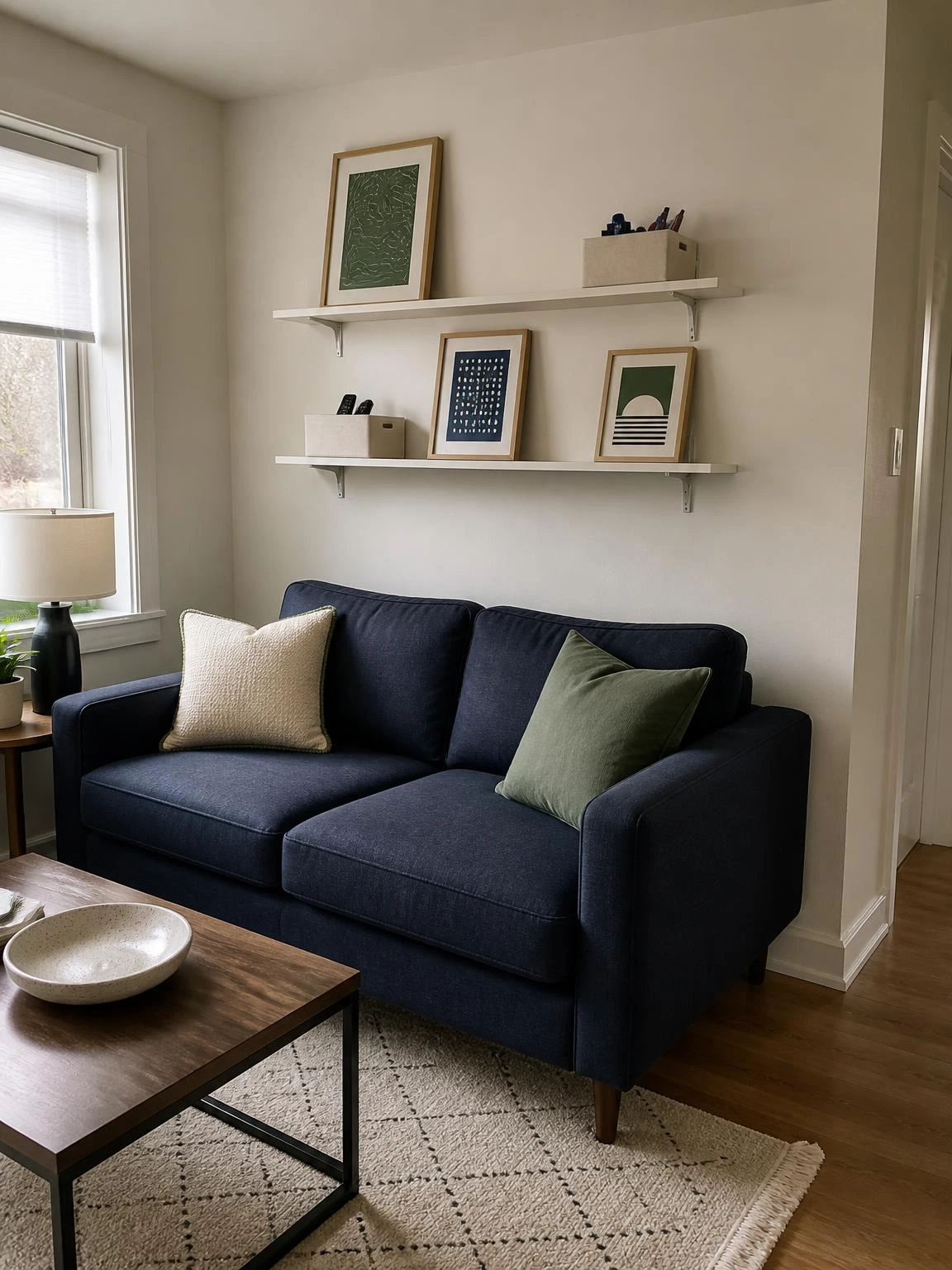
Empty wall space above a sofa can hold small belongings without using floor area.
Install two shallow floating shelves above the seating, leaving comfortable space below the ceiling.
Use small storage boxes for remotes, stationery, or rarely used accessories.
Keep decorative pieces limited so the shelves do not become another clutter zone.
Secure the shelves with fixings suited to the wall type, especially in rental or older properties.
9- Built-In Bookcase Around the Door
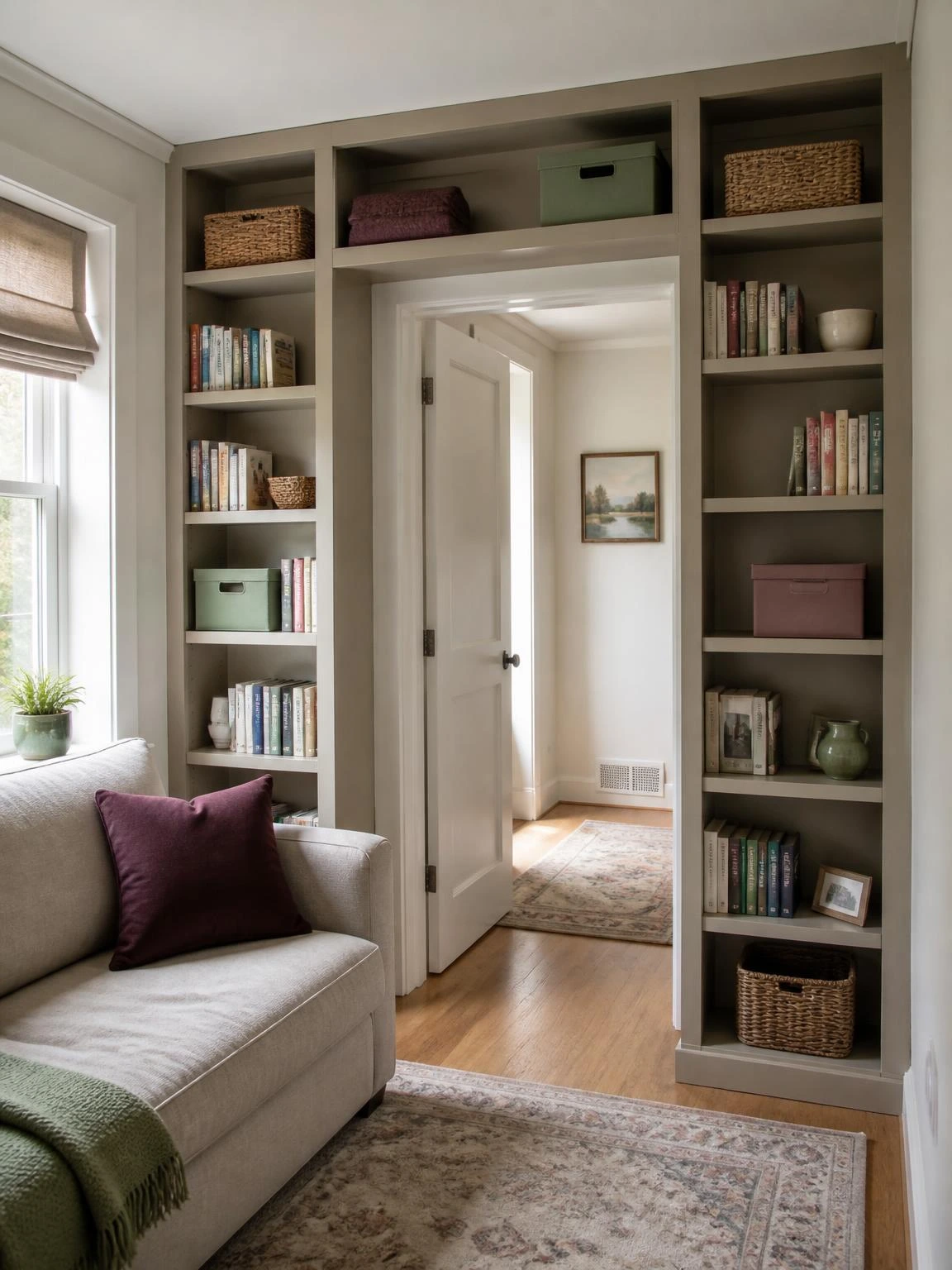
A doorway wall often contains useful vertical space that furniture cannot occupy.
A shallow bookcase can frame both sides while leaving the door fully operable.
Place books and daily items at reachable height, with seasonal belongings higher up.
Painted cabinetry can make the storage feel integrated rather than scattered across the room.
Built-ins require precise measurements and are difficult to remove, making them better for long-term homes.
10- Slim Floor Lamp in a Tight Corner
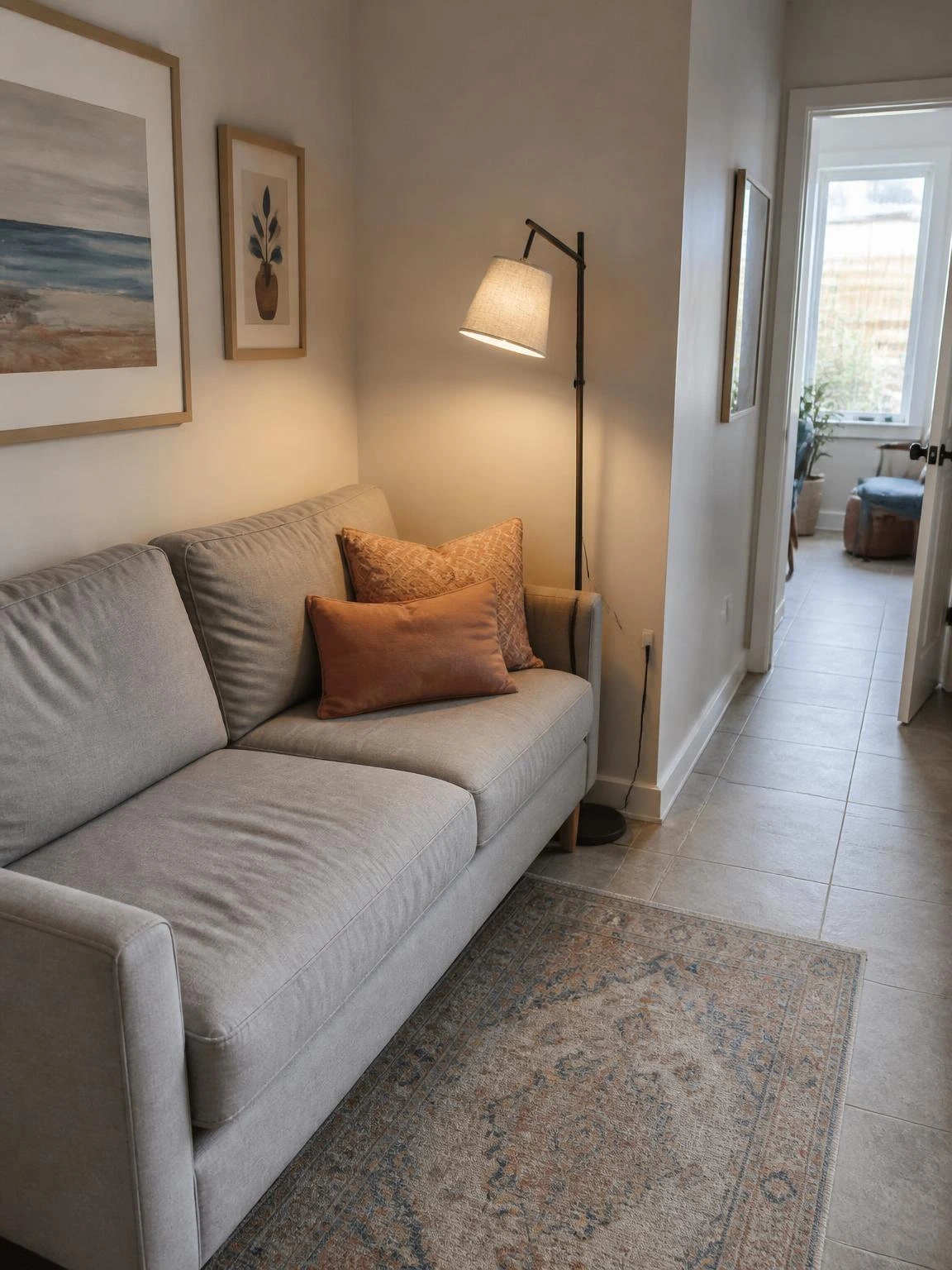
Floor lamps can fit small rooms when their bases stay outside the main route.
Tuck a slim lamp into the corner beside the sofa, behind its front line.
A linen shade can direct light toward a reading seat without needing a table.
Run the cord along the wall edge and secure excess length neatly.
Check that the base remains stable and that no cable crosses the walking path.
11- Wall Sconces Beside the Sofa
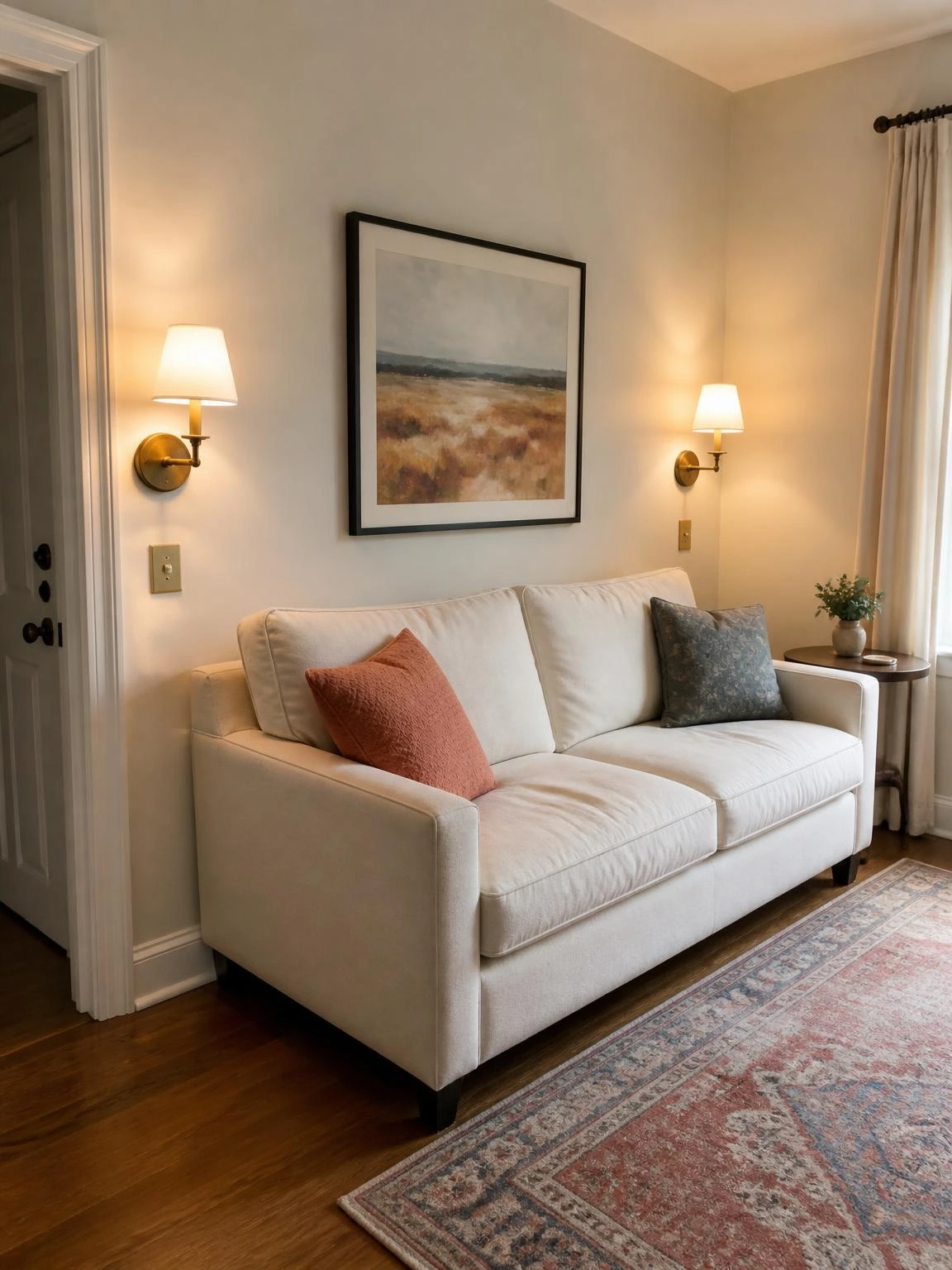
Wall lighting preserves floor space where two lamps would create obstacles.
Install compact sconces at either end of a short sofa for balanced reading light.
Choose fixtures with switches reachable from the seating whenever possible.
Warm white bulbs suit evening use without requiring a large side table.
Hardwired fixtures need appropriate electrical installation, while plug-in versions offer a less permanent alternative.
12- Round Rug for Better Circulation
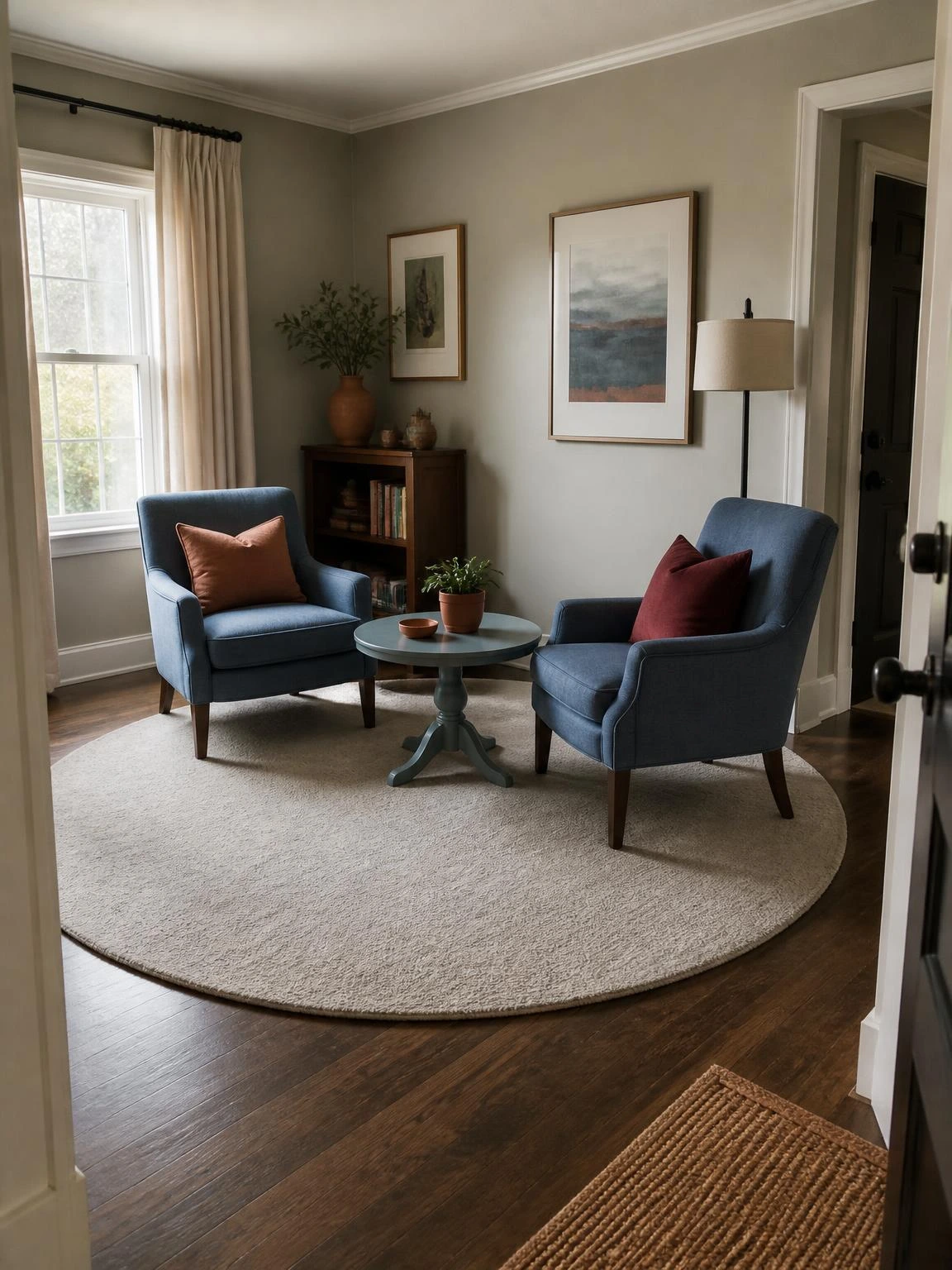
Square furniture arrangements can make the entry feel boxed in.
A round rug beneath two chairs and a small table softens the edges around the seating group.
Let the front legs of the main seating rest on the rug so everything feels connected.
Low-pile wool is easier to move around and generally suits frequently used routes.
A very small rug can separate the furniture visually, so measure the seating footprint first.
13- Clear Acrylic Coffee Table
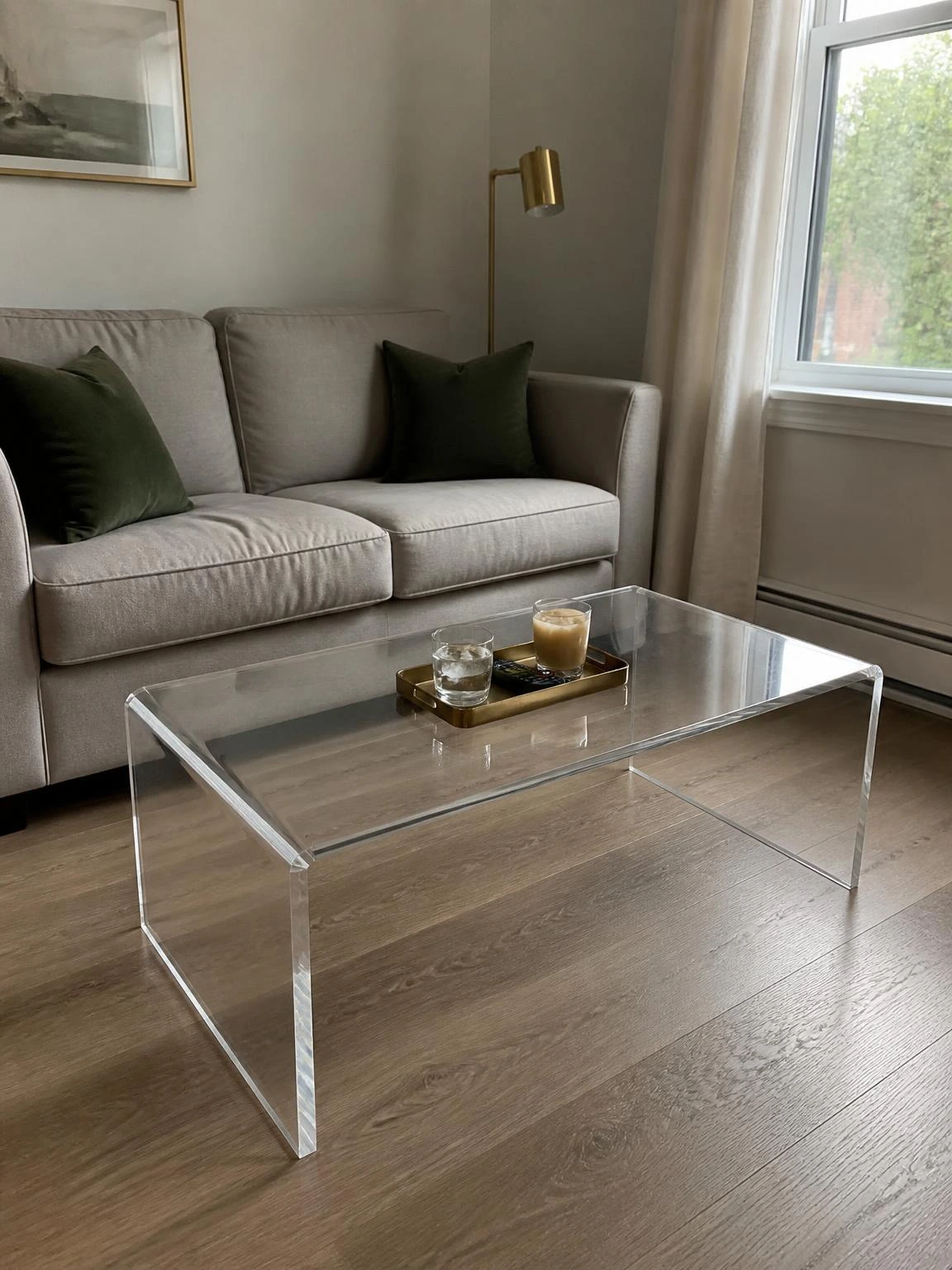
A solid coffee table can interrupt the visible floor in an already tight room.
A clear acrylic table provides a useful surface while keeping the flooring visible underneath.
Choose a size that leaves comfortable room between the table and sofa for knees and movement.
Use a tray to group remotes and drinks without covering the entire surface.
Acrylic shows fingerprints and scratches more readily, so it needs regular gentle cleaning.
14- Drop-Leaf Desk in the Living Room
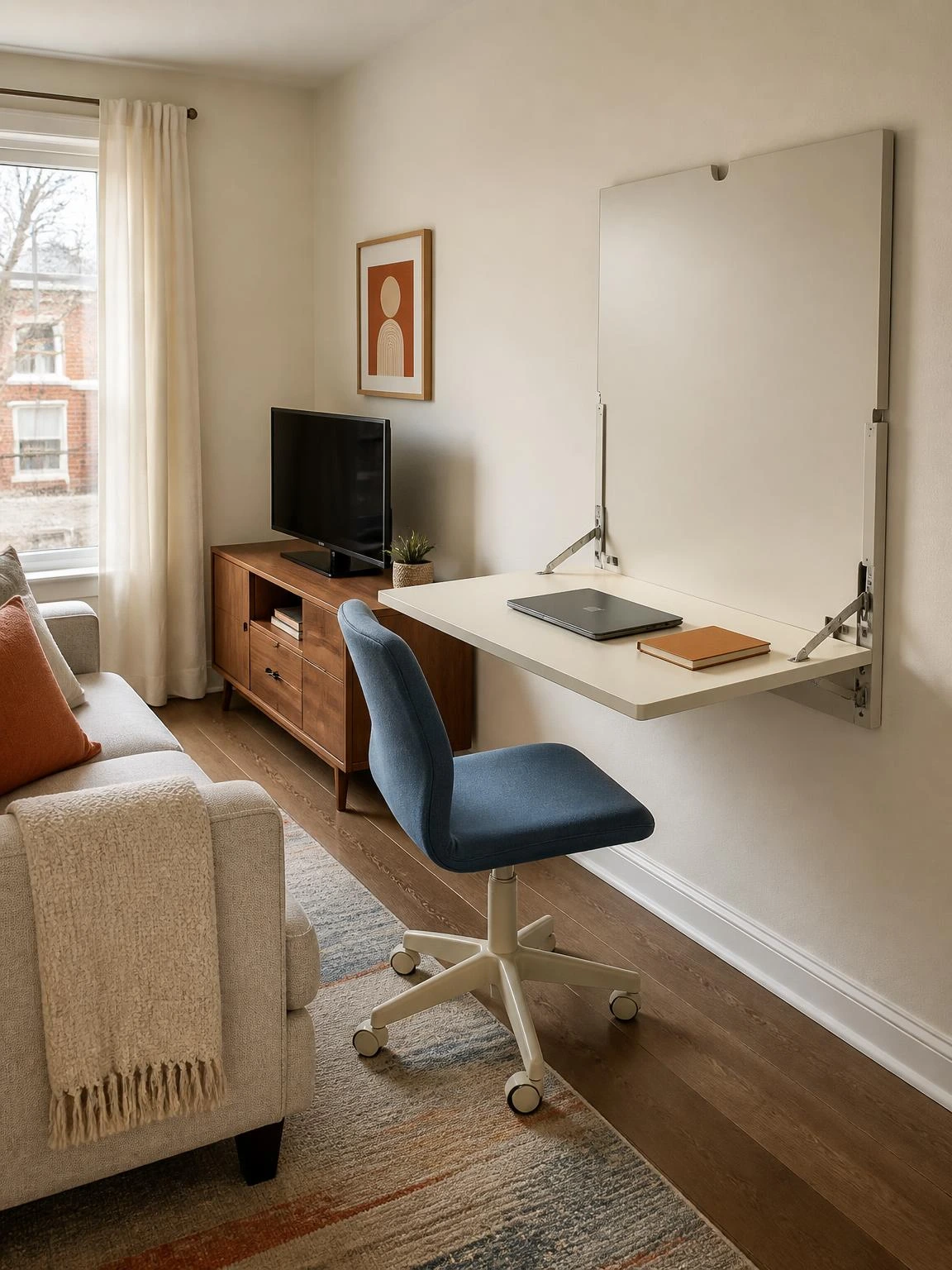
Occasional work does not always justify a permanent desk footprint.
Mount a drop-leaf desk beside the media cabinet or on another quiet wall.
Open it toward the room only during work hours, then fold it away afterward.
Keep a lightweight task chair nearby if it can slide beneath the desk.
The mounting surface must support the open desk and its intended load, so check the wall before installation.
15- Storage Bench Under the Window
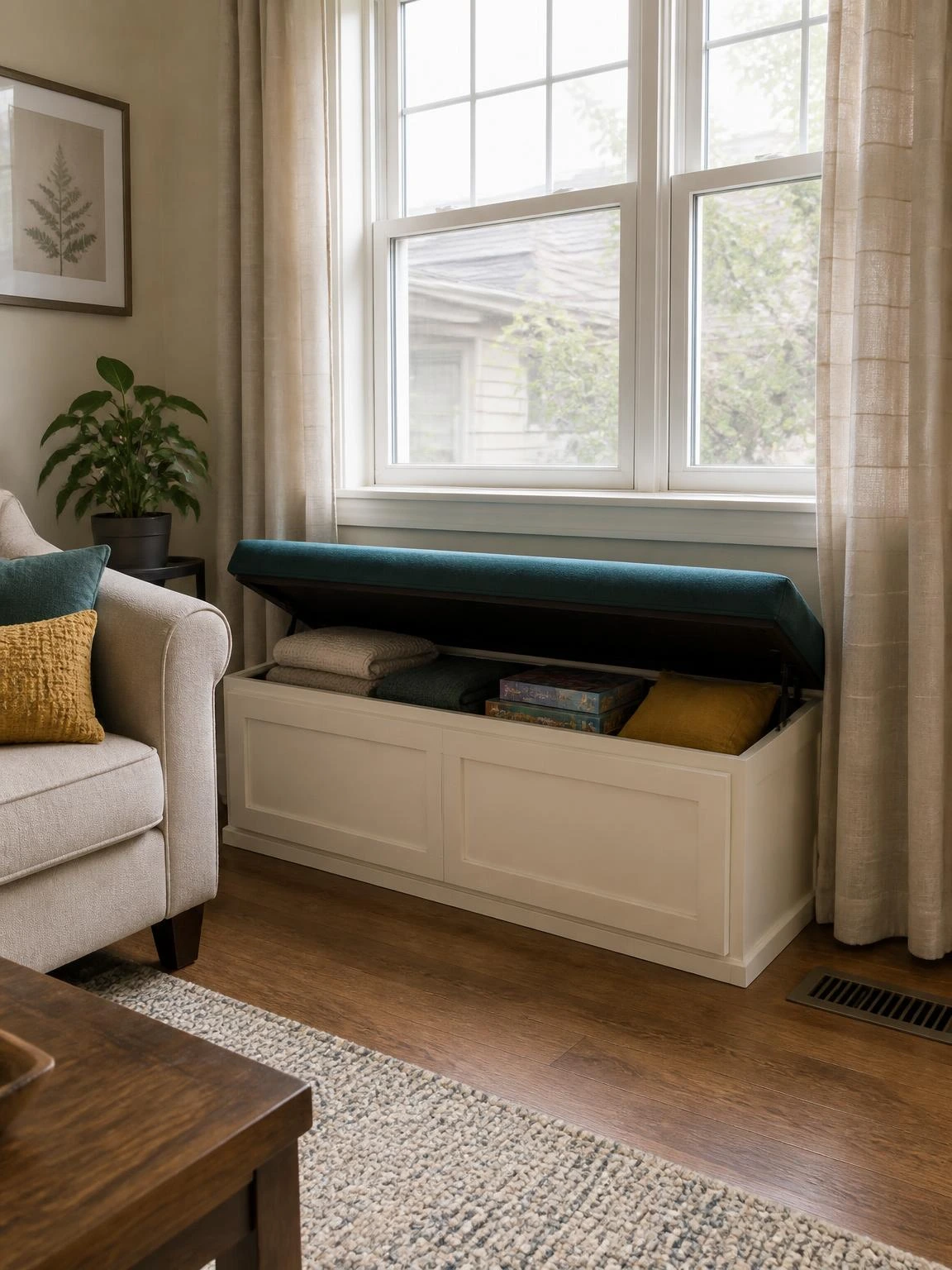
The area beneath a window can provide seating and hidden storage at once.
Use a low bench with a lift-up seat, keeping its height below the sill.
Store blankets, games, or infrequently used cushions inside rather than everyday essentials.
The bench can provide occasional seating without blocking the window’s lower section.
Measure carefully around radiators, vents, and window hardware before choosing its depth.
16- Vertical Cabinet for Small Living Rooms
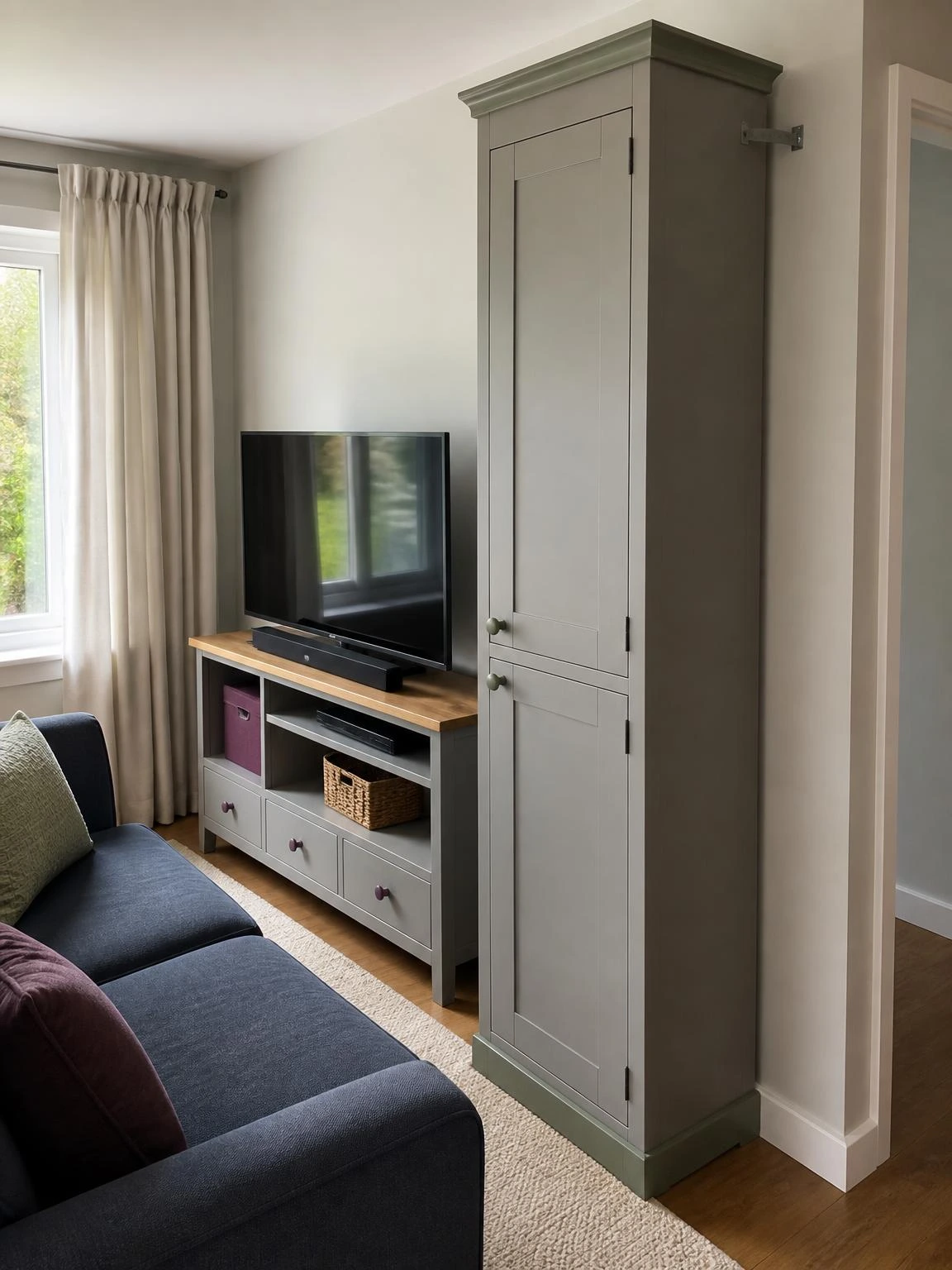
Low storage spreads belongings across the floor when wall height remains unused.
A tall, narrow cabinet beside the media unit stores games, cables, and paperwork vertically.
Assign one shelf to each category so finding things does not require emptying the cabinet.
Closed doors keep visual clutter contained, especially in rooms used for several activities.
Secure tall furniture appropriately to prevent tipping, particularly in homes with children or pets.
17- Sofa Table With Built-In Outlets
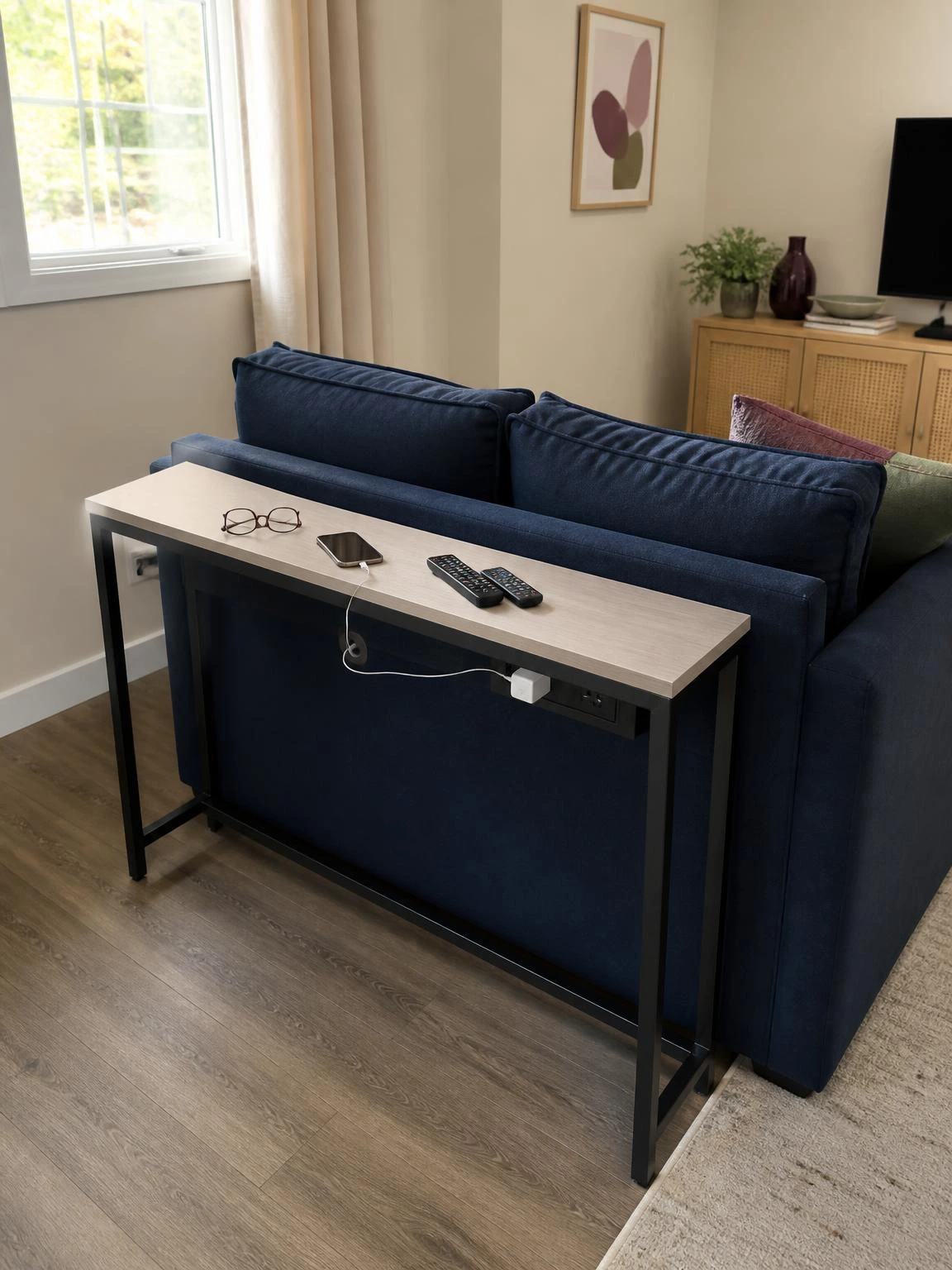
Charging cables often turn a small living room into a tangle of loose wires.
A narrow sofa table can hold devices behind the seating without widening the seating footprint.
Route cables through a rear grommet so they do not hang across the sofa or walkway.
Use the surface for phones, glasses, and remotes that otherwise collect on the floor.
Electrical components should follow the product instructions and remain accessible for maintenance.
18- Curtains Hung High and Wide
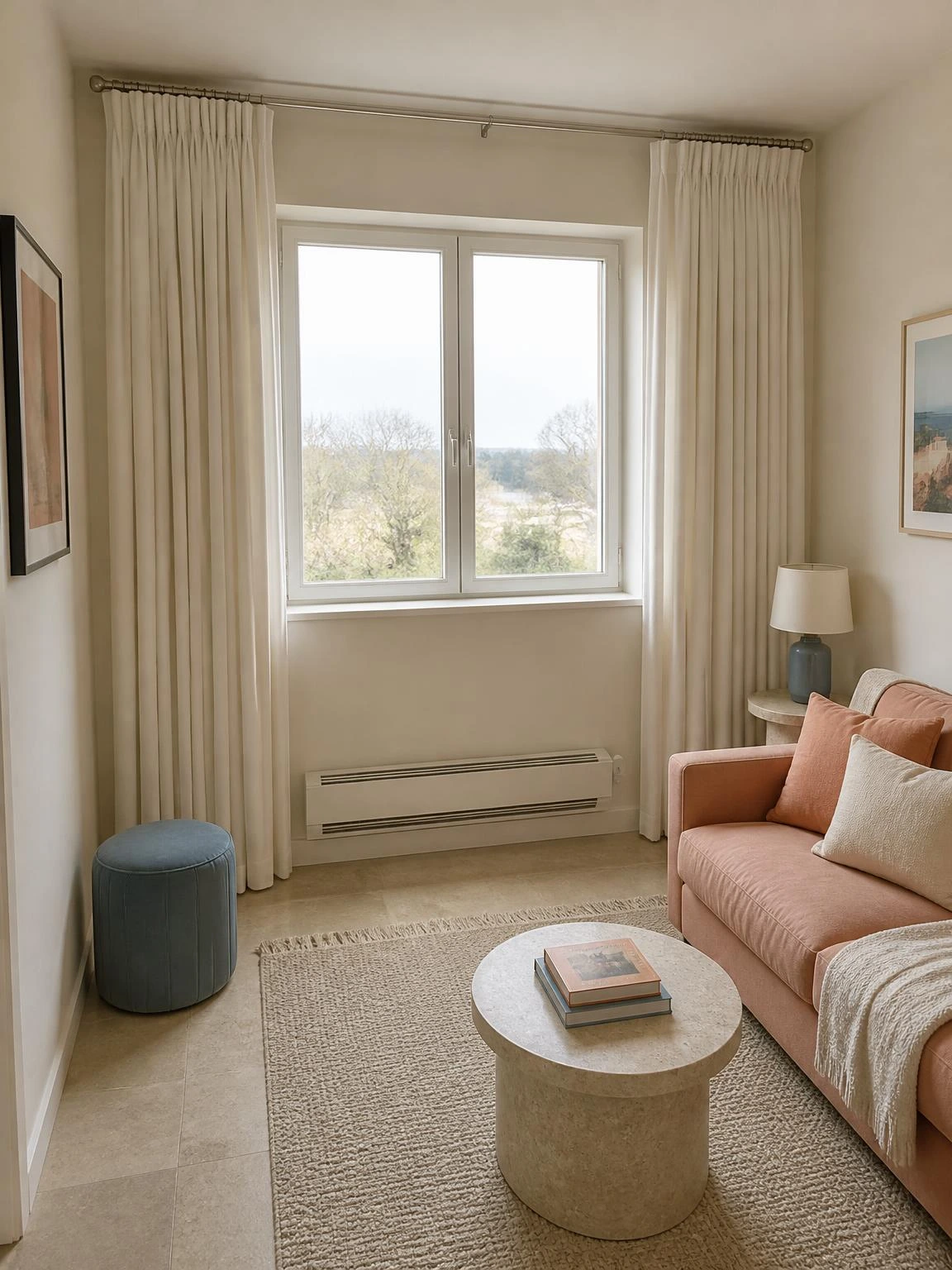
Short curtain placement can make a small window feel smaller than it is.
Mount the rod close to the ceiling and extend it beyond both sides of the window.
Stack the panels outside the glass during daylight to preserve the available view and light.
Cotton-linen fabric in warm white can soften the room without adding heavy visual weight.
Keep fabric clear of heaters, vents, handles, and any window hardware that needs regular use.
19- Mirror Opposite the Window
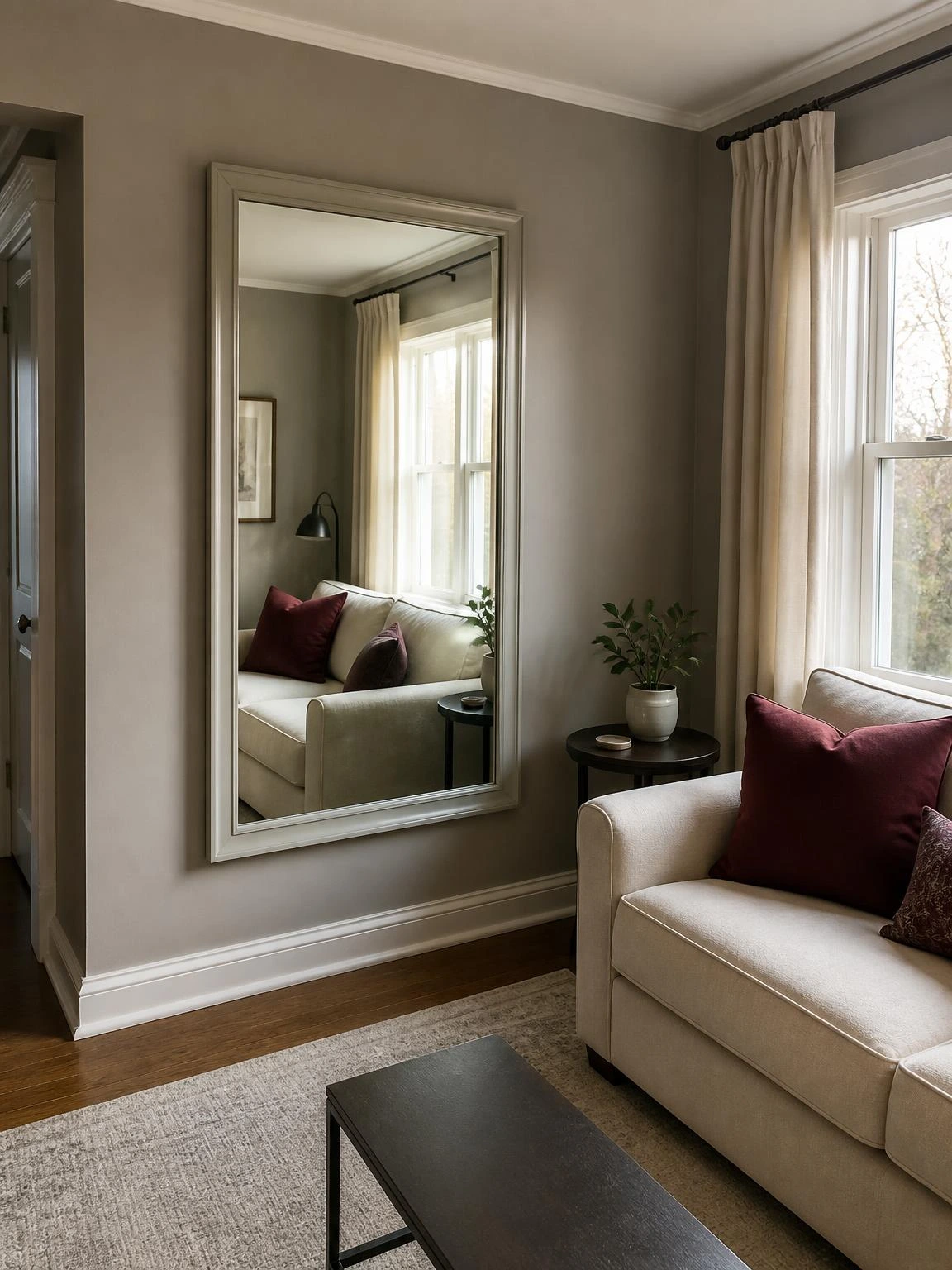
A dark corner often feels tighter when daylight cannot travel across the room.
Place a vertical rectangular mirror opposite the window to reflect light and part of the seating area.
Check the reflection from the sofa before fixing it, since clutter can become more noticeable.
A painted wood frame can coordinate with existing furniture without requiring extra storage.
Large mirrors need secure mounting suited to both their weight and the wall construction.
20- Two-Tone Wall for Visual Zoning
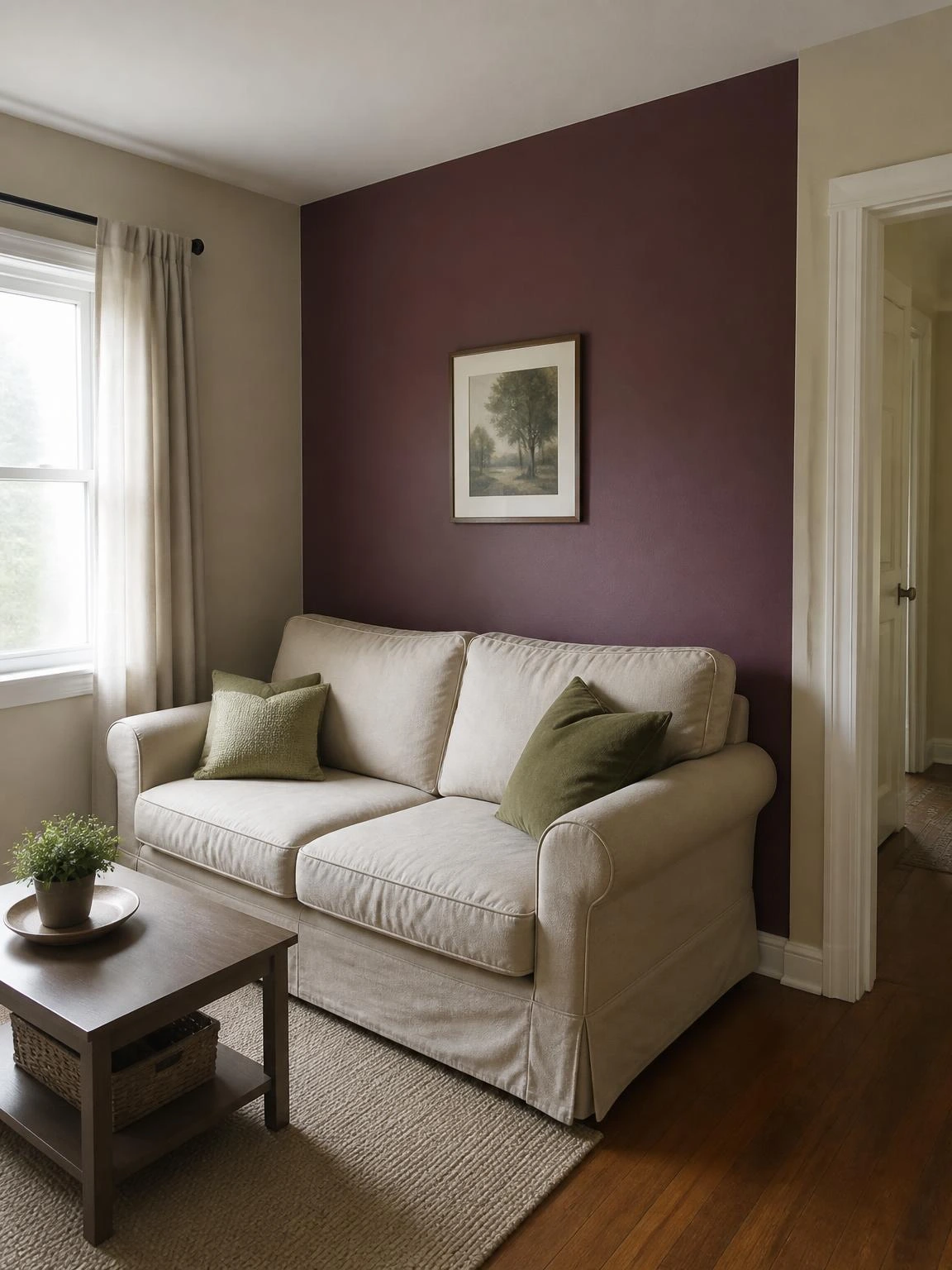
Furniture is not the only way to define a living zone.
Paint the wall behind the sofa muted plum while keeping the remaining walls stone.
The color block identifies the seating area without taking up floor space.
Stop the deeper color at a natural corner, doorway, or other architectural boundary.
Dark paint can make a poorly lit room feel enclosed, so sample the color under evening lighting.
21- Backless Sofa Against a Divider
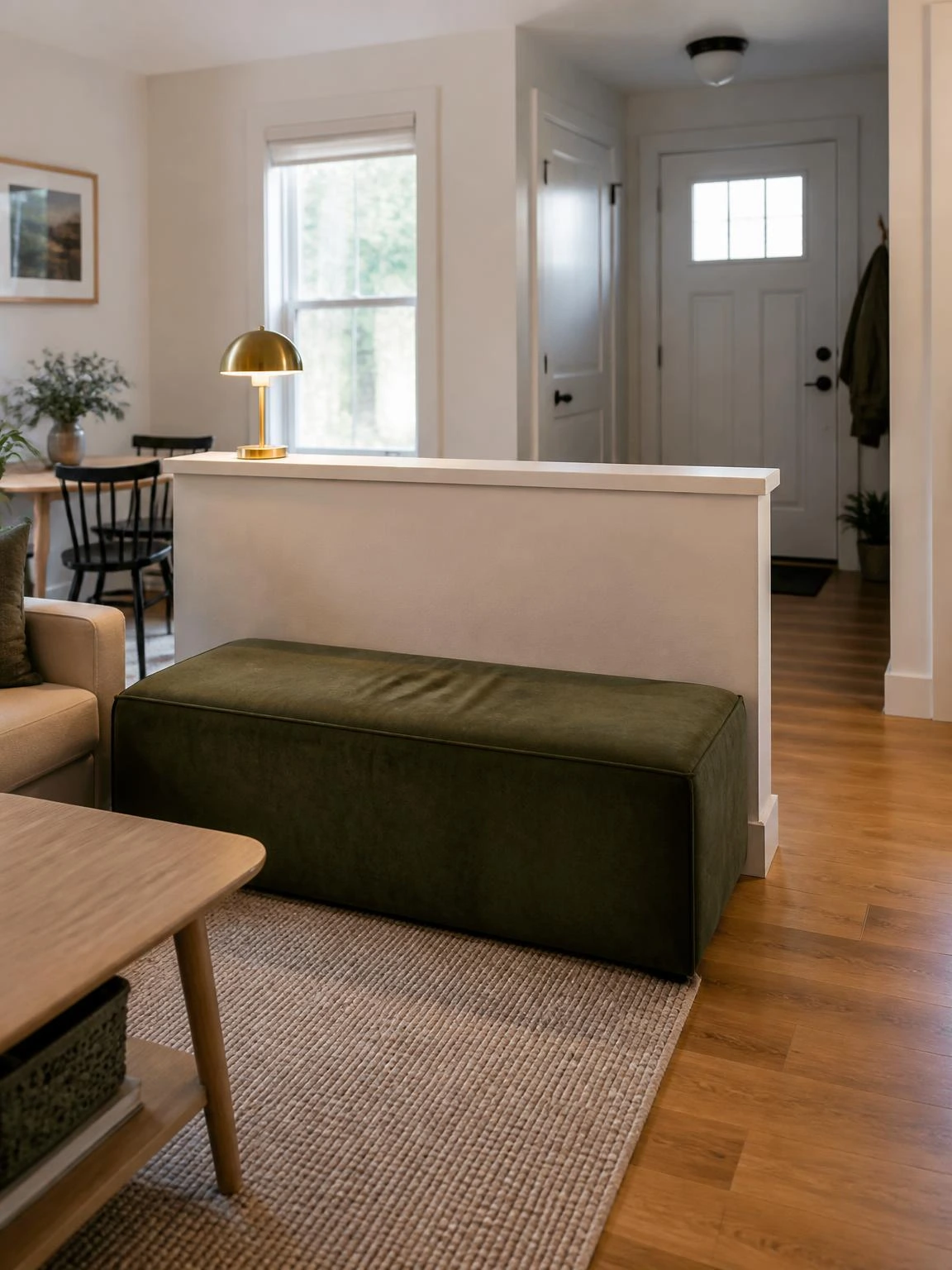
Open-plan rooms often need separation without losing daylight or sightlines.
Place a backless sofa behind a low divider to separate the living area from the entry.
Keep the divider low enough to preserve visual connection across the room.
A small lamp or tray can sit on the divider if it does not narrow the route.
Backless sofas provide less support than conventional models, so they may not suit every household.
22- Foldable Guest Chair Storage
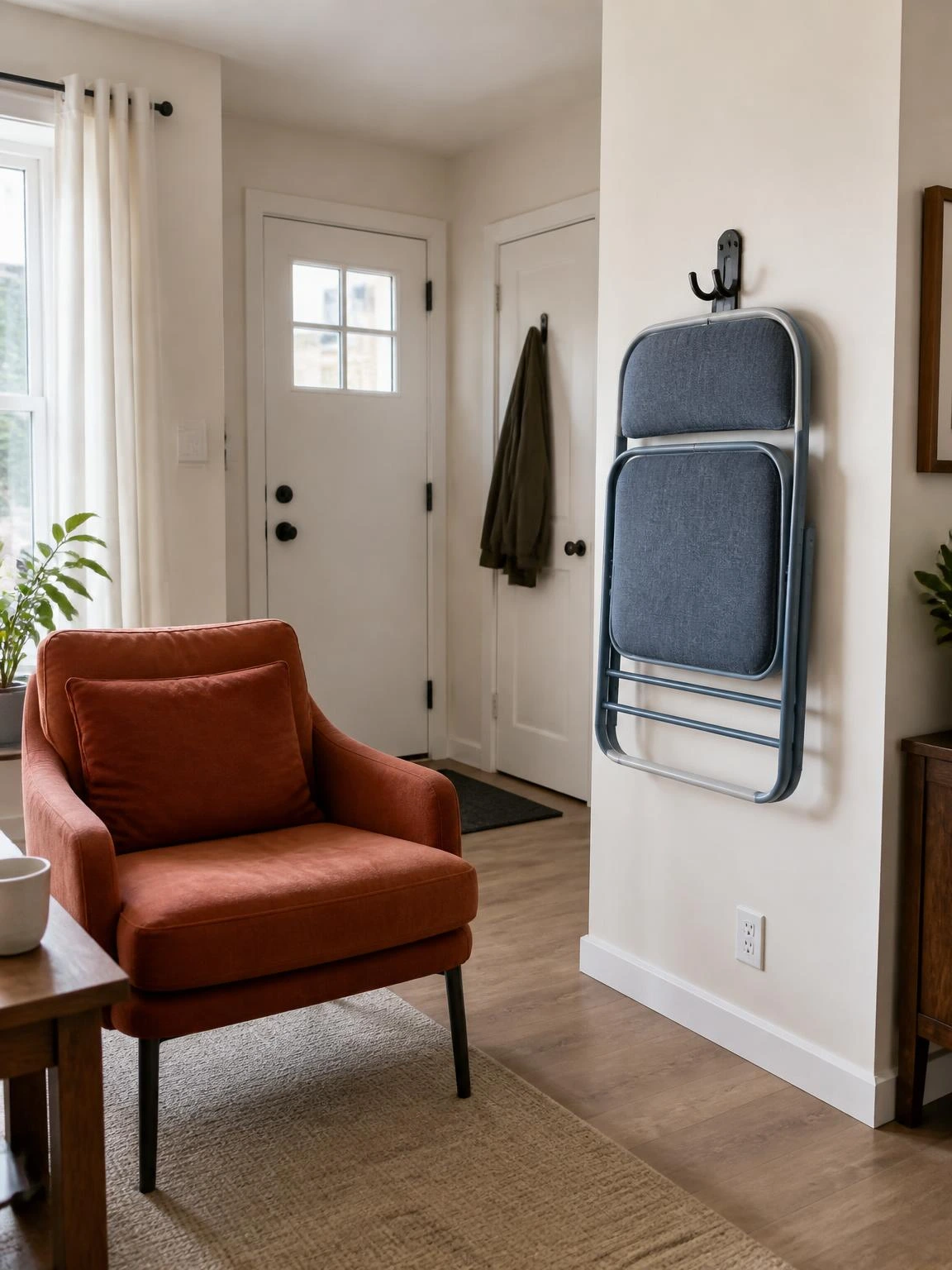
Occasional seating can occupy valuable floor space when guests are not visiting.
Store a foldable upholstered chair flat against the wall near the entry.
Use a suitable wall hook and keep the folded chair parallel to the wall.
Place it at a reachable height so bringing it out does not require a ladder.
Check the hook, wall construction, and chair weight before relying on the storage point.
Where do you want to go next?
Explore by topic
Recently viewed
23- Media Cabinet With Sliding Doors
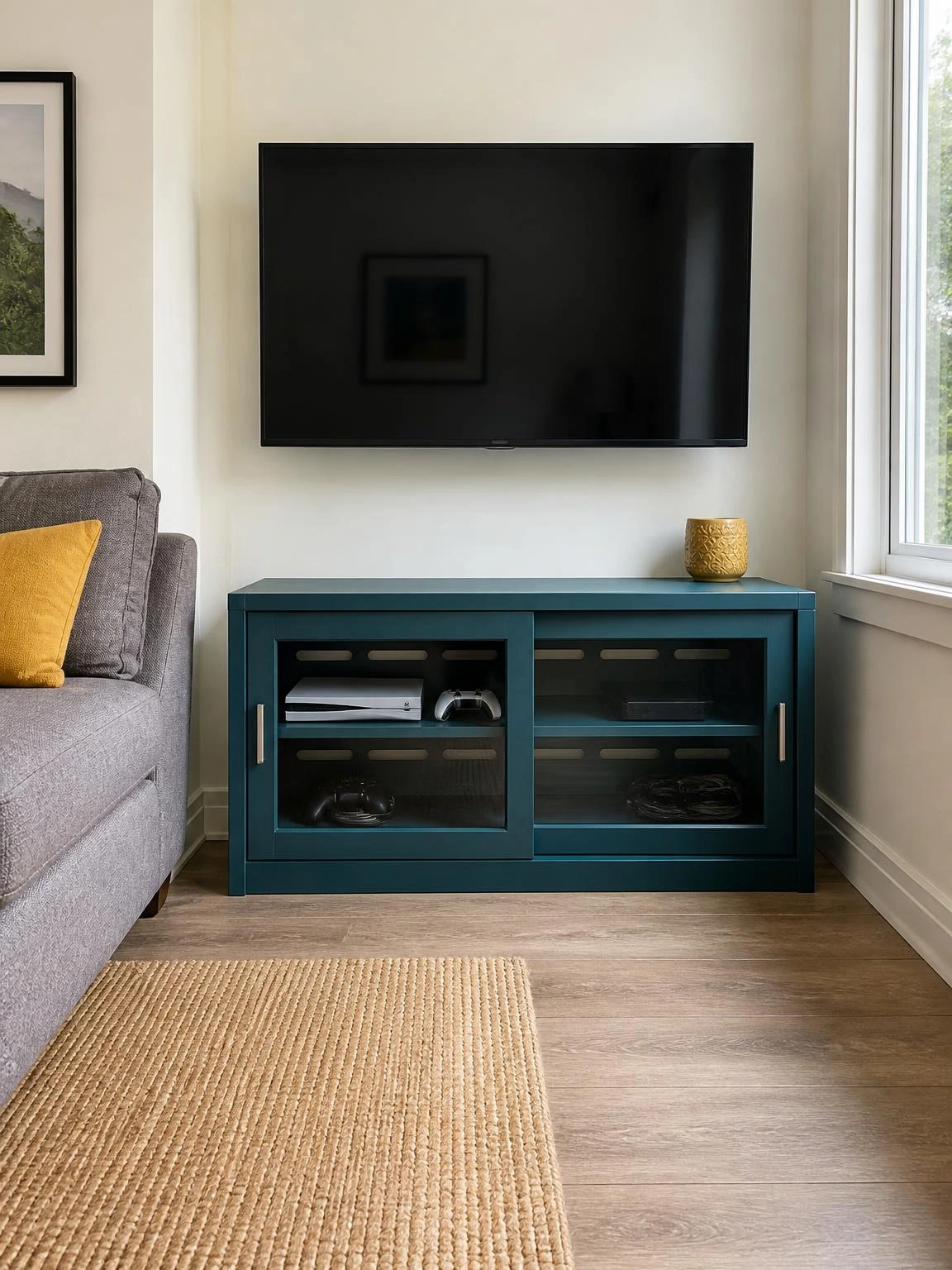
Hinged cabinet doors need open space that small living rooms may not have.
Choose a low media cabinet with sliding doors beneath the television.
Consoles, controllers, and spare cables stay concealed without blocking nearby seating.
Leave ventilation space around electronics and route cables through a rear panel.
Sliding hardware can need occasional adjustment, while equipment connections must remain accessible.
24- Narrow Living Room With One Focal Wall
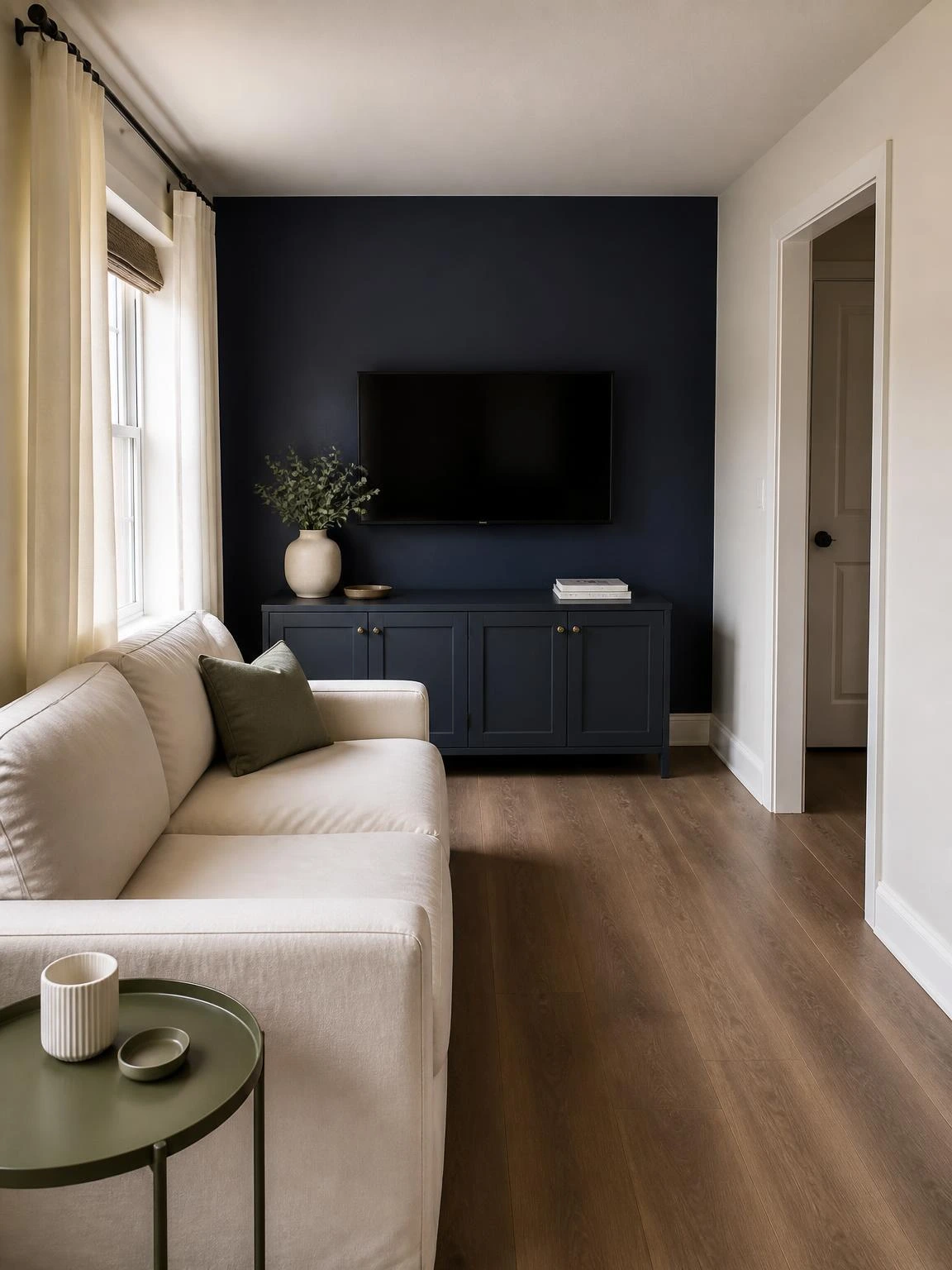
Too many competing furniture directions can make a narrow room feel disorganized.
Arrange the sofa toward one painted focal wall containing the television and low cabinet.
Keep the remaining walls quiet so the room reads as one clear living zone.
Aligning the sofa, cabinet, and television reduces unnecessary furniture paths.
This works best when doors and windows do not interrupt the chosen wall alignment.
25- Compact Living Room With Clear Walkway
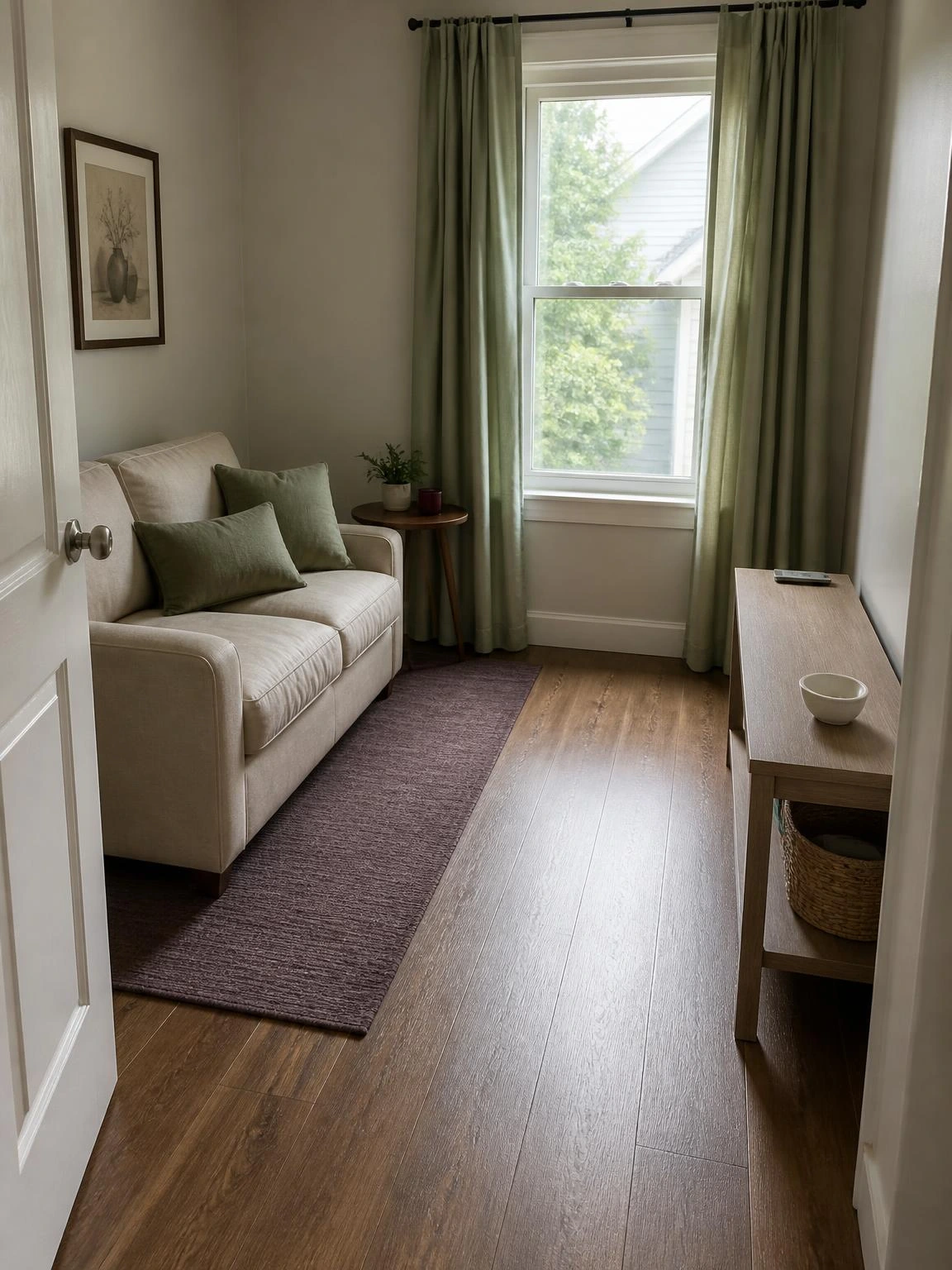
The most useful small room usually begins with its circulation route.
Map the path from the doorway to the window before placing the loveseat or tables.
Keep every major piece outside that route, even if the furniture arrangement feels less full.
A narrow table opposite the sofa can provide surface space without narrowing the passage.
Prioritizing movement may limit the number or size of furnishings, but daily access stays easier.
Make Every Piece Leave Room to Move
The strongest small space living room ideas protect the routes people use every day.
Choose compact furniture, vertical storage, and surfaces that serve more than one purpose.
Before adding anything, check door swings, window access, heating, cables, and cleaning space.
A room feels easier to use when every item has a clear place and purpose.

Hi, I’m Alizabeth, the creator of Pretty Home Hacks. I share practical home decor ideas, easy DIY projects, organization tips, and budget-friendly ways to make your home feel more beautiful and functional. From small room updates to everyday home hacks, my goal is to share approachable ideas you can actually use in your own space.