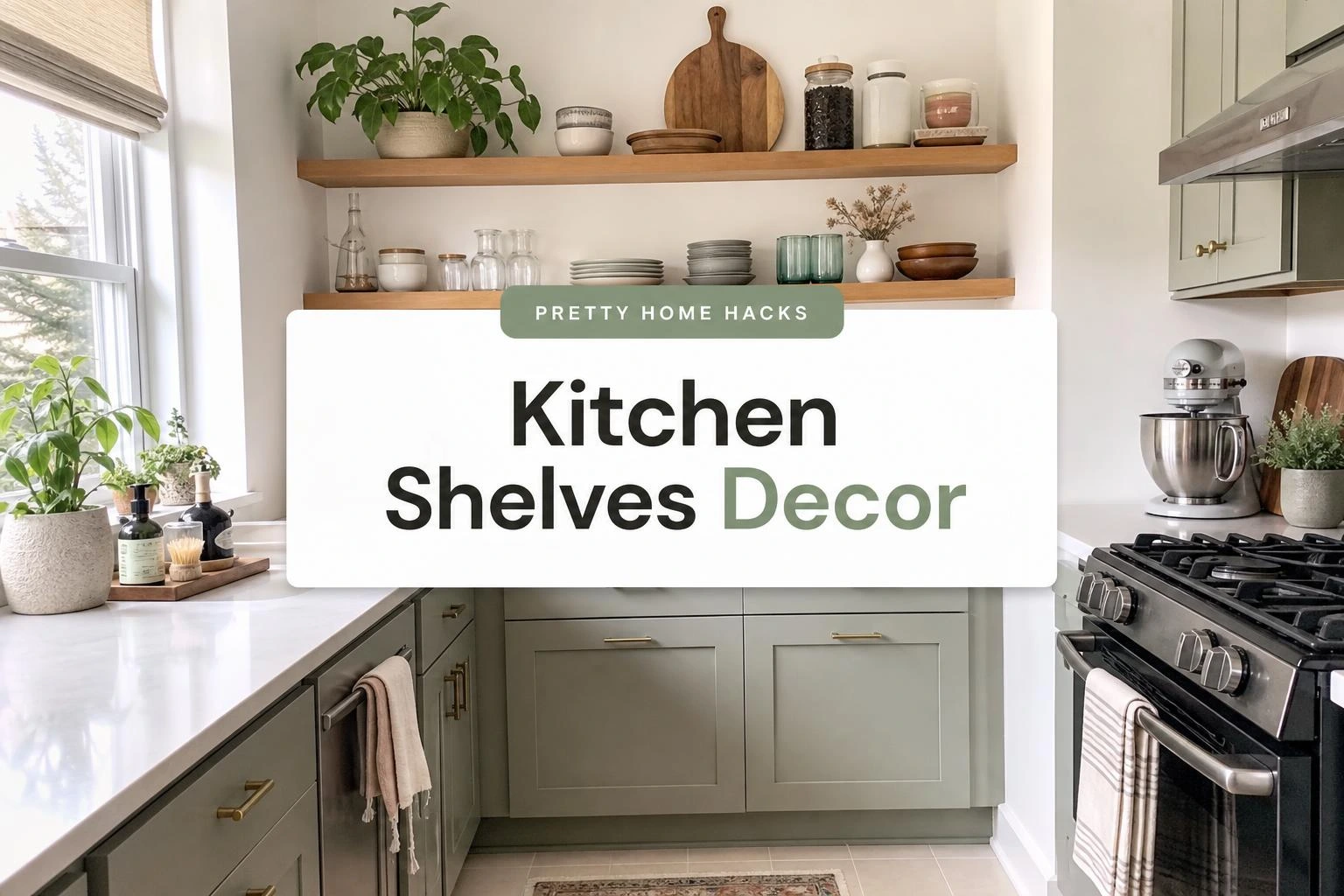
How to Style Kitchen Shelves Decor That Looks Good and Stays That Way
Open kitchen shelves are one of those things that look effortlessly cool in photos and then immediately become a minor source of stress in real life.
The dust thing is real, and nobody warns you about it when you fall in love with that airy, magazine-worthy shelf setup on Pinterest.
Most people assume the hard part is finding nice things to put on the shelves, but the actual challenge is making the whole display feel intentional instead of like a shelf where random stuff landed.
Kitchen shelves decor works best when it has a loose system behind it, even if that system is just knowing roughly where things go and what belongs together.
These ideas are all practical, and most of them are adjustable depending on what kitchen style is already there.
1- Grouping Items by Color
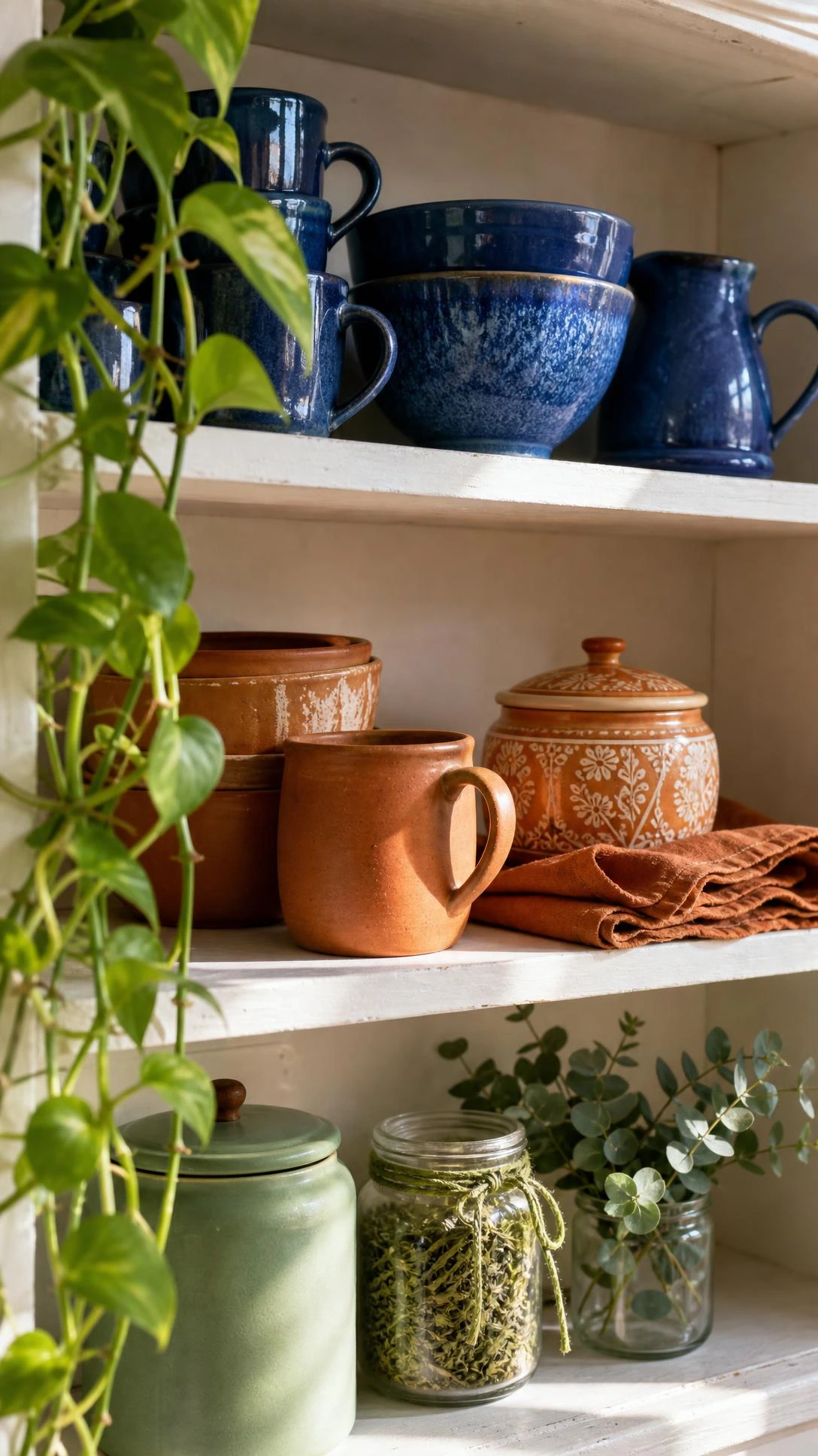
Color coordination is probably the fastest way to make a shelf look put together without buying anything new.
The idea is to cluster items that share a similar color family rather than spreading them randomly across the whole shelf.
A row of cream and white ceramics next to a couple of warm wood pieces reads as intentional even when the actual items are pretty ordinary.
Earthy neutrals like terracotta, warm white, and natural linen are consistently popular for kitchen shelves right now because they feel calm and work with almost any cabinet color.
This does not mean every single item has to match perfectly, just that there is a general direction the colors are heading.
2- Varying Heights for Visual Interest
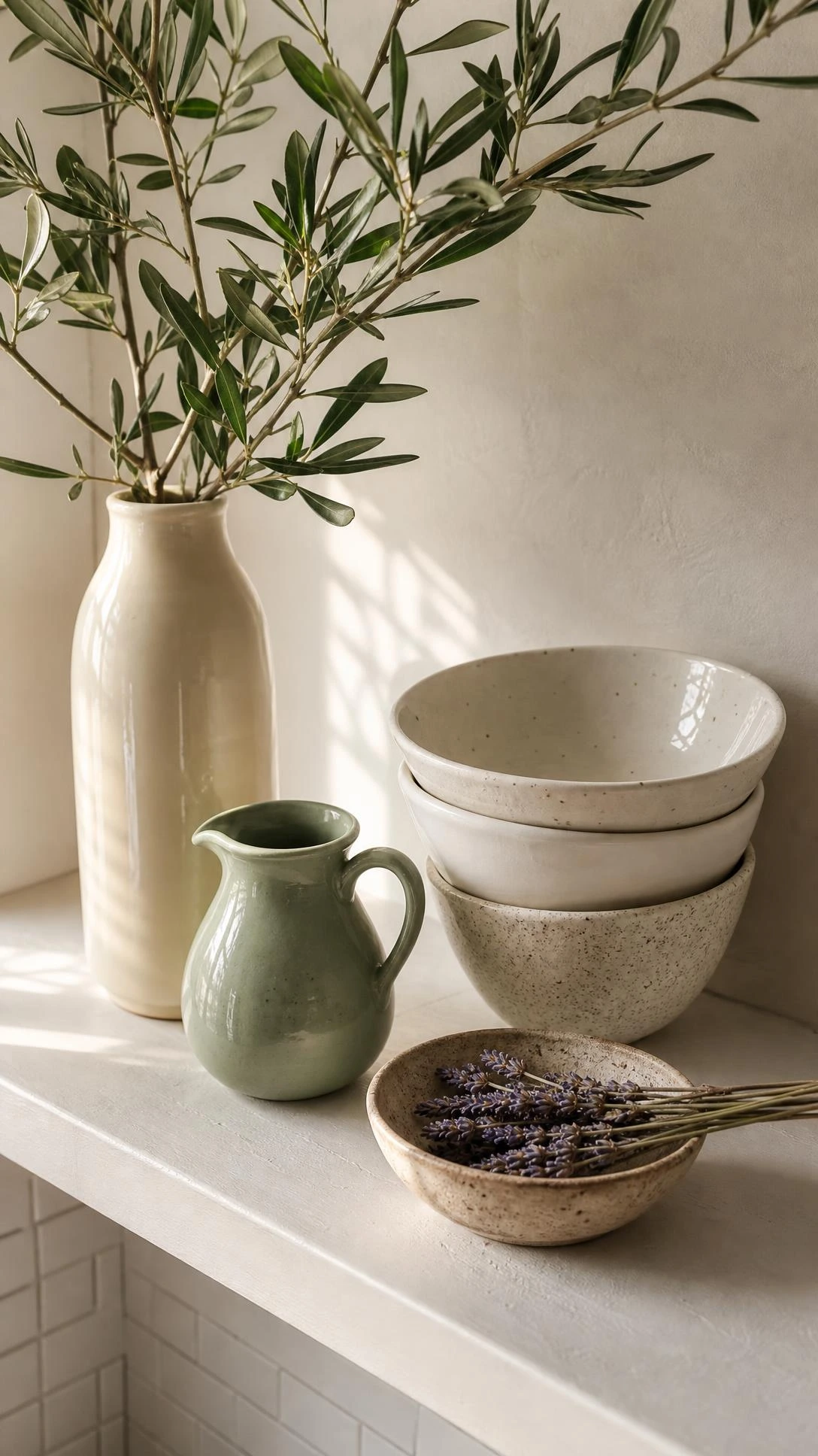
A shelf where everything sits at the same height looks a little flat, even when the items are nice.
The fix is easy: layer taller things like a large jar or a stack of cookbooks behind shorter items like a small bowl or a little plant.
A general rule that actually works is to keep one tall anchor piece on each shelf section, usually something around 10 to 12 inches high, and then fill around it with shorter pieces.
Books stacked horizontally are genuinely useful for this because they create a stable platform for placing something smaller on top, which adds a level without needing an actual riser.
Most shelves actually start looking better the moment someone introduces even one height difference.
3- Using a Backsplash Behind Floating Shelves
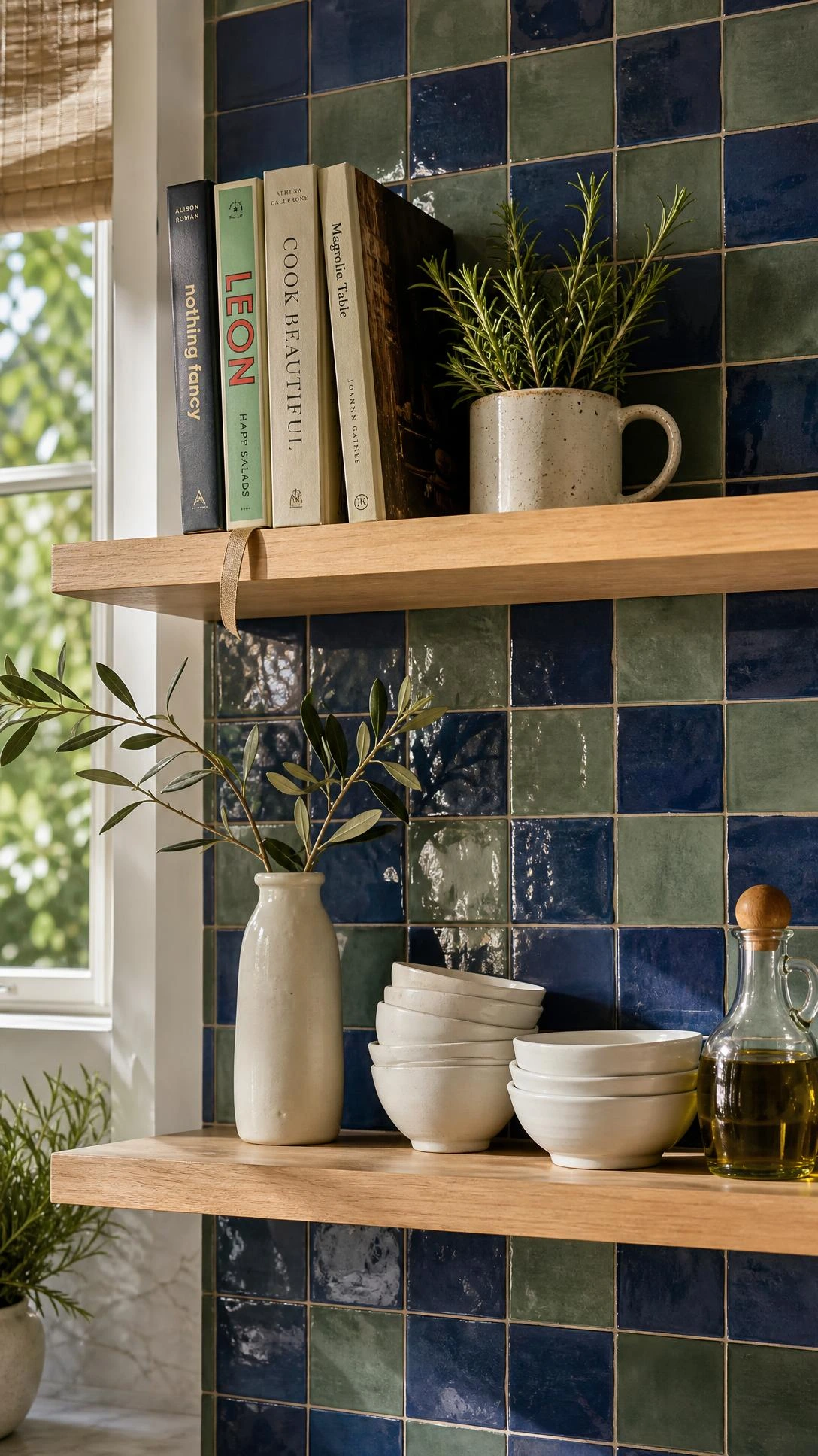
Floating shelves that sit in front of a plain painted wall are fine, but a backsplash behind them makes the whole thing feel more finished.
Subway tile, zellige, or even a peel-and-stick tile in a contrasting color gives the shelf display a backdrop that makes the objects on it pop.
Sage green or warm terracotta tile behind white floating shelves is a combination that performs really well on Pinterest searches for a reason, because it actually looks good in real kitchens too.
This works especially well in rental kitchens where the walls are plain white and the shelves need something to anchor them visually.
It is not a required step, but once someone sees the before and after, it is pretty hard to go back.
4- Keeping a Few Spots Intentionally Empty
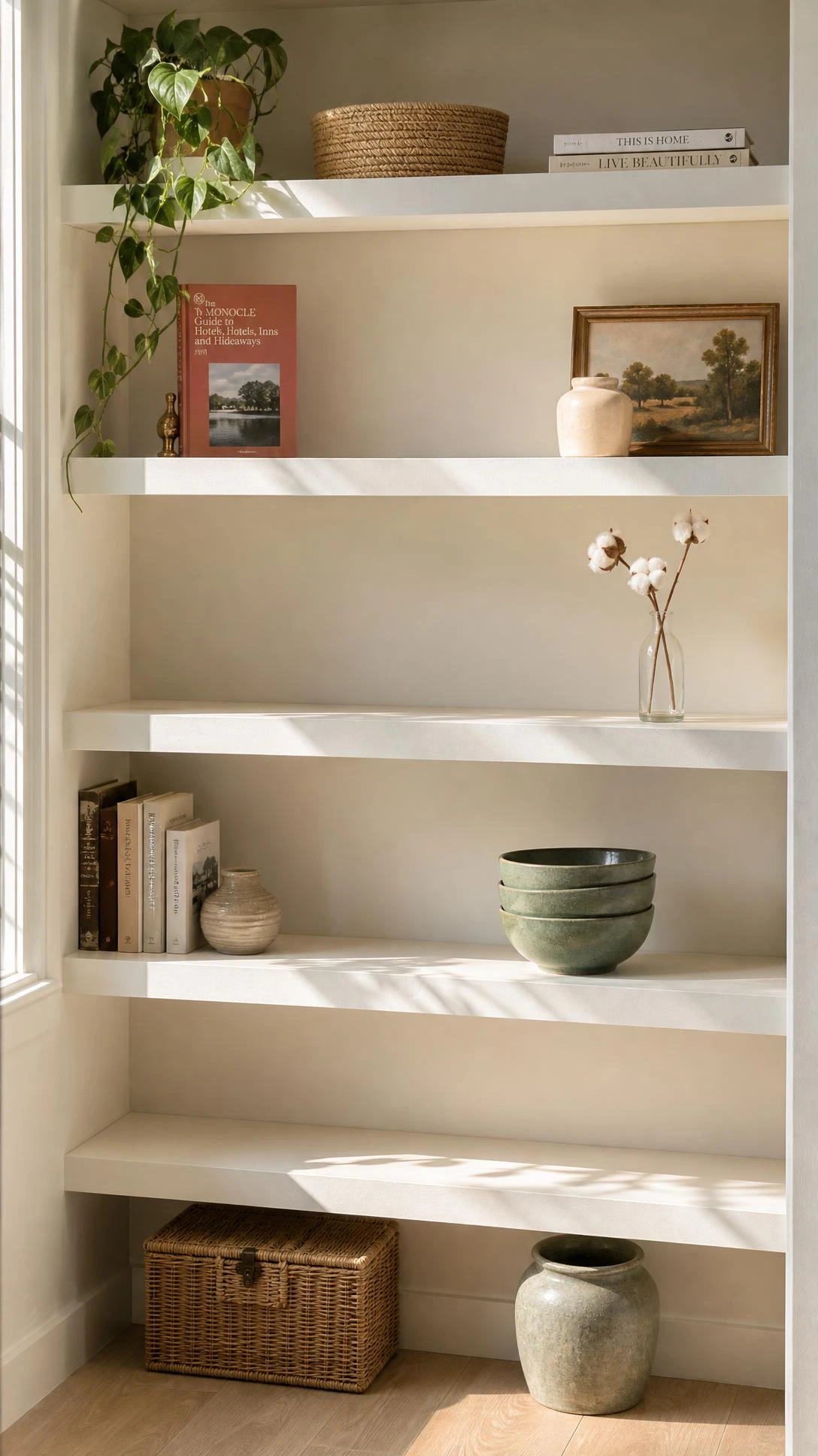
Overcrowding shelves is probably the most common issue, and it happens gradually because every item feels like it deserves a home.
Leaving small gaps between objects and keeping one section of a shelf noticeably open makes the whole display breathe.
I think people underestimate how much a little negative space does for a shelf, because the empty area is actually what makes the nearby objects look considered and deliberate.
A good starting point is to remove about a third of what is currently on the shelf, live with that for a few days, and then only add back what is genuinely missed.
That process sounds slightly tedious but it tends to reveal pretty quickly which items were there by habit rather than by choice.
5- Mixing Materials Like Wood, Ceramic, and Metal
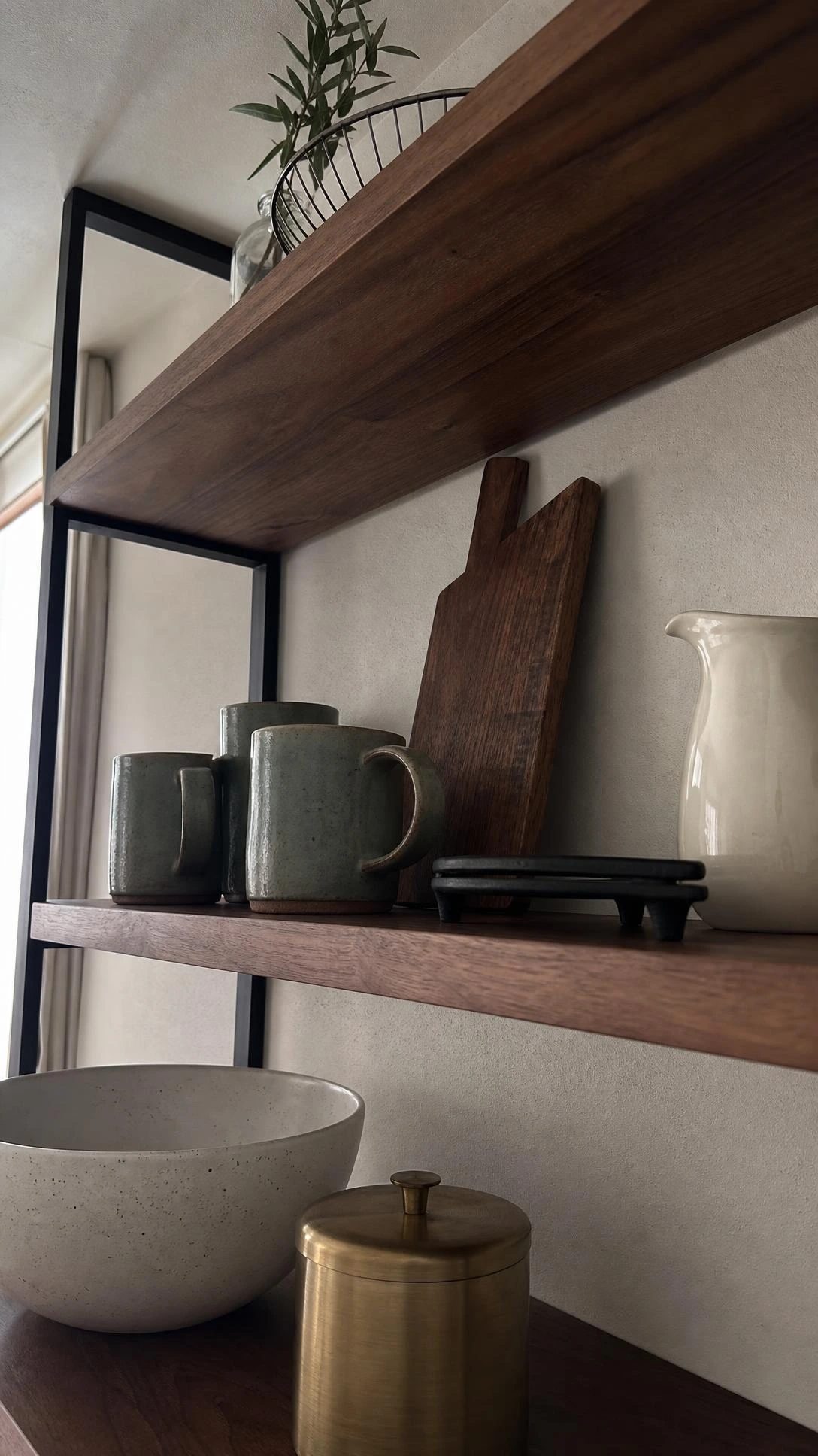
Shelves that stick to one material throughout can feel a little one-dimensional, even when that material is beautiful on its own.
Mixing a wooden cutting board or a small teak bowl with matte ceramic jars and a single metal canister creates contrast that feels curated rather than matchy.
The mix does not need to be complicated, three materials on one shelf is usually plenty, and going beyond that starts to feel busy.
Matte black metal paired with unglazed stoneware and light wood is a combination that consistently looks current and works across farmhouse, minimalist, and modern kitchen styles.
The key is that the materials should vary but the tones should stay in roughly the same family so the shelf reads as cohesive from a few feet away.
6- Practical Items That Are Actually Used Every Day
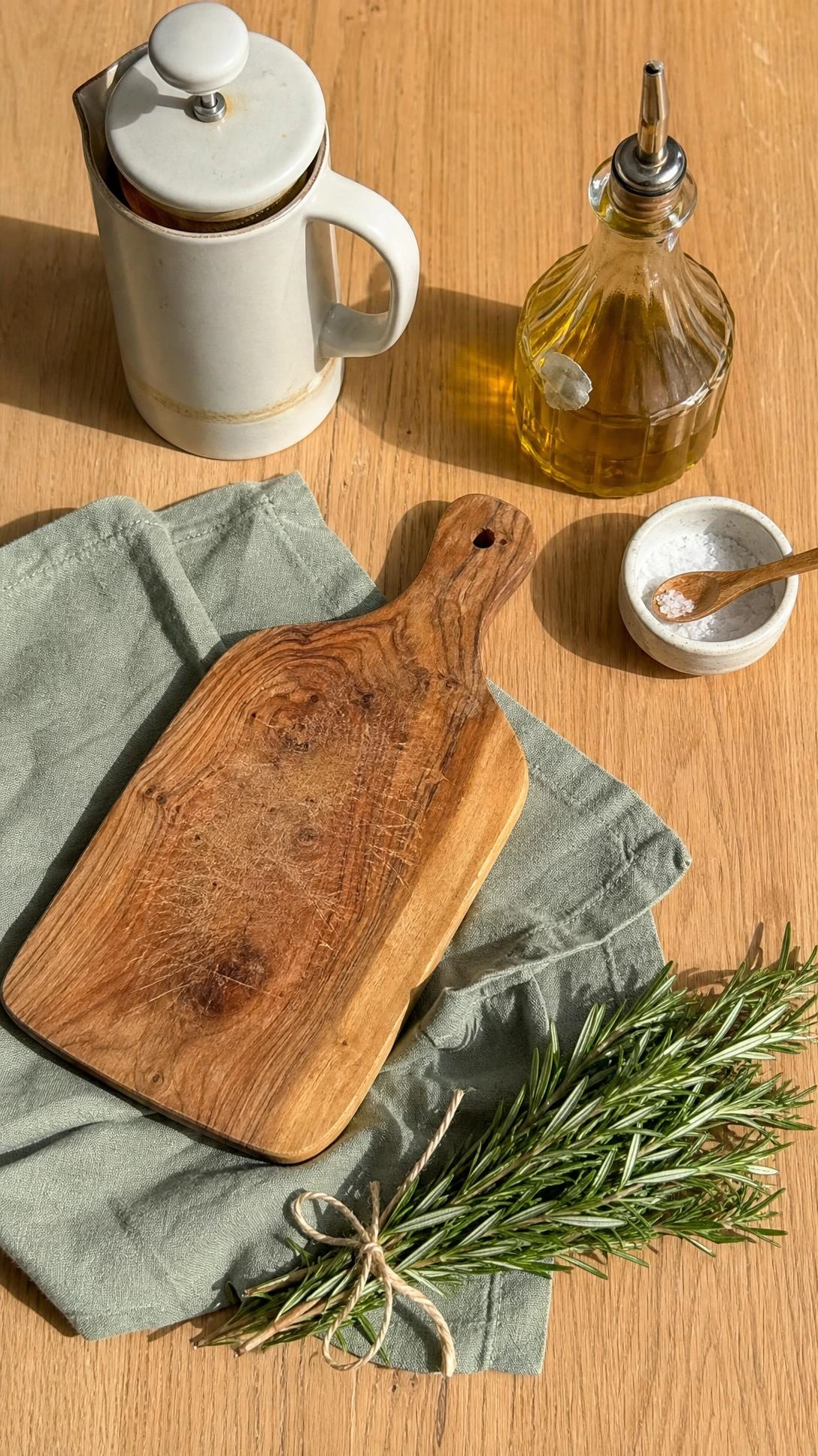
Shelves that are purely decorative tend to get ignored and dusty, which is ironic because the whole point of open shelving is usually to have things feel accessible and lived in.
Displaying the things that actually get used every day, like a nice olive oil bottle, a set of coffee mugs, or a glass jar of pasta, makes the kitchen feel genuinely functional rather than staged.
The Reddit advice that resonates here is simple: if something is only on the shelf to look good but never gets touched, it is probably the first thing that should go.
A set of matching mugs in a warm neutral, like dusty blue or sage green, costs around fifteen to thirty dollars and looks great while actually earning its place on the shelf every morning.
Practical and decorative do not have to be competing priorities on kitchen shelves.
7- Adding a Plant or Two Without Overdoing It
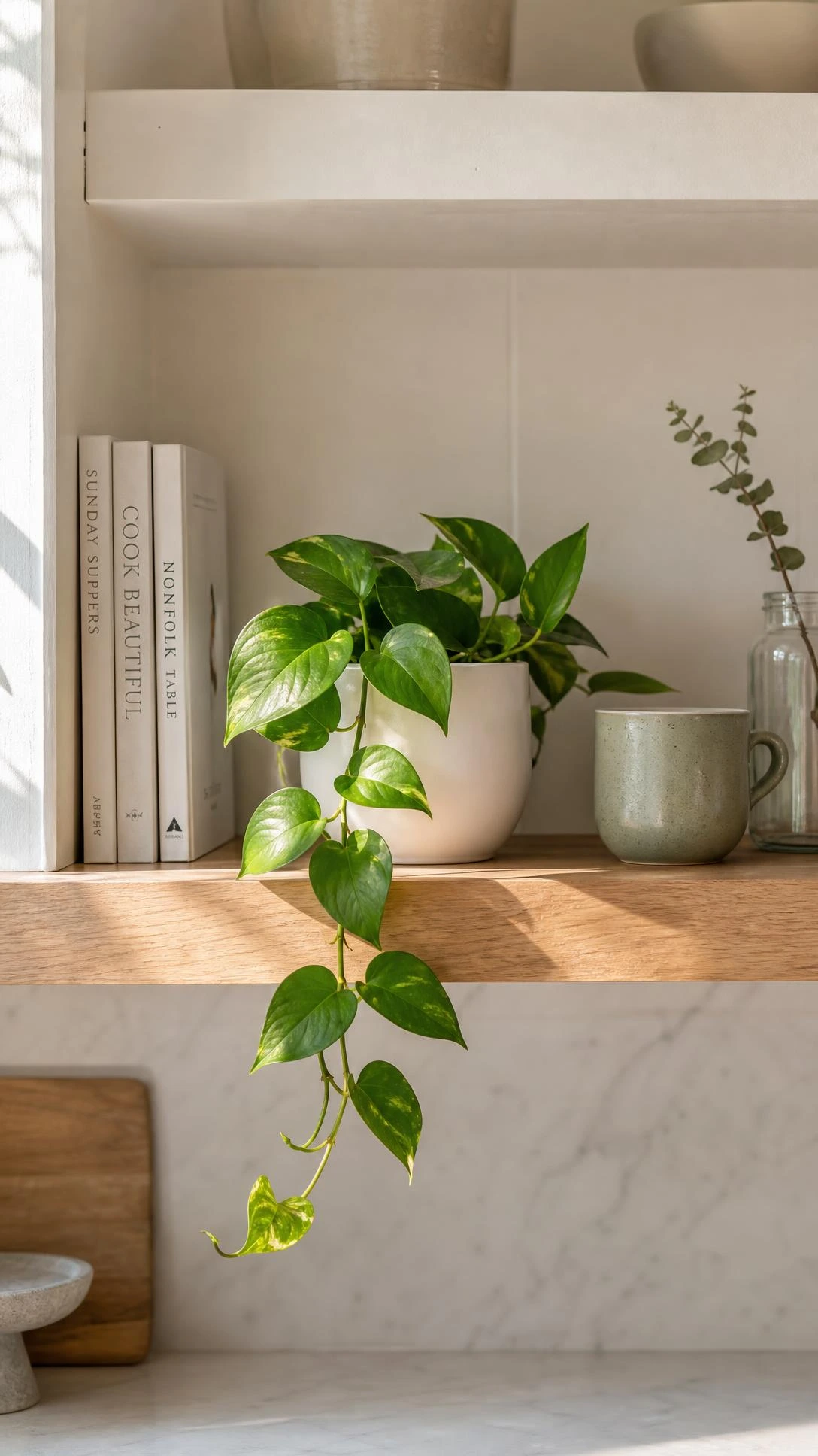
Plants on kitchen shelves look good in theory but require a realistic assessment of how much light that specific shelf actually gets.
Low-light options like pothos, a small snake plant, or a propagation vase with a cutting are better bets than something that needs full sun on a shelf two feet from a north-facing window.
One small plant per shelf section is usually enough, because more than that starts to feel like the kitchen is being slowly consumed by greenery.
A simple glass propagation vase with a few clippings from a pothos costs almost nothing and adds an organic softness to a shelf of hard ceramics and wood.
The goal is just a hint of living texture, not a full herb garden suspended over the counter.
8- Rotating Decor Seasonally Without Starting Over
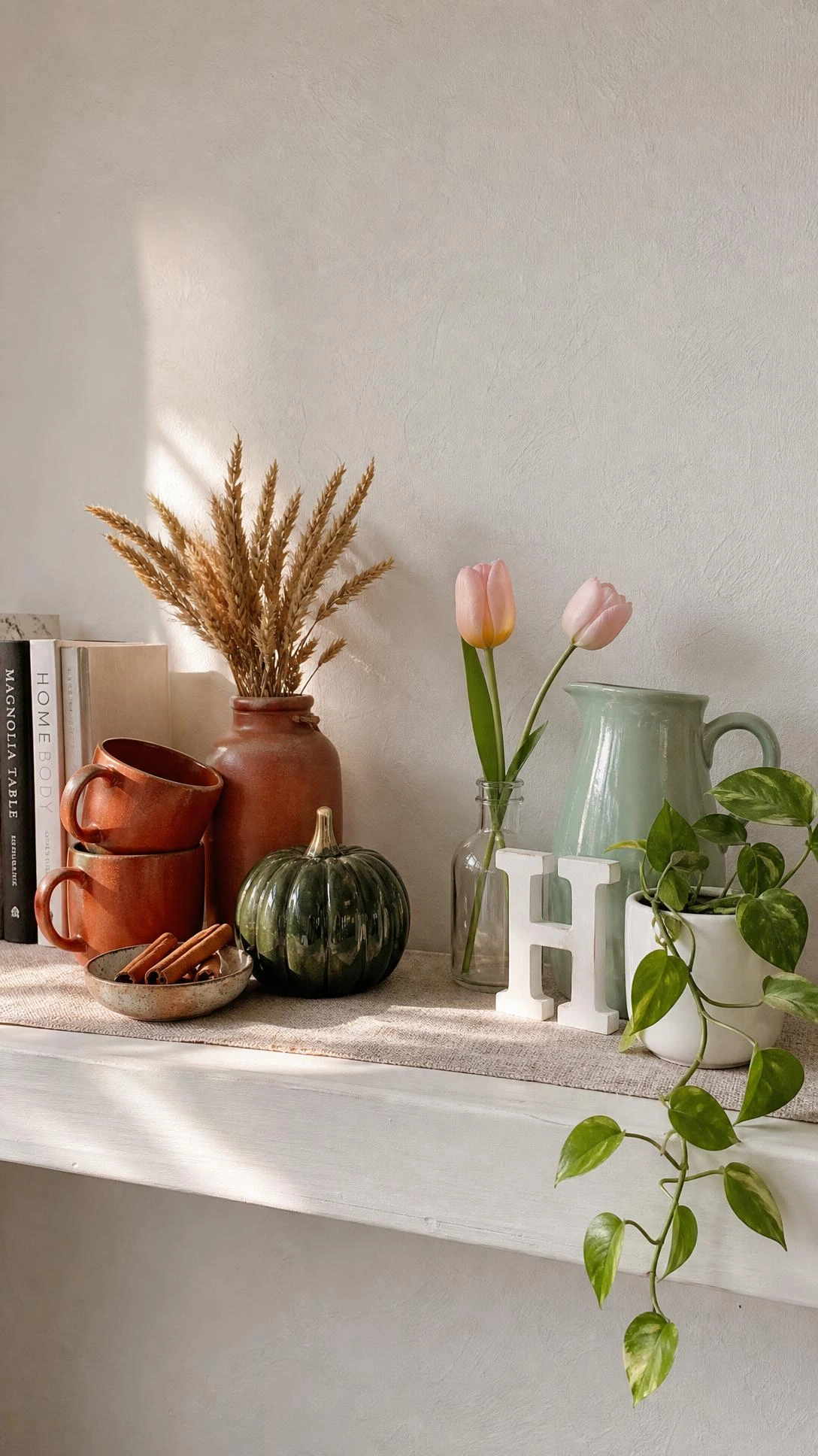
One of the reasons kitchen shelves start to feel stale is that the same arrangement sits there for months and eventually stops being noticed at all.
A seasonal rotation does not have to mean buying new things every few months, it can be as simple as swapping in a small pumpkin in fall, a sprig of eucalyptus in winter, or a lemon or lime in a small bowl in summer.
Most of the core items, like the jars, mugs, and books, stay in place while just one or two things rotate in to signal the season.
This approach keeps the shelves feeling current without requiring a full re-style four times a year, which nobody actually has time for.
A small seasonal swap takes about ten minutes and makes the kitchen feel like someone is paying attention to it.
9- Dealing With Dust and Grease Near the Stove
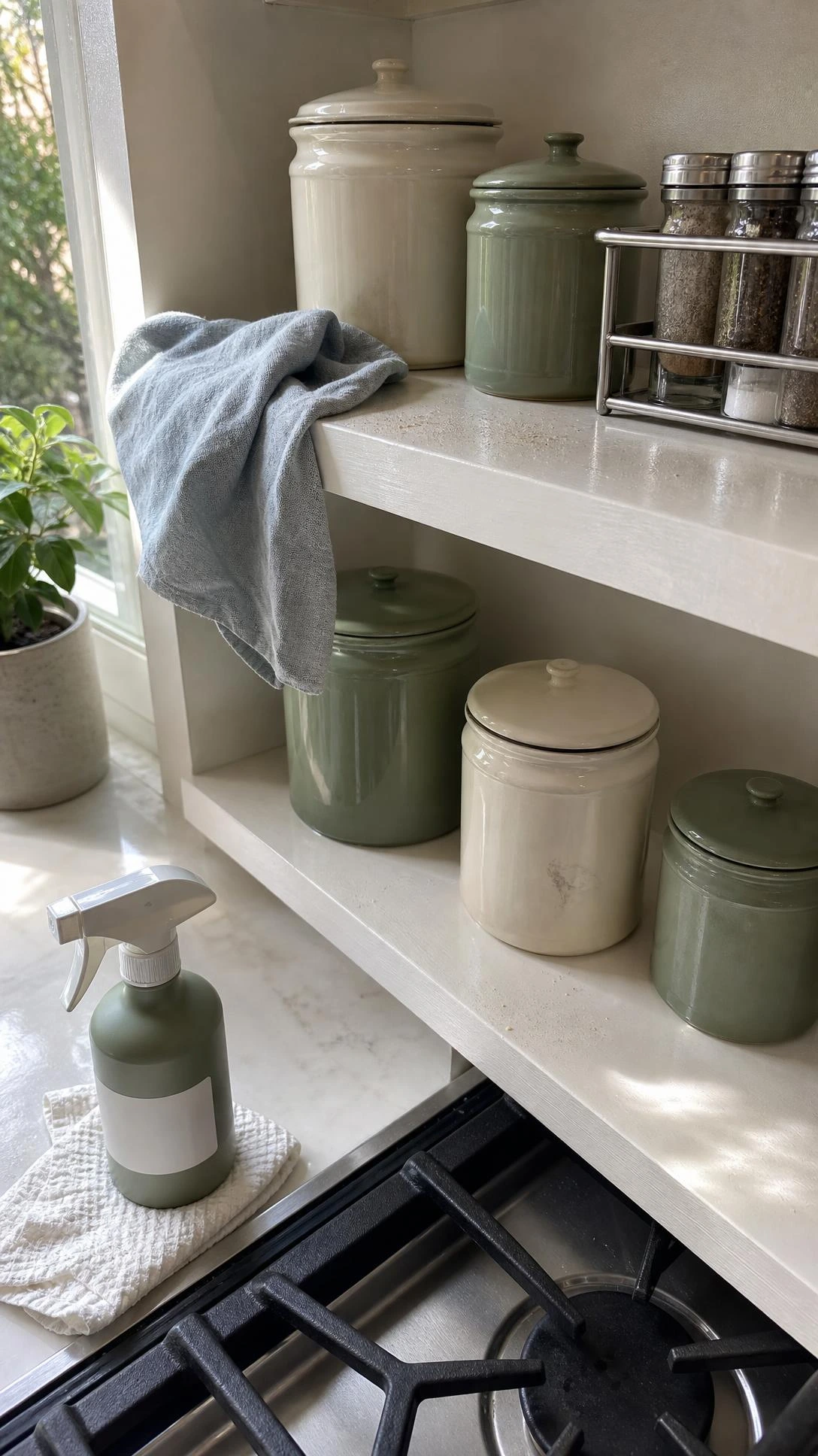
Shelves near or above the stove are a genuinely different situation from shelves on the other side of the kitchen, and most people figure that out a little too late.
Grease and cooking moisture settle on everything within a few feet of active cooking, which means anything stored there needs to be wipe-clean and not too precious.
Glass jars with tight lids, glazed ceramics, and sealed wood pieces all hold up reasonably well to that zone, while unfinished wood, fabric, or anything with a lot of texture will trap grease in a way that is unpleasant to clean.
A lot of people find that keeping the stove-adjacent shelf mostly practical, with just spices, a few used-daily items, and one or two easy-wipe pieces, saves a lot of frustration in the long run.
For shelves further from the stove, a quick wipe-down every two weeks keeps the dust from becoming a whole project.
10- Styling Shelves in a Farmhouse or Rustic Kitchen
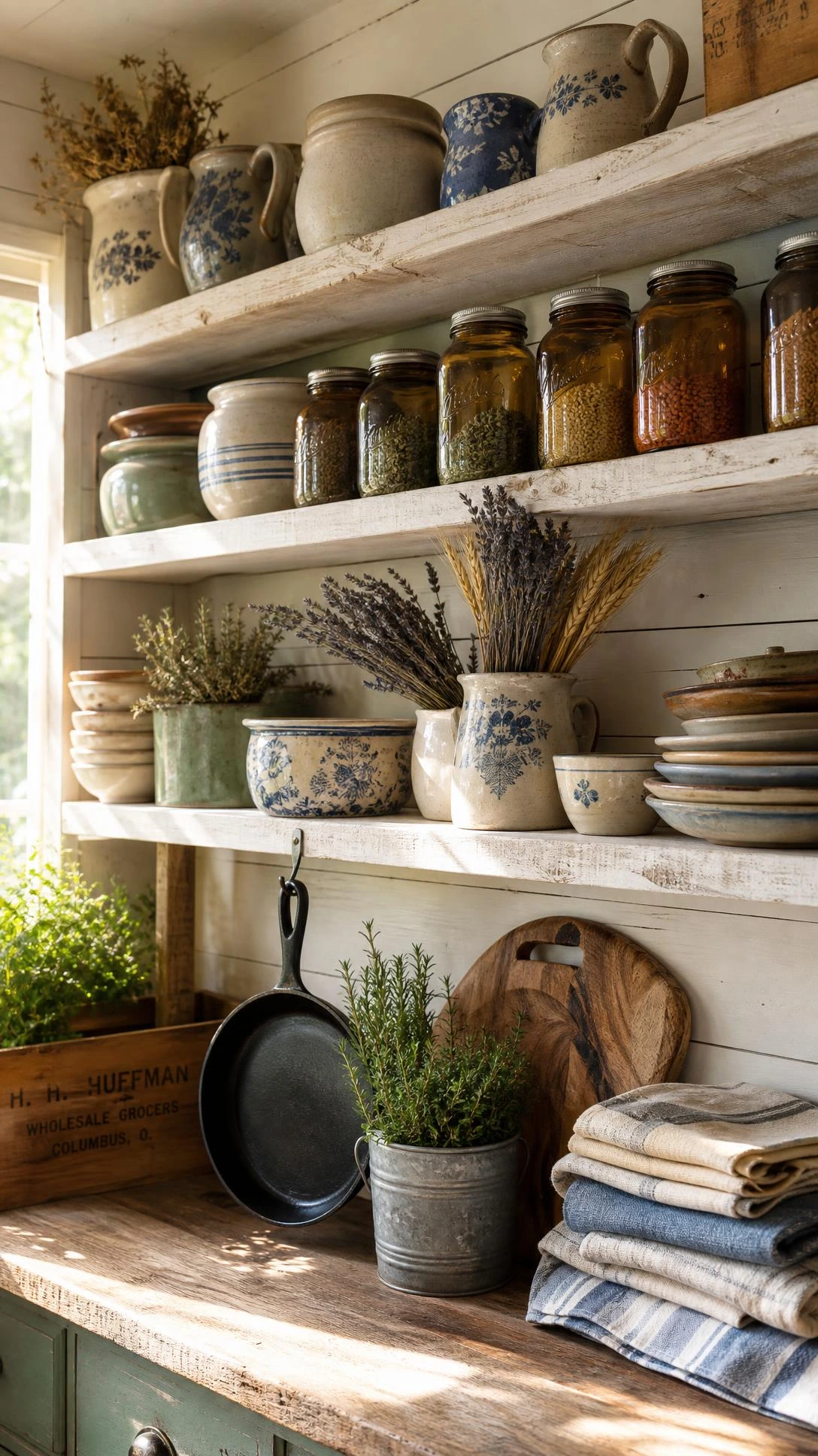
Farmhouse kitchen shelves have a very specific look that is easy to nail once the base elements are right.
Raw wood shelves, open white walls, vintage-style crockery, a enamel colander or two, and a few ironstone pieces in white or cream are the building blocks of that style.
A mason jar holding wooden spoons or a small woven basket used for bread storage reads immediately as farmhouse without needing to be labeled as such.
The thing that makes farmhouse shelves feel authentic rather than costume-y is mixing in items that look like they actually get used, because that style is rooted in working kitchens, not showrooms.
Shiplap or a white beadboard backsplash behind the shelves completes the look for around fifty to a hundred dollars if it is a DIY project.
11- Creating a Minimalist Shelf That Does Not Look Empty
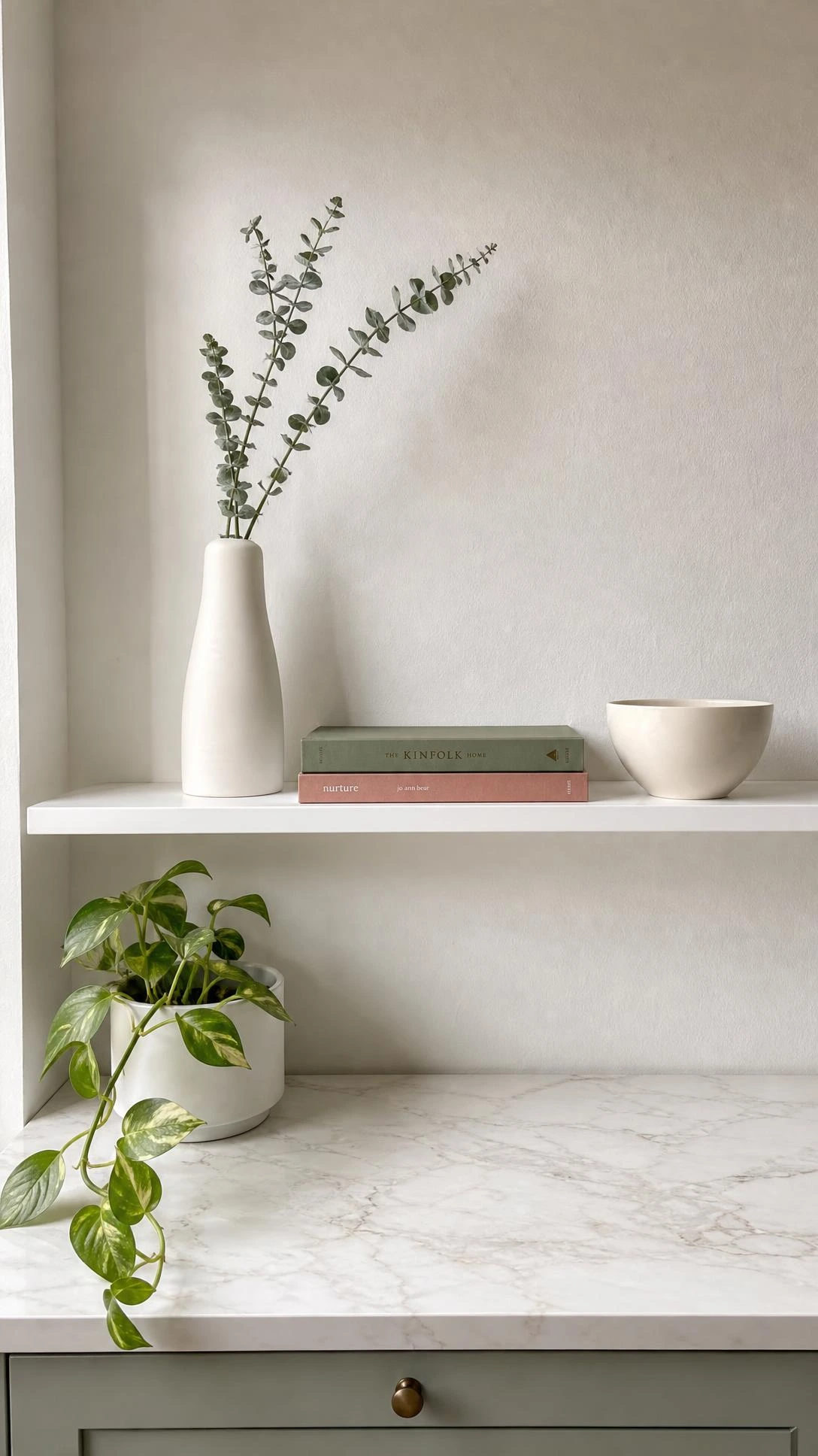
Minimalist kitchen shelves are tricky because the line between intentionally spare and just kind of bare is thinner than most people expect.
The approach that works is to choose a very limited palette, usually two to three colors max, and then let each object have real breathing room around it.
A shelf with four items on it can look considered and calm if those four items are different heights, mix two materials, and share a tonal color story.
Matte white or off-white pieces are the most forgiving starting point for a minimalist shelf because they blend without disappearing and they photograph well if that ever matters.
The goal is not fewer things because fewer is better, the goal is fewer things because each one was chosen specifically.
Kitchen Shelves That Feel Good Every Day
The best kitchen shelf setups are not the ones that look like they came from a catalog, they are the ones that still look right six months later because they were built around how the kitchen actually gets used.
A little color direction, some height variation, and a realistic approach to the dust and grease situation goes most of the way there without requiring much investment.
Most people find that once they clear the shelves back to just the essentials, they do not actually want to fill them all the way back up again.
A kitchen that feels easy to look at is a kitchen that is pretty easy to live in.

Hi, I’m Alizabeth, the creator of Pretty Home Hacks. I share practical home decor ideas, easy DIY projects, organization tips, and budget-friendly ways to make your home feel more beautiful and functional. From small room updates to everyday home hacks, my goal is to share approachable ideas you can actually use in your own space.