8 Kitchen Hacks DIY Ideas for a More Organized and Functional Kitchen
Kitchen chaos is one of those things that sneaks up on you so gradually that one day you open a drawer and a whisk falls out and hits you in the shin and you realize things have gotten completely out of hand.
It is never just one problem either — it is the spices that never get put back in the right spot, the cabinet where everything is technically stored but nothing is actually findable, and the counter that collects random items at a pace that defies logic.
Most people assume getting organized means buying a full set of matching containers and spending an entire weekend restructuring the kitchen from scratch, which is why it never happens.
The thing is, most kitchen organization hacks DIY ideas are actually small, low-cost fixes that take an afternoon at most and make a noticeable difference by dinner.
These eight ideas are the kind that actually stick because they work with how a kitchen gets used, not against it.
1- Pegboard Wall Organizer
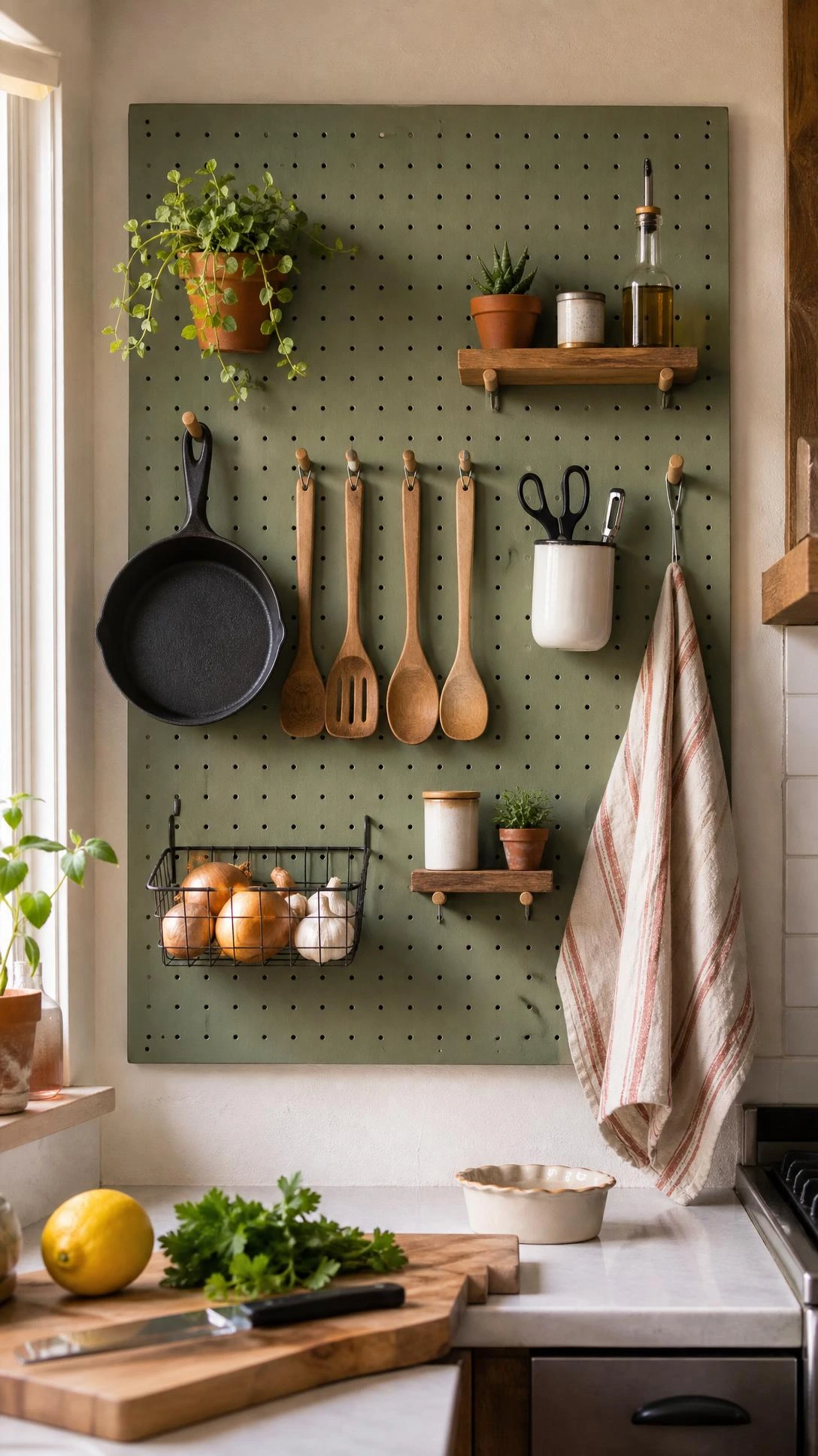
A pegboard is one of those kitchen hacks that sounds a little industrial until someone actually installs one and realizes how much counter space suddenly comes back.
The basic idea is mounting a painted sheet of pegboard on one wall and using hooks to hang lightweight pots, pans, utensils, and even small baskets for things like garlic or measuring cups.
A 2×4 foot pegboard panel runs around $15 to $20 at most hardware stores, and painting it white or sage green first makes it look intentional rather than like a garage overflow situation.
It works best on a wall near the stove where the things being hung are actually the things that get grabbed most often.
Once it is up, adding and rearranging hooks takes about 30 seconds, which means the layout can shift as the kitchen routine shifts.
2- Drawer Dividers for Utensil Drawers
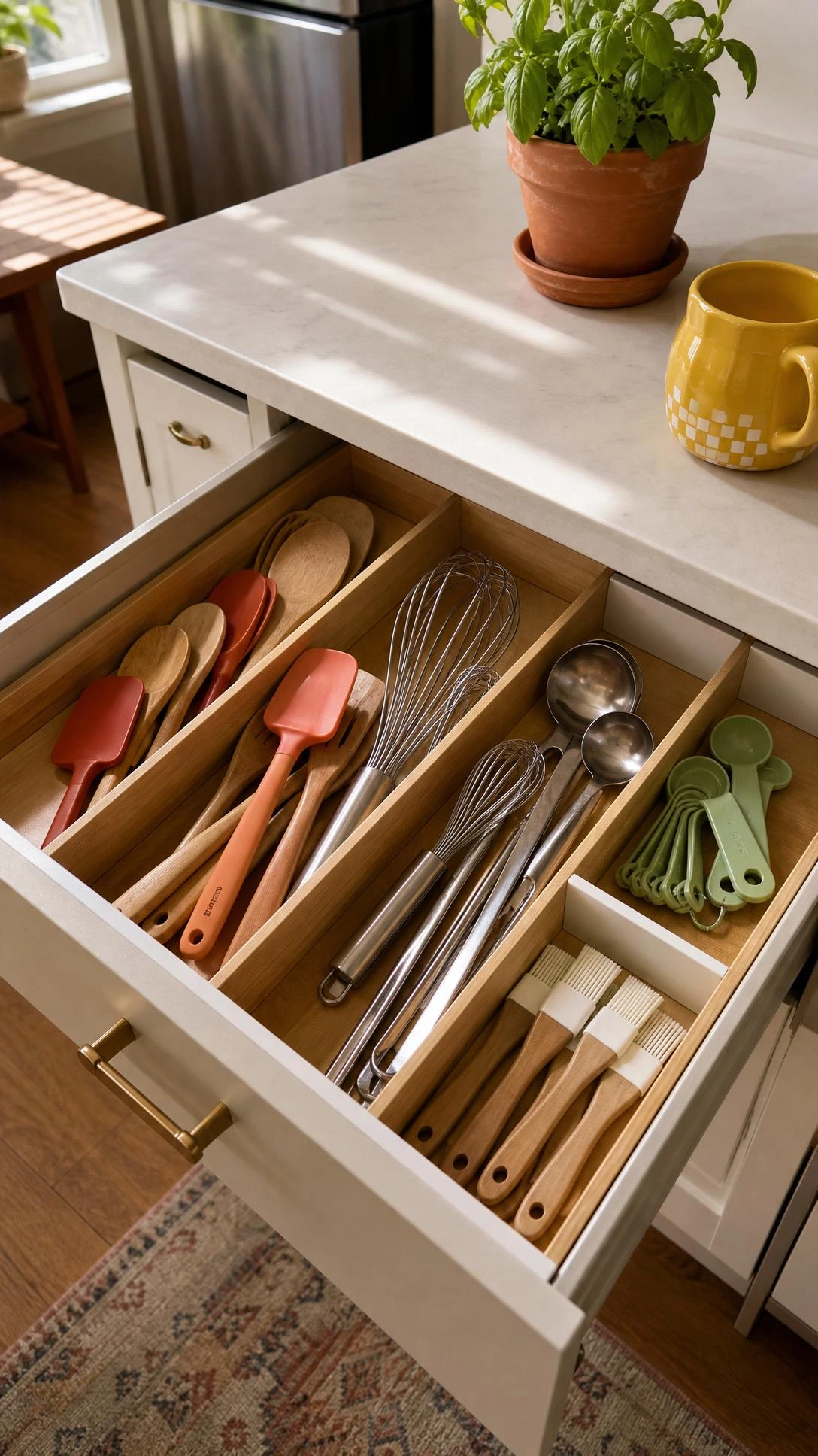
The utensil drawer is where kitchen organization goes to die in most homes, and there is usually one mystery item in there that nobody can identify but everyone is afraid to throw away.
Drawer dividers fix this by giving every category of utensil a dedicated lane so things actually go back where they belong instead of just getting pushed into the general pile.
Bamboo expandable dividers are the most practical option — they adjust to fit the drawer width, they hold up well, and a set of four costs around $12 to $18 depending on the brand.
The key is grouping by function: cooking tools together, measuring spoons together, and anything sharp in its own section so nobody gets surprised reaching in half-awake in the morning.
It takes maybe 20 minutes to set up and the drawer becomes the kind that is almost satisfying to open.
3- Lazy Susan for Deep Cabinet Corners
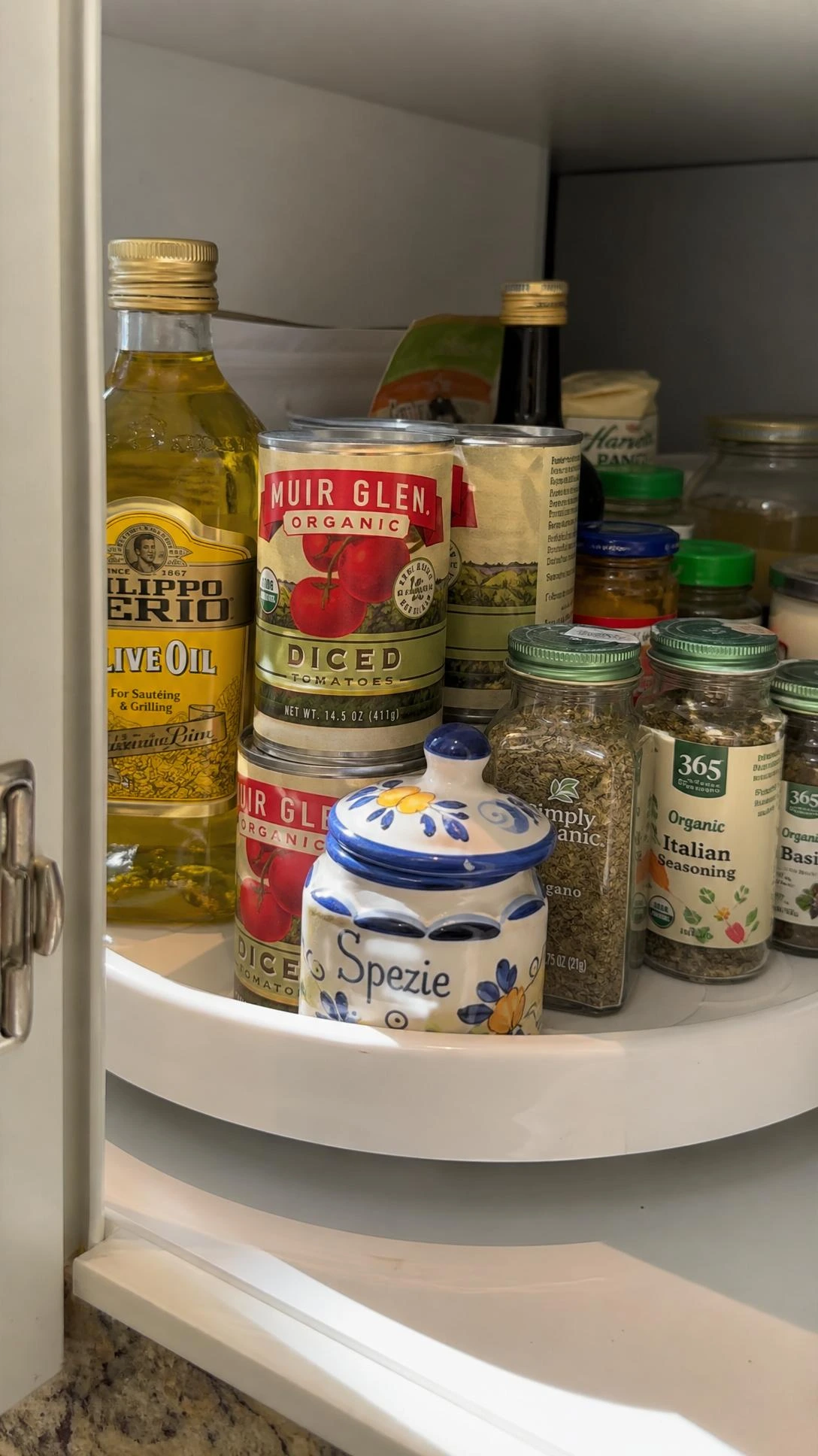
Deep corner cabinets are basically a black hole where canned goods go to be forgotten, and most people have rediscovered expired soup in there at least once.
A rotating organizer, also called a lazy Susan, solves the reach-and-dig problem by letting everything spin forward instead of staying buried at the back.
A two-tier turntable in the 12-inch range fits most standard cabinet depths and works well for spices, oils, vinegars, and small canned goods, all visible with one spin.
I think this single swap does more for everyday kitchen function than almost any other change because it turns a frustrating cabinet into one that actually gets used properly.
Clear or white acrylic versions are easy to wipe down and keep looking clean with almost no effort.
4- Tension Rod Mug and Lid Rack
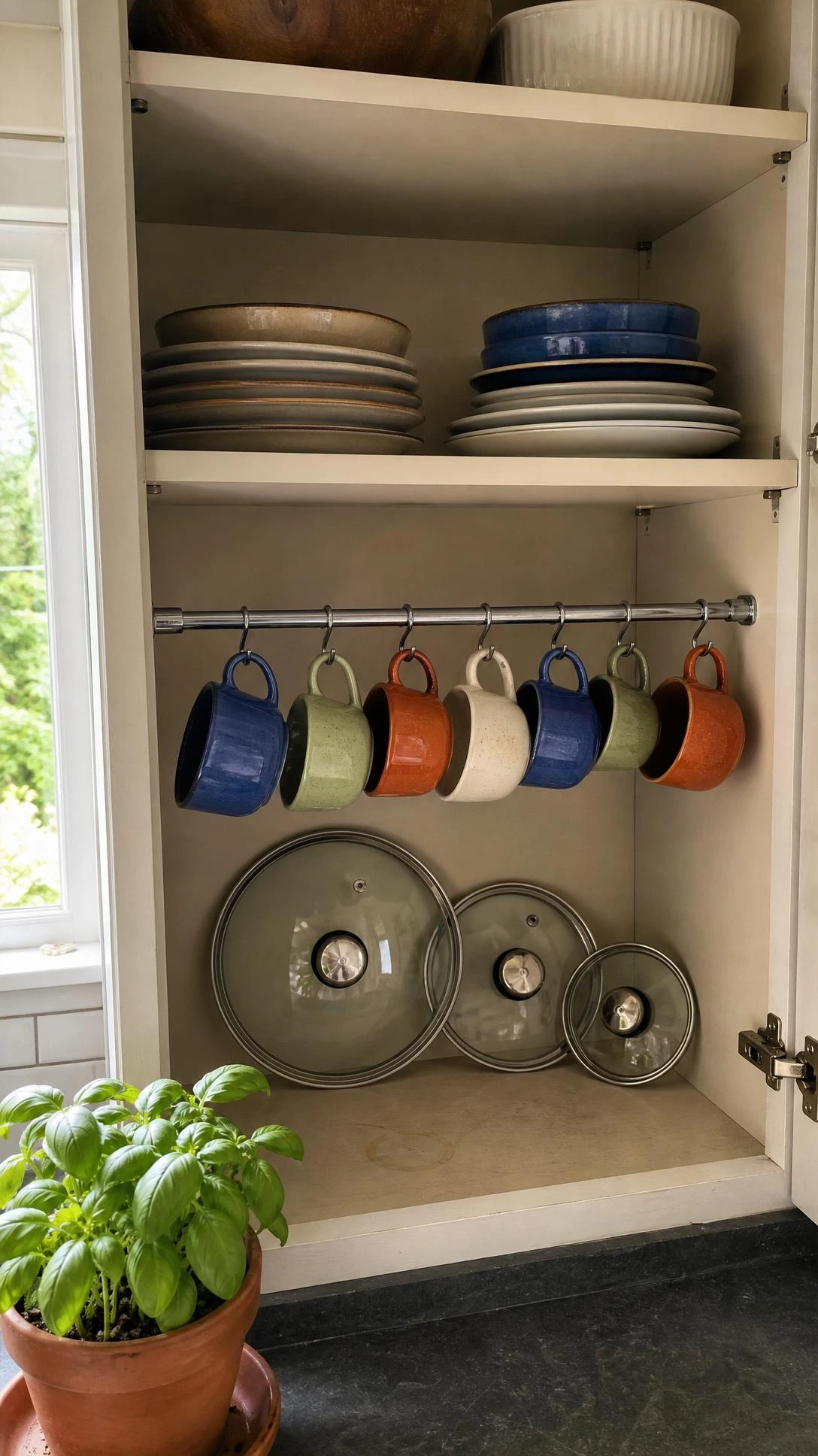
Tension rods are one of those cabinet hacks that looks like a before-and-after photo trick until people realize how genuinely useful they are.
Installed vertically inside a cabinet, a tension rod creates dividers that hold pot lids, cutting boards, and baking sheets upright instead of letting them all collapse into a flat pile that slides everywhere when one thing is removed.
Installed horizontally, a tension rod with S-hooks underneath turns the inside of a cabinet door or the underside of a shelf into a mug rack that frees up an entire shelf.
Spring tension curtain rods from the dollar section or discount bins work fine for this, and the whole setup costs under $5.
The only thing to check is the weight — this works best for lightweight mugs and lids, not cast iron pans.
5- Freezer Organization With Bins
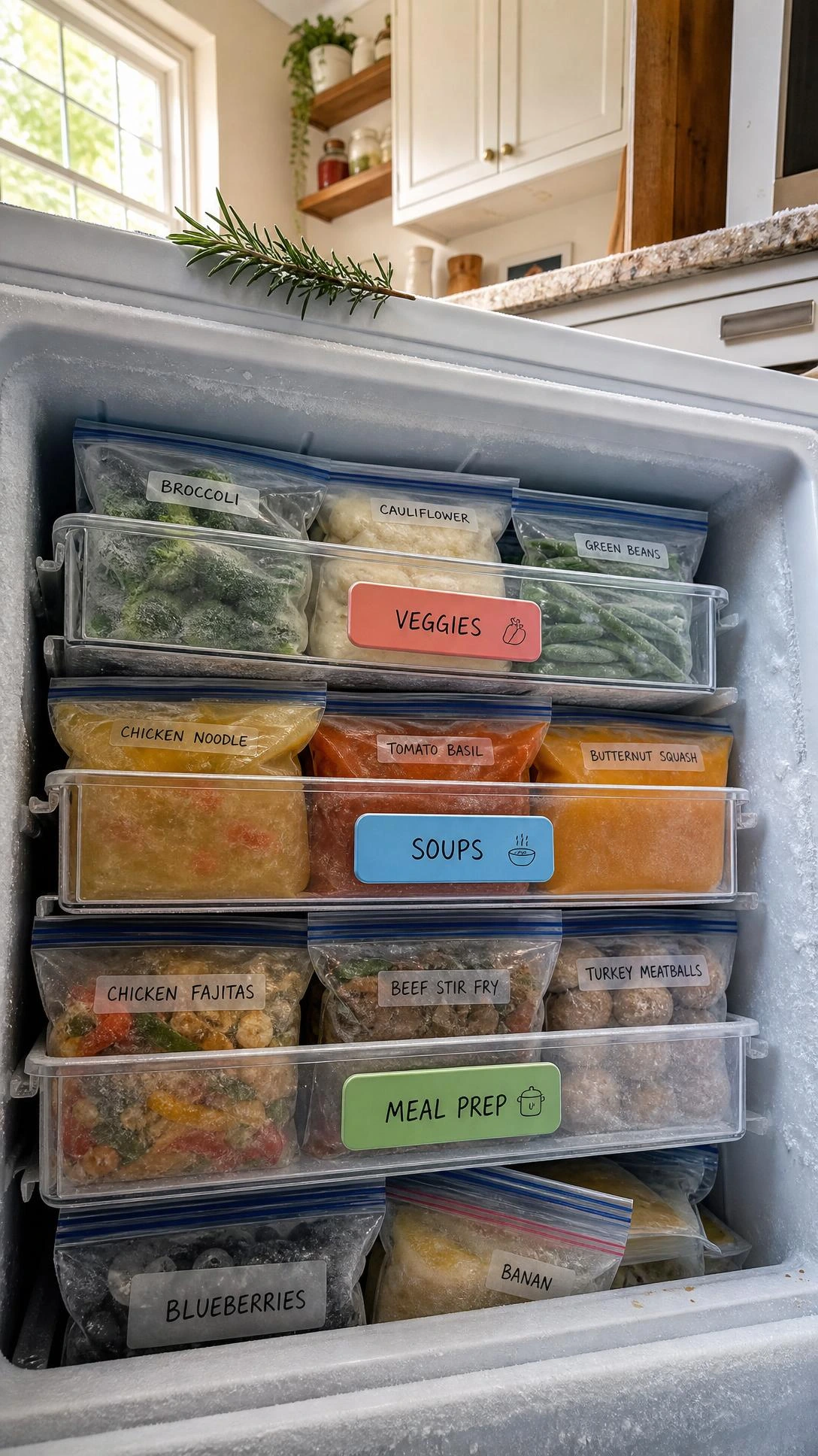
The freezer is the one place in the kitchen where most people just open the door, shove something in, and quietly close it before anything falls out.
Small rectangular bins or magazine-style holders used inside the freezer change how it functions completely — proteins in one bin, frozen vegetables in another, breakfast items in a third, so everything has a home and nothing gets lost under a pile of freezer bags.
Clear plastic bins in the 6×9 inch range fit most standard freezer shelves and stack cleanly, and labeling the front edge with masking tape and a marker keeps the system working even when someone else is putting things away.
This works especially well for chest freezers, which have the most buried-item problem of any appliance in the kitchen.
Most people are surprised by how much more fits once things are standing upright and grouped rather than stacked horizontally in random order.
6- DIY Vertical Spice Storage
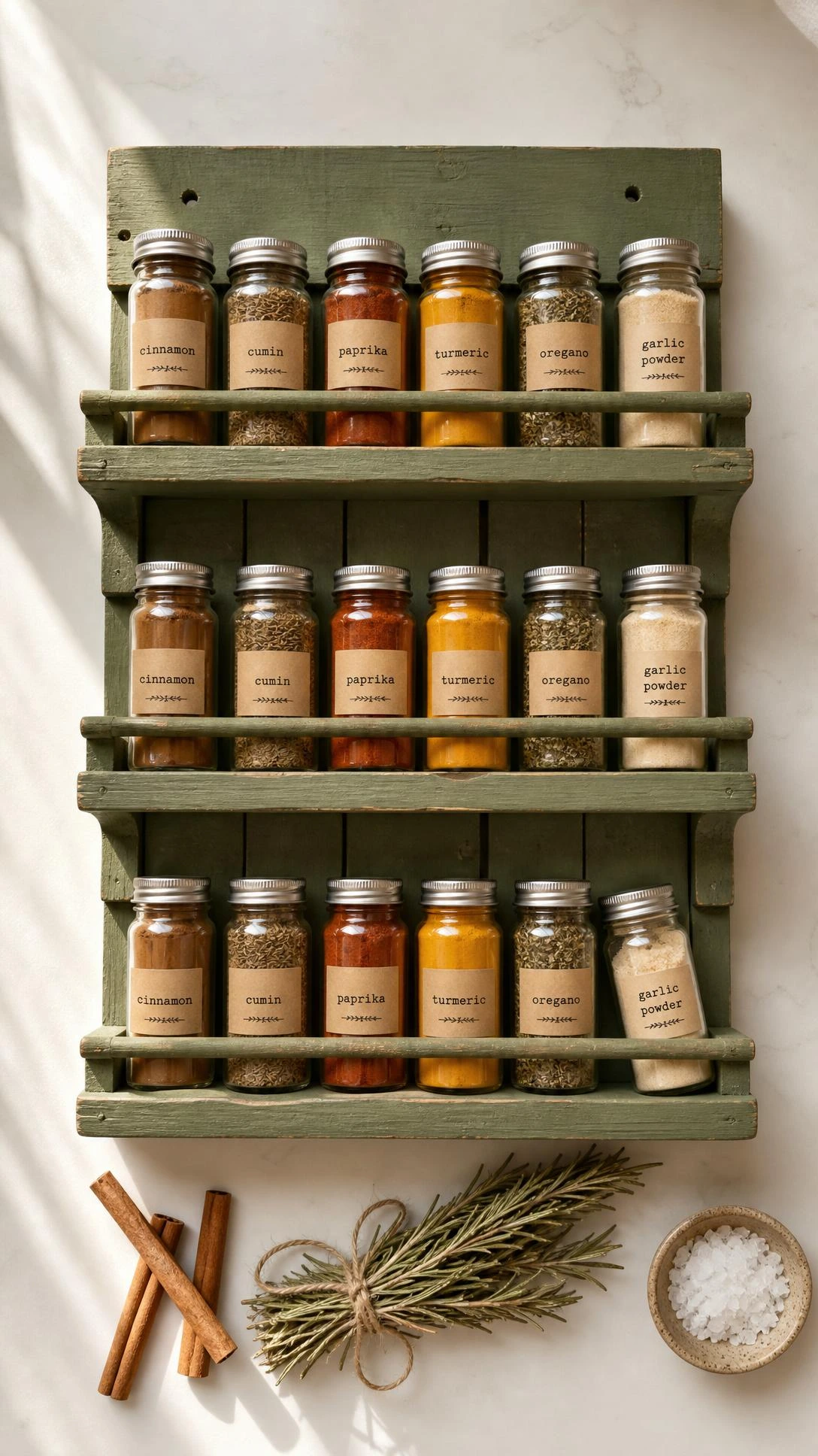
Spice organization is the one kitchen task people redo every six months because whatever system they tried last time has slowly collapsed back into a pile of unlabeled jars and duplicate bottles of paprika.
Storing spices vertically on a tiered shelf riser inside a cabinet, or on a narrow wall-mounted rack beside the stove, means every label faces forward and everything is visible without moving anything else.
A two-tier bamboo shelf riser runs around $10 to $14 and fits a standard cabinet shelf, holding roughly 20 to 24 spice jars in a space that previously held maybe eight in a single flat row.
Matching spice jars are not required for this to work, though switching to uniform 4-ounce glass jars with printed labels takes about an hour and makes the cabinet look considerably calmer.
The real goal is just being able to see everything at a glance so nothing gets bought twice and nothing gets abandoned because it was too hard to find.
7- Under-Sink Storage With Stackable Bins
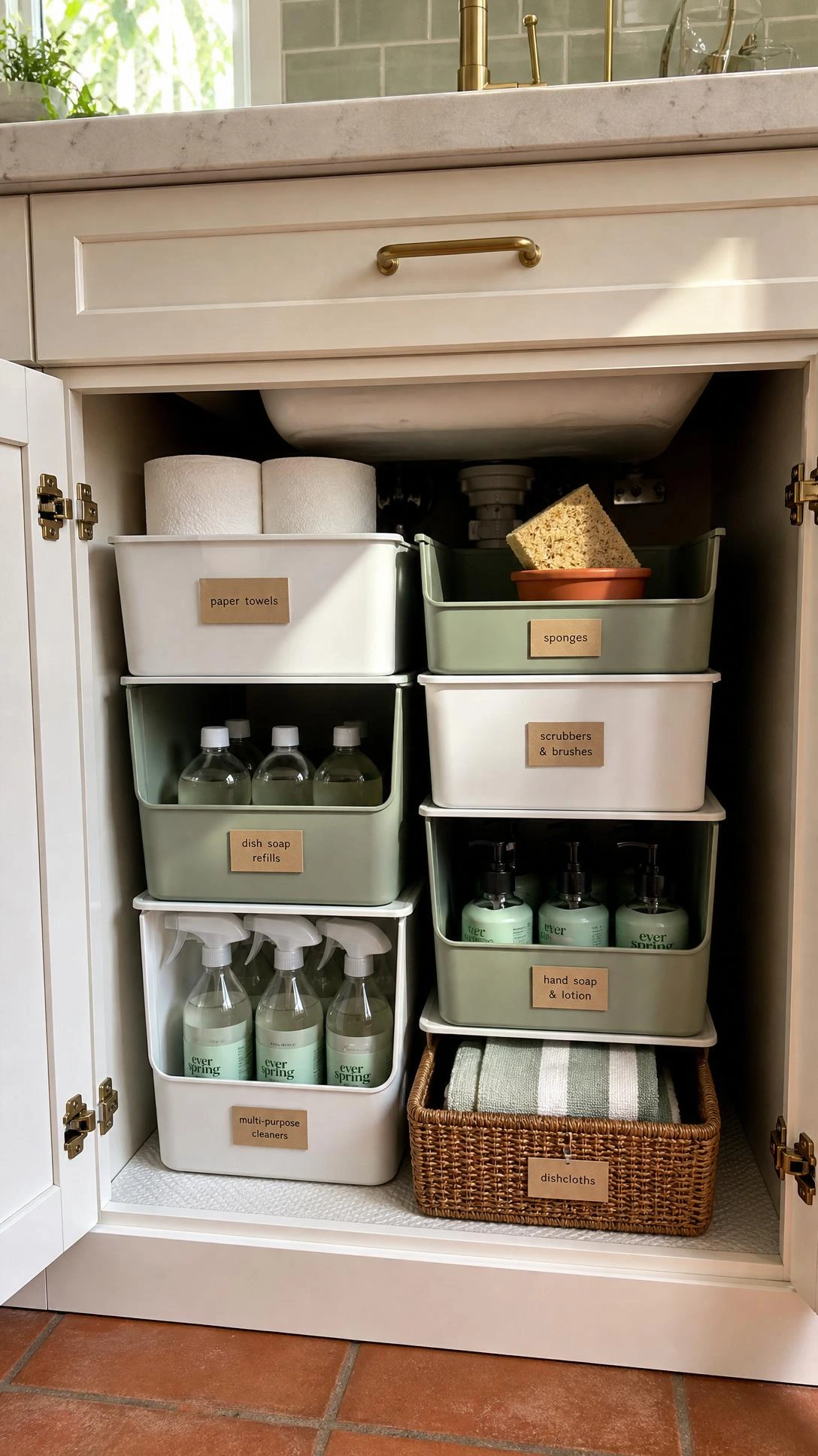
The cabinet under the sink is almost universally chaotic because the pipes make normal shelving impossible and most people just accept that it is going to be a mess.
Stackable bins and a slim pull-out organizer designed specifically for under-sink use work around the pipe situation by leaving the center clear and organizing everything on the sides.
A two-piece adjustable under-sink organizer from brands like mDesign or Simple Houseware costs around $20 to $30 and creates usable stacked space for cleaning products, extra sponges, dish soap refills, and garbage bags without requiring any tools to install.
Adding a small tension rod across the front of the cabinet to hang spray bottles upside down by their triggers frees up even more floor space inside the cabinet, which sounds impractical but works really well.
The pipes are still there, but they stop being the reason nothing fits.
8- Wall-Mounted Plate and Cutting Board Rack
Plates stacked in a cabinet are fine until the stack is more than eight or nine deep, at which point getting to a specific plate involves removing and restacking half of them every single time.
A floor-length or counter-height wall-mounted plate rack stores plates, cutting boards, and even cookbooks vertically and visibly, which sounds fancy but is actually just a practical answer to a very annoying problem.
DIY versions use two horizontal dowel rods mounted on the wall with wooden brackets spaced about 3 inches apart — the plates slide in vertically and stay put without any special hardware, and the whole build costs around $15 to $25 in materials.
This works best in a dedicated section of wall near the dish drying area or close to the dinner table so the most-used plates are always the easiest to grab.
It also frees up an entire cabinet shelf, which is a surprisingly big deal in kitchens where cabinet space has always felt like not quite enough.
Small Changes That Make the Kitchen Work Better
None of these ideas require a renovation or a big budget, which is the whole point of kitchen hacks DIY ideas that actually get used.
Most of them cost under $25 and take less than an afternoon, and the difference in how the kitchen feels after is more noticeable than most people expect from something so small.
Starting with the one area that causes the most daily frustration tends to make the rest feel easier to tackle once the first fix is in place.
A kitchen that functions well is just a kitchen where everything has a home and getting to it does not require a small excavation project.

Hi, I’m Alizabeth, the creator of Pretty Home Hacks. I share practical home decor ideas, easy DIY projects, organization tips, and budget-friendly ways to make your home feel more beautiful and functional. From small room updates to everyday home hacks, my goal is to share approachable ideas you can actually use in your own space.