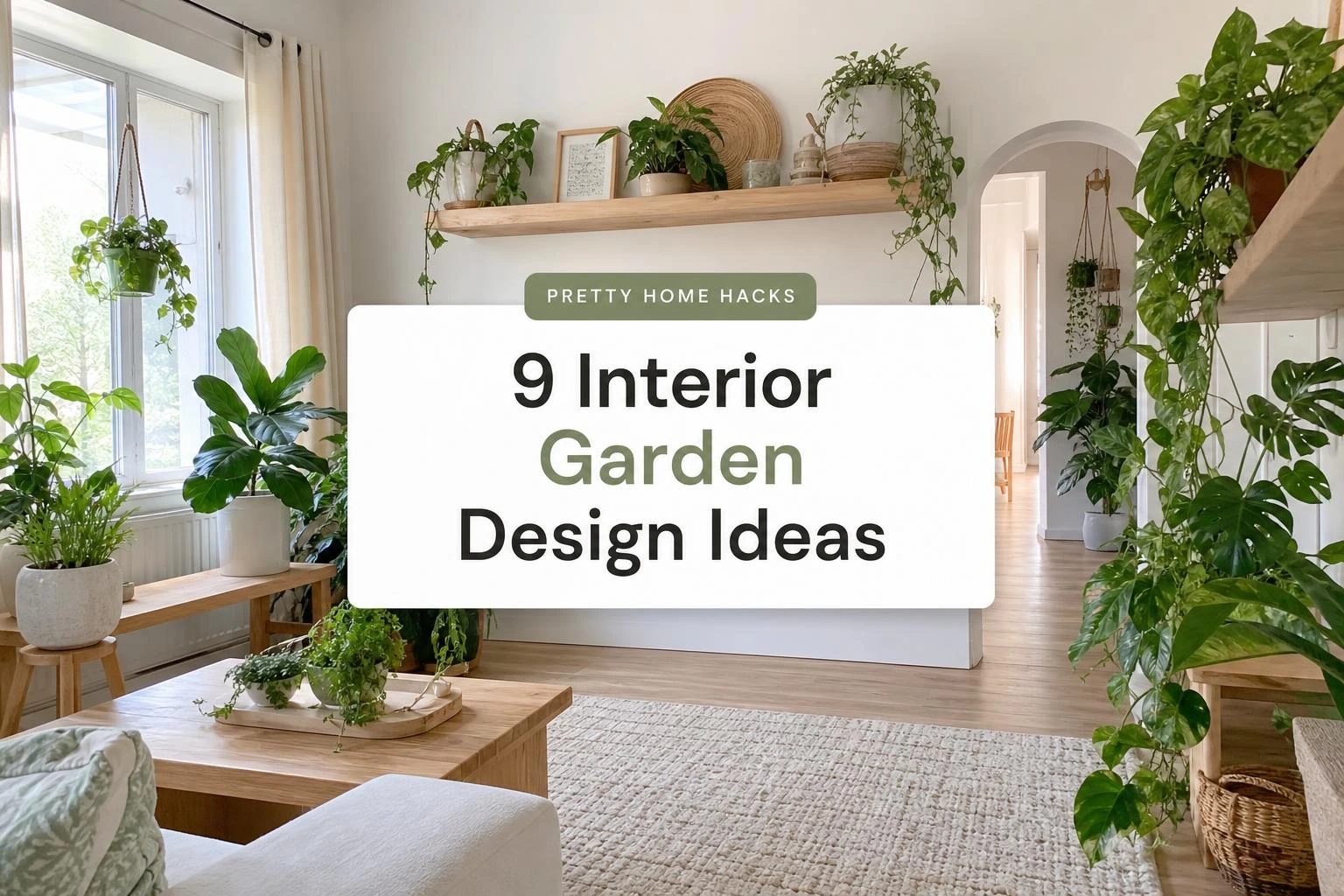
9 Interior Garden Design Home Ideas That Bring Nature Into Every Room
Most people think about adding plants to their home at some point, then look around and genuinely have no idea where to start.
It usually goes like this: one sad little succulent on the windowsill, a vague feeling that something is missing, and a lot of scrolling through pictures of rooms that look lush and alive and nothing like the actual house.
The frustrating part is most people assume interior garden design means having either a huge space or a serious green thumb, and most of us have neither.
The thing is, bringing nature into a home does not have to mean a complicated setup or a room full of plants that need watering on a schedule.
These nine ideas work across different rooms, different budgets, and different levels of plant confidence, which makes them actually useful rather than just pretty to look at.
1- Kitchen Windowsill Herb Garden
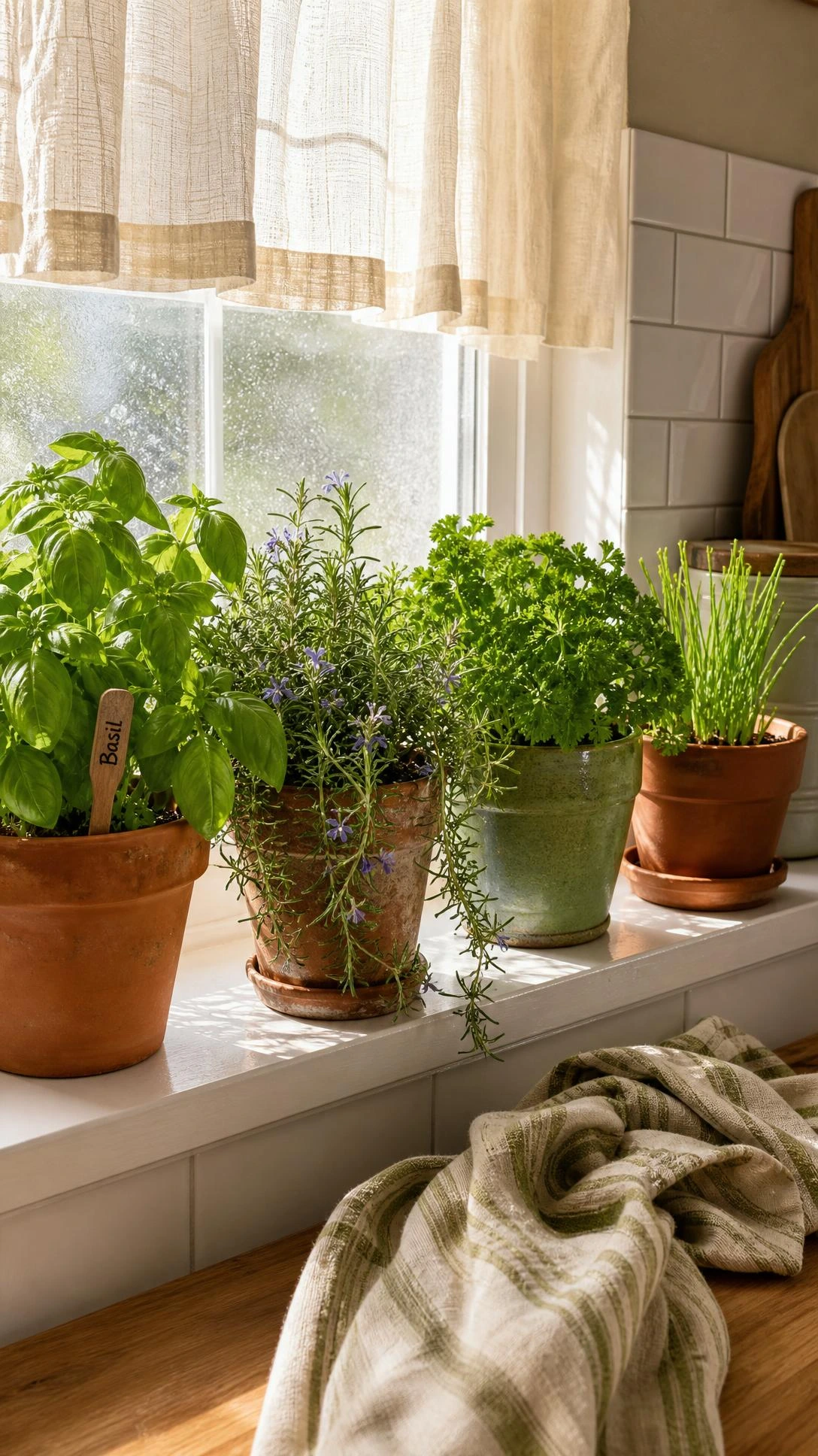
Nobody really talks about how much a kitchen windowsill can do when it is actually being used.
A small row of herbs like basil, rosemary, mint, and thyme in terracotta pots along a south-facing window costs around ten to fifteen dollars to get started and makes the whole kitchen smell better immediately.
The practical benefit is real too, because fresh herbs are right there when cooking instead of half-dead in the back of the fridge.
Mint is probably the easiest starting point because it grows aggressively and survives some neglect, which is always a nice surprise for people who worry about killing everything.
This works best in a window that gets at least four to five hours of direct sunlight a day, so south or west facing is ideal.
2- Living Wall Panel in the Living Room
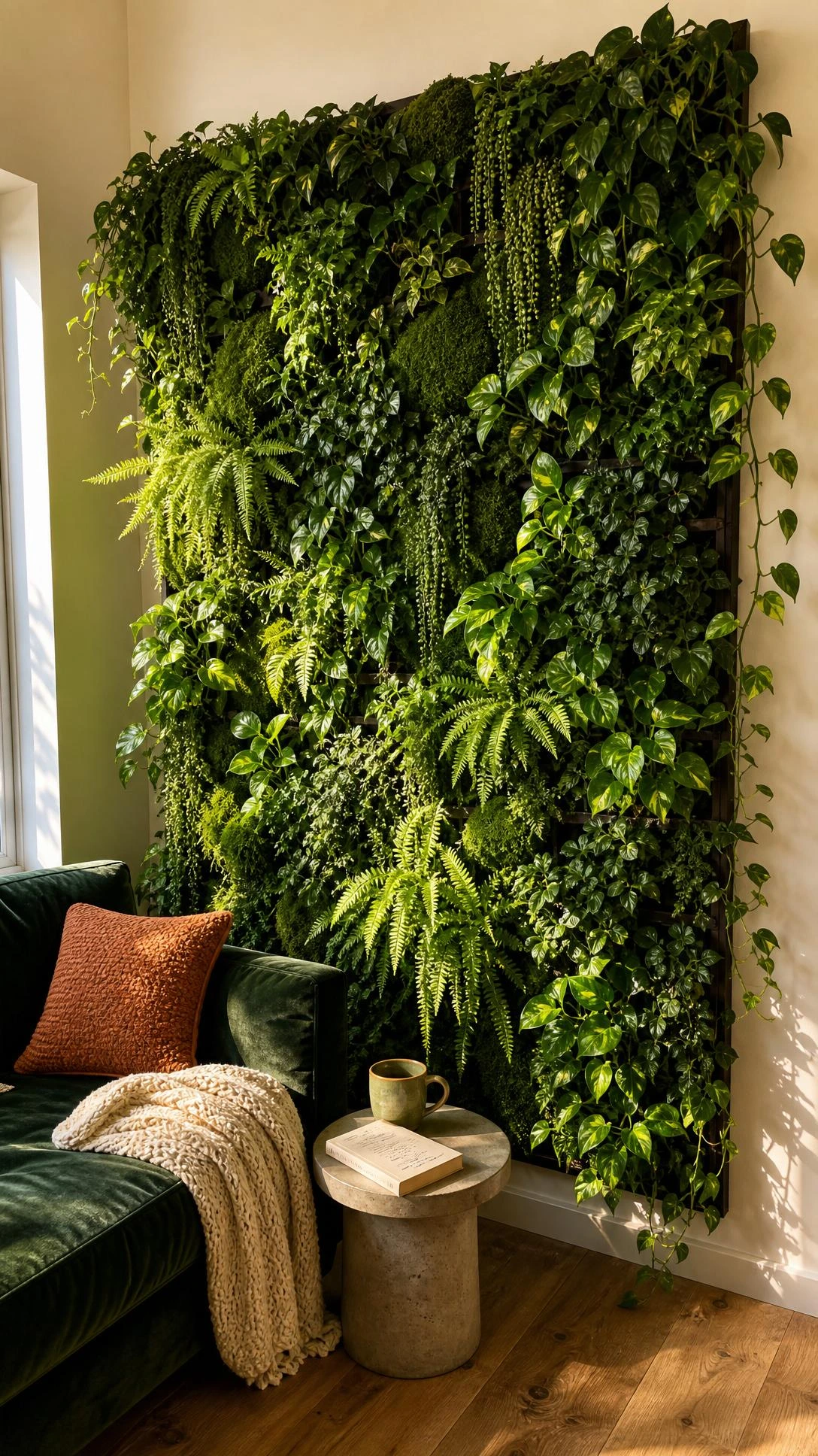
A living wall sounds like a major project but the modular panel versions have made it genuinely manageable for a regular home.
These are pre-planted panels with built-in irrigation pockets that mount directly to the wall, and brands like Floraframe and Planted sell starter kits from around eighty to one hundred and fifty dollars.
The visual impact in a living room is significant because a four-foot by two-foot section filled with pothos, ferns, and trailing philodendron reads like a piece of art rather than a gardening project.
I think this is one of those interior garden design ideas that photographs better in real life than it does on Pinterest, which is saying something.
The main thing to watch for is moisture on the wall behind it, so either use a panel with a built-in backing board or attach a waterproof liner first.
3- Bathroom Tropical Plant Corner
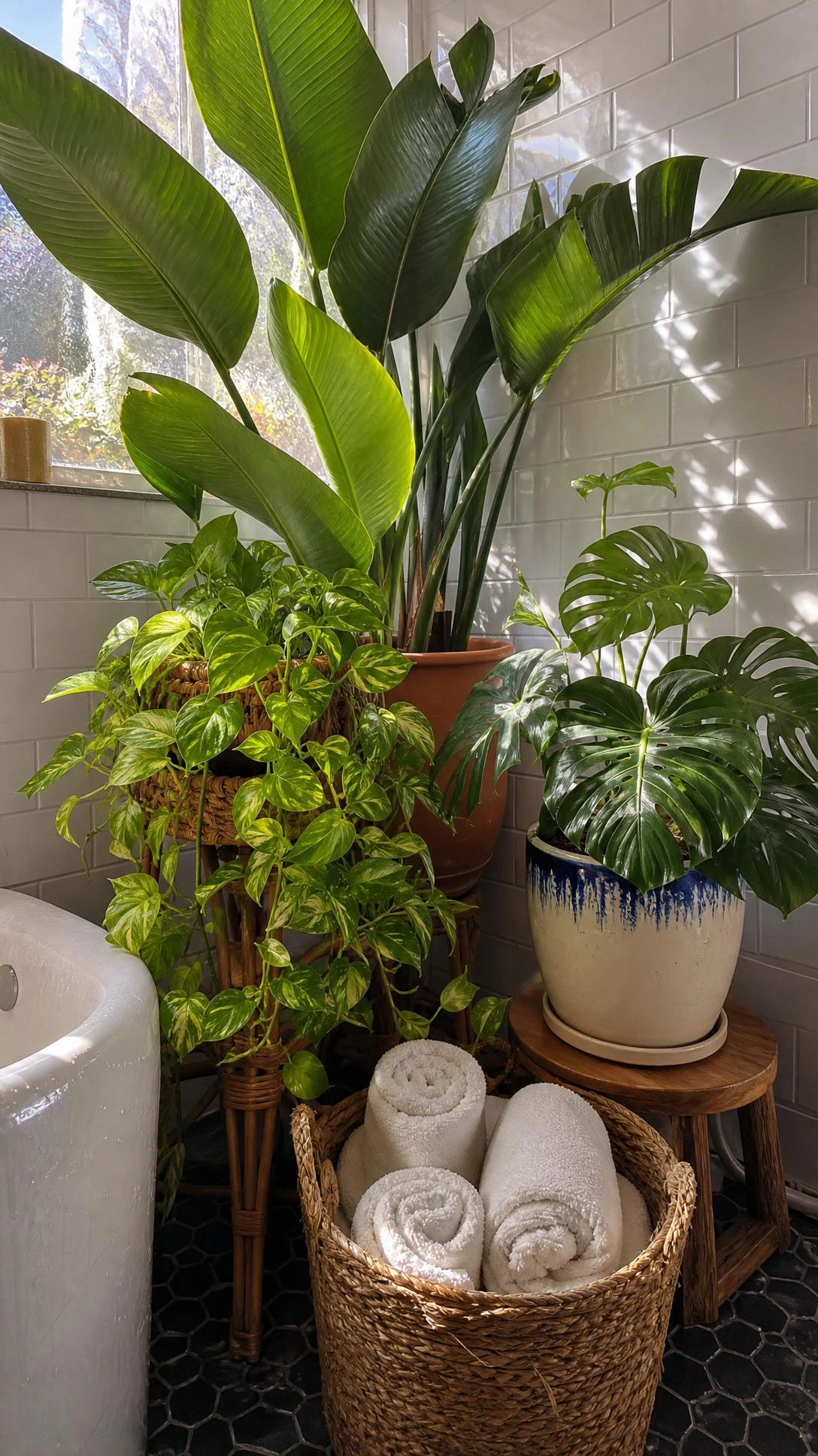
Bathrooms already have humidity and indirect light, which makes them basically perfect for a whole category of plants most people never think to put in there.
Pothos, Boston ferns, and peace lilies all do well in bathroom conditions and a peace lily in a white ceramic pot on the floor next to a freestanding tub looks incredibly intentional.
The transformation from plain bathroom to something that feels like a spa honestly just takes two or three plants placed well rather than a whole collection.
Peace lilies are worth mentioning specifically because they are one of the few plants that tolerate low light, thrive in humidity, and also clean the air, which for a small bathroom is a pretty good combination.
Grouping plants in odd numbers, like three different heights in one corner, tends to look more like a design decision than just plants sitting around.
4- Entryway Statement Plant
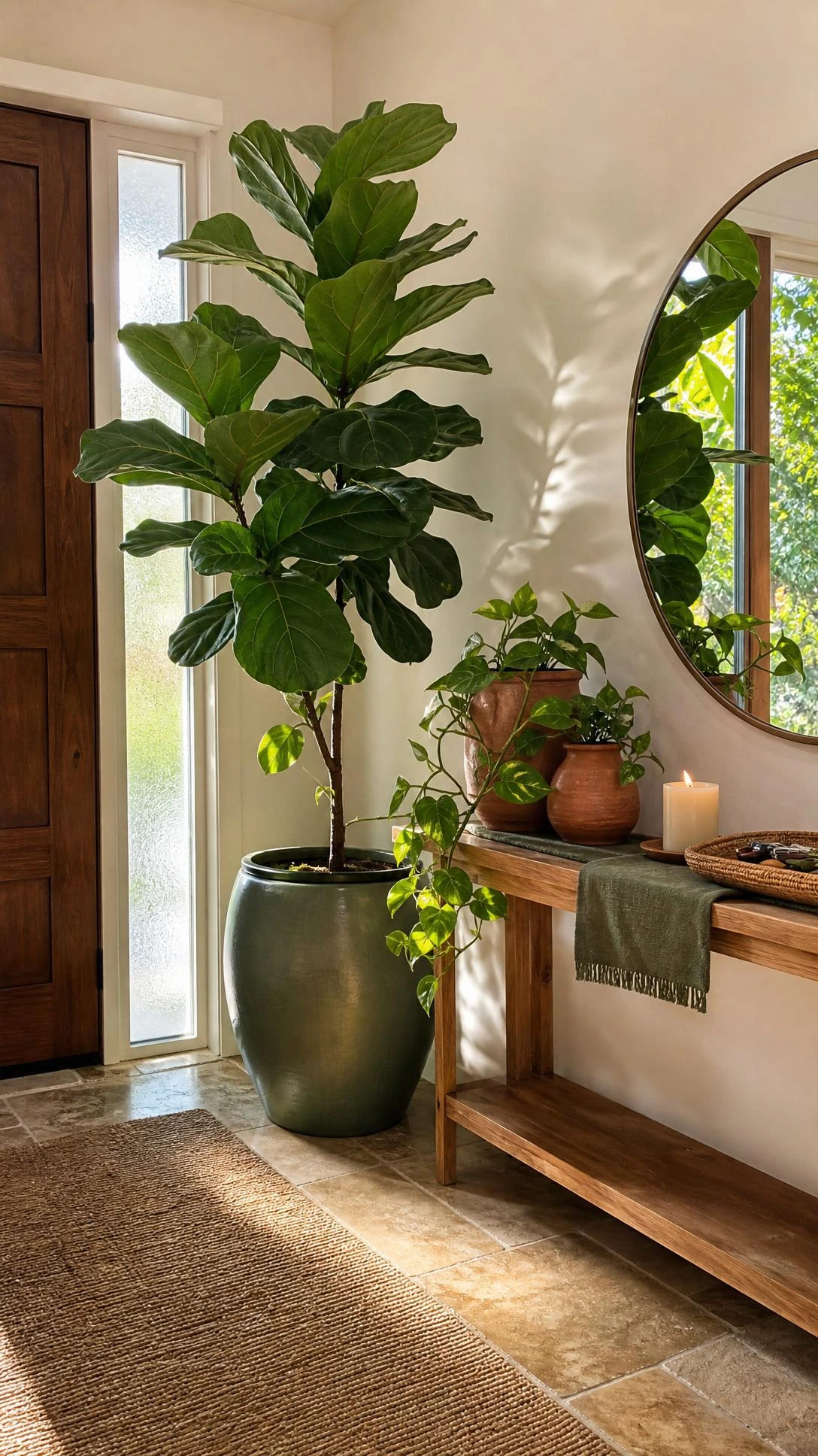
The entryway is one of those spots that sets the tone for a whole home and most people leave it completely bare.
A tall fiddle leaf fig or a monstera in a woven rattan basket planter by the front door immediately makes the space feel considered and alive.
Fiddle leaf figs need bright indirect light and consistent watering, so an entryway with a window nearby works well, but a monstera is more forgiving and will manage in lower light conditions without looking miserable.
Nursery prices for a medium monstera around two feet tall usually run between twenty-five and forty dollars, which for the visual payoff is a reasonable spend.
The goal is just one strong plant rather than a collection, because the entryway usually does not have the space for more and one well-placed plant looks more deliberate anyway.
5- Bedroom Snake Plant for Air Quality
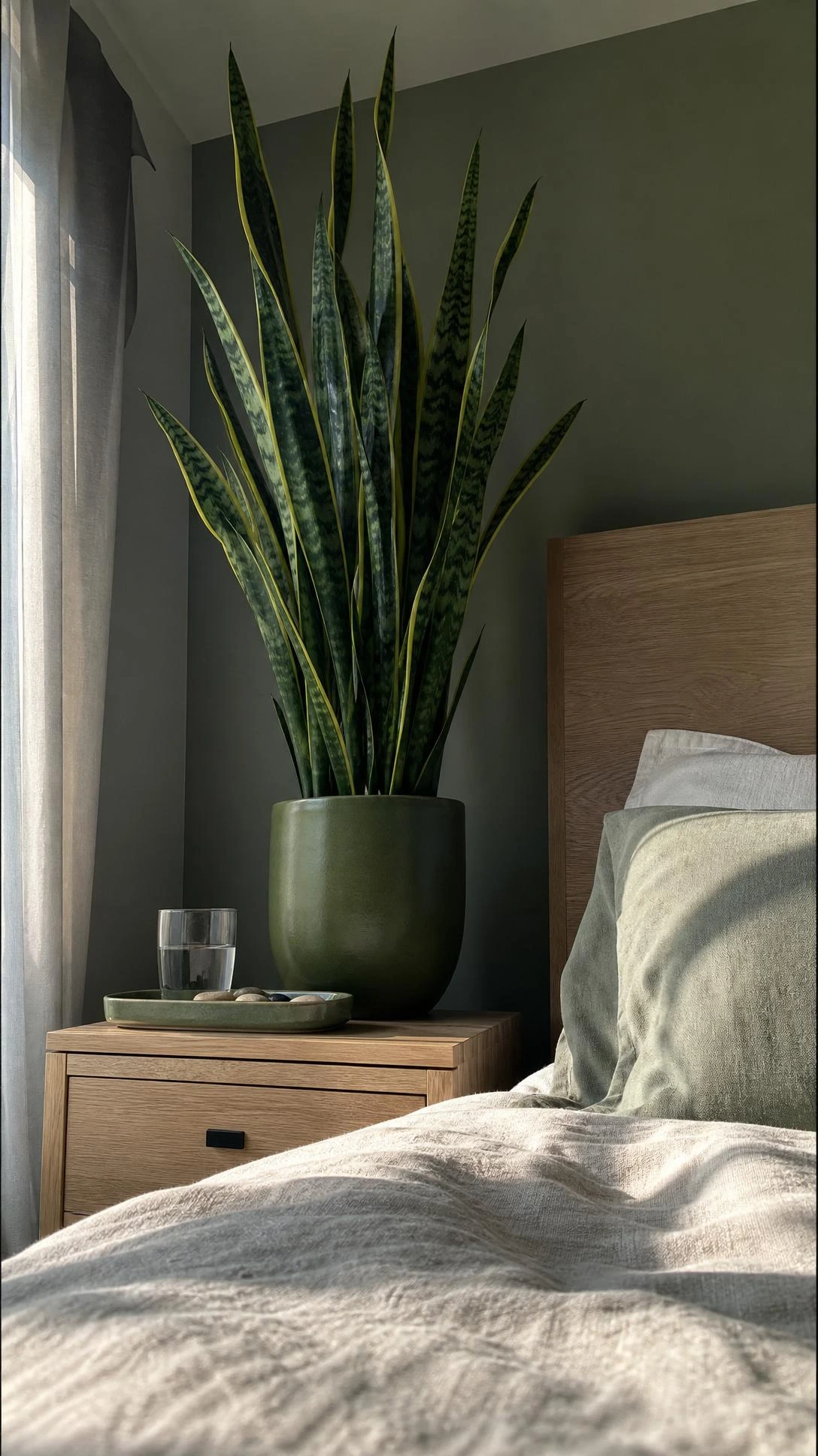
Snake plants have become something of a cliche in interior design content but the reason they keep appearing everywhere is that they genuinely work.
They release oxygen at night rather than during the day, which makes them one of the few plants that actually makes sense in a bedroom specifically.
A tall cylindrical snake plant in a matte black or terracotta pot on a nightstand or in the corner by the window looks clean and modern without demanding any attention.
They survive low light, irregular watering, and pretty much every form of neglect a busy person can throw at them, which makes them the honest first recommendation for beginners.
Most garden centers carry them for under twenty dollars for a medium-sized pot, and they stay looking good for years without needing much beyond an occasional wipe of the leaves.
6- Nature-Inspired Wall Art Gallery
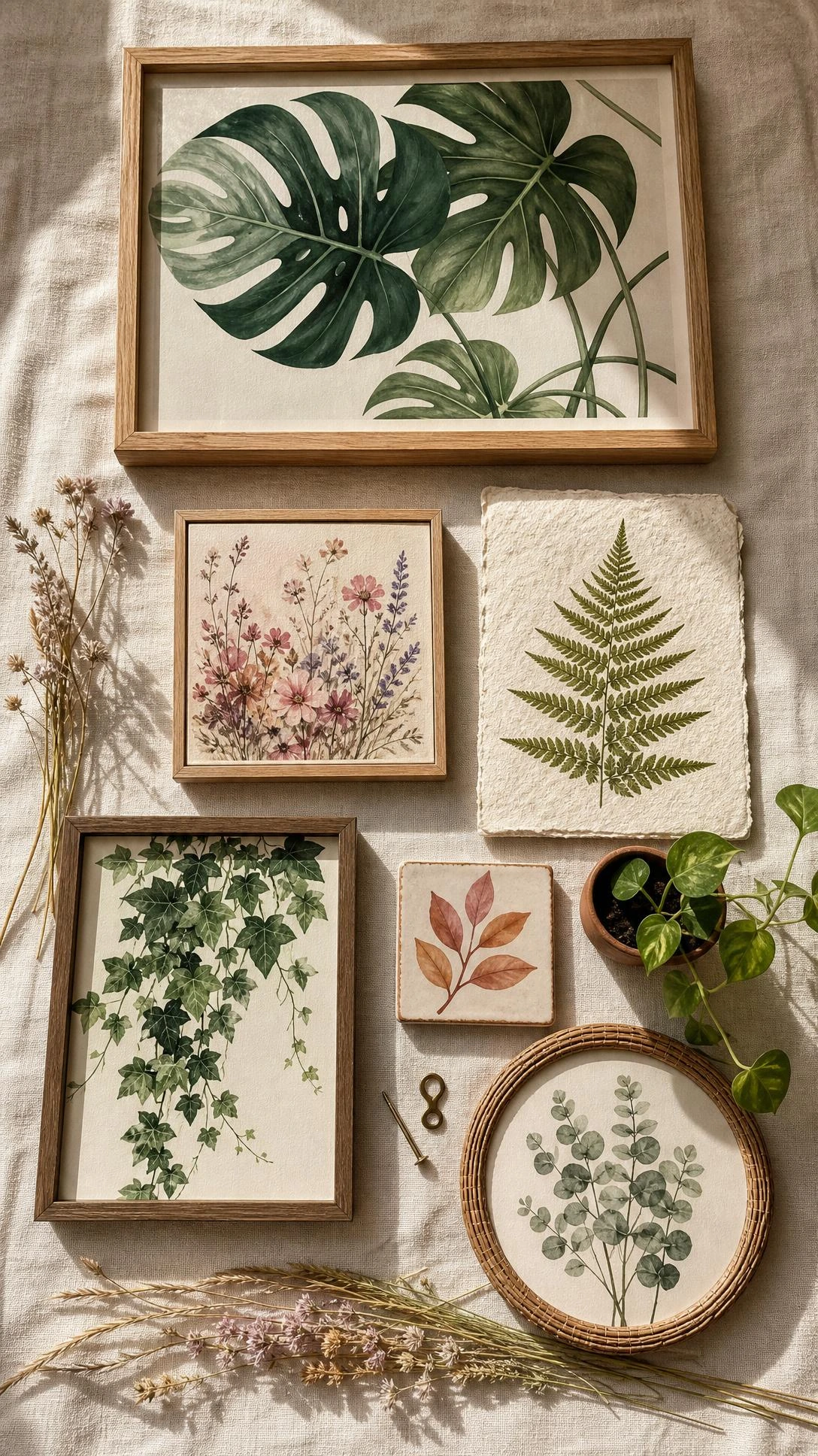
Not every element of interior garden design has to be a living plant, and for people who travel a lot or genuinely cannot keep things alive, wall art is a real solution.
Botanical print galleries, large-scale forest photographs, and framed vintage plant illustrations all bring the same visual softness that plants do without the watering schedule.
A set of three A3-sized framed botanical prints in simple black frames arranged on a white wall can run between thirty and sixty dollars total through Etsy sellers or Society6, and they age well without any maintenance required.
This works especially well in a home office or dining room where real plants might feel out of place but the room still needs something organic to keep it from feeling too stiff.
The trick is going larger rather than smaller, because tiny prints on a big wall get lost, and nature imagery needs some scale to actually feel immersive.
7- Indoor Container Garden on a Balcony or Windowseat
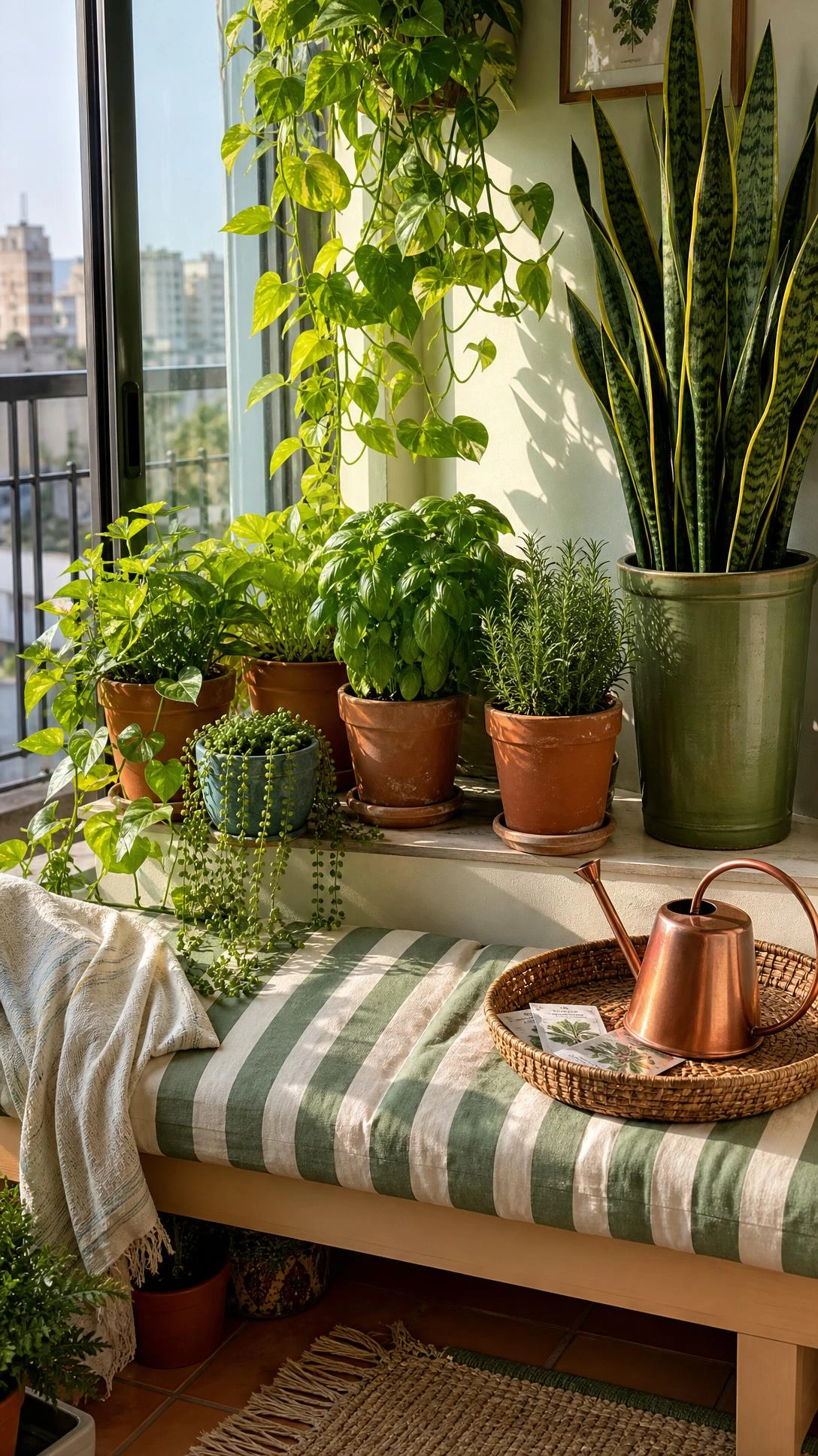
Container gardening is the answer for anyone in a rented space or anyone with limited floor area who still wants a real interior garden feel.
Grouping five to seven containers of different heights on a balcony or wide windowseat with trailing plants like string of pearls at the front and taller lavender or lemongrass at the back creates a layered, intentional look.
Lemongrass in particular is underused for indoor container setups because it grows quickly, smells amazing, and looks architectural in a tall narrow pot.
The container material matters more than people expect, because terracotta breathes and prevents overwatering, while glazed ceramic holds moisture longer and suits plants like ferns that like consistent dampness.
Once the containers are arranged in a cluster rather than spaced apart individually, the whole thing starts to read as a garden rather than just a few pots sitting around.
8- Natural Material Accents That Evoke the Outdoors
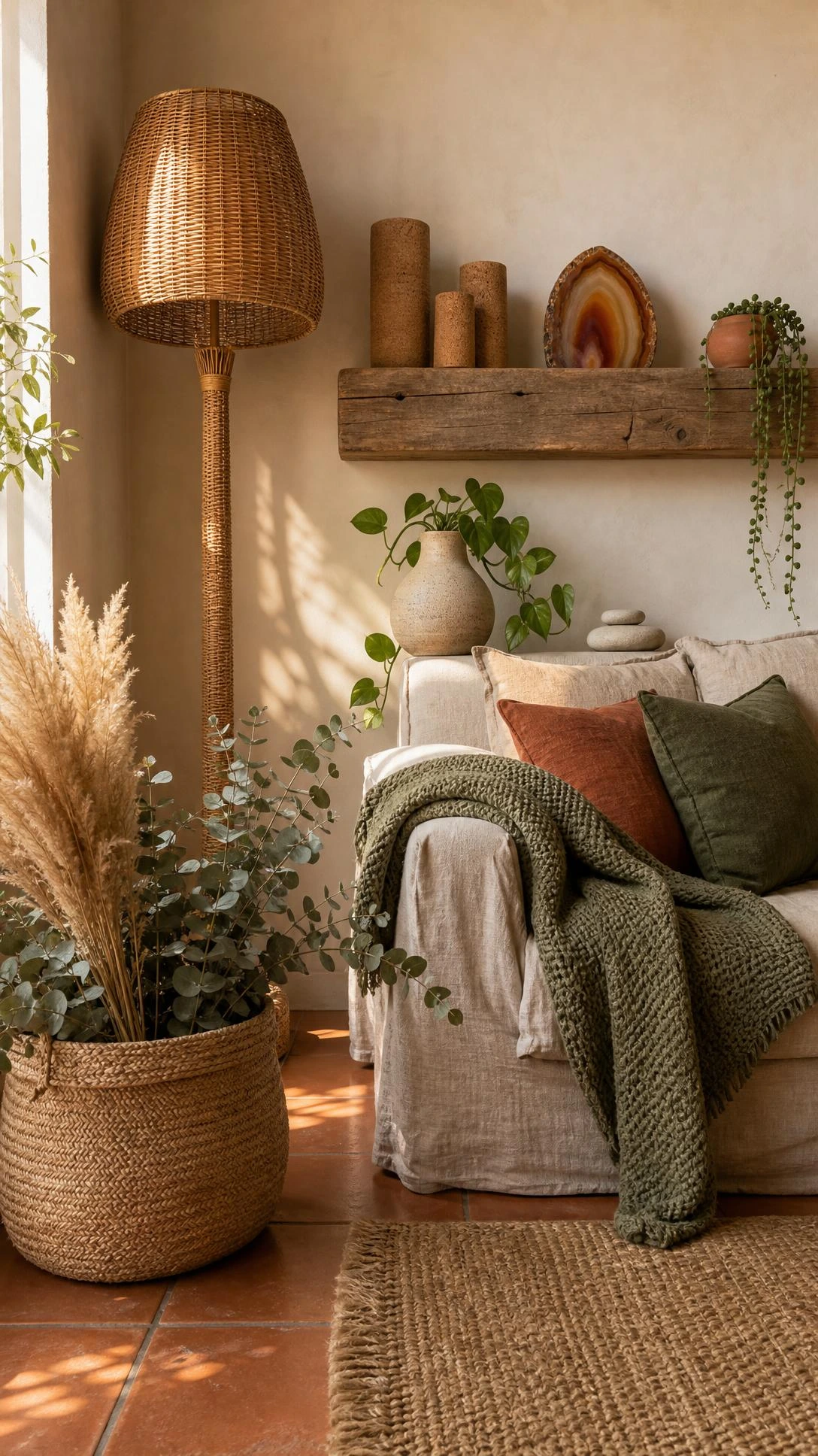
Interior garden design is not only about plants, it is also about the materials around them that reinforce the connection to nature.
Exposed wood grain shelving, a jute rug, rattan pendant lights, and stone coasters all quietly signal the outdoors in a way that most people feel but cannot immediately identify.
Swapping out one or two plastic or synthetic elements in a room for something like a bamboo tray or a raw edge wood side table from a place like CB2 or even a local vintage market can shift the whole atmosphere of the room.
These details work best when they are not overdone, so one or two natural material swaps per room rather than trying to do everything at once tends to look deliberate instead of chaotic.
I think the reason this approach works so well with actual plants is that the room starts to feel cohesive, like the plants belong there rather than just sitting on top of an otherwise modern space.
9- Skylight or Large Window Natural Light Setup
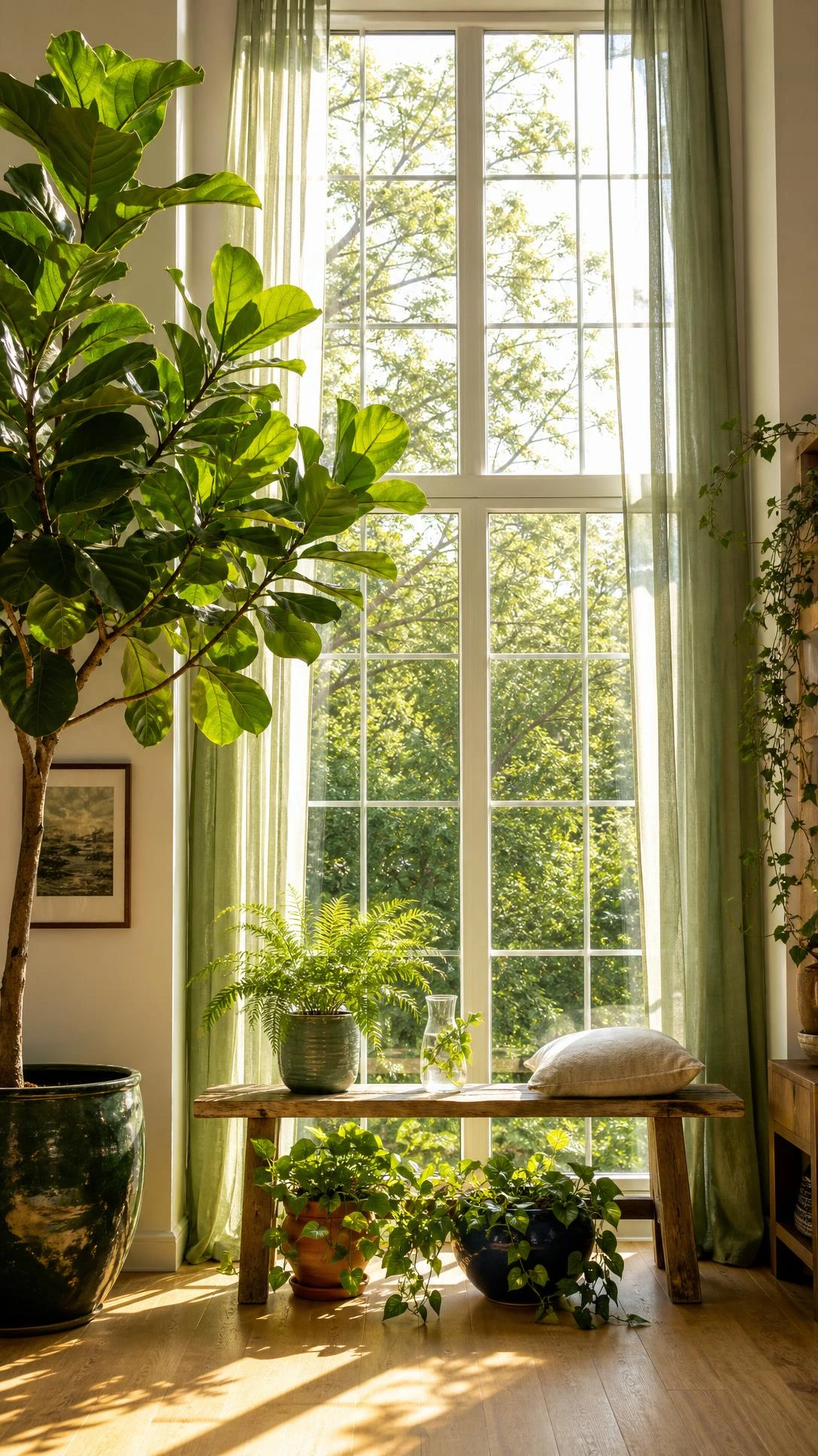
The one thing that makes indoor plants look and grow the way they do in those beautifully lit magazine rooms is just more natural light, and most homes are not making the most of what they already have.
Swapping out heavy drapes for linen or sheer panels in a room with a south or west facing window immediately makes the space feel more connected to the outside and gives plants nearby a much better chance of thriving.
For rooms with limited window access, a tubular skylight, which is a small reflective tunnel installed through the ceiling and roof, can bring natural light into a room that otherwise has none, and installation typically runs between five hundred and one thousand dollars including labor.
Even without structural changes, moving furniture away from windows so that light can reach more of the room is something most people have never considered and it makes a noticeable difference almost immediately.
Plants respond to this kind of setup better than any fertilizer, and a room with good natural light just needs one or two well-chosen plants to feel like a proper interior garden rather than a collection of pots hoping for the best.
Starting Small Makes the Whole Thing Feel Possible
Interior garden design looks complicated from the outside but most of it comes down to one or two good decisions per room rather than a whole overhaul.
Starting with a kitchen herb garden or a single statement plant in the entryway gives the confidence to add more over time without feeling overwhelmed by it all.
The rooms that feel the most alive are usually not the ones with the most plants, they are just the ones where the plants that are there look like they belong.
Pick one room, pick one idea from this list, and see how it feels before adding anything else.

Hi, I’m Alizabeth, the creator of Pretty Home Hacks. I share practical home decor ideas, easy DIY projects, organization tips, and budget-friendly ways to make your home feel more beautiful and functional. From small room updates to everyday home hacks, my goal is to share approachable ideas you can actually use in your own space.