12 Flower Garden Design Ideas That Actually Work
Most people think about flower garden design the same way they think about redecorating a room, which is to say they picture the finished version in their head and then stand in a garden center completely overwhelmed with no plan.
There are so many options, so many conflicting advice columns, and so many plants that look amazing on the tag but turn into a mystery situation once they are actually in the ground.
The frustrating part is that most flower garden design guides talk about principles like they are art school theory when all most people want is a yard that looks nice and does not require a full weekend of maintenance every two weeks.
The good news is that a good-looking garden is mostly about a few basic decisions made early, and the rest tends to follow pretty naturally from there.
These twelve ideas cover the things that actually matter when putting a flower garden together, whether the space is a narrow front border or a full backyard redesign.
1- Flower Garden Color Palette
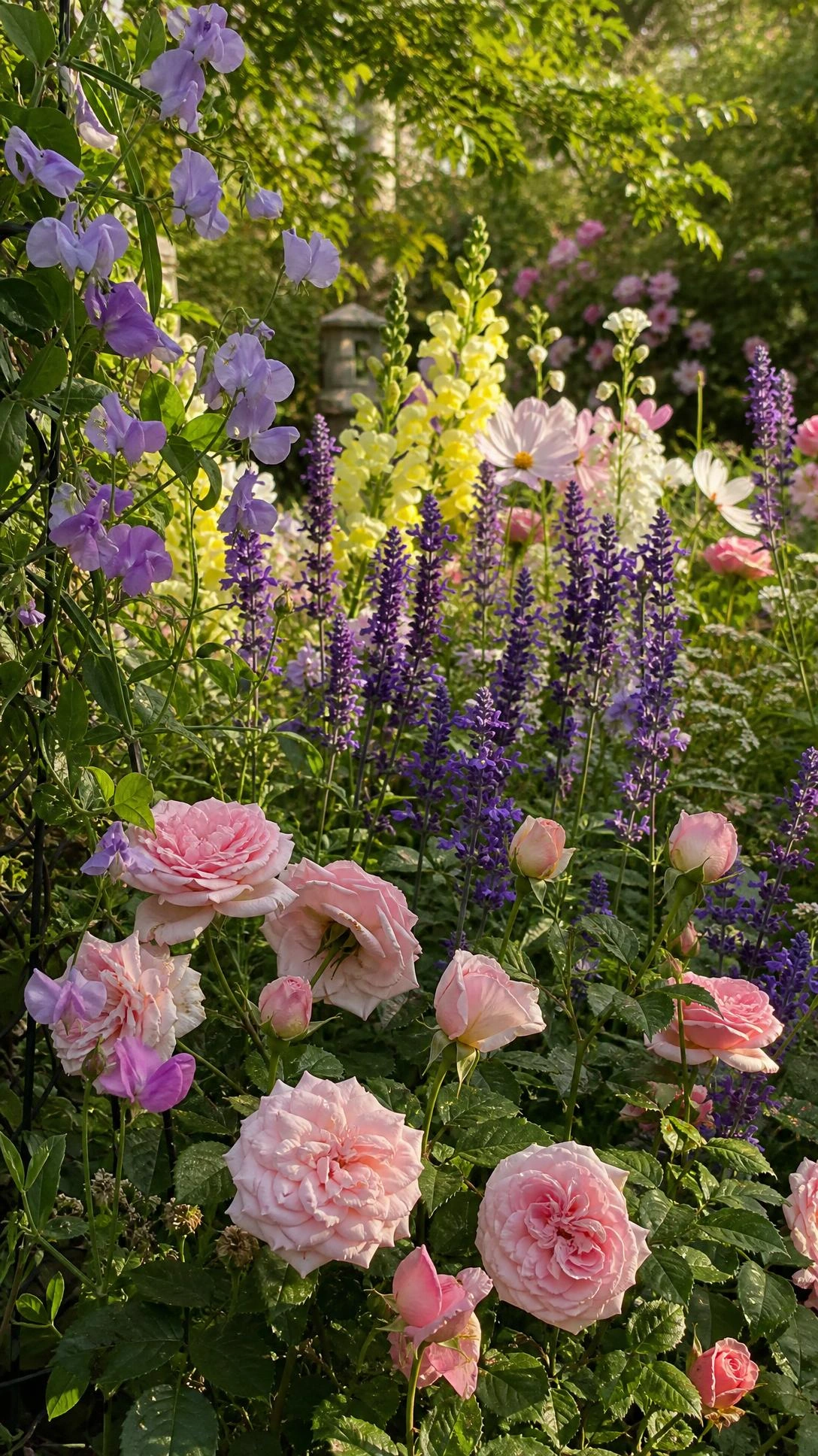
Color is the thing people notice first about a flower garden, and it is also the thing most people overthink before they even plant a single bulb.
The simplest approach is to pick two or three colors and repeat them throughout the bed rather than buying whatever looks pretty at the garden center that week.
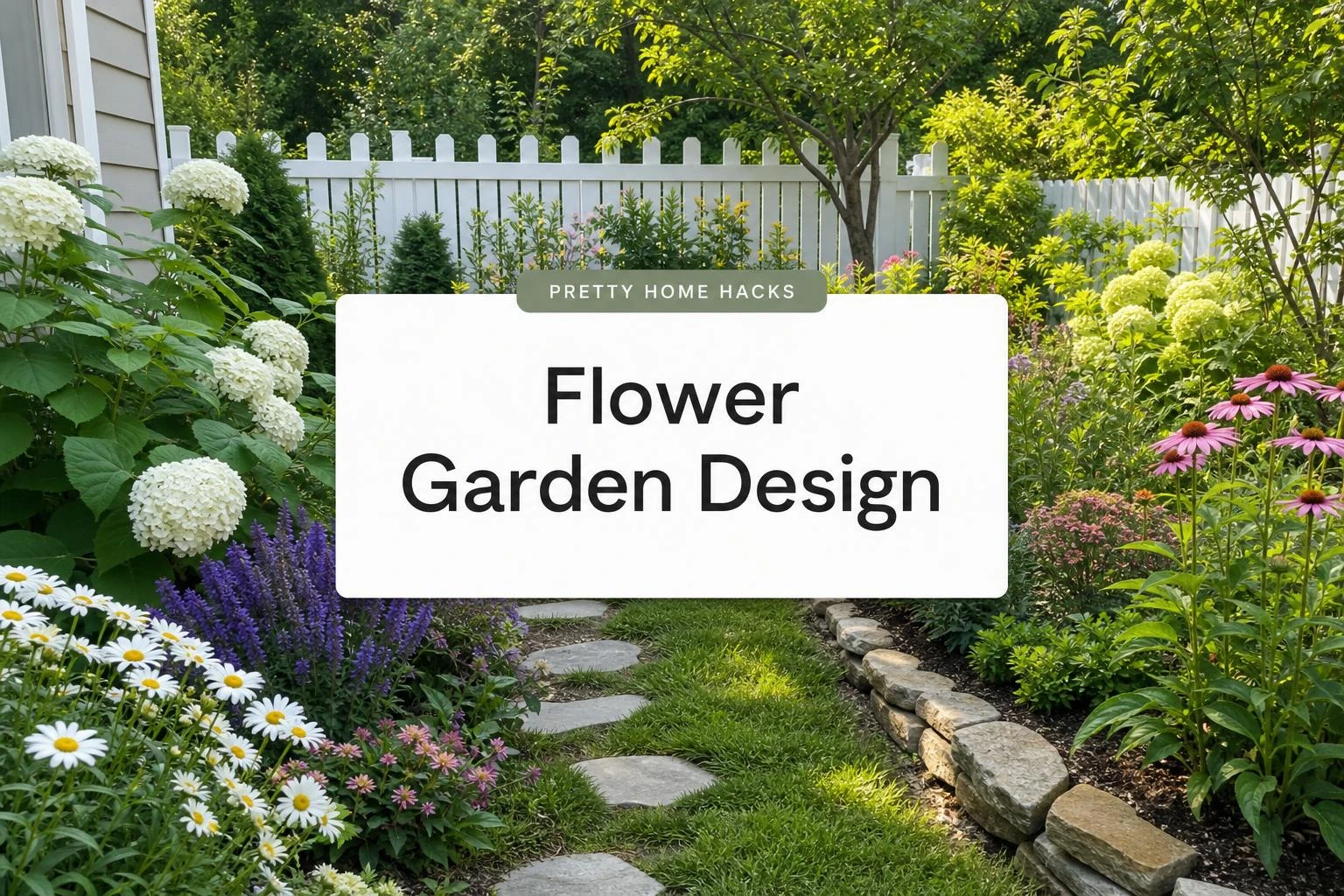
A classic combination that holds up really well is deep purple salvia, creamy white shasta daisies, and a warm yellow rudbeckia, because those three tones do not compete with each other but still have enough contrast to look intentional.
Gardens that use too many colors at once can start to look more like a clearance sale than a design, which is not a judgment, just something worth knowing before spending a hundred dollars on impulse buys.
I think starting with one anchor color and building around it is the most reliable way to get a result that looks cohesive even if the plant knowledge is still developing.
2- Choosing the Right Garden Site
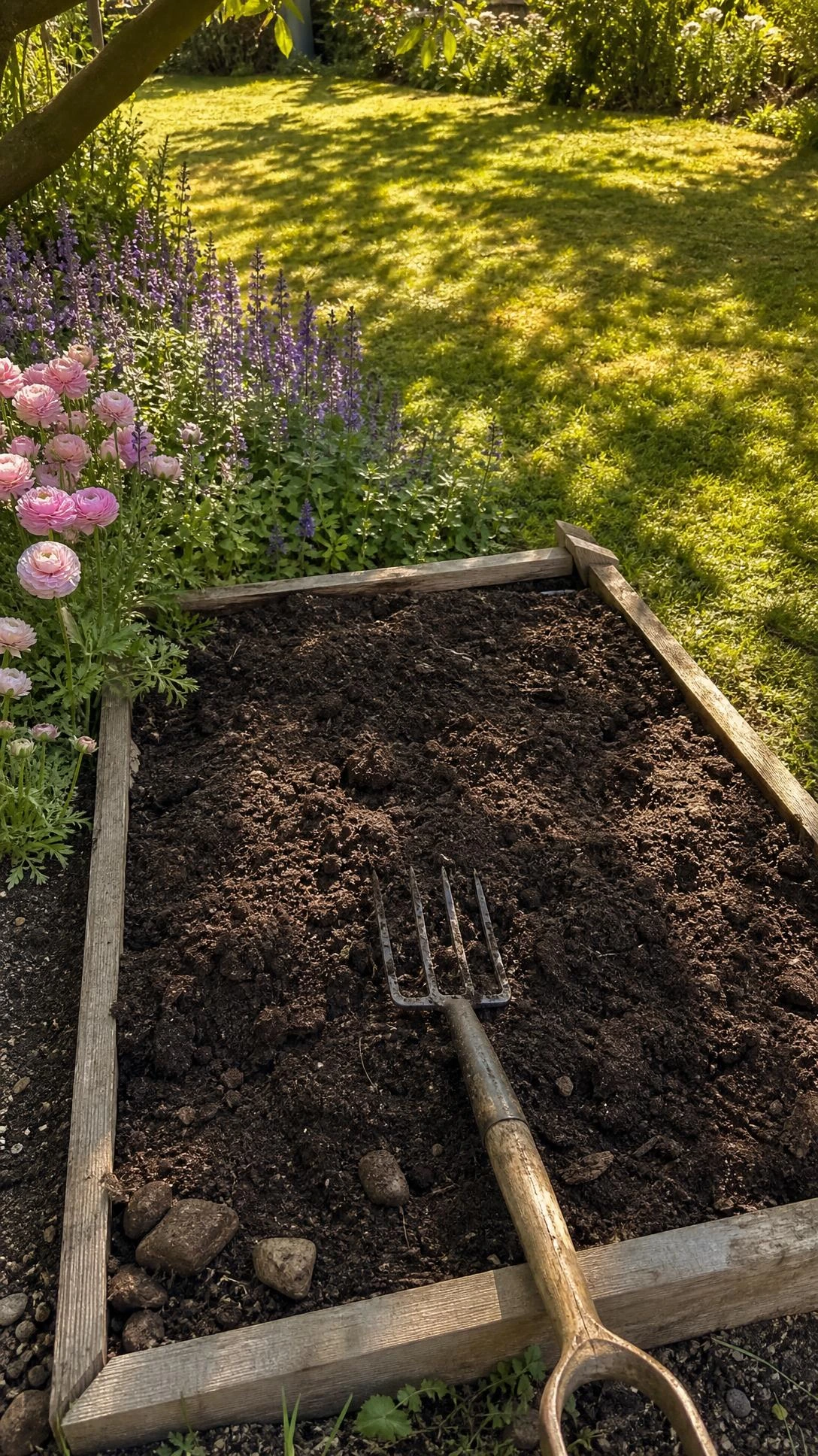
A lot of flower gardens struggle not because of bad plant choices but because the site itself was never really evaluated before anything went in the ground.
Most flowering plants need at least six hours of direct sun per day, and putting a sun-loving plant in a shaded corner is one of those situations where no amount of care is going to fix the core problem.
Before buying anything, it is worth watching a spot through the day at least once to see how the light actually moves across it, because what looks sunny in the morning can be fully shaded by afternoon depending on nearby structures or trees.
Soil drainage matters too, and a quick test is to dig a small hole about six inches deep, fill it with water, and check whether it drains within an hour or sits there like a small pond.
Most flower gardens can be adjusted for soil quality with some compost worked in before planting, but the light situation is harder to work around without doing some real restructuring.
3- Garden Bed Shape and Size
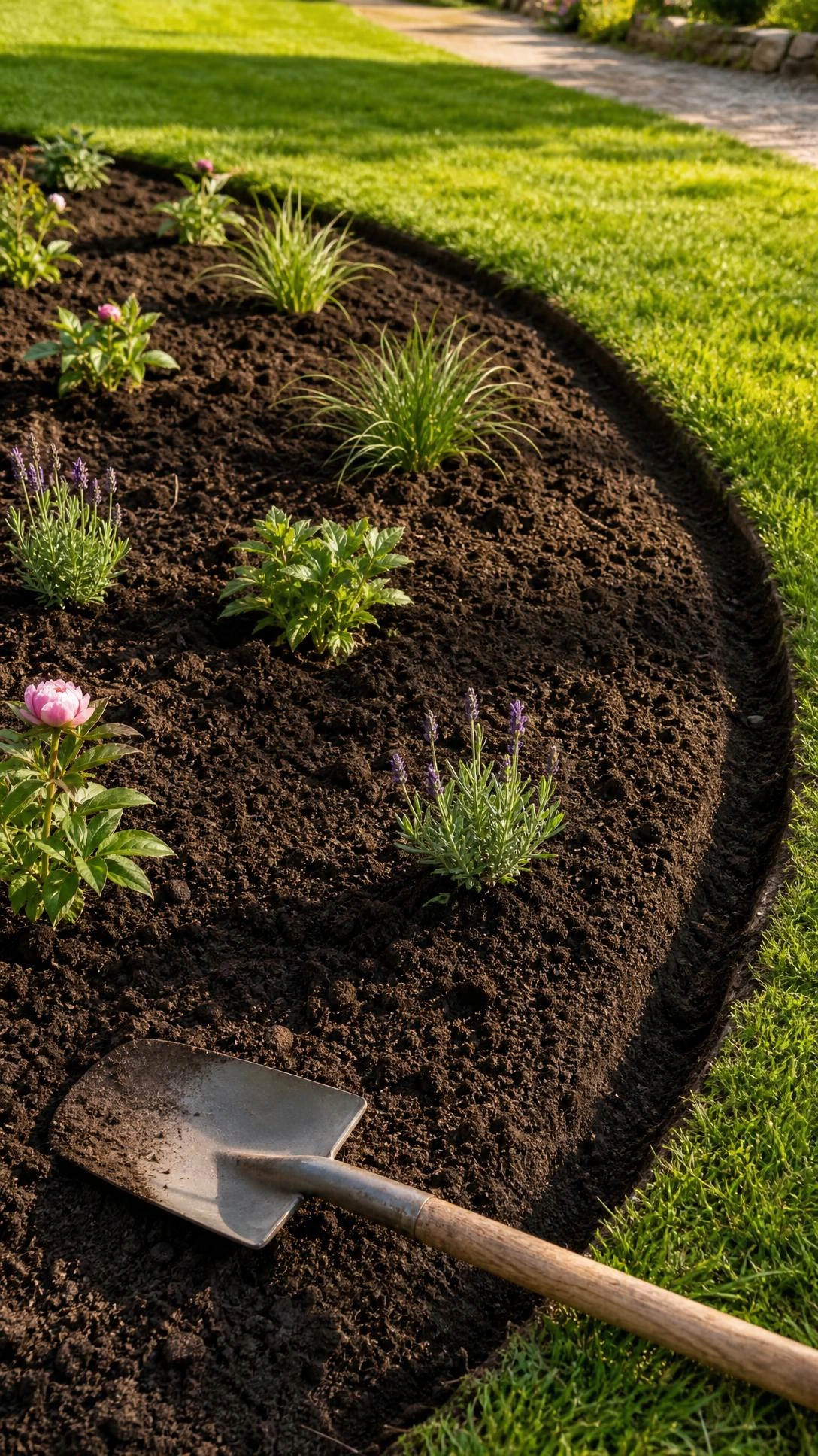
The shape of a flower garden bed does more for the overall look than most people expect, especially from a distance or when viewed from a window inside the house.
Curved beds tend to feel more relaxed and natural, while straight geometric borders give a more structured and intentional look, and neither is better than the other but they do set very different tones.
A border bed that is less than three feet deep is genuinely hard to make look layered or full, so going at least four to five feet deep gives enough room to work with tall, mid-height, and low-growing plants in the same space.
One thing people do not always plan for is how the bed shape creates a natural line that either leads the eye somewhere interesting or just kind of stops abruptly, and a gentle curve that ends near a focal point like a tree or a patio edge tends to feel much more resolved.
Using a garden hose laid on the ground to test the shape before digging anything is one of those tips that sounds a little tedious but saves a lot of regret.
4- Layering Plant Heights in Garden Borders
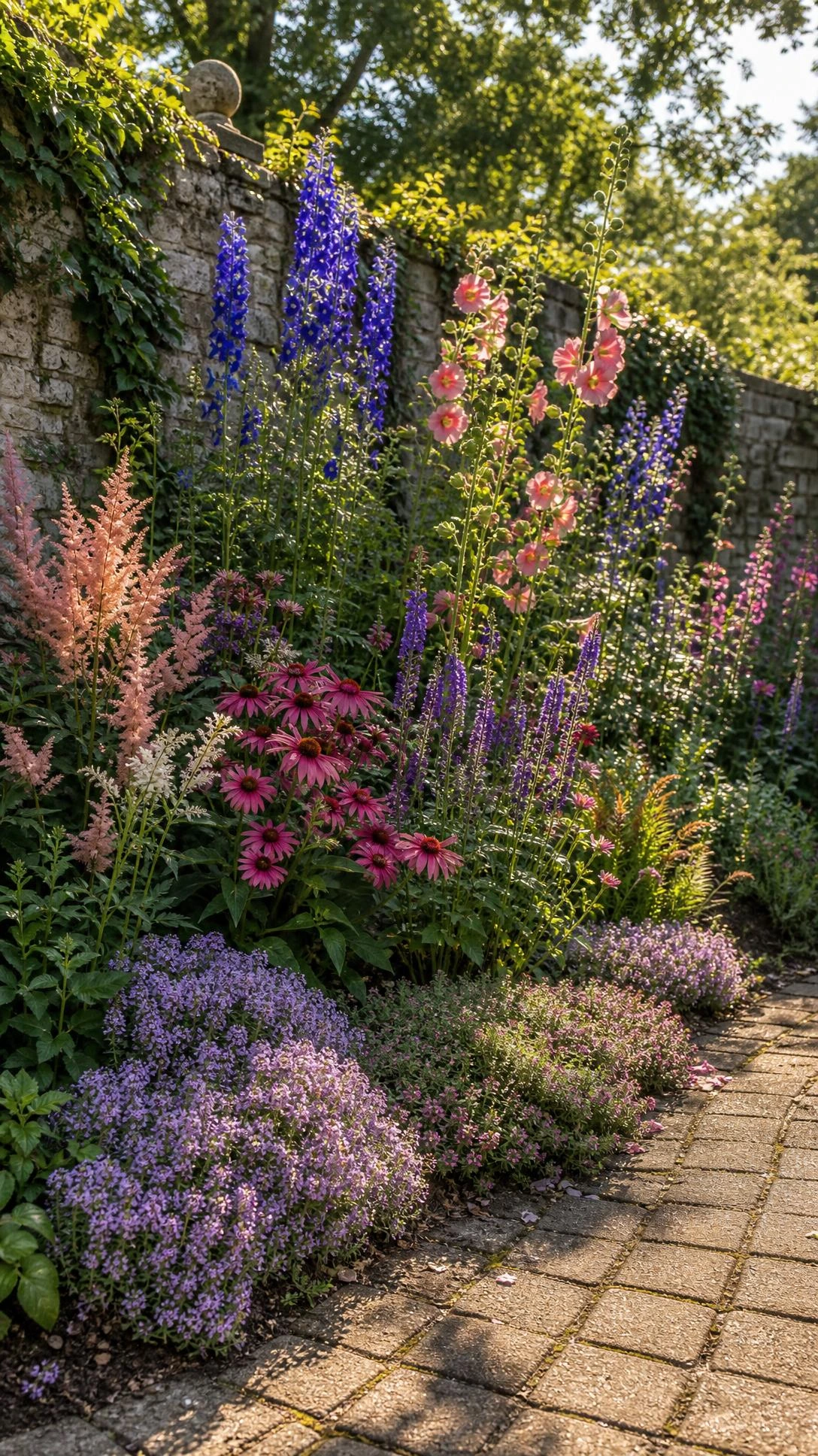
One of the most common reasons a flower garden looks flat or unfinished is that everything in it is planted at roughly the same height, which removes all the depth and visual interest that layering creates.
The general rule is to put the tallest plants at the back of a border bed or in the center of an island bed, mid-height plants in the middle, and low ground-hugging plants along the front edge.
A practical example that works in most climates is using tall Russian sage at around three to four feet at the back, mid-height coneflowers at two feet in the middle, and catmint spilling softly along the front edge at about twelve inches.
The front edge plants are the ones people underestimate most, because a soft spilling plant at the border makes the whole bed look intentional even if the rest of the planting is still filling in.
Leaving a little room for the plants to spread into each other slightly as they grow is fine and actually tends to look better than perfectly spaced plants with bare soil between them.
5- Mixing Annuals and Perennials Together
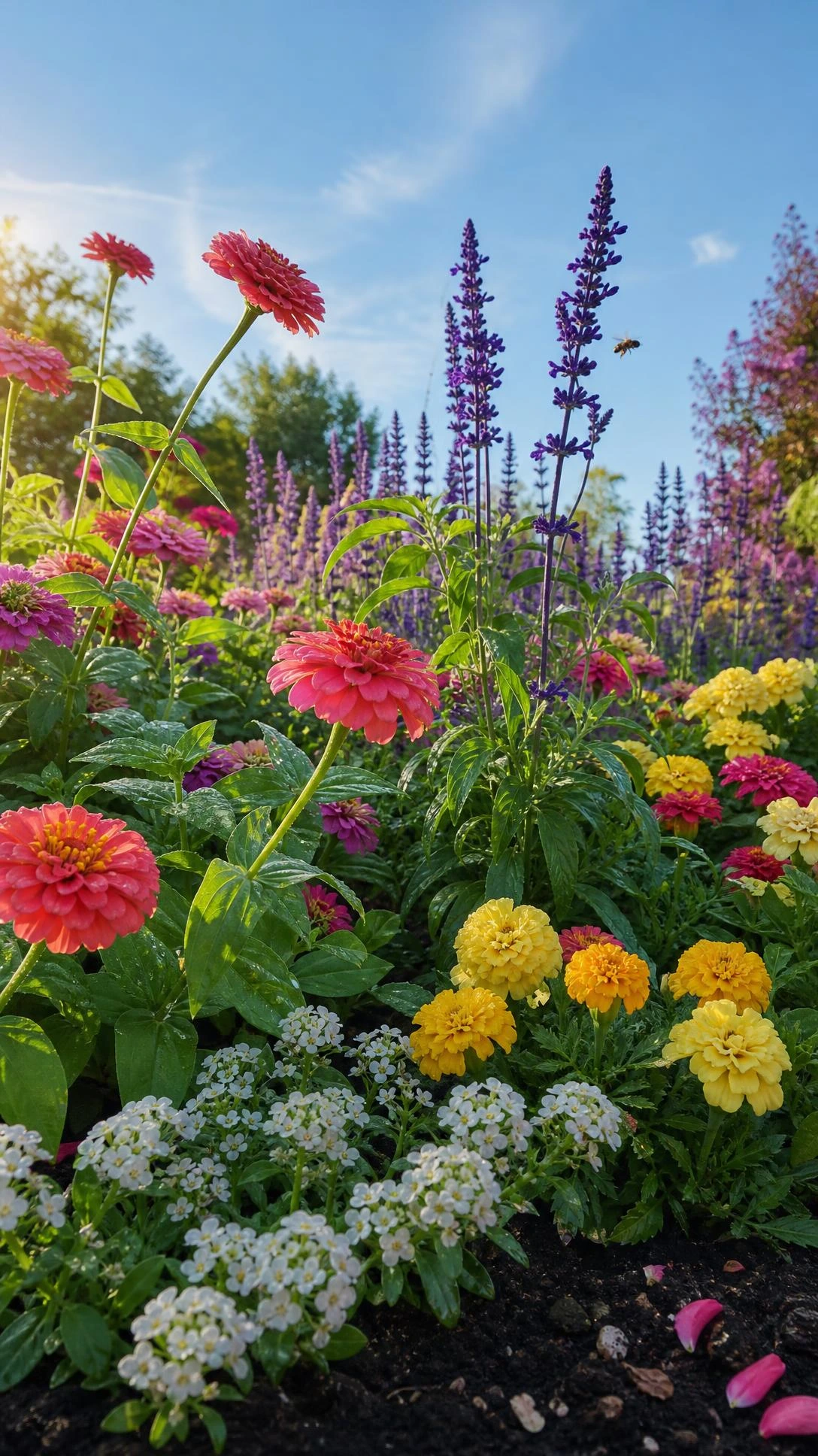
There is a running debate about whether to go all perennials for a low-maintenance garden or mix in annuals for season-long color, and the real answer is that mixing them is almost always the better-looking option.
Perennials like black-eyed Susans, coneflowers, and salvias give the garden its backbone and come back reliably each year without replanting, but they tend to bloom in waves rather than all season long.
Annuals like zinnias, marigolds, and petunias fill in those gaps and keep color going from late spring through the first frost, and in most garden centers a six-pack of annuals runs somewhere between three and eight dollars depending on the variety.
Marigolds in particular are genuinely useful beyond just looking nice, because planting them near the edges of a flower bed helps deter aphids and certain beetles without needing to spray anything.
The goal is a garden that looks full and alive even in the weeks when the perennials are between bloom cycles, and a good mix of annuals tucked into open spots handles that really well.
6- Using Texture to Add Depth to Flower Beds
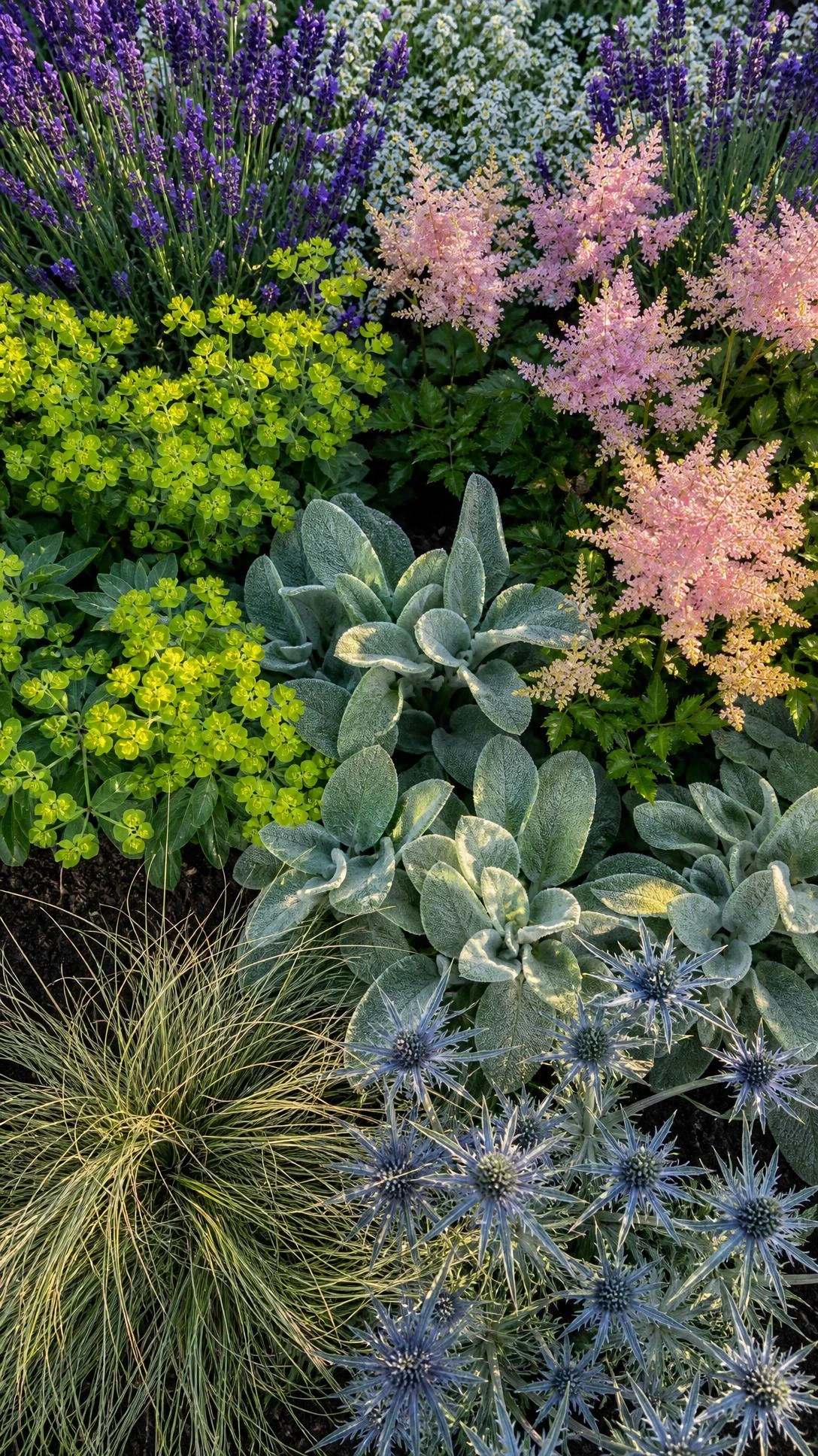
Texture in a flower garden is one of those things that most people respond to without knowing exactly why a garden looks interesting versus just adequate.
Fine feathery textures like ornamental grasses or fennel foliage next to broad flat leaves like hostas or hellebores create a contrast that reads as depth even when colors are similar.
It is not just about the flowers either, because leaves, seed heads, and stems all contribute texture throughout the season including after the blooms have faded.
Russian sage is a really good example of a plant that earns its spot in a garden through texture alone, because those silvery-grey stems and tiny lavender flowers create a hazy, layered look that catches light in a way flat-leafed plants just do not.
Adding even one or two plants with clearly different leaf structure to an existing bed can change how the whole garden reads without changing a single color.
7- Planting Native Flowers for Low Maintenance Color
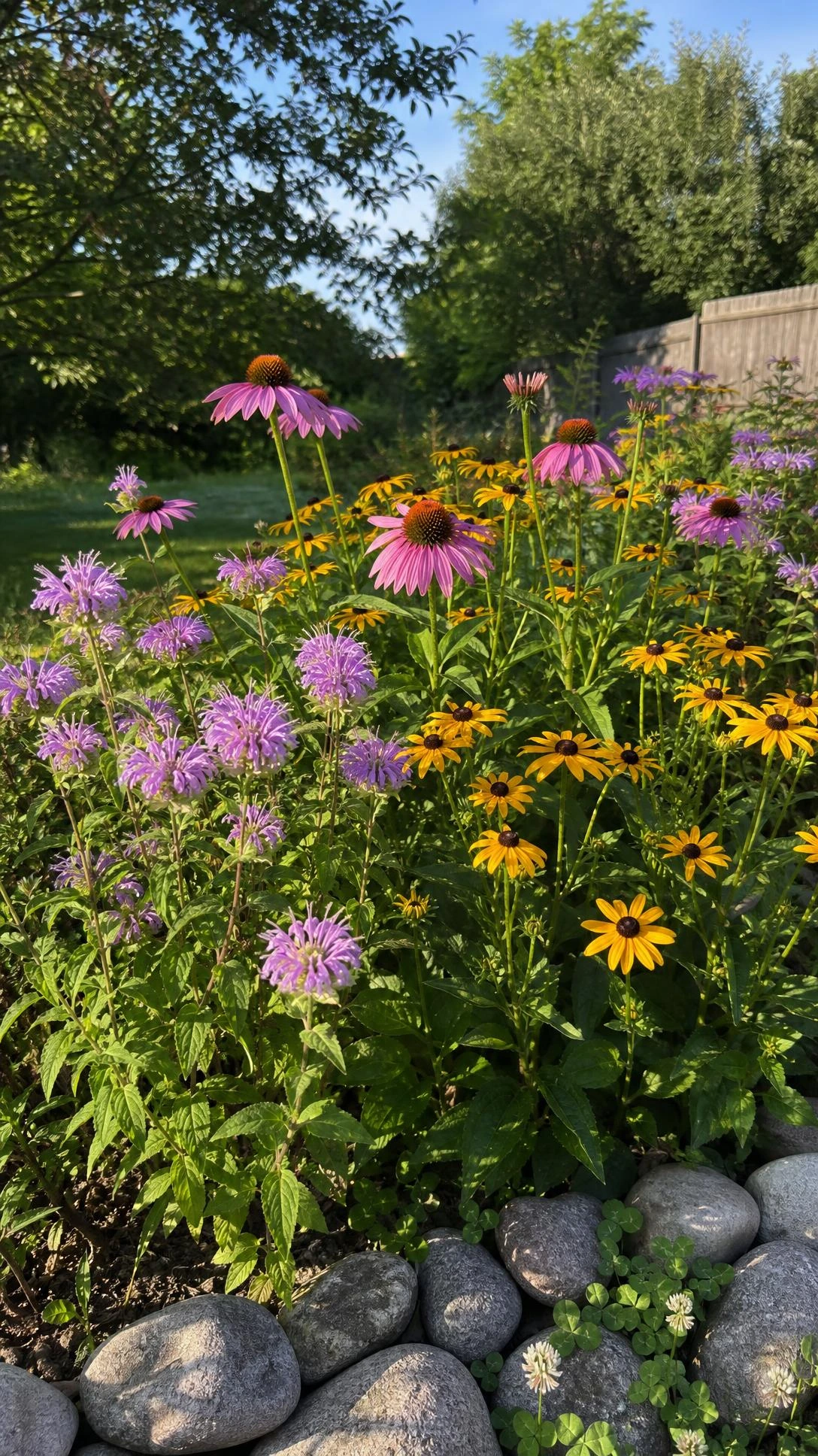
Native plants are talked about a lot in gardening circles, and while it can sound like a complicated or niche approach, the practical reality is that native flowers are usually just easier to keep alive.
Plants that are native to a region have already adapted to the local rainfall patterns, soil type, and temperature swings, which means they tend to need less water, less fertilizer, and far less intervention once they are established.
Black-eyed Susans are a really accessible example for most of North America, because they bloom reliably from late summer into fall, attract pollinators constantly, and spread slowly to fill in bare patches on their own without becoming a problem.
The adjustment period is usually the first growing season while the roots are establishing, and it is normal for native plants to look less showy in year one before they really take off in year two or three.
Replacing even a quarter of a flower bed with regional natives tends to reduce how much time the garden actually needs each week, which most people appreciate more than they expected.
8- Creating a Path or Edge Through the Garden
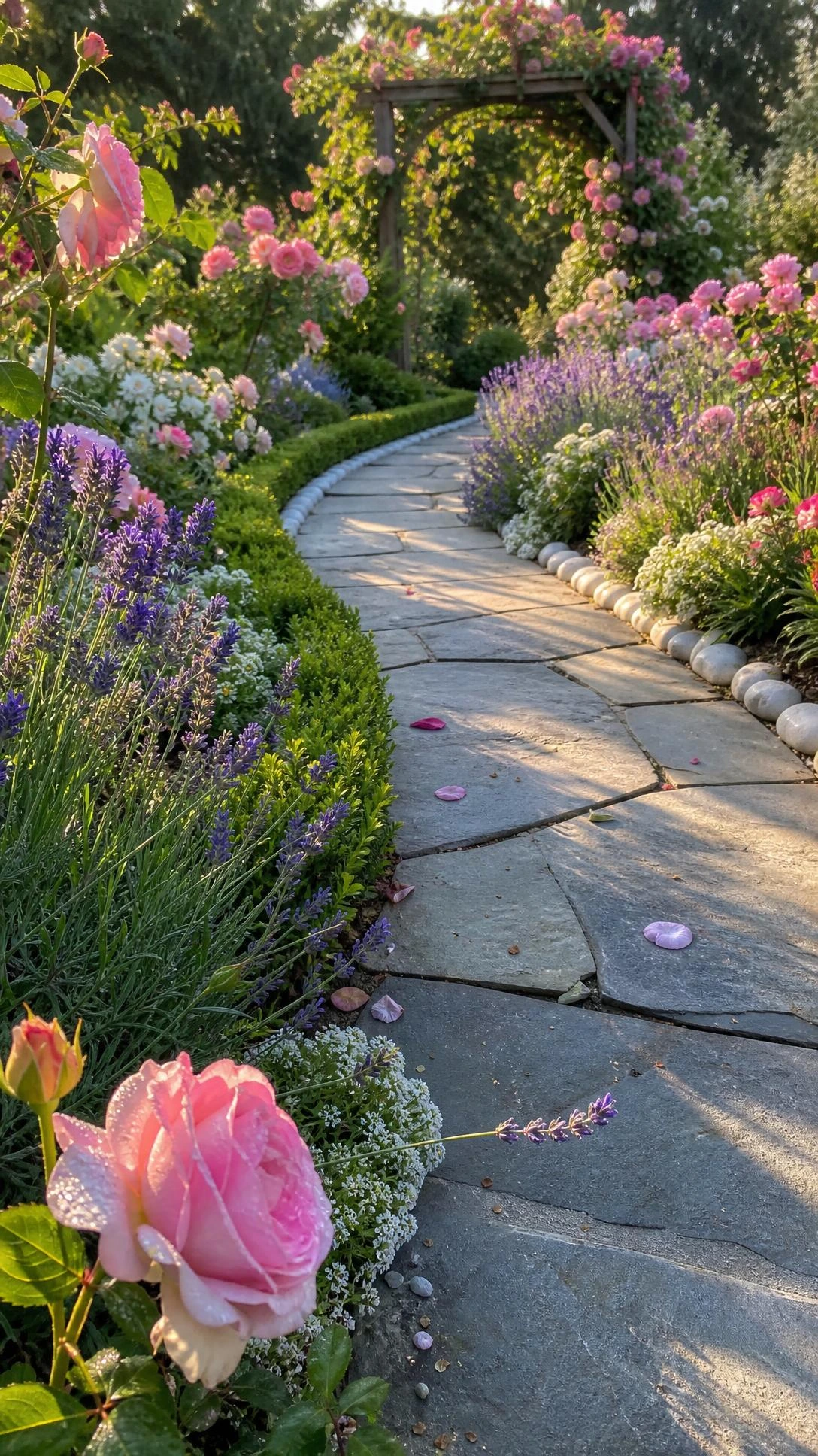
A simple path or defined edge does something useful for a flower garden beyond just looking organized, because it actually prevents grass and weeds from creeping into the bed from the sides.
A steel or aluminum edging strip buried about two inches into the soil along the border is one of the most underrated investments in a garden, because it holds the shape of the bed for years with almost no maintenance.
For internal paths through larger gardens, stepping stones set flush with the soil level at about eighteen inches apart give enough room to move through the space for deadheading and weeding without compacting the planting areas.
The inside edge of the path is also worth thinking about as a planting zone, because low creeping plants like thyme or ajuga along the edge of a stone path create that soft finished look where the hard surface meets the planting.
Getting the edge right early means the garden retains its shape through the season instead of slowly losing definition every time it rains hard or someone mows a little too close.
9- Incorporating Edible Plants Into Flower Garden Design
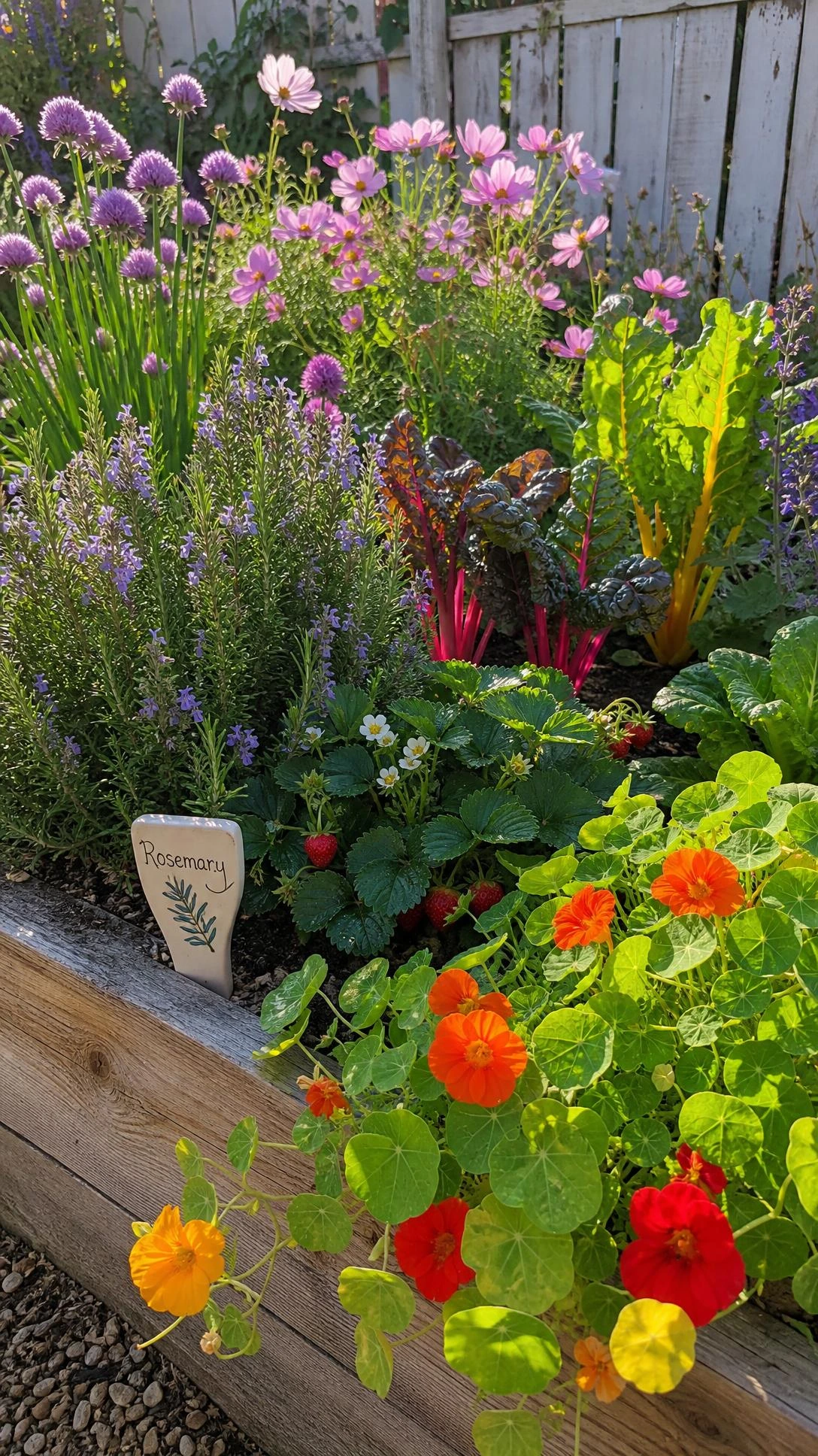
There is something really satisfying about a garden that looks beautiful and also produces something, and mixing edible plants into a flower bed is more natural-looking than most people expect.
Nasturtiums are one of the best plants for this because they have round cheerful leaves, bright orange and yellow flowers, and they work as a living mulch that shades the soil and repels aphids from nearby plants.
Herbs like purple basil, flowering chives, and bronze fennel all look genuinely ornamental in a flower border while also being actually useful in the kitchen, and they tend to cost less per plant than purely decorative annuals.
The trick is treating the edible plants as design elements first and kitchen plants second, which means thinking about their height, leaf color, and flower structure before deciding where they go.
A small cluster of purple basil nestled between pale pink cosmos and white nicotiana honestly looks like it was planned by someone who knew exactly what they were doing, even if it was mostly a happy accident.
10- Designing for Bloom Succession Through the Season
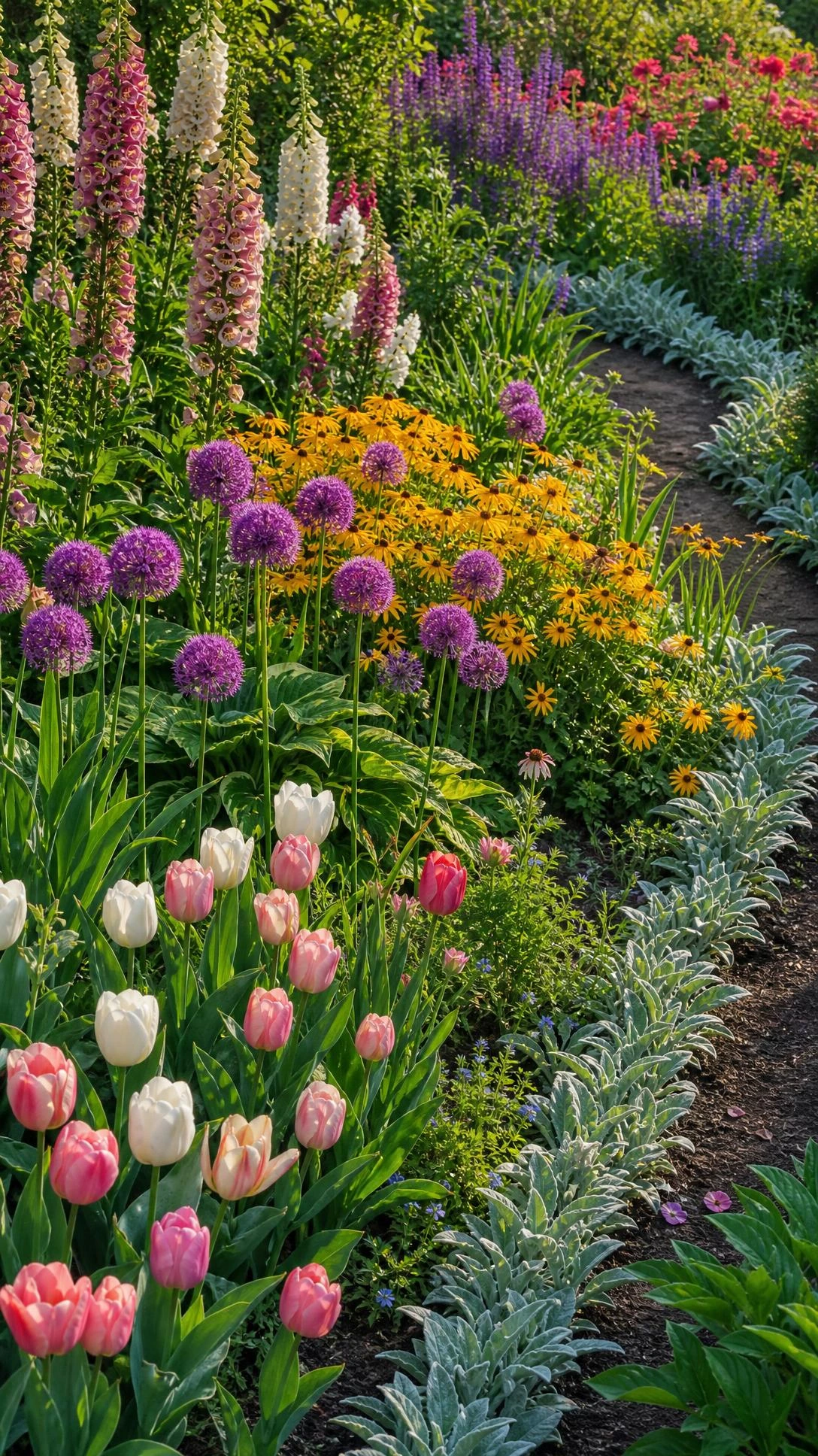
One of the most common disappointments with flower gardens is that everything blooms in June and then the garden looks tired and green for the rest of the summer, which is almost always a planting selection issue rather than a skill issue.
Designing for succession just means making sure there are plants with early, mid, and late season bloom times all represented in the same bed so something is always happening from spring through fall.
A simple framework that works well is alliums and tulips for spring, coneflowers and shasta daisies for summer, and sedums, asters, and rudbeckia for late summer and fall color that carries through until the first hard frost.
It also helps to notice which plants have interesting seed heads or fall foliage because those extend the visual season even after the blooms are gone, and black-eyed Susan seed heads in particular look striking against a light frost.
Mapping out bloom times before buying anything is a ten-minute planning step that prevents the garden from becoming a one-month wonder every single year.
11- Using Repetition to Make a Garden Feel Designed
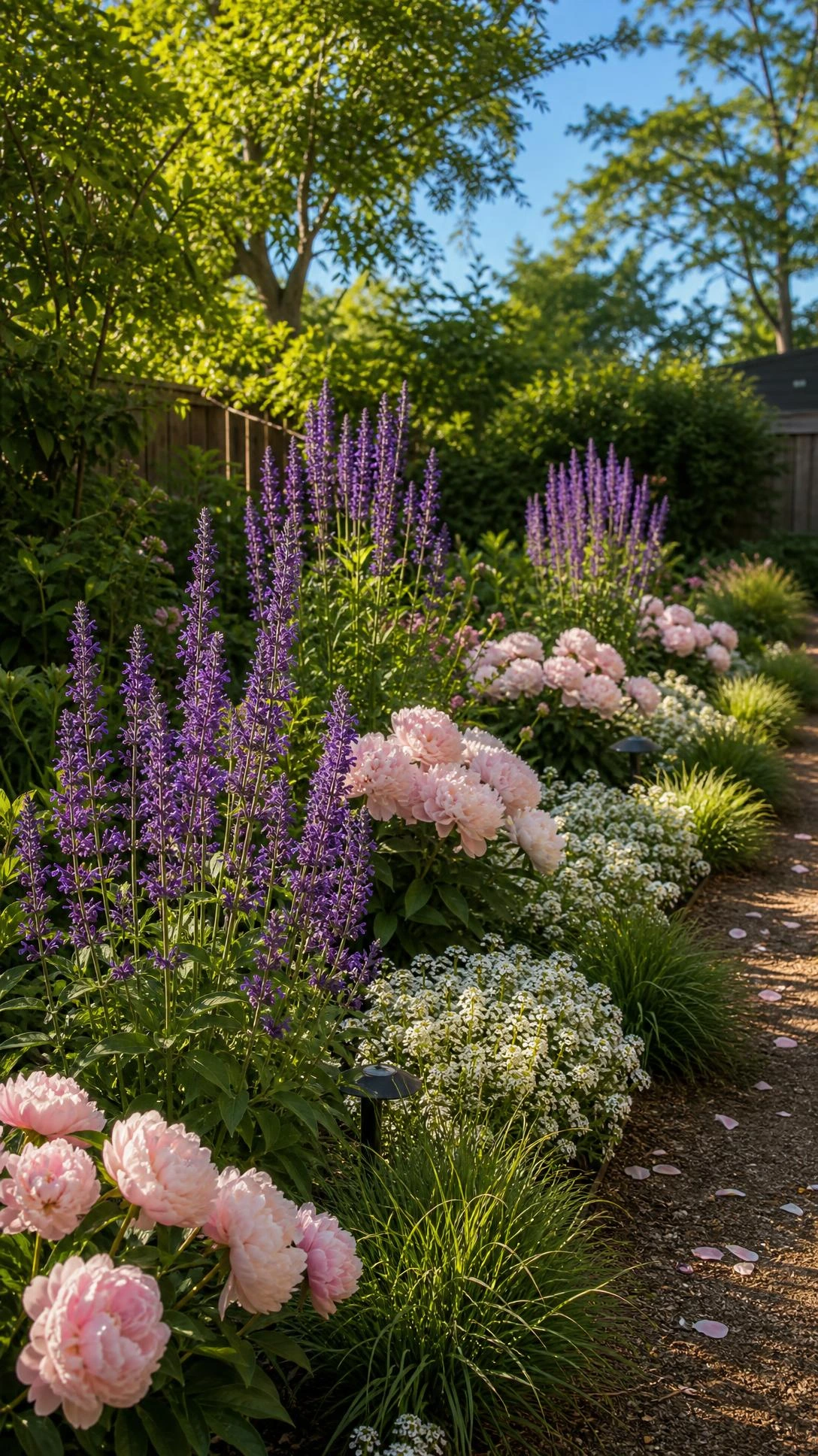
Repetition is the design principle that most people are already responding to when they describe a garden as looking “put together” without being able to say exactly why.
Planting the same variety or the same color at intervals through a long bed creates a visual rhythm that pulls the eye along the whole space, and it makes even a simple planting feel intentional.
A practical version of this is planting one variety of ornamental grass, like Karl Foerster feather reed grass at about four feet tall, every six to eight feet along the back of a border, and then filling between those anchors with other plants.
The repeated element does not have to be a tall plant, because even repeating the same low edging plant like a specific lavender variety every few feet creates that same pulled-together quality in a much more subtle way.
I think repetition is honestly the easiest principle to apply once someone starts paying attention to it, and it tends to make more difference to the finished look than any other single change.
12- Planning for Garden Maintenance Honestly
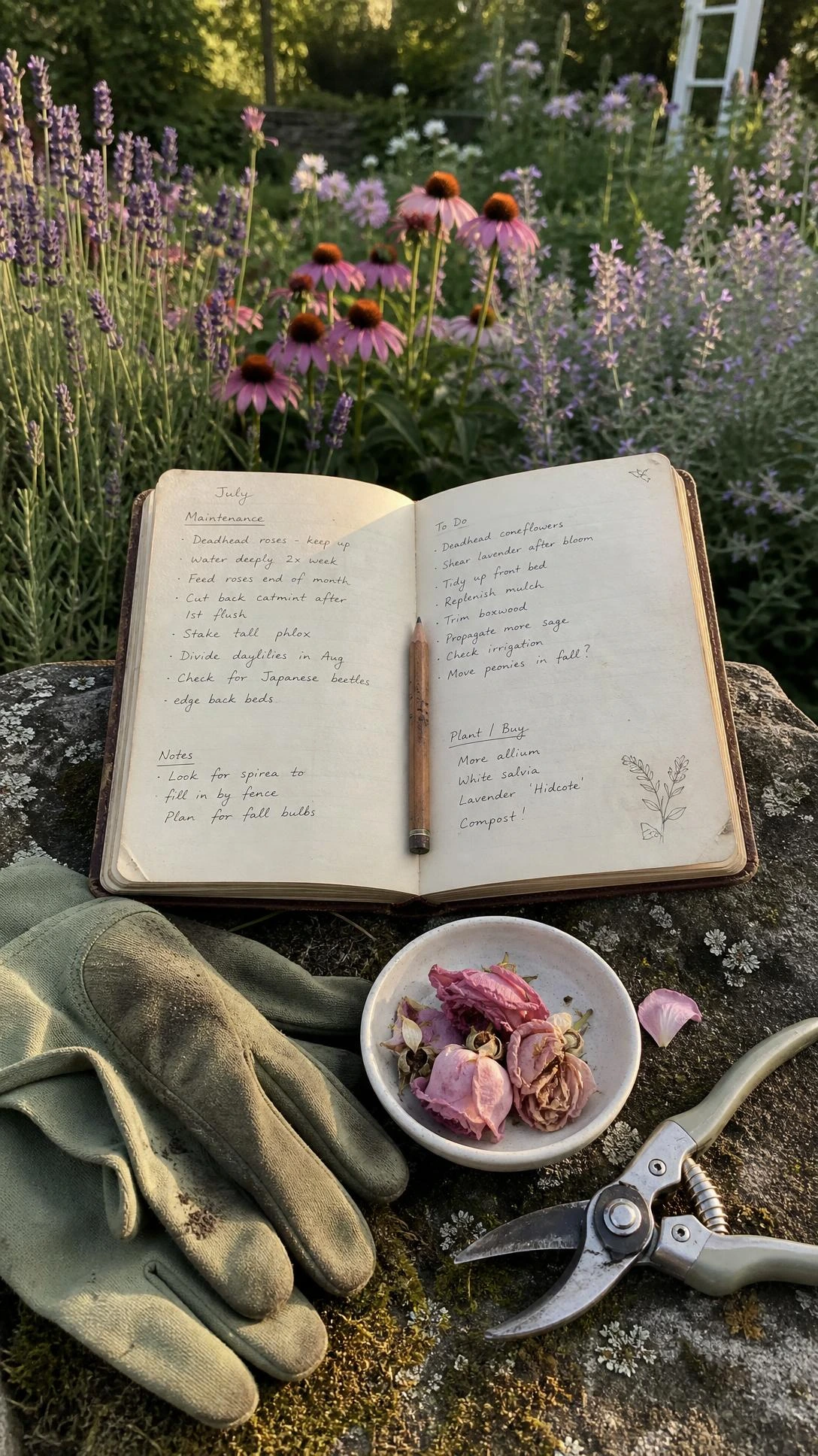
Most flower garden plans fall apart not because of bad design but because the ongoing maintenance demand was never really matched to how much time the gardener actually has most weeks.
A garden that relies heavily on annuals, roses, or fussy perennials that need regular deadheading, staking, or fertilizing can easily require three to four hours a week to look its best, which is a real commitment to make honestly.
Going with mostly self-sufficient plants like coneflowers, black-eyed Susans, ornamental grasses, and rudbeckia means the weekly commitment drops to maybe an hour, which is a much more sustainable reality for most households.
Mulching the bed with about two to three inches of shredded hardwood mulch each spring is one of the single highest-return maintenance tasks because it suppresses weeds, retains moisture, and reduces how often the garden needs watering through dry stretches.
A garden that is designed around realistic maintenance is one that actually gets cared for, and a cared-for garden always looks better than an ambitious one that gets neglected by August.
A Flower Garden That Grows With You
Flower garden design does not have to be figured out all at once, and most of the best gardens people end up with were built slowly over a few seasons of paying attention to what worked and what did not.
Starting with a good site, a simple color idea, and a mix of reliable plants that cover different bloom times gives a foundation that is genuinely hard to ruin.
The gardens that feel the most personal and the most alive are almost never the ones that followed a strict plan perfectly, they are the ones that got adjusted, added to, and edited over time by someone who was actually out there watching how the space worked.
A patch of black-eyed Susans coming back on their own in early September after a long dry summer is its own kind of reward that no design principle fully captures.

Hi, I’m Alizabeth, the creator of Pretty Home Hacks. I share practical home decor ideas, easy DIY projects, organization tips, and budget-friendly ways to make your home feel more beautiful and functional. From small room updates to everyday home hacks, my goal is to share approachable ideas you can actually use in your own space.