
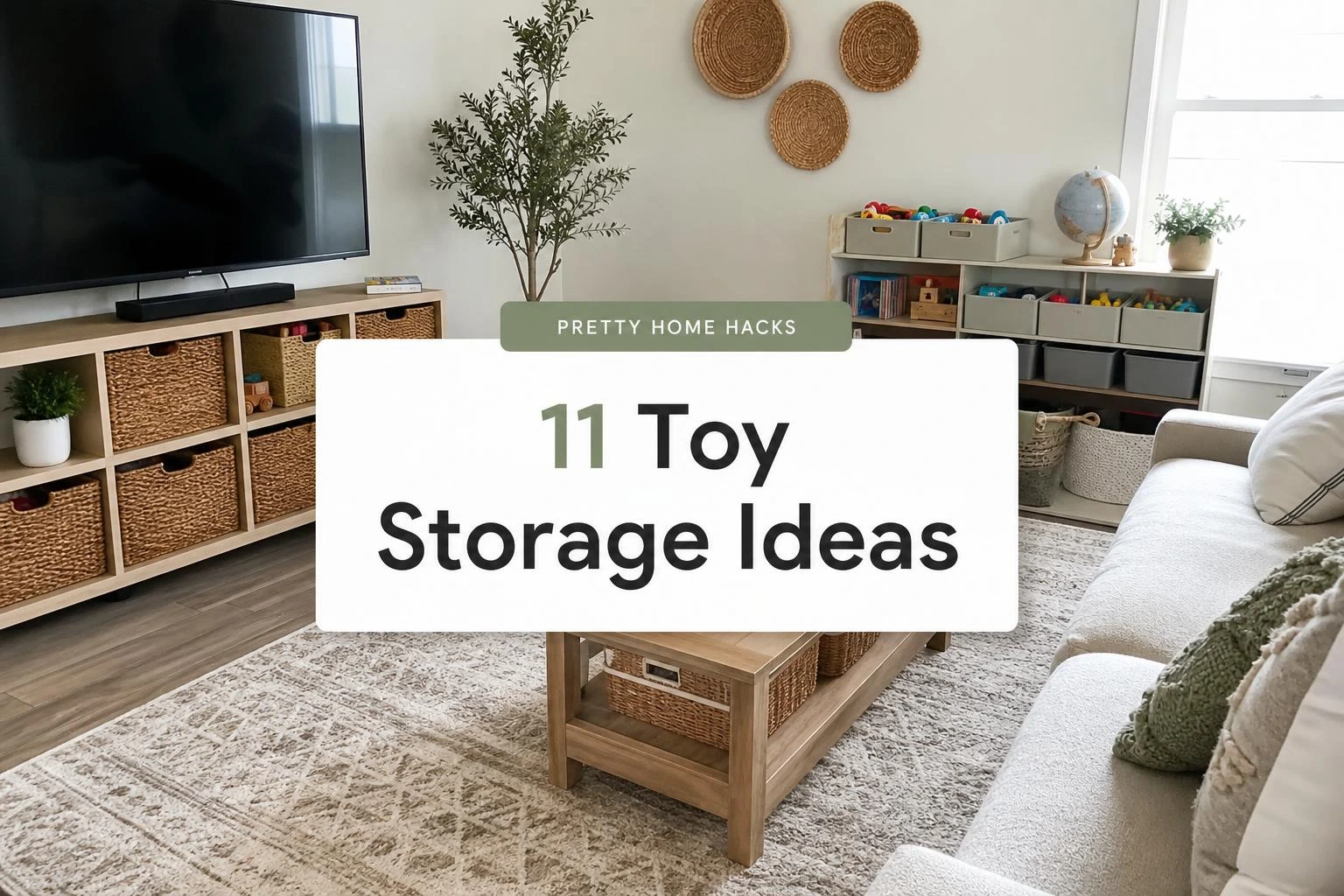
11 Toy Storage Ideas for the Living Room That Actually Keep the Floor Clear
Living room floors and toys have a relationship nobody asked for but every parent knows too well.
It starts with a few things left out after bath time and somehow by Friday the entire floor is a obstacle course of tiny plastic pieces that are aggressively painful to step on at midnight.
Most people assume the only real fix is a dedicated playroom, which is not something every home has or every budget allows.
The thing is, toy storage ideas for the living room have gotten a lot better, and a lot of them look like actual furniture instead of a brightly colored chaos zone.
These are eleven ideas that genuinely hold up in real living rooms where both adults and kids have to coexist without the space looking like a daycare by dinner.
1- Large Open Bins Near the Sofa
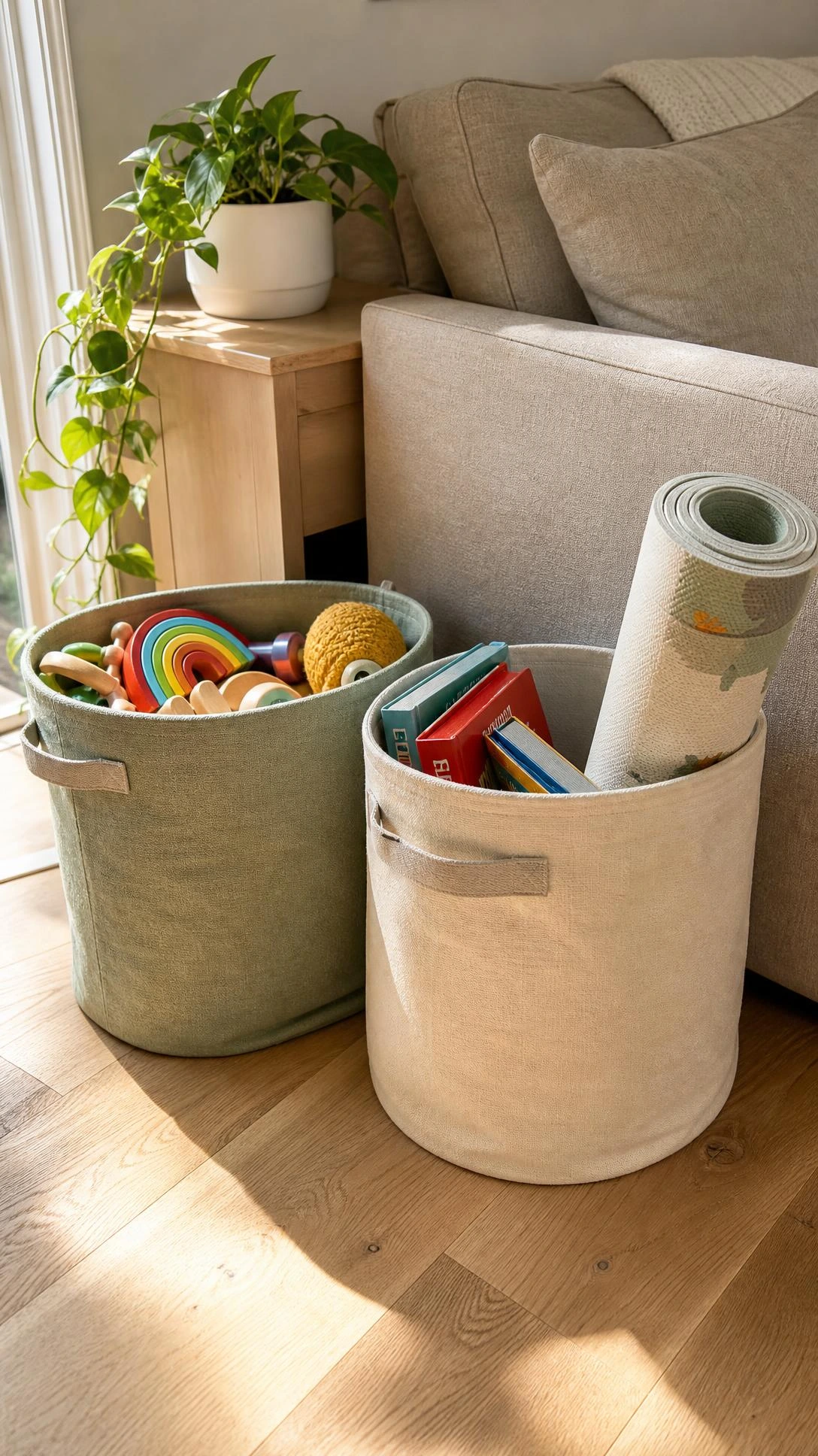
The fastest toy storage solution is also the least complicated one, which is a big open bin that kids can actually use themselves without help.
No lids, no sorting required, just a simple drop zone that gets things off the floor in about thirty seconds.
Woven seagrass baskets around 18 inches wide look completely at home next to a sofa and hold an impressive amount without looking cluttered.
The trick is keeping it to one or two bins rather than spreading them all over the room, because the goal is a clear floor, not a basket collection.
Most kids will actually use this system because there is no wrong way to do it.
2- IKEA Kallax as a Room Anchor
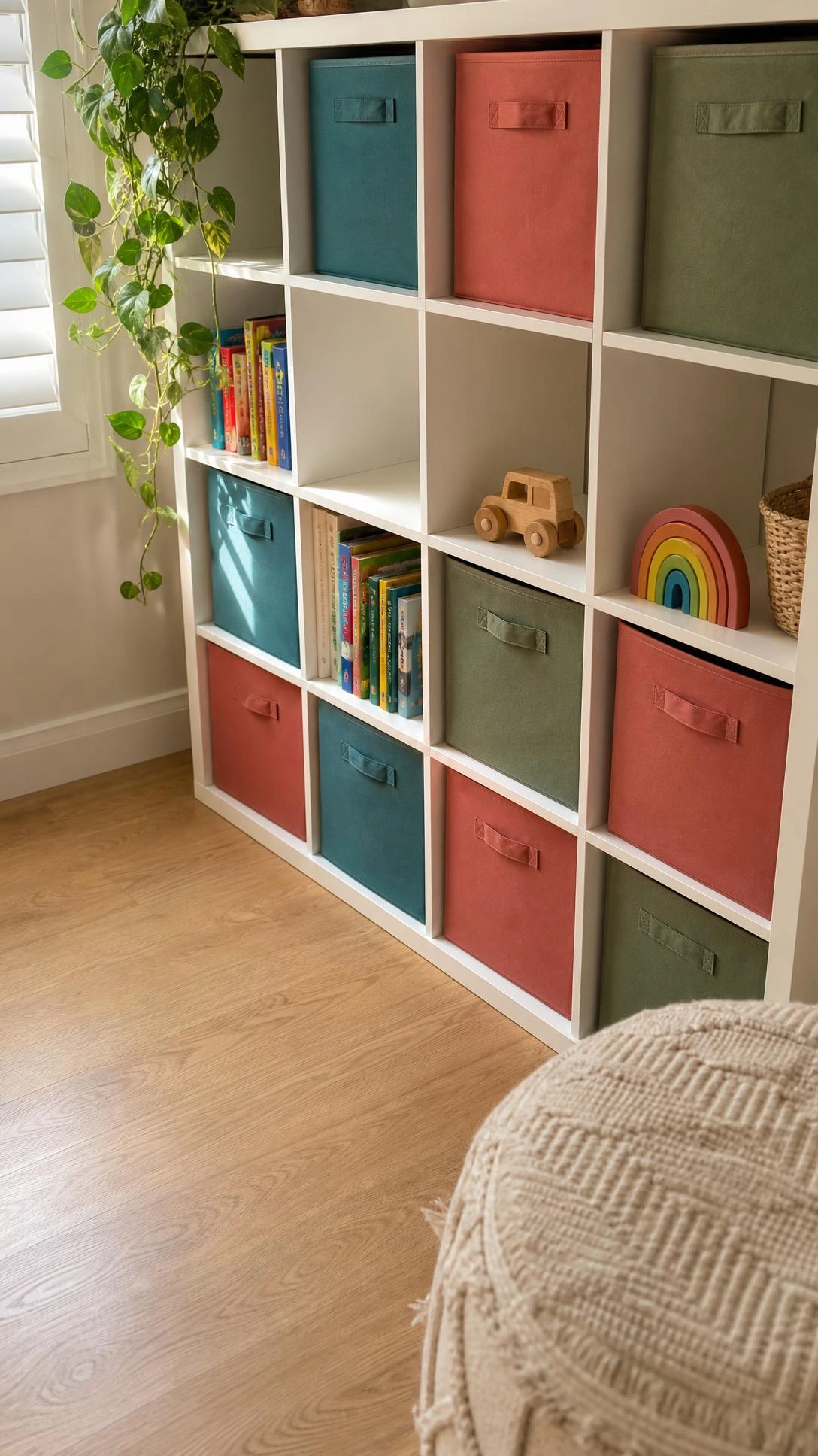
The Kallax unit has been a staple in family living rooms for years and it earns that reputation.
It works as a shelf, a room divider, and a storage unit all at once, which is a lot to ask of one piece of furniture and it mostly delivers.
The horizontal four-by-two configuration sits at about 30 inches high, which is low enough to feel furniture-like rather than institutional.
Mixing open cubes with fabric insert boxes in a neutral like oatmeal or charcoal keeps the look calm even when the boxes are stuffed with LEGOs and random doll accessories.
It runs around $100 to $150 depending on size, which is reasonable for something that does this much work in a room.
3- Storage Ottoman as the Coffee Table
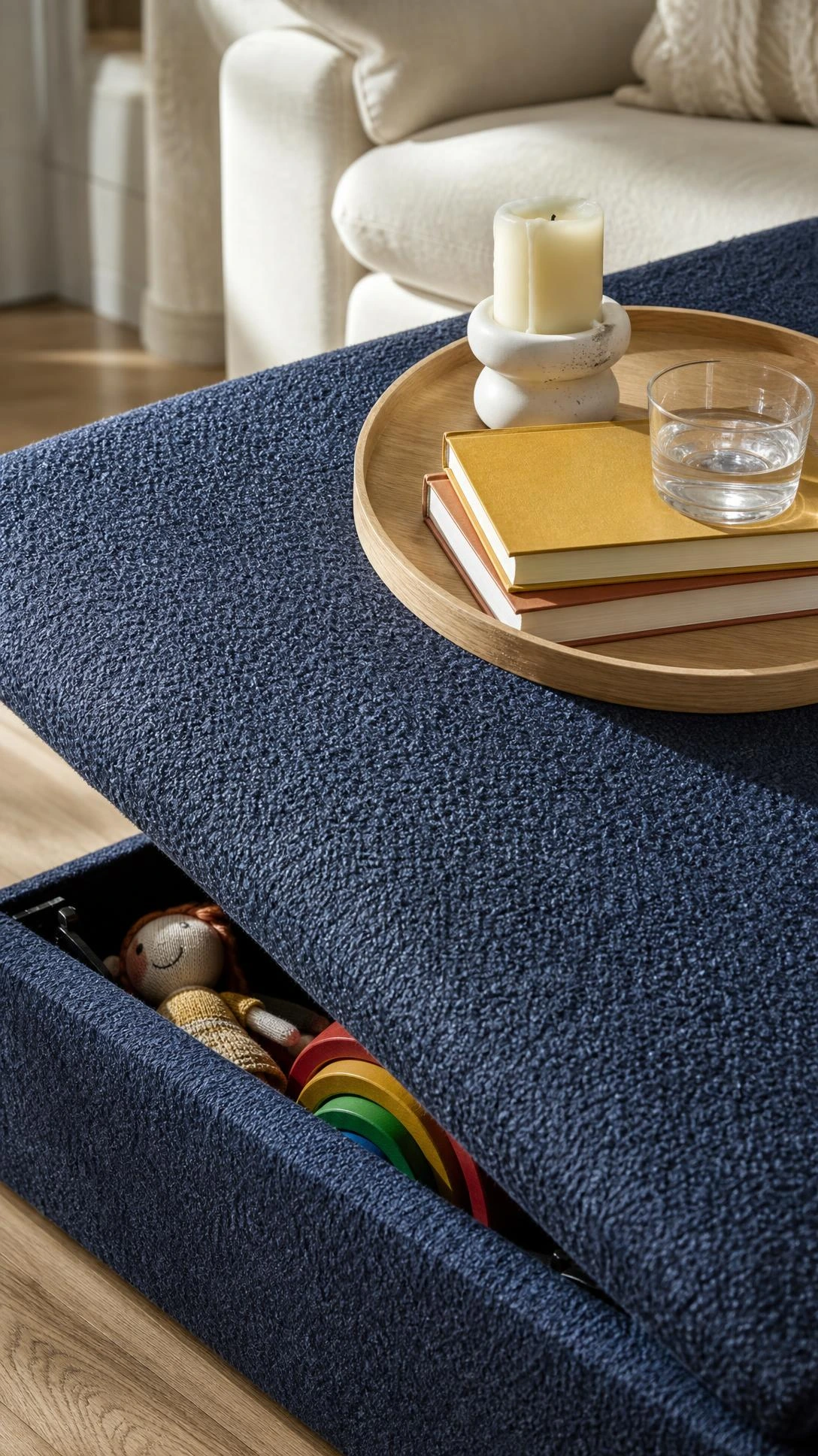
Swapping a regular coffee table for a storage ottoman is one of those decisions that seems small and ends up being genuinely useful every single day.
The top stays clear as a surface and the inside holds board games, stuffed animals, and anything else that migrates to the middle of the room.
A tufted cube ottoman in a washable performance fabric, something like a slate blue or warm gray, works well in most living rooms without reading as obviously child-related.
The lid situation matters though, because some ottomans have heavy lids that small kids struggle with, so a lightweight lift-top or a completely open basket style works better for families with younger children.
It also means one less sharp corner in the room, which is always a nice side effect.
4- Clear Drawer Units for Small Toy Sets
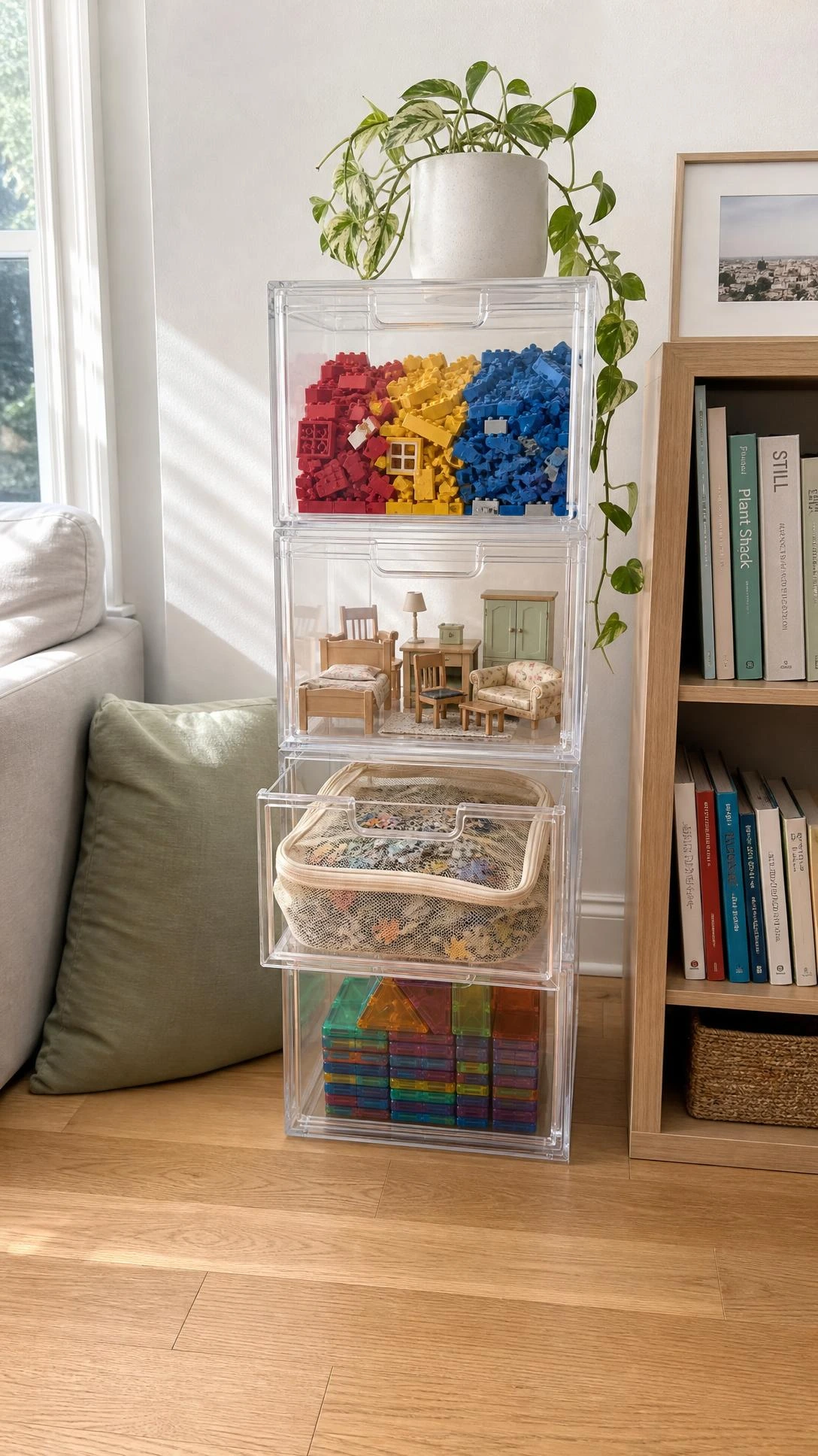
Small toys are the real enemy of a tidy floor because they scatter in ways that defy logic.
Clear plastic drawer units, the kind with individual pulls on each drawer, let kids see exactly where everything lives without opening every single one.
The IKEA Alex drawer unit or a similar stackable option works well when each drawer is dedicated to one category, like trains, magnetic tiles, or art supplies.
Keeping these inside a cabinet or sideboard means the drawers stay accessible but invisible from the main seating area.
This setup works best for kids who are old enough to understand the system, so roughly four and up.
5- Storage Bench Along a Wall
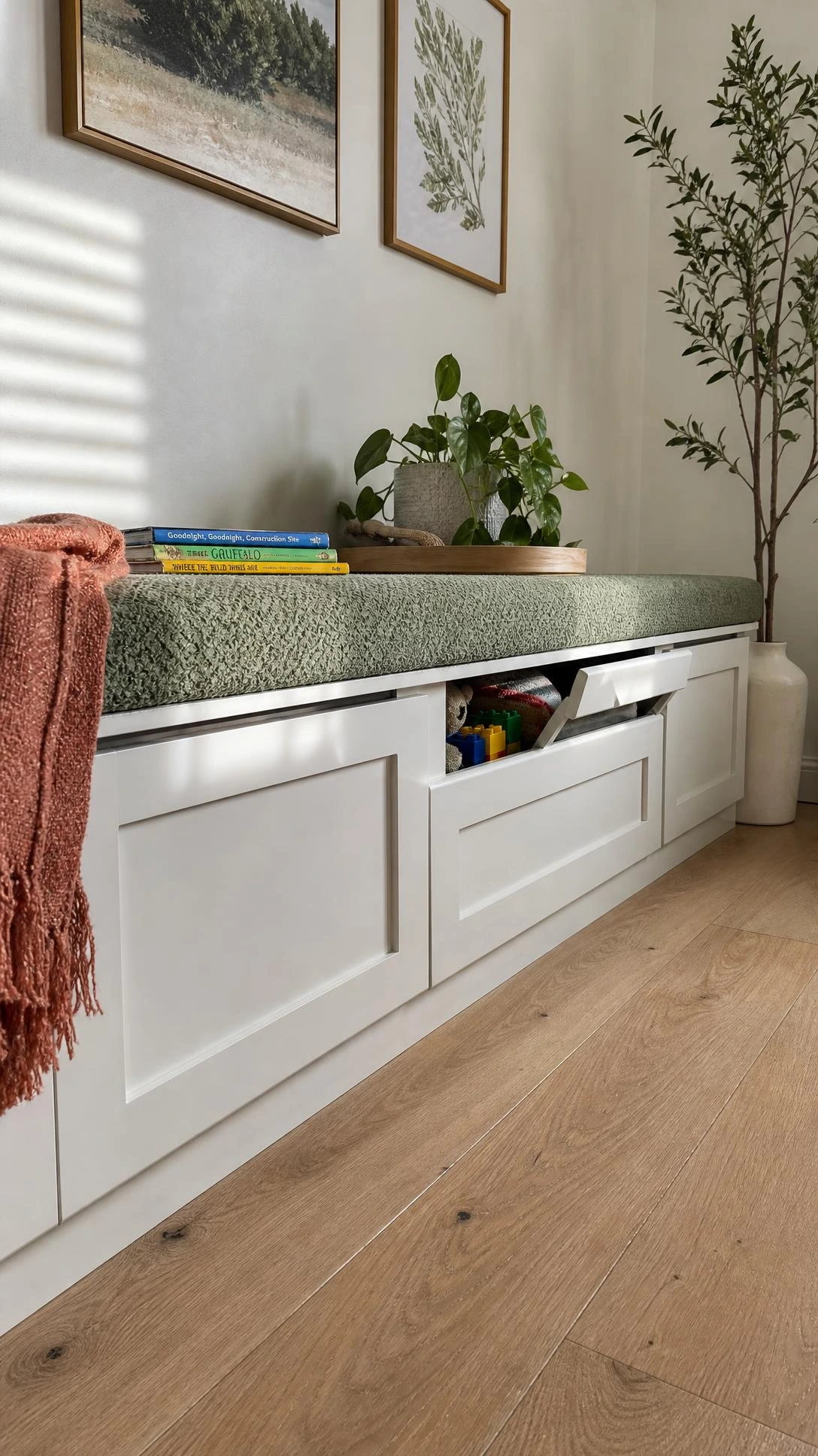
A storage bench along the living room wall pulls double duty as seating and a hiding spot for anything that does not have a better home.
The flip-top style with a hollow interior holds a surprising amount, things like dress-up clothes, sports gear, and the board games that are too big for a shelf.
A bench in a natural wood finish or painted in a soft white reads as furniture first and storage second, which matters in a room where adults also spend time.
Around 48 inches long is a practical size for a living room because it fits most walls without overwhelming the space.
The only real watch-out is making sure the lid has a soft-close hinge if small fingers are going to be lifting it regularly.
6- A Sideboard or Media Cabinet With Closed Doors
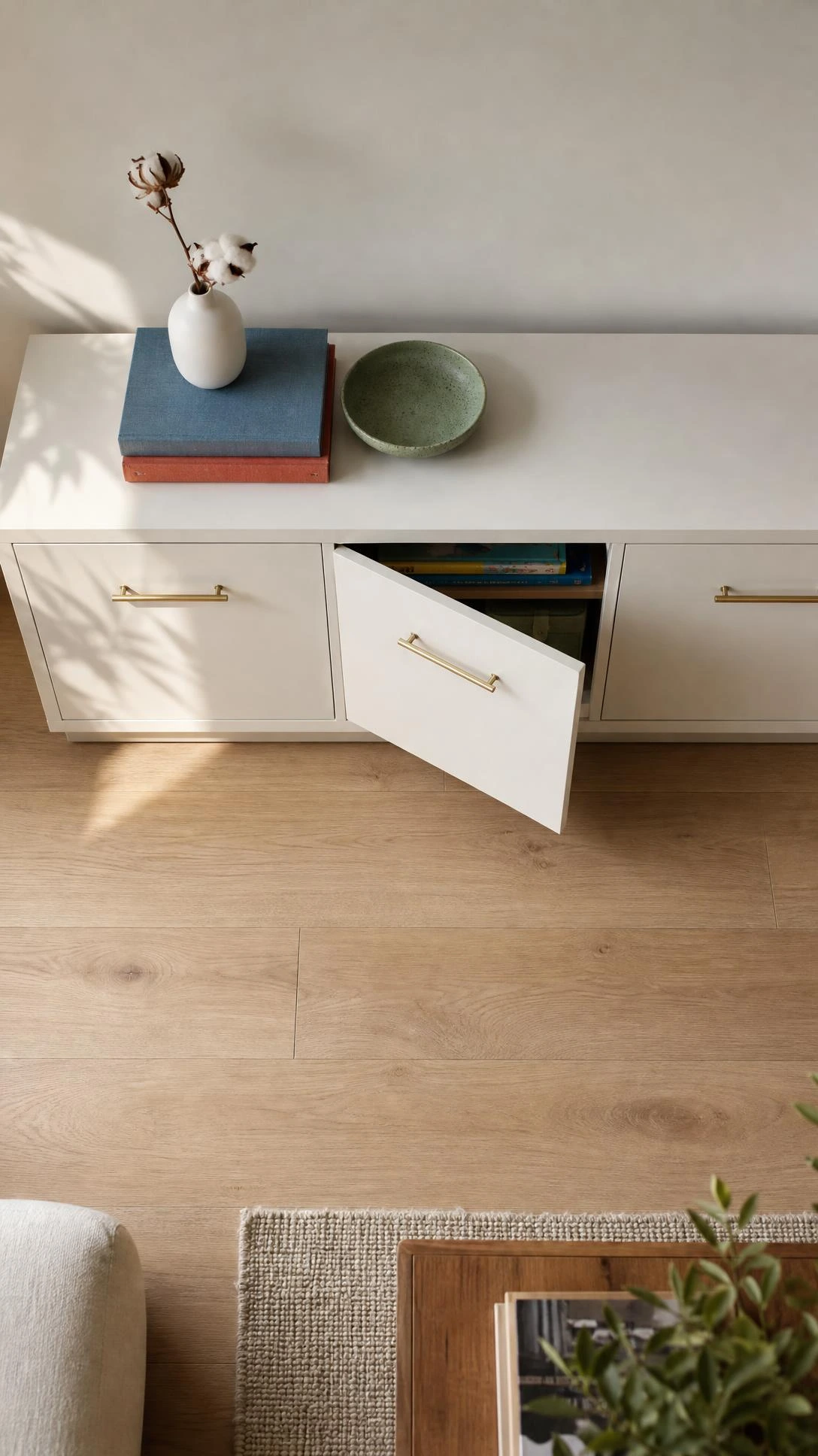
Closed doors are the most effective toy storage tool in a living room and nobody talks about this enough.
A sideboard or media cabinet with solid doors makes an entire category of toys disappear in one sweep, and from across the room the space looks completely adult.
Large toys like play kitchens in smaller sizes, doll houses, and bulky car sets fit surprisingly well in a deep sideboard when the internal shelves are removed.
A mid-century style sideboard in walnut veneer around 55 inches wide holds a lot and costs anywhere from $200 to $600 depending on where it comes from.
I think this is the single best upgrade for a living room that needs to work as both a family space and a room that feels calm after bedtime.
7- Floating Shelves for Books and Display Toys
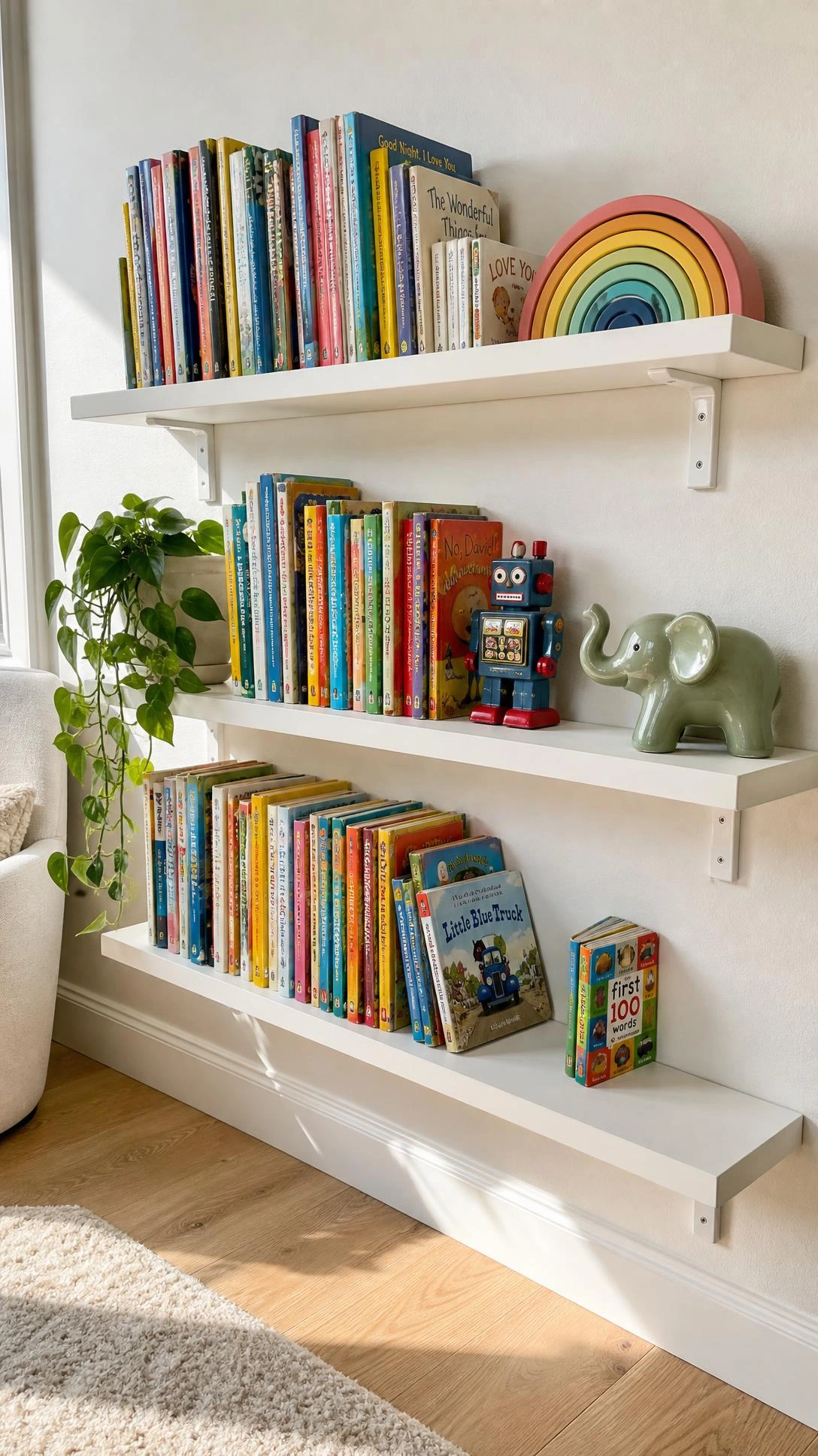
Not every toy needs to be hidden, and floating shelves give the ones worth displaying an actual home that keeps them off the floor.
Books, puzzles in their boxes, and a few well-chosen toys arranged on shelves look intentional rather than messy.
Shelves installed at around 48 to 60 inches high keep things out of everyday grab-and-scatter range while staying accessible with a little help.
Grouping by color or category makes the shelf look curated rather than random, which sounds like a lot of effort but takes about ten minutes to set up the first time.
This works best as a complement to a closed storage piece rather than the only storage solution in the room.
8- Woven Baskets Styled Into the Decor
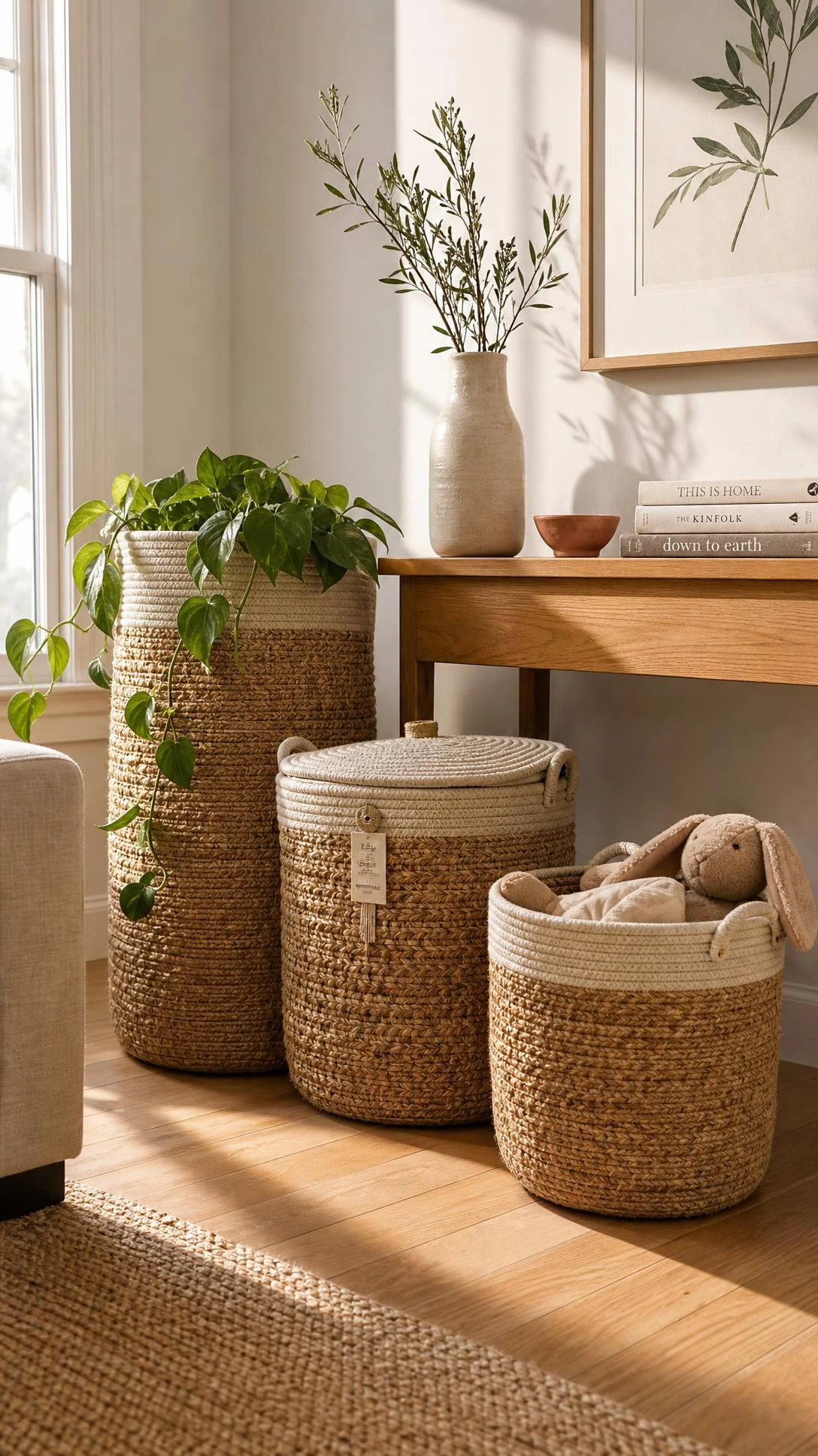
Woven baskets have a very specific talent for looking like intentional decor even when they are crammed with stuffed animals.
The key is choosing baskets that match the room’s existing texture, so a jute or rattan basket works well in a warm neutral room and a tightly woven cotton rope basket fits a cleaner more modern space.
Placing one basket beside the fireplace, one near the sofa, and one by the TV unit creates a flow that looks styled rather than scattered.
Baskets in the 14 to 20 inch range are the most useful because they hold enough to matter without taking over the floor.
The goal is not to have a basket for every toy category but to have enough capacity that the floor can be clear in one quick pass before company comes over.
9- A Pegboard Panel for Art Supplies and Smaller Toys
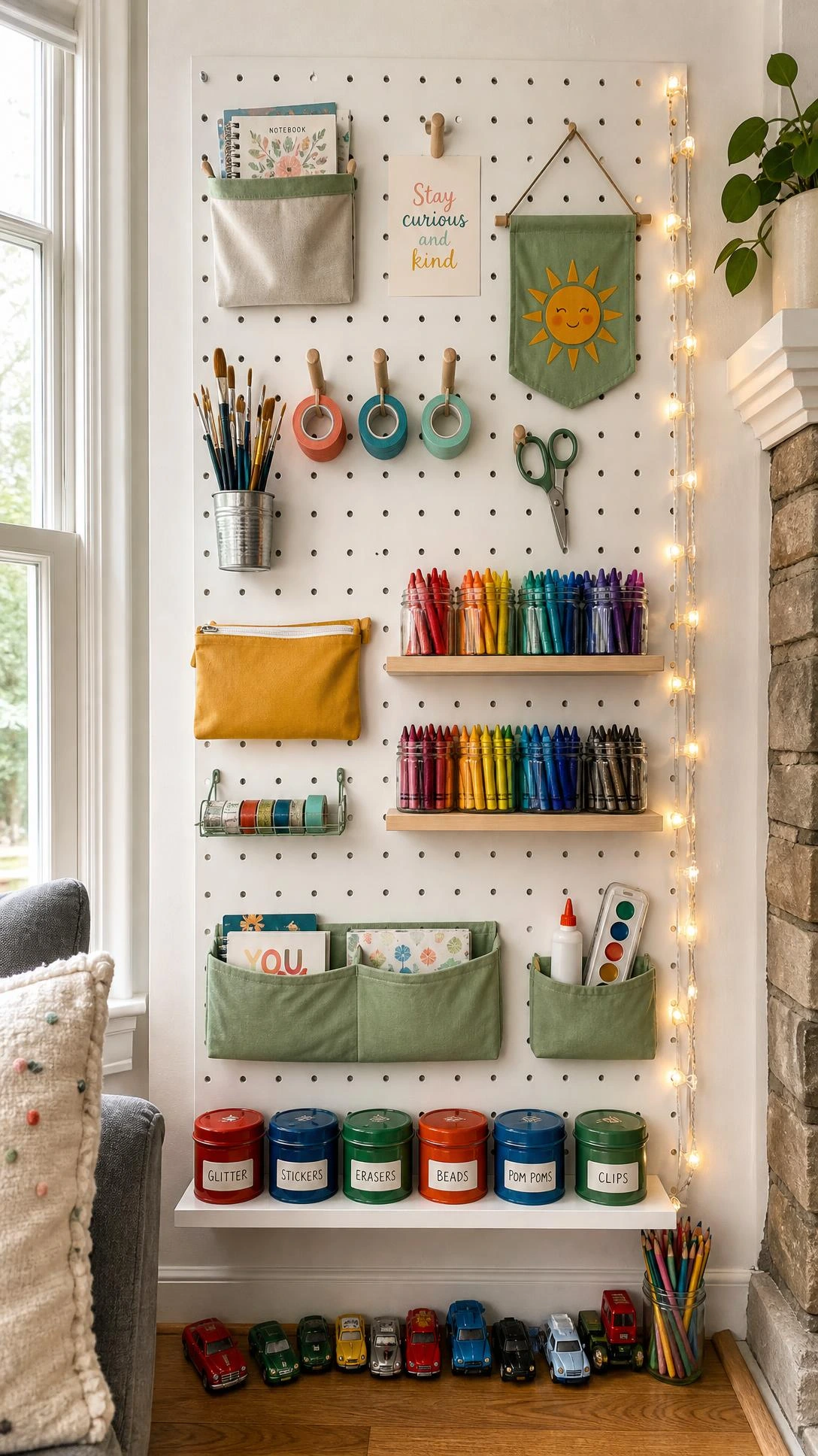
Pegboards tend to live in craft rooms and garages but they work surprisingly well in a living room corner when they are styled properly.
A painted pegboard in a soft sage green or warm white with matching hooks and small bins reads more like a design choice than a storage hack.
This setup is especially useful for art supplies, small figurines, and anything kids use often enough that it needs to be visible and reachable.
A 24 by 36 inch panel is enough to hold a meaningful amount without dominating the wall, and the whole setup including hooks and bins usually comes in under $60.
The reorganizing that comes with pegboards is actually kind of enjoyable, which is a low bar to clear but still a nice thing.
10- A TV Unit With Hidden Toy Storage
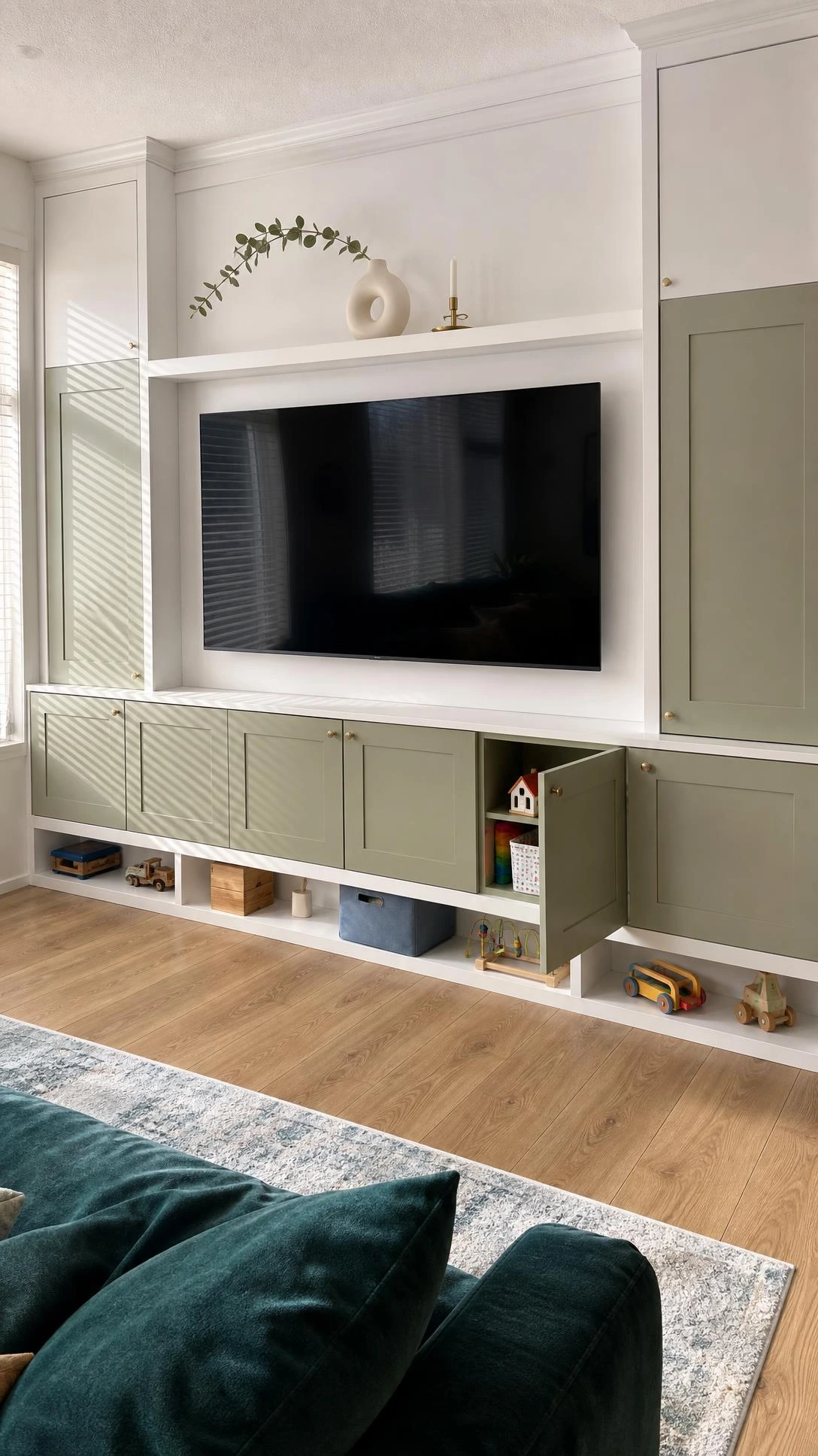
Most living rooms already have a TV unit and most of them have more storage capacity than people are actually using.
Replacing a basic open-shelf media stand with a closed cabinet style unit creates instant toy storage without adding any new furniture to the room.
Units with a mix of open top shelves for the TV and equipment and closed lower cabinets for toys are the most practical configuration for family rooms.
A unit around 63 inches wide with two lower cabinet doors can hold building sets, puzzles, and a full bin of miscellaneous things behind closed doors with no extra effort.
The cables situation is a separate problem but at least the toy situation is handled.
11- Labeled Fabric Bins on Low Shelving
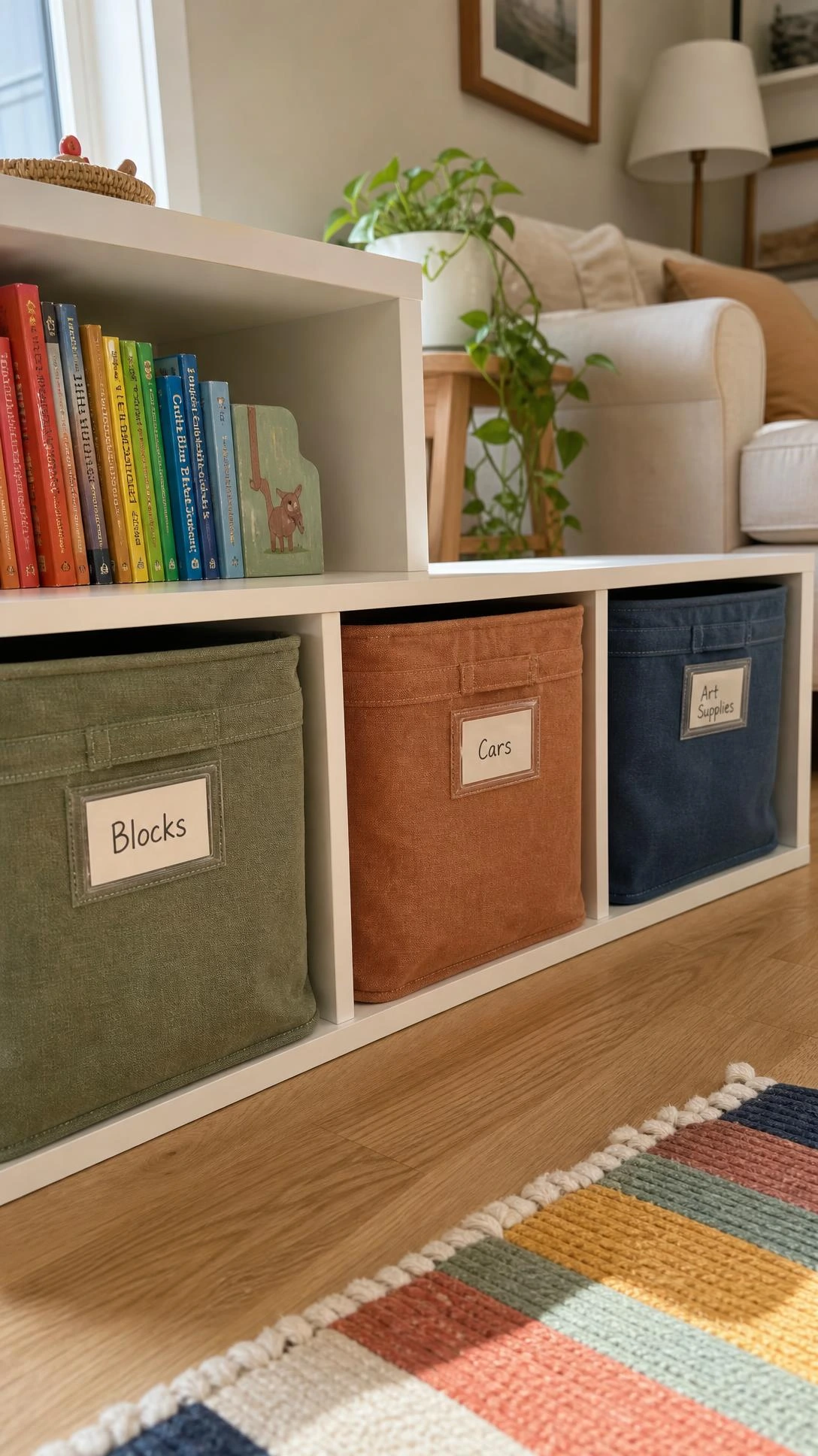
Low open shelving with labeled fabric bins is the setup that actually gets used day after day because it is simple enough for kids to manage on their own.
Labels with pictures instead of words work for kids who are not reading yet, and the visual cue is enough to make cleanup feel like a matching game rather than a chore.
Cotton canvas bins in a natural or white color on a low Billy bookcase or similar unit keep the look calm and easy to swap out as the toy collection changes.
Keeping the shelving unit to waist height or lower means it does not visually take over the room even when the bins are full.
This is one of those systems that takes about a weekend to set up and then runs mostly on its own once the habit forms.
A Living Room Floor That Stays Clear Most of the Time
No single storage solution solves everything, and most homes end up using two or three of these ideas together rather than picking just one.
The combination that works best is usually one closed piece for big toys, one open bin for fast cleanup, and one spot that kids control themselves.
The floor does not have to be perfectly clear every hour of the day, but having a system means it can be clear within a few minutes when it needs to be.
That is a pretty reasonable place to land for a room that is actually being lived in.

Hi, I’m Alizabeth, the creator of Pretty Home Hacks. I share practical home decor ideas, easy DIY projects, organization tips, and budget-friendly ways to make your home feel more beautiful and functional. From small room updates to everyday home hacks, my goal is to share approachable ideas you can actually use in your own space.