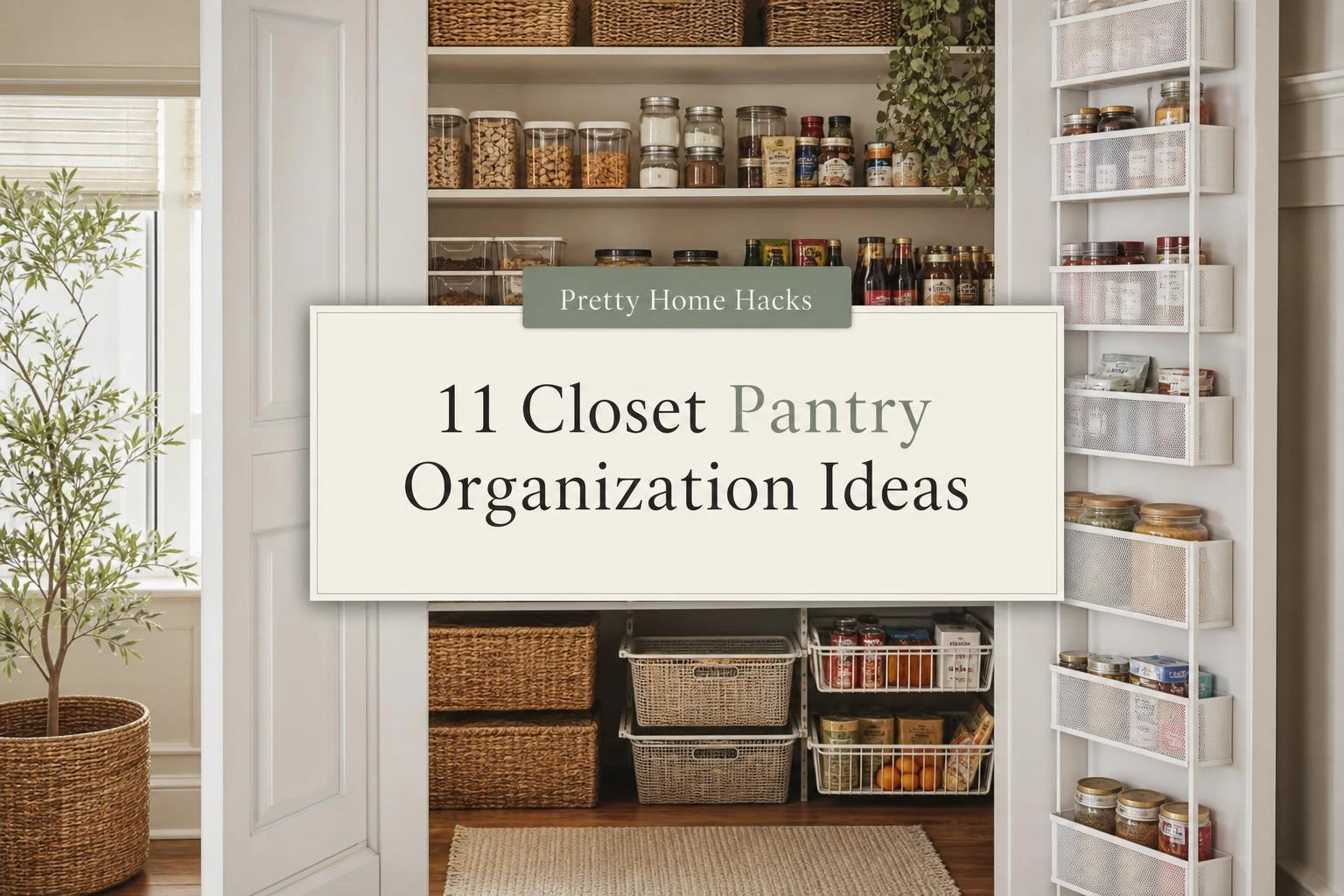
11 Closet Pantry Organization Ideas That Fix Deep Shelves
Closet pantries can look roomy and still act like a tiny food cave.
Most closet pantry organization ideas sound simple until the cereal, pasta, snack bags, and mystery cans start playing 3D Tetris again.
The annoying part is how fast food gets buried in the back, especially on deep shelves nobody can fully see.
The easier shift is to stop treating the pantry like one big shelf and start giving every category a real little home.
Nothing here needs to be fancy, because the goal is just to make dinner, snacks, and grocery unloading feel less annoying.
1- Empty Everything First
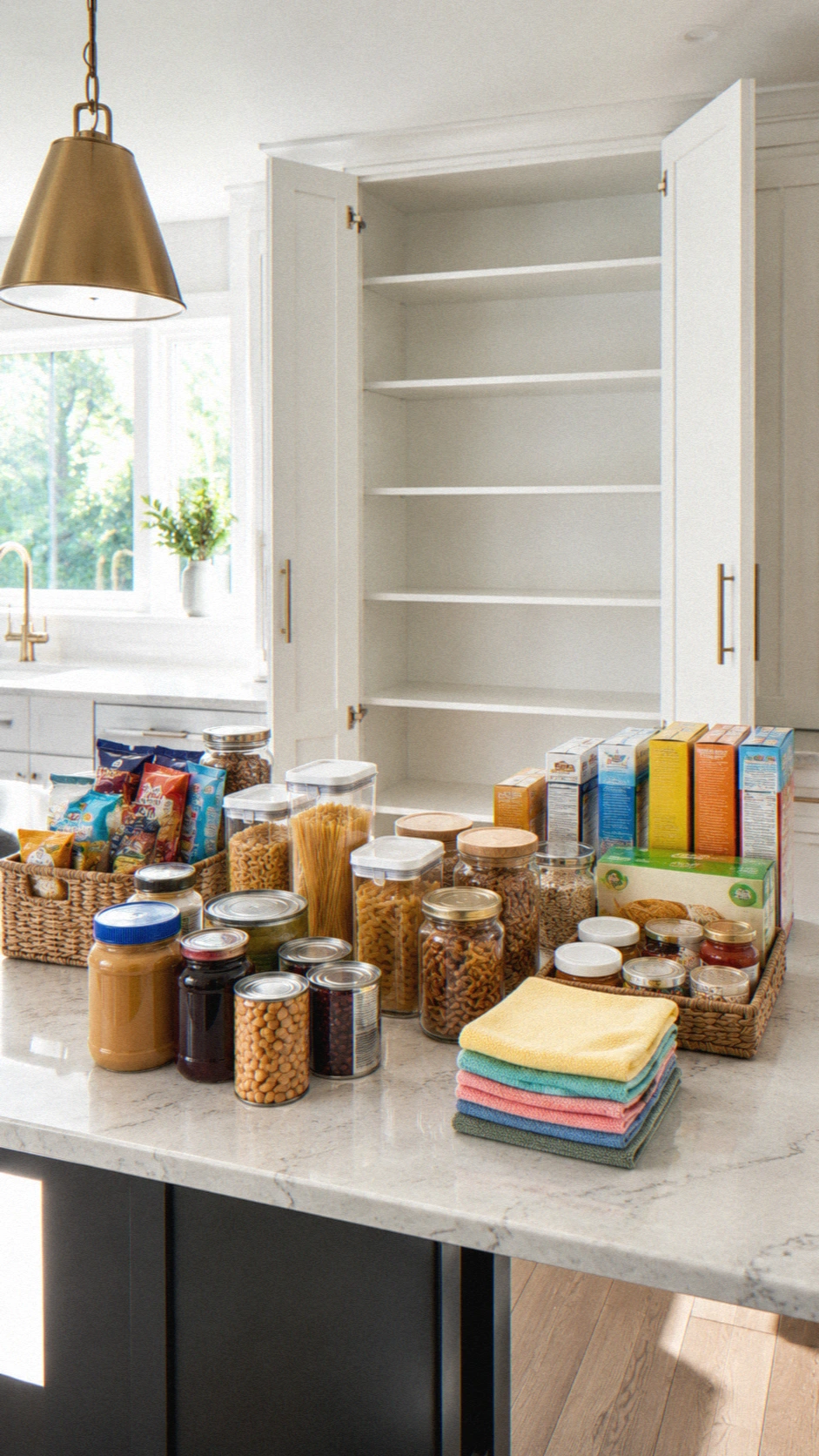
Pantry organizing always looks worse before it gets better, which is rude but true.
Pull everything out, even the weird packet of taco seasoning hiding behind the vinegar.
Sort food into groups like snacks, baking, breakfast, pasta, canned goods, oils, and back stock.
This is also when expired food and things nobody likes can quietly leave the house.
Most people buy bins too early, but the pantry makes more sense once the clutter is actually on the counter.
2- Use Clear Pantry Bins Like Drawers
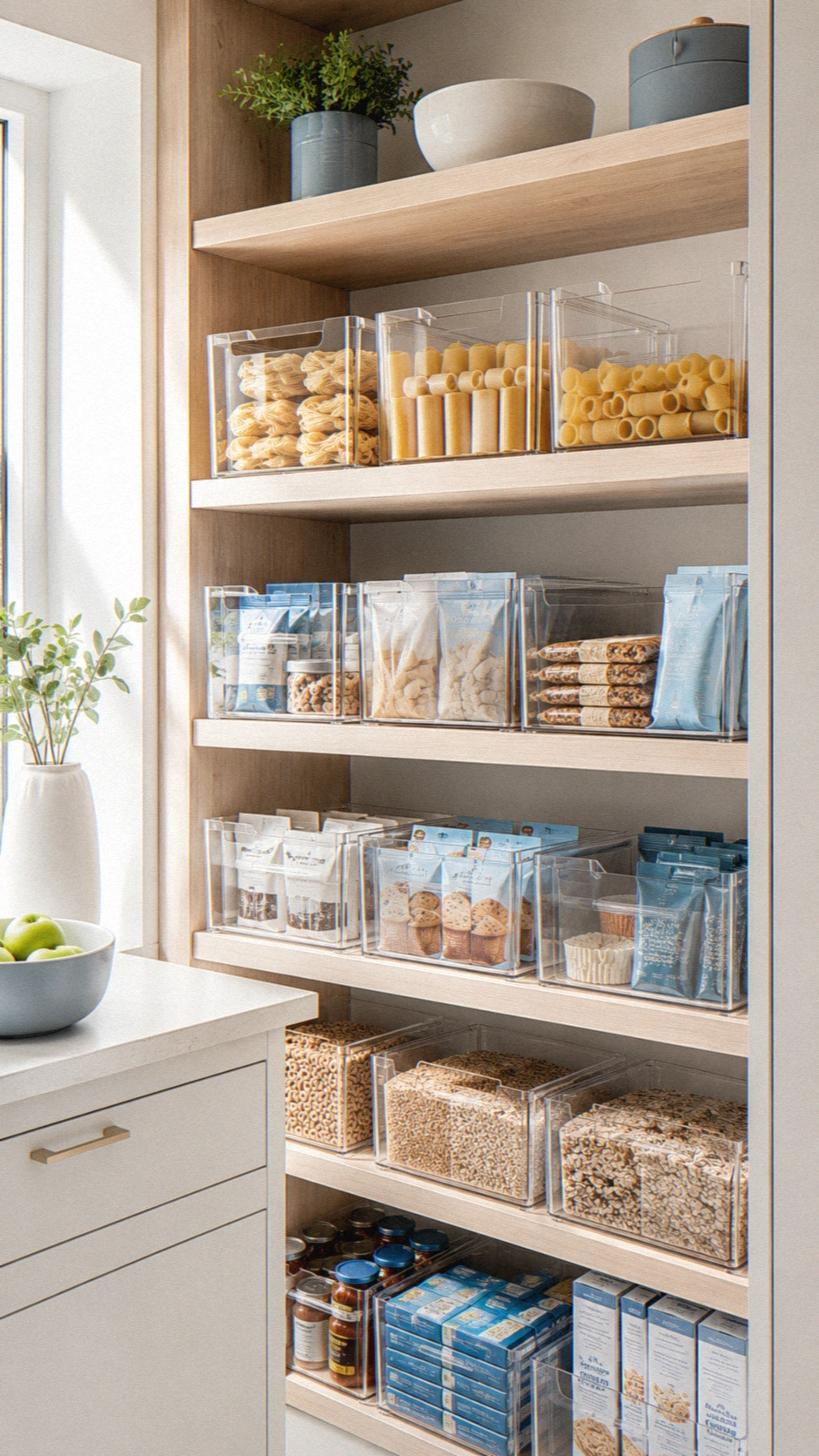
Clear pantry bins are one of the easiest fixes for a closet pantry with deep shelves.
Instead of reaching into the back, people can pull out the whole bin and see what is inside.
Use narrow bins for beans, snacks, pasta, baking supplies, rice packets, and little lunchbox things.
This works best when the bins are measured first, because oversized baskets can waste more space than they save.
I think clear bins beat cute hidden baskets for everyday food, mostly because nobody has to guess where anything went.
3- Add Pantry Door Storage
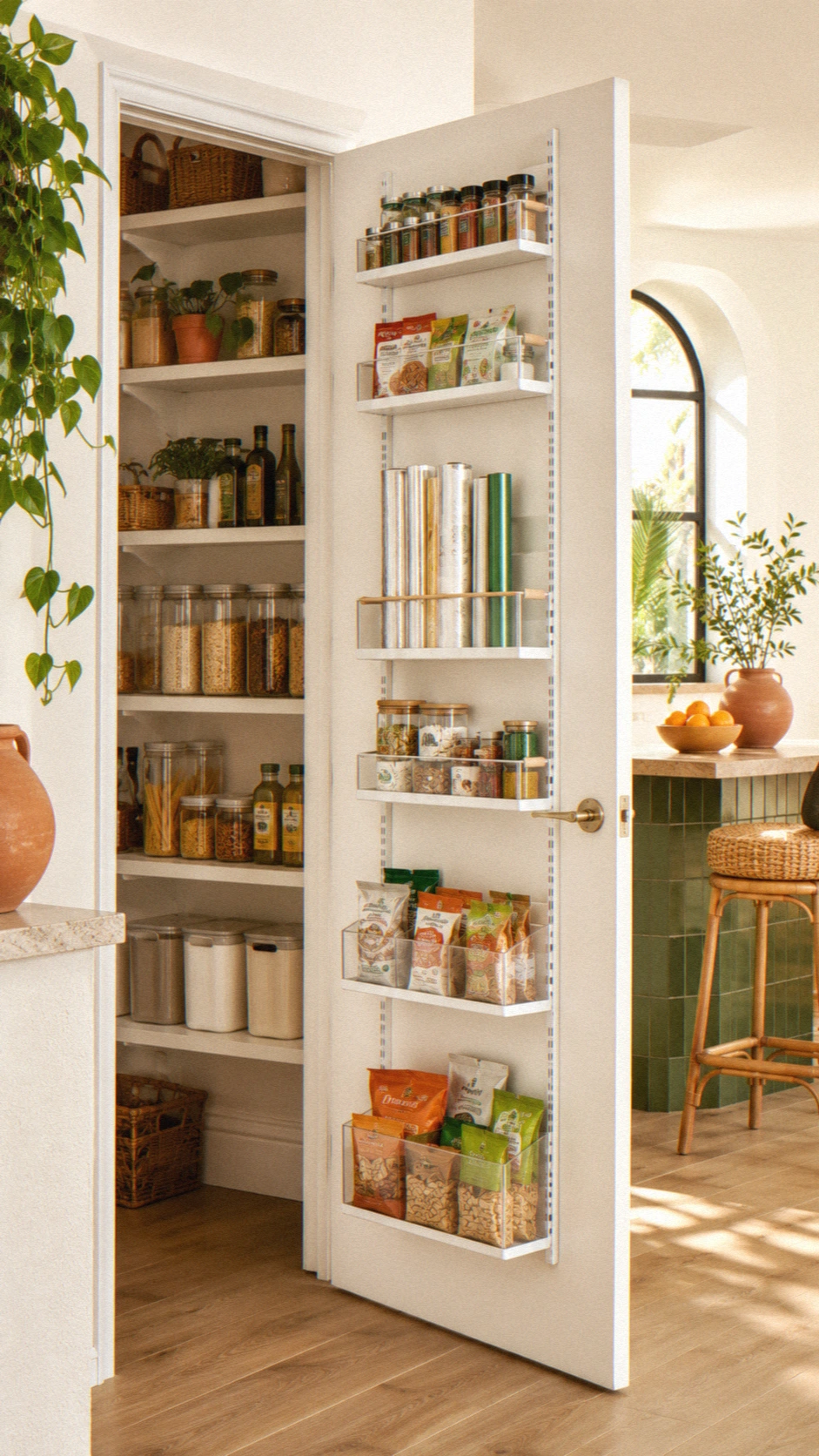
The pantry door is usually doing absolutely nothing, which feels unfair in a small closet pantry.
An over the door rack can hold spices, tea, snack bars, foil boxes, gravy packets, and small condiment bottles.
Shallow shelves around 3 or 4 inches deep work best because jars stay visible and do not flop around.
For renters, adhesive hooks can hold reusable bags, aprons, measuring cups, or a small hanging basket.
It is a small change, but it frees up shelf space fast.
4- Put Lazy Susans in Deep Corners
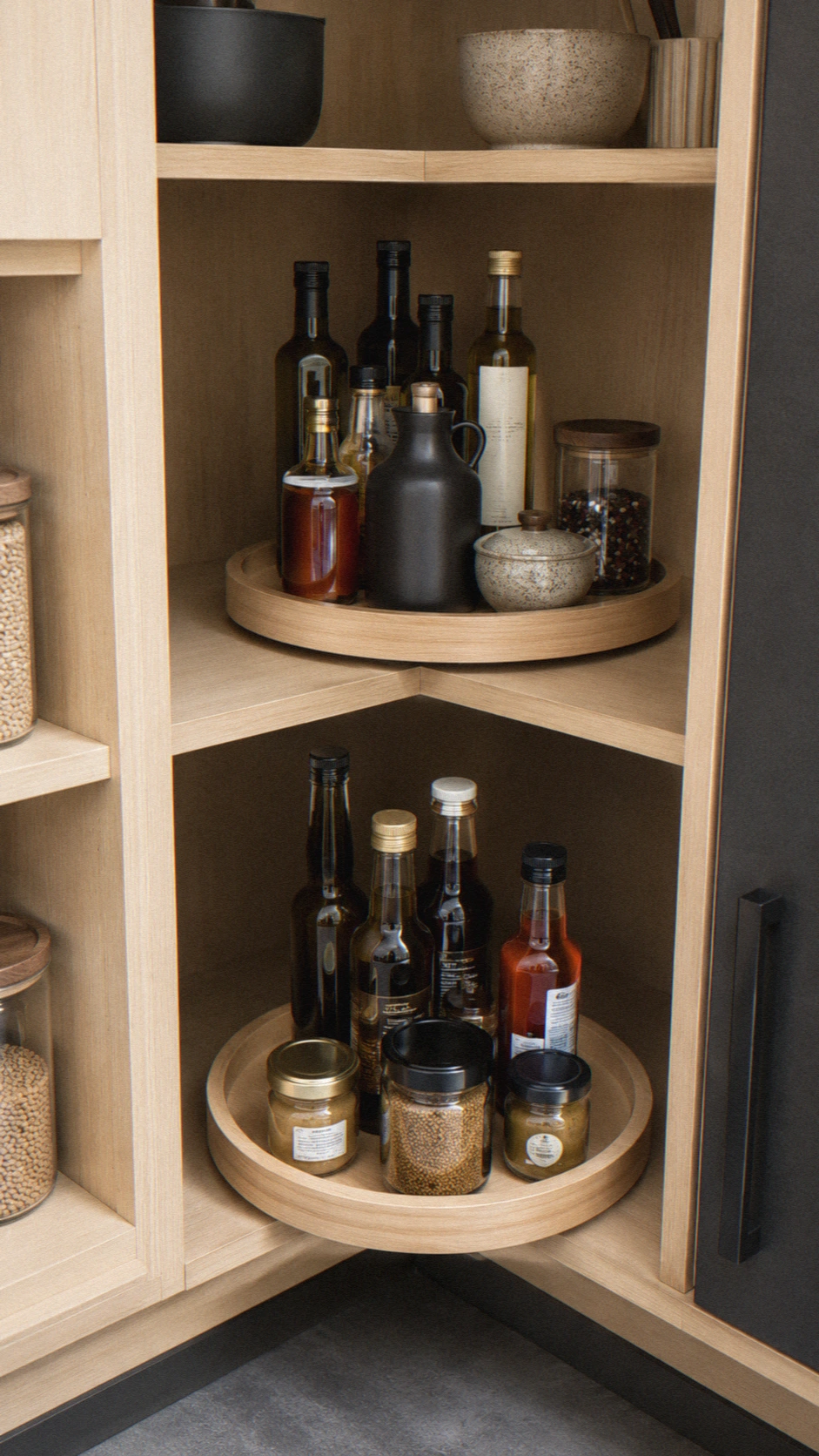
Deep corners are where pantry food goes to be forgotten forever.
A lazy Susan brings oils, vinegars, sauces, peanut butter, honey, and condiments back to the front with one spin.
Two tier turntables are handy for spices or small jars when shelf height allows it.
This works best on shelves deeper than about 14 inches or in odd corners where bottles get trapped.
Once people stop digging behind three bottles to find soy sauce, the pantry feels calmer.
5- Try Shelf Risers for Cans
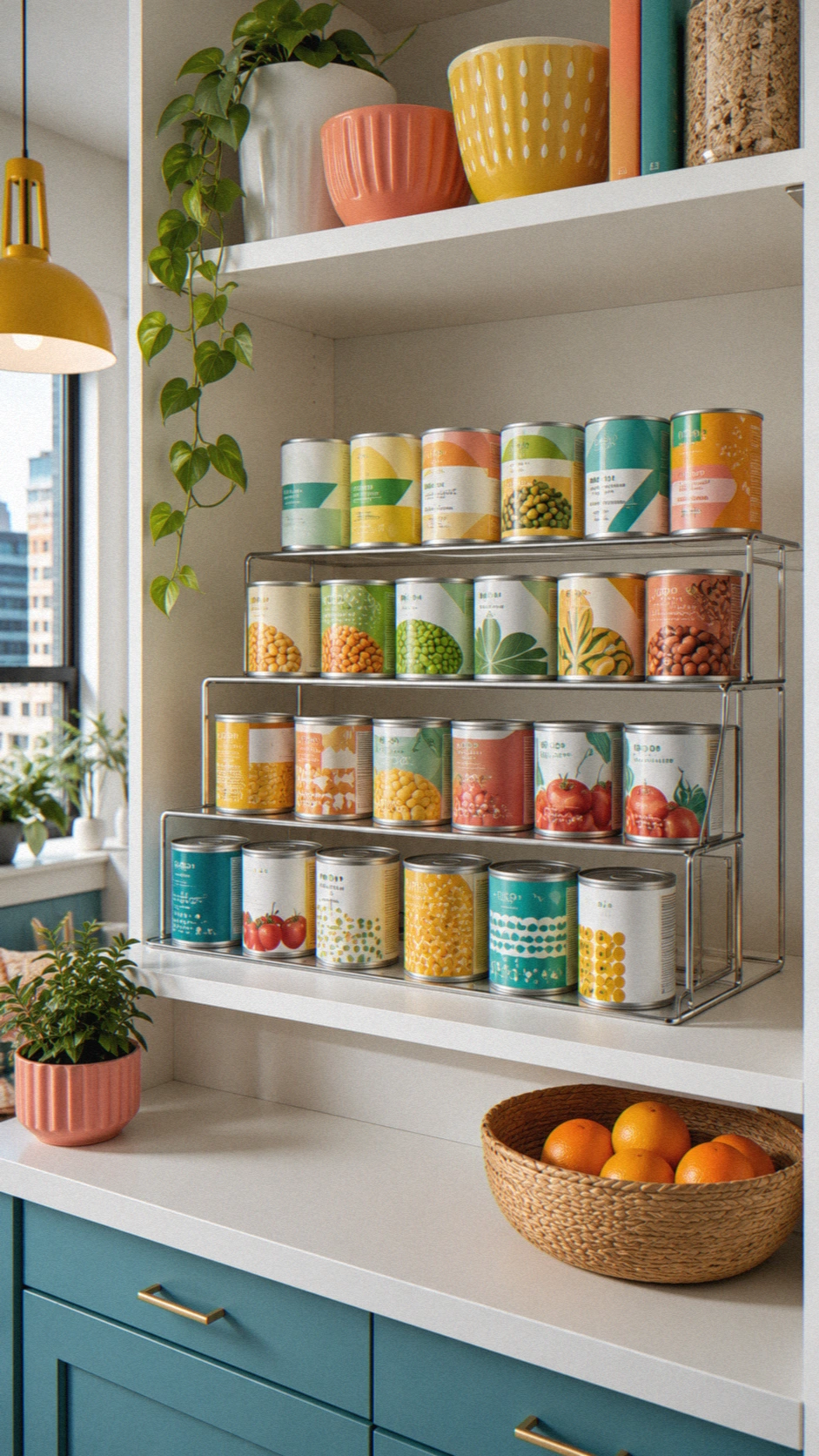
Cans are sneaky because one flat row always turns into three hidden rows.
Shelf risers or tiered can shelves let people see soup, beans, tomatoes, and fruit without moving half the pantry.
Bamboo risers look nice, but basic wire ones work just fine.
A cheap option is flipping a sturdy plastic container upside down and using it as a riser.
The point is simply to make the back row visible before buying more diced tomatoes again.
6- Keep Everyday Food at Eye Level
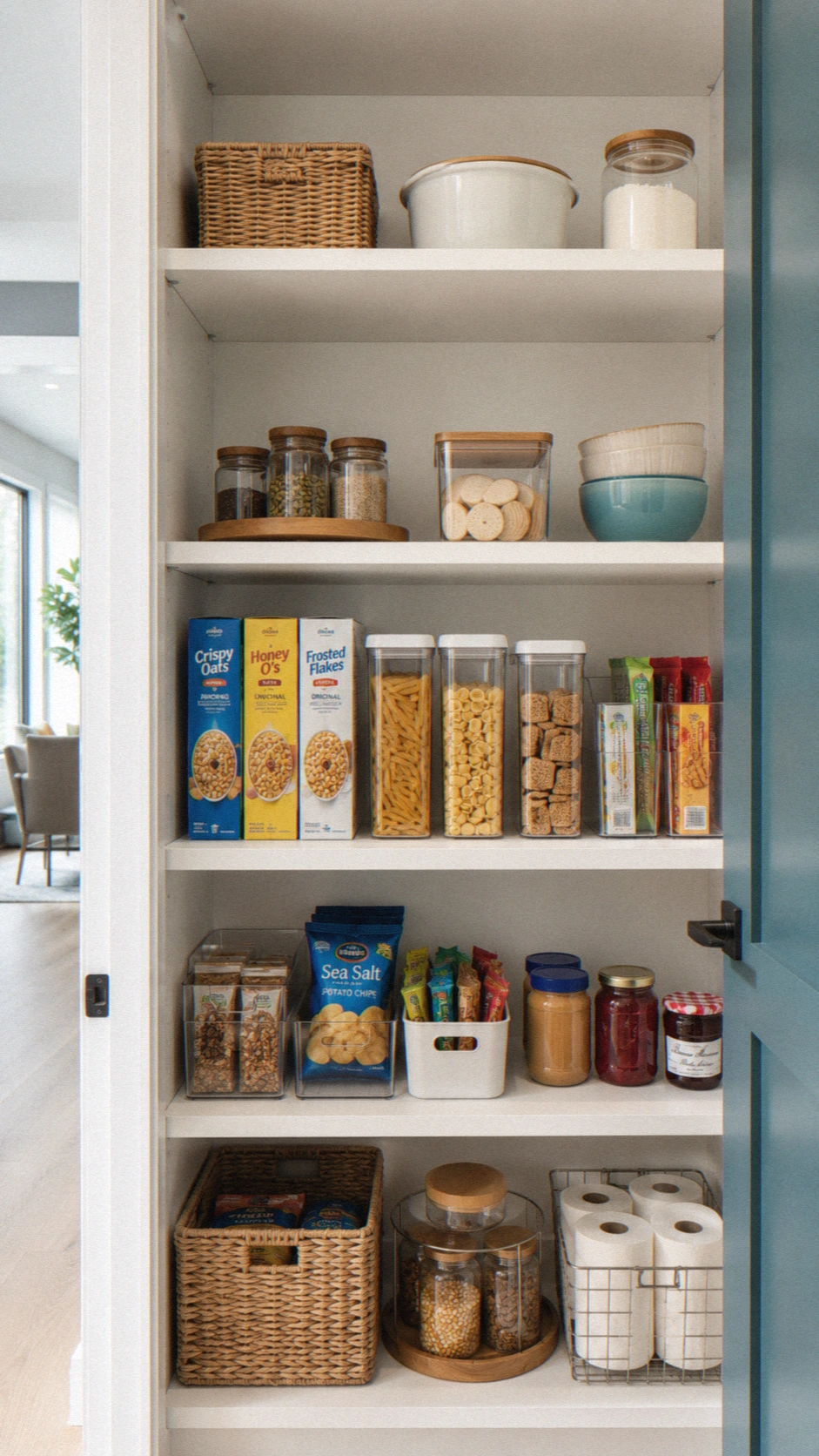
Pantries stay neater when the easy spots match real life.
Put breakfast food, lunch snacks, cooking staples, and daily ingredients where people can grab them without thinking.
Heavy things like flour tubs, soda cases, pet food, and bulk rice belong low.
Rarely used extras, party supplies, seasonal baking pans, and backup stock can go higher.
This sounds obvious, but it fixes a surprising amount of pantry chaos.
7- Use Matching Containers for Staples
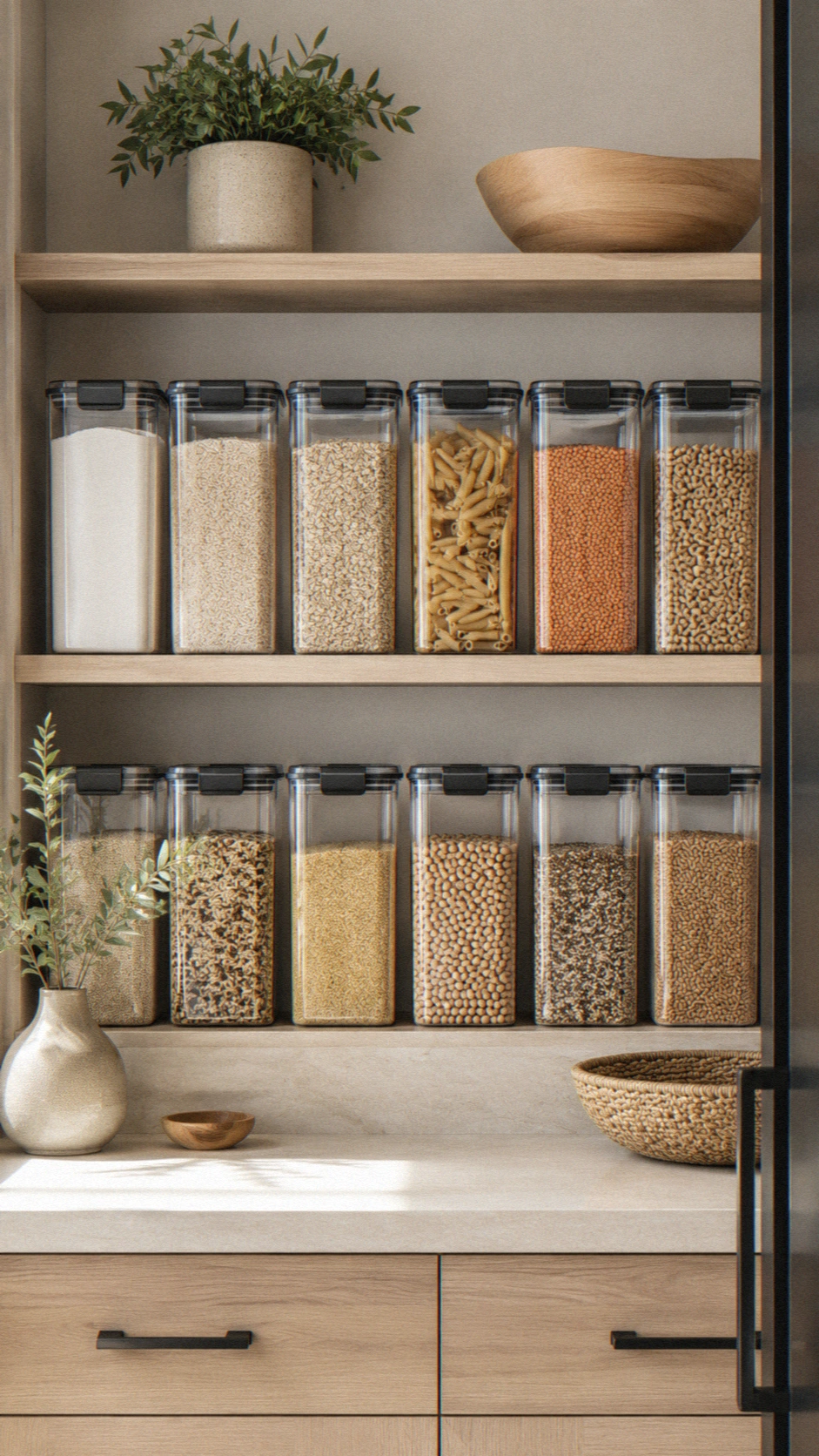
Open bags of flour and sugar have a special talent for making shelves dusty.
Rectangular airtight containers stack better than round ones and waste less shelf space.
Start with the staples people use often, like flour, sugar, rice, oats, cereal, pasta, and crackers.
A set of nine or twelve containers is usually plenty before things start feeling overdone.
Labels help here, especially when powdered sugar and flour decide to look exactly the same.
8- Make a Snack Zone
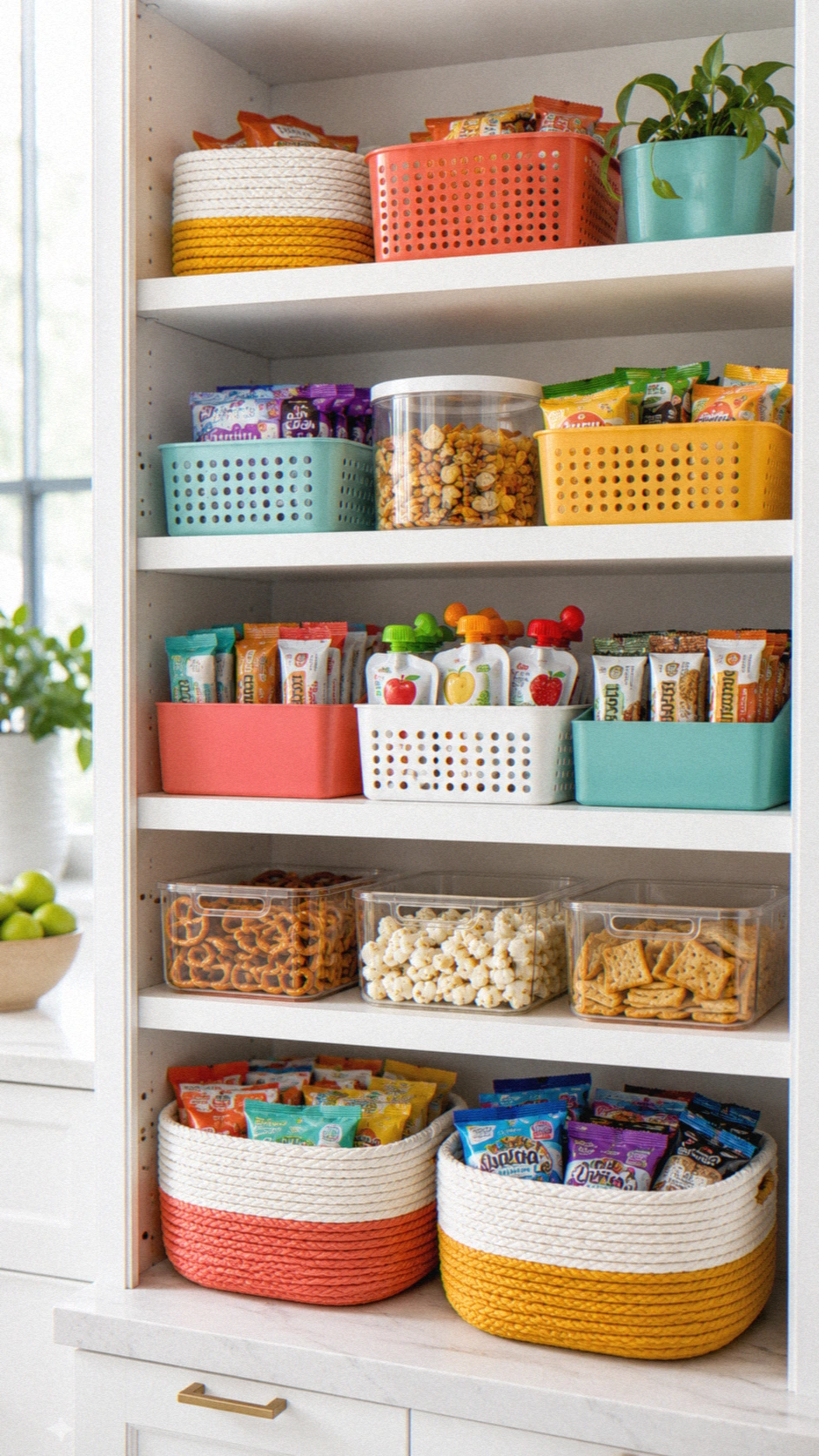
Snacks are usually the category that destroys a pantry first.
Take bars, crackers, fruit cups, and small bags out of bulky boxes and sort them into open bins.
If kids are grabbing their own snacks, keep the main snack bin on a lower shelf.
Small containers inside the bigger bin keep loose packets from sinking to the bottom.
This setup also helps the person who opens the pantry and tosses things in like a raccoon with chores.
9- Add Pull Out Shelves if Budget Allows
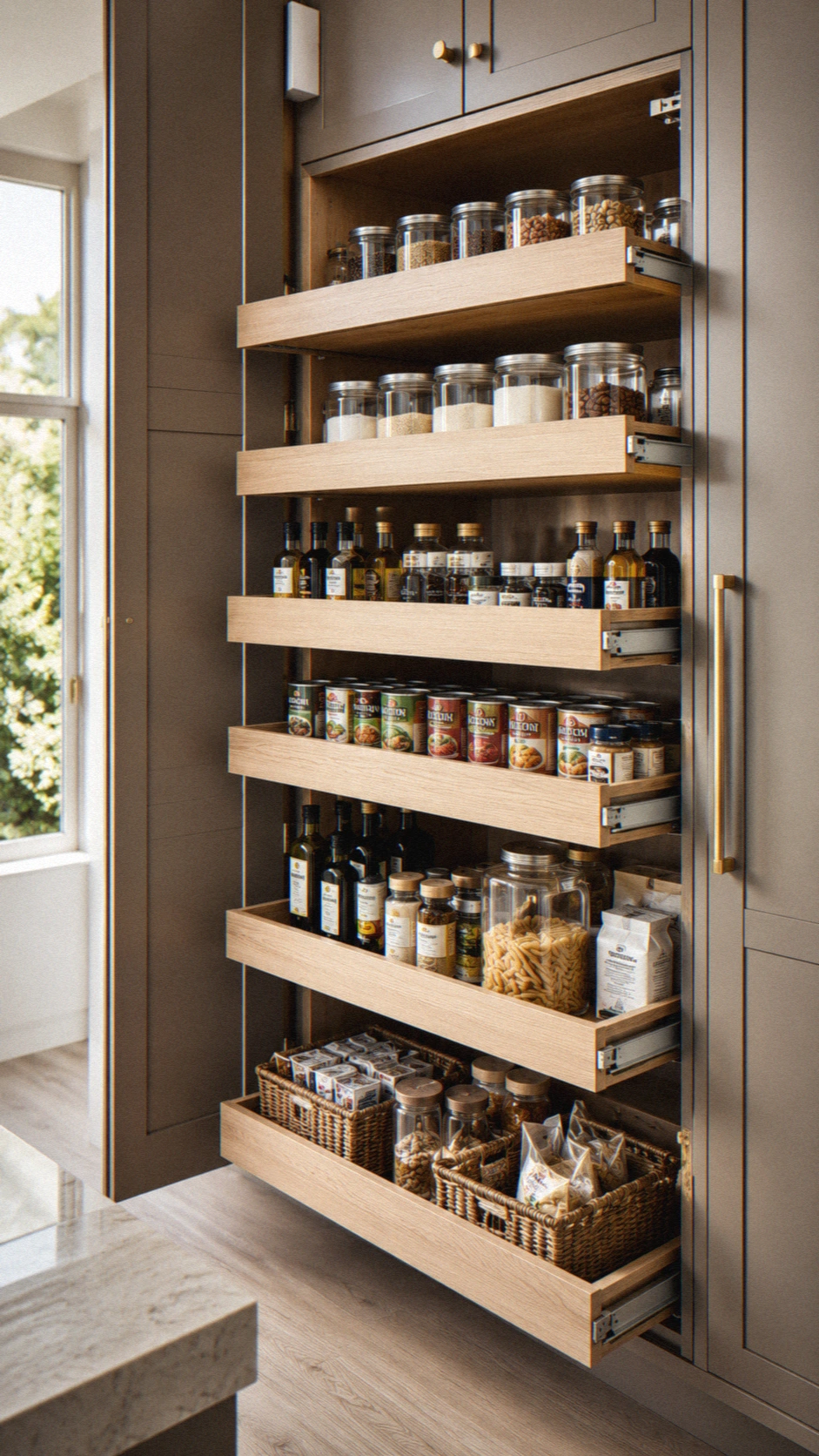
Pull out shelves solve the deep pantry problem in the nicest way.
They let the whole shelf slide forward, so nobody has to unload six things to reach one jar.
Basic retrofit trays can be affordable, while custom systems cost much more.
This works best for lower shelves, heavy items, canned goods, and anything used often.
If the budget only allows one or two, start where the pantry causes the most daily irritation.
10- Label Bins and Shelf Zones
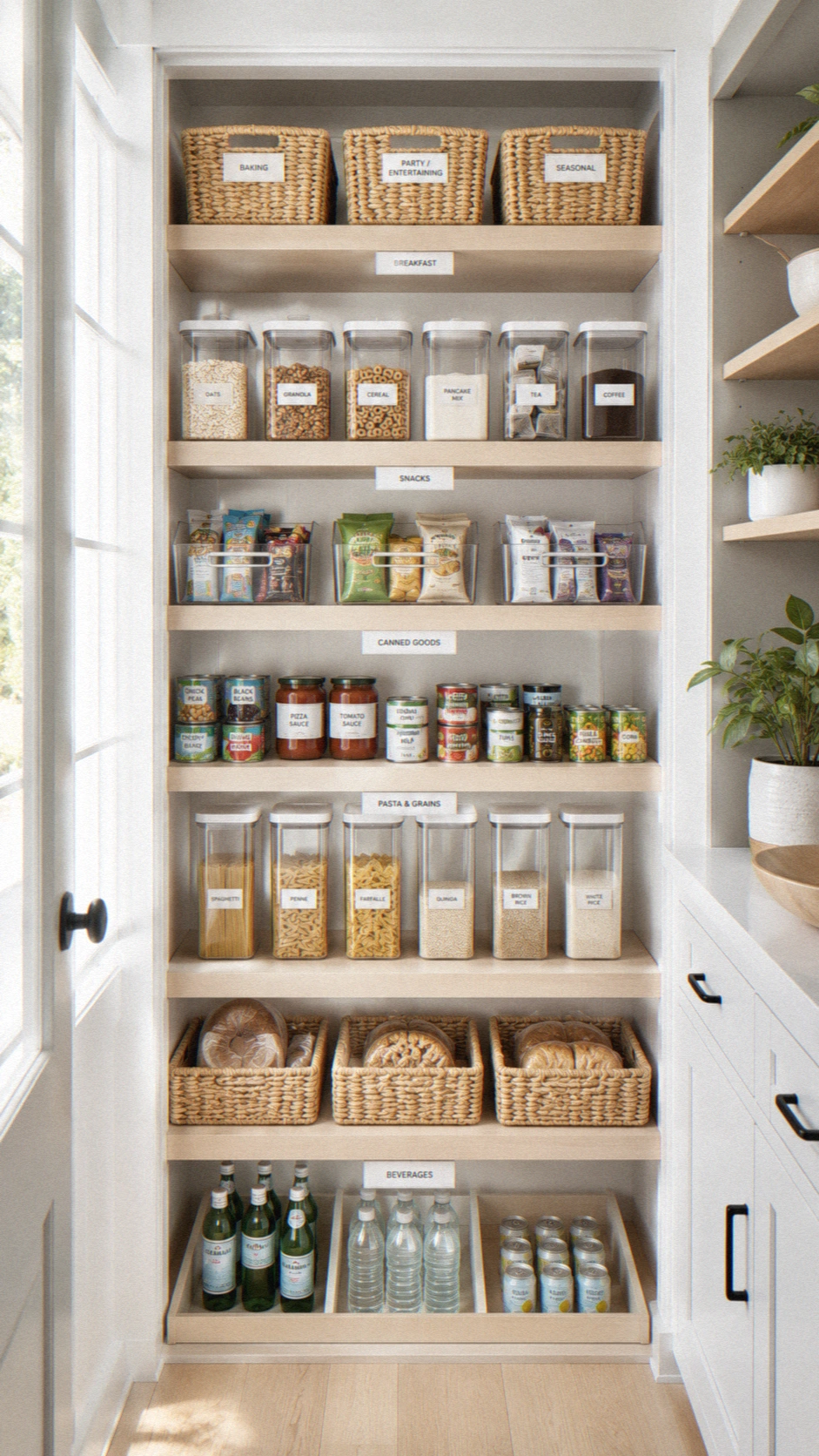
Labels are not about being precious, they are about stopping the pantry from slowly drifting back into chaos.
Label bins for snacks, baking, pasta, breakfast, canned goods, back stock, and dinner helpers.
Simple sticky notes work if fancy labels feel like too much.
Shelf labels help other people put groceries away without asking where every single thing goes.
Most closet pantry organization ideas stick better when the system explains itself.
11- Use High Shelves for Back Stock
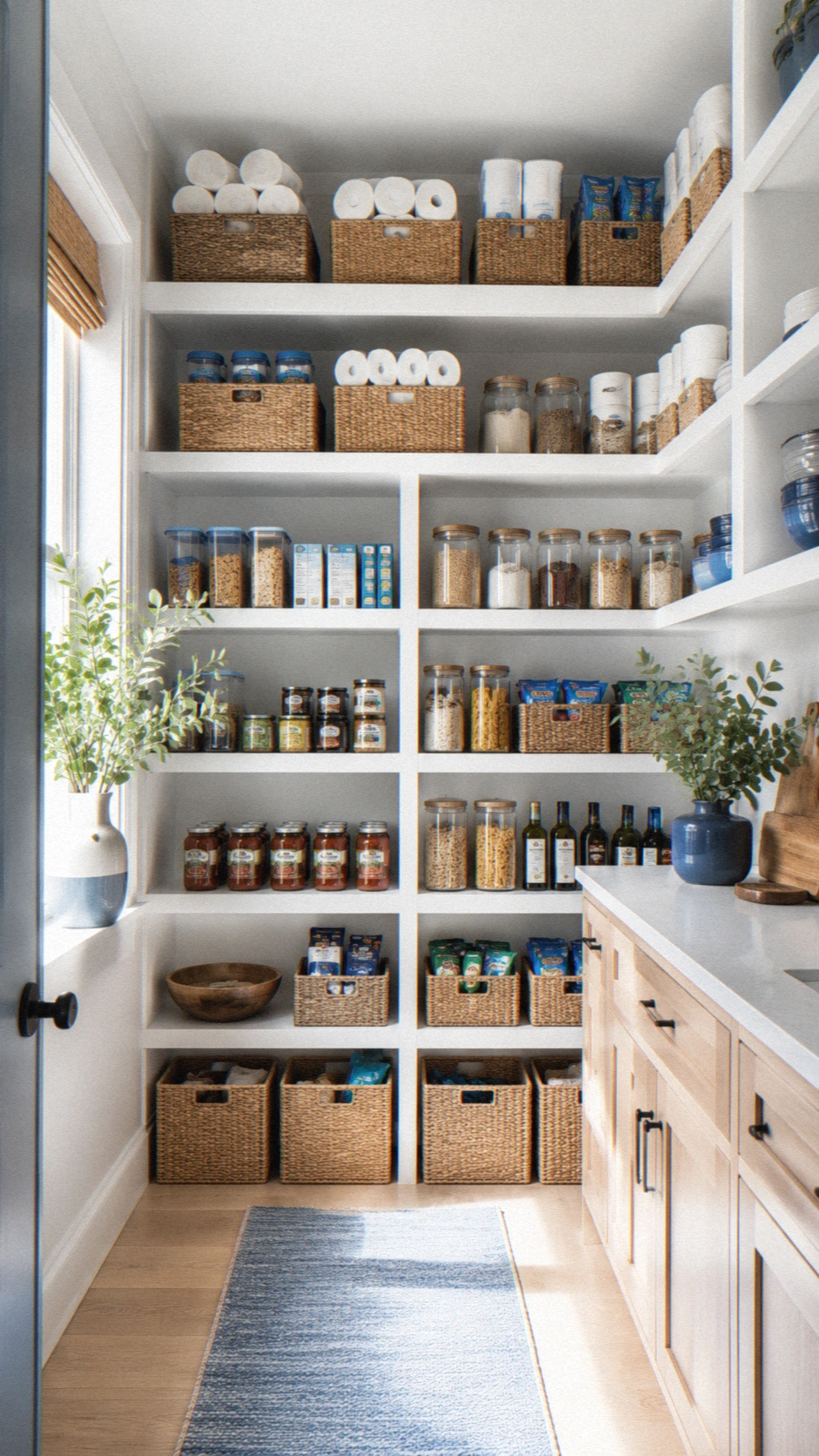
High shelves are useful, but only if they stop pretending to be daily storage.
Use them for extra paper towels, backup cereal, holiday baking supplies, party plates, and unopened bulk items.
Clear bins with handles make high shelves easier because people can pull down the whole category.
A small step stool nearby helps too, as long as it is stable and not buried behind the mop.
The everyday pantry should feel reachable, not like a tiny grocery store obstacle course.
A Cleaner Closet Pantry That Actually Works
Good closet pantry organization ideas do not need to look perfect to be useful.
They just need to make food easier to see, grab, and put back.
Start with the shelf that annoys people most, then build from there.
A pantry that saves dinner from becoming a digging project is already doing its job.

Hi, I’m Alizabeth, the creator of Pretty Home Hacks. I share practical home decor ideas, easy DIY projects, organization tips, and budget-friendly ways to make your home feel more beautiful and functional. From small room updates to everyday home hacks, my goal is to share approachable ideas you can actually use in your own space.