
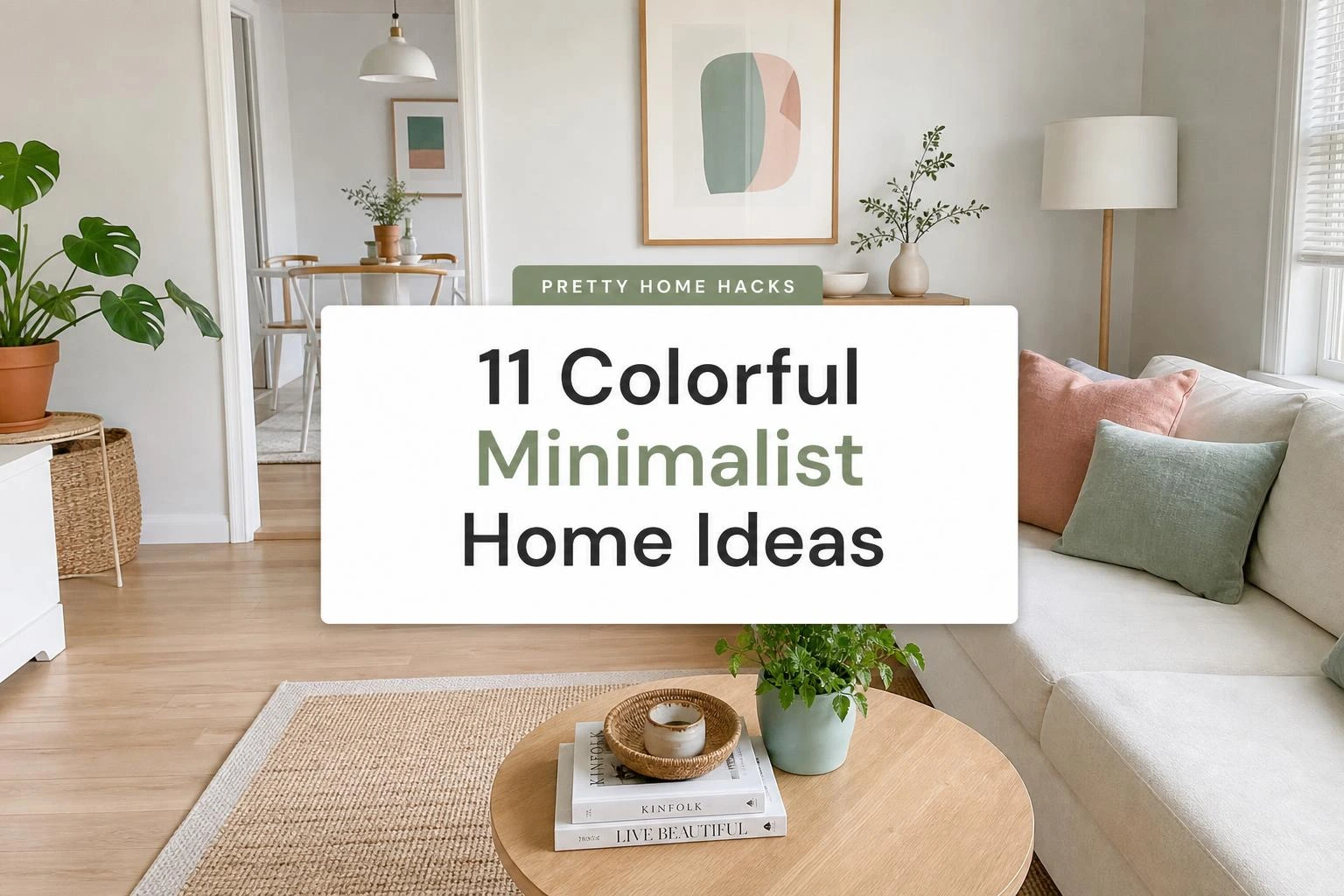
11 Colorful Minimalist Home Ideas That Prove You Can Have Color Without the Clutter
Color and minimalism feel like they should cancel each other out, which is probably why so many people just give up and default to white walls and beige everything.
The assumption is that the moment you bring in anything bold, the whole clean calm feeling disappears and suddenly the room looks busy and stressed out.
The specific frustration most people hit is that they try adding one colorful thing and it looks wrong, so they pull it out, and then the room just looks empty and cold again.
The actual trick is not about how much color you add but where it lands and what is around it when it does.
These colorful minimalist home ideas are not about decorating with restraint as a sacrifice, they are about using color in a way that actually makes the whole space feel more intentional.
1- One Anchor Color Across the Whole Room
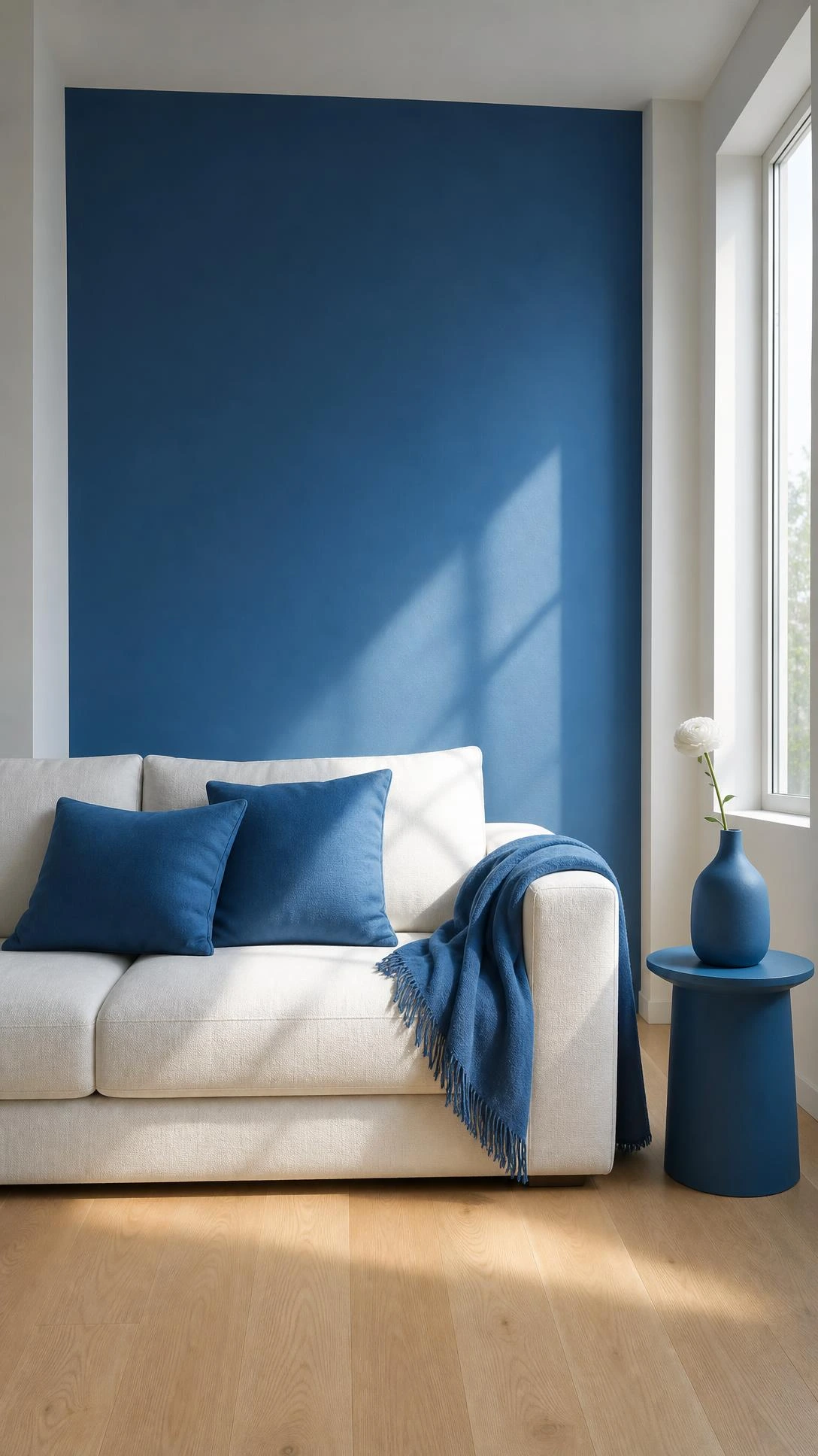
Picking one color and repeating it in a few places is one of those things that sounds too simple to actually work until you see it in a real room.
The idea is to choose a single shade, something like terracotta or dusty blue, and let it show up in two or three spots rather than just one.
A terracotta throw, a terracotta candle, and one terracotta ceramic pot create a sense of intention that no single accent piece ever pulls off on its own.
It reads as a decision rather than a random purchase, which is basically the whole goal of colorful minimalism in the first place.
The room does not need to be themed or matchy, it just needs that one quiet thread running through it.
2- Sage Green as a Wall Color With Warm Wood
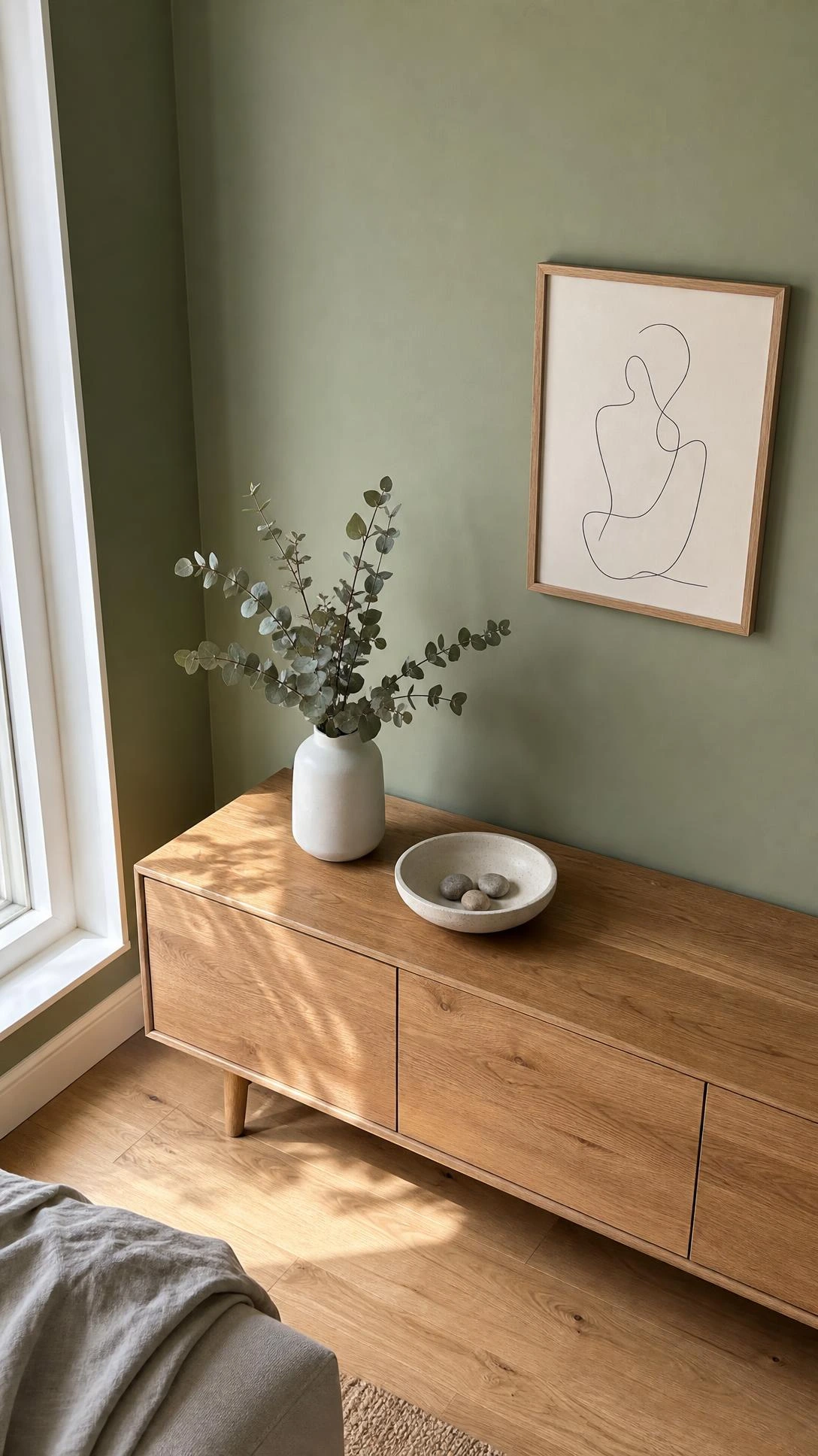
Sage green is probably the easiest wall color to live with if someone wants color without feeling like they moved into a paint swatch.
It reads almost like a neutral from certain angles and in certain light, which is why it works so well in a minimalist space that still wants a little warmth.
Paired with warm wood tones like oak or walnut furniture, sage green walls stop the room from feeling cold or clinical.
Benjamin Moore’s Aganthus Green or Sherwin-Williams Retreat are both in that muted, dusty sage range that photographs well and lives even better.
The key is keeping the rest of the room fairly simple so the wall color actually has room to do something.
3- A Single Bold Piece of Art on a White Wall
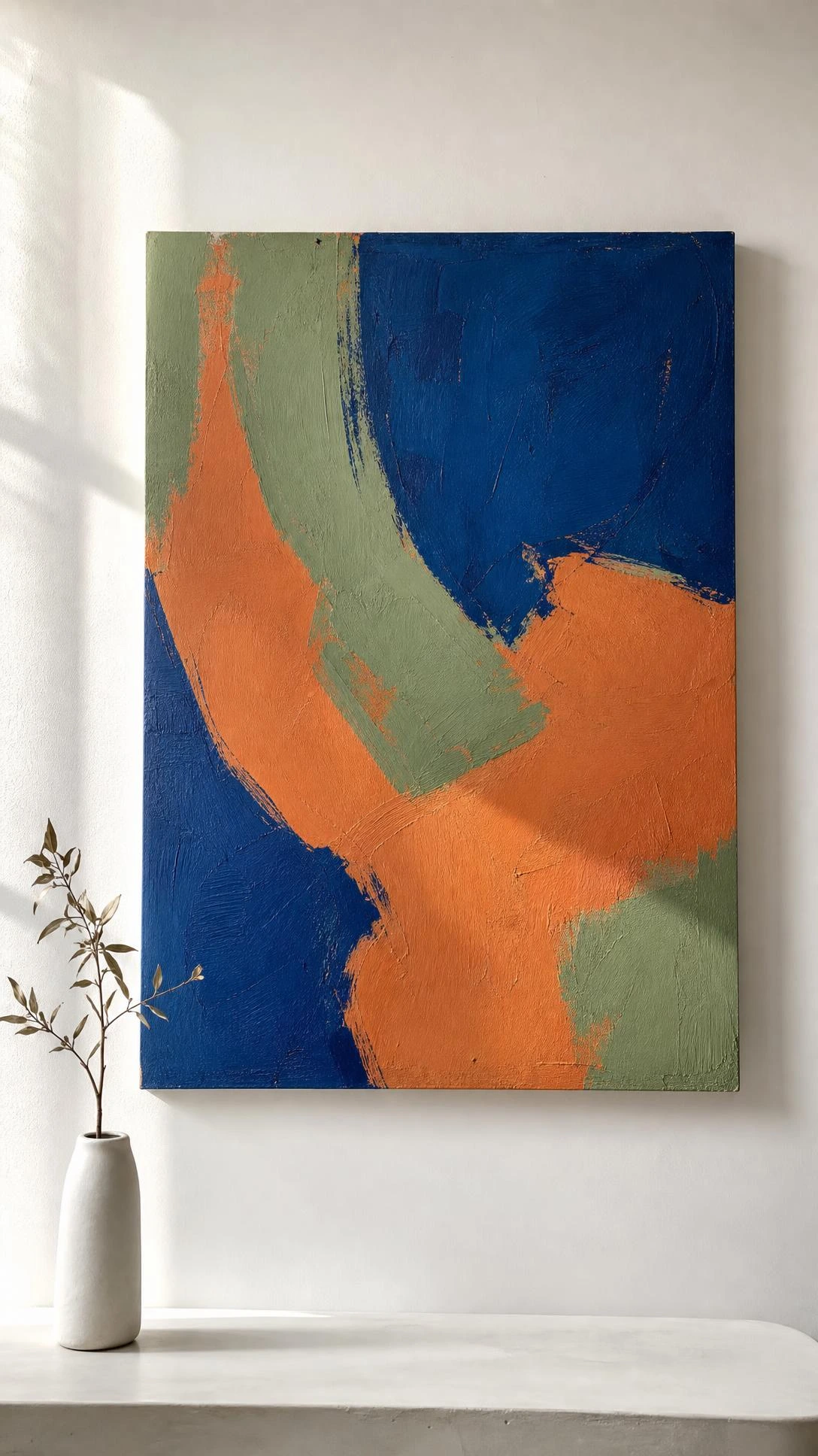
A white wall with nothing on it looks unfinished, but a white wall with one large, colorful piece of art looks like someone lives there who actually knows what they like.
The scale matters here because a small piece gets lost and suddenly it just looks like clutter at eye level with empty space everywhere else.
Something around 24 by 36 inches or larger is usually the minimum for a piece to hold its own on a full wall.
Abstract art in two or three strong colors works especially well because it brings the visual interest without adding any physical stuff to the room.
I think this is honestly the fastest way to get color into a minimalist space without buying a single extra thing that needs a home.
4- Colorful Linen Curtains Instead of White Ones
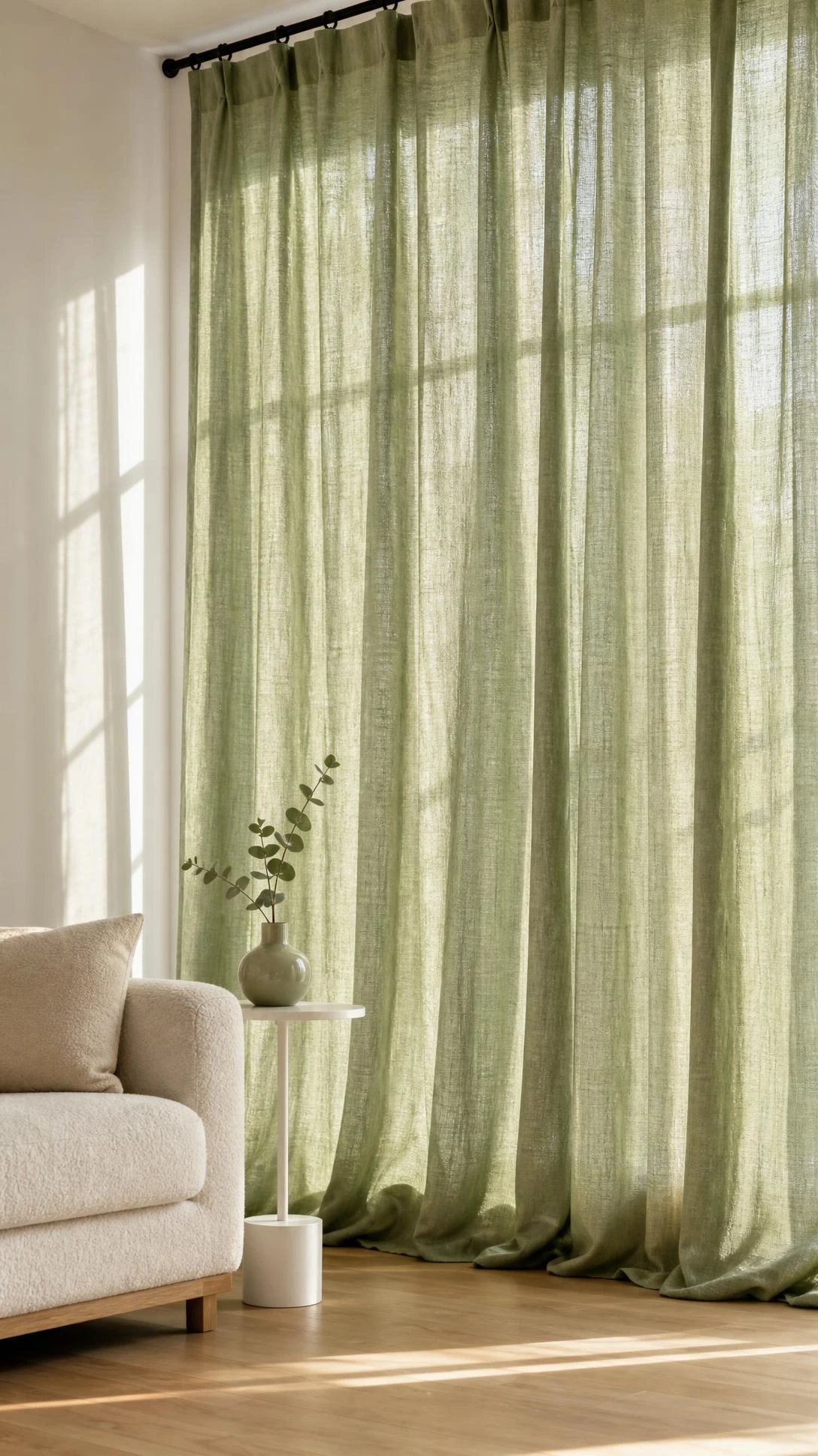
Most people default to white or off-white curtains without really questioning it, which is a missed opportunity in a room that needs a quiet hit of color.
Swapping to linen curtains in a soft dusty mauve, rust, or slate blue adds a lot of warmth without adding anything to the floor or the surfaces.
Curtains are one of the few things that can hold a lot of color without making a room feel cluttered because they live at the edges and move with the light.
Linen specifically works well because the texture softens the color and keeps it from reading as too bold or too precious.
Rust linen curtains in a room with natural wood floors and bare walls feel pulled together without trying too hard.
5- A Colorful Rug as the Starting Point
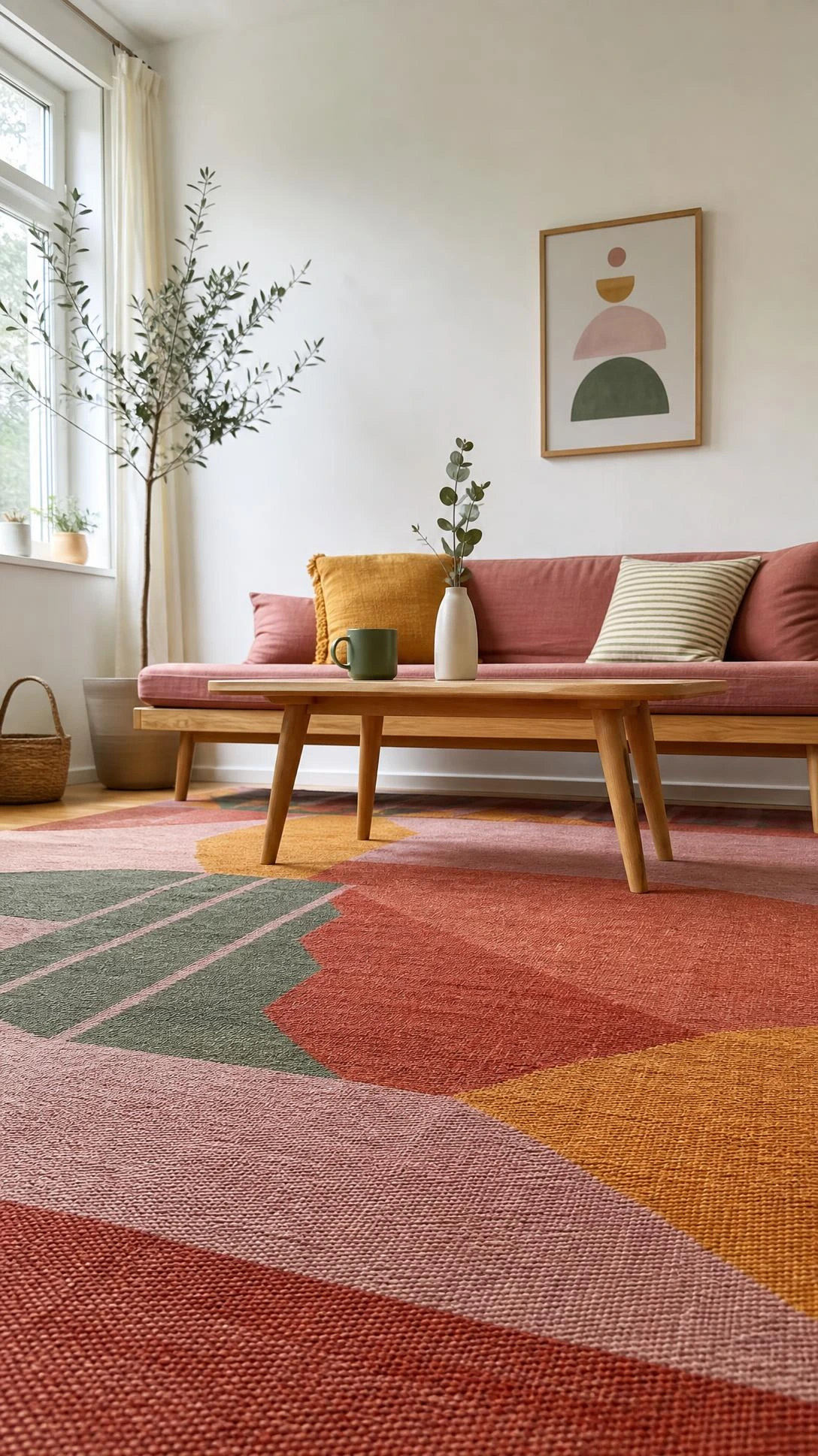
Starting with a rug is one of the smartest ways to build a colorful minimalist room because it sets the palette before anything else goes in.
The rug anchors the whole space and gives every other purchase something to answer to, which cuts down on the random accumulation of stuff that kills the minimalist vibe.
A Moroccan-style rug in terracotta, ivory, and black pulls together a room with almost no effort because the work is already baked into the design.
The benefit is that a great rug reads as one item even though it is technically doing the work of several color decisions at once.
Everything else in the room can stay neutral and the rug will carry the whole thing.
6- Colorful Ceramics on Open Shelving
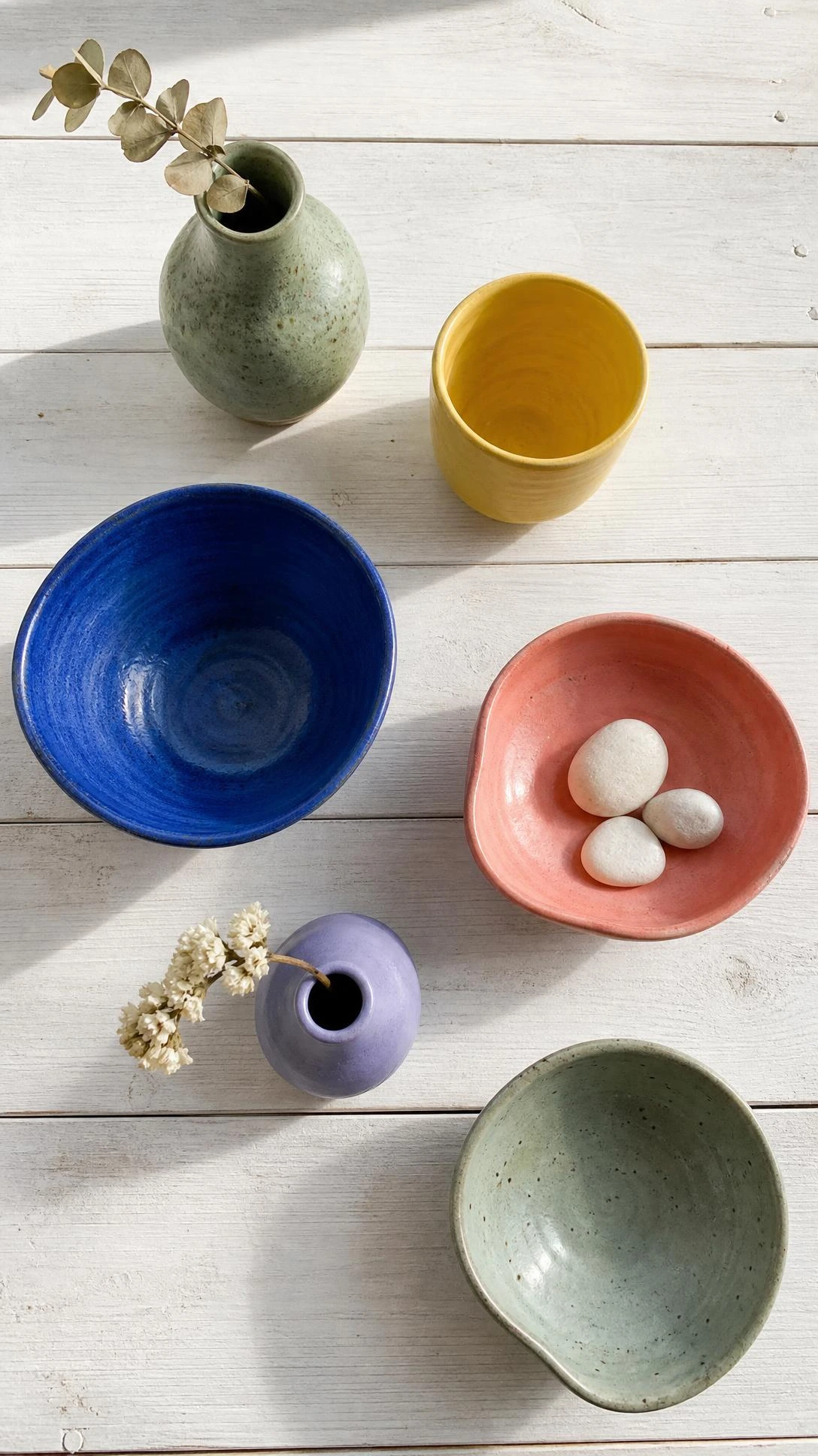
Open shelving has a reputation for looking cluttered, but that is usually a density problem, not a color problem.
Three or four pieces of handmade ceramics in a single color family, spaced out with actual breathing room between them, look intentional rather than collected.
A set of three cobalt blue stoneware bowls on a raw wood shelf against a white wall is genuinely all a space needs sometimes.
The rule that keeps this from tipping into clutter is that each item needs to earn its spot, meaning it is either useful or something that actually means something.
Empty shelf space is not wasted space in a minimalist room, it is part of the composition.
7- A Colorful Sofa in a Neutral Room
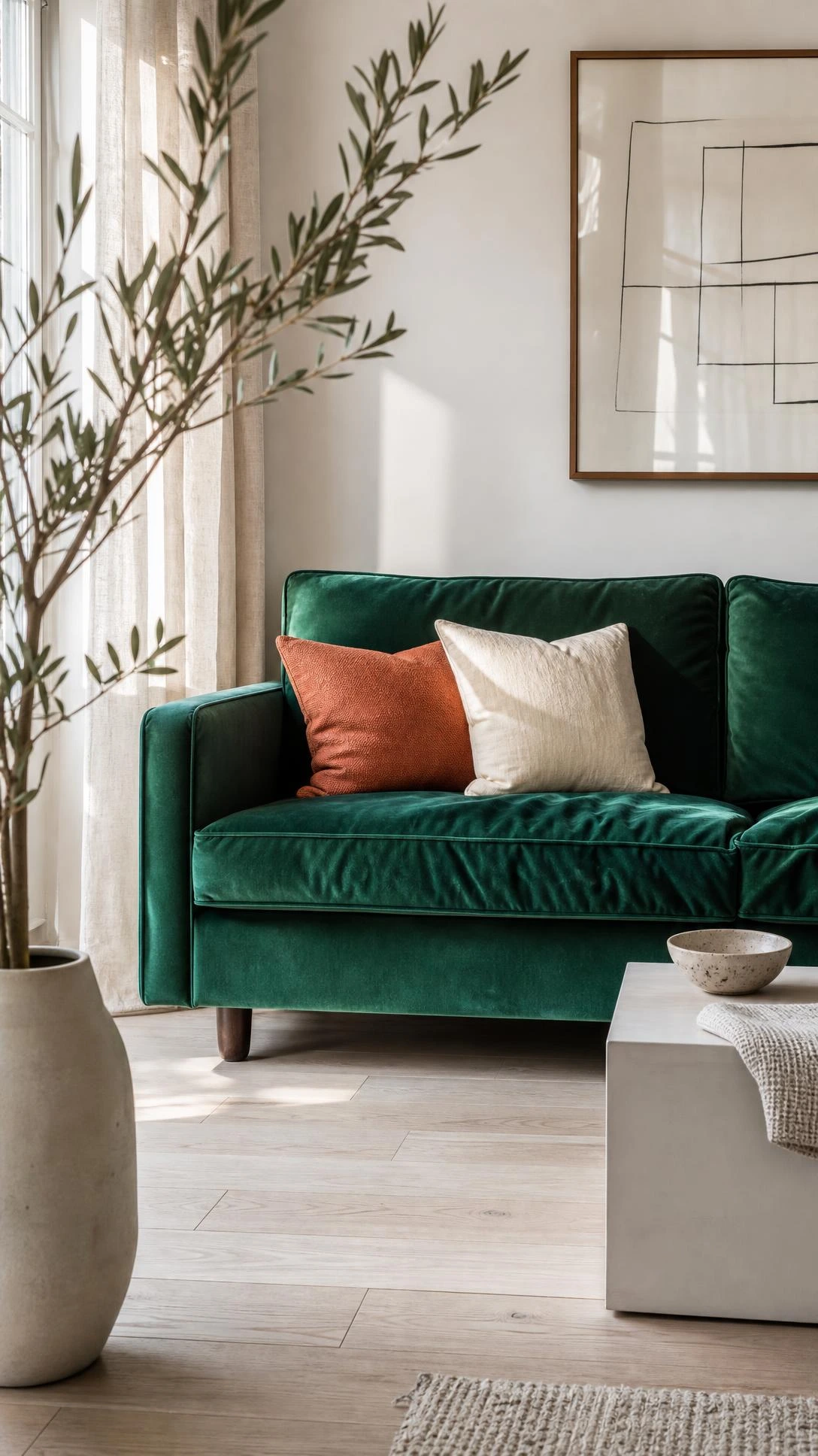
Most people are scared of a colored sofa, which makes sense because it is a big purchase and it is not exactly easy to return.
The thing is, a sofa in a deep olive green, mustard yellow, or dusty pink becomes the entire personality of a room when everything else is kept quiet around it.
A mustard yellow sofa with a natural jute rug, white walls, and simple wood side tables creates a colorful minimalist living room that does not need much else.
The sofa is doing all the work and the rest of the room just needs to stay out of the way and let it.
It works best in rooms where the architecture is already fairly simple, so the sofa has clean context to sit against.
8- Warm Terracotta Tones in a Bathroom
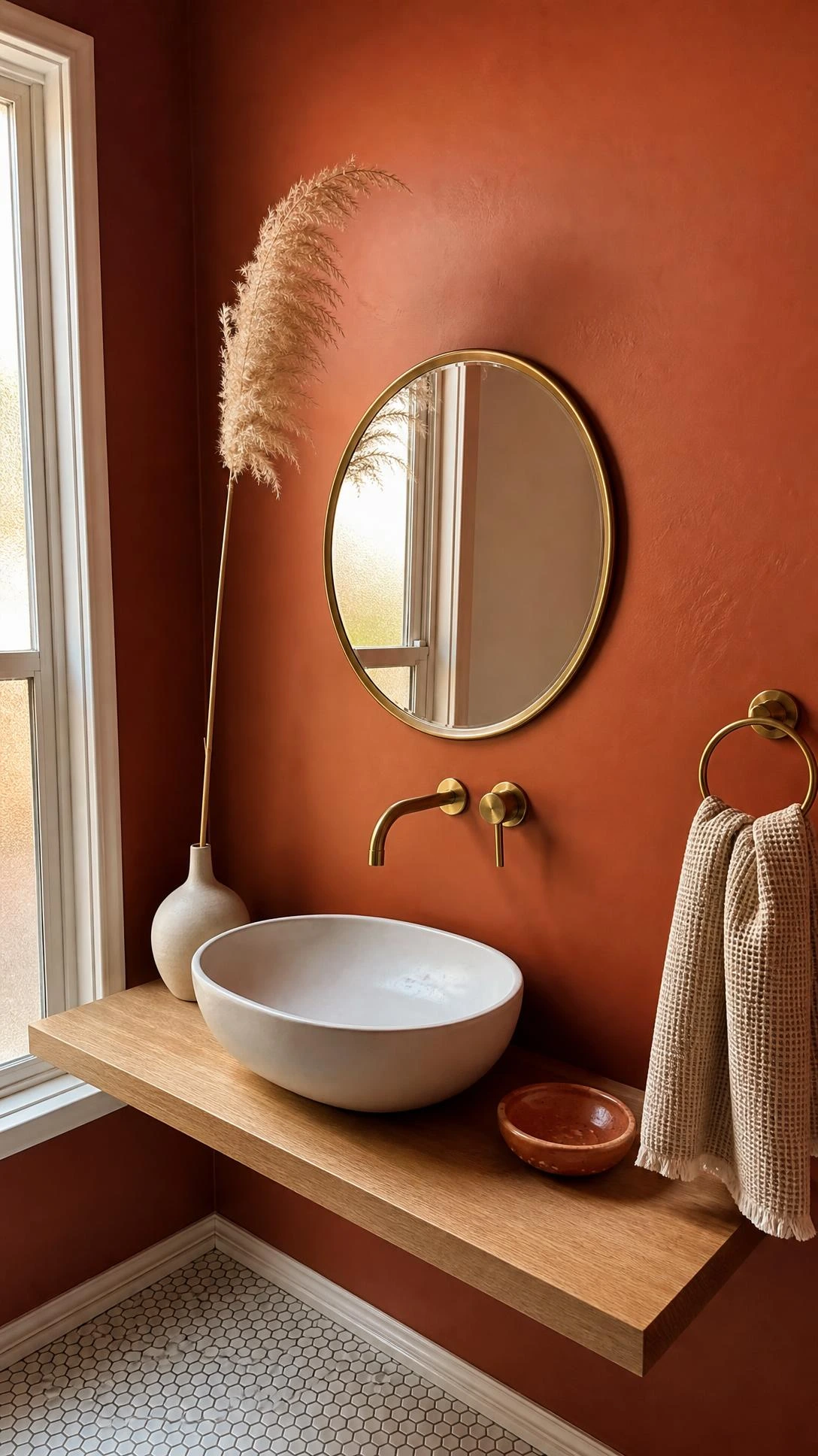
Bathrooms are often the easiest room to take a color risk in because they are small and the investment is usually low compared to a living room or bedroom.
Terracotta tiles, even just as a single accent wall behind the vanity, shift the whole mood from utilitarian to warm and considered.
Paired with white fixtures and simple black hardware, terracotta reads as earthy and calm rather than loud or dated.
Zellige-style tiles in a warm terracotta or burnt sienna range run around $8 to $15 per square foot and cover even a small bathroom wall for a reasonable cost.
The rest of the bathroom can stay completely plain and it still feels like a room someone made real decisions about.
9- A Deep Blue Bedroom With Almost No Decor
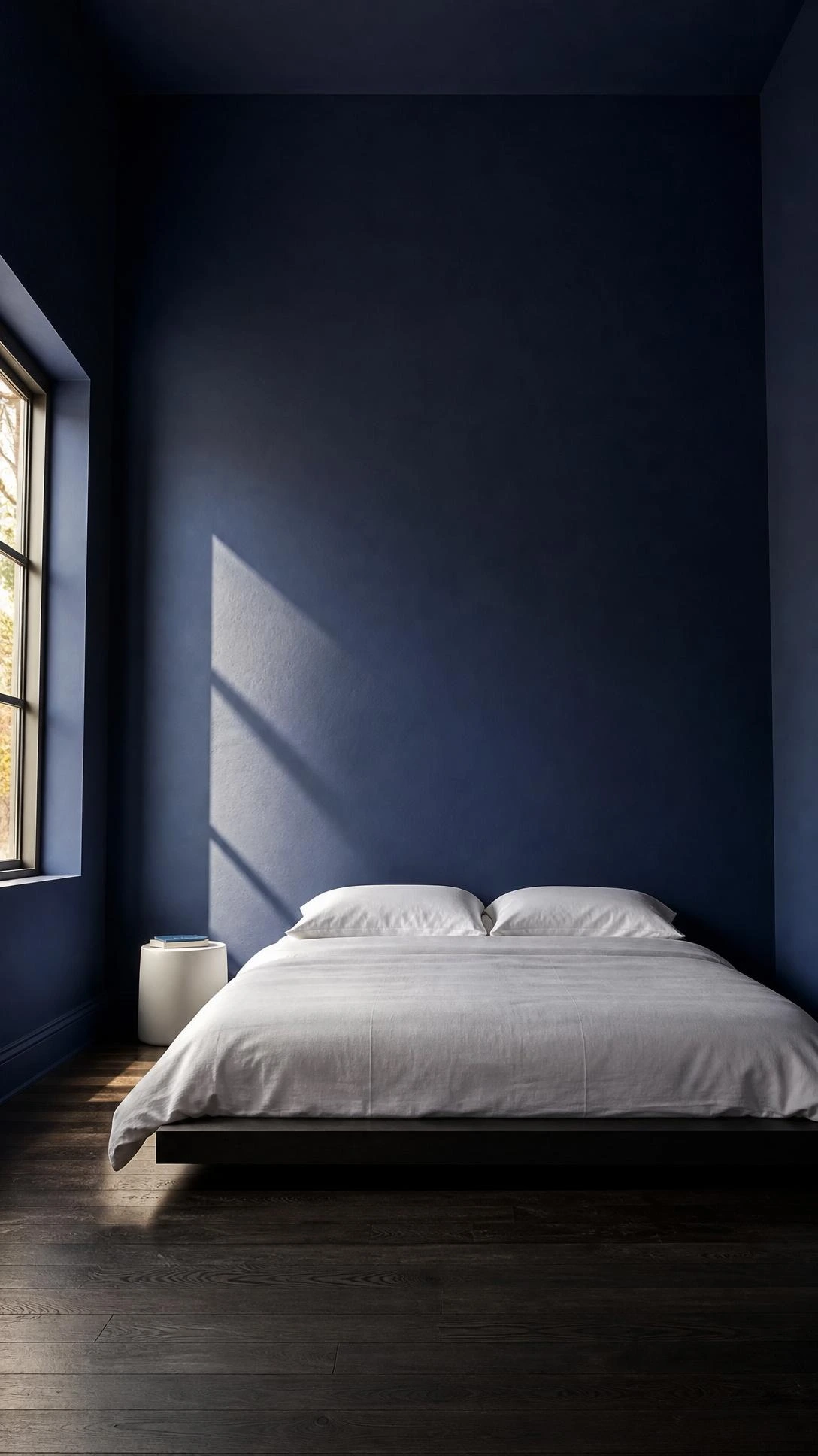
Deep, moody colors in a bedroom work better with less stuff, not more, which makes them a natural fit for a colorful minimalist approach.
A bedroom painted in a color like navy, deep teal, or Hague Blue with white bedding and one wooden nightstand is one of the most calming combinations possible.
Farrow and Ball’s Hague Blue is often cited as one of the most livable deep blues because it shifts between blue and green depending on the light in the room.
The depth of the color creates visual richness that makes decorative accessories feel unnecessary, which is a nice situation to be in.
Most people who try this report being surprised by how much calmer the room feels compared to a plain white bedroom that still somehow always felt incomplete.
10- Functional Items That Happen to Be Colorful
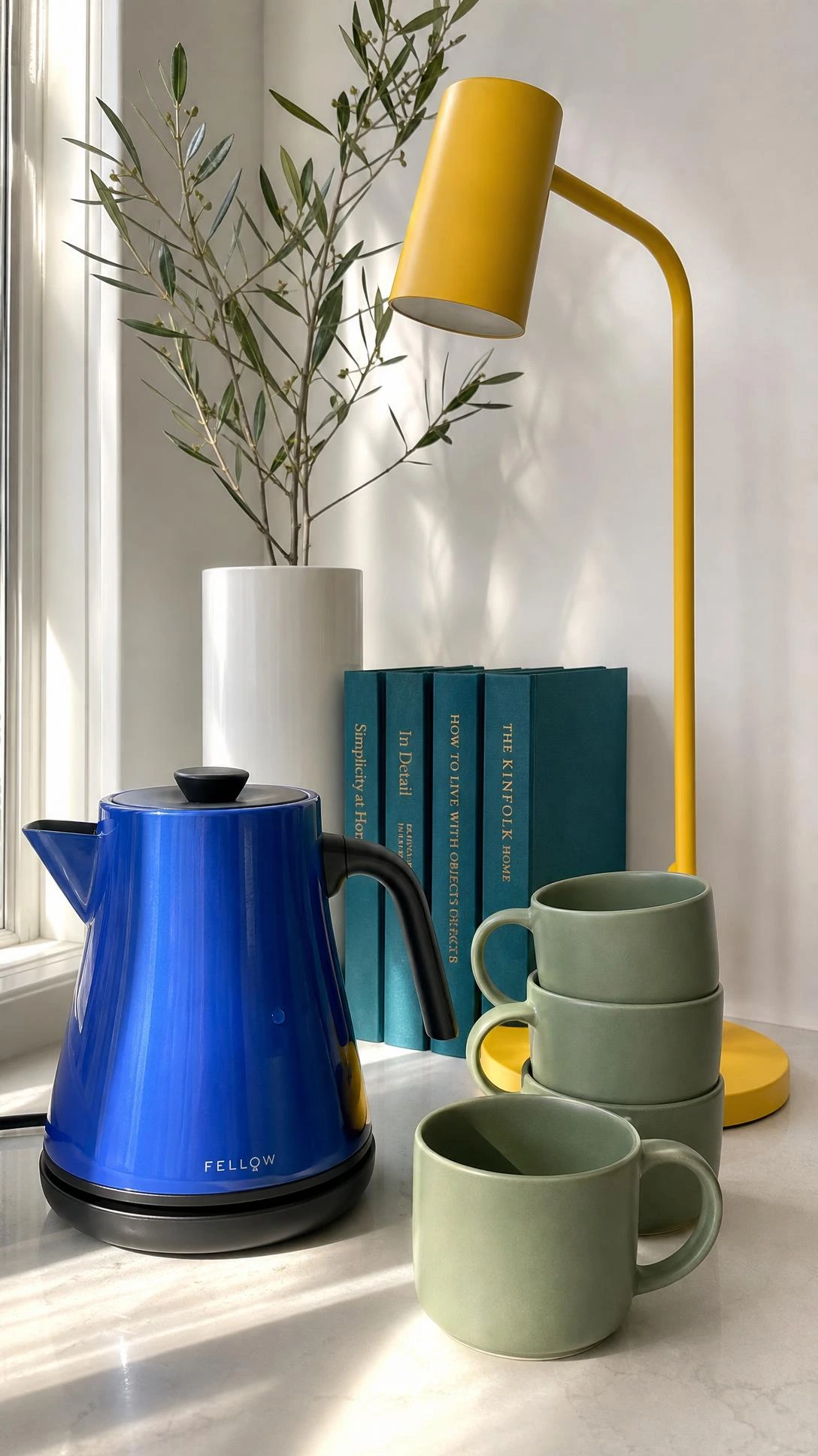
One of the cleanest ways to add color without adding clutter is to let the functional things do the color work.
A bright yellow Le Creuset Dutch oven on a stove, a cobalt blue kettle on the counter, or a set of deep green glassware in a cabinet all count as color without being decorative objects in the clutter sense.
They already have a job, so they are not adding to the visual weight of the space the way a purely decorative object would.
This is probably the most Reddit-approved approach to colorful minimalism because it solves the problem without creating a new one.
The goal is just to be deliberate about which functional items come into the space and what color they bring with them.
Where do you want to go next?
Explore by topic
Recently viewed
11- A Tonal Color Scheme Instead of a Mixed One
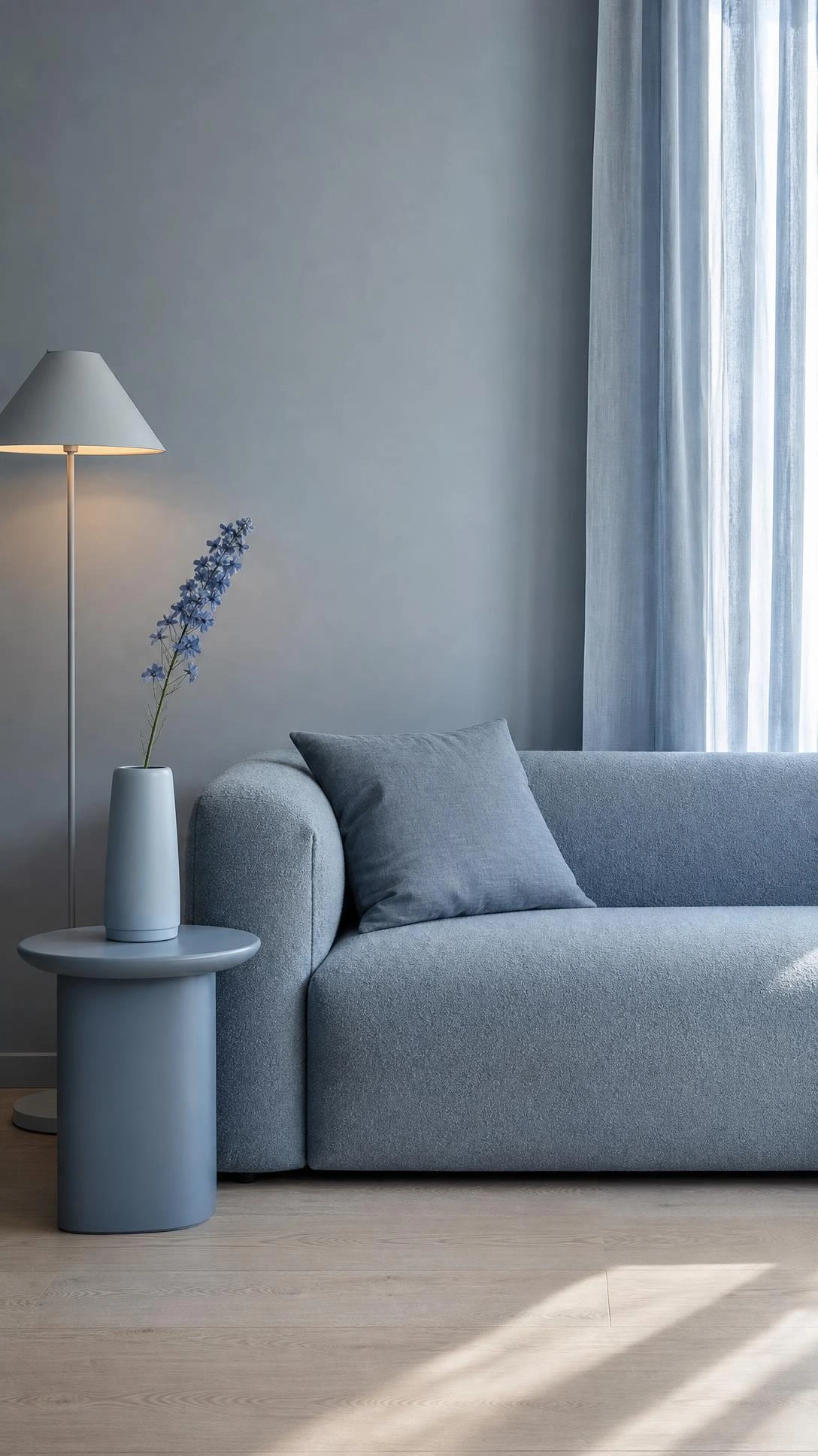
Tonal decorating is when an entire room stays within one color family but varies the shades from light to dark, and it is one of the most underused ideas in colorful minimalist design.
A room done entirely in shades of green, from pale sage walls to a deeper olive sofa to a forest green velvet cushion, feels cohesive and rich without ever feeling busy.
The visual quiet comes from the fact that there is nothing competing for attention, every element is speaking the same language.
This approach works especially well in living rooms and bedrooms where the goal is to feel settled rather than stimulated.
It takes more planning than just picking a few favorites, but the result is a room that looks like it was designed rather than assembled over time.
Color Without the Chaos Is a Real Thing
None of these ideas require a big renovation or a full room overhaul to work.
Most of them are just about making more deliberate choices with things that are already coming into the space anyway, like art, textiles, and functional objects.
Colorful minimalism is less a specific aesthetic and more just a mindset about letting color be purposeful rather than accidental.
A room with one considered color decision and a lot of breathing room around it will always feel better than a room that tried to be interesting with volume.

Hi, I’m Alizabeth, the creator of Pretty Home Hacks. I share practical home decor ideas, easy DIY projects, organization tips, and budget-friendly ways to make your home feel more beautiful and functional. From small room updates to everyday home hacks, my goal is to share approachable ideas you can actually use in your own space.