
10 TV Unit Living Room Design Ideas That Hide All the Cables and Still Look Really Good
Cable clutter is one of those things that just silently ruins a living room without anyone really naming it as the problem.
The TV goes up, the setup looks great for about five minutes, and then there are six cords dangling down the wall and a power strip sitting on the floor like it owns the place.
Most people assume fixing it means cutting into walls or calling someone in, which is why it just never gets dealt with.
The good news is that a well-chosen TV unit does most of the heavy lifting here without any of that, and there are more options than most people realize.
These ten TV unit living room design ideas are all things that actually work in real spaces, not just in showroom photos where nothing is ever plugged in.
1- Full Wall Entertainment Unit With Back Panel Cable Routing
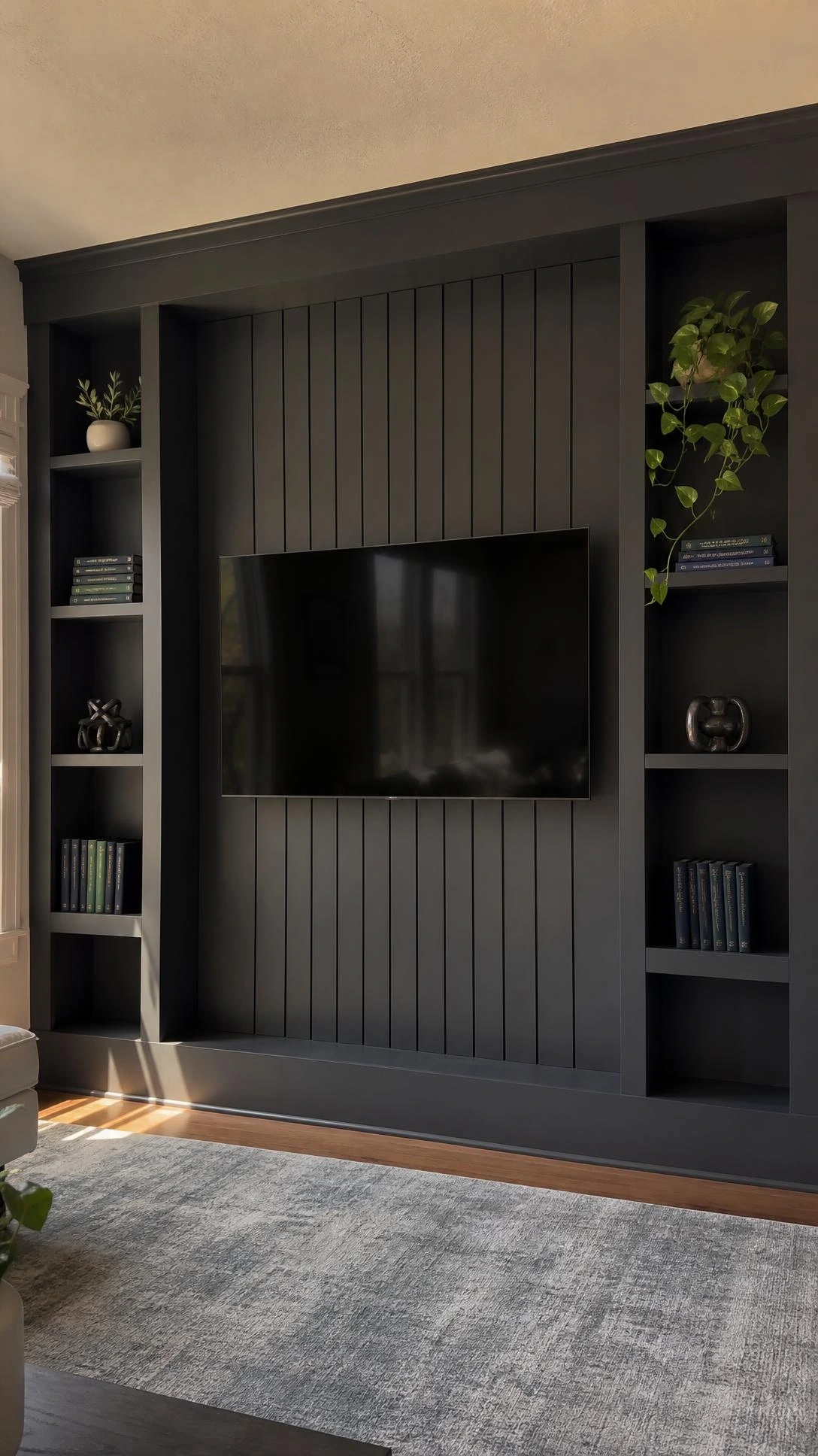
A full wall unit is probably the most complete solution for anyone dealing with a lot of devices, because everything has somewhere to go and the wires go with it.
The key is choosing a unit that has a back panel with pre-cut cable routing holes, so cords from the TV, speakers, and streaming boxes all thread through to a single hidden power strip inside the cabinet.
Units in this category from brands like IKEA’s Besta range start around $300 to $600 depending on how many modules are added, which is not bad for something that basically eliminates visible cabling entirely.
The unit should be wider than the TV by at least 30 centimeters on each side so the screen sits centered and the whole wall feels balanced rather than crowded.
Once everything is routed through and the cabinet doors are closed, the living room looks like the kind of place where cords were never really a consideration.
2- Floating TV Unit With Concealed Cable Channel
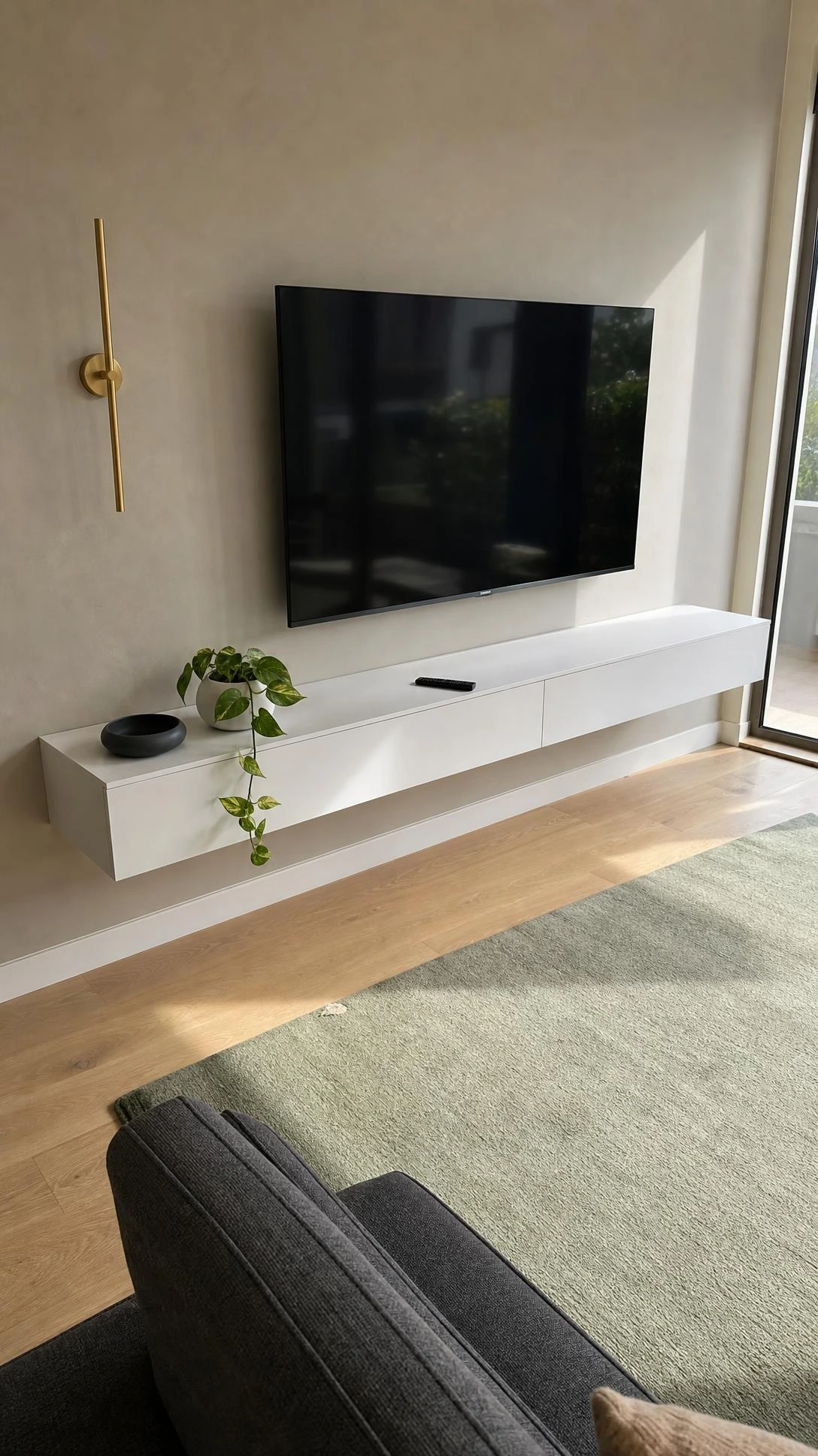
Wall-mounted floating units are the go-to for smaller living rooms because they free up floor space and make the room feel bigger without any furniture rearranging.
The cable situation is where most people get stuck, because floating units can leave wires dangling between the TV and the unit below.
The fix is a slim cable channel raceway, like the D-Line range in white or matte black, which runs flush against the wall and covers the vertical drop of cords in a way that actually looks intentional.
Mounting the unit at around 45 to 50 centimeters from the floor tends to hit the sweet spot where the TV sits at comfortable eye level for a seated viewer.
I think floating units with a timber veneer finish are doing the most work right now in living rooms that want a clean Scandi feel without the all-white sterility.
3- TV Unit With Closed Cabinet Doors for Full Cable Hide
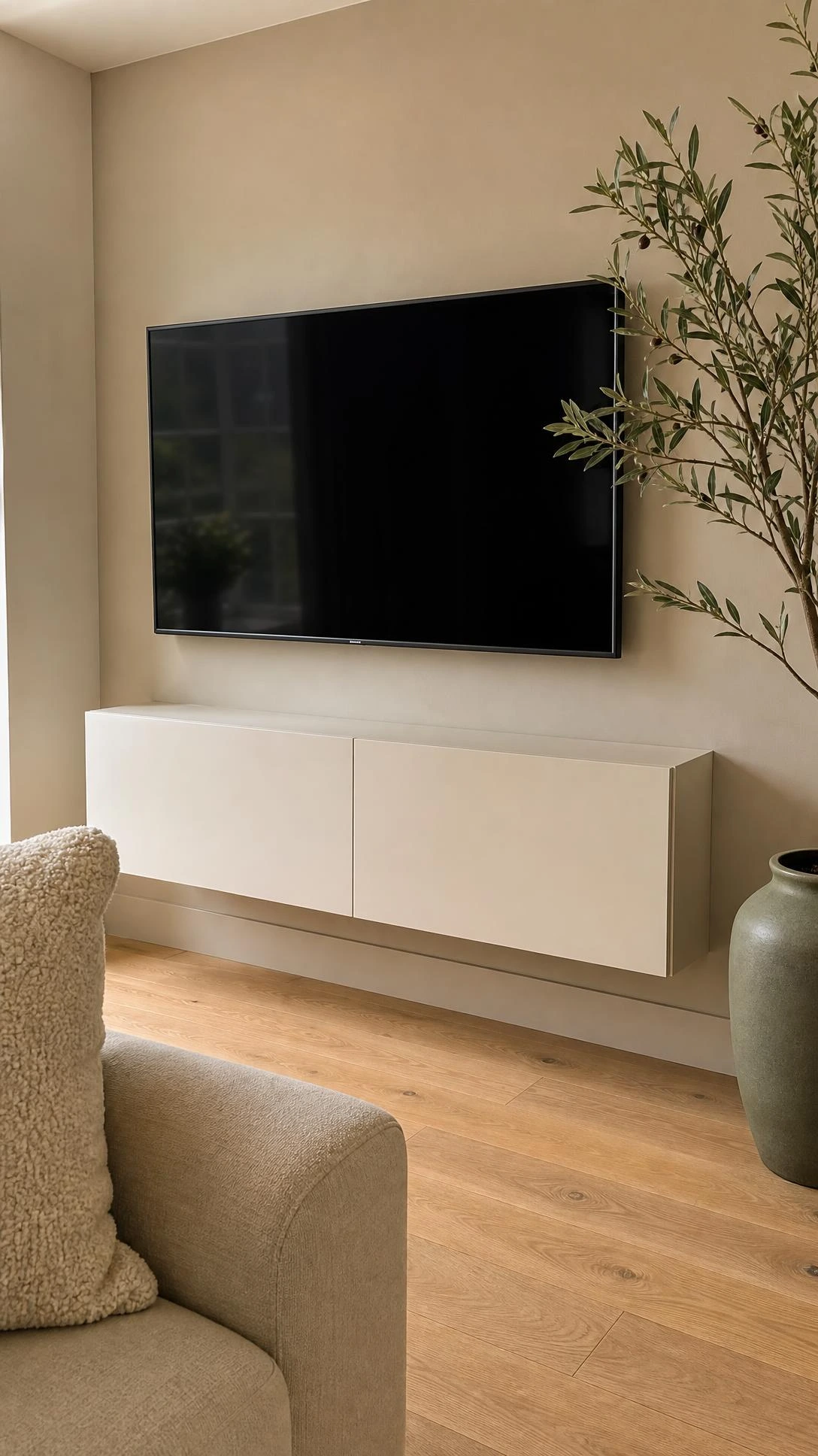
Closed cabinet TV units are probably the most underrated option because people often overlook them in favor of open shelving, which turns out to be significantly harder to keep looking good.
With closed doors, every device, every remote, every power cord, and every cable just disappears behind a panel and nobody has to think about it again.
The practical detail is to make sure the unit has ventilation gaps at the back, because streaming devices and game consoles generate heat and need airflow to run properly.
Units with push-to-open doors in a matte finish, like a warm white or a soft charcoal, tend to look the cleanest because there are no visible handles breaking up the surface.
This setup works best in family living rooms where the goal is just to keep things functional and calm-looking without constant tidying.
4- Timber TV Unit With Integrated Cable Management Grommets
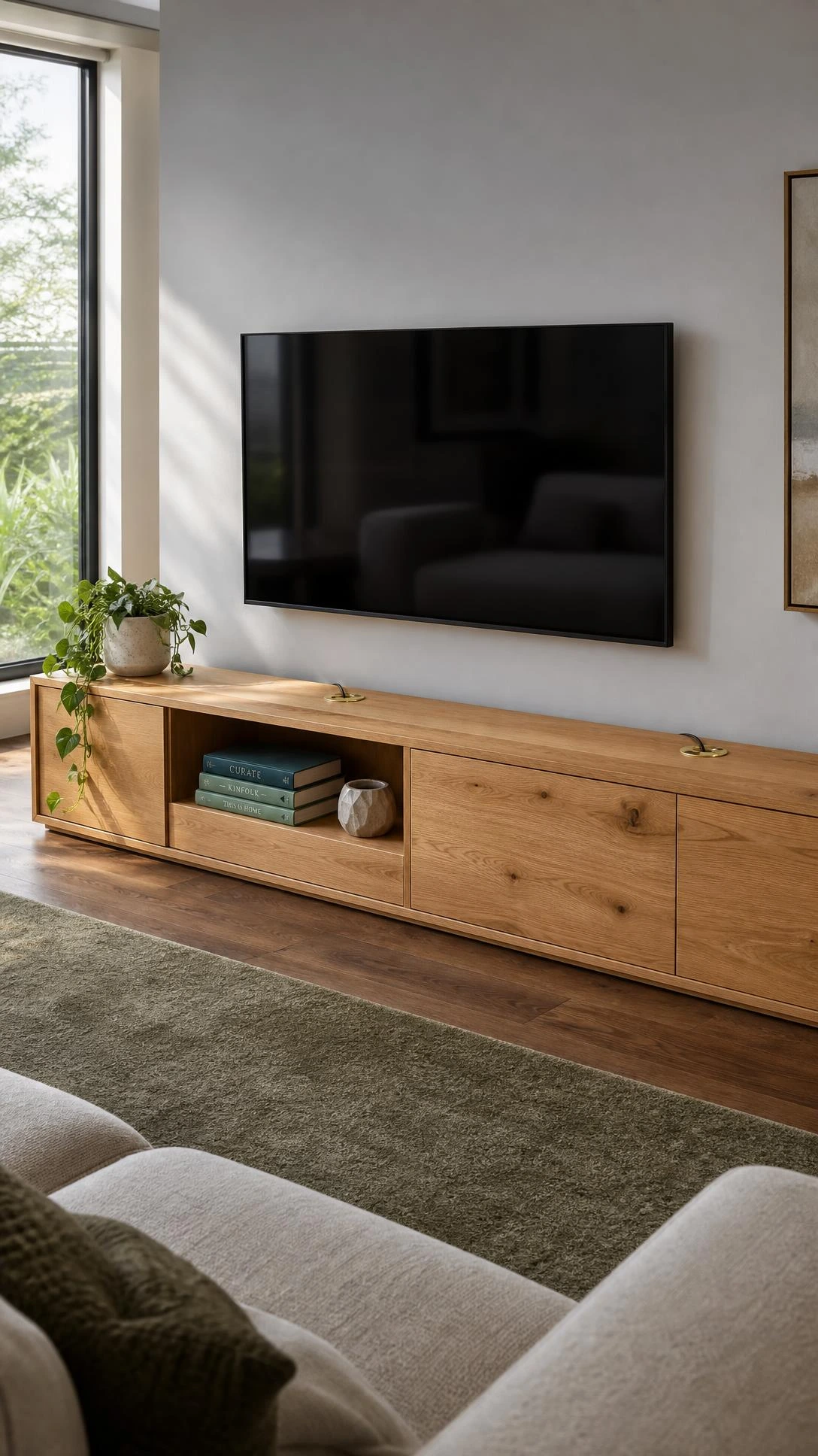
Timber units bring a warmth to a living room that almost nothing else does, and the good ones are built with cable management already factored in.
Integrated cable grommets are the small circular openings cut into the back or sides of the unit that let cords pass through cleanly instead of being bunched up and shoved behind the TV.
A solid oak or oak-veneer unit in a medium warm tone pairs naturally with almost any wall color, and in a room with sage green or warm white walls it looks genuinely considered.
The thing to watch for is units that have the grommet positioned too far to one side, because it makes routing cords from a centrally placed TV awkward and the cords end up angled visibly across the back.
Timber units in the $400 to $800 range from furniture retailers like Temple and Webster or West Elm tend to have the best combination of cable features and actual finish quality.
5- Wall Paneling Behind the TV to Hide All Cords
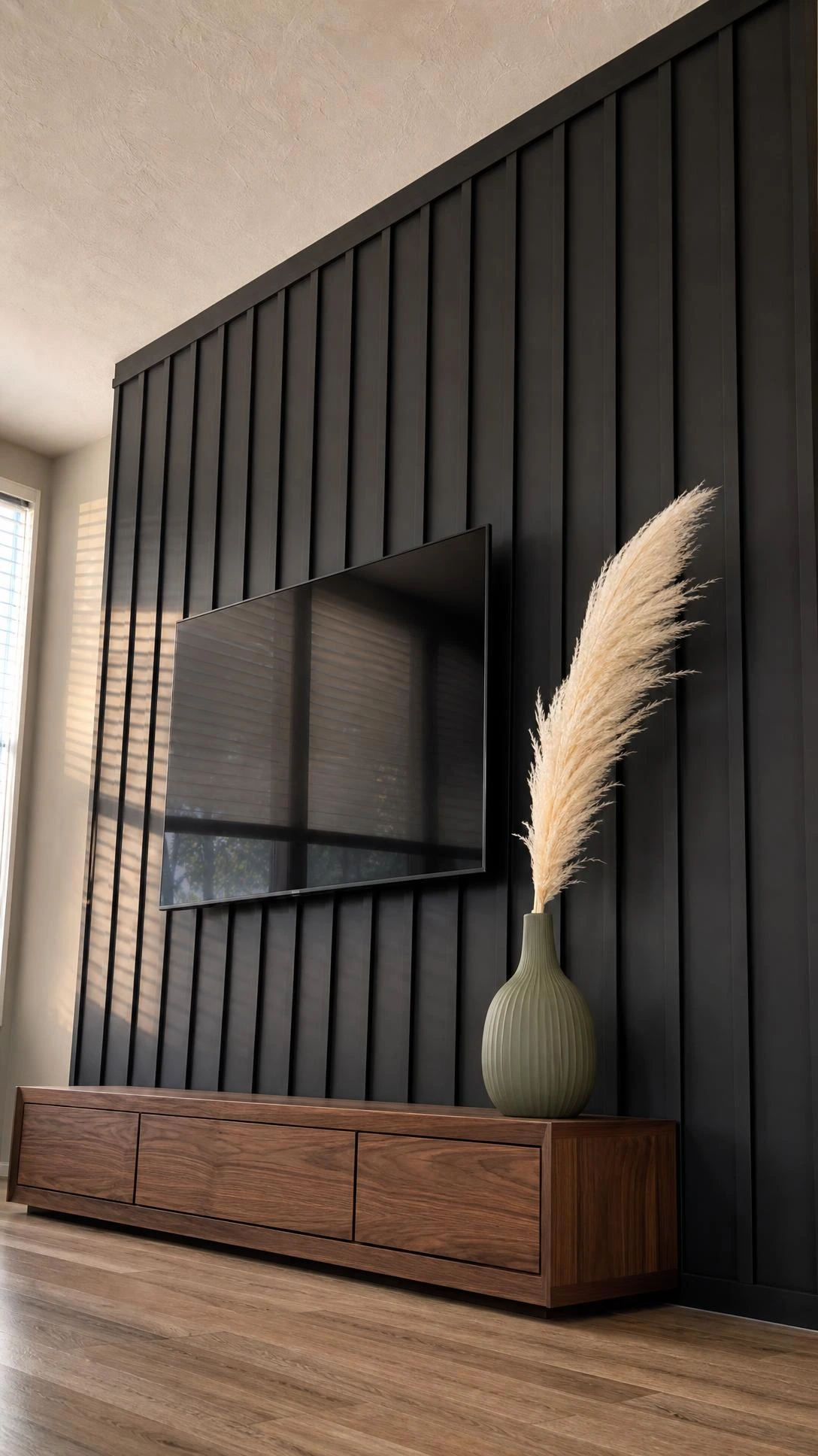
Wall paneling behind the TV is one of those ideas that sounds like a big project but is actually much more manageable than it looks.
The approach is to attach slim timber battens or MDF panels to the wall area directly behind the TV, leaving a hollow gap between the panel and the actual wall where all the cords can run vertically out of sight.
The panel is clipped or attached at the base so it can be popped off whenever access to the cables is needed, which makes future changes or upgrades easy enough to not be dreaded.
This works particularly well in rooms that already have a feature wall idea in mind, because the paneling doubles as a design moment and a functional cable cover at the same time.
Painting the panel the same color as the wall, something like a deep slate or a warm greige, makes the whole setup read as one intentional surface rather than an obvious add-on.
6- Low Profile TV Credenza With Hidden Power Strip Drawer
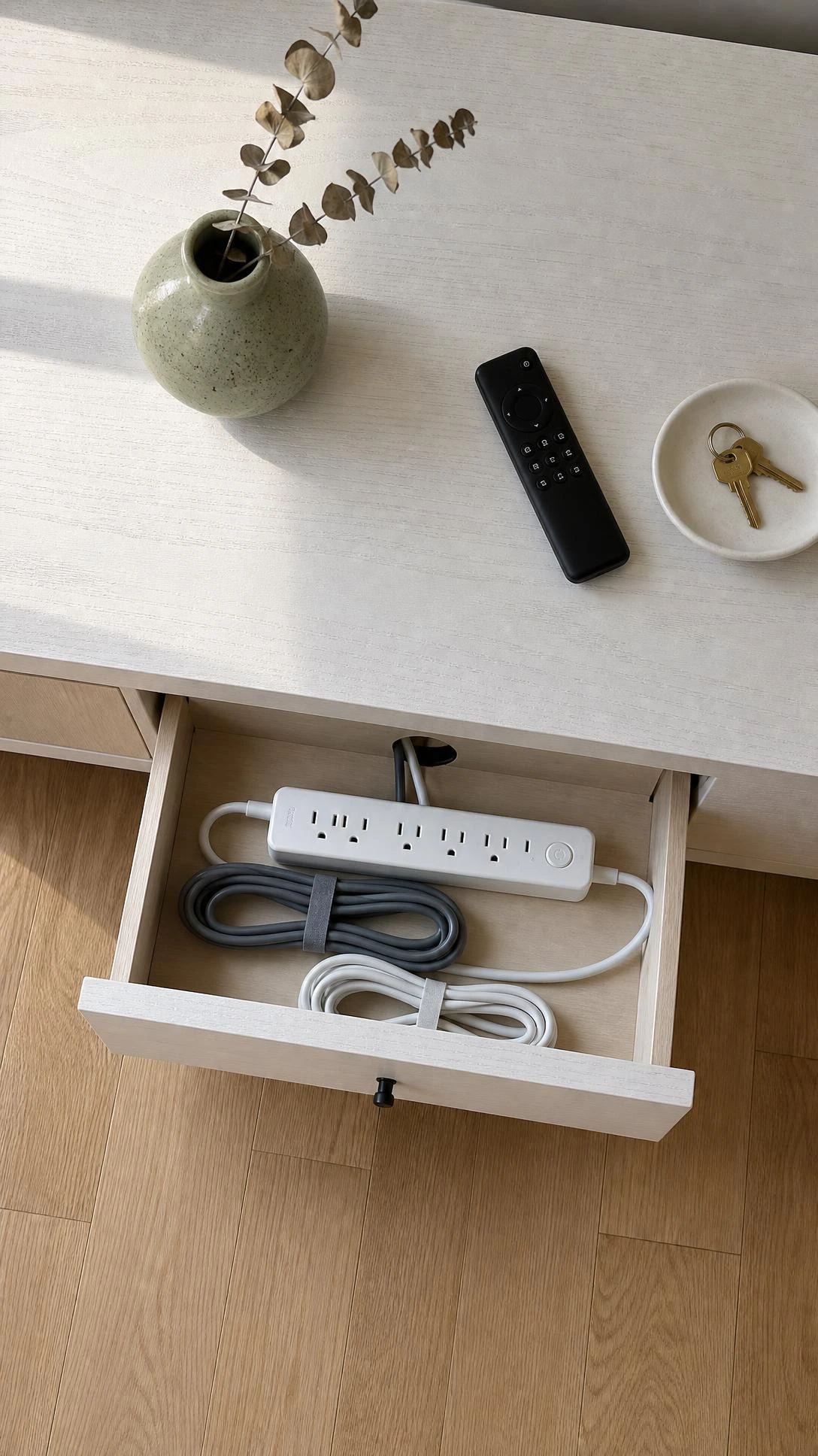
A low credenza-style TV unit has a long, low silhouette that makes the whole living room feel more deliberate and less thrown together, which is a nice bonus on top of the storage it provides.
The best versions have a shallow rear drawer or channel specifically designed to hold a power strip, so every device plugs in internally and only a single cord runs to the wall outlet.
Single cord to the wall is really the goal because it means even if that one cord is slightly visible, it barely registers as clutter compared to five separate cords fanning out in different directions.
Credenzas in a walnut finish with hairpin legs are the version most people are reaching for right now, and they sit well in living rooms with mid-century or retro-modern furniture already in the mix.
The surface of a credenza is wide enough to style properly with a plant, a few objects in odd numbers, and still leave the right third clear, which is usually where the breathing room in a styled surface actually comes from.
7- Gaming Setup TV Unit With Dedicated Console Cable Management
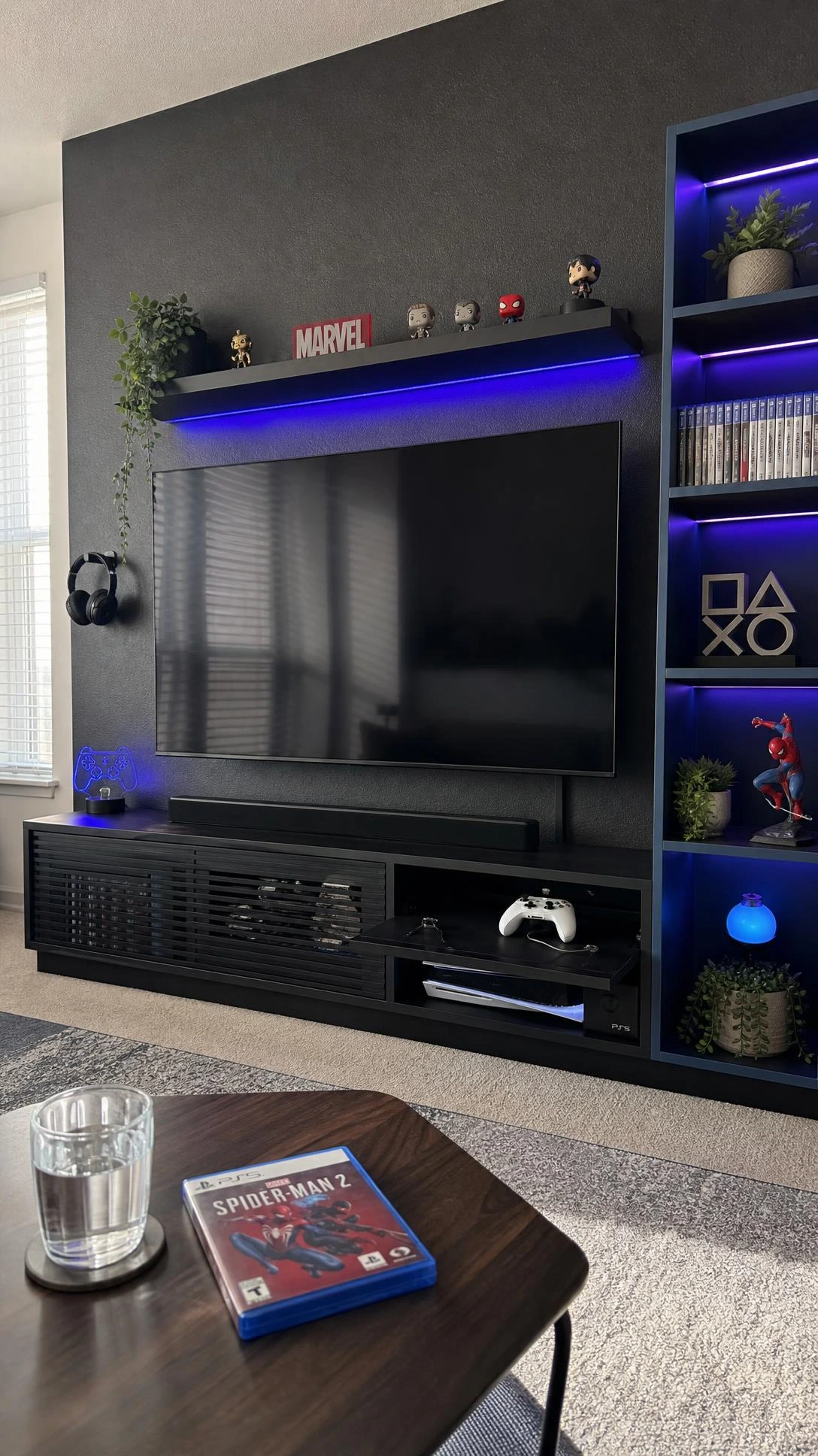
Gaming setups are genuinely the hardest cable situation in a living room because there are more devices, more controllers, more charging cables, and more power requirements than a standard TV setup by a significant margin.
A TV unit built for this needs at least three or four open cubbies or pull-out drawers to house consoles, and each cubby should have its own cable pass-through at the back so cords do not all merge into one impossible tangle.
Cable ties in a 20-pack cost almost nothing and are the one thing that makes the difference between a cubby that looks managed and one that looks like a nest of something unknown.
Labeling each cable at both ends with a small sticker or tag sounds like overkill until the first time something needs to be unplugged and it is genuinely impossible to tell which cord belongs to what.
Units with a solid back panel rather than an open back also help here because they contain the cable situation physically and stop things from drifting or pulling loose over time.
8- Marble-Look or Stone-Finish TV Unit With Closed Styling Shelves
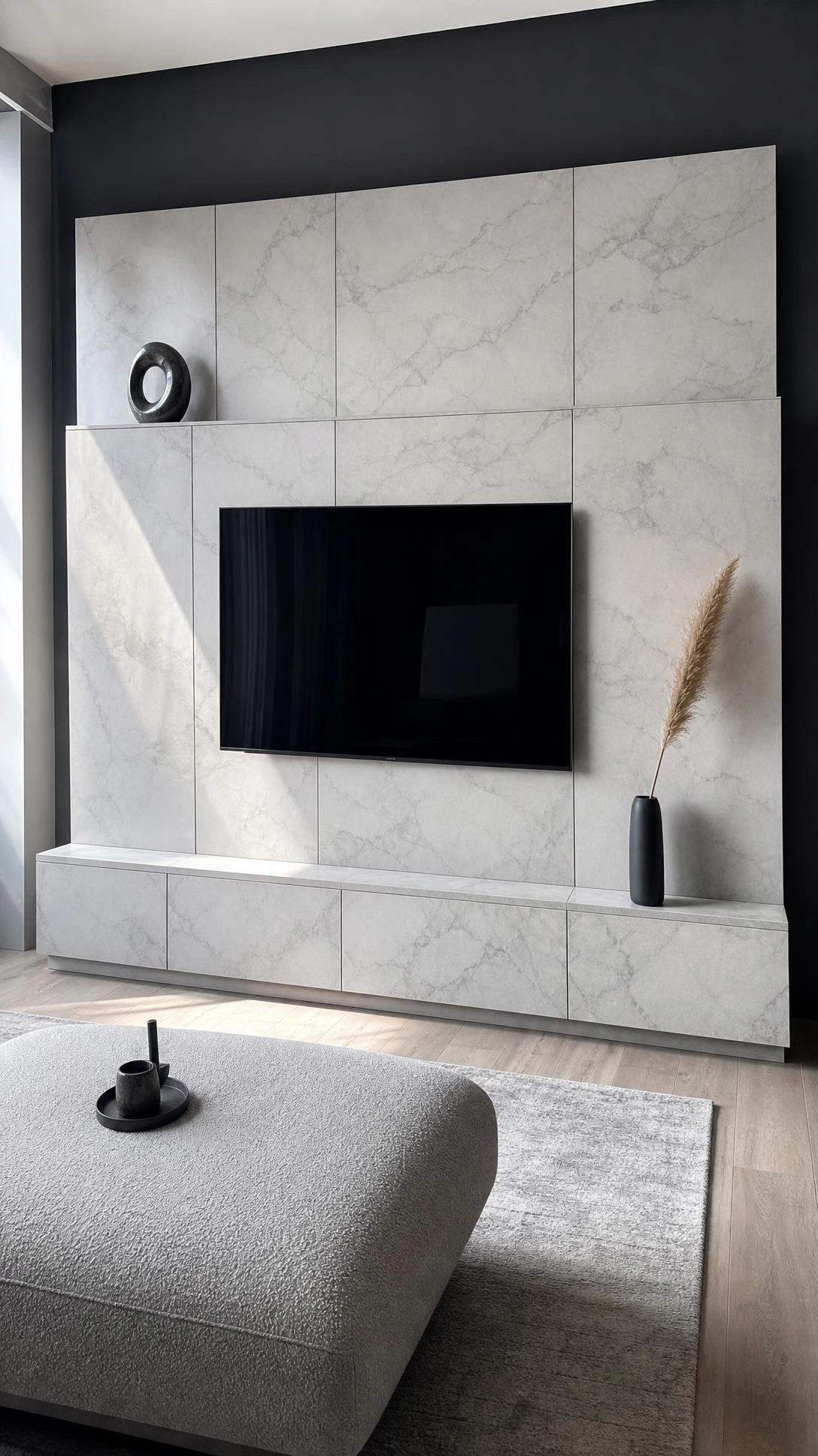
Marble-look finishes on TV units have moved into a space where they feel more like a real design choice and less like a trend that will look dated in two years, especially in the matte versions.
The thing about a marble or stone-effect finish is that the surface texture naturally draws the eye, which means a few cables or cords nearby become far less noticeable than they would against a plain matte white unit.
Closed lower cabinets on these units handle the cable and device storage, while the upper open shelves are where the styling happens with books, ceramics, and one plant that actually suits the light in the room.
Styling two-thirds of the shelf and leaving one-third clear is the detail that separates a shelf that looks considered from one that looks like a collection of things with nowhere else to go.
Units in this finish tend to run between $600 and $1,200, and in a room with white or pale walls they do a lot of visual work without needing anything else added to the space.
9- Built-In Alcove TV Unit With Floor-to-Ceiling Cable Concealment
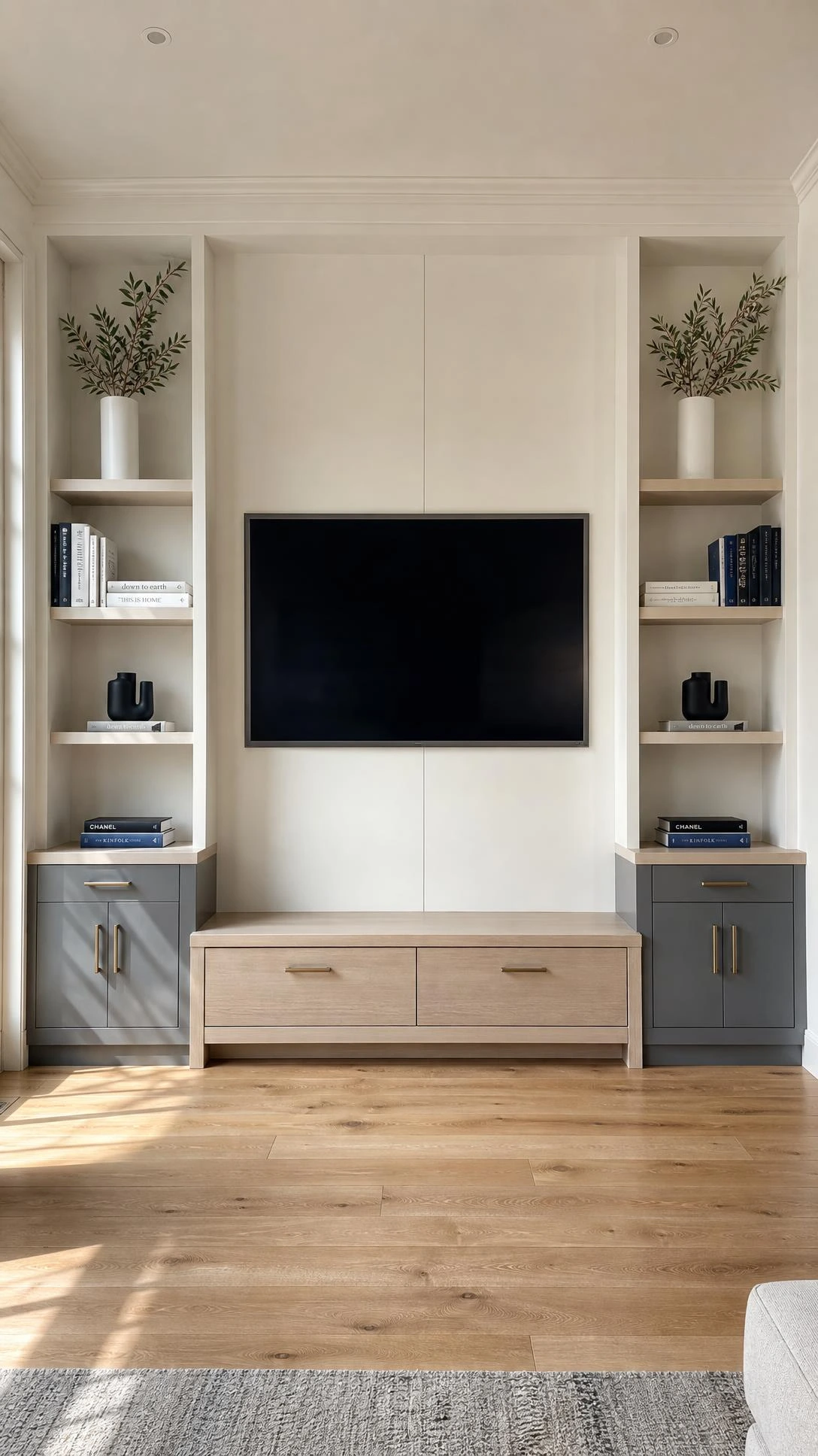
If the living room already has an alcove or a recessed wall section, building a TV unit into it is probably the cleanest possible outcome for both the cable situation and the overall look of the room.
A built-in means the unit goes wall to wall and floor to ceiling within the recess, which gives a natural channel behind the unit where every cable can run vertically down to a single floor-level power point completely hidden from view.
The cost varies a lot depending on materials and whether it is custom-built or assembled from modular components, but a modular approach using IKEA Besta units fitted to an alcove can come in under $1,000 and look genuinely custom when painted out to match the walls.
Painting the inside of the alcove the same color as the unit is the detail that makes a modular built-in look like it was always meant to be there rather than recently installed.
This works best in rooms where the TV placement is not going to change, because a built-in is a commitment in a way that a freestanding unit is not.
10- Minimalist Open Shelf TV Unit Styled to Make Cables Disappear
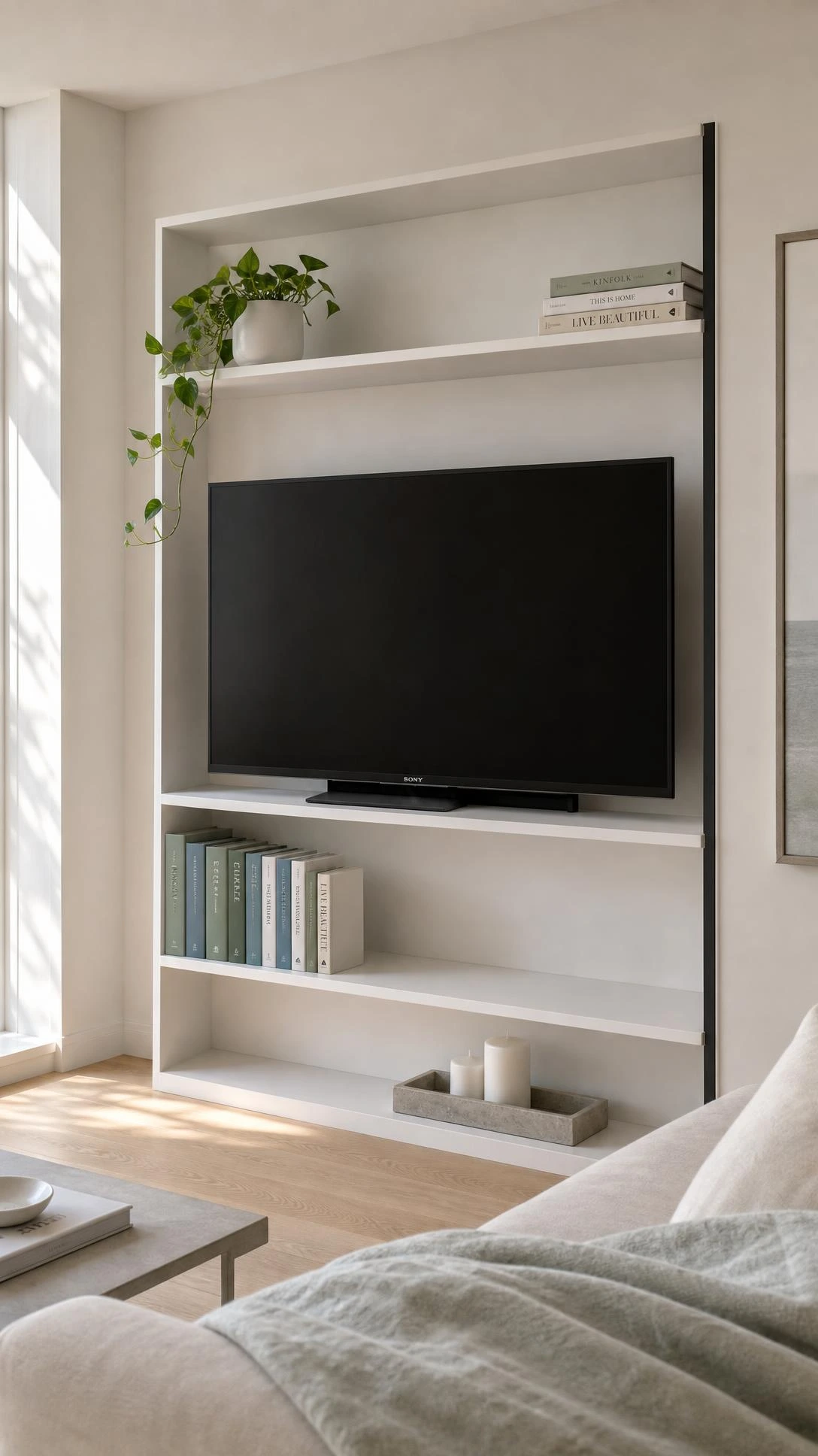
Open shelf TV units are the hardest to make look tidy because there is nowhere for anything to hide, which means the cable situation has to be handled with more intention than any other style.
The approach that actually works is to use cable spine covers, which are fabric or silicone sleeves that bundle all the cords from a shelf together into a single column that reads as one vertical line rather than a cluster of individual wires.
Matching the cable sleeve color to the unit or the wall behind it, usually a matte black sleeve against a dark unit or a natural linen sleeve against a timber one, makes the whole thing almost invisible at normal viewing distance.
The shelf styling matters here too, because a visually busy shelf makes the eye look everywhere and eventually land on the cables, while a calmer shelf with fewer larger objects keeps the attention on the objects and not the hardware.
I think open shelf units look best when about half the shelves have something on them and the other half are left empty, which sounds counterintuitive for storage but looks genuinely much better in practice.
The Cable Situation Is More Solvable Than It Looks
Most living rooms with a cable problem do not need a renovation, they just need a unit that was actually chosen with the cords in mind.
Once the right unit is in place, the rest of it, the styling, the finishing details, the decor on the surface, all becomes a lot easier because the messy foundation is already dealt with.
A TV wall that looks calm and considered is less about perfection and more about having one less visible problem pulling the room apart.
Start with the cables, and the rest of the room tends to follow pretty naturally from there.

Hi, I’m Alizabeth, the creator of Pretty Home Hacks. I share practical home decor ideas, easy DIY projects, organization tips, and budget-friendly ways to make your home feel more beautiful and functional. From small room updates to everyday home hacks, my goal is to share approachable ideas you can actually use in your own space.