

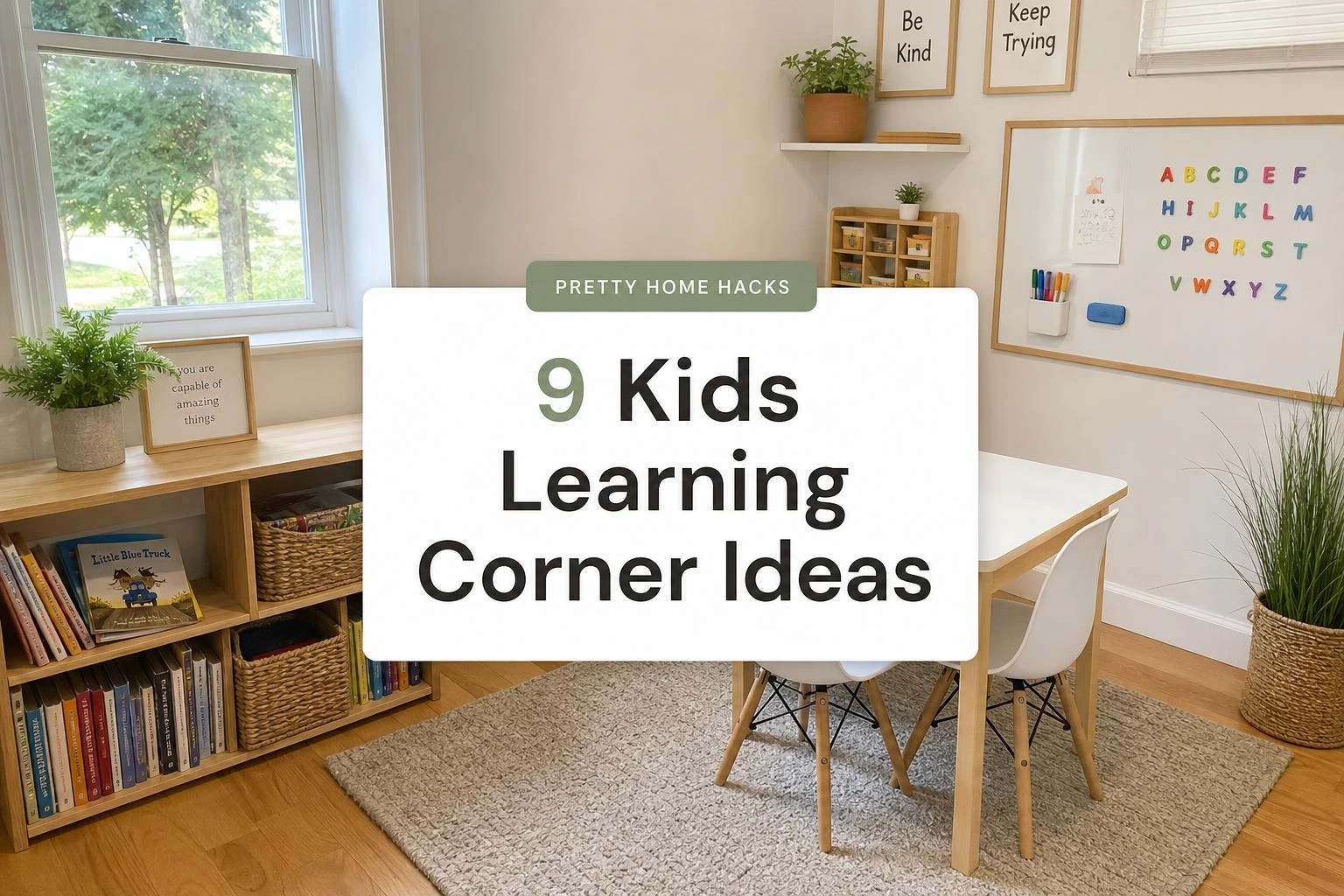
9 Kids Learning Corner at Home Ideas That Cost Almost Nothing and Actually Get Used
Setting up a kids learning corner at home sounds like one of those projects that always ends up costing more than expected and getting ignored by the following Tuesday.
The classic version involves a whole Pinterest board, a cute desk from a children’s furniture store, and a wall full of coordinated baskets that nobody actually puts things back into.
Most people assume the space has to look a certain way before kids will use it, which is where the whole thing starts going sideways before it even gets started.
The spaces that actually get used are usually the ones that cost almost nothing, took less than an afternoon to set up, and were built around what the kid already does naturally.
These nine ideas are all genuinely low-cost and actually field-tested in real homes, not just styled for a photo.
1- A Carpet Square to Define the Space
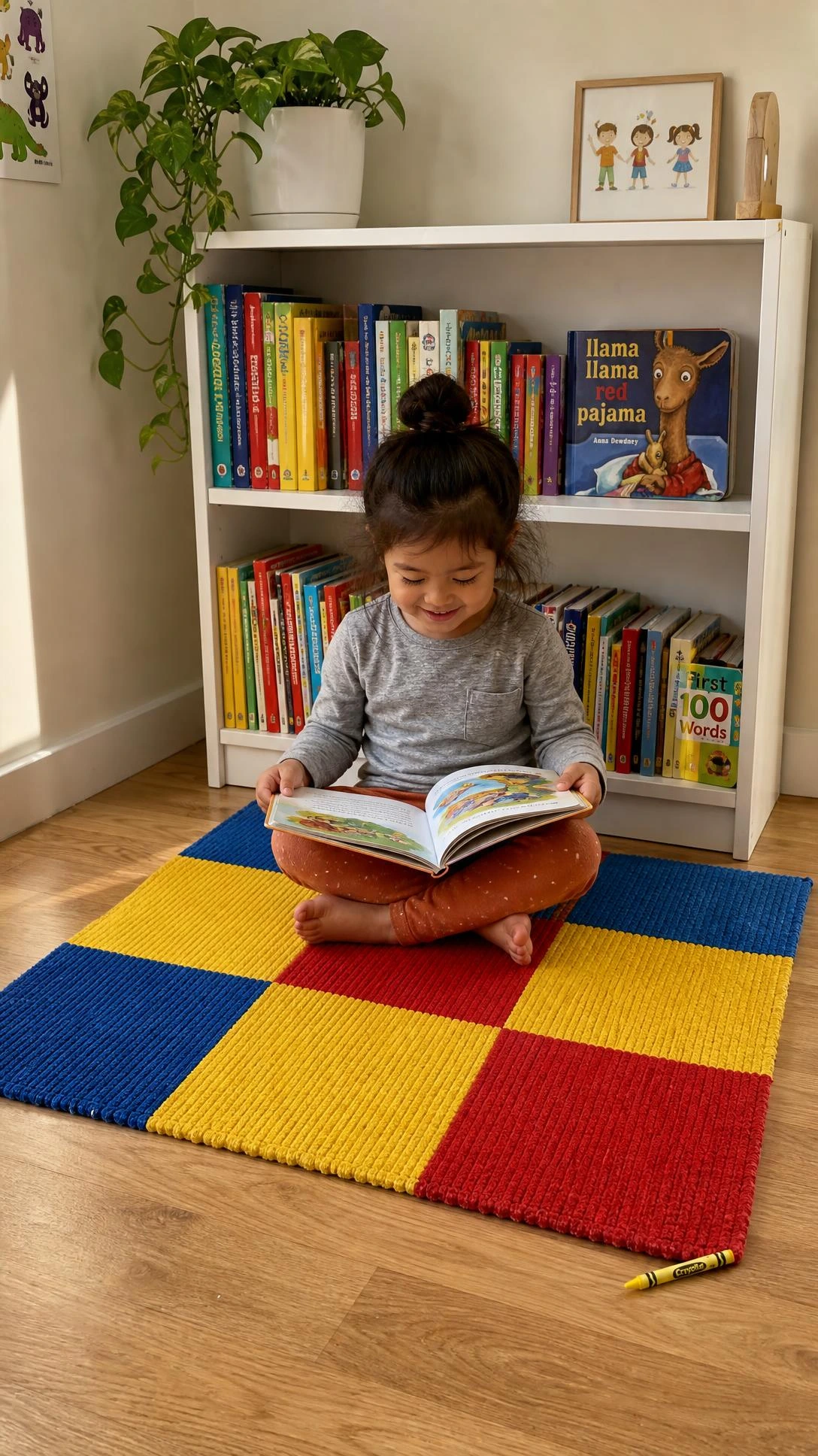
Kids respond really well to having a space that feels like theirs, and a single carpet square does that without requiring a whole room redesign.
A simple 4×6 rug or even a few interlocking foam play mats in a corner signal to a child that this spot is for them.
Neutral foam mats run around 20 to 30 dollars at most big box stores, and colorful patterned ones are regularly found at thrift stores for almost nothing.
The physical boundary matters more than most parents expect, because kids tend to drift and lose focus when there is no defined place to land.
I think this one small move does more for actually getting the corner used than almost anything else on this list.
2- Low Shelf or Bookcase at Kid Height
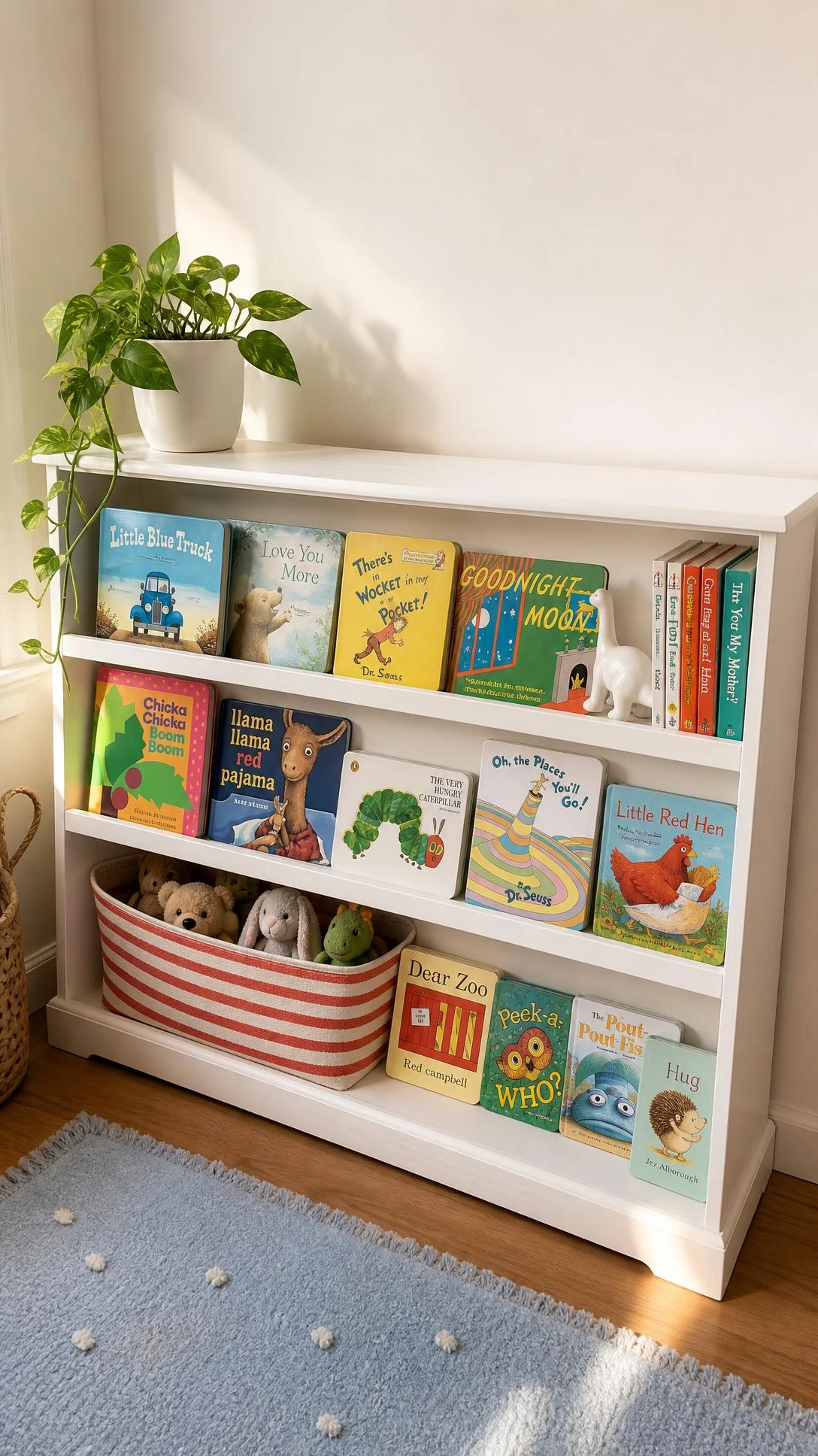
The single biggest reason a learning corner stops being used is that kids cannot reach what they need without asking for help.
A low shelf, even a basic three-tier IKEA Kallax unit turned on its side, puts books and supplies exactly where little hands can grab them without interrupting anyone.
The goal is for the child to be able to walk up, pick something out, and get started completely on their own.
Second-hand bookshelves from Facebook Marketplace often go for five to ten dollars and sand down or paint up easily in an afternoon.
Floor level access is the thing that actually makes the space functional instead of decorative.
3- Color-Coded Bins for Supplies
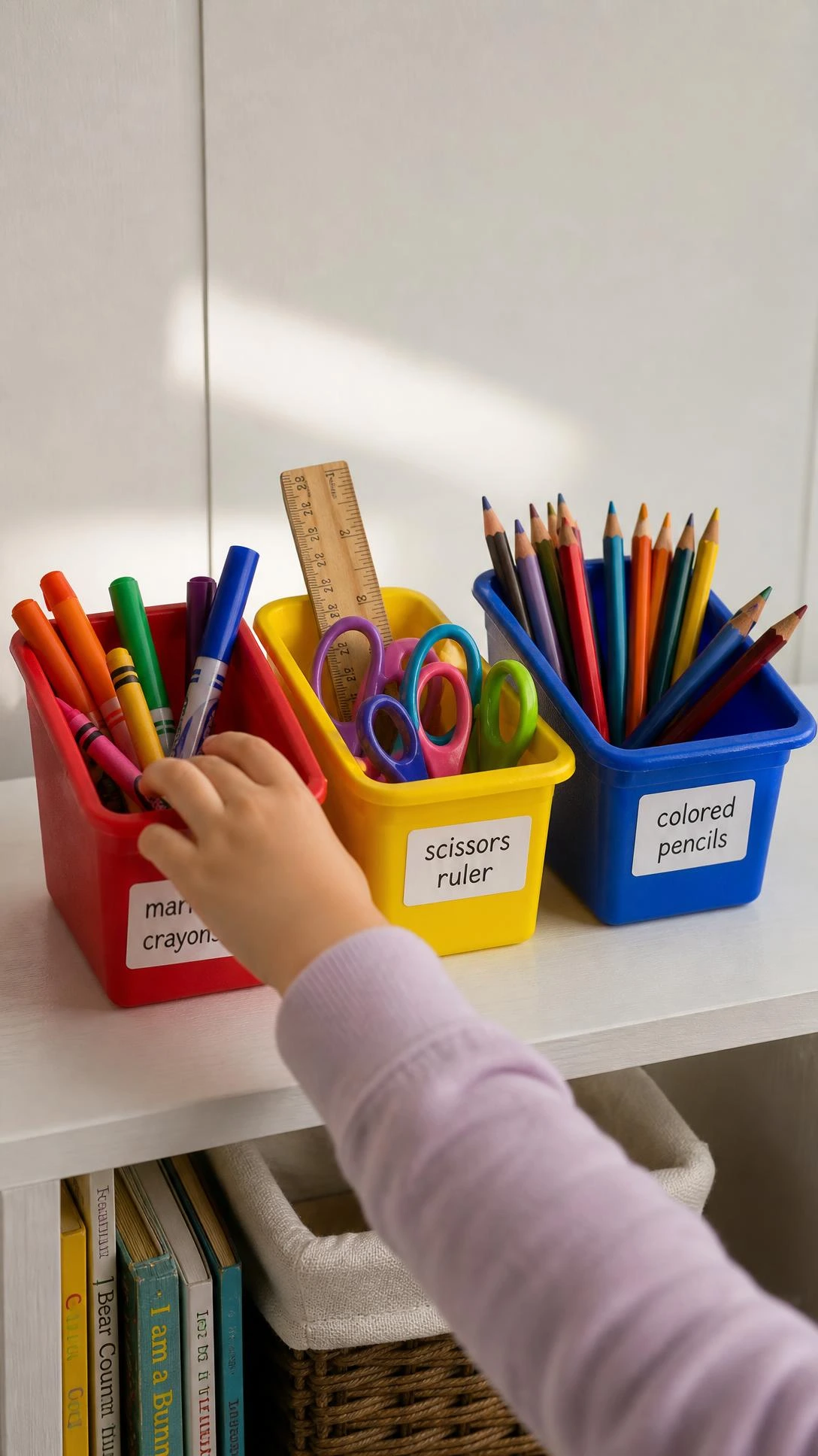
Nobody wants to spend ten minutes hunting for the green marker before they can start a drawing, and kids especially will just give up and walk away.
Color-coding bins by category, like blue for art supplies, red for books, and green for building or sensory toys, makes the whole system something kids can actually maintain themselves.
Dollar store plastic bins in three or four colors cost under two dollars each and hold up surprisingly well to daily use.
Labeling them with a picture and a word works best for kids who are not reading yet, because they can match visually without needing help.
The color system also makes cleanup faster, which means the corner stays usable instead of turning into a pile that nobody wants to touch.
4- A Dedicated Spot for Rotating Materials
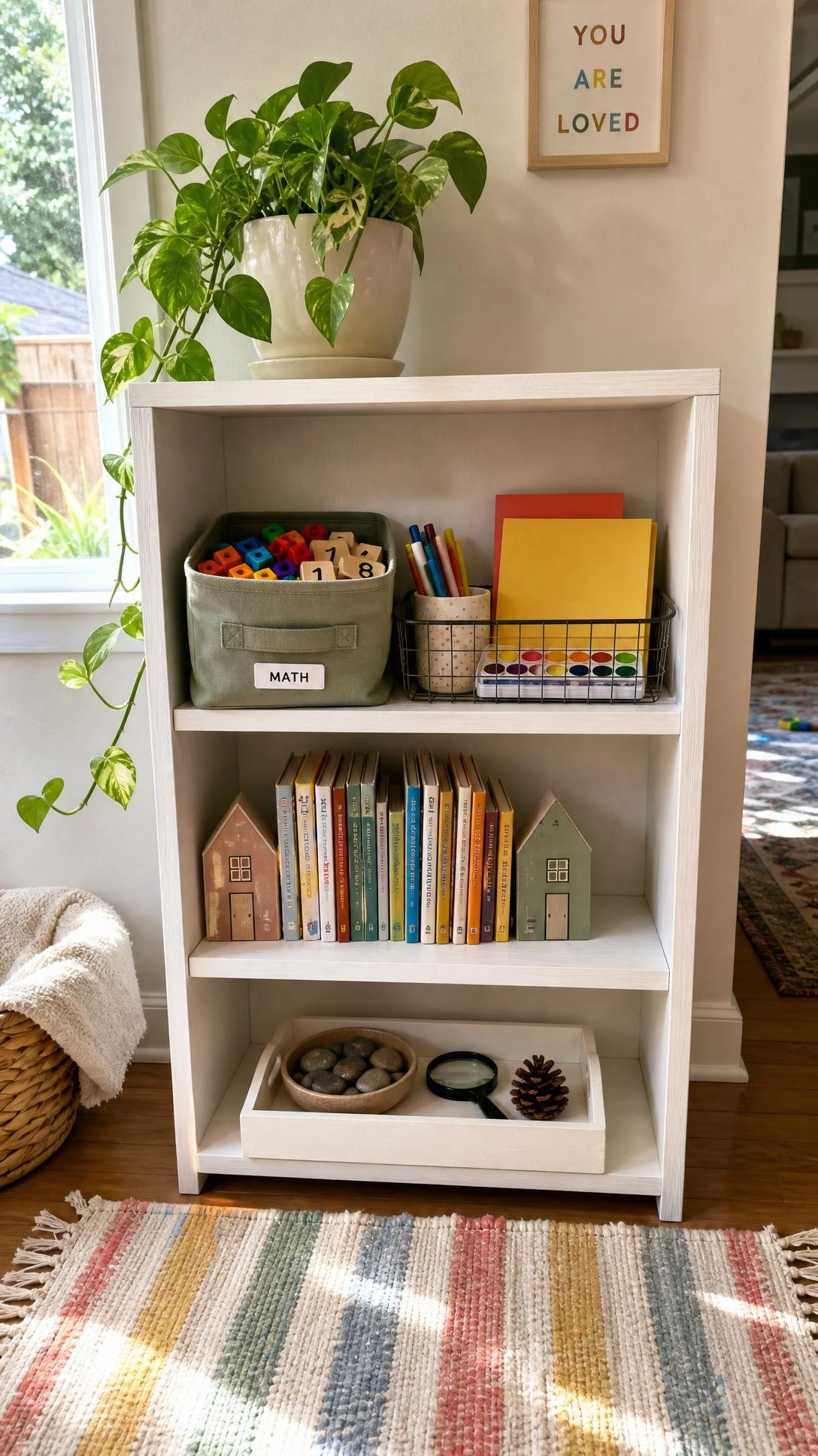
One of the quieter secrets of kids learning corners that actually stay interesting is that the materials change regularly instead of sitting there collecting dust.
Rotating what is on the shelf every week or two, even just swapping one bin out, makes the space feel fresh without buying anything new.
Keeping a small overflow bin in a nearby closet makes rotation easy because the “new” things are already sorted and ready to swap in.
A lot of parents notice that the toys and books kids ignore in rotation suddenly become the most exciting things in the room when they reappear after a few weeks away.
The whole system costs nothing once the initial bins are bought, which is always a nice surprise for something that works this well.
5- Natural Light Placement Over a Special Lamp
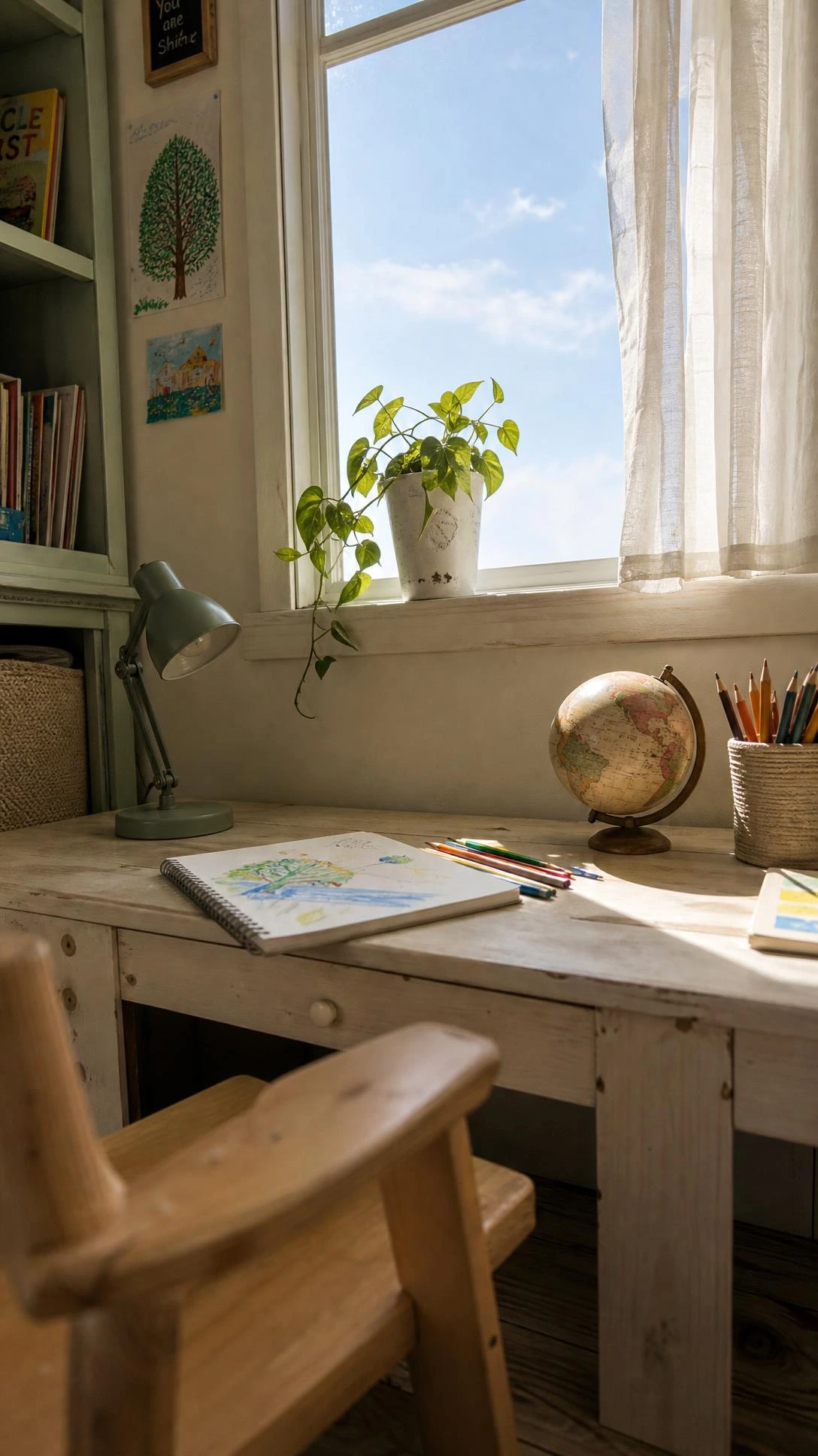
Where the corner sits in the room matters more than most people think when setting up a kids learning corner at home that actually gets consistent use.
A corner near a window, even a small one, beats a dark corner with a clip-on lamp almost every single time.
Natural light keeps kids more alert and more comfortable during longer stretches of activity, and it also means the space just feels nicer to be in.
If a window spot is not available, a soft warm-toned bulb in a basic floor lamp from a thrift store runs about five dollars and makes a real difference over harsh overhead lighting.
The light situation is worth solving before worrying about anything decorative because it affects how long the corner actually gets used in a session.
6- A Simple Chalkboard or Whiteboard Wall Panel
A writable surface changes how kids interact with a learning corner completely because it turns blank space into something active instead of passive.
Chalkboard contact paper costs around eight to twelve dollars for a large sheet and sticks directly to a wall, a cabinet side, or even a piece of cardboard propped up in a corner.
Kids who will not sit and do worksheets will sometimes spend forty minutes writing letters and drawing diagrams on a chalkboard surface just because it feels like play.
A small dry-erase board from a dollar store works just as well for families who do not want anything on the walls.
The point is just having a surface where things can go up, get used, get erased, and go up again without anyone needing to supervise.
7- A Kid-Involved Setup Using Their Own Drawings
Spaces that kids help set up almost always get used more than spaces that are set up for them.
Letting a child tape their own drawings to the wall above their corner, choose which books go on the shelf first, or pick the color of their supply bin gives them ownership of the space.
It sounds almost too simple, but the difference in how protective and attached kids feel about a corner they helped create is genuinely noticeable within the first week.
Their drawings cost nothing and do more for making the corner feel personal and inviting than any store-bought wall decal ever will.
The goal is for the child to walk past it and think of it as their place, not a parent’s project that happened to land in their room.
8- A Routine That Anchors the Corner to Daily Life
A learning corner that does not have any regular time built around it tends to become a really nice place where stuff gets piled.
Even a loose daily routine, like thirty minutes after lunch or right after school snack time, teaches kids to expect the space and move toward it naturally.
It does not need to be a strict schedule with timers, just a consistent pattern that becomes part of how the day flows.
Most families find that after about two weeks, the child starts going to the corner on their own without anyone suggesting it, which is the whole goal.
The routine is what activates the corner, and it costs nothing to build one.
9- A Small Restock Bin to Keep Things Running
One of the fastest ways a learning corner falls apart is when supplies run out and nobody replaces them, so the whole thing quietly stops working.
A small restock bin, basically just a shoebox or basket kept nearby with backup crayons, fresh paper, tape, and a spare glue stick, means the corner never actually hits empty.
The bin gets checked and topped up once a week, which takes about three minutes and costs almost nothing since most of these supplies come in bulk packs.
A 48-count crayon set from a dollar store or bulk retailer runs about three dollars and lasts most families two to three months in a dedicated corner.
The restock bin is the kind of boring, practical thing that nobody talks about but that is quietly responsible for keeping the whole setup going long-term.
Where do you want to go next?
Explore by topic
Recently viewed
The Easiest Kids Learning Corner That Actually Sticks
None of these ideas require a special budget, a big room, or a weekend project to pull off.
The corners that actually get used week after week are almost always the ones that were kept simple, stayed within reach, and made sense for how that specific kid already spends their time.
A kids learning corner at home does not need to look like a classroom or a curated Instagram post to do its job well.
Start with the rug square and one low shelf, let the child pick something for the wall, and see what happens in the first two weeks before adding anything else.

Hi, I’m Alizabeth, the creator of Pretty Home Hacks. I share practical home decor ideas, easy DIY projects, organization tips, and budget-friendly ways to make your home feel more beautiful and functional. From small room updates to everyday home hacks, my goal is to share approachable ideas you can actually use in your own space.