
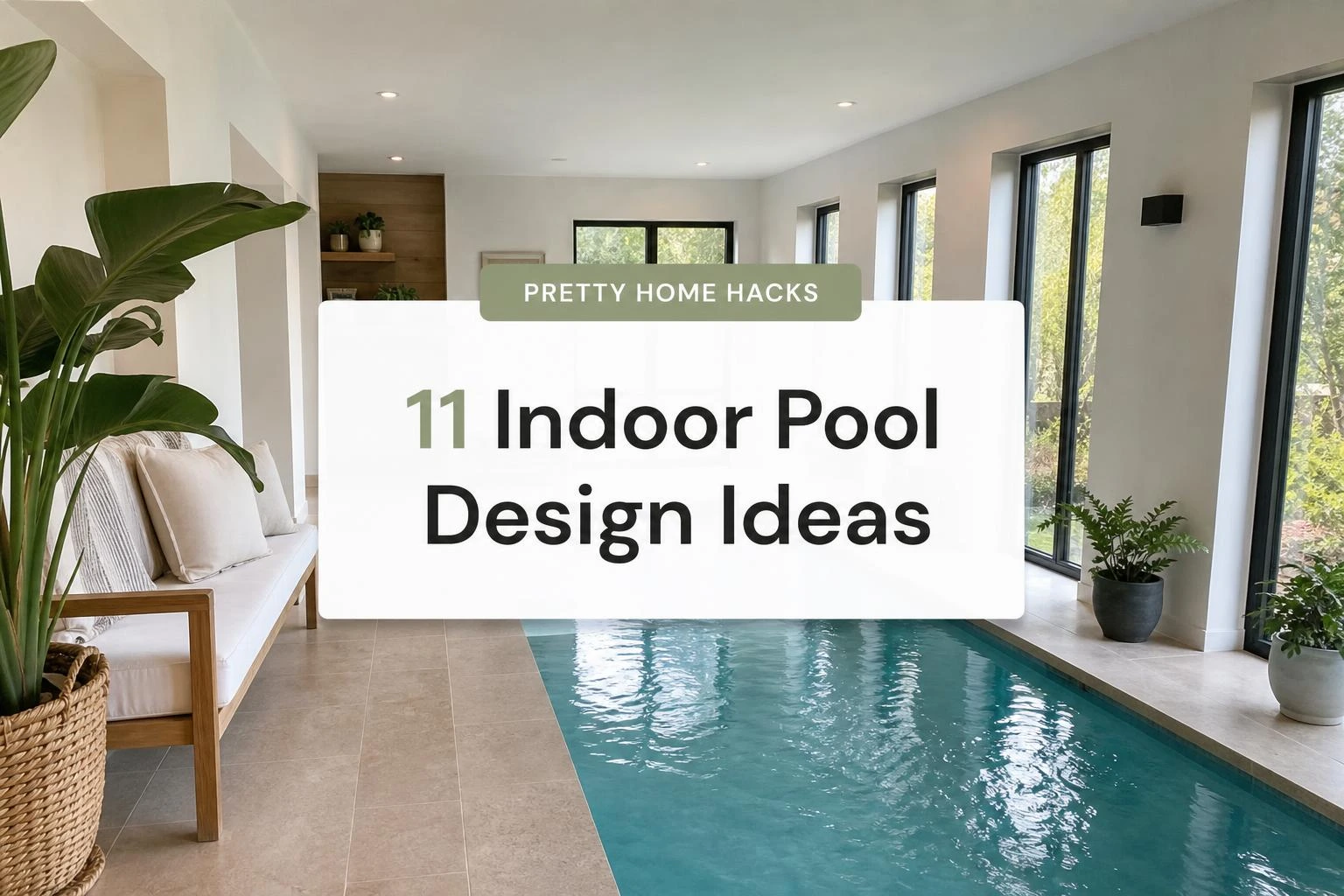
11 Indoor Swimming Pool Design Ideas That Prove You Do Not Need a Huge Budget
Indoor pools have this reputation for being something only certain people can afford, which is why most people scroll past the inspiration photos without ever really stopping to think about what is actually realistic for them.
The thing is, a lot of those dreamy indoor pool images are not as far out of reach as they look, and the gap between a luxury result and a budget-conscious one is often just a few smart decisions made early in the planning process.
Most people assume an indoor swimming pool automatically means a full construction project, a massive footprint, and a monthly maintenance bill that eats through whatever savings are left.
That assumption keeps a lot of genuinely achievable indoor pool setups from ever getting started.
These 11 indoor swimming pool design ideas cover a real range of spaces, budgets, and goals, and the through-line in all of them is that something beautiful does not have to mean something expensive.
1- Screened-In Indoor Pool
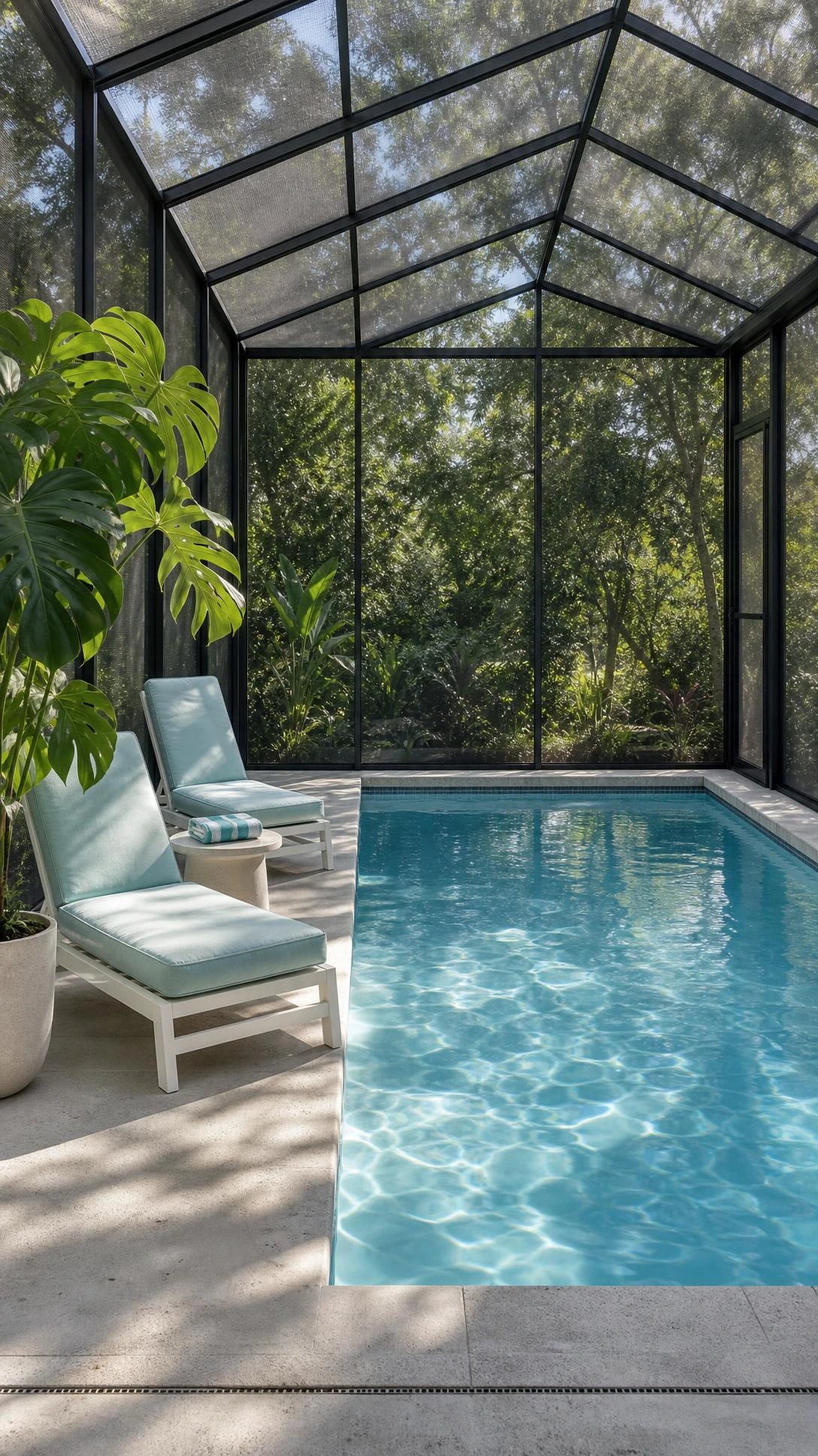
A screened-in pool sits in that interesting middle ground between a fully outdoor pool and a proper enclosed indoor one, and it tends to be one of the most underrated options for people working with a limited budget.
The structure itself is simpler than full enclosure, which brings the build cost down significantly, and the screening does a surprisingly good job of keeping out debris, leaves, and insects without needing a full roof system.
Basic aluminum-framed screen enclosures typically start around $5,000 to $15,000 depending on size, which is a fraction of what a fully enclosed pool room would cost.
The light that comes through the screen has a soft, diffused quality that actually makes the space feel really calm and airy, which most people are not expecting when they first see one in person.
It works best in climates that are mild for most of the year, since temperature control is limited compared to a sealed enclosure.
2- Completely Enclosed Indoor Lap Pool
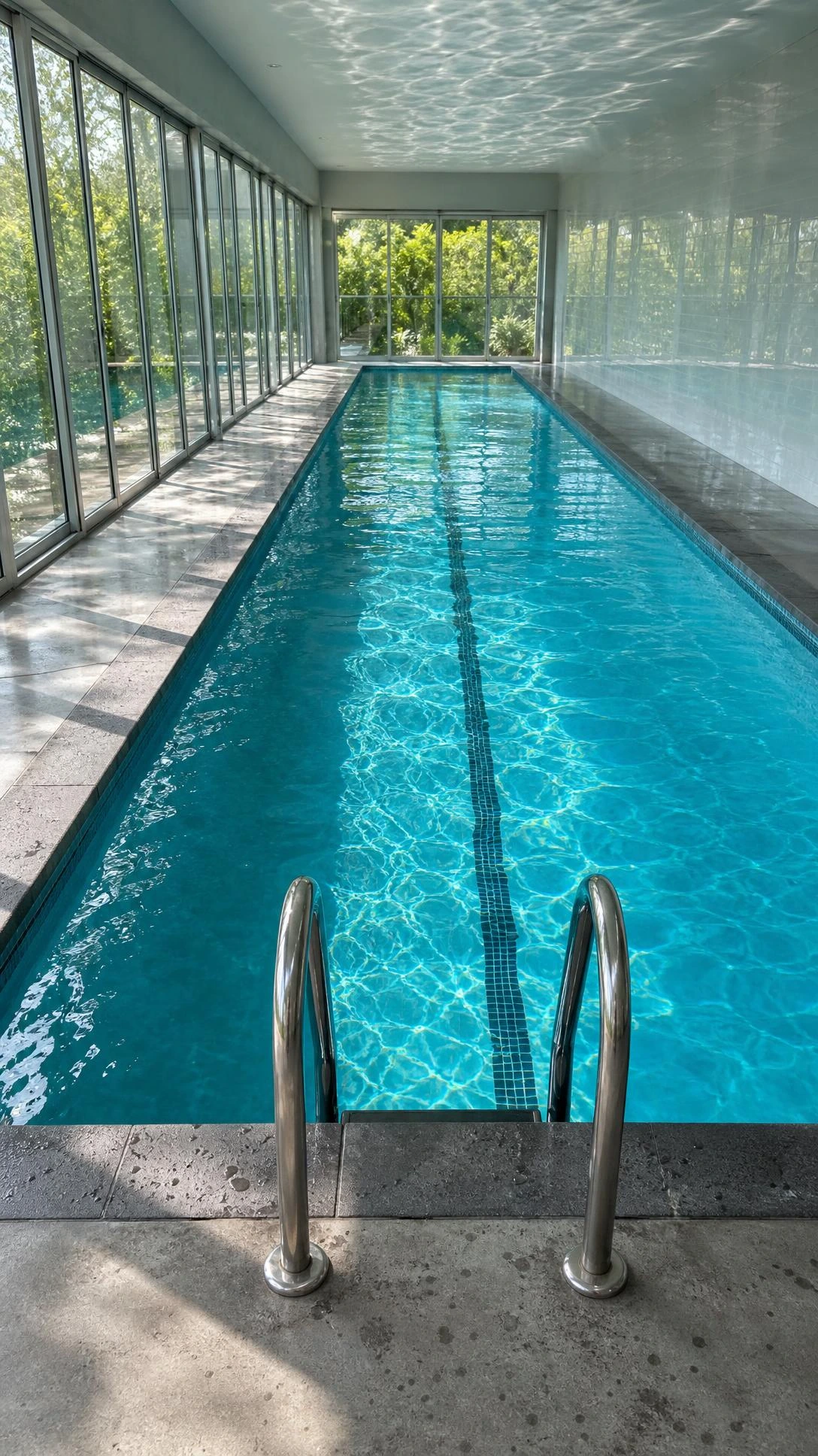
Lap pools are one of those designs that look minimal and intentional, which happens to also make them one of the more budget-friendly indoor pool shapes to build and maintain.
The long, narrow footprint means less water volume, which translates directly to lower heating costs and fewer chemicals needed to keep the water balanced.
A compact indoor lap pool can be as narrow as 8 feet wide and as short as 40 feet, which fits into a surprisingly normal-sized room addition or converted garage space.
Matte concrete finishes and simple white tile work keep costs low without the pool looking cheap, and the clean lines actually photograph beautifully if that matters to anyone planning to sell eventually.
I think lap pools are genuinely one of the smartest indoor pool choices for people who actually want to use the pool regularly rather than just have it.
3- Minimalist Pool with Concrete Walls
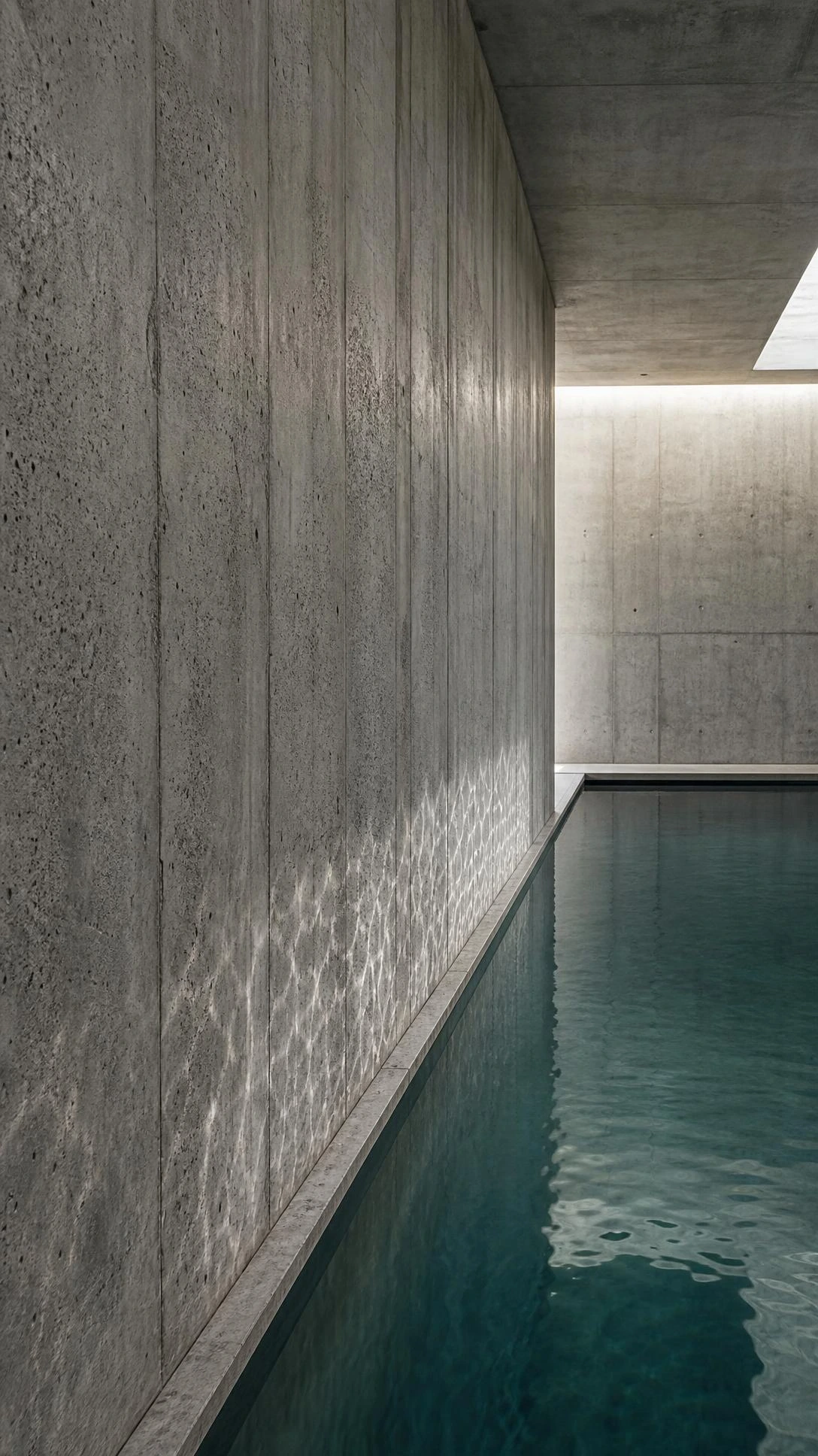
Minimalist indoor pools have become more popular partly because the aesthetic looks expensive but the material costs are actually quite reasonable when done with restraint.
Polished or honed concrete is the workhorse of this look, used for the walls, the pool interior, and sometimes the surrounding deck in a continuous pour that feels very intentional and architectural.
A concrete pool interior in a warm grey or soft charcoal tone reads as high-end without the price tag of specialty tile or natural stone, and the colour holds up well over years of use.
The key to keeping this design from feeling cold or industrial is natural light, so skylights or large narrow windows positioned above the waterline make a significant difference.
Most rooms with this design aesthetic go together fairly quickly once the concrete work is done because there is intentionally very little else to install.
4- Indoor Plunge Pool
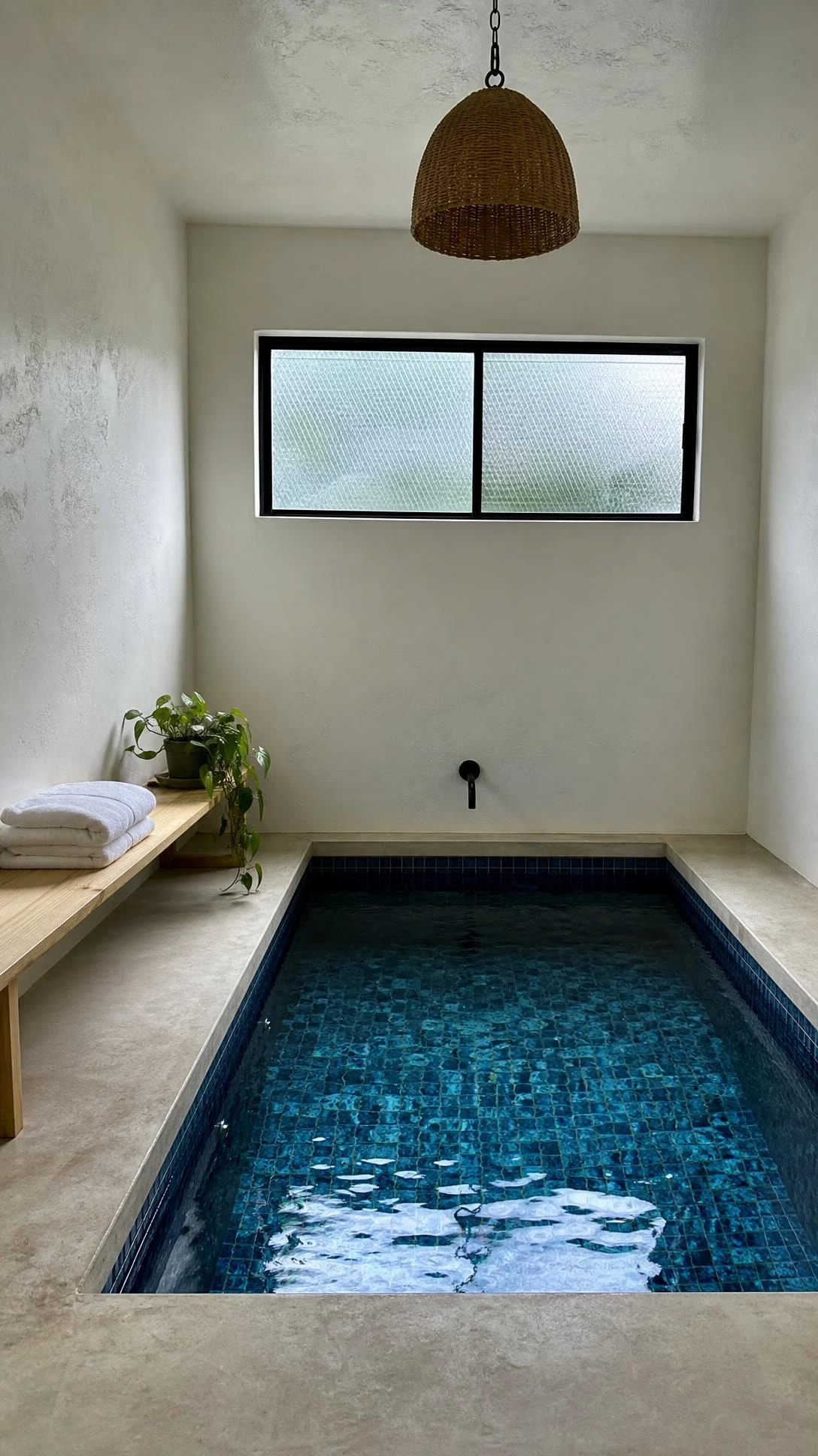
Plunge pools are probably the most budget-accessible indoor pool option that still delivers a genuine pool experience rather than something that feels like a compromise.
They are small by design, typically 10 to 15 feet long and 6 to 8 feet wide, which means a much smaller footprint in the home and dramatically lower material and heating costs compared to a full-sized pool.
The therapeutic angle is real too, cold plunge pools and hydrotherapy setups have become genuinely popular for recovery, and a small indoor plunge pool serves both functions depending on how it is set up.
Prefabricated fiberglass plunge pool shells are available starting around $10,000 to $20,000 before installation, which is a meaningful starting point compared to a custom concrete build.
The space around a plunge pool is actually easier to style because there is more room to work with, and simple wooden decking or large-format stone tile around a small pool always looks considered rather than minimal by default.
5- Mosaic Tile Pool on a Budget
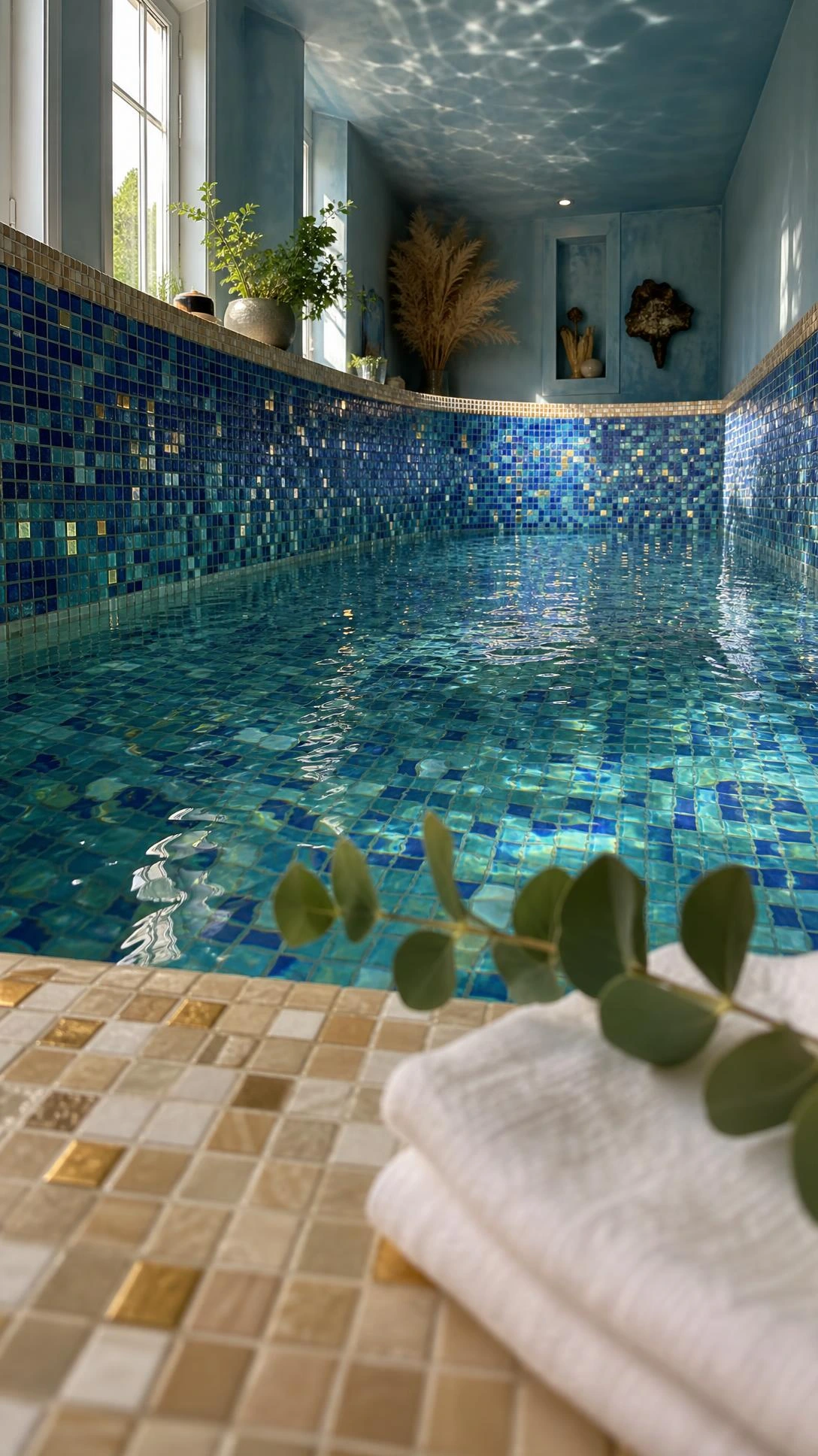
Mosaic tile pools have a reputation for being expensive, and a fully custom hand-laid mosaic absolutely can be, but there are ways to get that look without commissioning an artist to spend three weeks on the floor of a pool.
Sheet-mounted glass mosaic tiles in blues, aquas, and soft greens are available at tile wholesalers for a fraction of what bespoke work costs, and when installed well they are visually indistinguishable from the more expensive versions.
Using mosaic tile only on the pool floor while keeping the walls simple is a particularly smart budget move because the floor pattern does most of the visual work and uses the least amount of material.
The light refracting through the water onto a mosaic floor creates that rippled, shifting pattern that makes indoor pools feel genuinely beautiful to be around, which is always a nice surprise for people who have not spent time near one before.
This design works best in a room with a light-coloured ceiling so the reflected light has somewhere to go and the effect reads clearly.
6- Basement Pool with LED Lighting
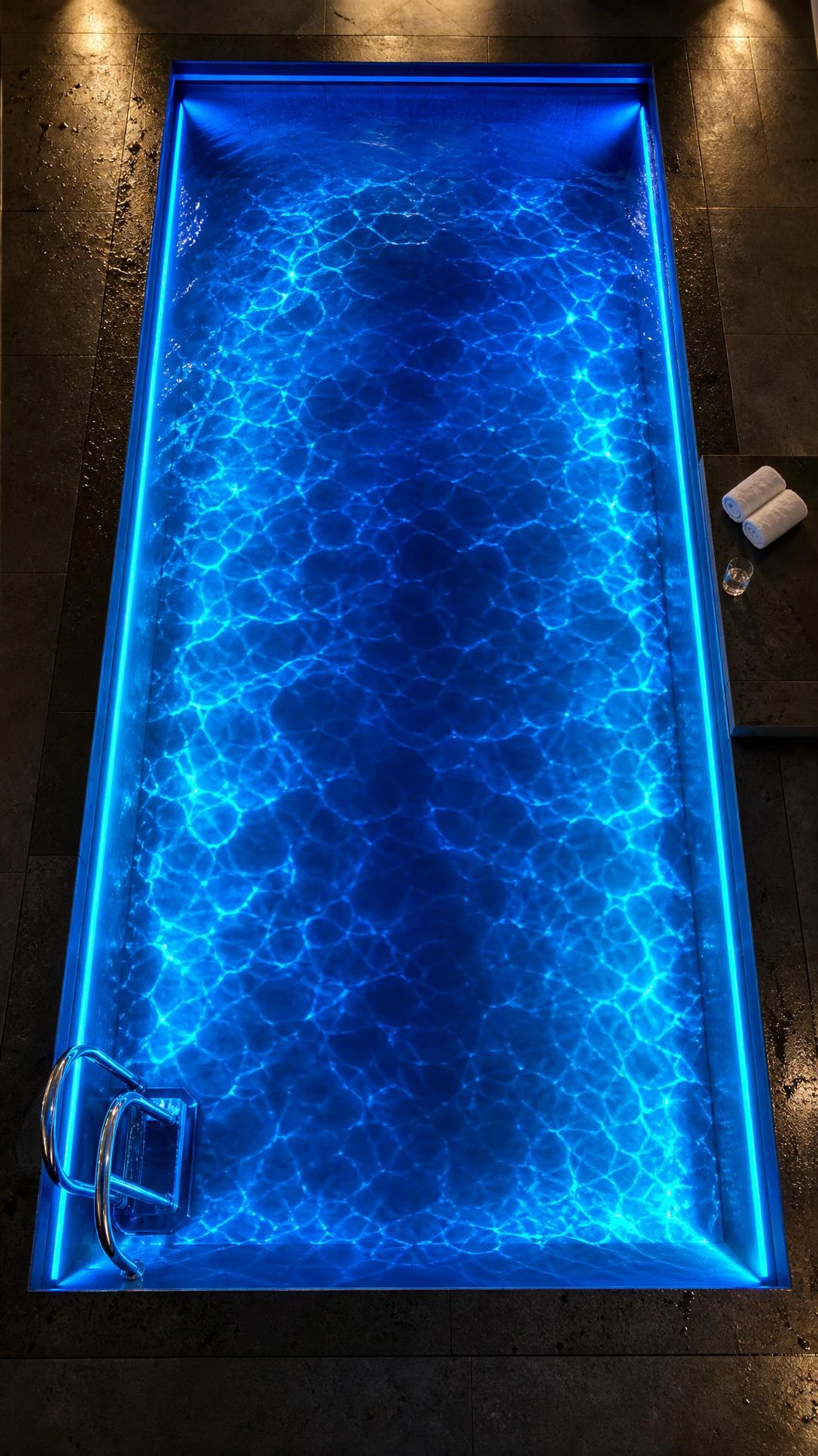
Basement pools make practical sense for a lot of homeowners because the structural shell of the basement is already there, which removes one significant cost from the project before it even starts.
The lighting situation in a basement pool requires more thought than an above-ground installation since natural light is usually limited to small egress windows at best, and this is actually where the design gets interesting.
Recessed LED strip lighting along the waterline, underwater pool lights in warm white or soft blue, and wall sconces at lower heights create a layered lighting setup that makes a basement pool feel atmospheric rather than dim.
Ceiling height is the one thing to check carefully before committing, since standard basement ceilings around 8 feet can feel quite low in a humid pool environment, and 10 feet or higher makes a noticeable difference in comfort.
Ventilation is the other non-negotiable detail in a basement pool, and getting that right from the start is less expensive than fixing a moisture problem later, which anyone who has dealt with basement damp will understand immediately.
7- Indoor-Outdoor Pool with a Glass Wall
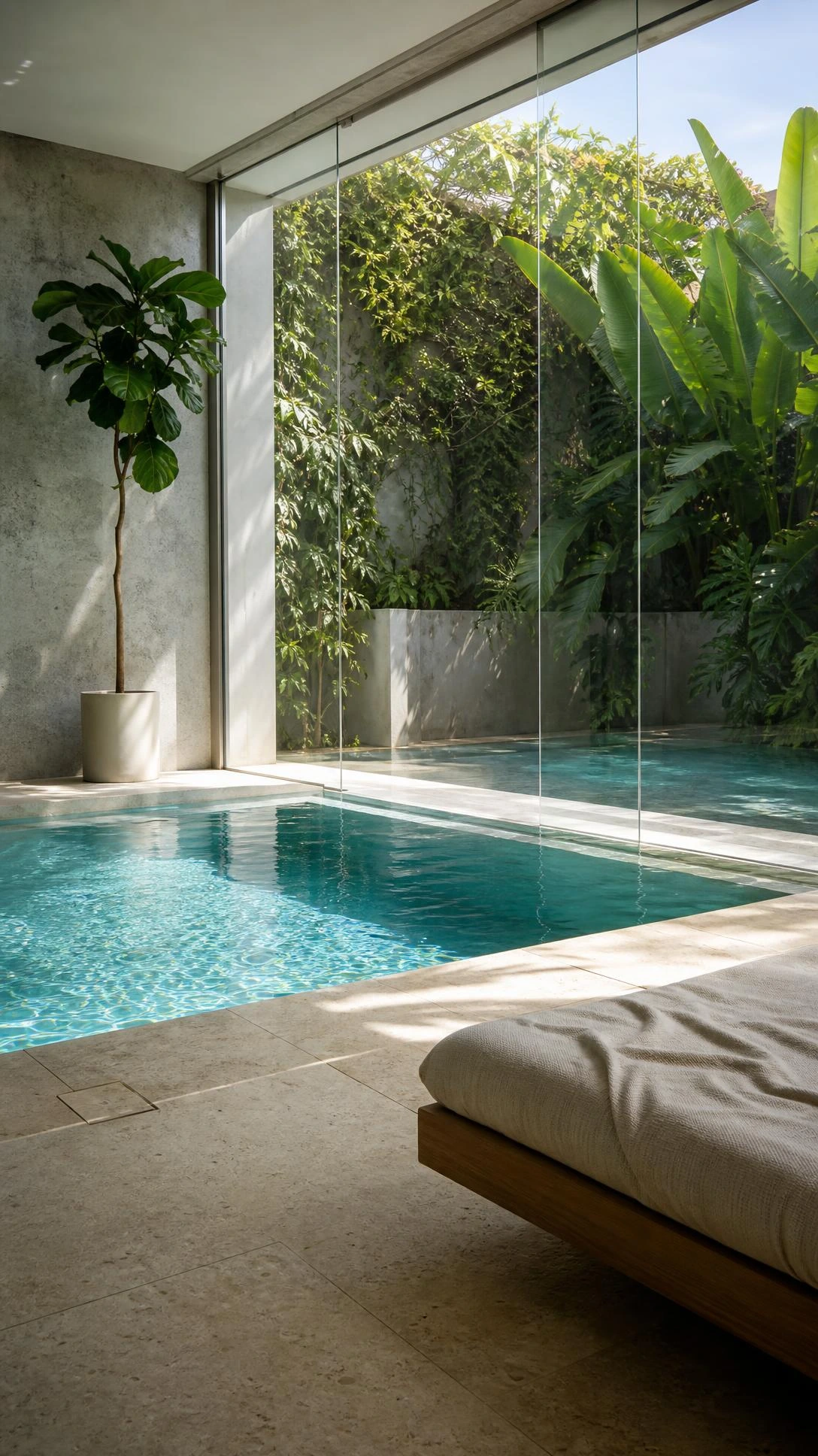
Indoor-outdoor pools are one of those designs that look like they belong in a very expensive home but the concept itself is more achievable than most people assume, especially in a smaller format.
The pool runs under a glass wall or a large sliding door system, so when the panels are open it reads as an outdoor pool and when they are closed it becomes a fully enclosed indoor one.
Frameless or minimally framed glass panels in a floor-to-ceiling configuration are the most popular approach, and they create a visual connection to the garden or yard that makes even a modest pool feel like it belongs to a much larger space.
Temperature control is more variable with this setup than a fully sealed room, so pairing it with an efficient pool heating system like a heat pump rather than a gas heater keeps the running costs more manageable year-round.
The transition between the indoor floor material and the pool deck works best when it is continuous, so the same large-format stone tile or polished concrete running through both spaces makes the indoor-outdoor connection feel seamless.
8- Small Kidney-Shaped Inground Pool
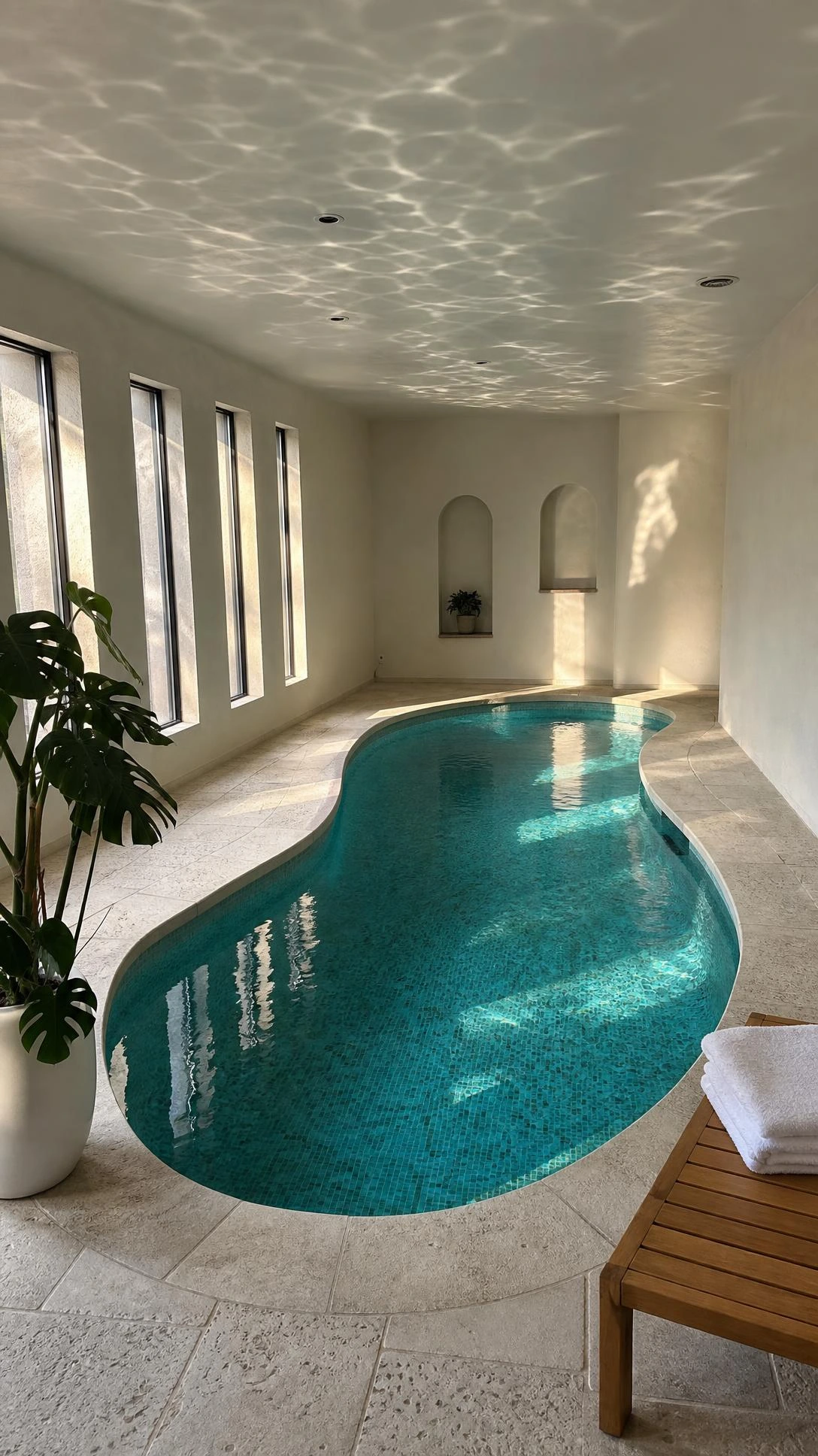
Kidney-shaped pools have been around for decades and they fell out of fashion for a while, but they are genuinely practical for smaller indoor spaces because the curved shape fits into awkward rooms better than a rectangle does.
The organic shape also softens a pool room that might otherwise feel quite boxy, which is something a lot of people do not think about when planning a smaller indoor pool space.
Fiberglass shells in a kidney shape are widely available and are one of the most cost-effective pool construction options, with installed prices often starting around $25,000 to $40,000 depending on size and local labour rates.
Surrounding a small kidney pool with simple wooden decking and a few tropical or leafy plants keeps the installation looking considered and resort-like without adding significant cost to the project.
I think the kidney shape actually looks better in a smaller indoor room than a rectangle does, because the curve gives the eye something to follow and the space feels less like a tank and more like a destination.
9- Indoor Spa Pool for Hydrotherapy
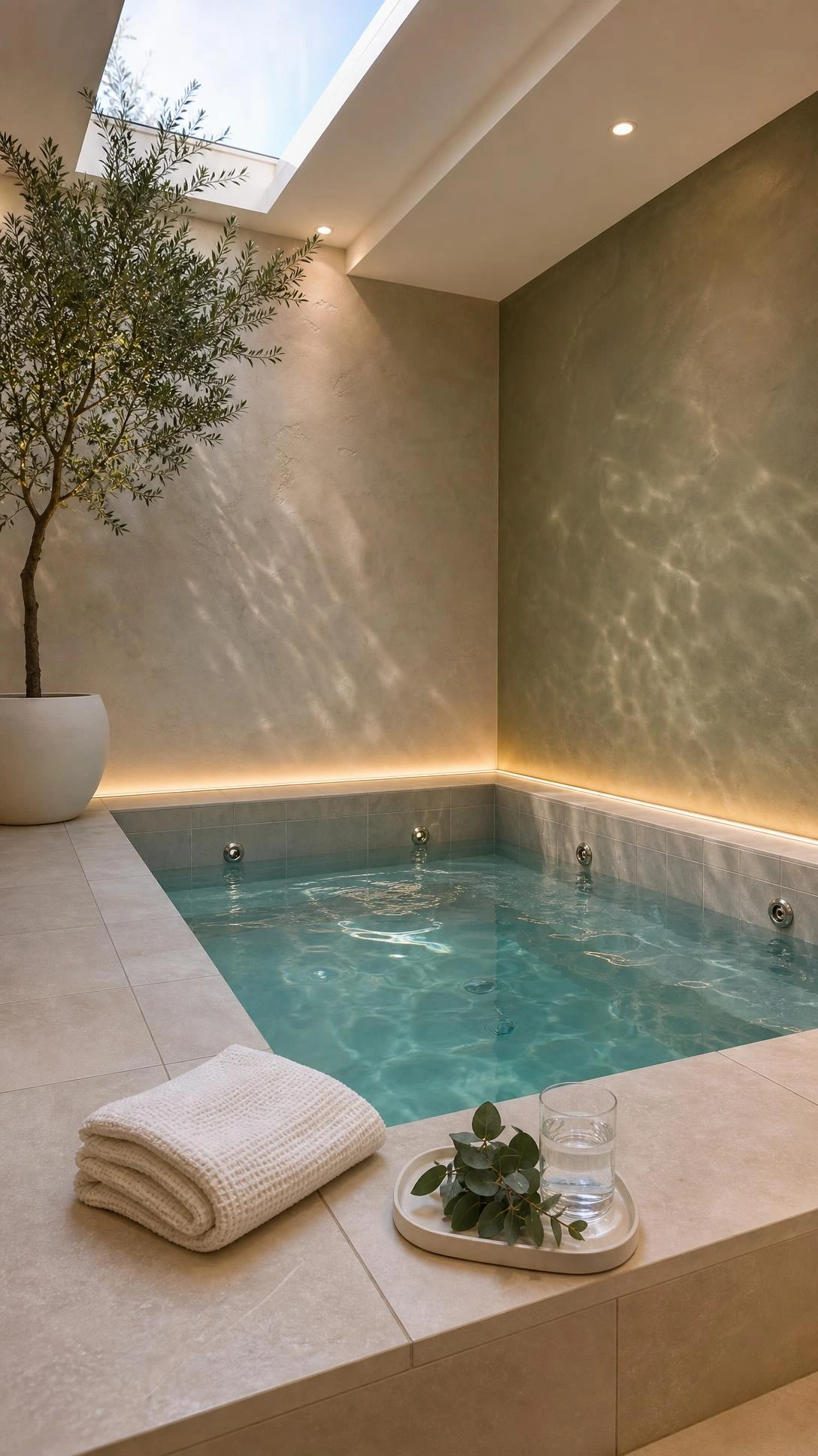
Spa pools occupy a category of their own because they deliver a full water experience in a much smaller footprint than a swimming pool, which makes them one of the most practical indoor options for homes with limited space.
The hydrotherapy benefits are real and consistent, and for a lot of people an indoor spa pool used regularly is more valuable than a full-sized pool that sits unused for most of the year.
A quality indoor spa pool or large hot tub with a permanent surround can be installed for as little as $8,000 to $20,000, and because the water volume is small the heating and chemical costs are genuinely low month to month.
Building a tiled surround and a simple wooden or stone deck around a prefabricated spa shell makes it look much more like a permanent pool installation than a portable hot tub, which changes how the whole room reads.
Ventilation matters here too since warm water in an enclosed room creates humidity quickly, and a simple exhaust system keeps the air quality comfortable without requiring a complicated HVAC setup.
10- Energy-Efficient Heated Indoor Pool
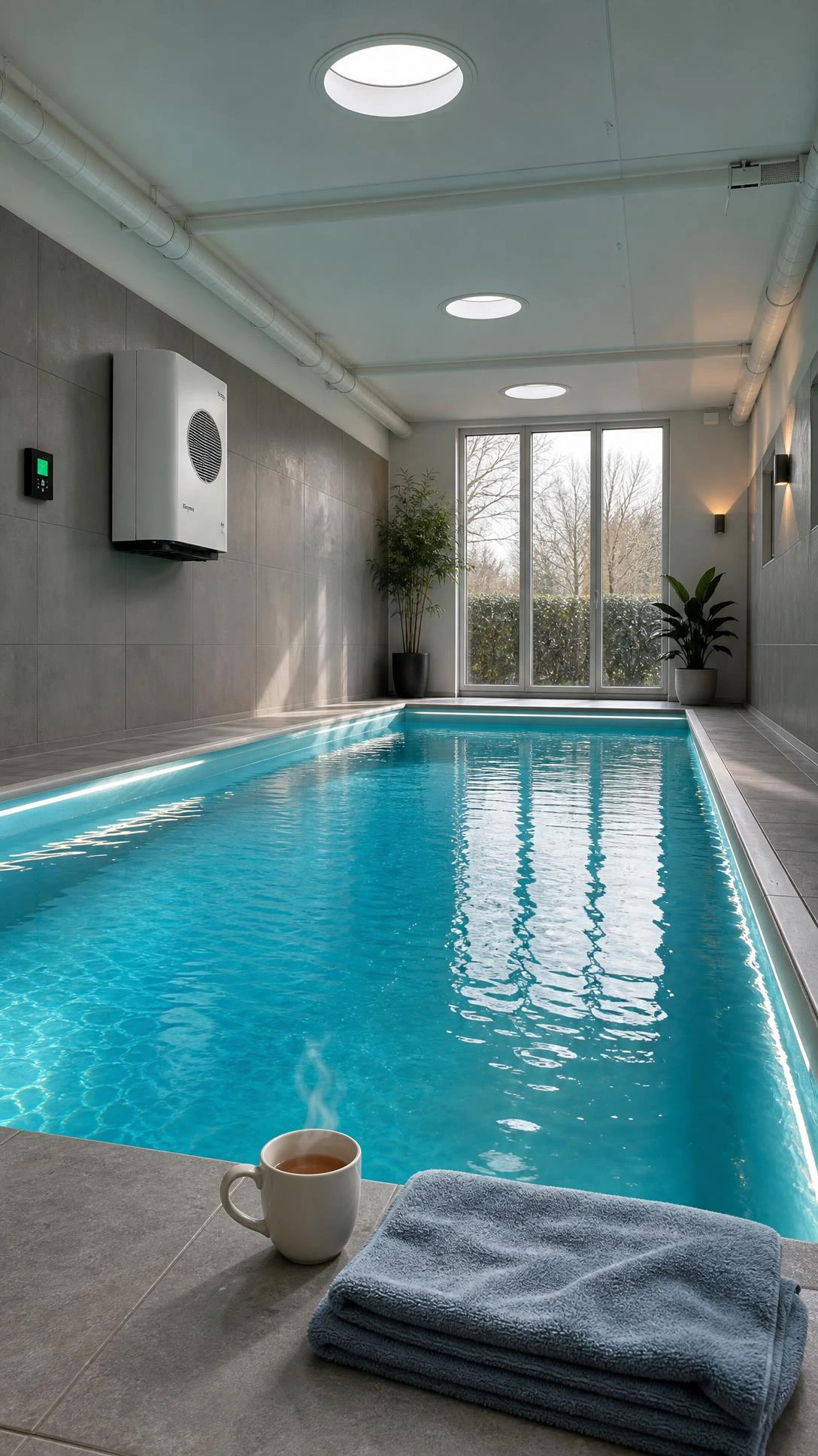
One of the most common reasons people hesitate on indoor pools is the anticipated running cost, and this is the one area where the right decisions at the start make a significant difference over time.
A heat pump pool heater is the most energy-efficient heating option for an indoor pool, using around three to five times less energy than a gas heater to produce the same amount of warmth, which adds up fast over a full year of use.
Pairing the heat pump with a good quality pool cover reduces heat loss overnight significantly, and most pool heat experts estimate that a cover alone reduces heating energy use by 50 to 70 percent.
LED pool lighting uses a fraction of the energy of older incandescent pool lights and the bulbs last far longer, so swapping those in during the build or renovation is one of those changes that costs very little and saves consistently.
The goal with an efficient indoor pool setup is just to make it something that does not feel like a financial burden to run, and with the right systems in place most people find the monthly costs are lower than they expected.
Where do you want to go next?
Explore by topic
Recently viewed
11- Low-Maintenance Pool with Simple Design
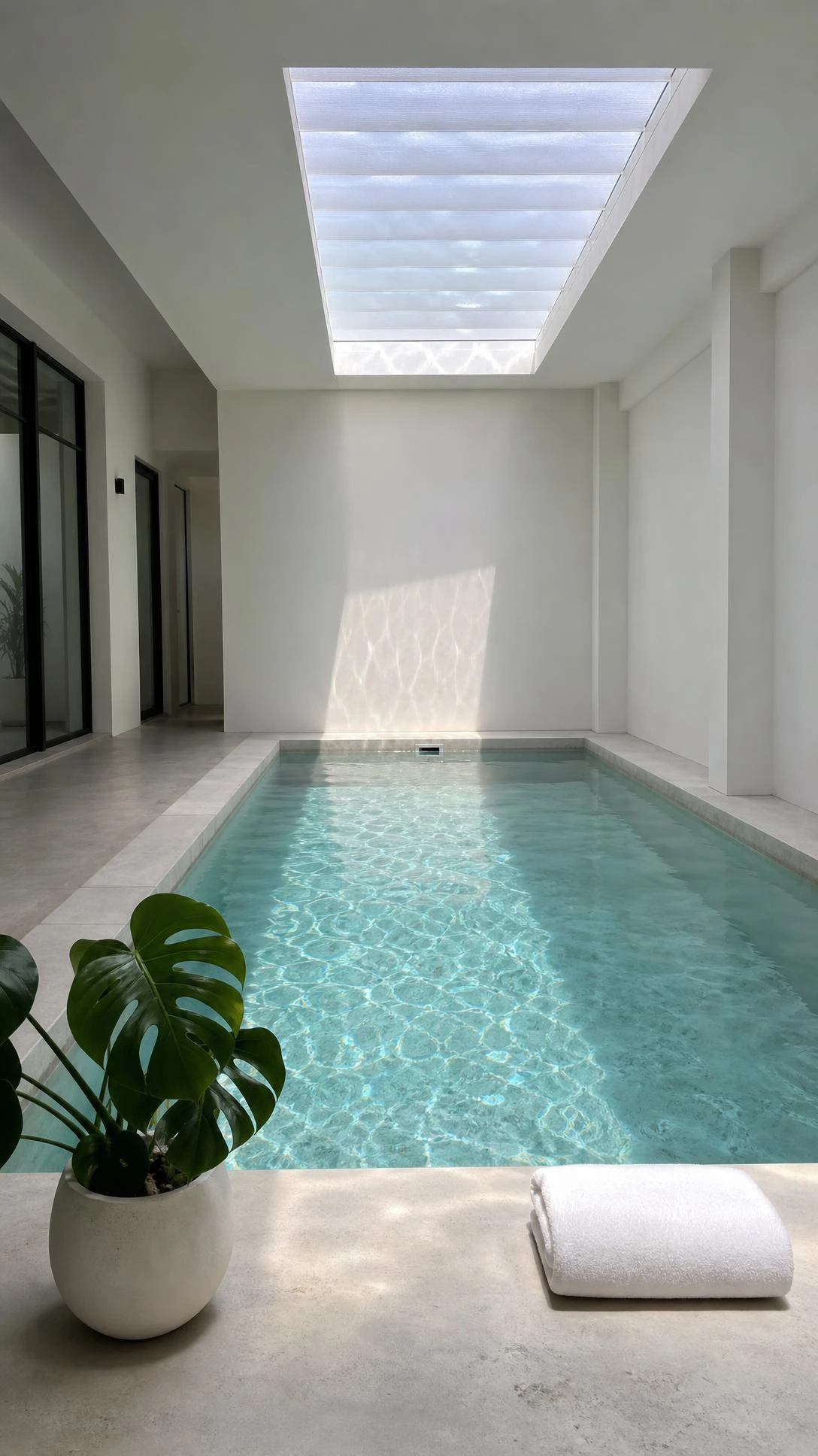
The pools that people actually enjoy long-term tend to be the ones that are easy to take care of, not the ones that look the most dramatic in a photo.
Simple rectangular shapes with smooth interior finishes are the easiest to clean because there are fewer corners, fewer grout lines, and less surface texture for algae and residue to cling to.
A pool with an automatic cleaning system built in from the start, like a robotic pool cleaner or an in-floor cleaning system, reduces the weekly maintenance time significantly, and a good robotic cleaner runs around $500 to $1,500 which is reasonable compared to ongoing manual cleaning costs.
Saltwater systems are another genuinely low-maintenance alternative to traditional chlorine pools, with lower chemical costs over time and a softer feel to the water that most people find noticeably more comfortable.
Durable materials chosen at the beginning, like porcelain tile over natural stone in wet areas, mean fewer repairs and refinishing costs over the years, which is the kind of decision that feels boring to make but pays off quietly and consistently.
Indoor Pools That Actually Work for Real Budgets
The through-line across all of these ideas is that the most beautiful indoor pool setups are usually the most considered ones, not the most expensive ones.
Simple shapes, honest materials, good lighting, and efficient systems do more for a pool space than any decorative upgrade ever will.
Most of the frustration people feel around indoor pools comes from looking at the wrong reference points and assuming the price tag is fixed when it is actually very flexible depending on the choices made along the way.
Starting with a clear sense of how the pool will actually be used makes every other decision easier, and a small pool that gets used every week is always going to be worth more than a large one that feels like maintenance work.

Hi, I’m Alizabeth, the creator of Pretty Home Hacks. I share practical home decor ideas, easy DIY projects, organization tips, and budget-friendly ways to make your home feel more beautiful and functional. From small room updates to everyday home hacks, my goal is to share approachable ideas you can actually use in your own space.