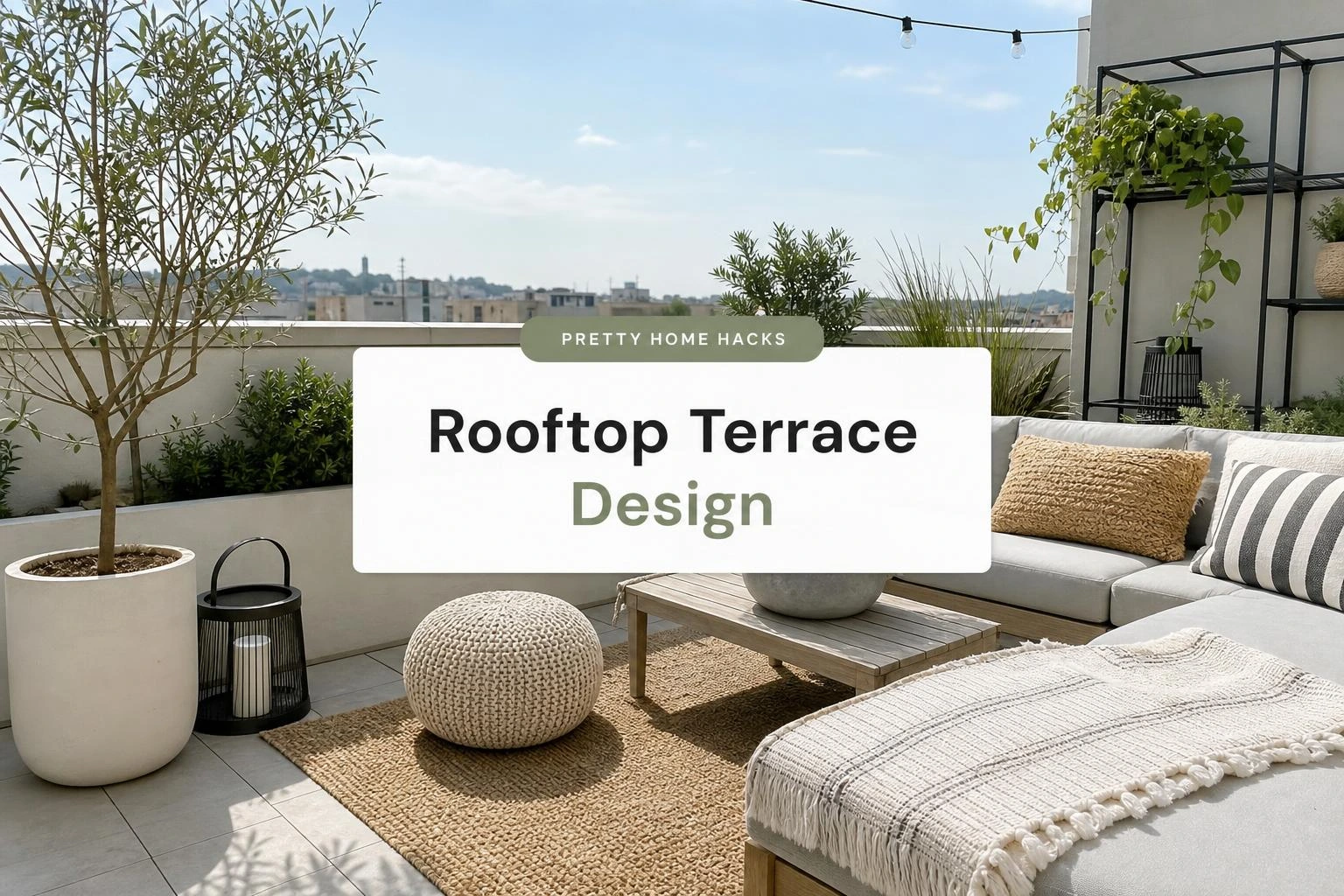
10 Small Rooftop Terrace Design Ideas That Actually Work in Tight Spaces
Rooftop terraces have this reputation for being something only people with serious square footage can pull off.
The reality is most urban rooftop spaces are small, exposed, and kind of awkward to work with, and nobody really talks about that part.
Most people assume a tiny rooftop needs to be left mostly empty or it will feel cluttered, which is the opposite of true once the right pieces go in.
A small rooftop terrace design can feel like a proper outdoor room when the furniture scale, the lighting, and the greenery are all working together instead of competing.
These ideas are all things that genuinely work in tight rooftop spaces, not just things that look good in photos taken from the one perfect angle.
1- Low Profile Seating with Oversized Cushions
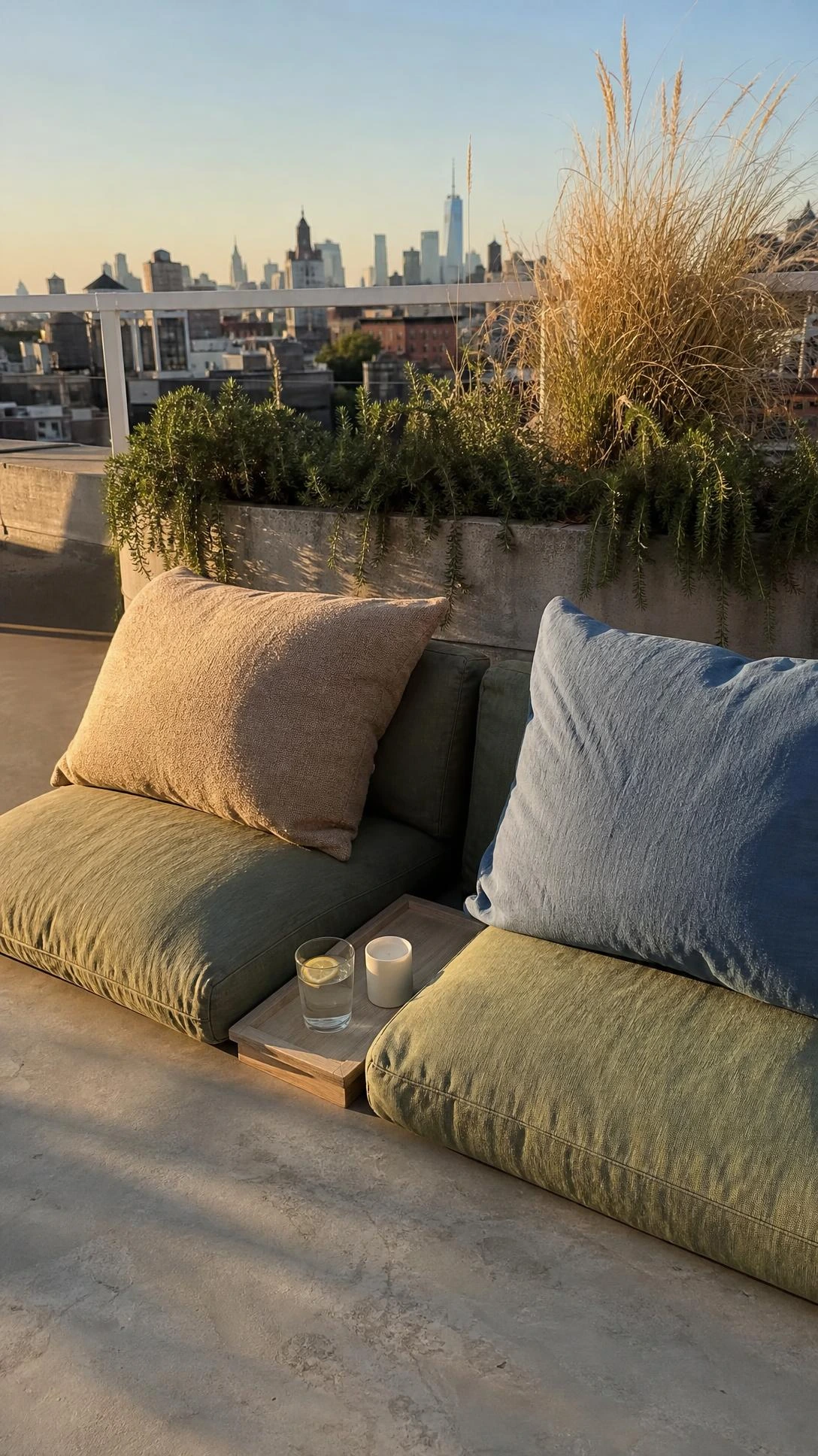
Low profile seating is one of those choices that makes a small rooftop feel more spacious without actually adding any square footage.
When furniture sits closer to the ground, the sightlines open up and the space reads as bigger than it is.
Rattan or wicker low-profile chairs with earth-toned cushions in terracotta or warm sand work especially well because they feel casual and layered without being heavy.
A set of two low chairs with a small side table between them takes up roughly the same footprint as a bistro set but feels much more like a lounge.
This works best when the cushion covers are made from outdoor-rated fabric like Sunbrella, because rooftop exposure is harder on textiles than a covered patio would be.
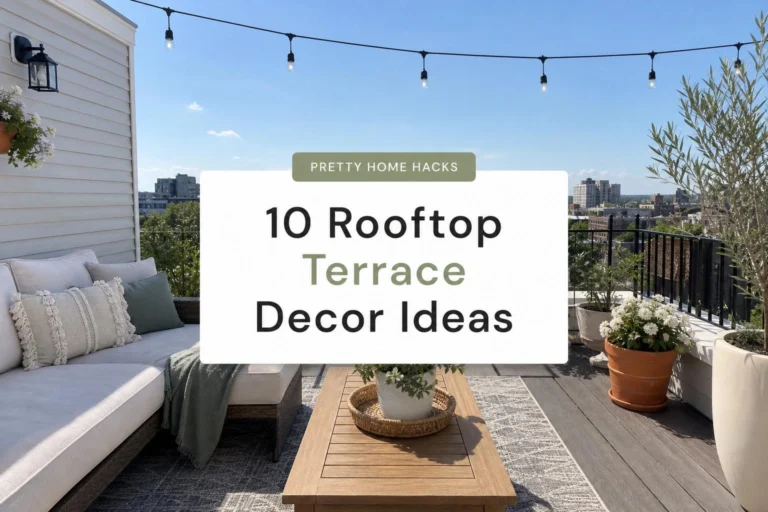
2- String Lights Strung Overhead for Evening Use
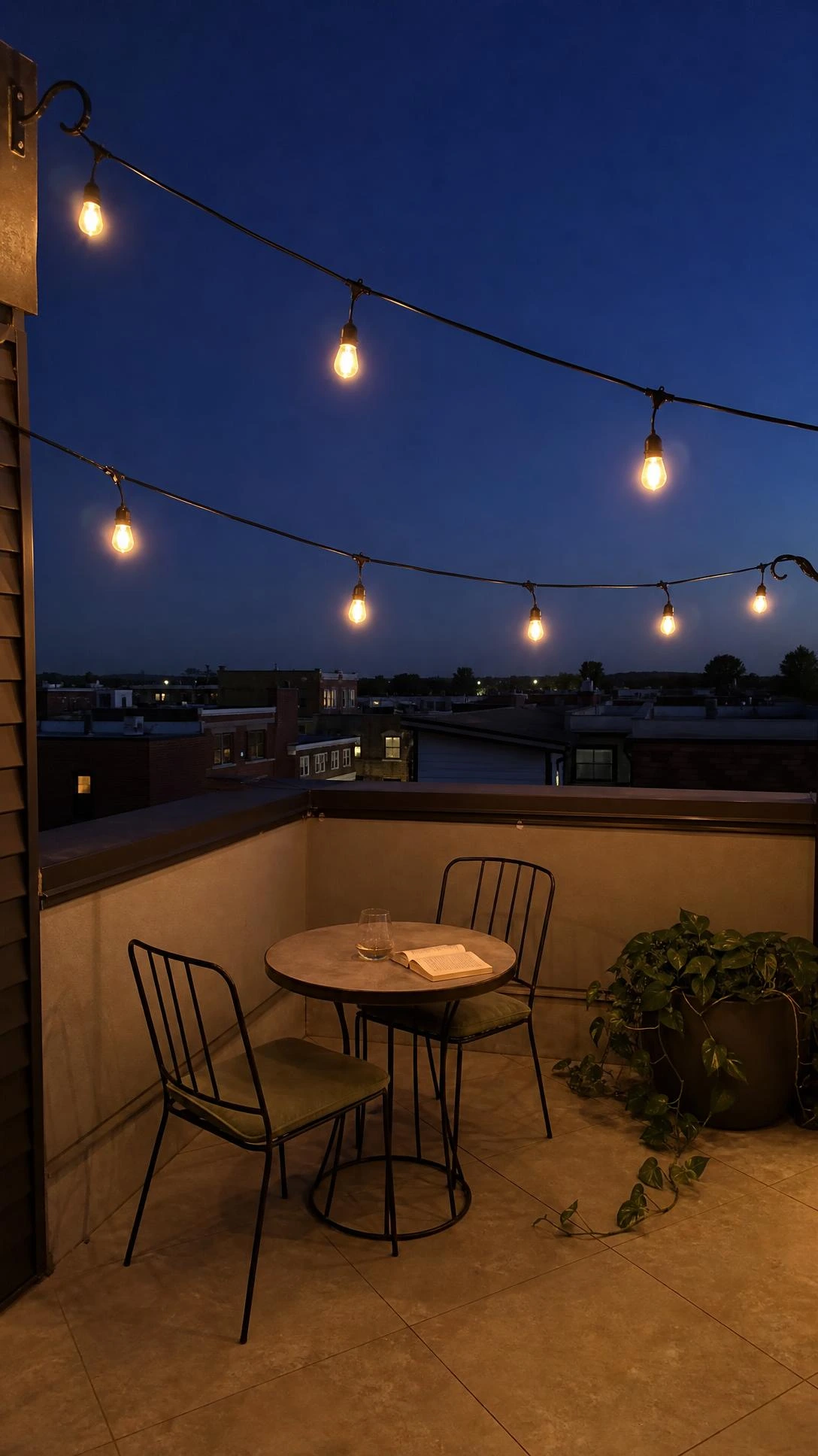
String lights are one of the most searched rooftop additions for a reason, and it is not just aesthetics.
They extend the usable hours of a rooftop space into the evening without requiring any permanent electrical work if solar-powered options are used.
Warm white globe string lights, around 25 feet for a typical urban terrace, create the kind of soft overhead glow that makes the space feel intentional instead of improvised.
The trick is stringing them across the full span of the space rather than just along one edge, which is the version that actually photographs well and feels immersive in person.
I think this one detail does more work than almost anything else on a rooftop at night.
3- Potted Herb Garden Along One Wall
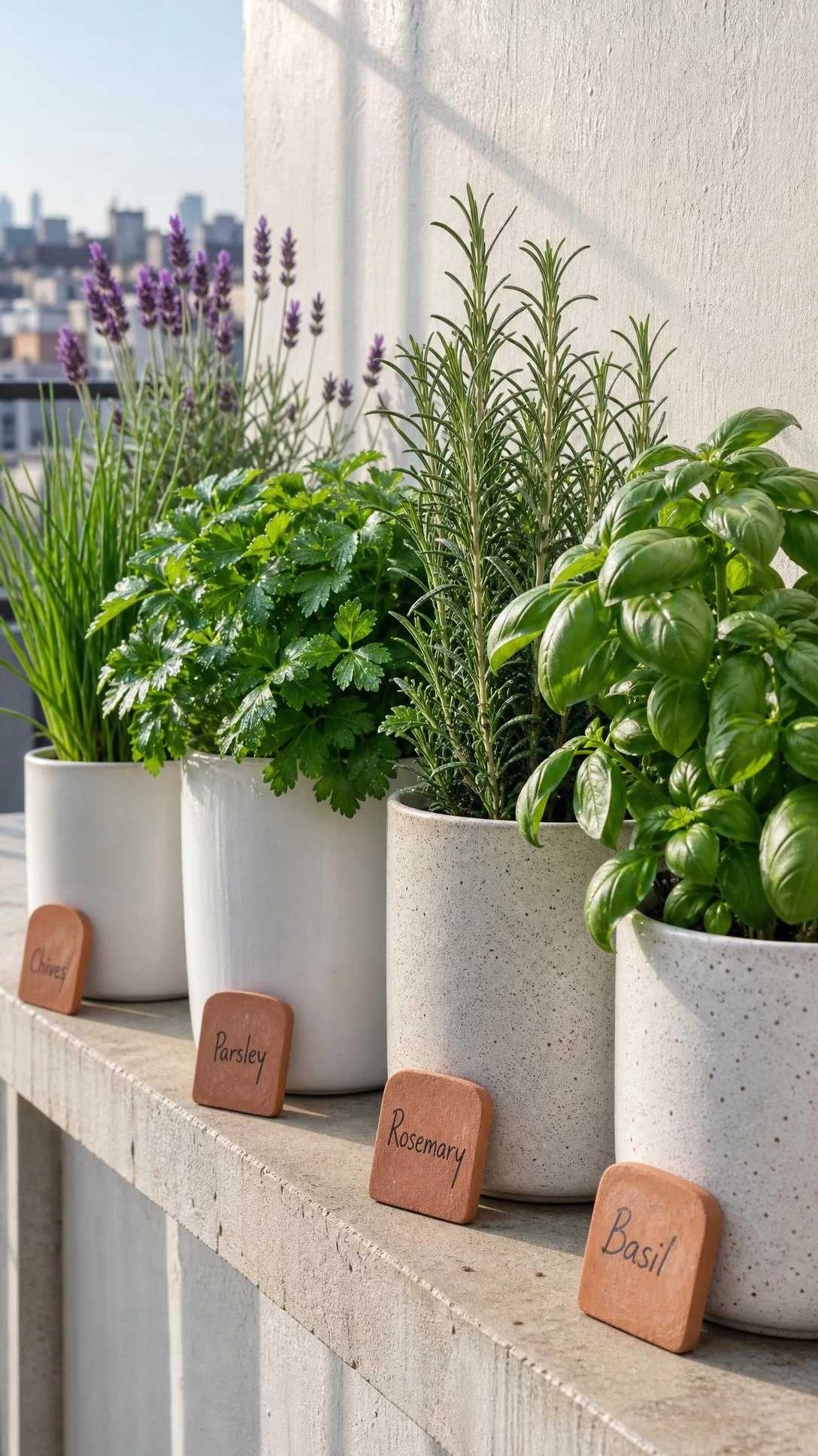
Rooftop spaces get a lot of sun, which most people see as a problem but is actually perfect for growing herbs.
A row of terracotta pots along the low wall or parapet planted with basil, rosemary, thyme, and mint turns what is usually dead space into something that actually gets used.
Four to six pots in matching terracotta or matte white ceramic look intentional and clean rather than random, which matters a lot in a small space where every detail is visible.
This works best when the pots have drainage and are placed where they get at least six hours of direct sun, which a south or west-facing rooftop usually handles easily.
There is also something quietly satisfying about clipping fresh basil from your rooftop, which sounds obvious but feels like a genuinely good use of a space that would otherwise just sit there.
4- Monochrome Color Palette in Gray and White
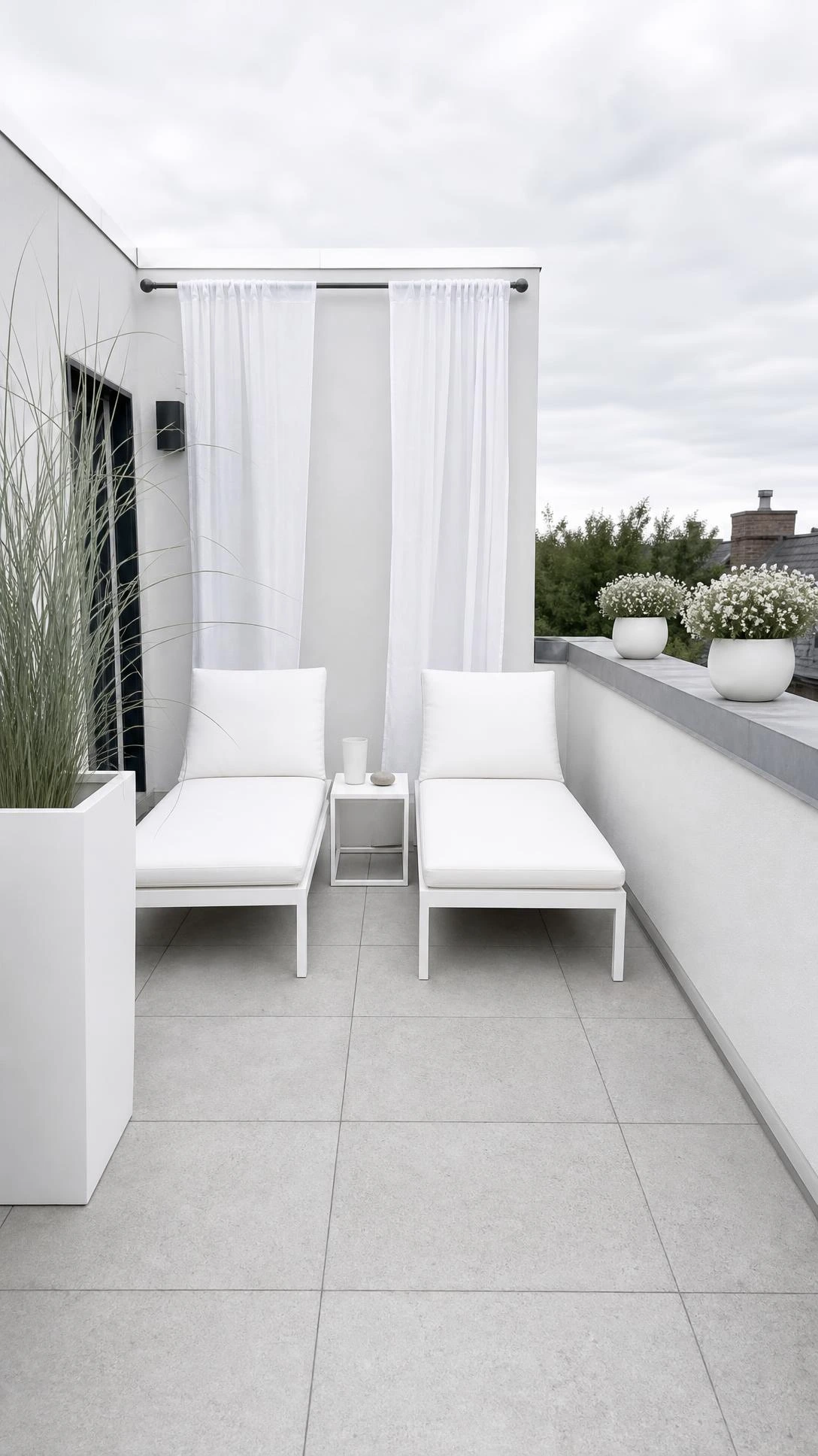
A monochrome palette is one of those choices that sounds limiting but actually makes small rooftop terrace design feel more cohesive and intentional.
Gray concrete pavers, white furniture, and charcoal cushions create a layered tonal look that reads as modern without requiring a lot of accessories to feel complete.
The key is varying the texture within the palette so the space does not look flat, using matte concrete next to smooth ceramic next to woven fabric in similar shades.
This approach works especially well on rooftops that face urban skylines because the neutral palette lets the view and the sky become the color in the space.
It is also a lot more forgiving maintenance-wise than a palette with bold color, since weather and fading affect a gray and white scheme far less noticeably over time.
5- Compact Foldable Furniture for Flexible Space
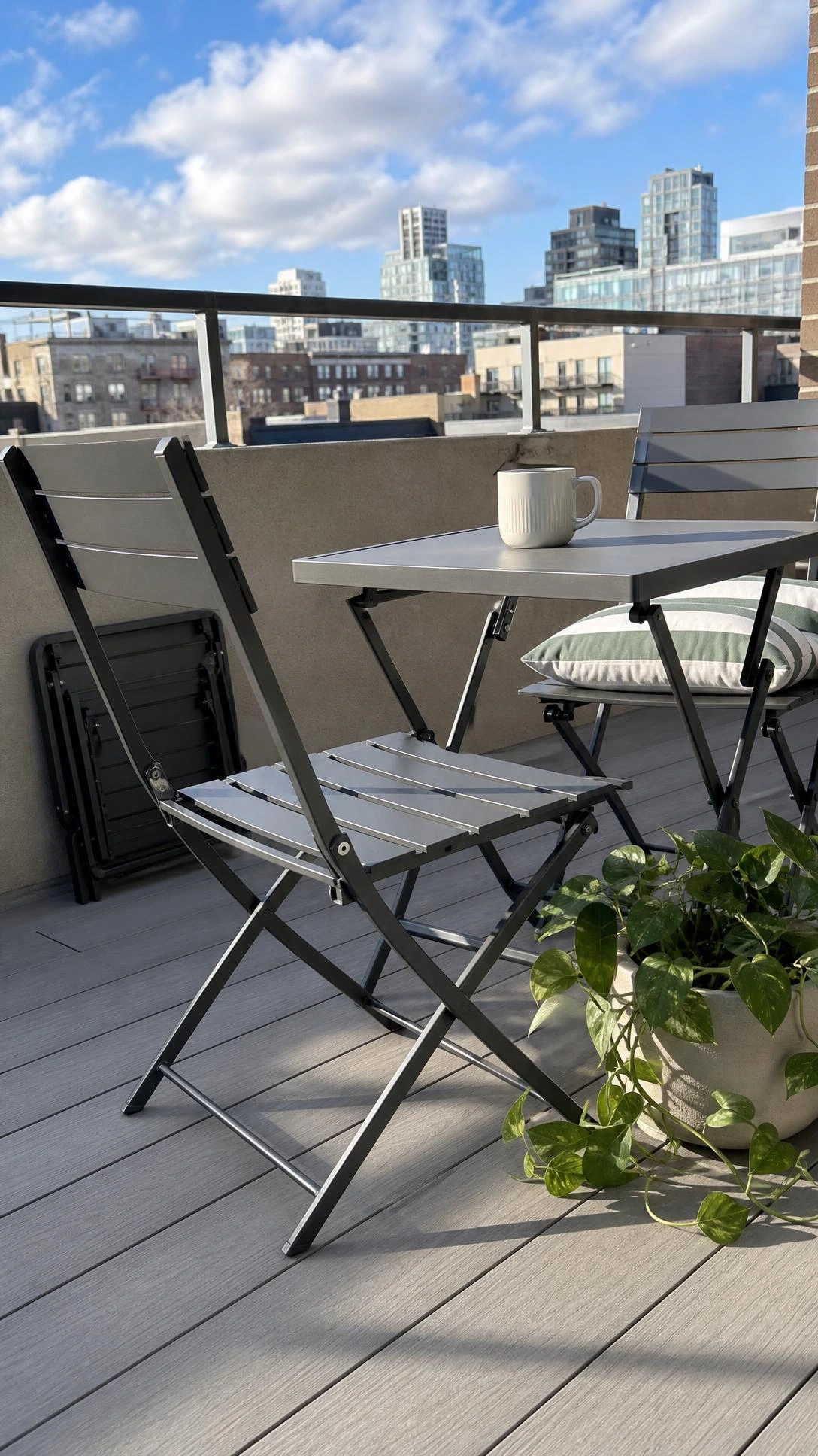
People underestimate how much a rooftop layout needs to flex depending on whether one person is reading up there or six people are having drinks.
Foldable teak or powder-coated steel chairs paired with a small folding table mean the whole setup can shift in about three minutes when the situation changes.
A folding table in the 24 by 36 inch range is the sweet spot for a small rooftop because it seats two comfortably and stores flat against a wall when not in use.
This matters more on rooftops than most outdoor spaces because access is often through a door or hatch, so oversized furniture that cannot be broken down becomes a real logistical headache.
Most people who go this route end up using their rooftop more often because the setup feels easy instead of committed.
6- Outdoor Rug to Define the Seating Zone
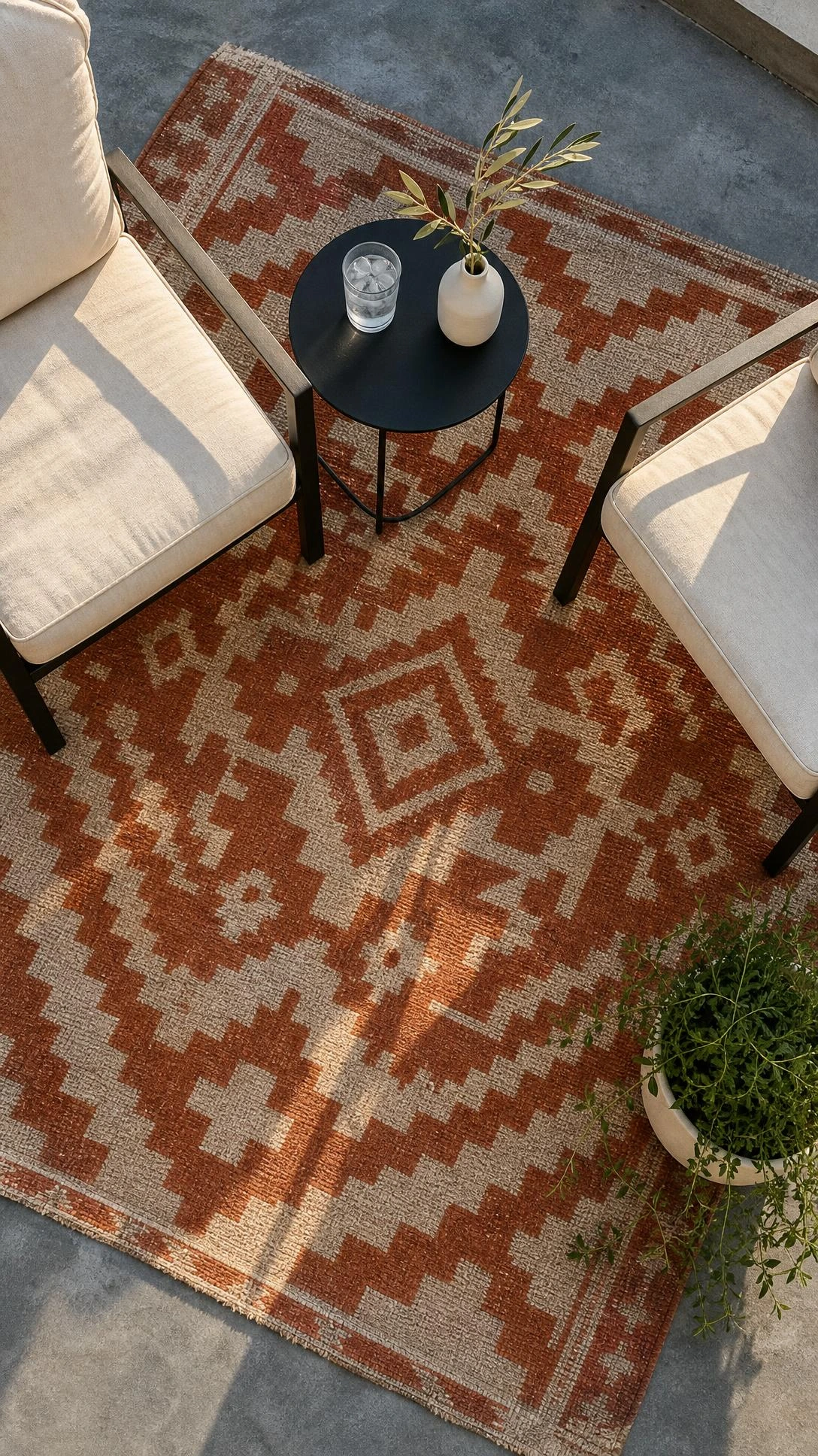
One of the most common reasons small rooftops feel unfinished is that nothing visually anchors the seating area to the floor.
An outdoor rug in a flat weave or low pile, something around four by six feet for a compact space, immediately makes a seating arrangement look deliberate rather than just dropped there.
Natural tones like jute-look polypropylene or a simple stripe in cream and charcoal tend to read well in outdoor light without competing with the sky or the view.
Polypropylene outdoor rugs in the thirty to sixty dollar range hold up well to rain and sun without mold or fading, which is the practical version of what a lot of expensive options promise.
The rug does not need to be large, it just needs to be there, because even a small one changes the whole feel of the space.
7- Vertical Planter Wall for Greenery Without Floor Space
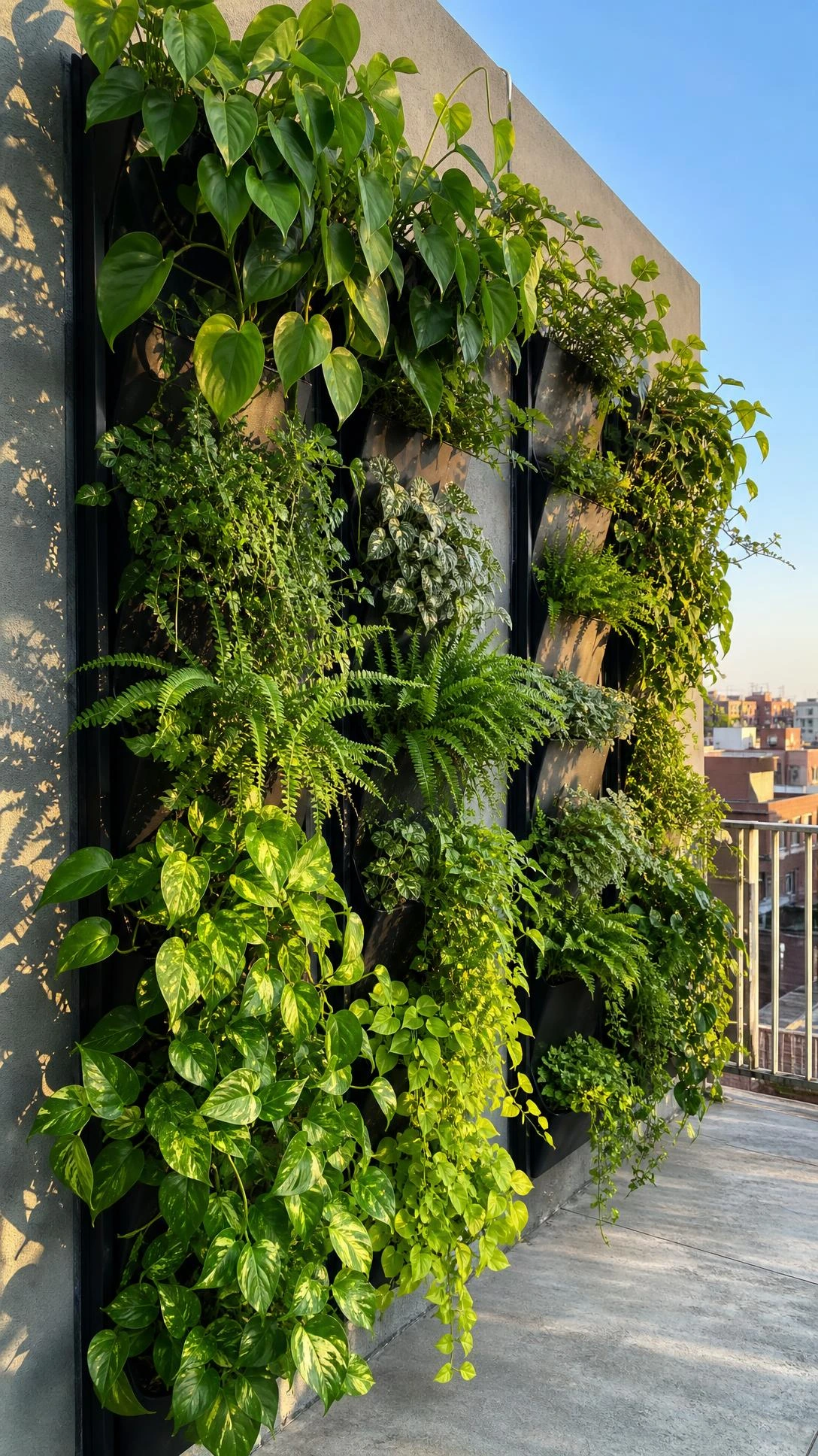
Floor space on a small rooftop is precious, which is exactly why going vertical with plants is one of the smarter moves available.
A modular vertical planter system mounted to a low wall or privacy screen can hold eight to twelve small pots in a two by four arrangement without taking up a single square foot of terrace floor.
Succulents, trailing pothos, or compact ferns all work well in vertical planters because they do not need deep root space and stay manageable without constant pruning.
Most vertical planter systems designed for outdoor use run between forty and ninety dollars and are designed to mount with basic hardware, which means this is not a contractor-level project.
The visual effect is a lot richer than it sounds because a full vertical panel of greenery genuinely softens the hard edges that most rooftop spaces have in abundance.
8- Concrete or Stone Firepit for a Rooftop Focal Point
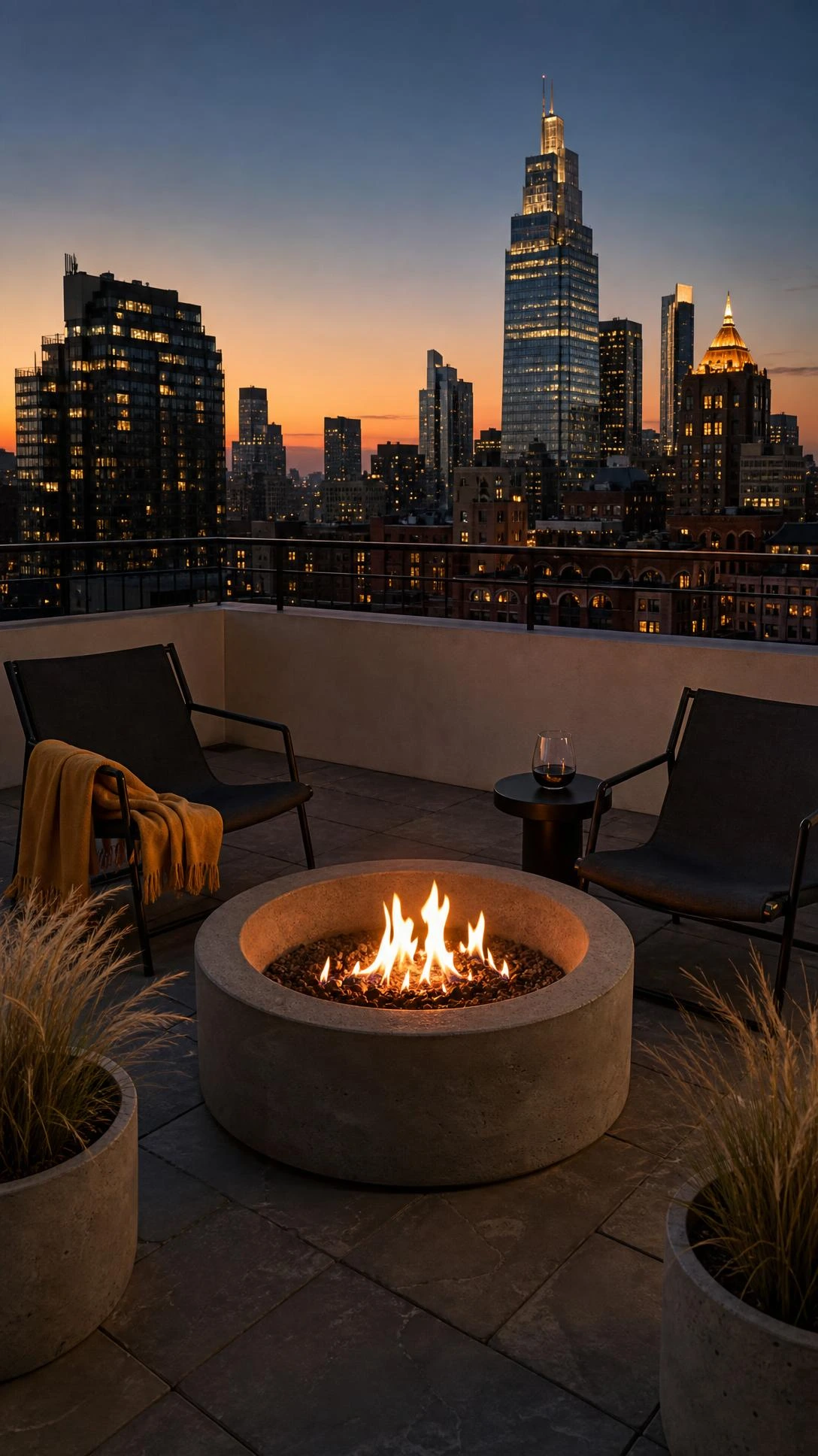
A small firepit is the kind of addition that makes a rooftop feel like a destination rather than just an overflow space.
A tabletop propane firepit in the eighteen to twenty-two inch range works well on compact terraces because it does not require any venting, does not produce ash, and can be moved or stored easily.
Concrete and cast stone finishes in charcoal or slate gray look expensive and hold up better in weather than painted metal options, which start showing rust within a season or two.
People often assume rooftop firepits require approval or permits, and that varies by city, so it is worth a quick check with building management before buying anything, which takes about five minutes online.
That said, once one is up there and lit on a cool evening, it changes the whole energy of the space in a way that string lights alone cannot quite replicate.
9- Privacy Screen with Climbing Plants
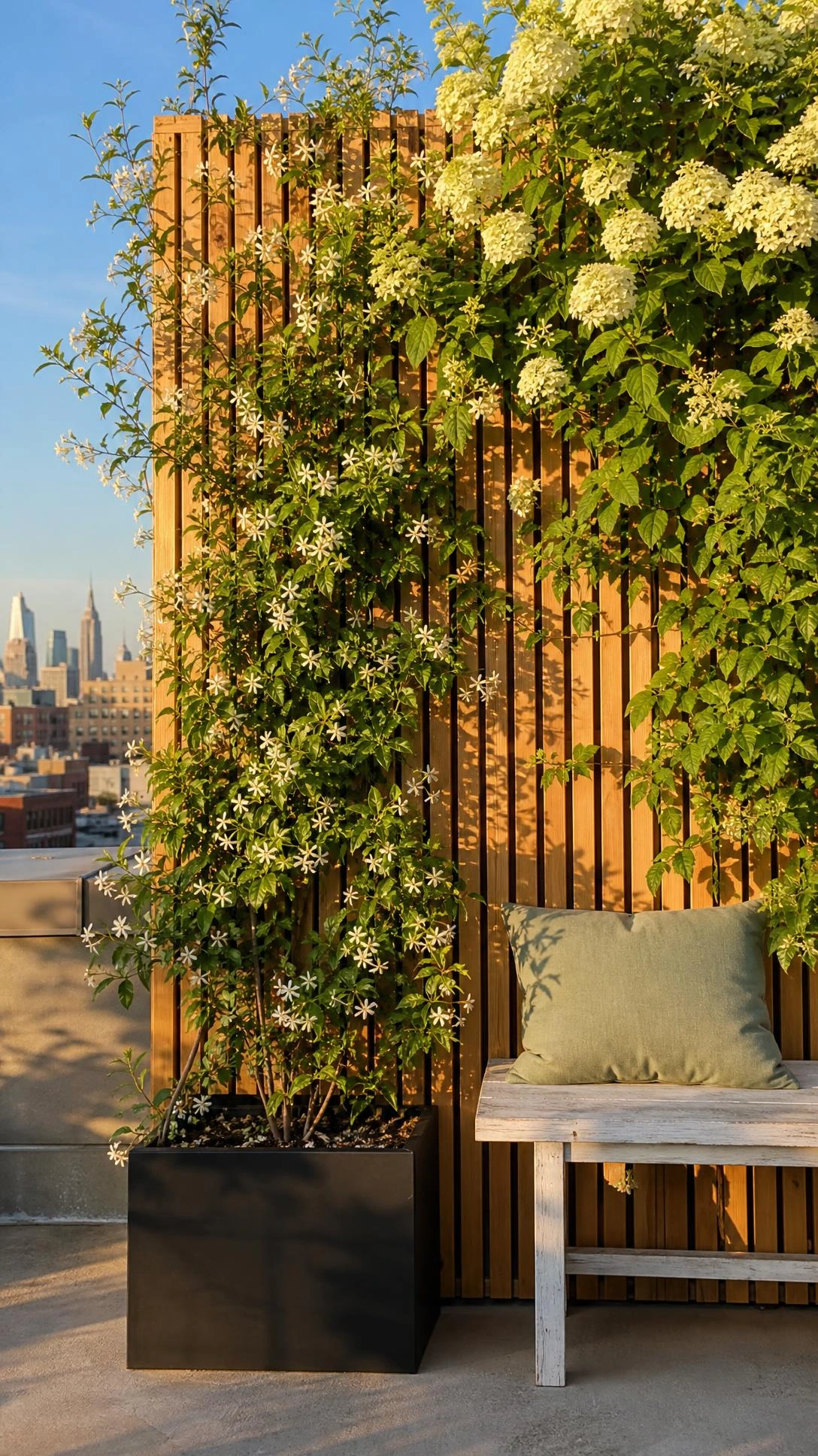
Rooftop exposure is one of the most common complaints people have about using their terrace regularly, because it can feel like being on a stage.
A freestanding lattice privacy screen in cedar or weather-treated wood, around five to six feet tall, creates a windbreak and a visual barrier without requiring any permanent installation.
Training a fast-growing climbing plant like sweet potato vine or a compact jasmine up the lattice softens the structure and makes it feel like a garden feature rather than a fence.
This works best positioned on the side of the rooftop that faces the most neighboring sightlines, which for most urban spaces is usually one specific direction rather than all four sides.
I think this is one of the most underused ideas in small rooftop terrace design because it solves the privacy problem and adds a living element at the same time.
10- Weather-Resistant Storage Ottoman for Double Duty
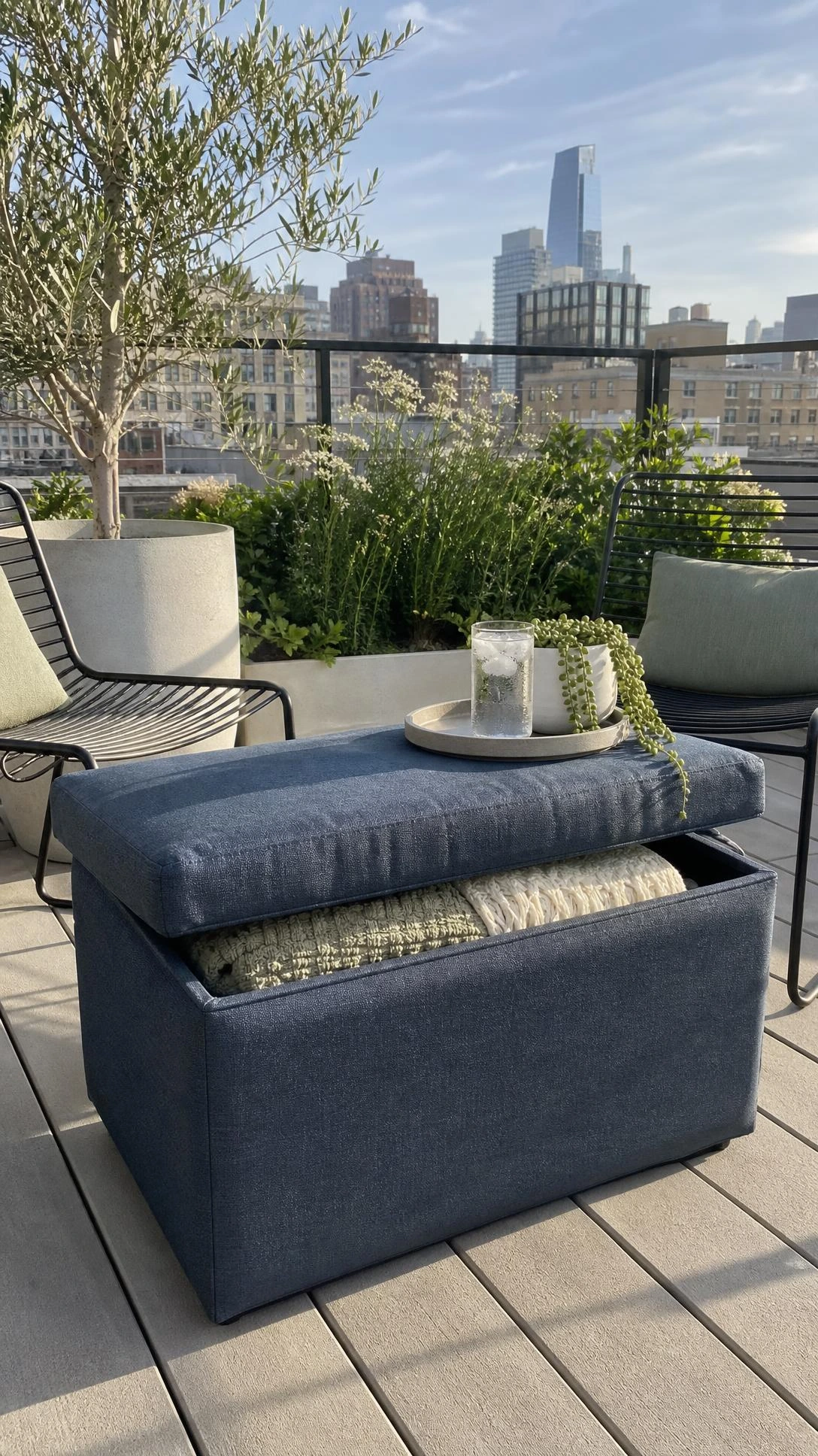
Storage is something nobody thinks about when planning a rooftop space until they have nowhere to put the extra cushions when it rains.
A lidded storage ottoman in all-weather wicker, around twenty-four inches square, can hold four to six full-size outdoor cushions and doubles as extra seating or a footrest when the lid is on.
Neutral tones like warm gray, sandy beige, or classic natural wicker blend into most small rooftop terrace design schemes without needing to match anything precisely.
This matters especially on rooftops because there is rarely a shed or garage nearby for overflow storage, so anything left out is fully exposed to whatever weather rolls through overnight.
Having a place to tuck everything away in under two minutes is the kind of practical detail that makes people actually use their rooftop consistently instead of avoiding the setup hassle.
A Small Rooftop Terrace That Gets Used Is the Whole Point
None of these ideas require a renovation budget or a design background to pull off.
The spaces that feel the best are usually the ones where a few pieces were chosen carefully and the rest was left open and simple.
A small rooftop terrace design does not need to do everything at once, and starting with lighting, seating, and one plant is often enough to make the space feel worth going up to.
The best version of a rooftop is one that gets used on a regular Tuesday evening, not just for a party twice a year.

Hi, I’m Alizabeth, the creator of Pretty Home Hacks. I share practical home decor ideas, easy DIY projects, organization tips, and budget-friendly ways to make your home feel more beautiful and functional. From small room updates to everyday home hacks, my goal is to share approachable ideas you can actually use in your own space.