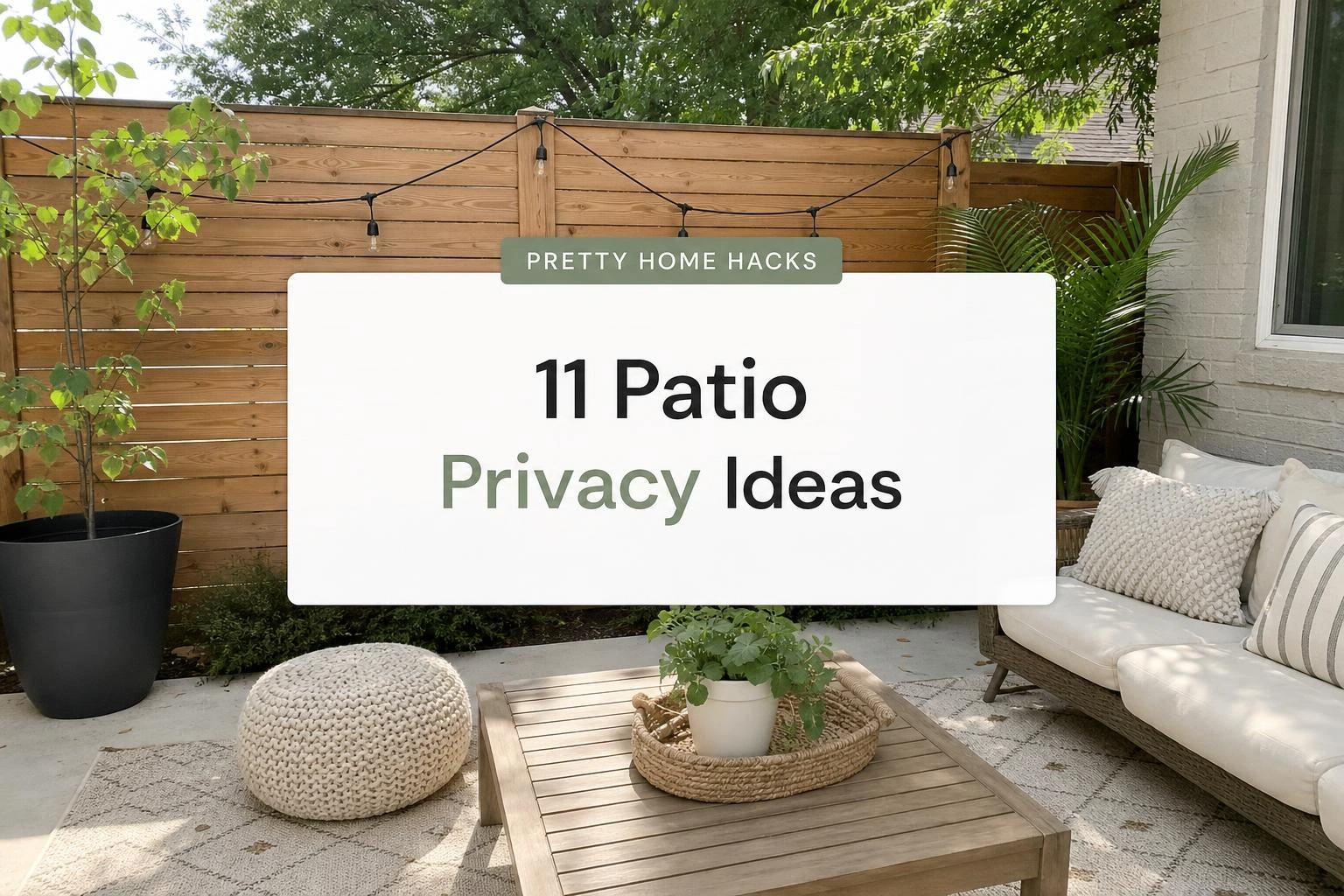
11 Patio Privacy Ideas That Actually Block the View
Having a patio that feels like a fishbowl is one of those things that slowly ruins the whole point of being outside.
People set up chairs, maybe a little table, get ready to relax with a coffee or a glass of wine, and then realise the neighbour across the way has a perfect sightline straight to the whole setup.
Most of the time the assumption is that fixing it means a big landscaping project or a contractor and a budget that does not exist right now.
The thing is, there are a lot of ways to get real privacy out there without making it a whole construction situation.
These are the ideas that actually work, and most of them can be done on a weekend or less.
1- Outdoor Curtains on a Simple Rod or Wire
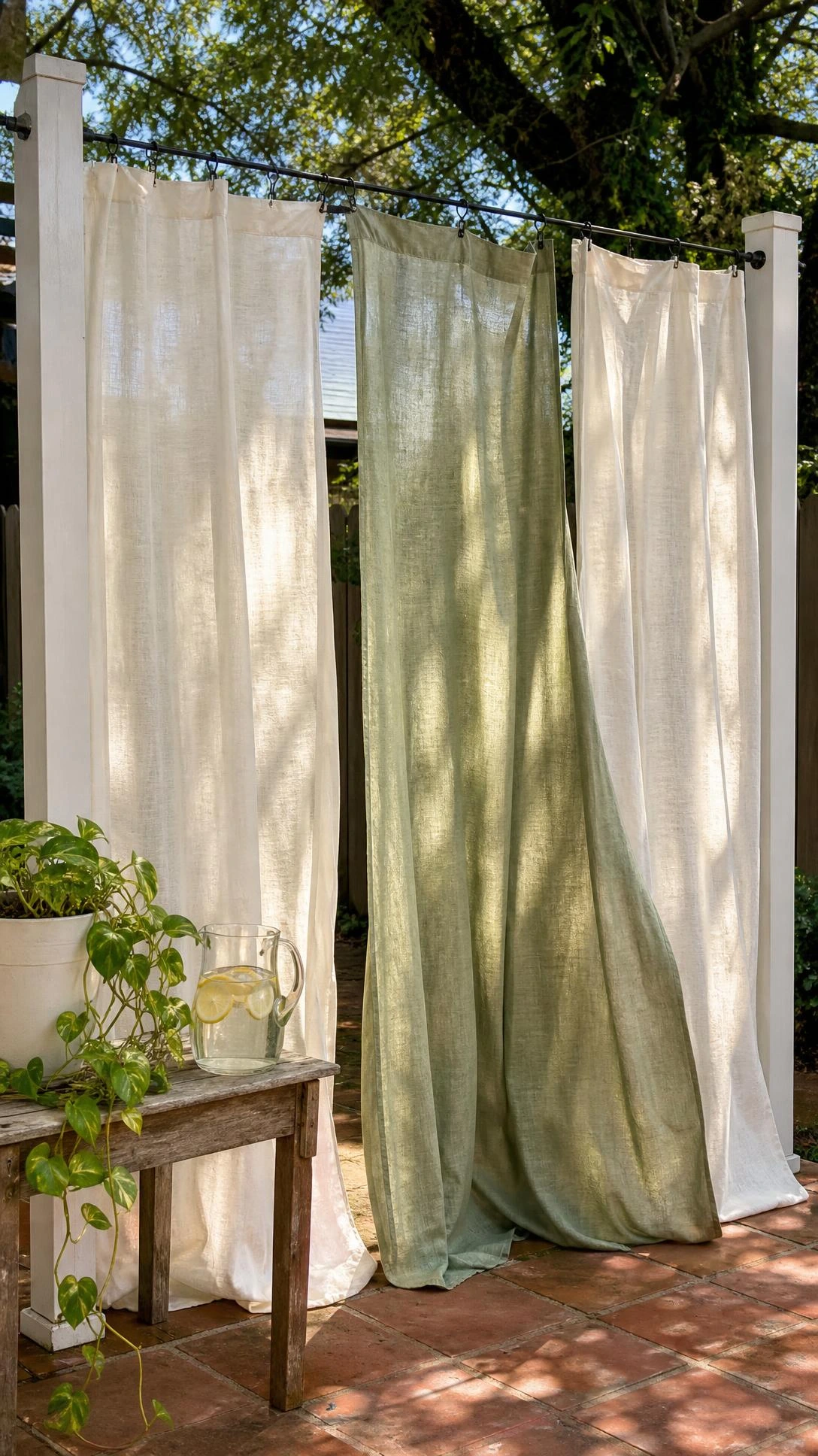
Outdoor curtains are one of those solutions that looks way more intentional than the effort it takes to put up.
A basic curtain rod or a simple wire strung between two posts is all that is needed to hang them, and the whole thing can go up in an afternoon.
White or natural linen-look outdoor fabric tends to photograph well and hold up longer than anything too dark, which fades fast in direct sun.
IKEA’s DYNING outdoor curtains run around 25 dollars a panel and are a good starting point for anyone who wants the look without spending much.
They move in the breeze too, which sounds like a small thing but genuinely makes the patio feel more like a retreat than a screened-off box.
2- Freestanding Privacy Screen Panels
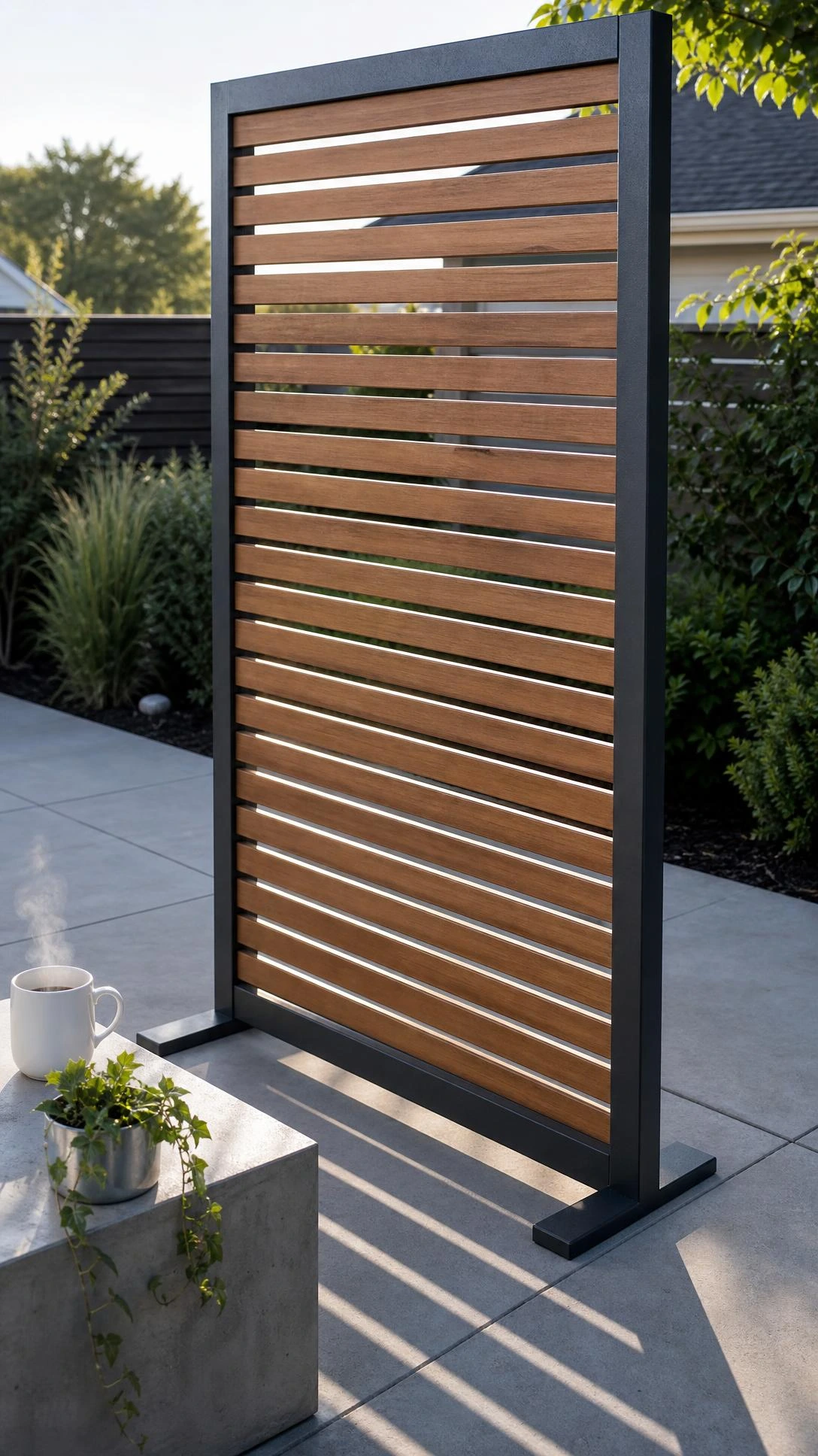
Privacy screens are the option people reach for when they do not want anything permanent, which is most renters and a surprising number of homeowners too.
They come in wood, metal, and woven wicker-style materials, and the freestanding ones mean no drilling, no posts, no permits.
A set of three hinged wooden panels in a natural cedar finish can block a pretty significant sightline when placed at an angle, and they fold flat for winter storage.
The trick is anchoring them a little so wind does not send them over, and most people use a planter or a sandbag base tucked out of sight behind the panel.
This works best for patios that already have a defined edge or corner to work with rather than completely open spaces.
3- Climbing Plants on a Simple Frame
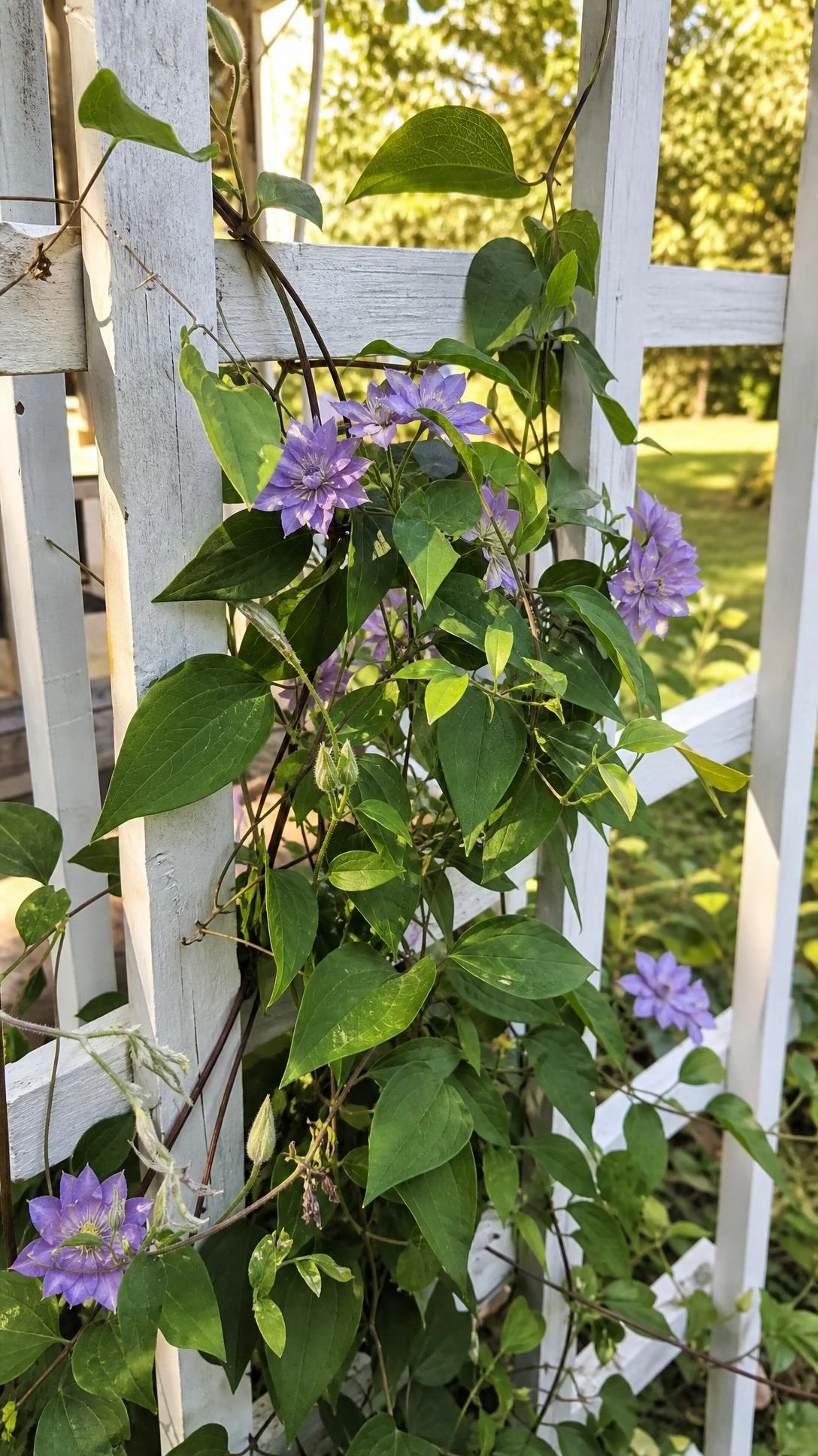
Growing climbing plants for privacy sounds like it takes forever, but a lot of varieties establish much faster than people expect.
Clematis can cover a basic trellis frame in a single growing season, and wisteria is even more aggressive once it gets going, which is a good or bad thing depending on how much maintenance sounds appealing.
A simple wooden or metal frame from the garden centre costs around 20 to 40 dollars and is enough to get something started along a fence line or patio edge.
The real advantage here is that the view from inside becomes something green and alive instead of just a fence panel, which is a nice trade-off.
That said, climbing plants need a little attention the first year to train them in the right direction before they take over on their own.
4- Pergola With Curtains or Vines
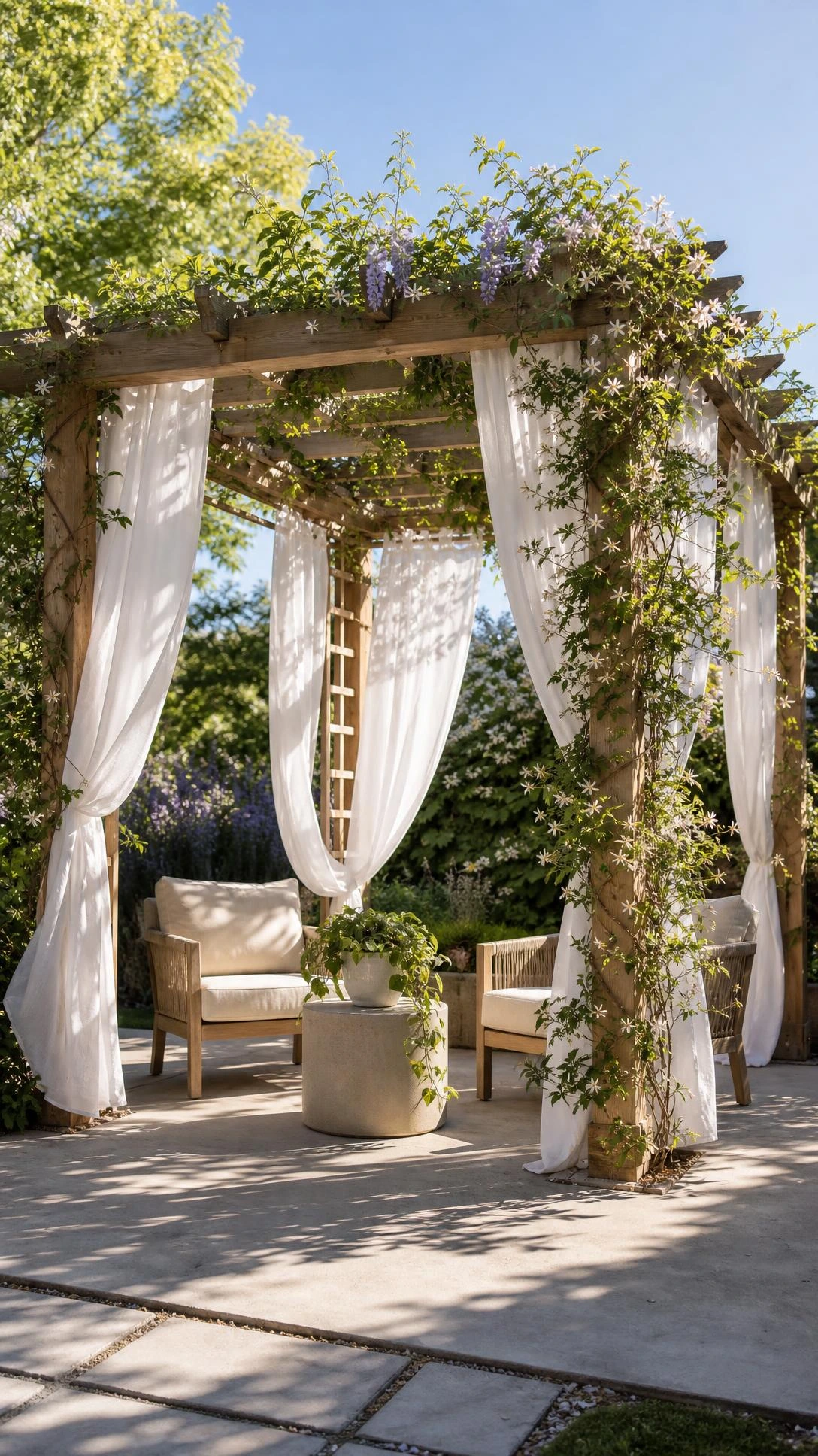
A pergola solves two problems at once because it handles overhead coverage and gives something to hang curtains from or train plants up without any additional structure.
The prefab kit versions have gotten a lot more realistic in the last few years, and a basic 10 by 10 foot kit from a home improvement store runs somewhere around 300 to 600 dollars depending on the material.
Hanging sheer outdoor curtains on all four sides turns it into a nearly fully enclosed space that still gets airflow, which most solid structures do not offer.
I think the pergola-plus-curtains combination is probably the most versatile patio privacy setup for people who want to feel cozy out there without building a whole room.
It does need a flat surface and some basic anchoring to stay stable, so uneven patios might need a little prep work first.
5- Trellis Panels Along the Fence Line
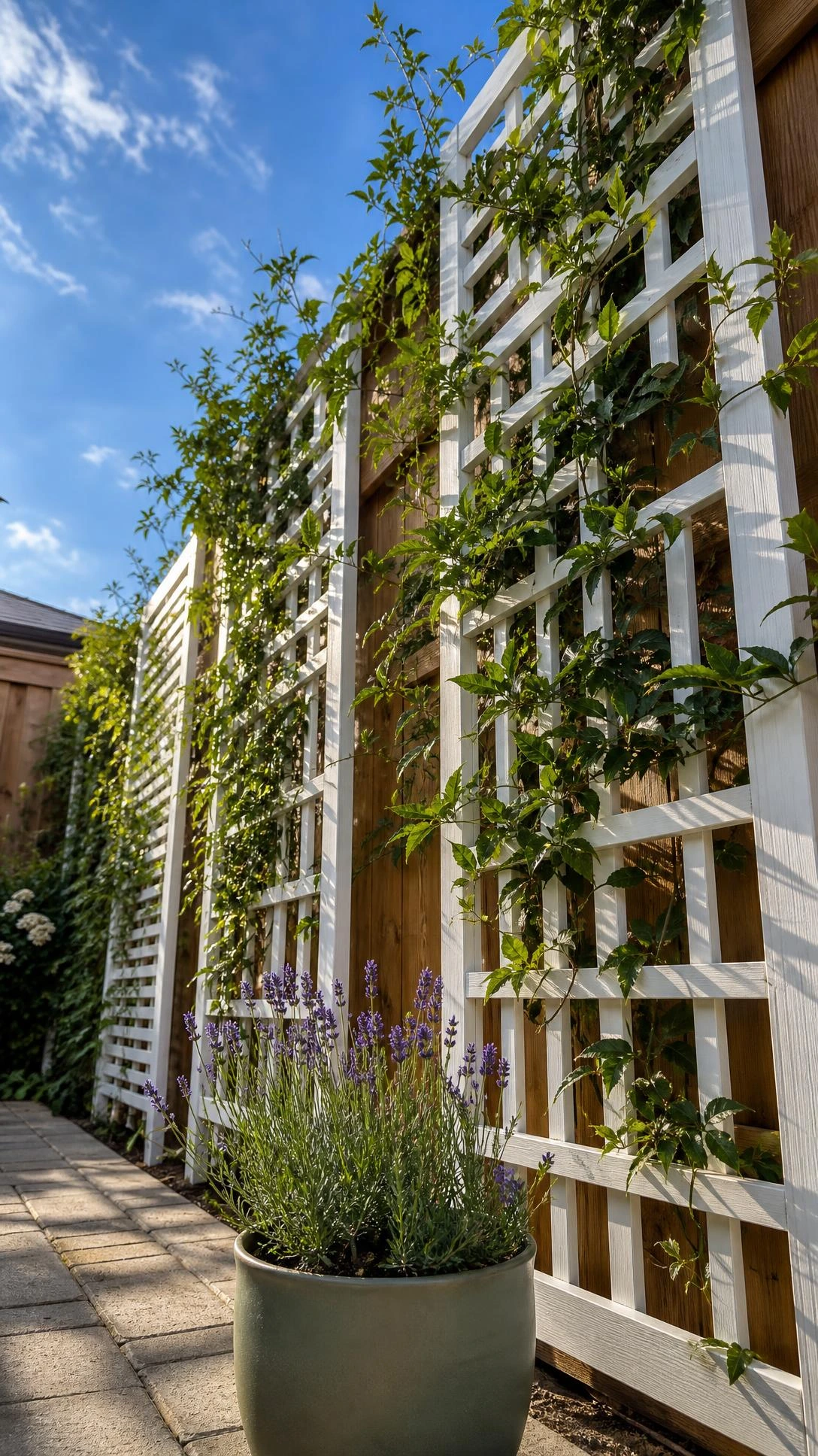
A trellis is one of those additions that reads as decorative while actually doing a very functional job of filling in the gaps where people can see through.
Placing trellis panels on top of an existing fence line immediately adds height without the fence looking like a wall, because the open lattice pattern keeps things feeling lighter.
Standard trellis panels come in 6 by 2 foot sections at most garden centres, and three or four of them along a shared fence line makes a real difference in how exposed the patio feels.
The best part is that they double as support for any plants that are already growing nearby, so nothing goes to waste.
Painting them the same colour as the existing fence before mounting makes the whole thing look planned rather than patched together.
6- Bamboo Fencing Rolls
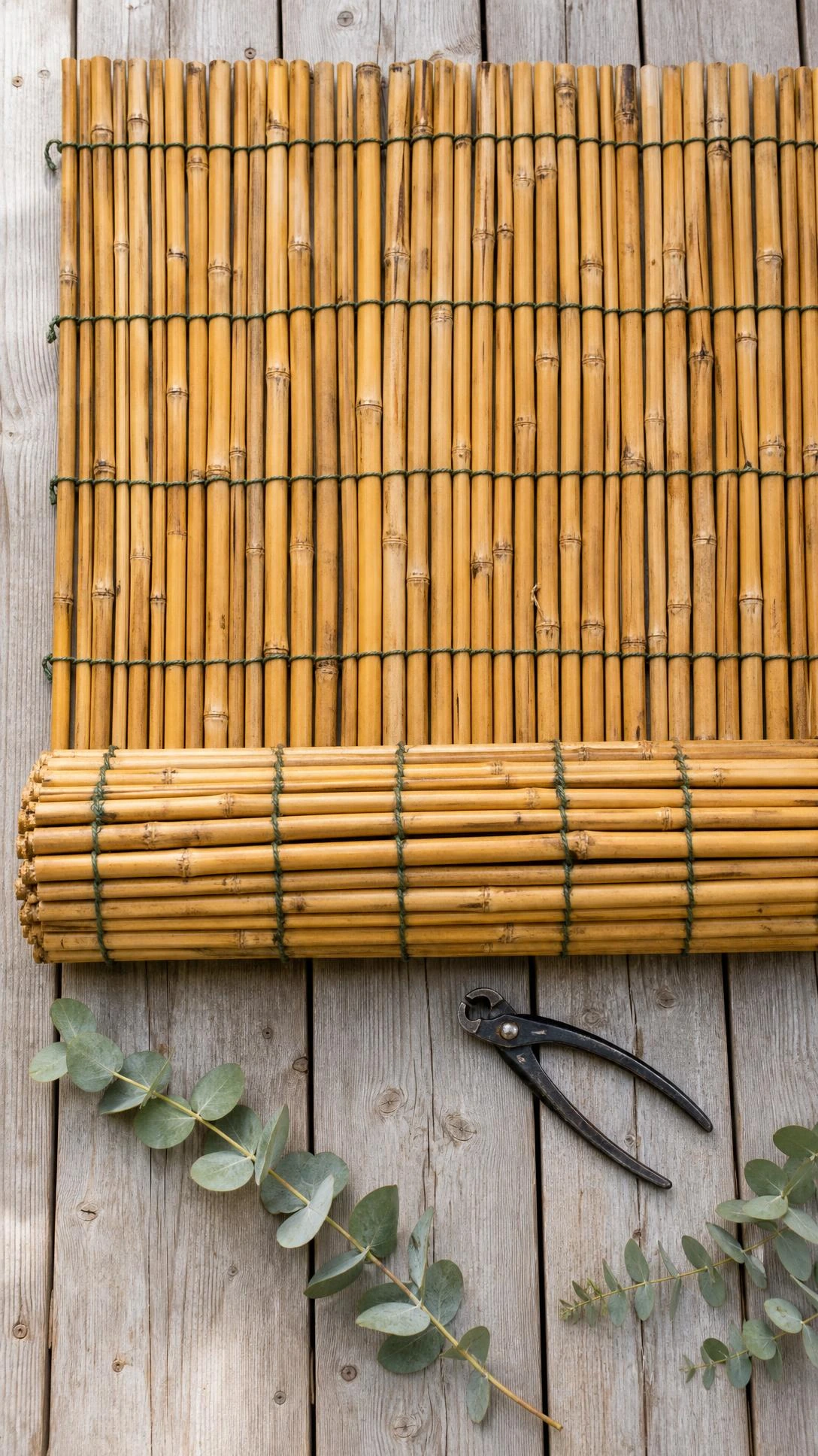
Bamboo fencing rolls are probably the most underrated option on this list because they are fast, cheap, and look genuinely good once they are up.
A standard roll is about 8 feet tall and 16 feet long and costs around 40 to 60 dollars, which covers a decent stretch of fence line or the side of a deck without much investment.
They attach to an existing fence or railing with zip ties or wire, and the whole installation for one roll takes maybe 20 minutes.
The natural colour weathers nicely over time into a soft grey-brown that actually looks more intentional than the bright honey colour it starts as.
People who live in windier spots should note that bamboo rolls can catch a lot of air, so securing them at the top, middle, and bottom makes a big difference in how long they stay put.
7- Tall Shrubs and Arborvitae Along the Edge
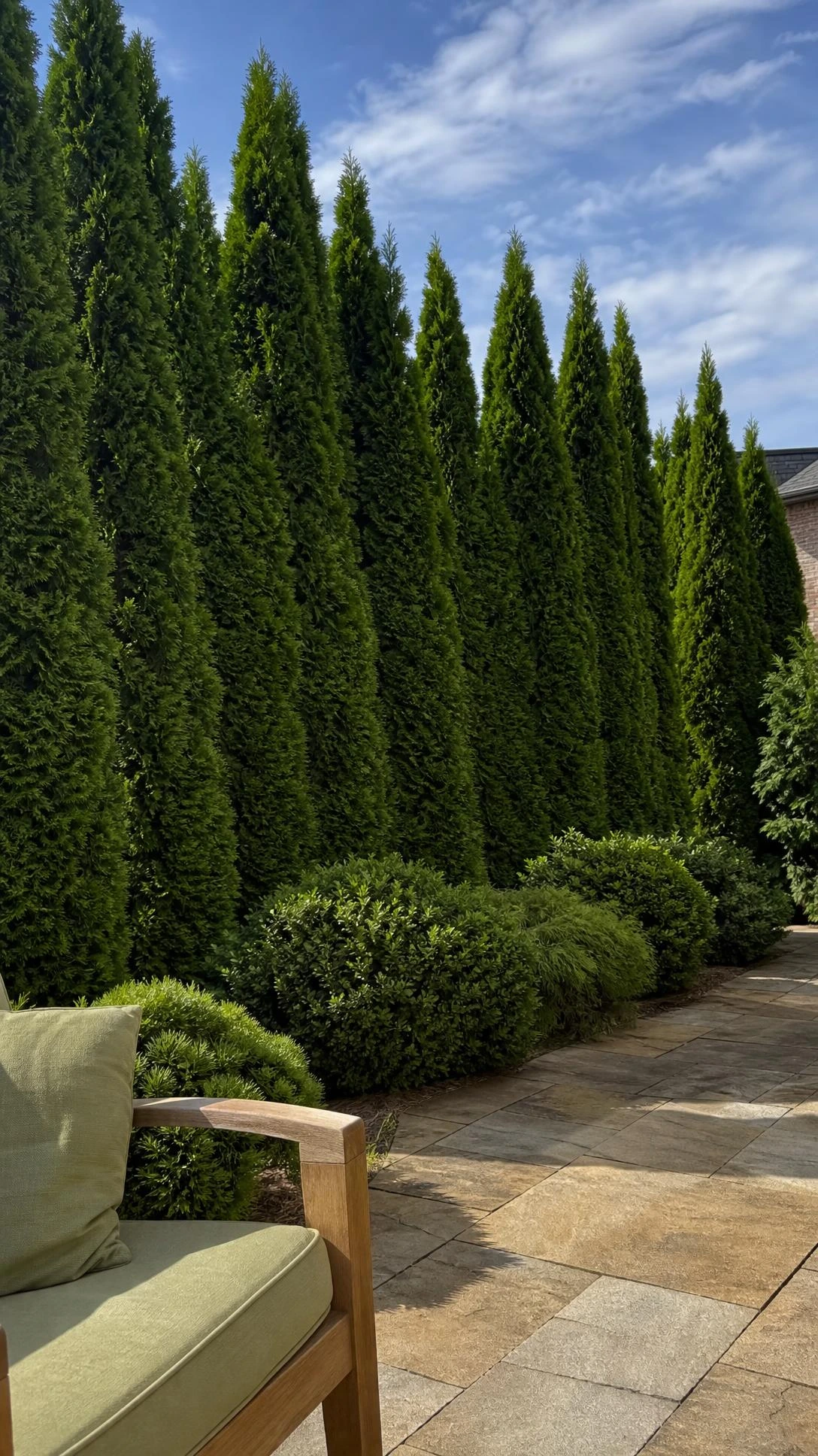
Planting a row of tall shrubs is the slowest option here but also the one that ends up looking the most like it was always meant to be there.
Arborvitae is the go-to for this because it grows relatively quickly, stays narrow, and does not drop leaves in the fall, which matters a lot when the goal is year-round privacy.
Emerald Green arborvitae planted about 3 feet apart will close in the gaps within two to three seasons and eventually forms a dense green wall without much maintenance after the first year.
Boxwood works well too for lower screening along a deck edge, though it grows slower and needs more shaping to stay tidy.
This option makes the most sense for people who plan to stay in the house for a few years and want something that builds itself over time.
8- Lattice Fence Panels for Partial Privacy
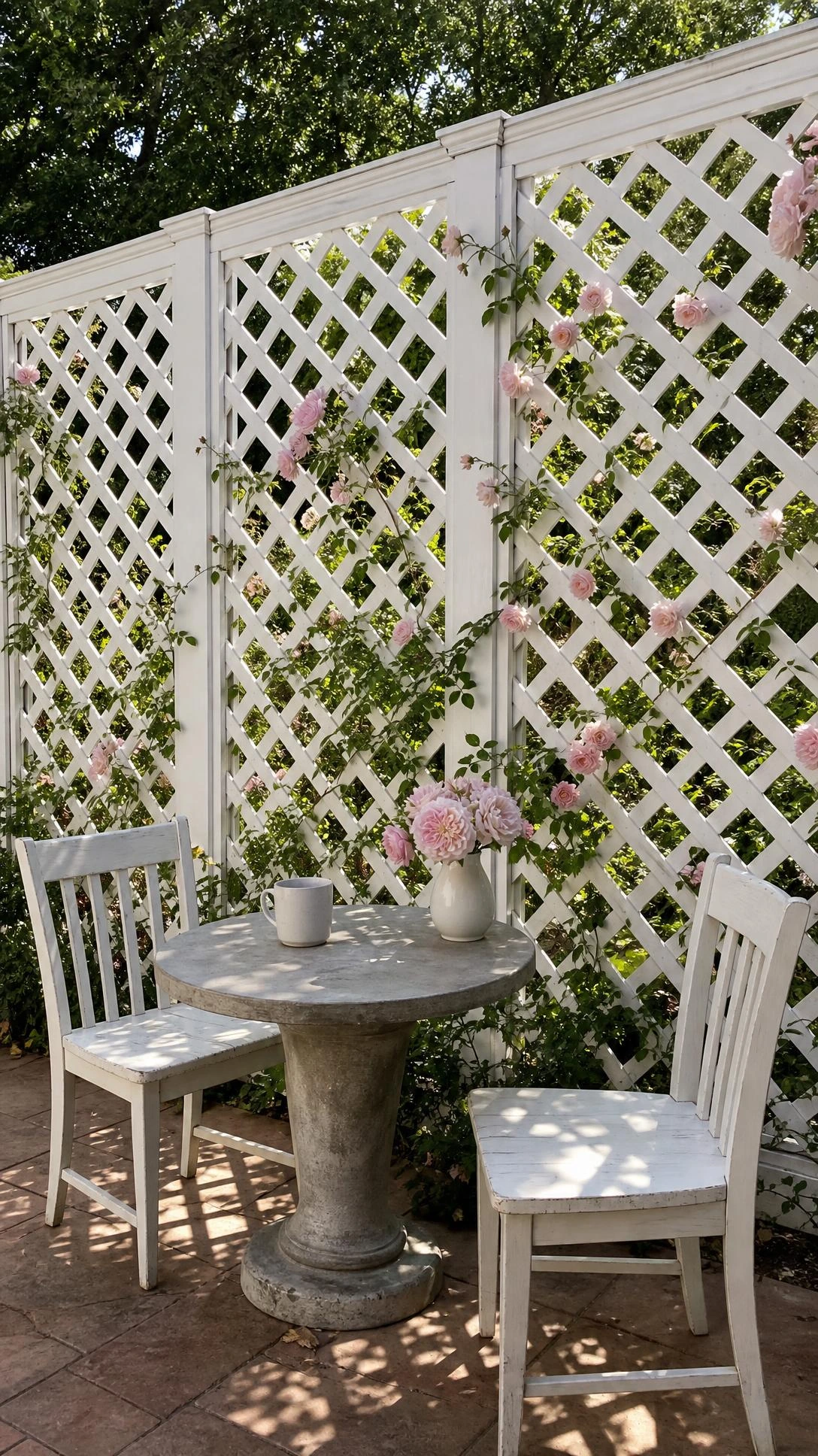
Lattice fencing is the choice for people who want to block the direct line of sight without making the patio feel completely closed off from the rest of the yard.
The open diamond pattern lets light and air through while still breaking up the view enough that neighbours are not watching every move from their window.
White vinyl lattice panels are the most low-maintenance version since they never need painting and hold up in rain without warping the way wood eventually does.
A 4 by 8 foot panel runs about 20 to 30 dollars, and three or four panels framed with simple 2 by 4 lumber creates a finished-looking barrier without a huge material cost.
Lattice also grows on people who were not sure about it at first, especially once something starts climbing through it and filling in the gaps naturally.
9- Outdoor Roller Blinds on an Existing Structure
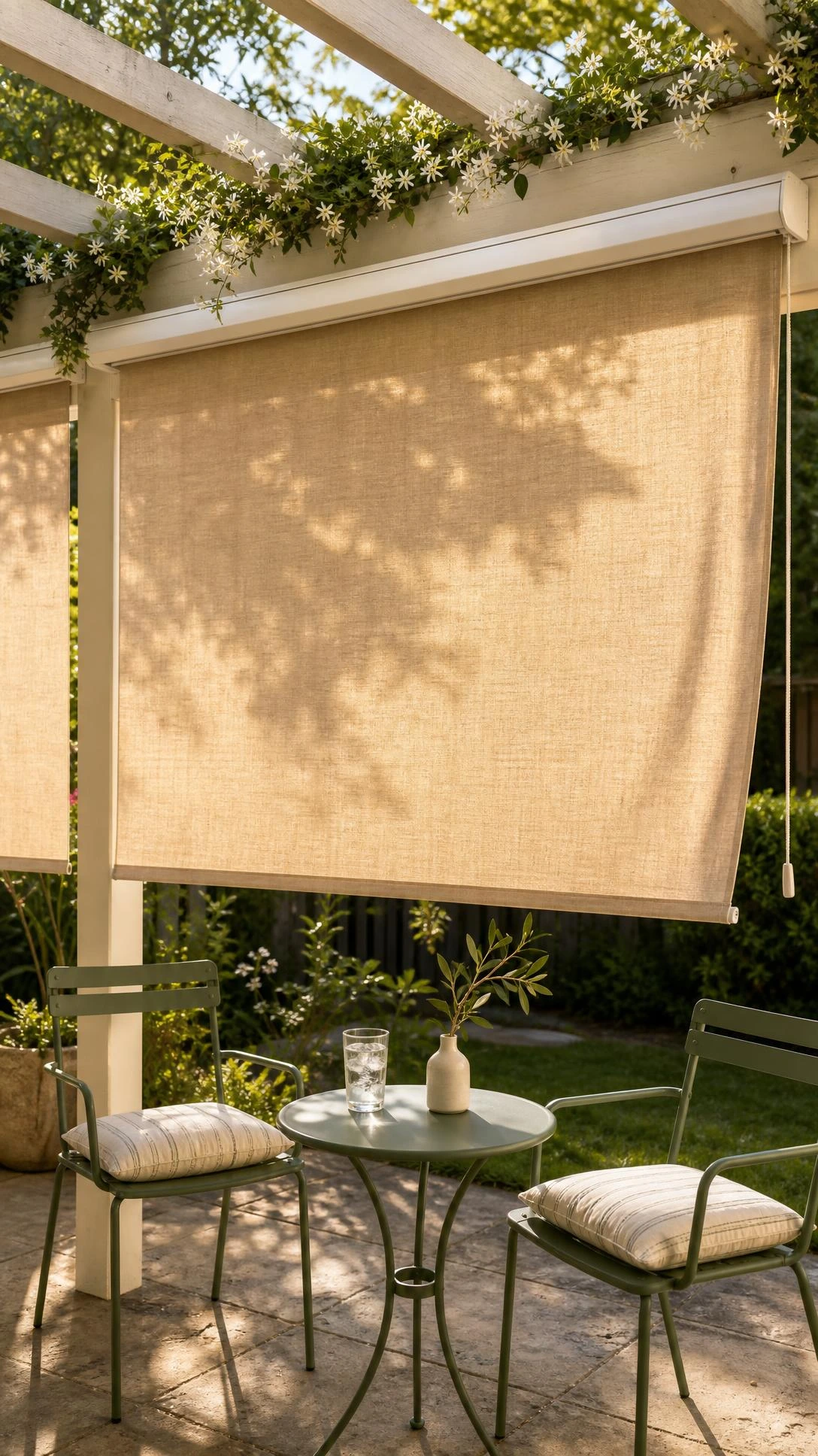
Outdoor roller blinds are the most underused patio privacy idea, mostly because people do not realise they exist outside the context of a sunroom or screened porch.
They mount directly to the overhang, pergola beam, or exterior wall above the patio and roll down when privacy is needed, then roll back up when the space should feel more open.
Bamboo roll blinds in a natural finish can handle outdoor conditions reasonably well and cost around 30 to 80 dollars depending on width, which makes them a realistic option for most budgets.
The adjustability is the best part because most patios have times of day when privacy matters more than others, and a blind that goes up and down handles that in a way a fixed structure never can.
They do need something solid overhead to mount to, so completely open patios without any roof structure would need a rod or beam added first.
10- Built or Placed Privacy Wall Section
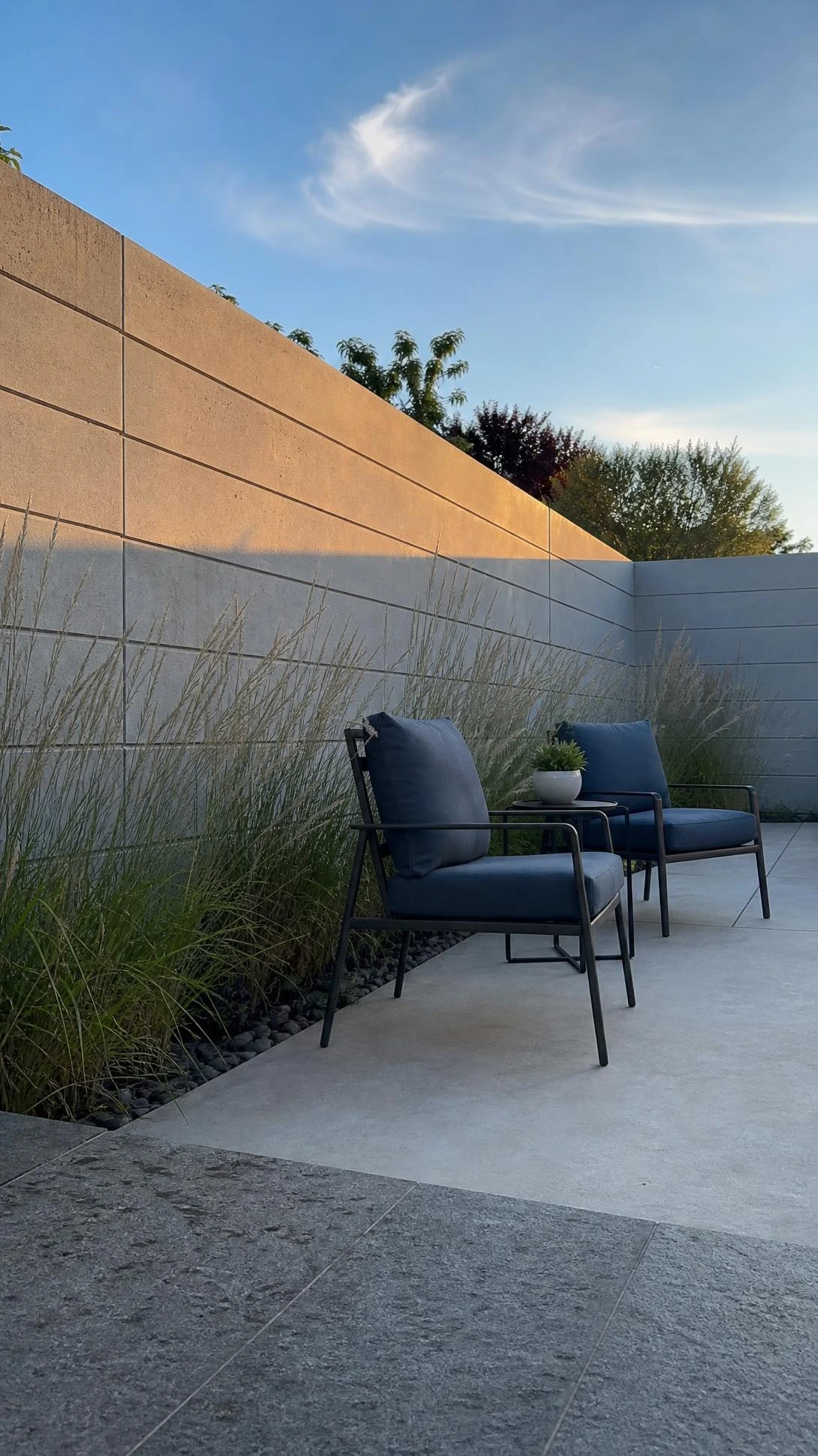
A privacy wall sounds more permanent and expensive than it has to be, especially when the goal is just one targeted section rather than surrounding the whole patio.
A single 6 foot section of stacked horizontal cedar boards mounted on two posts can block the exact angle where privacy is actually needed without walling off the whole space.
Horizontal board fencing in a natural cedar stain is one of those looks that adds something to the backyard rather than just closing it in, which matters when the patio is also the view from the kitchen.
The cost for a single DIY section using cedar boards and two pressure-treated posts is usually somewhere between 80 and 150 dollars in materials.
Placing it at a slight angle rather than parallel to the property line sometimes works better for blocking a specific sightline while keeping the patio feeling less boxed in.
11- Outdoor Rugs to Define and Enclose the Space
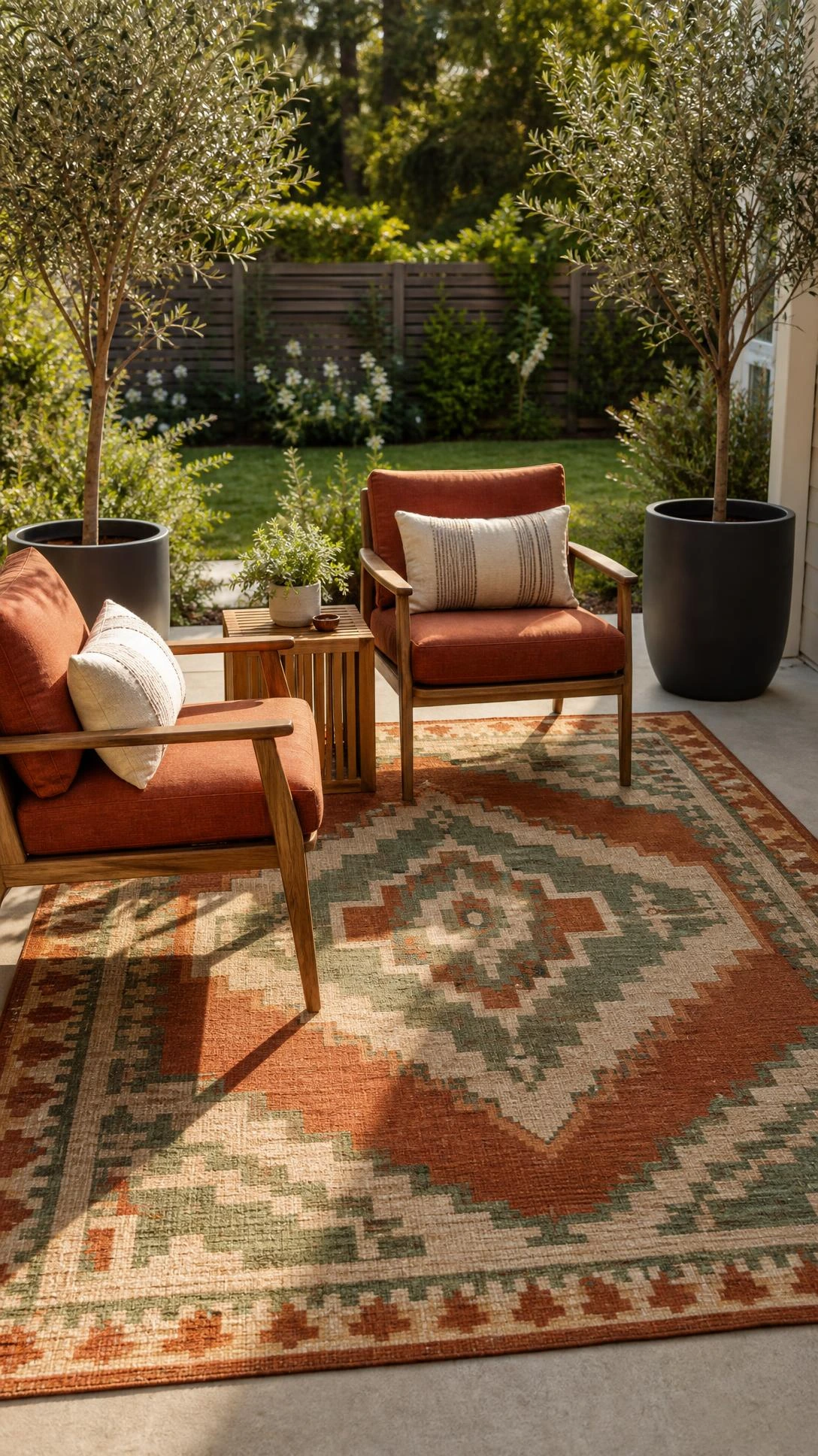
An outdoor rug does not block any actual views, which is worth saying clearly, but what it does is make the patio feel like its own defined space rather than an exposed corner of the yard.
That shift in how the space feels psychologically actually matters more than people expect, especially when combined with even one other idea from this list.
A large rug in the 8 by 10 foot range anchors the whole patio, pulls the furniture together, and makes the area feel intentional rather than just a few chairs sitting out in the open.
Neutral geometric patterns in grey, terracotta, or warm cream hold up well visually as seasons change and do not date the space as fast as something more trend-forward.
Most outdoor rugs in that size run between 60 and 150 dollars, and the difference in how the patio feels before and after one goes down is bigger than the number suggests.
Making the Patio Feel Like It Was Designed That Way
Most of the best patio privacy setups use two or three of these ideas layered together rather than one big solution trying to do everything.
A bamboo roll along the fence, a few curtains on the open side, and a rug to tie it together gets most patios to that comfortable, closed-in feeling without a single contractor involved.
The goal is just a space where people can sit outside and actually relax without that low-level awareness of being on display.
Start with the angle that bothers you most, fix that one first, and the rest tends to fall into place from there.

Hi, I’m Alizabeth, the creator of Pretty Home Hacks. I share practical home decor ideas, easy DIY projects, organization tips, and budget-friendly ways to make your home feel more beautiful and functional. From small room updates to everyday home hacks, my goal is to share approachable ideas you can actually use in your own space.