
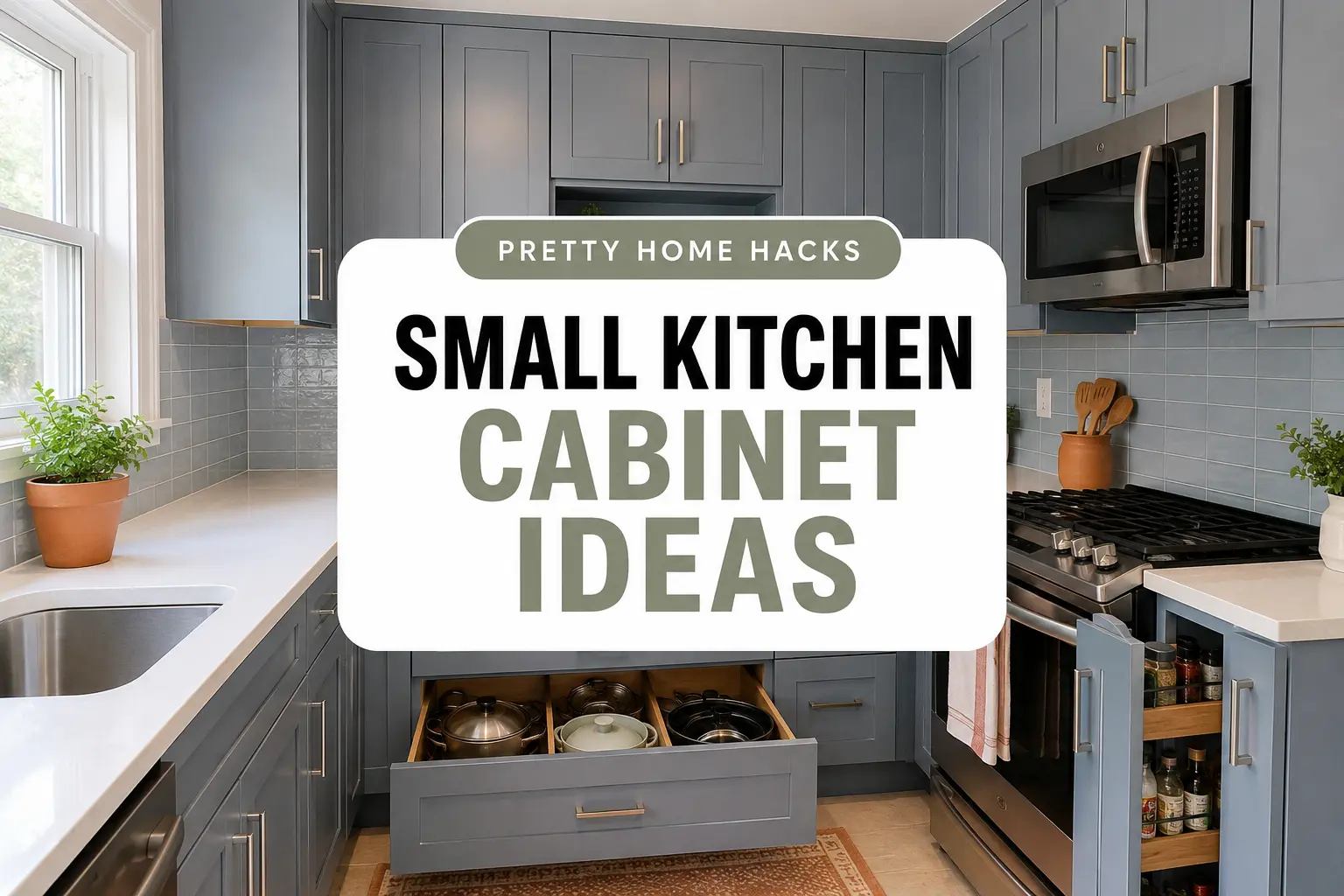
11 Small Kitchen Cabinet Ideas That Make Every Inch Easier to Use
Open one cupboard in a small kitchen and three unrelated things usually lean forward at once.
The room may have enough cabinet space on paper, but deep shelves, narrow gaps, and awkward corners can make half of it difficult to reach.
Good small kitchen cabinet ideas fix that daily frustration before worrying about decorative handles or a fashionable paint color.
The useful changes bring stored items forward, divide wide spaces, and give frequently used things a sensible home near the place they are needed.
Some require new cabinetry, while several can be added to the cabinets already on the wall.
1- Kitchen Cabinets That Reach the Ceiling
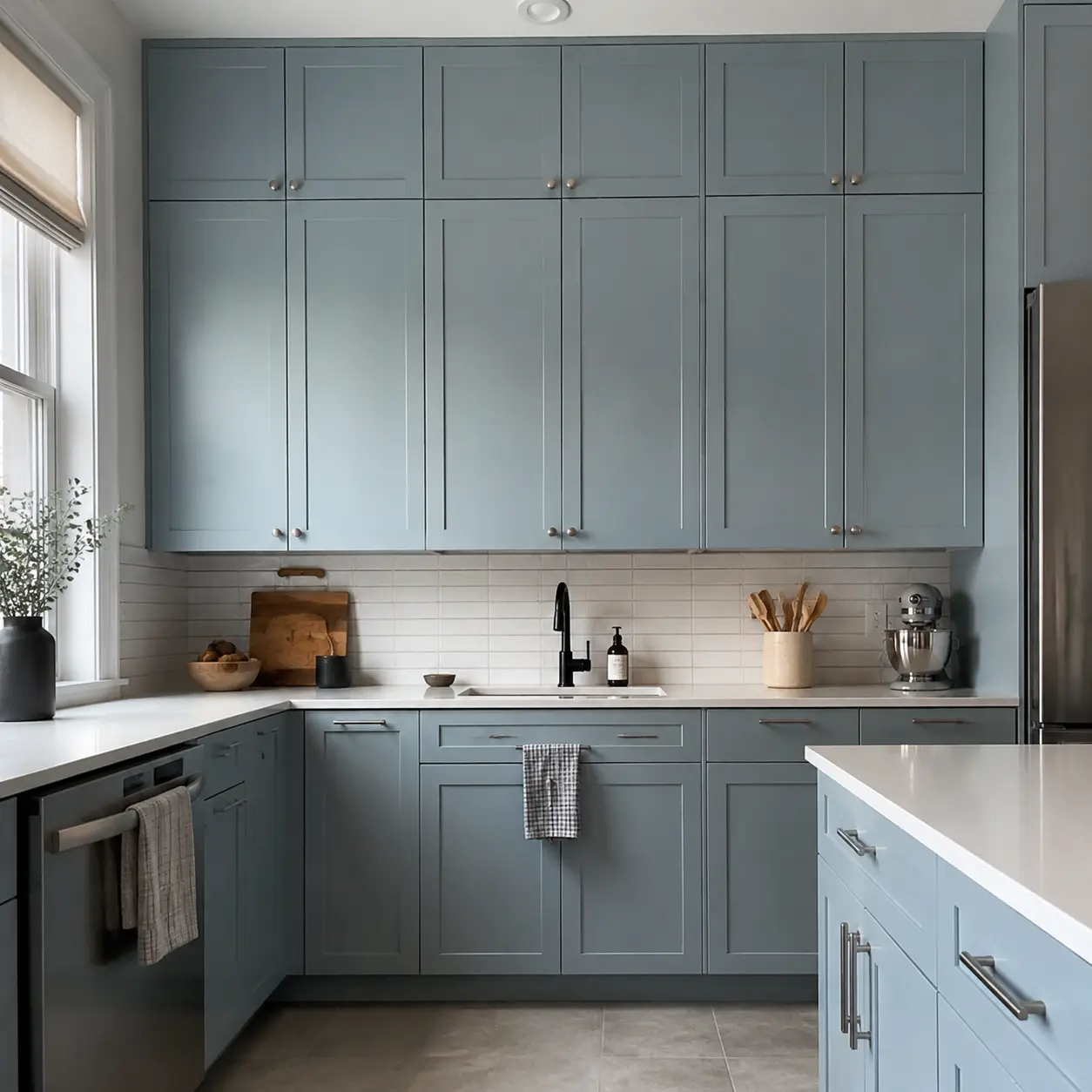
The empty strip above standard wall cabinets collects dust while serving no useful purpose.
Extending cabinets to the ceiling creates a proper place for holiday dishes, spare glassware, and appliances used a few times each year.
In a room with an 8-foot ceiling, a 36-inch upper cabinet with a 12-inch stacked cabinet can use the height without making every door unusually tall.
Keep everyday plates on the lower shelves because a step stool should not become part of making breakfast.
Paint the upper and lower sections the same color so the vertical storage reads as one calm surface.
2- Pull-Out Drawers Inside Deep Cabinets
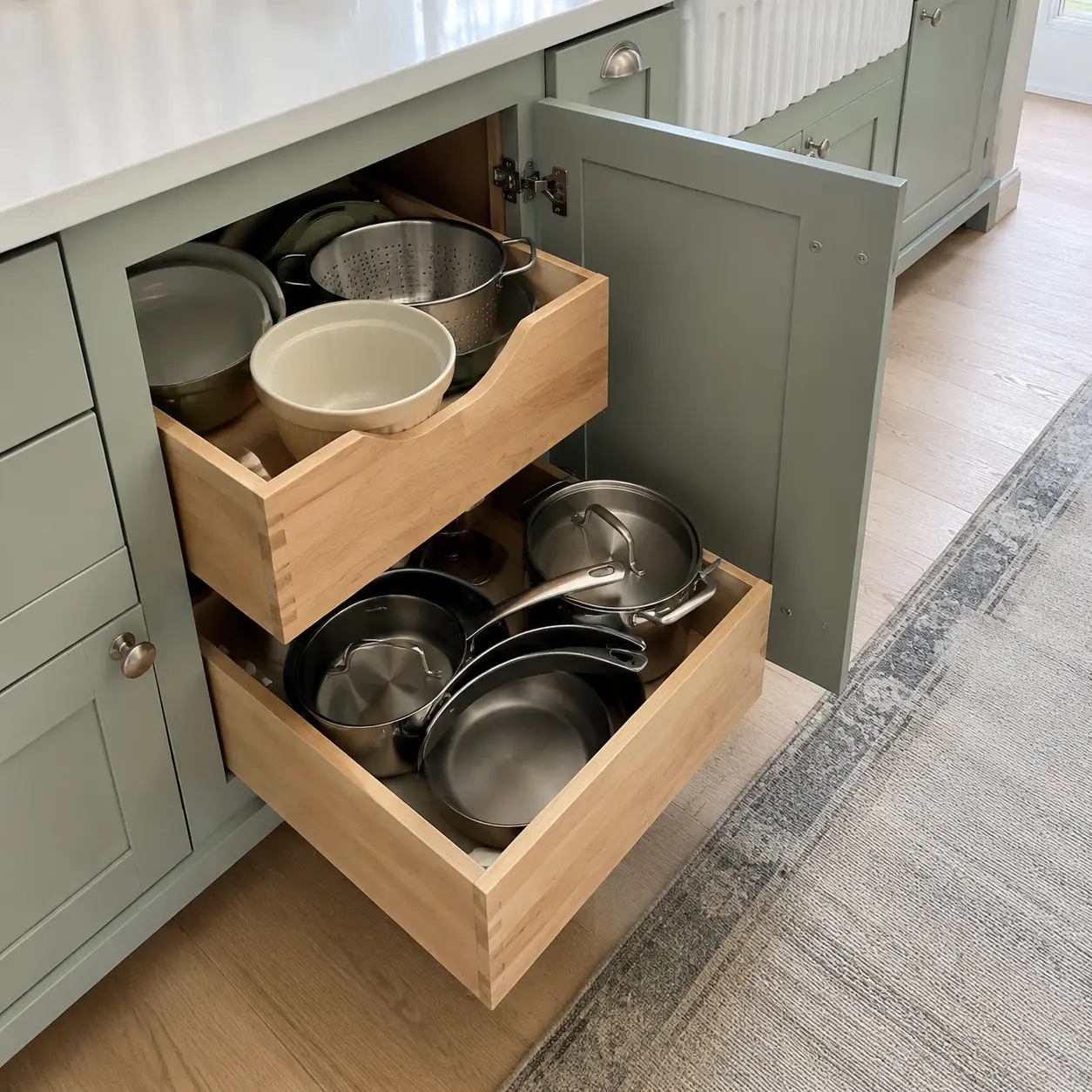
Deep base cabinets are generous until the colander disappears behind two saucepans and a mixing bowl.
Full-extension pull-out drawers bring the entire shelf into view and make the back several inches useful again.
Retrofit metal or solid-sided drawer kits are available in common cabinet widths from about 12 to 24 inches.
Measure the clear opening between the hinges rather than measuring only the cabinet box.
A drawer should slide past the door and hardware without needing a sideways tug.
3- Narrow Pull-Out Cabinet Beside the Range
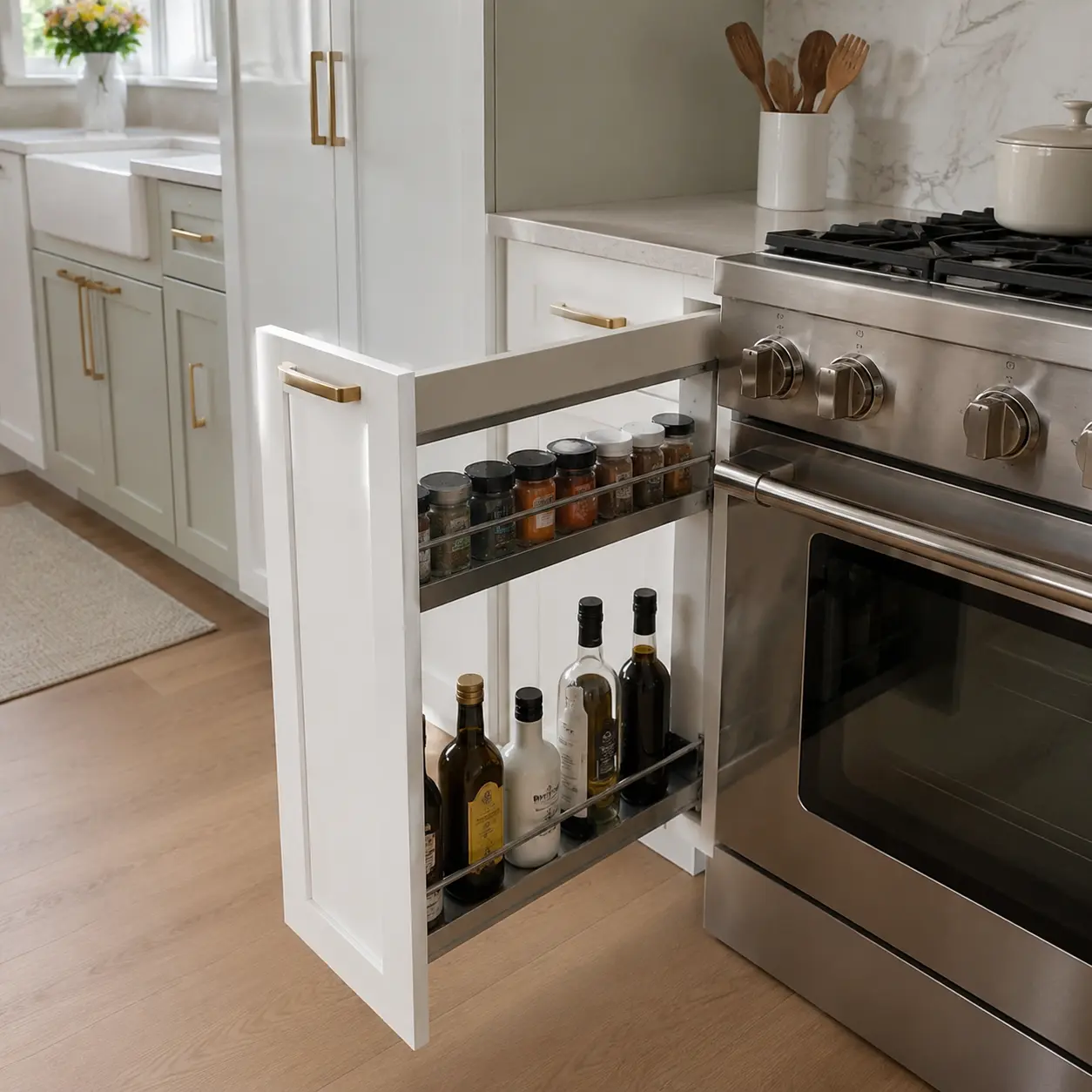
A slim gap beside the range can hold more than a decorative filler panel.
A pull-out cabinet between 6 and 9 inches wide keeps oils, vinegars, and frequently used spices upright and visible.
Choose an insert with raised metal rails so narrow bottles do not tip when the cabinet moves.
Heat-sensitive oils still need a little distance from a range that becomes hot along its outer wall.
When that location is unsuitable, the same narrow unit works well beside the refrigerator for foil, wraps, and baking sheets.
4- Wide Drawers Instead of Lower Doors
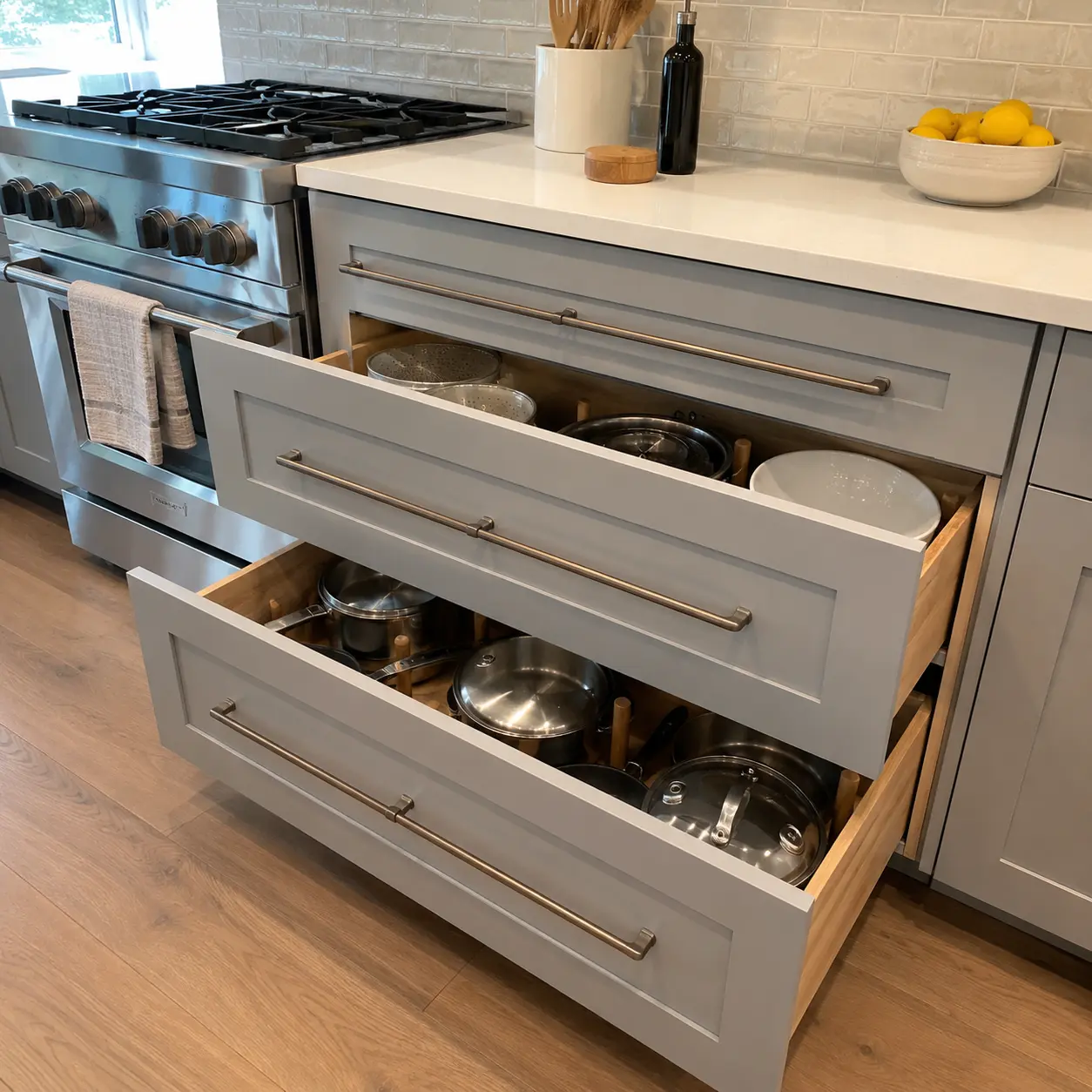
Lower cabinet doors often hide a fixed shelf that requires crouching and searching.
Two or three wide drawers can separate pots, bowls, and lids while keeping every layer visible from above.
A 30-inch drawer base is wide enough for many cookware sets when the bottom drawer uses sturdy full-extension runners.
Heavy pans need hardware rated for the expected load, commonly at least 75 pounds for a large drawer.
This change costs more than a removable organizer, but it makes a noticeable difference in a kitchen used every day.
5- Vertical Dividers for Trays and Cutting Boards
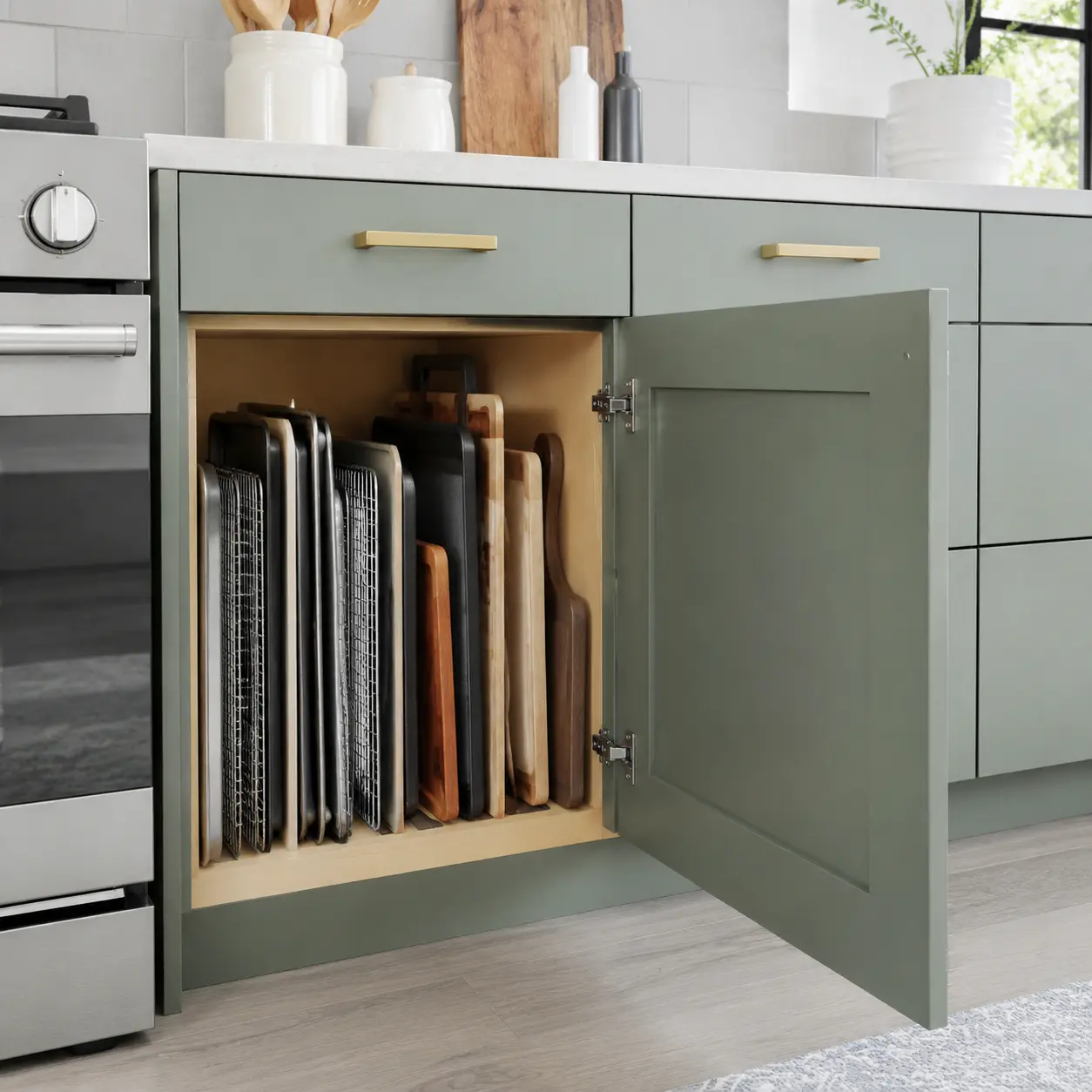
Baking sheets become noisy and awkward when they are stacked underneath heavier pans.
Vertical dividers let trays, cooling racks, cutting boards, and muffin tins slide out individually.
Allow roughly 3 to 4 inches between dividers for thin pieces and a wider section for deeper roasting pans.
A cabinet above the refrigerator is a useful candidate because flat items are easier to lift down than a heavy appliance.
For a lower cabinet, place the dividers close to the oven so the storage follows the way the kitchen is used.
6- Swing-Out Corner Cabinet Shelves
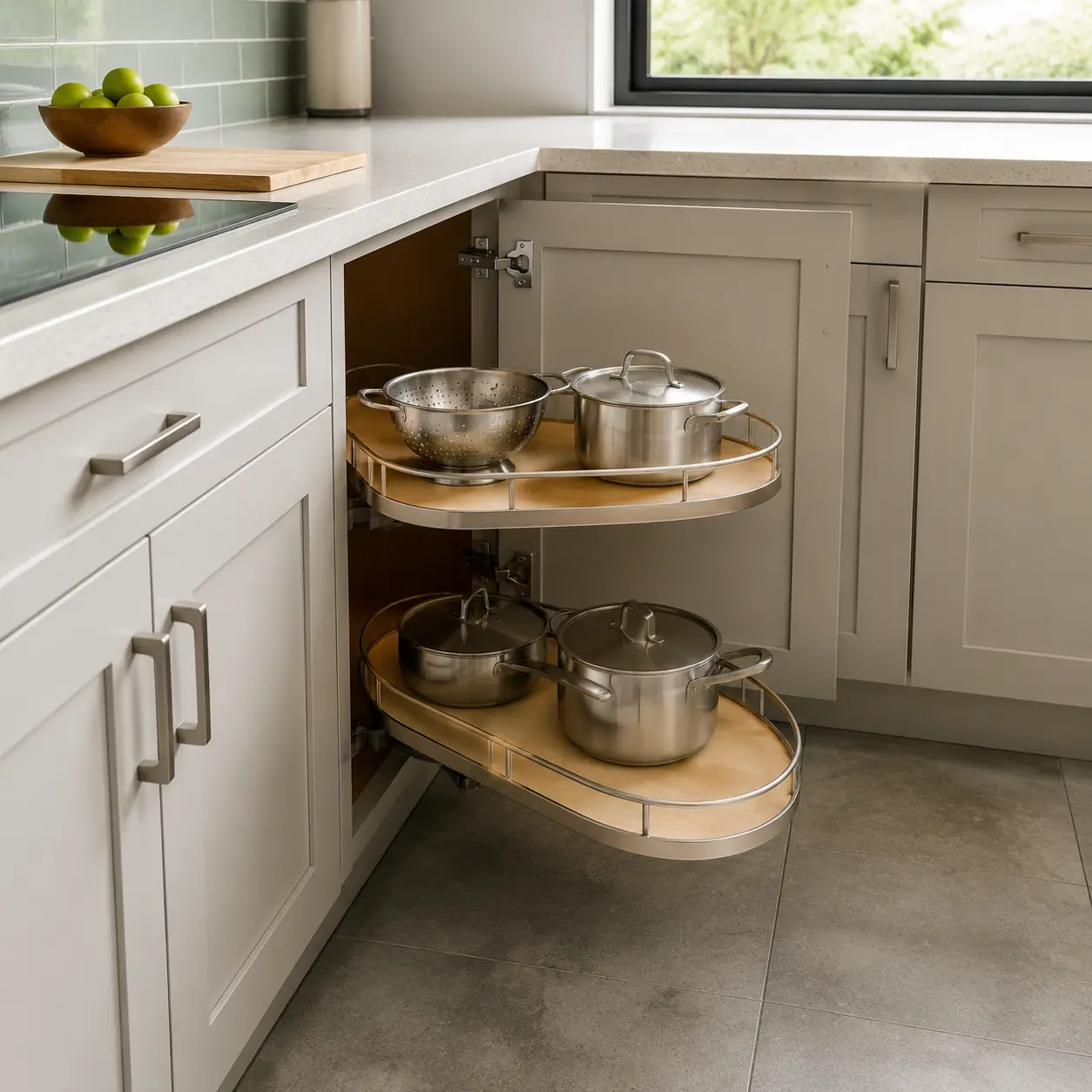
A blind corner cabinet can swallow a stockpot so thoroughly that buying another one starts to feel reasonable.
Kidney-shaped or LeMans-style shelves swing beyond the door opening and expose the deepest part of the cabinet.
Check the required door width and interior clearance carefully because corner mechanisms are not universal.
Store medium-weight cookware here rather than tiny packets that may fall around the moving hardware.
A simpler two-tier turntable is often enough when a full swing-out system does not suit the budget.
7- U-Shaped Drawers Under the Sink
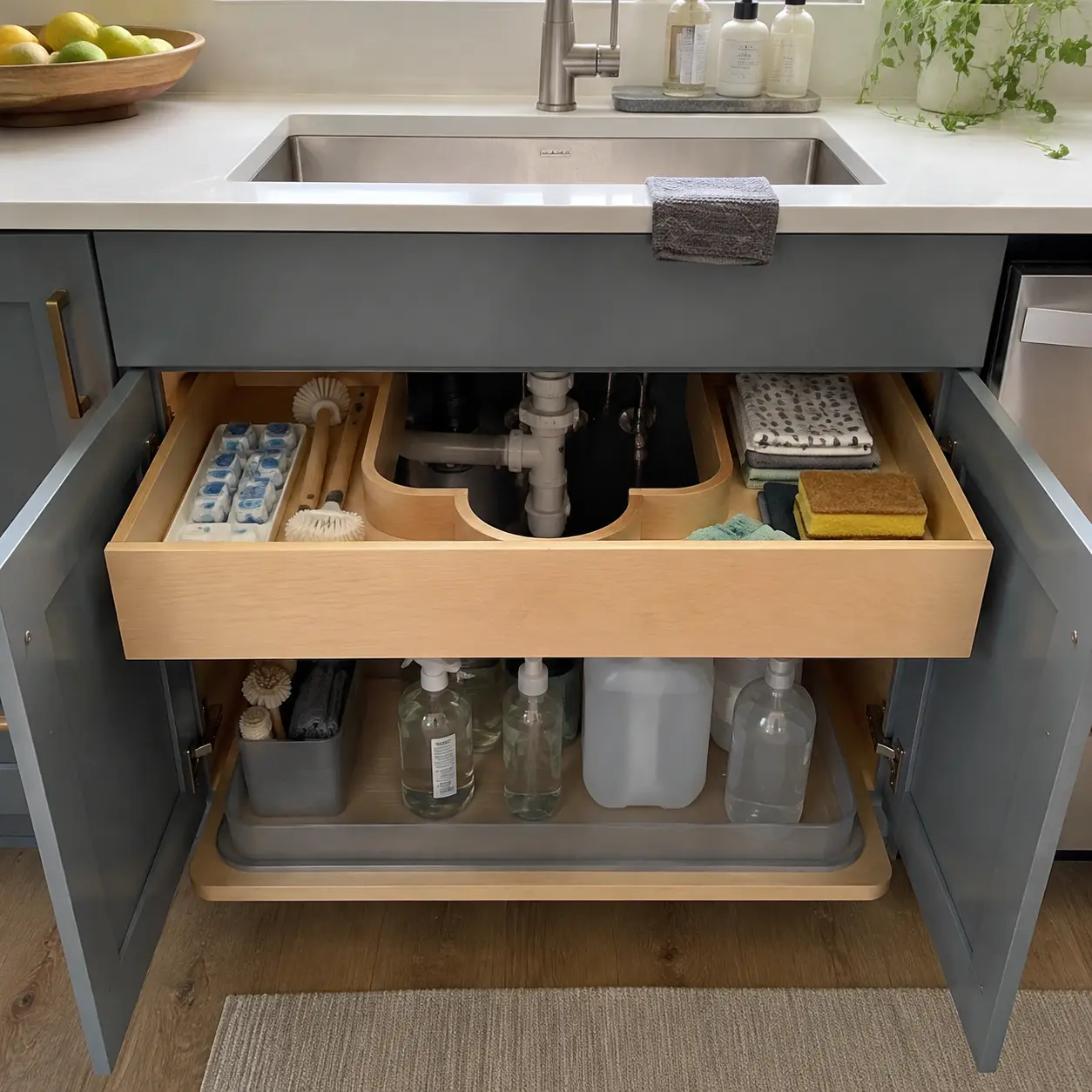
The plumbing beneath a sink leaves an annoying amount of storage that looks usable but is not.
A U-shaped drawer wraps around the waste pipe and keeps cloths, dishwasher tablets, and spare sponges near the front.
Choose a shallow top drawer for small supplies and reserve the cabinet floor for taller cleaning bottles.
A removable waterproof tray beneath the bottles makes small leaks much easier to notice and clean.
The arrangement works only after measuring the trap, disposal unit, and water lines rather than assuming the center is clear.
8- Toe-Kick Drawers for Flat Kitchen Items
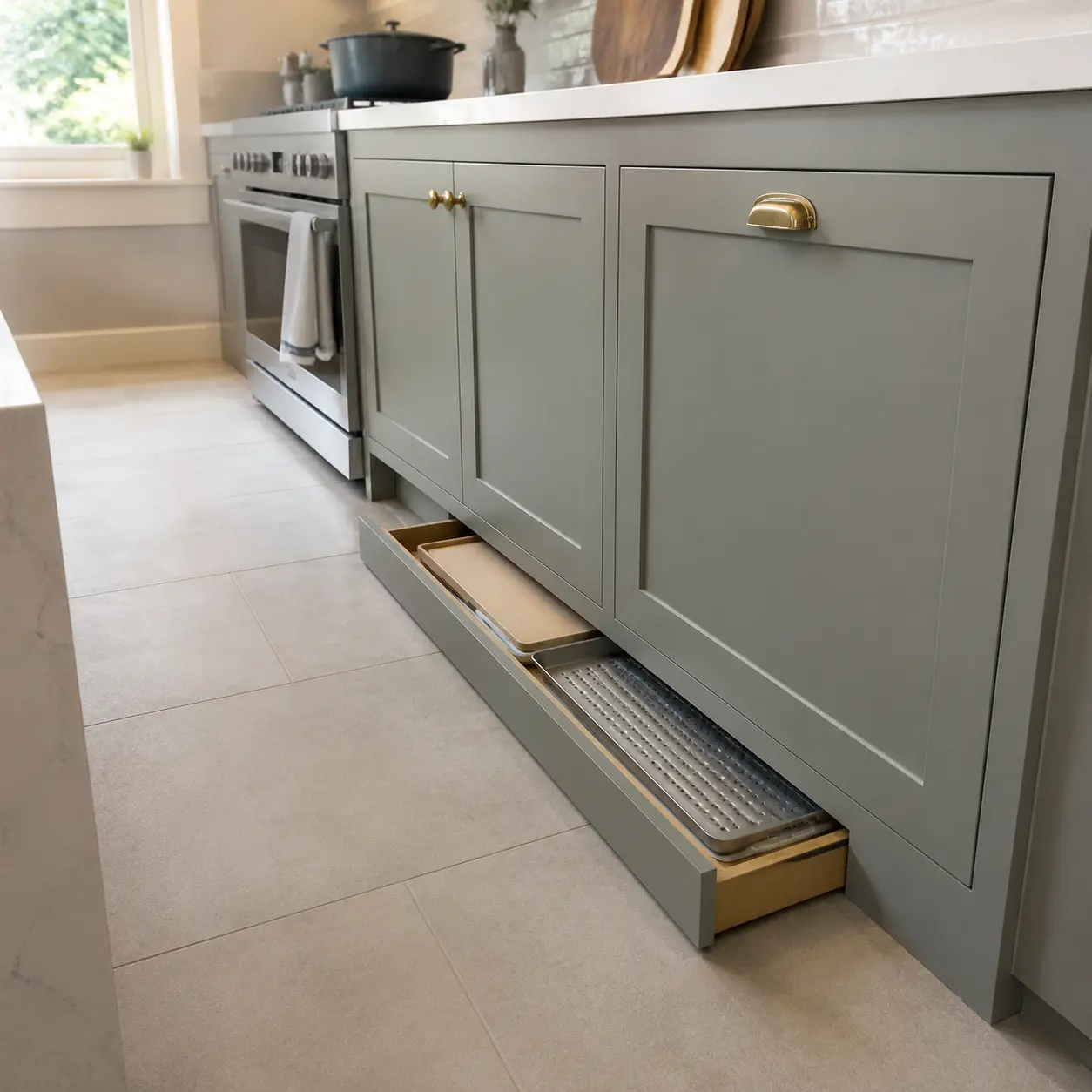
The recessed base below the cabinets is rarely considered storage, even in a very small room.
A toe-kick drawer can hold baking trays, placemats, serving boards, or a folding step stool without taking space from the main cabinets.
Most toe-kick areas are only about 4 inches high, so the drawer needs low-profile runners and a carefully fitted front.
A push-latch opening keeps handles away from feet and preserves the clean cabinet line.
This is usually easiest to include during a renovation, since retrofitting may disturb the existing cabinet base.
9- Cabinet Door Storage for Small Supplies
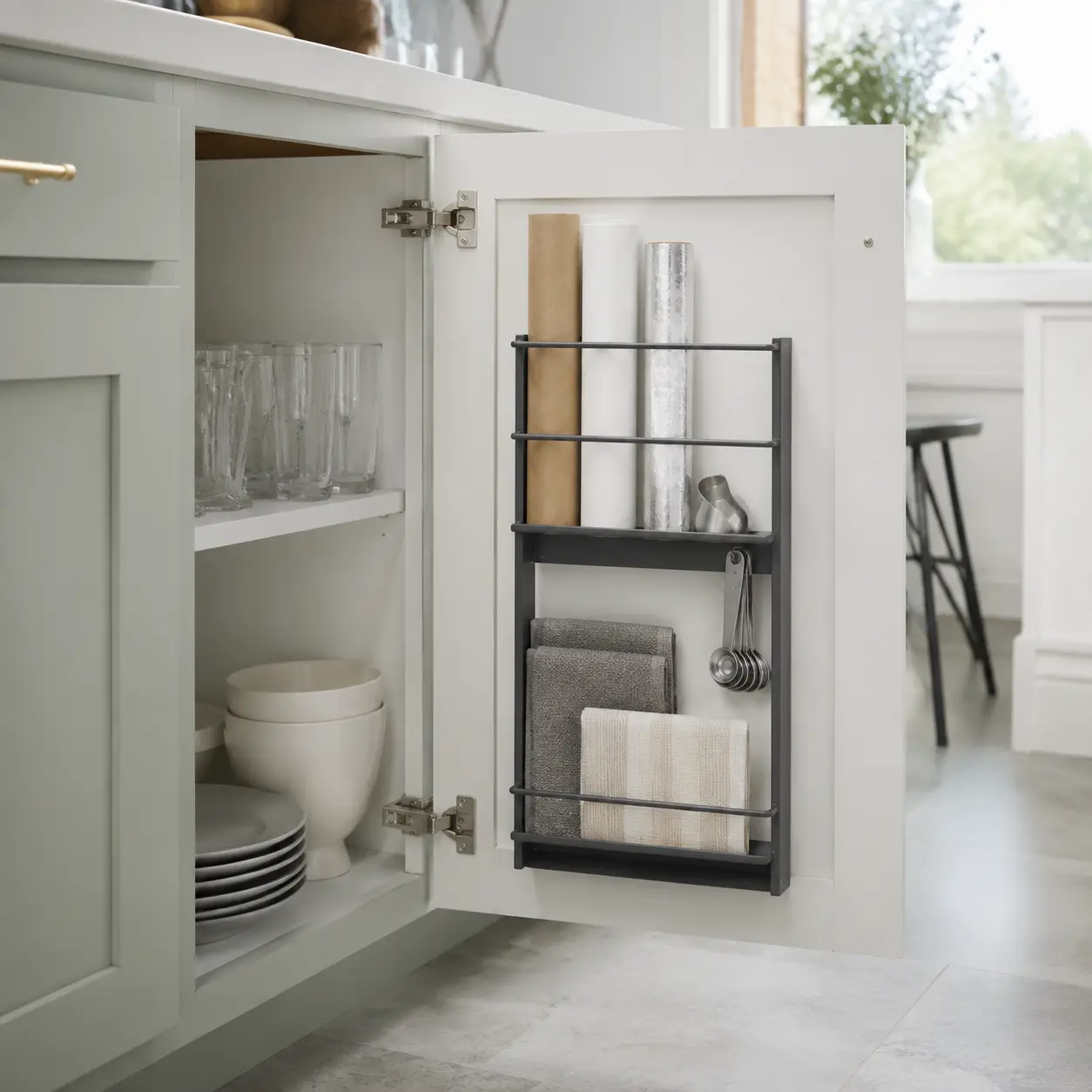
The inside of a cabinet door can store light items that otherwise drift around a shelf.
A slim powder-coated rack works for food-storage lids, measuring spoons, cleaning cloths, or rolls of foil.
Keep the organizer shallower than 3 inches unless there is generous clearance between the closed door and the shelves.
Short screws must stay within the thickness of the door, while removable adhesive fittings suit rentals and lighter loads.
Close the door slowly the first time to confirm the rack does not meet a shelf edge or hinge.
10- Shelf Risers for Plates and Mugs
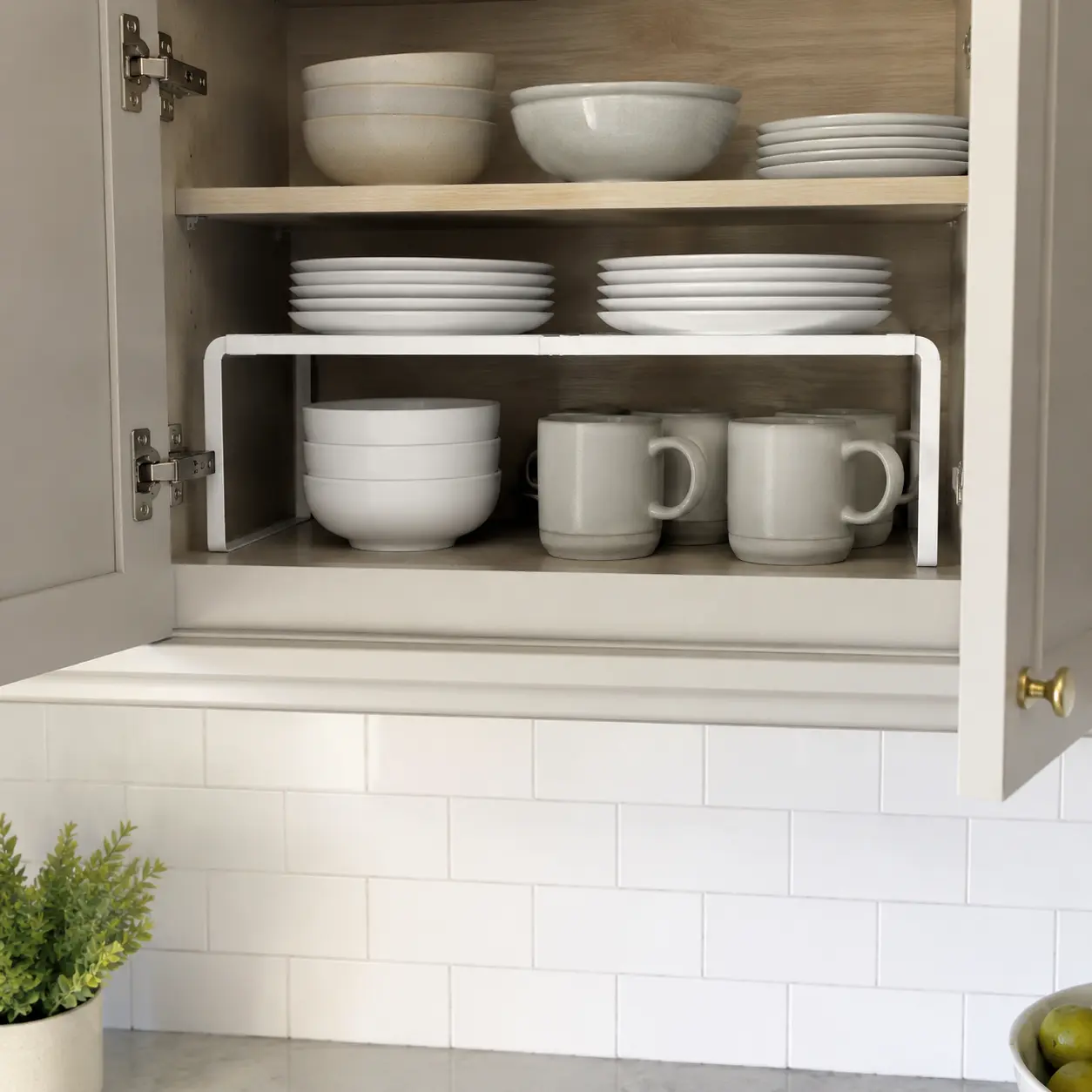
A tall gap above one stack of plates is wasted space that can be fixed without changing the cabinet.
A freestanding metal shelf riser creates a second level for bowls, side plates, or matching mugs.
Choose a riser around 5 to 6 inches high and slightly narrower than the cabinet interior.
Non-slip feet matter because a lightweight rack that shifts every time a mug is removed quickly becomes irritating.
Keeping similar items on each level makes the extra shelf useful rather than simply creating two layers of clutter.
11- Appliance Cabinet With Pocket Doors
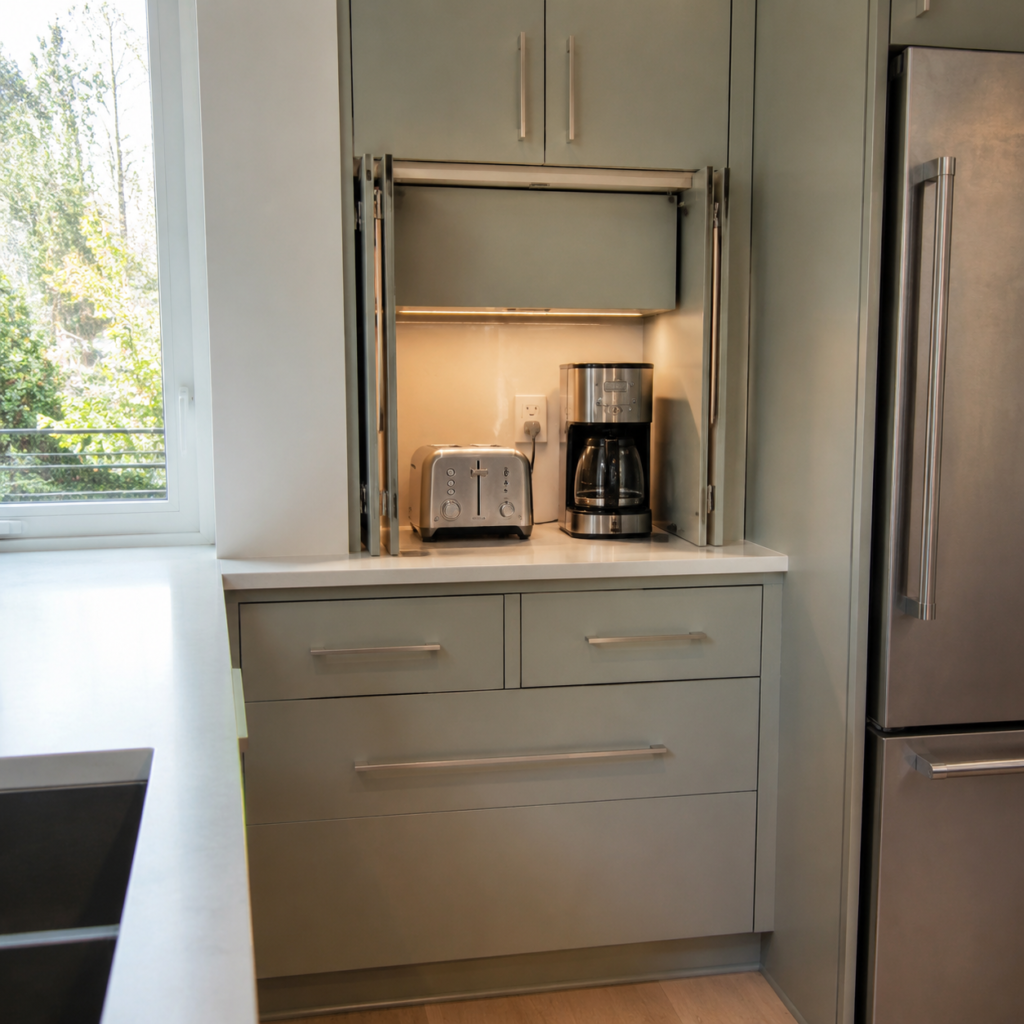
A toaster and coffee machine can consume most of the preparation space in a compact kitchen.
An appliance cabinet keeps them at counter height while pocket or lift-up doors move completely out of the working area.
Plan an interior depth of at least 18 inches for many small appliances, then confirm the actual machine dimensions and ventilation requirements.
Electrical outlets should be installed by a qualified professional and positioned where cords cannot touch hot surfaces or moving doors.
The cabinet is most useful when the appliance can operate safely in place instead of being lifted out for every use.
Choose Better Access Before Adding More Storage
A small kitchen does not always need more cabinets as much as it needs better access to the cabinets it already has.
Start with the cupboard that causes the most bending, stacking, or searching during an ordinary week.
A shelf riser or door rack may solve that problem, while a future renovation can reserve drawers and pull-outs for the harder spaces.
The kitchen feels roomier when reaching one pan no longer requires moving three others first.

Hi, I’m Alizabeth, the creator of Pretty Home Hacks. I share practical home decor ideas, easy DIY projects, organization tips, and budget-friendly ways to make your home feel more beautiful and functional. From small room updates to everyday home hacks, my goal is to share approachable ideas you can actually use in your own space.