


10 English Countryside Interior Ideas That Bring That Cozy Old World Feeling Into a Modern Home
There is something about the English countryside aesthetic that people keep coming back to, even when their home is a newer build with flat ceilings and zero original features.
It is that specific feeling, warm and a little worn in, like the house has been lived in by people who actually used the rooms instead of styling them for a photo.
Most people assume getting that look means buying a cottage or gutting a room, which is obviously not realistic for most households.
The thing is, a lot of what makes English countryside interiors feel the way they do comes down to materials, layers, and a few specific choices that work in almost any space.
These ten ideas are the ones that actually translate to modern homes without looking like a theme park version of the real thing.
1- Reclaimed Wood or Flagstone Style Flooring
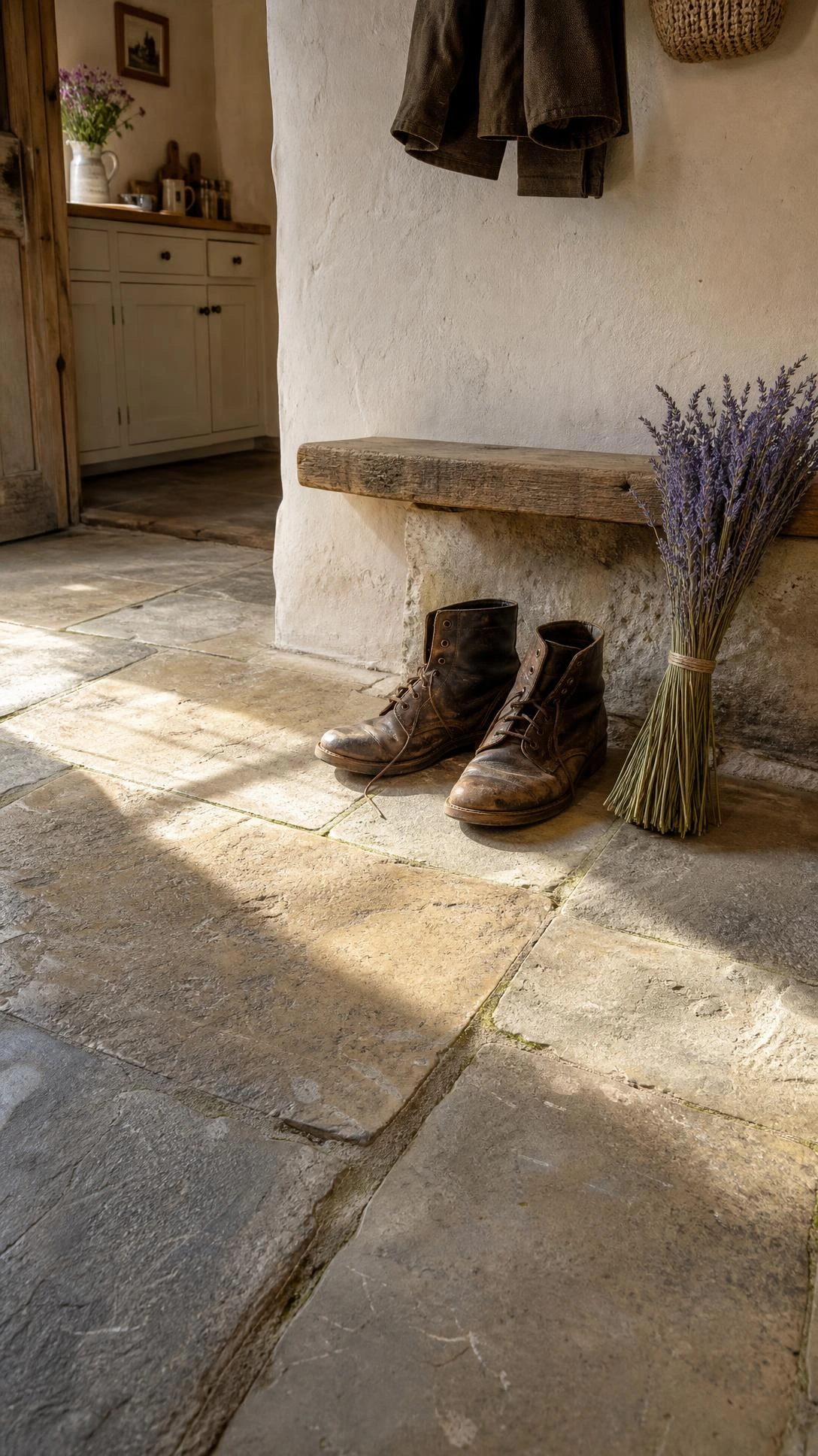
Flooring is where the whole look either holds together or falls completely flat.
Natural materials like reclaimed oak planks or flagstone-effect porcelain tiles do most of the work before a single piece of furniture goes in the room.
Wide plank flooring in a warm honey or aged chestnut tone reads as far more countryside than narrow strip laminate, even if both are technically wood toned.
For rooms where real stone is not practical, large format porcelain in a slate grey or warm buff works surprisingly well and is a lot easier to maintain than actual flagstone.
The goal is just to get away from anything that looks too uniform or too shiny, because that is what makes a floor feel modern in a way that fights the rest of the look.
2- Exposed Ceiling Beams in Dark Wood
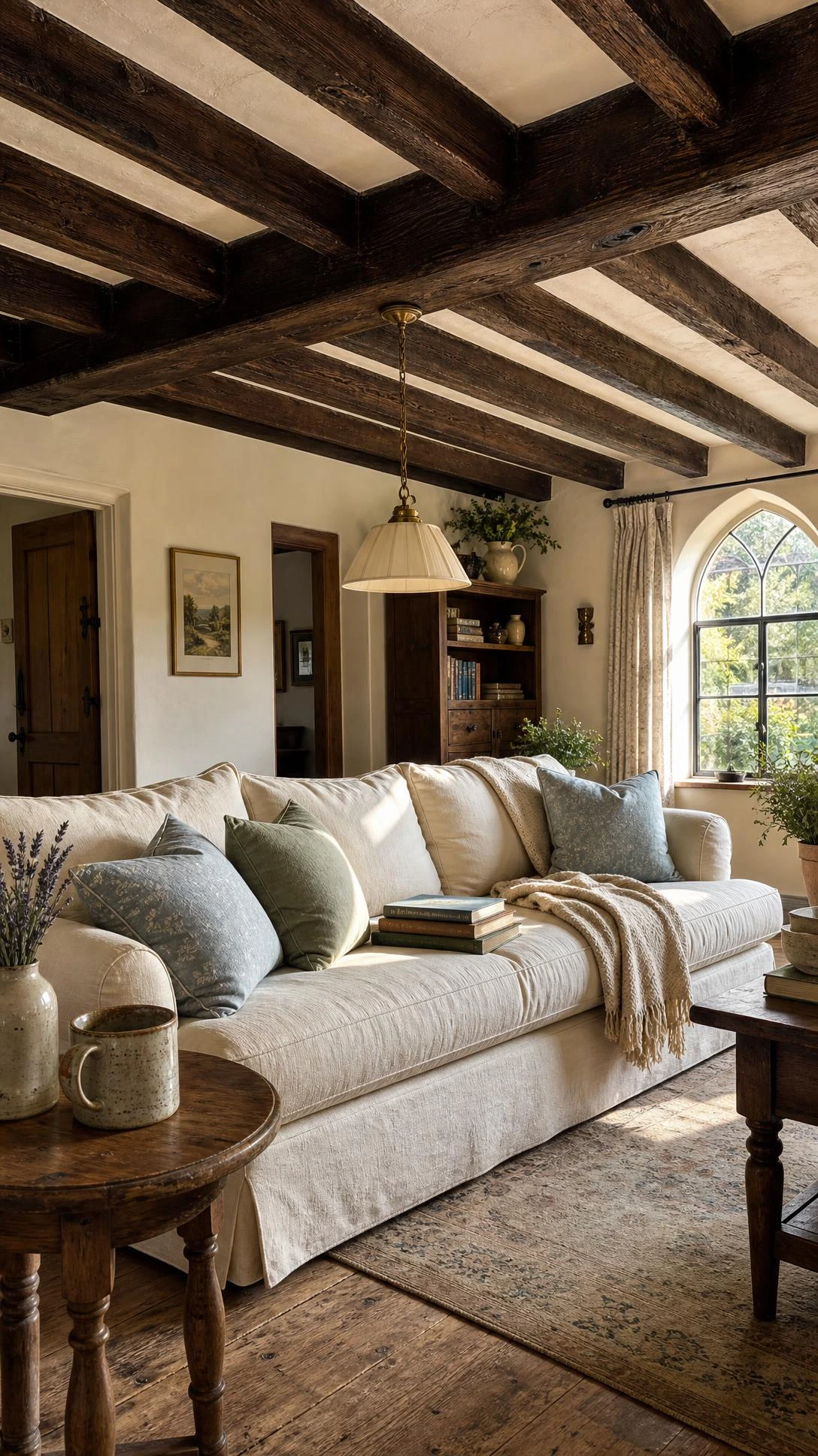
Dark wooden beams running across a ceiling are probably the single fastest way to give a room that classic English countryside character.
Original beams are obviously ideal, but most people are not lucky enough to have them, and faux beams have gotten genuinely good in recent years.
Lightweight polyurethane beams in a dark walnut or weathered oak finish install without structural work and are hard to tell apart from the real thing once they are up.
The one thing that matters here is the wall color underneath them, because dark beams against a stark white ceiling can feel a bit stark and commercial.
Off white, warm cream, or a very soft limewash finish is what makes the beams settle into the room instead of competing with everything else.
3- Layered Wool and Linen Textiles
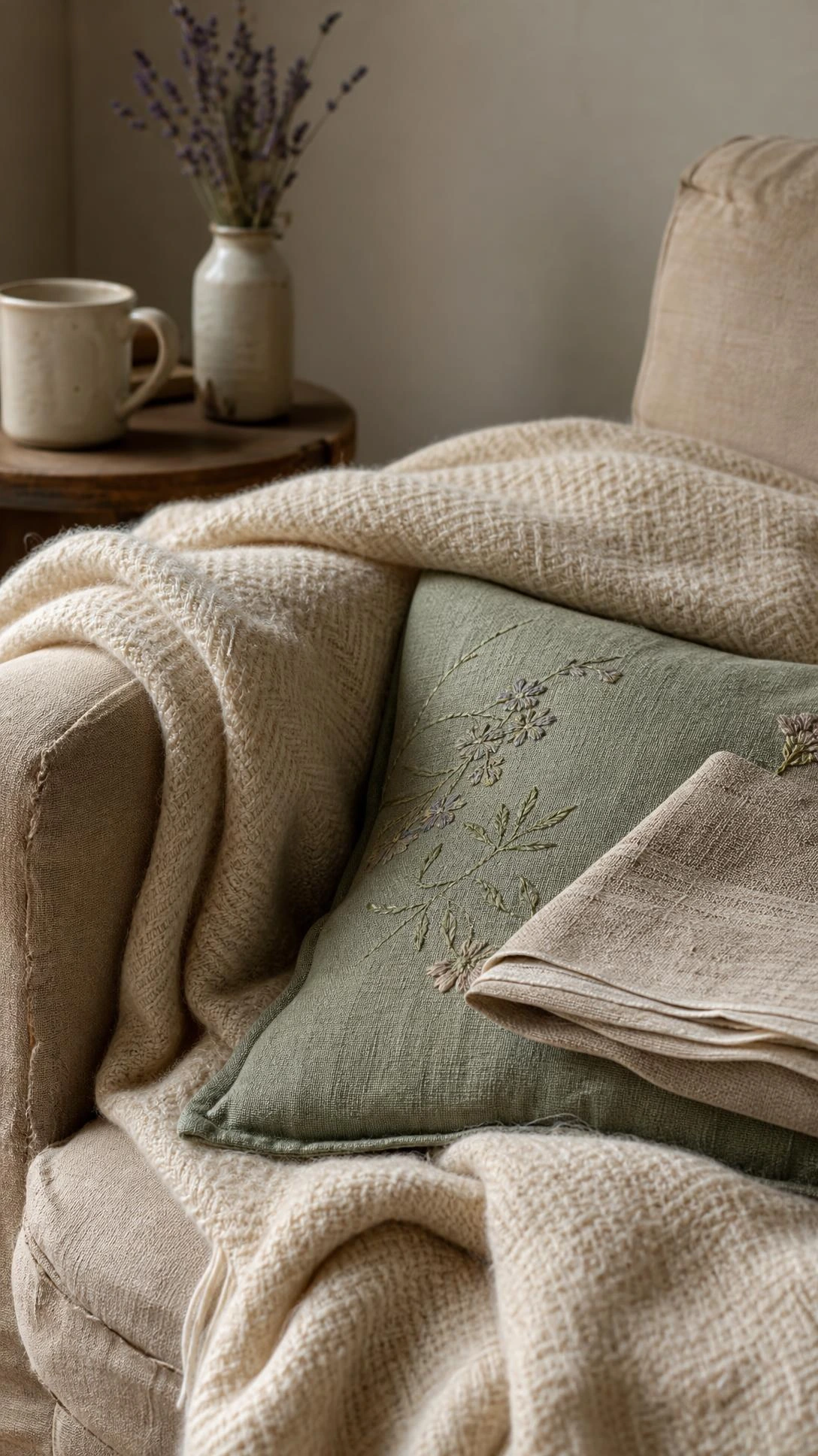
Nobody really talks about how much of that cozy countryside feeling comes from textiles rather than furniture or paint.
The layering is what does it, wool throws over linen sofas, quilted cushions stacked with plain ones, a heavier curtain with a sheer underneath.
Wool is the material that anchors this look more than anything else, and a chunky knit throw in oatmeal, rust, or deep forest green costs around fifteen to thirty dollars and does a lot of heavy lifting.
Linen curtains in a natural undyed shade let in soft light without looking too modern or too stark, which is a balance that is harder to get right than it sounds.
Mixing textures matters more than matching colors perfectly, so a mohair cushion next to a plain linen one is exactly the kind of combination that makes a room feel collected rather than styled.
4- Muted Earthy Wall Colors
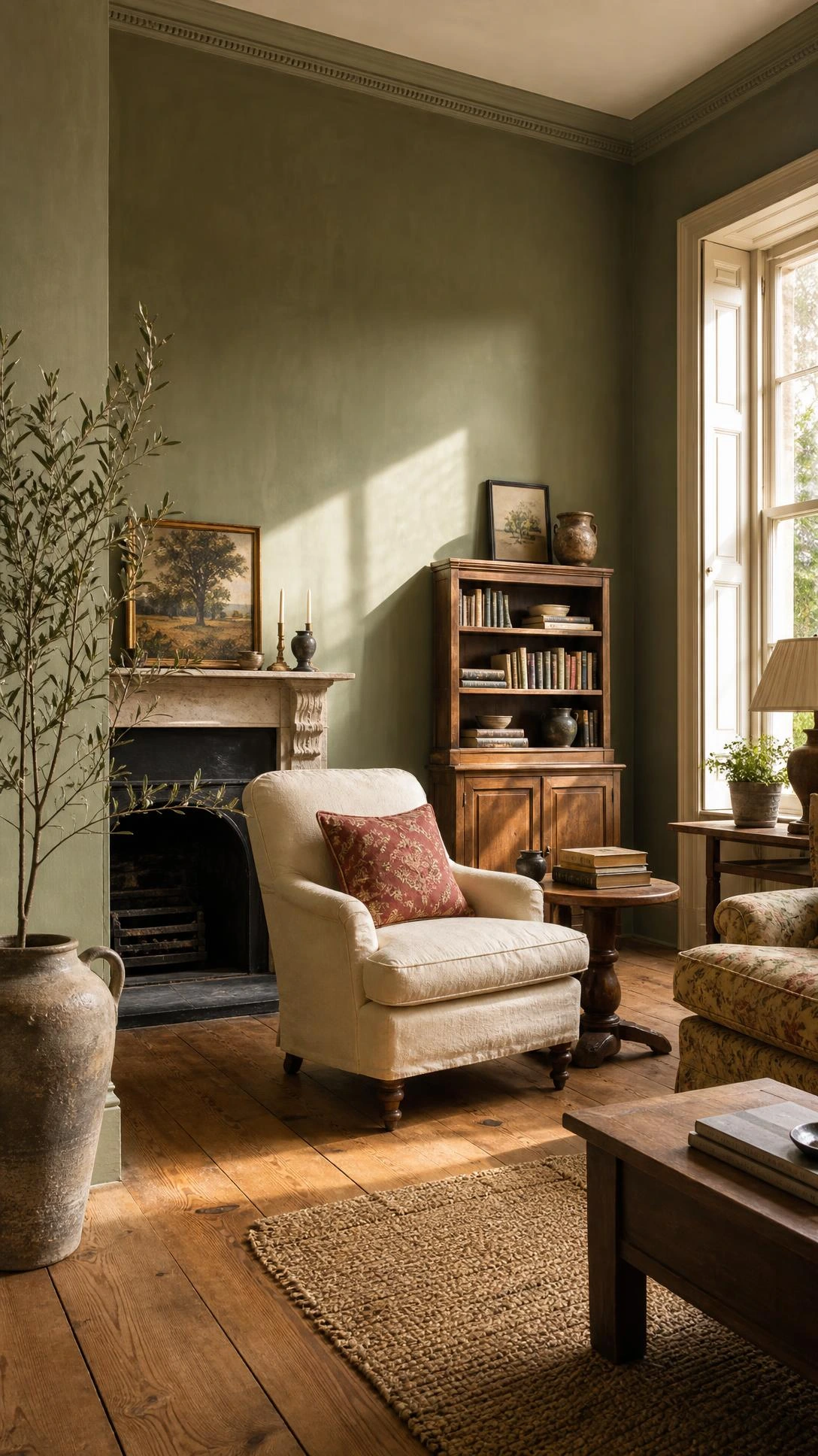
English countryside interiors almost never use bright white walls, which is the first thing worth knowing if the current room feels a bit too sharp and modern.
The palette that actually works is warm creams, muted sage greens, dusty blues, and soft terracotta tones, nothing saturated, nothing that reads as a trend color.
Farrow and Ball’s “Mole’s Breath” or “Elephant’s Breath” are both endlessly referenced for good reason, but similar tones from any brand in the greige or warm grey family get the same result for less money.
Limewash paint is worth considering if the walls are in decent condition because the slightly uneven, chalky finish it creates looks like it belongs in a centuries old farmhouse even on a perfectly flat modern wall.
I think the color choice is where people overthink it most, because almost any warm muted tone will work better than a cool grey or bright white in a room going for this feeling.
5- Floral Upholstery and Vintage Print Curtains
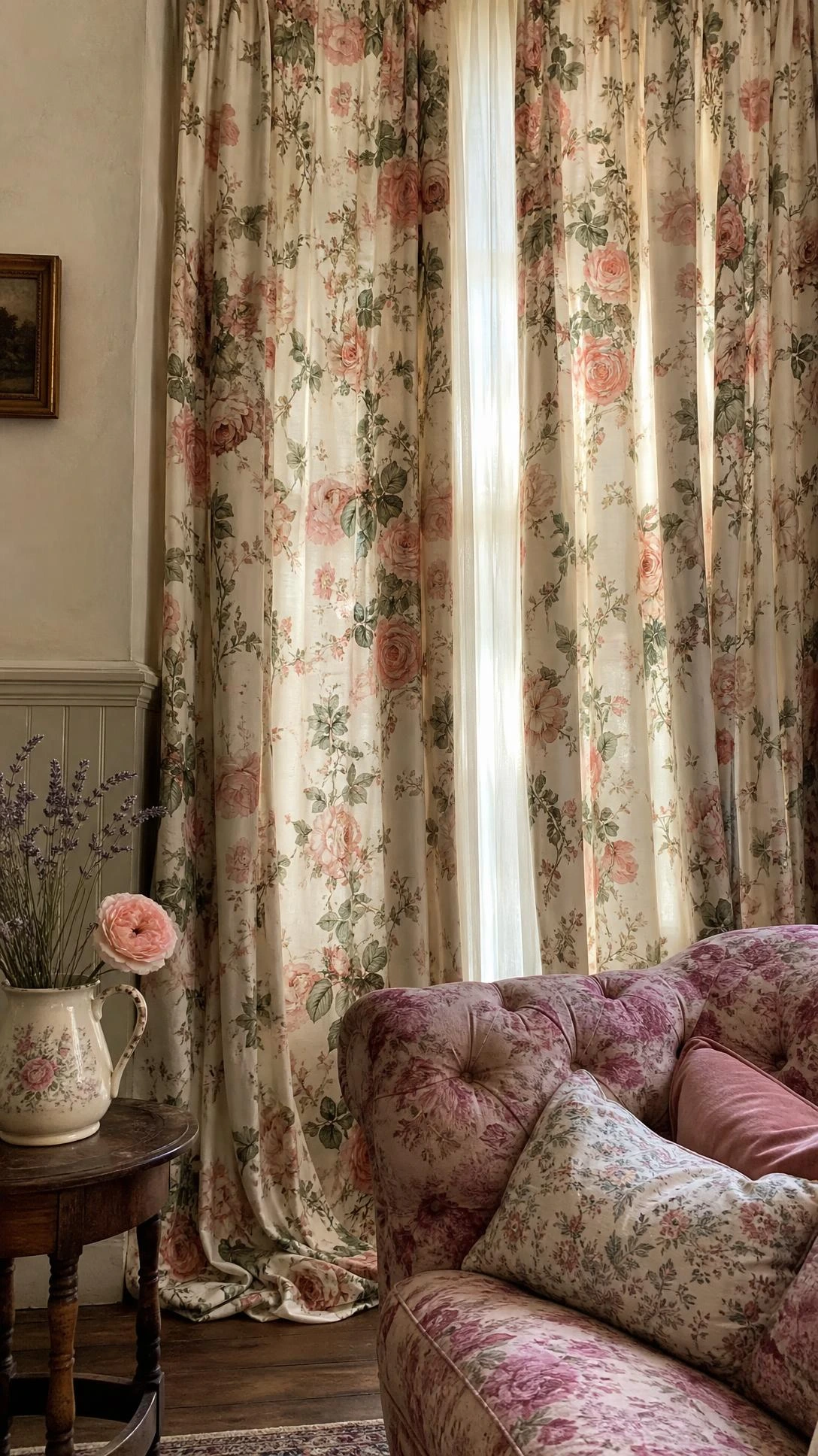
Floral fabric is the thing people either avoid completely or go too far with, and the difference between charming and overwhelming is mostly about scale and restraint.
One or two pieces in a soft vintage floral, a pair of curtains, an armchair, or a single sofa, is enough to anchor the look without making the room feel like a garden centre.
The prints that work best are faded, slightly muted florals in dusty pink, sage, cream, and soft blue rather than anything bright or graphic.
Mixing floral pieces with solid linen or cotton upholstery in a neutral tone keeps the balance right and prevents the room from looking too busy or themed.
Sanderson and Liberty both do classic English floral prints that photograph beautifully, but similar styles turn up regularly at HomeGoods and on Etsy for a fraction of the price.
6- Antique or Antique Style Wooden Furniture
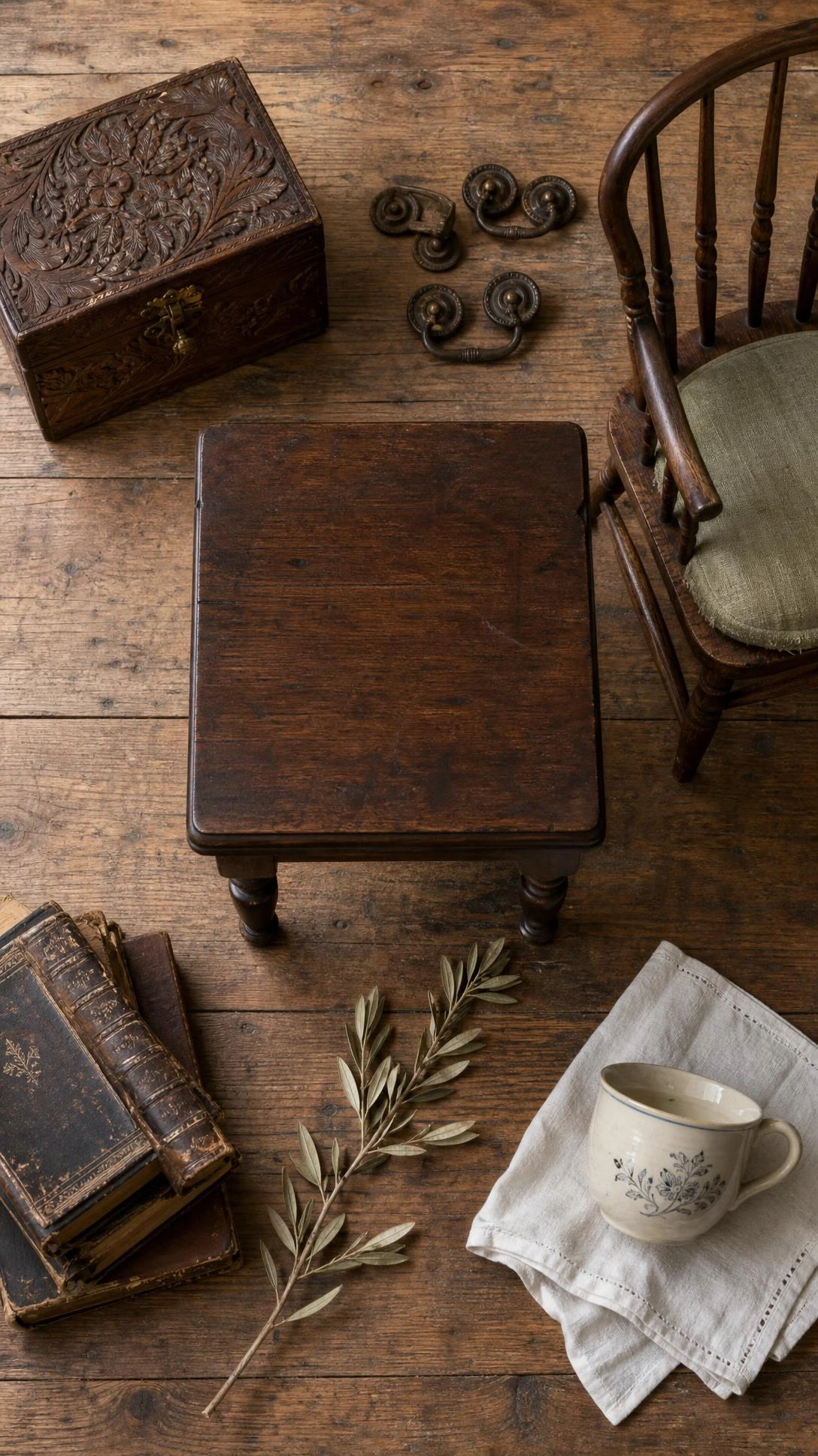
The furniture in English countryside interiors tends to look like it was collected over time rather than bought as a matching set, which is actually easier and cheaper to achieve than buying everything new.
A single piece with aged wood, carved details, or curved legs, even just a side table or a small chest of drawers, shifts the whole feeling of a room noticeably.
Second hand shops, estate sales, and Facebook Marketplace are where the most interesting pieces turn up, usually in dark oak, pine, or mahogany for somewhere between twenty and a hundred dollars.
The worn edges and slightly imperfect finish on an older piece is exactly what makes it feel right in this kind of interior, so sanding it back or repainting it defeats the purpose.
Mixing one or two genuinely old pieces with newer furniture is the approach that works best because it feels layered rather than like a staged period room.
7- Traditional Wall Paneling or Wainscoting
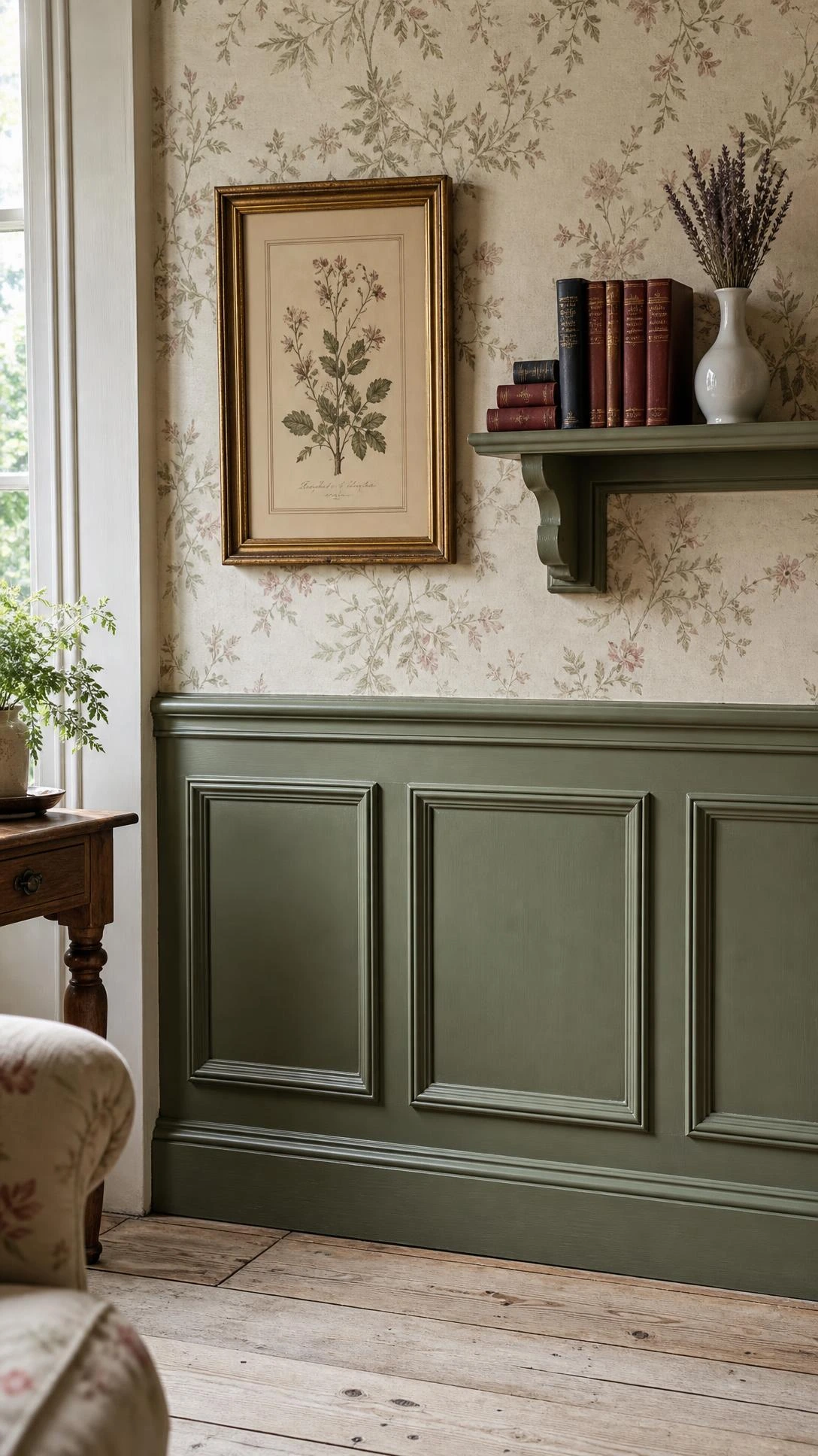
Wall paneling is one of those details that people walk past in older homes and notice without quite realizing what it is that makes the room feel so grounded.
Classic wainscoting, the kind that runs from the floor up to roughly chair height, adds an architectural quality that makes a plain modern room feel like it has some history behind it.
Peel and stick paneling kits have gotten much better in the last few years and a basic shiplap or raised panel kit for one wall typically runs between fifty and one hundred and fifty dollars depending on the room size.
Painting the paneling in a color slightly deeper than the wall above it, like a soft sage below a warm cream, creates a grounded layered effect that reads as classic English without looking too formal.
One wall is usually enough, and it works especially well in a dining room, hallway, or bedroom where the paneling becomes a quiet backdrop rather than the whole focus of the space.
8- Botanical Prints and Framed Nature Illustrations
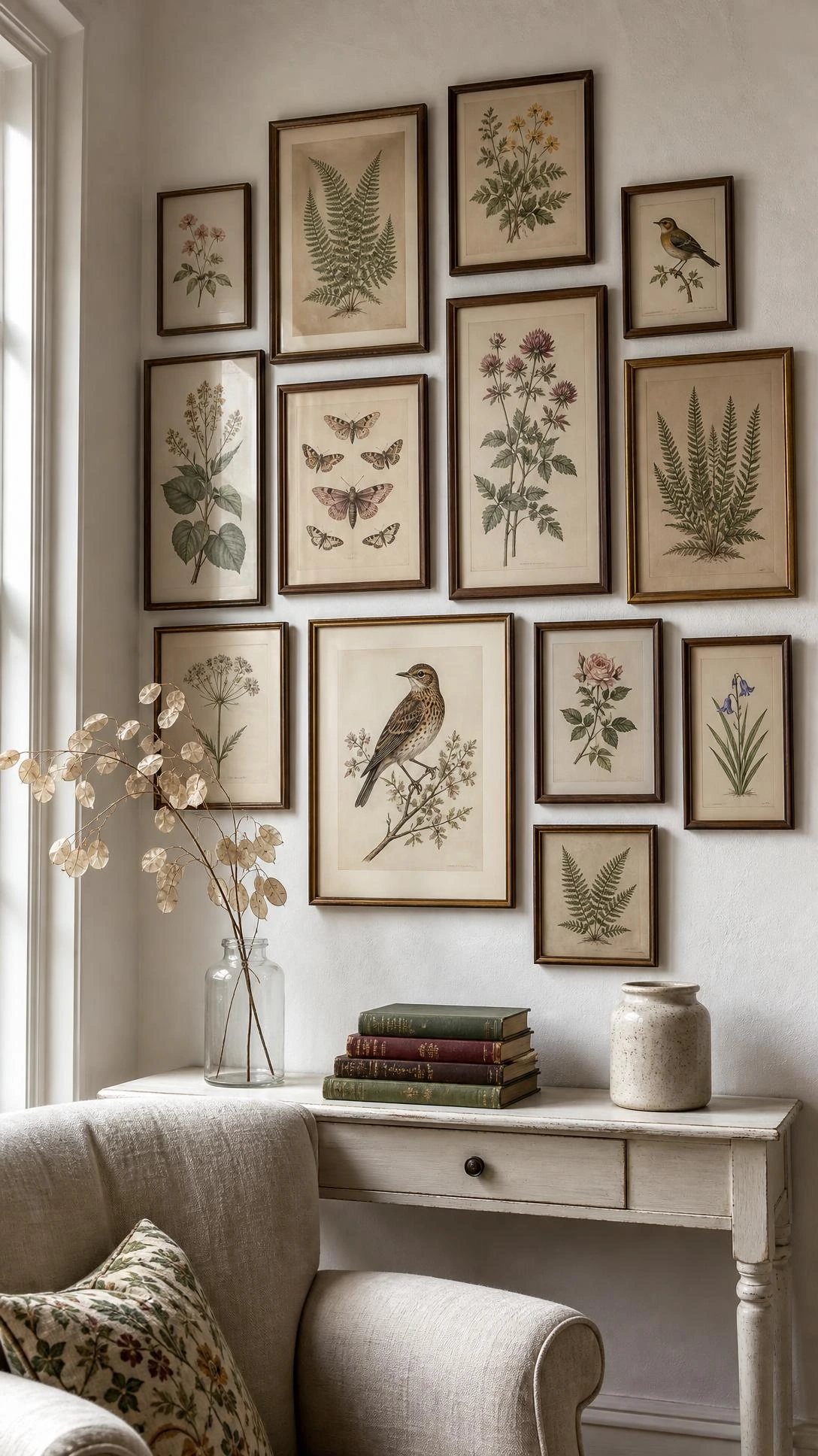
Botanical prints are one of the most consistently used details in English countryside interiors, and they work because they bring in a nature reference without needing actual plants that need watering.
Vintage style illustrations of flowers, birds, ferns, or herbs in simple frames have a specific quality that fits this look, especially when they are slightly aged looking rather than crisp and graphic.
Etsy has a huge range of printable vintage botanical illustrations for around two to five dollars each, and printing them at home or through a print shop and framing them in simple dark wood frames looks intentional and unhurried.
Grouping three to five prints in slightly mismatched frames works better than a perfectly symmetrical grid because the slight randomness is part of what makes it feel collected rather than decorated.
They work particularly well in a kitchen, a bathroom, or a hallway where the walls are small enough that a couple of prints can fill the space without needing a whole gallery.
9- A Window Seat With Layered Cushions and Throws
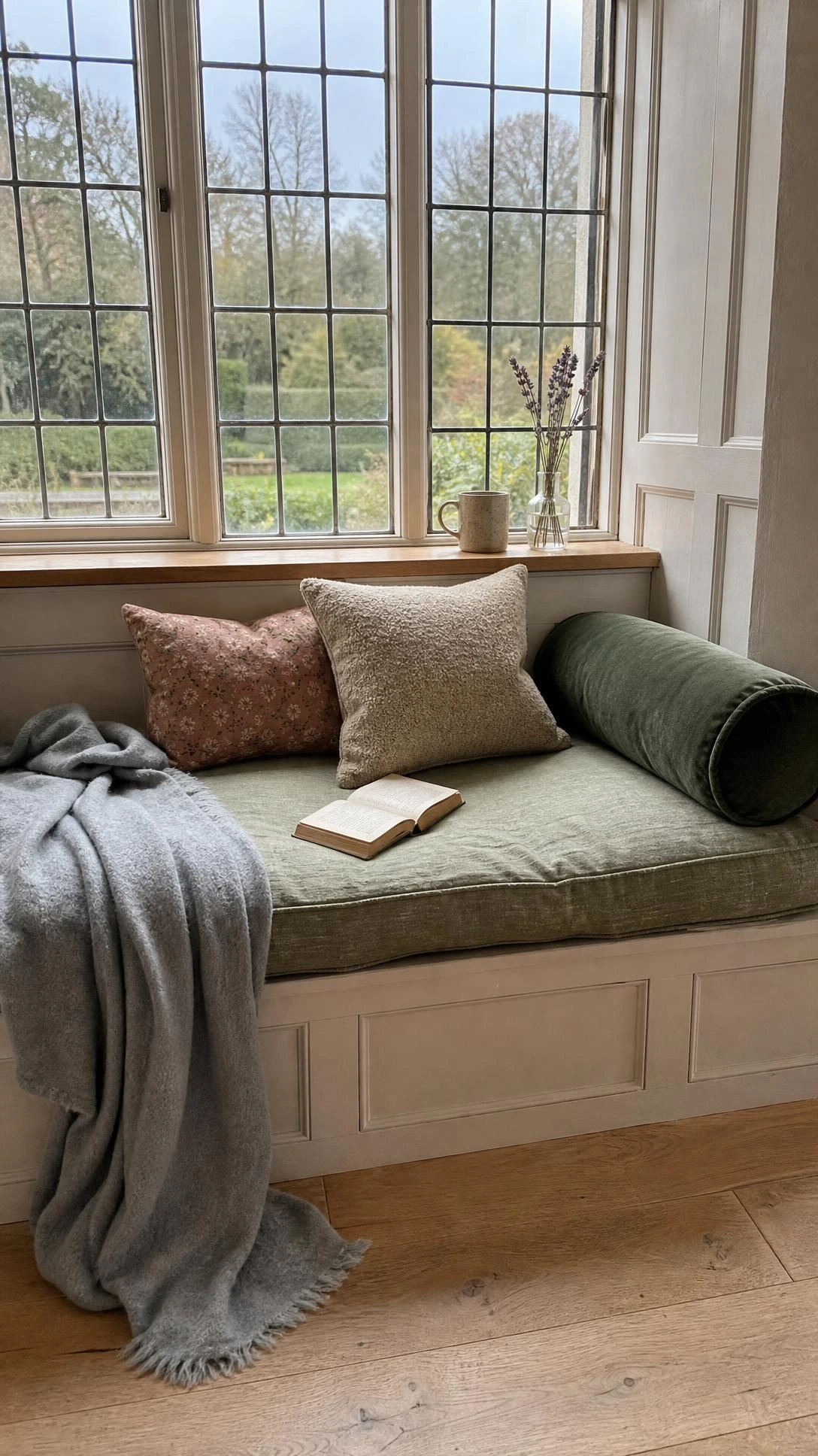
Window seats show up in almost every English countryside interior that people save on Pinterest, and the reason is that they look effortlessly livable in a way that most furniture does not.
Not every home has a bay window or a deep sill to work with, but a low built in bench under any window with a cushion and a few throws achieves the same feeling for far less than it looks like it costs.
A custom cushion in a thick cotton or wool blend in a warm stripe or plain earthy tone is the detail that makes the seat feel considered rather than improvised, and most upholstery shops can cut a simple bench cushion for around forty to eighty dollars.
Layering a couple of linen or quilted cushions in different sizes against the wall and draping a wool throw over one end is the finishing touch that makes the seat look used and inviting rather than staged.
It is one of those corners in a room that people gravitate to naturally once it exists, which is always a nice surprise in a space that previously just had a windowsill and a draught.
10- Warm Tartan or Textured Wool Rugs
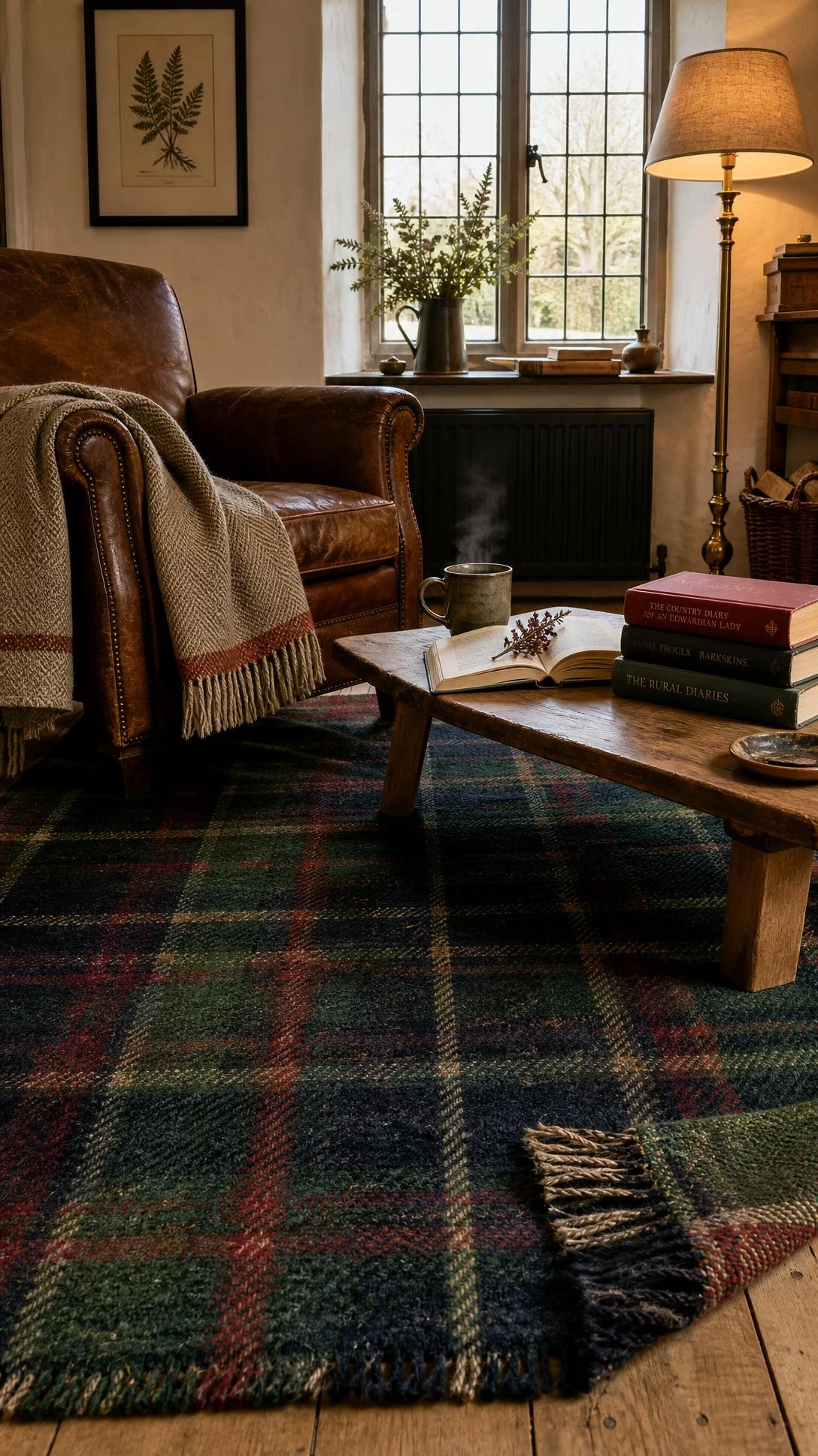
Rugs are what pull a room together in English countryside interiors, and the specific types that work are wool, textured, and warm toned rather than flat, synthetic, or cool.
Tartan in deep reds, forest green, navy, and burnt orange is the most traditional choice and it works in living rooms and bedrooms without looking costume-y as long as the rest of the room is relatively calm and neutral.
A large wool rug in a plain warm tone, something like a deep rust, dusty sage, or faded navy, does the same job with a bit less commitment and tends to work better in rooms with a lot of pattern already in the curtains or upholstery.
Layering a smaller rug over a larger natural fiber one, like a jute or sisal base with a wool rug on top, adds depth and that collected over time quality that is hard to fake with a single rug alone.
I think the rug is the most underestimated part of getting this look right because it is the thing that makes a room feel warm underfoot in a way that nothing hanging on the walls can replicate.
Where do you want to go next?
Explore by topic
Recently viewed
The English Countryside Look in a Modern Home
None of these ideas require a period property or an unlimited budget, which is the part that tends to surprise people once they start making small changes and see how quickly the feeling shifts.
The whole aesthetic is built on layers, materials, and a slightly imperfect quality that modern interiors often lack, and most of those things are achievable through thrift shops, Etsy, and one good paint color.
Starting with the walls and the textiles before touching the furniture is usually the move that makes the biggest difference with the least amount of effort or money.
A warm muted wall, a wool throw, and one framed botanical print will do more for a room than a complete furniture overhaul, and that is probably the most useful thing to hold onto from all of this.

Hi, I’m Alizabeth, the creator of Pretty Home Hacks. I share practical home decor ideas, easy DIY projects, organization tips, and budget-friendly ways to make your home feel more beautiful and functional. From small room updates to everyday home hacks, my goal is to share approachable ideas you can actually use in your own space.