
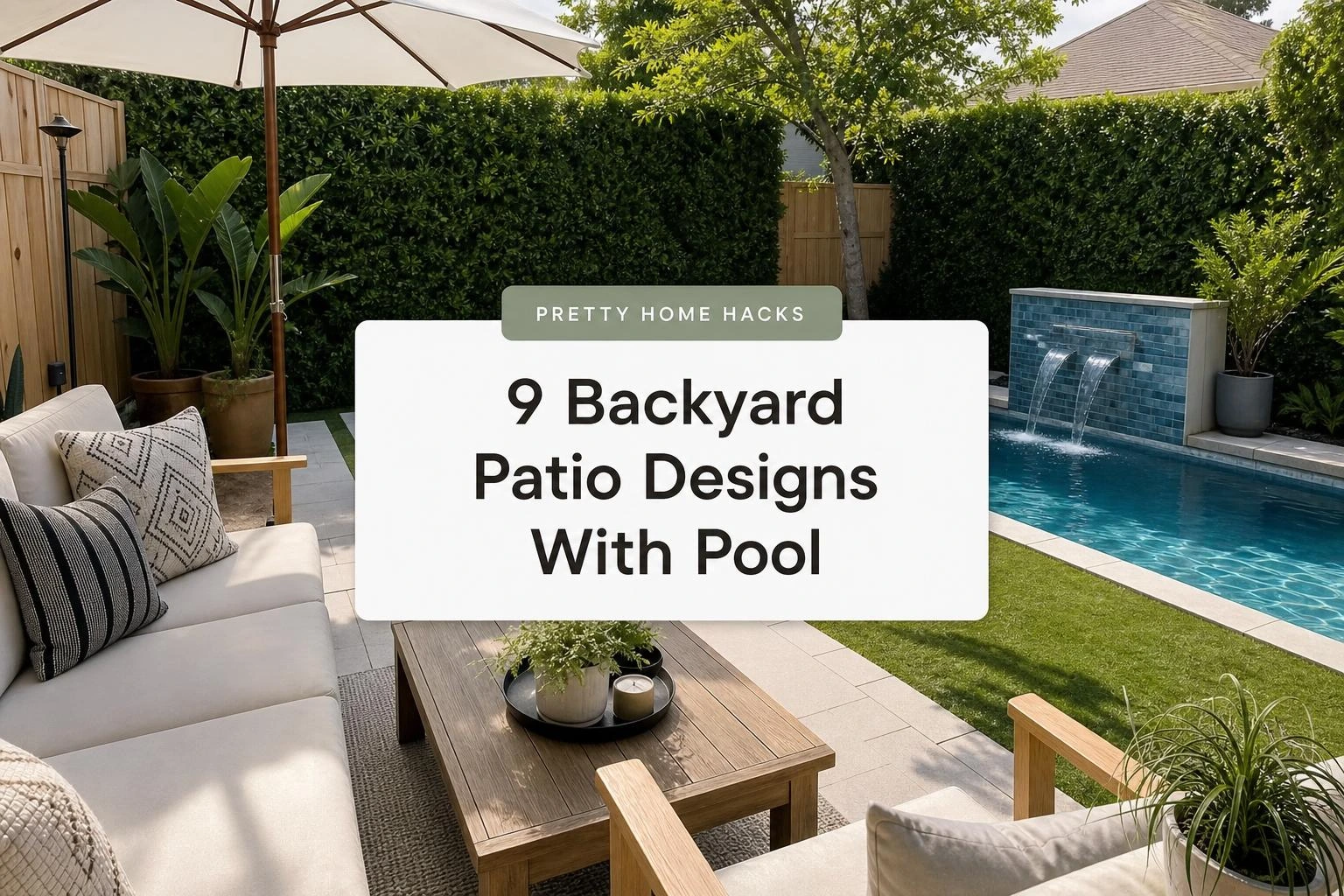
9 Backyard Patio Designs With Pool That Actually Work for Small Backyards
Small backyards and pools feel like they should be mutually exclusive, like the universe just decided you only get one or the other.
Most people with a compact yard assume a pool is off the table entirely, so they never even look into what is actually possible back there.
The frustrating part is that the internet is full of pool inspiration featuring sprawling properties with enough space to land a small aircraft, which is not exactly helpful.
Backyard patio designs with pool do not require a huge footprint to work, and some of the most livable outdoor setups are actually the smaller, more intentional ones.
These nine designs are the ones worth paying attention to if the yard is tight but the idea of having water back there is not something you are ready to give up on.
1- Plunge Pool With a Wraparound Paver Patio
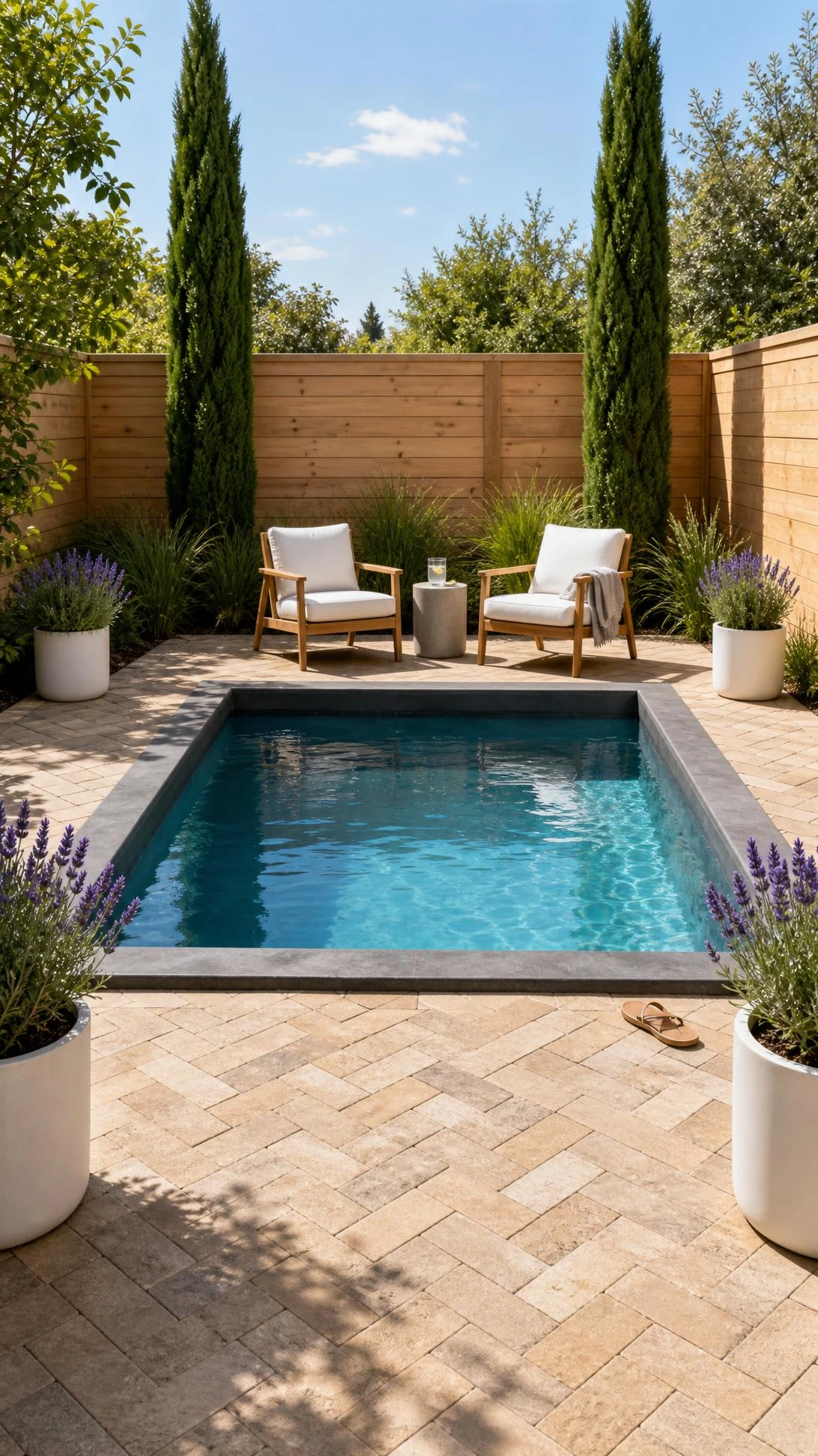
Plunge pools are exactly what they sound like: small, deep, and built for soaking rather than laps.
They typically run around 6 to 10 feet wide and 10 to 14 feet long, which means even a narrow yard can usually fit one without giving up the entire outdoor space.
Wrapping the pool in large-format concrete pavers, something in the 24×24 inch range, creates a seamless visual flow that makes the whole area feel more expansive than it actually is.
Light sand or soft cream tones work better than darker surfaces here because they reflect heat and light instead of absorbing both.
I think this setup is one of the most underrated options for small backyards because it genuinely feels like a full outdoor room rather than a pool crammed into a corner.
2- Cocktail Pool With Built-In Bench Seating
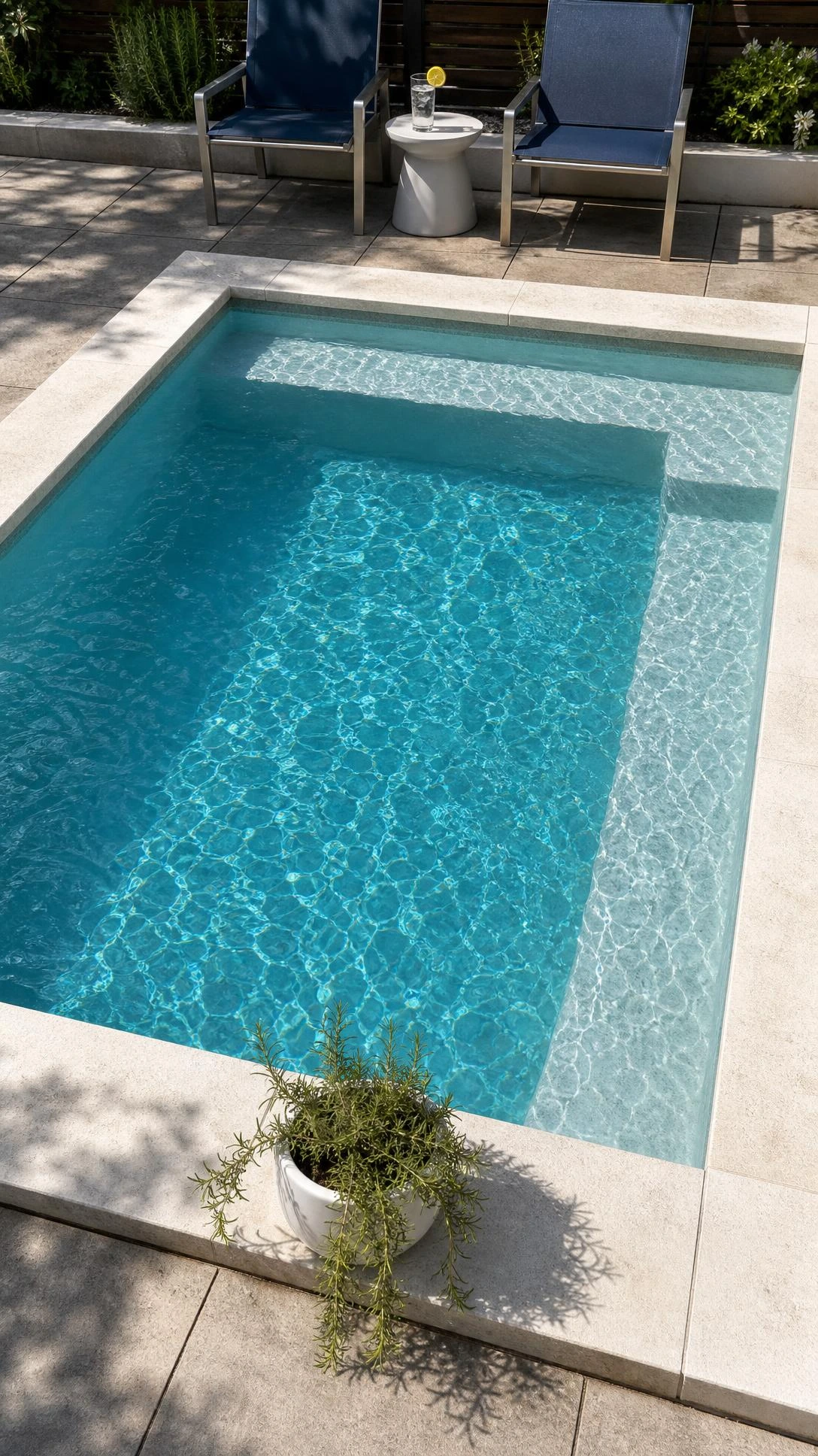
Cocktail pools are compact by design, usually no bigger than a generous hot tub footprint, but they feel like a real pool once you are actually in one.
The smart move with this style is building low bench seating directly into the pool interior along one wall, so the water doubles as both a cooling spot and a social space.
Nobody needs a dedicated lounge area and a full pool separately when both are already happening in the same 10-foot square.
Surrounding it with a narrow strip of light gray porcelain tile keeps the patio footprint tight while still giving people a clean, dry surface to step onto.
This design works especially well for people who entertain, because guests naturally gather around the water without needing much room to do it.
3- Single Surface Run From House to Waterline
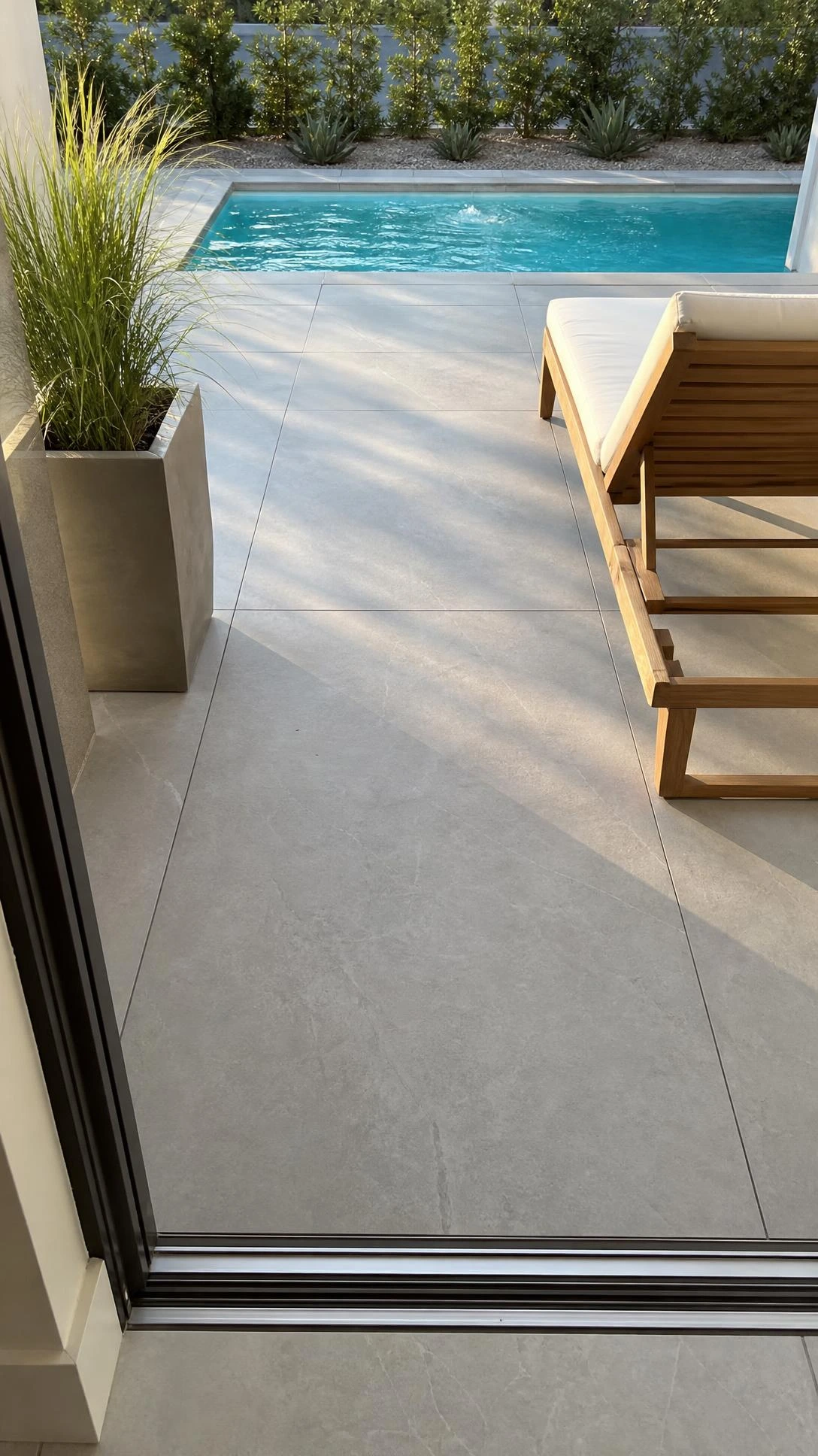
One of the quieter tricks in small backyard design is running the same patio surface continuously from the back door all the way to the edge of the pool without breaking it up.
It sounds like a small detail but it removes the visual chop that makes tight spaces feel even more cluttered and cramped.
A brushed concrete or light limestone finish in a warm ivory tone works well because it reads as one unified space rather than several small zones competing with each other.
Lighter surfaces also stay noticeably cooler underfoot, sometimes by as much as 30 degrees compared to dark slate or charcoal pavers on a hot afternoon.
The goal is just to make the eye travel from one end to the other without stopping, which tricks the brain into reading the space as larger than it is.
4- Above-Ground Pool With Raised Deck Surround
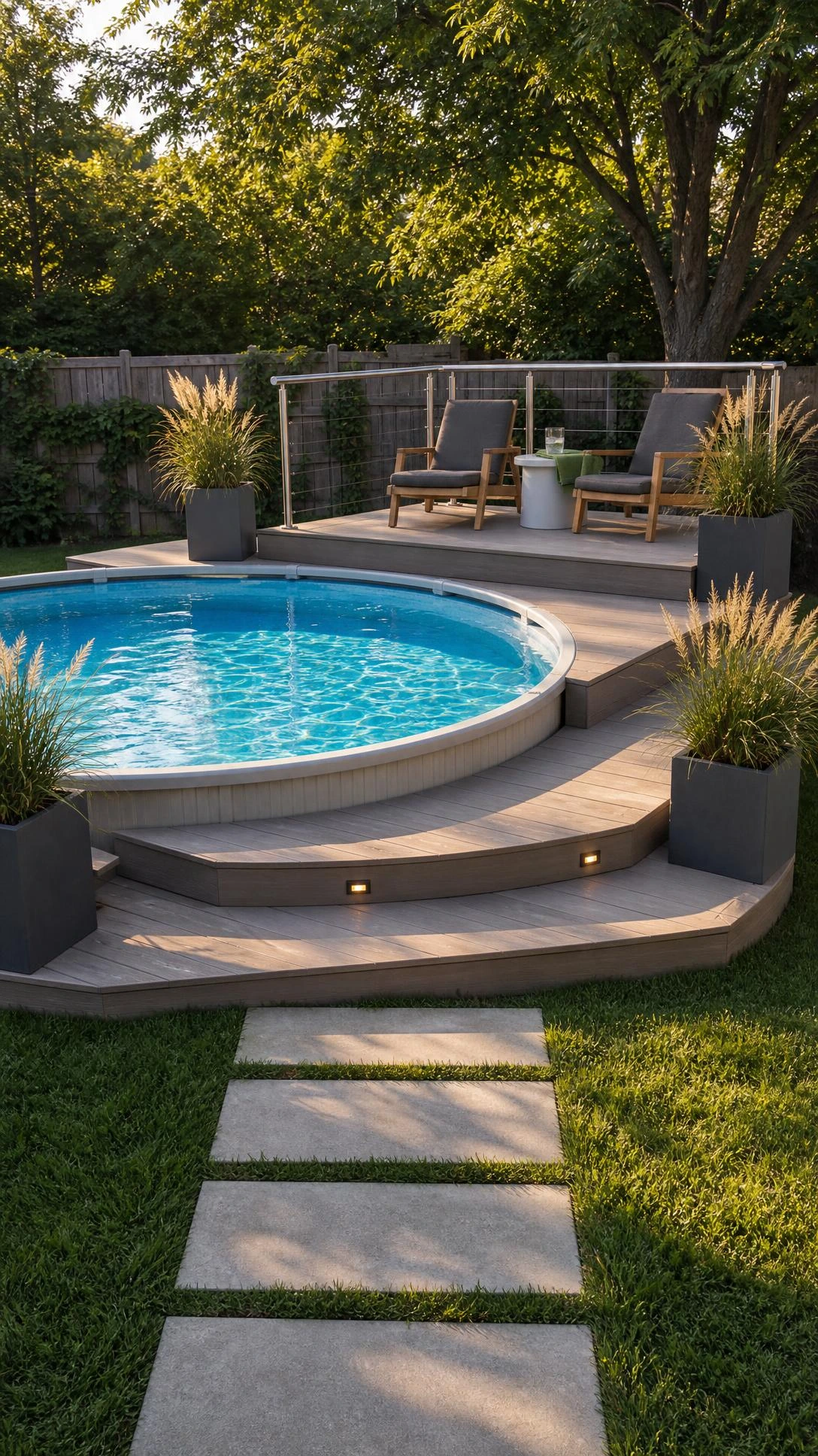
Above-ground pools get a bad reputation mostly because of the ones sitting in backyards with no thought put into how they look.
When a raised timber deck is built directly around the pool structure, flush with the waterline, the whole thing reads as an intentional design rather than an afterthought.
Cedar or composite decking in a warm honey tone keeps it feeling relaxed rather than formal, which suits smaller outdoor spaces well.
This setup also sidesteps a lot of the drainage frustrations that come with in-ground pools on tight lots, since the deck naturally directs water away from the structure.
People are often surprised by how finished this looks once the deck is in place and a few simple planters are added along the perimeter.
5- Narrow Lap Pool Along a Side Fence
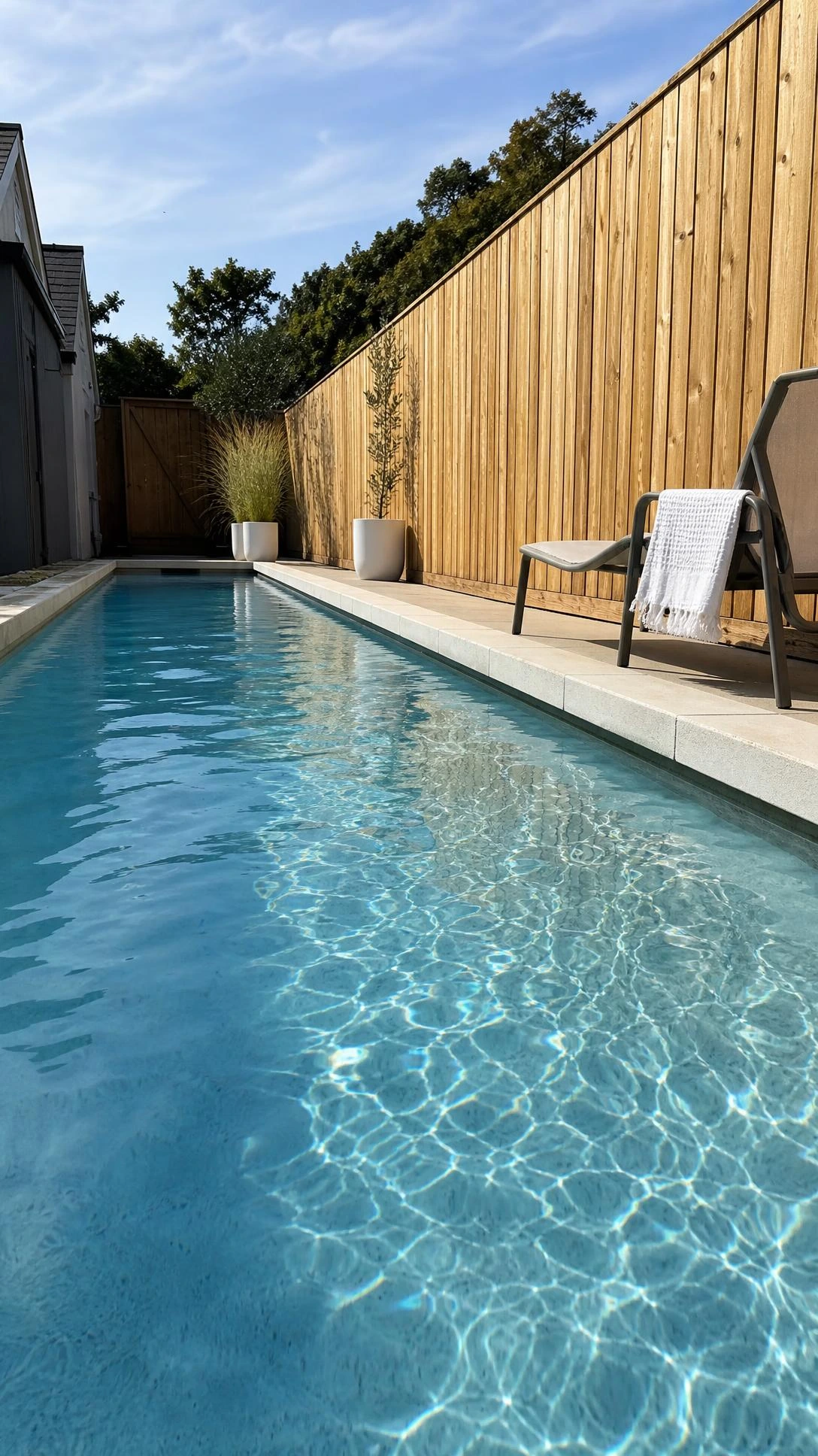
Side yards are one of those spaces most people write off completely, usually treating them as a walkway and nothing more.
A narrow lap pool running the length of a side fence, typically 8 feet wide and anywhere from 25 to 40 feet long, actually fits in spaces that feel way too tight for anything useful.
Pairing this with a slim patio strip in a pale travertine or buff-toned concrete keeps the surrounding area light and open instead of closing it in further.
Positioning the pool a few feet away from the fence rather than right against it makes room for a simple drainage channel and a narrow planting bed, which also helps with overflow and runoff.
It is not the most social pool layout, but for someone who actually wants to swim rather than just sit in the water, it is hard to beat for a small property.
6- Geometric Pool Centered in the Yard
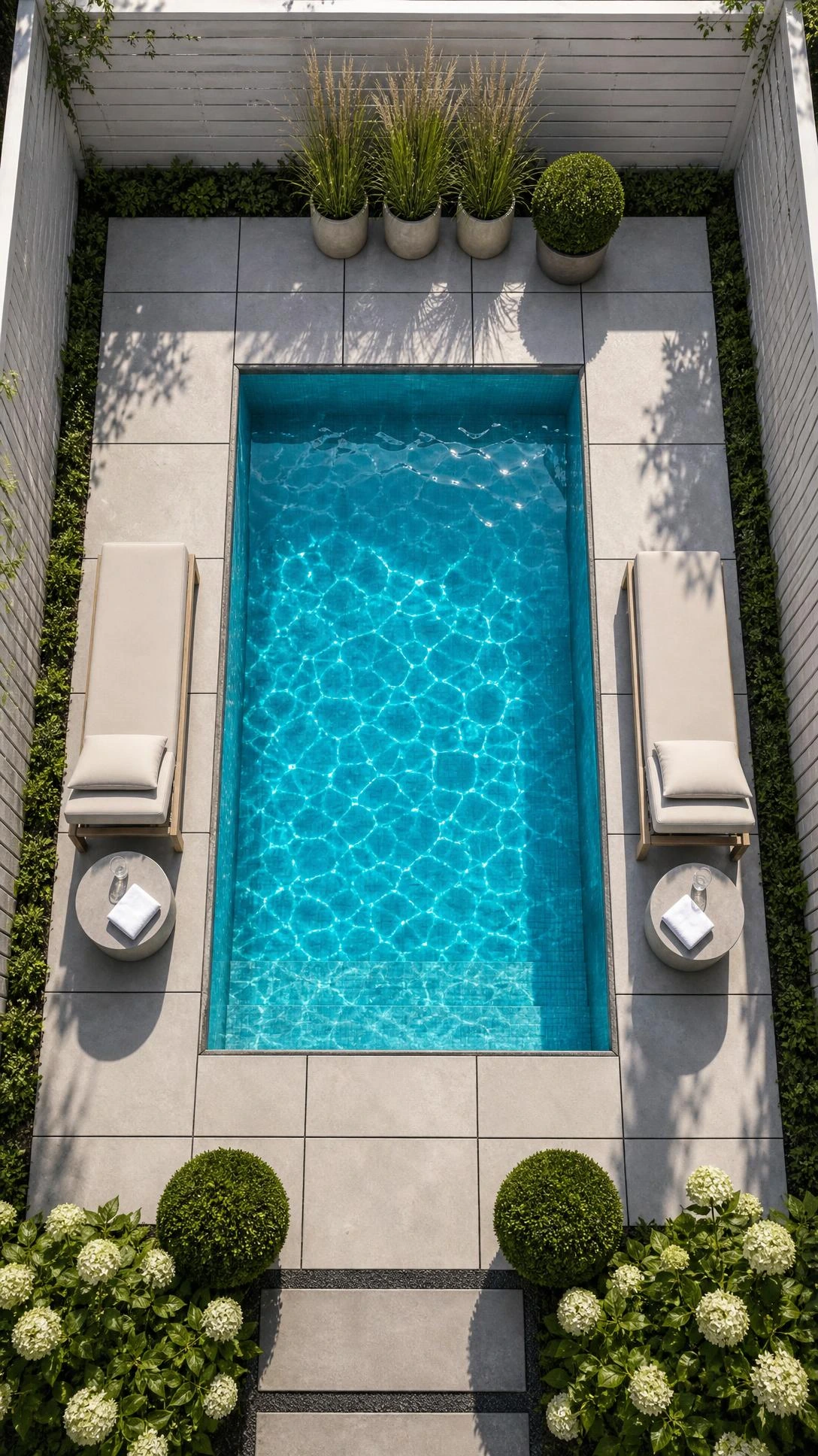
Centering the pool in the middle of the backyard rather than pushing it to one side is a move that not enough people consider on smaller lots.
It creates a natural visual anchor for the whole space and leaves a consistent strip of patio around all four sides, which feels balanced and intentional.
A clean rectangular or square pool shape in the 12×16 foot range works best here because geometric lines mirror the property boundaries and keep everything looking orderly.
There is also a practical upside to this layout: pools positioned away from garden beds and fences tend to attract fewer bees since the water is not sitting right next to flowering plants.
Surrounding the pool with the same large-format tile used inside the house creates a blurred indoor-outdoor transition that makes the whole backyard feel like an extension of the living space.
7- Spa-Style Pool With Stone Coping and Privacy Screen
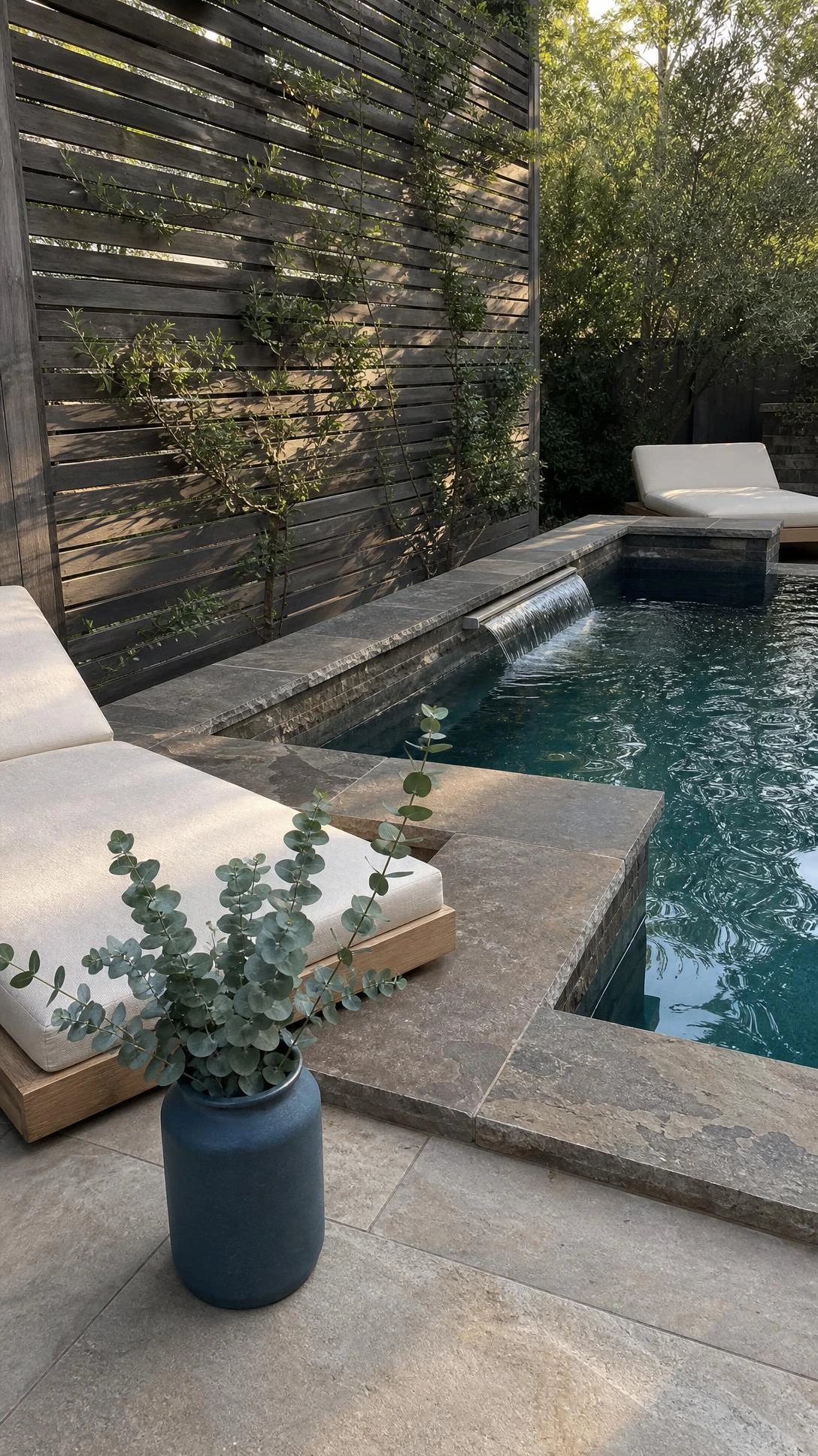
Small pools feel intentional and luxurious when the detailing is done well, and stone coping is one of the highest-impact finishing details available.
Bluestone or travertine coping around the pool edge, even on a pool that only measures 10×12 feet, shifts the whole aesthetic toward something that feels considered rather than budget-driven.
Adding a simple privacy screen on one or two sides, either a cedar slat wall or a row of tall bamboo in planters, creates a sense of enclosure that makes small outdoor spaces feel more like a destination.
Above-ground planter boxes around the perimeter serve double duty by blocking extra runoff from neighboring properties and softening the edges of what would otherwise be a hard, paved surface.
This design appeals to people who want the backyard to feel like a retreat rather than just a place where a pool happens to be sitting.
8- Pebble Finish Pool With Tropical Landscaping
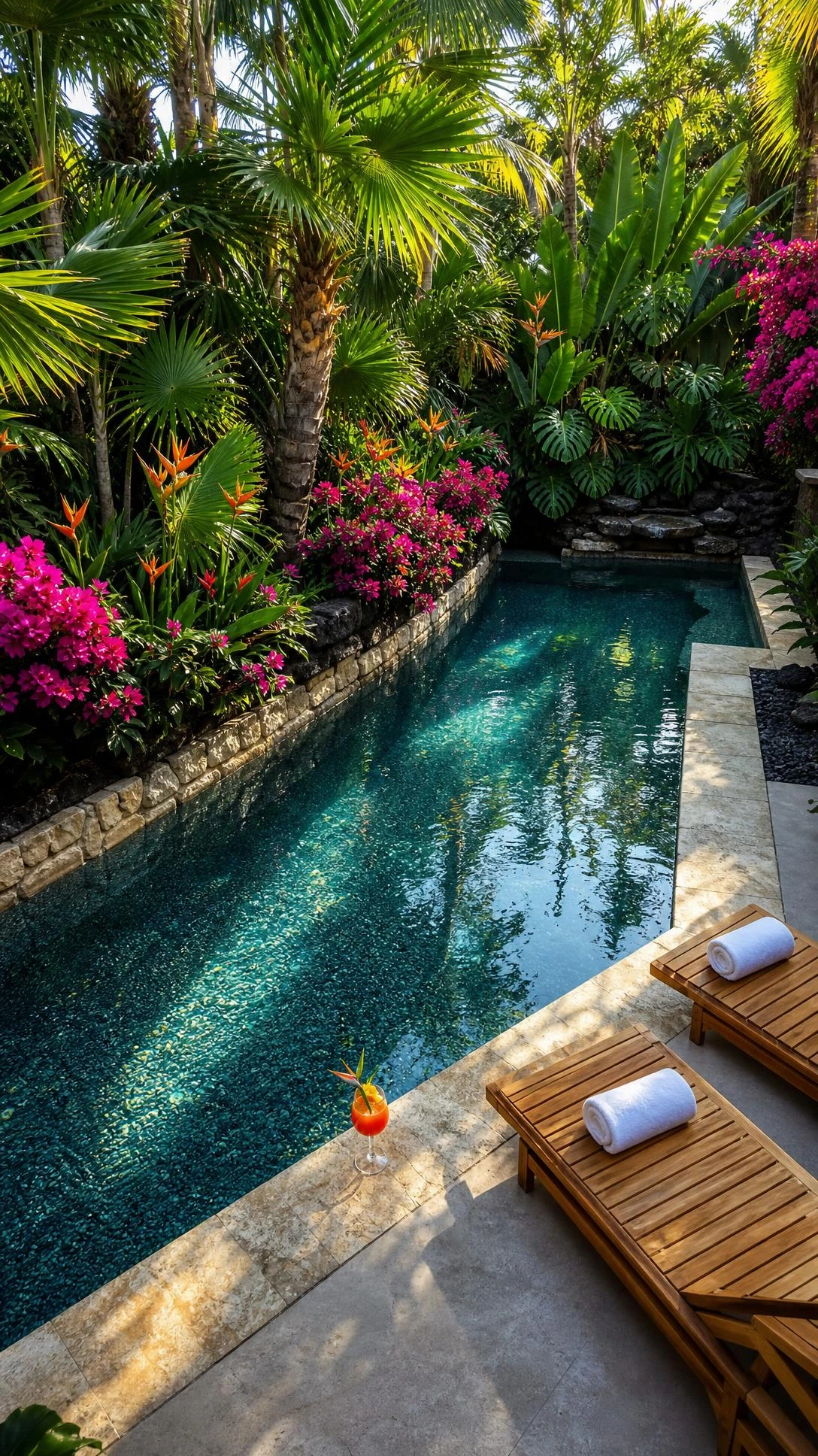
A pebble interior finish on a small pool does something interesting to the water color, turning it into a deep blue-green that looks expensive without costing dramatically more than standard plaster.
Surrounding a compact pool with layered tropical planting, think large-leaf banana plants, clumping grasses, and a single palm if the climate supports it, draws attention up and outward instead of highlighting how small the yard is.
This is one of those designs where the landscaping does most of the heavy lifting and the pool just sits quietly in the middle looking good.
Keeping the patio surface simple and light, a plain pale concrete or light gray travertine, lets the planting and the water color be the visual focus without competing with each other.
I think this works better in small backyards than people expect because lush planting actually makes tight spaces feel enclosed and private rather than cramped.
9- Sunken Patio Pool Design for a Split Level Yard
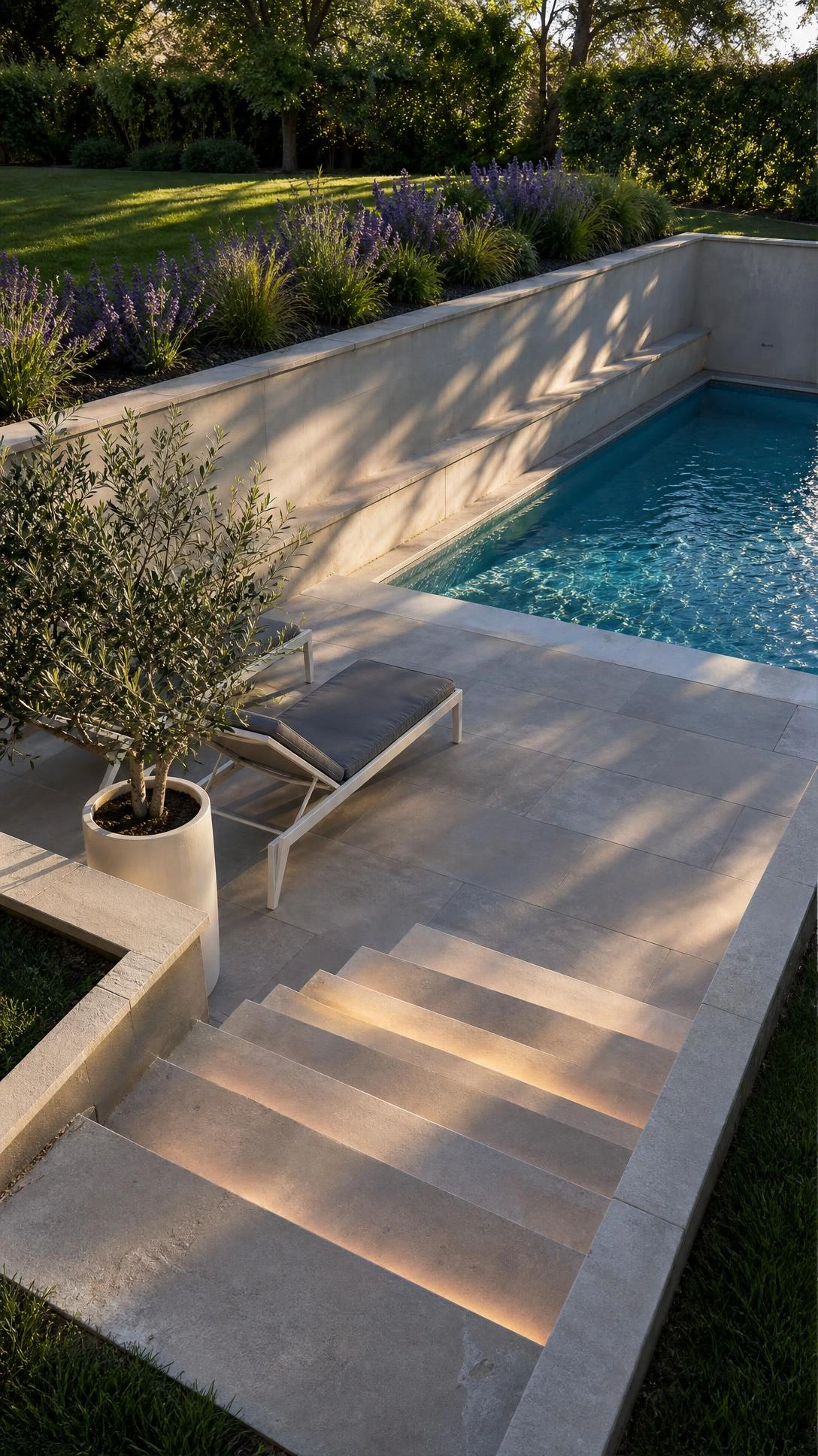
Backyards with a slight slope or change in grade are often seen as a problem, but they are actually one of the best situations for a built-in pool and patio combination.
A sunken pool patio uses the natural grade change to create a lower entertaining level with the pool as the centerpiece, separated from the main yard by a low retaining wall or step-down in level.
This setup visually expands the perceived size of the yard because the lower level feels like its own separate zone rather than just another part of a small, flat space.
Concrete retaining walls in a smooth off-white finish with a handful of built-in steps keep the transition clean and modern without requiring a lot of extra square footage.
Once the level change is in place and the pool is set into it, even a yard under 400 square feet can feel like it was always designed to have water in it.
Where do you want to go next?
Explore by topic
Recently viewed
Small Backyards With a Pool Can Actually Work Really Well
The layouts that work best in tight spaces are the ones that stop fighting the size and start working with it instead.
Light surfaces, clean geometry, centered placement, and a continuous run from house to water are the details that quietly do the most work in a compact backyard.
None of these designs require a major property or an enormous budget, just some thoughtful planning before anything gets dug up or poured.
A small backyard with a well-designed pool patio is usually more enjoyable to actually spend time in than a sprawling one that never quite comes together.

Hi, I’m Alizabeth, the creator of Pretty Home Hacks. I share practical home decor ideas, easy DIY projects, organization tips, and budget-friendly ways to make your home feel more beautiful and functional. From small room updates to everyday home hacks, my goal is to share approachable ideas you can actually use in your own space.