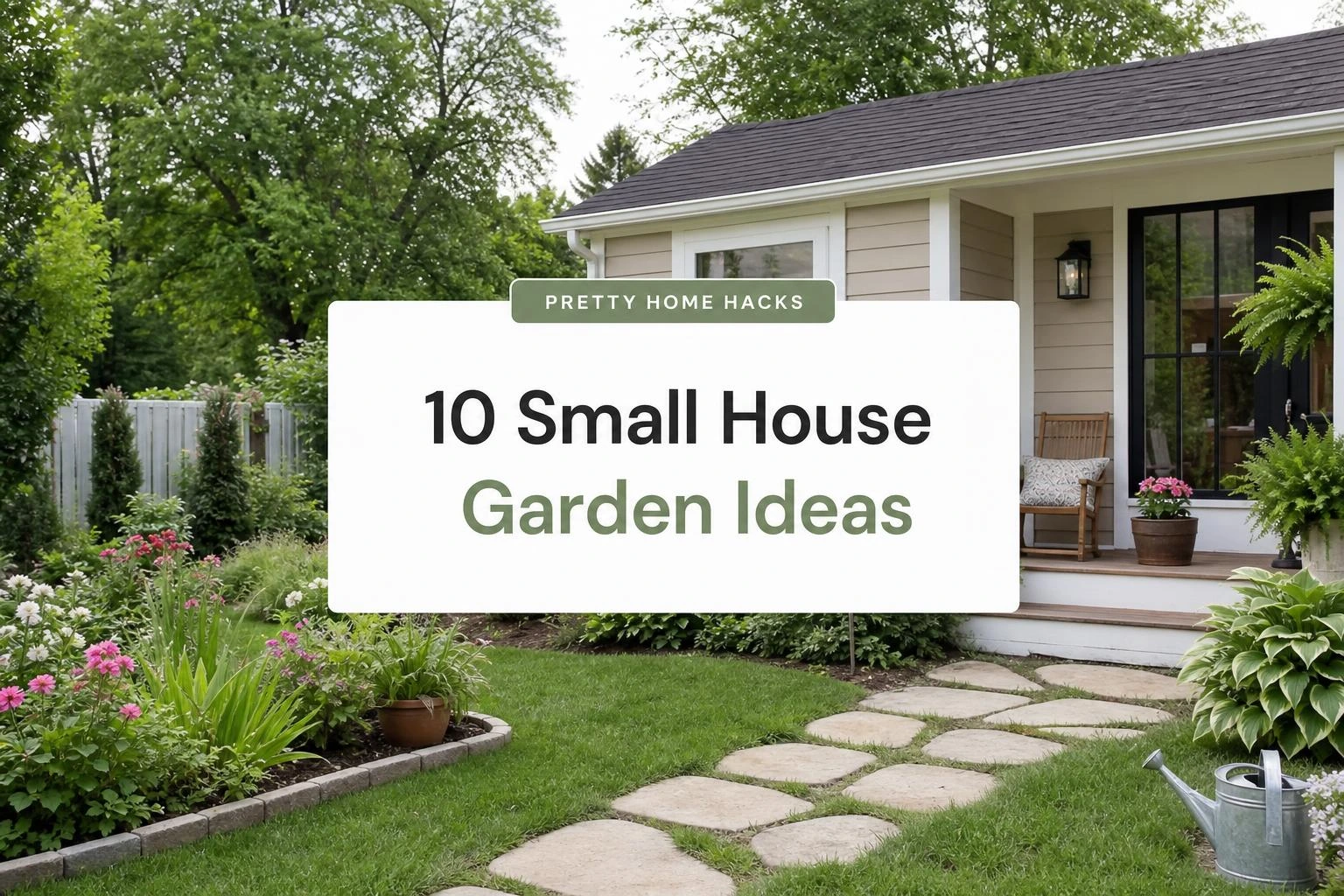
10 Small House Garden Ideas That Turned a Boring Patch of Grass Into Something Worth Showing Off
A flat rectangle of grass behind a small house is one of those things people just live with for years without really doing anything about it.
It is not that they do not care — it is more that the space feels too small to bother with, like whatever they do will just look like an afterthought anyway.
Most people assume a real garden requires a real amount of space, and when a yard is the size of a parking spot, the options feel limited before they even start looking.
The thing is, small house garden ideas have gotten genuinely interesting in the last few years, and most of the best ones cost almost nothing to try.
This is just a round-up of what actually works for compact outdoor spaces — no landscaping budget required, no tearing everything up from scratch.
1- Raised Garden Beds in a Small Backyard
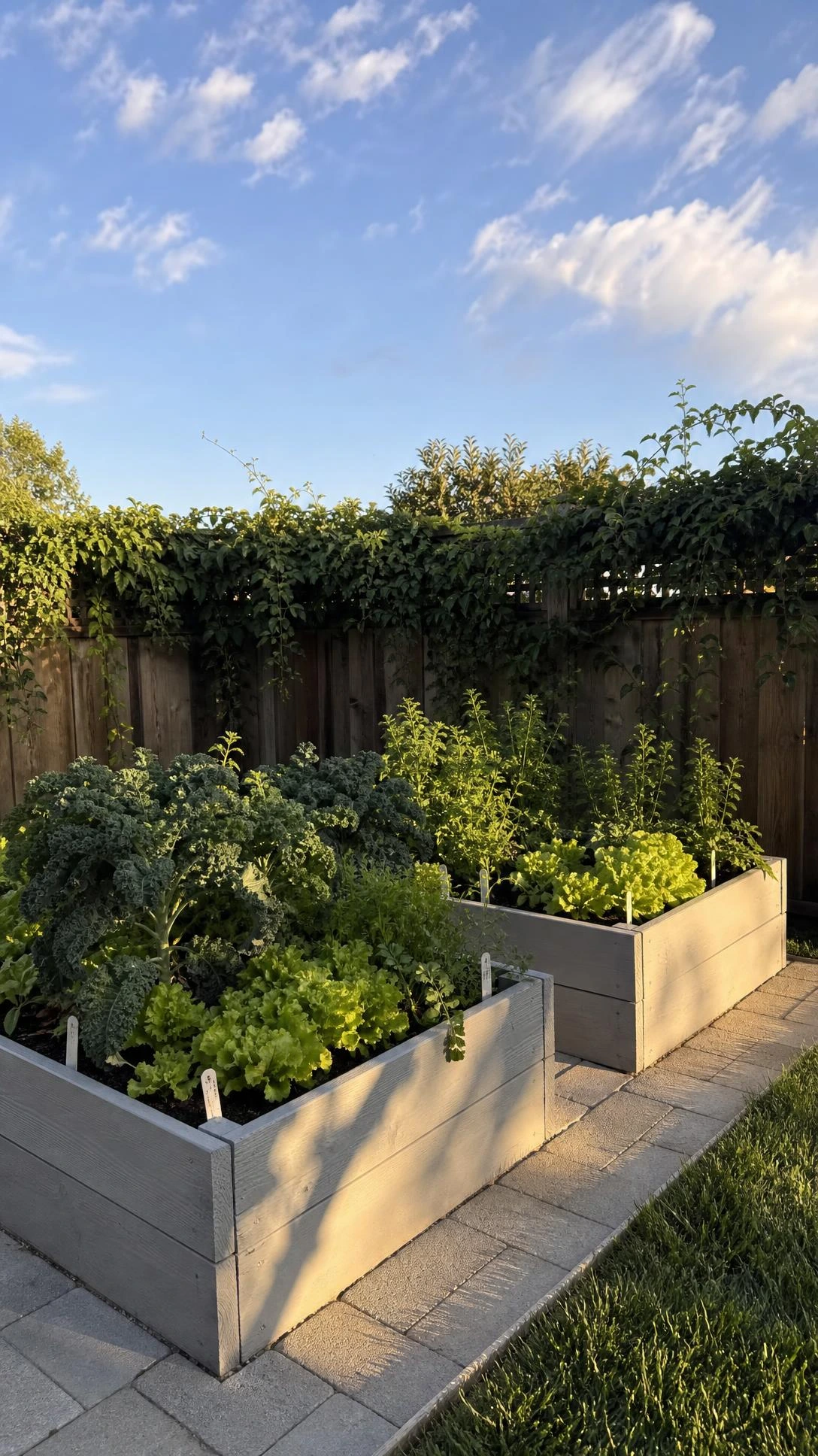
Raised beds do something a flat lawn never can — they give the eye somewhere to land and make the space feel intentional instead of unfinished.
A single cedar raised bed, roughly 4 feet by 6 feet, is enough to grow herbs, lettuces, cherry tomatoes, and a few marigolds all at once.
Cedar is worth the extra few dollars over treated pine because it holds up for years without rotting or warping in the rain.
The height of the bed also matters more than people expect — 12 inches deep is the sweet spot for most vegetables to have enough root room without overbuilding.
I think this is the single change that makes a small garden look the most like a real garden rather than a hobby project someone started and forgot about.
2- Vertical Garden Wall With Climbing Plants
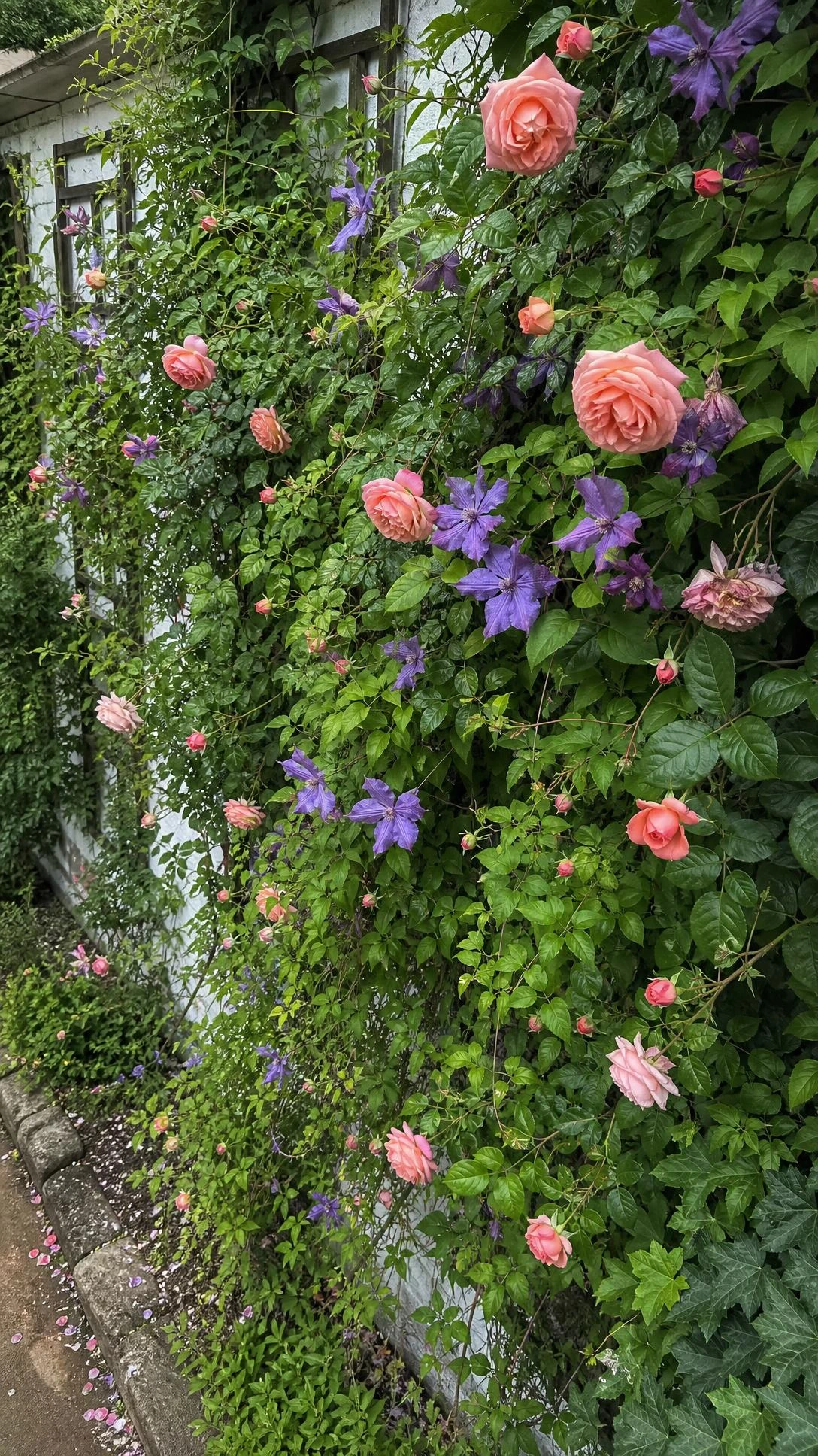
When floor space is the problem, the wall is basically free real estate that most people completely ignore.
A simple wooden trellis panel attached to a fence and planted with something like a climbing hydrangea or a star jasmine can cover a surprising amount of wall within one growing season.
Clematis is another option and comes in deep purple varieties like Jackmanii that look genuinely striking against a dark painted fence.
The trick is to anchor the trellis about 3 to 4 inches away from the fence surface so the plant has room to weave through the gaps and grip properly.
Once it fills in, the wall stops reading as a boundary and starts reading as a feature, which completely changes how the whole garden feels.
3- Container Garden With 5-Gallon Buckets
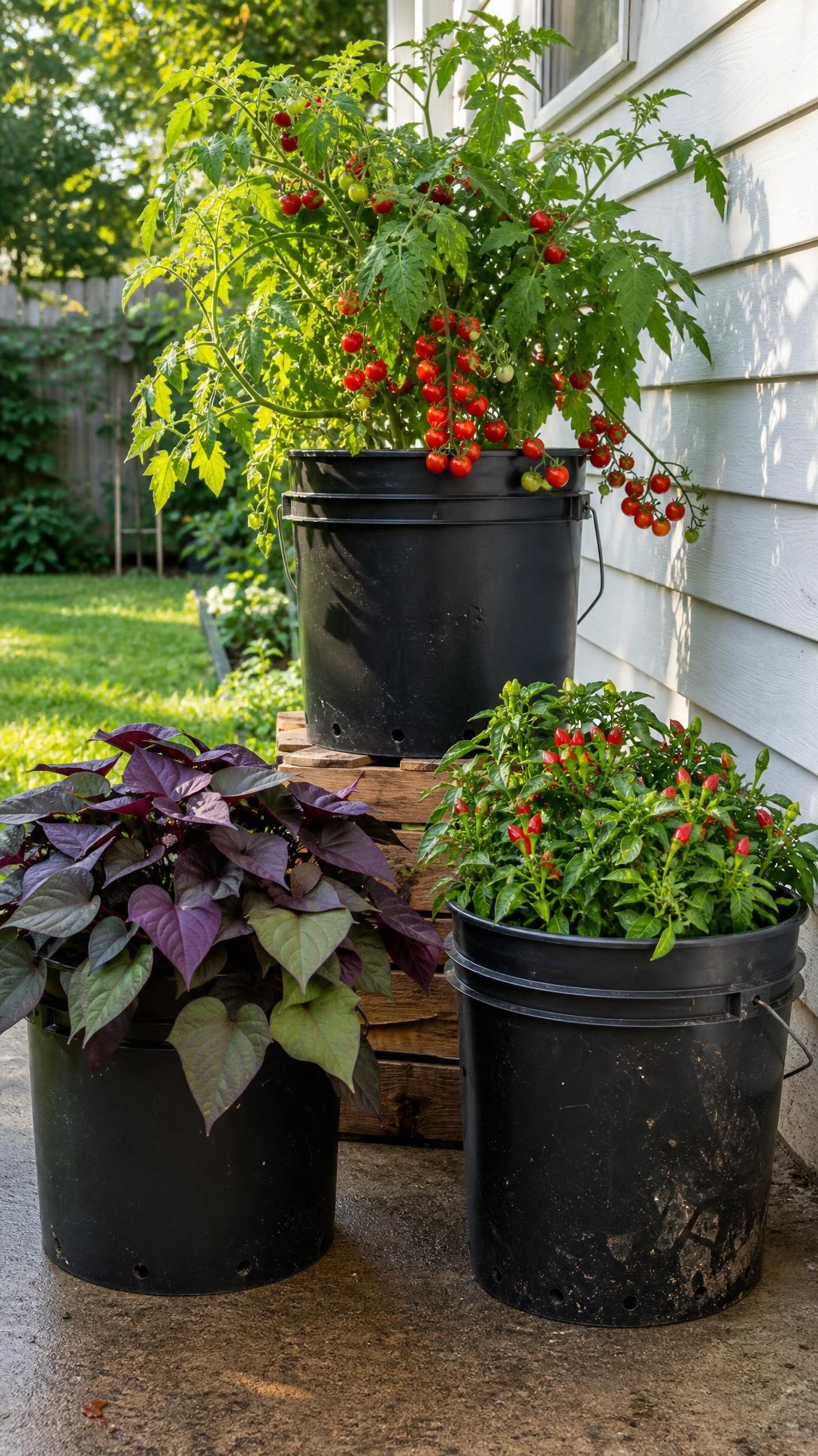
Container gardening is the tip that keeps coming up when people have almost no space, a landlord with opinions, or a yard that is more concrete than soil.
Full-size tomatoes and peppers grow perfectly well in standard 5-gallon buckets, which run about $3 to $5 each at any hardware store.
The buckets look a lot better once they are painted — a matte terracotta or forest green reads as intentional rather than functional, and the plants do not know the difference.
Rolling plant dollies under the heavy ones is one of those small hacks that sounds unnecessary until the first time moving containers becomes a whole event — they also protect the grass underneath from dying off in patches.
A cluster of five or six containers in different heights and sizes creates more visual interest than the same plants spaced out flat across the ground.
4- Dark Painted Fence to Make the Garden Feel Bigger
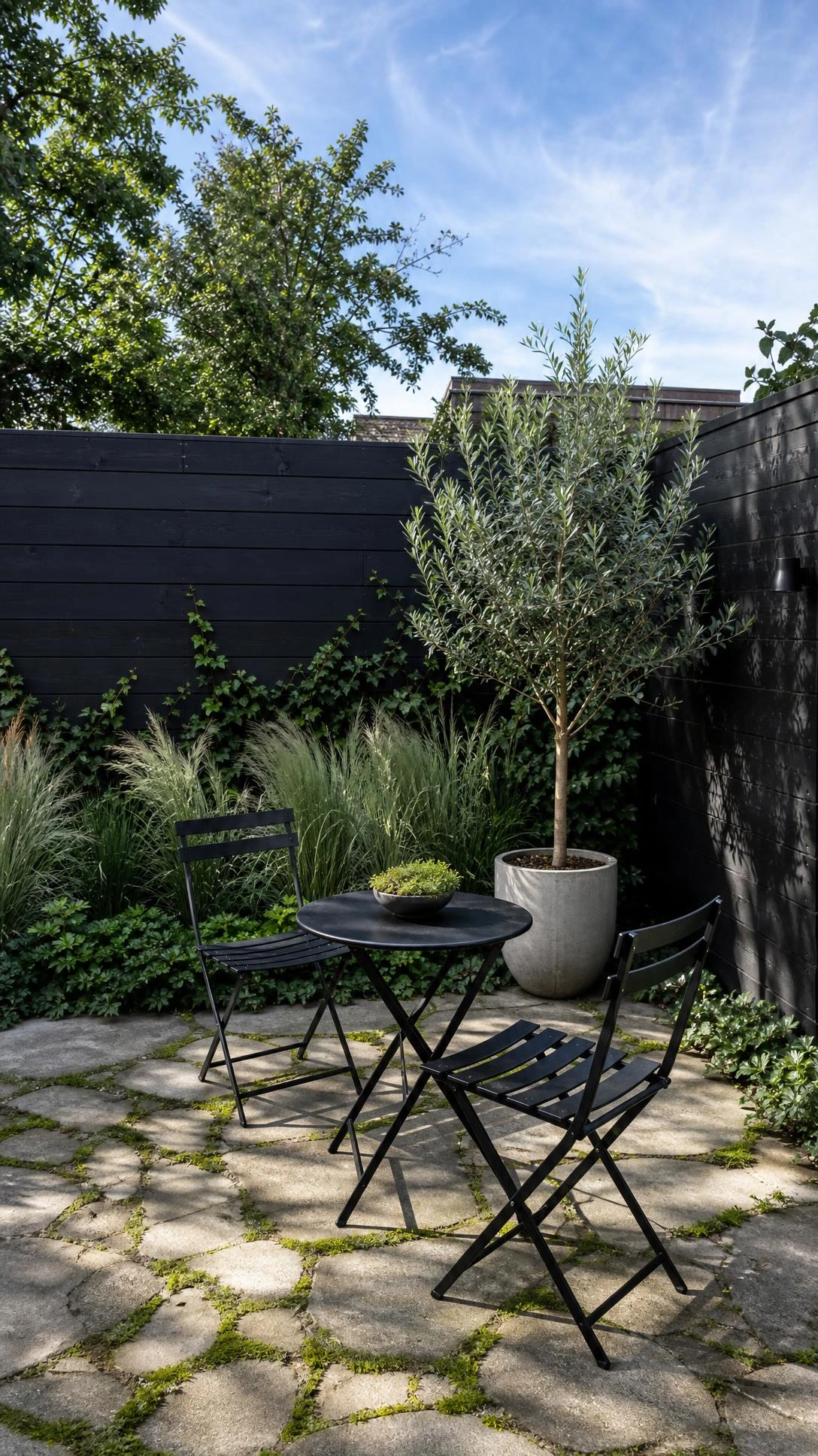
Nobody talks about the fence enough when it comes to small garden design, and it is doing a lot more visual work than most people realize.
A light-colored or weathered natural wood fence pulls the eye toward the boundary and makes a small space feel boxed in, which is the opposite of what a compact garden needs.
Painting it a dark color — charcoal gray, matte black, or deep forest green — makes the boundary visually recede so the planting in front becomes what the eye focuses on instead.
Rust-Oleum’s Chalked Ultra Matte in Charcoal is a popular choice and holds up reasonably well through rain and temperature changes without needing a top coat.
It sounds like a small thing but the before and after is genuinely one of the more dramatic changes possible without touching the actual planting at all.
5- Self-Seeding Plants to Fill In the Gaps Naturally
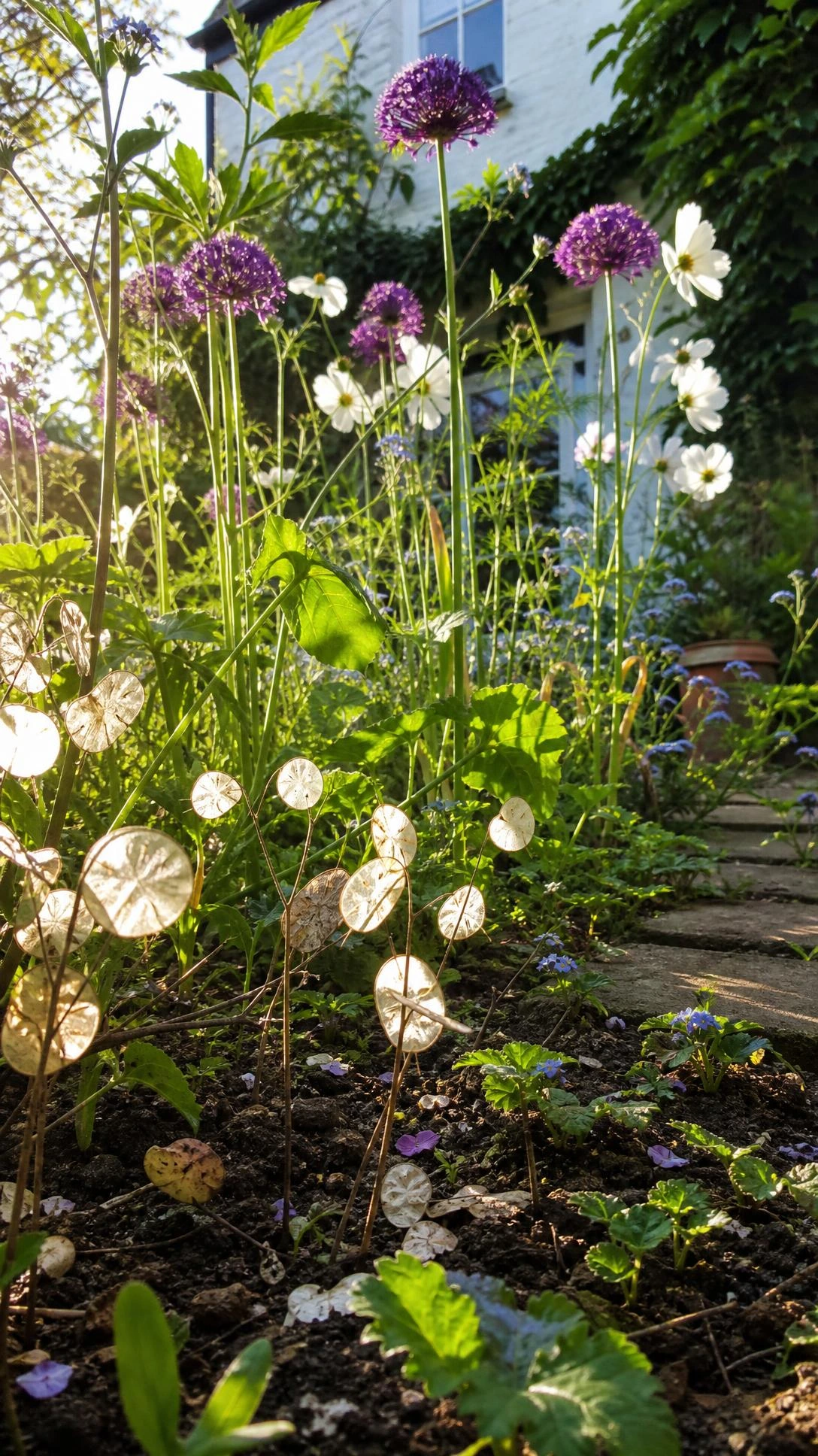
One of the most common small garden problems is that everything looks sparse and deliberate in a way that feels more like a diagram than an actual garden.
Self-seeding plants like love-in-a-mist, annual poppies, and foxgloves solve this by filling the empty ground between other plants on their own once they establish.
Forget-me-nots are especially good for this because they spread into soft blue clouds that look effortless and cost almost nothing — a single seed packet covers a surprising amount of ground.
The key is letting a few of them go to seed at the end of each season rather than deadheading everything, which is honestly a great excuse to do less work.
Once they start naturalizing, the garden stops looking like something that was just planted and starts looking like something that has been growing there for a while.
6- Curved Paving Path Through a Tiny Yard
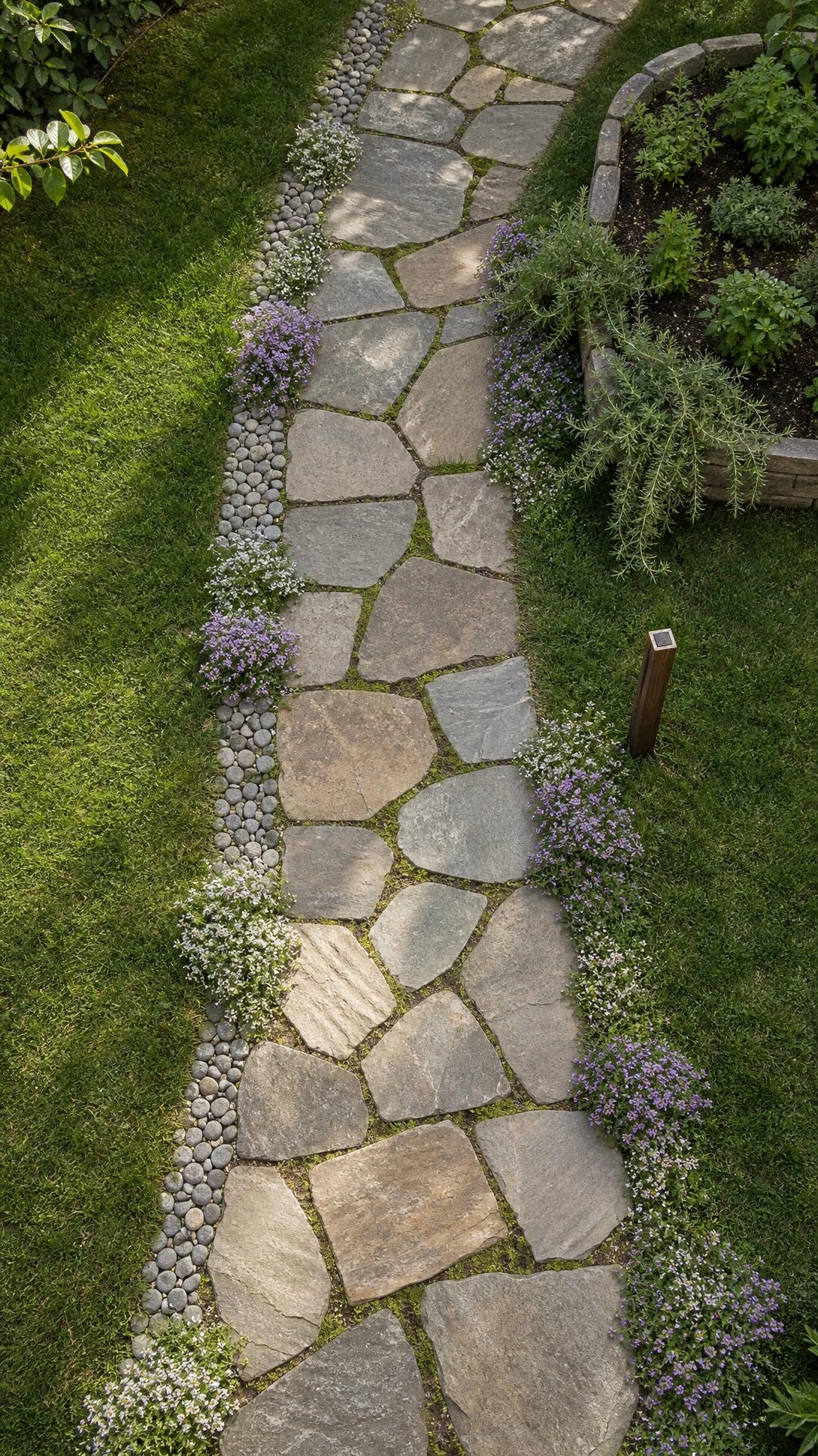
A straight path from the back door to the fence is practical but it also makes a small garden look shorter than it actually is.
A gently curved path draws the eye along a longer route and creates the impression that there is more space to explore, even when the yard is only 15 feet deep.
Large format pavers in a warm buff or pale grey work better than small stepping stones here because bigger individual pieces make the ground plane read as more generous.
Leaving small gaps between the pavers and filling them with creeping thyme adds softness, a faint herbal smell when walked on, and keeps weeds from taking over the joints.
The curve does not have to be dramatic — even a gentle S-shape is enough to shift how the whole garden reads from the back door.
7- Trellis Privacy Screen to Define the Space
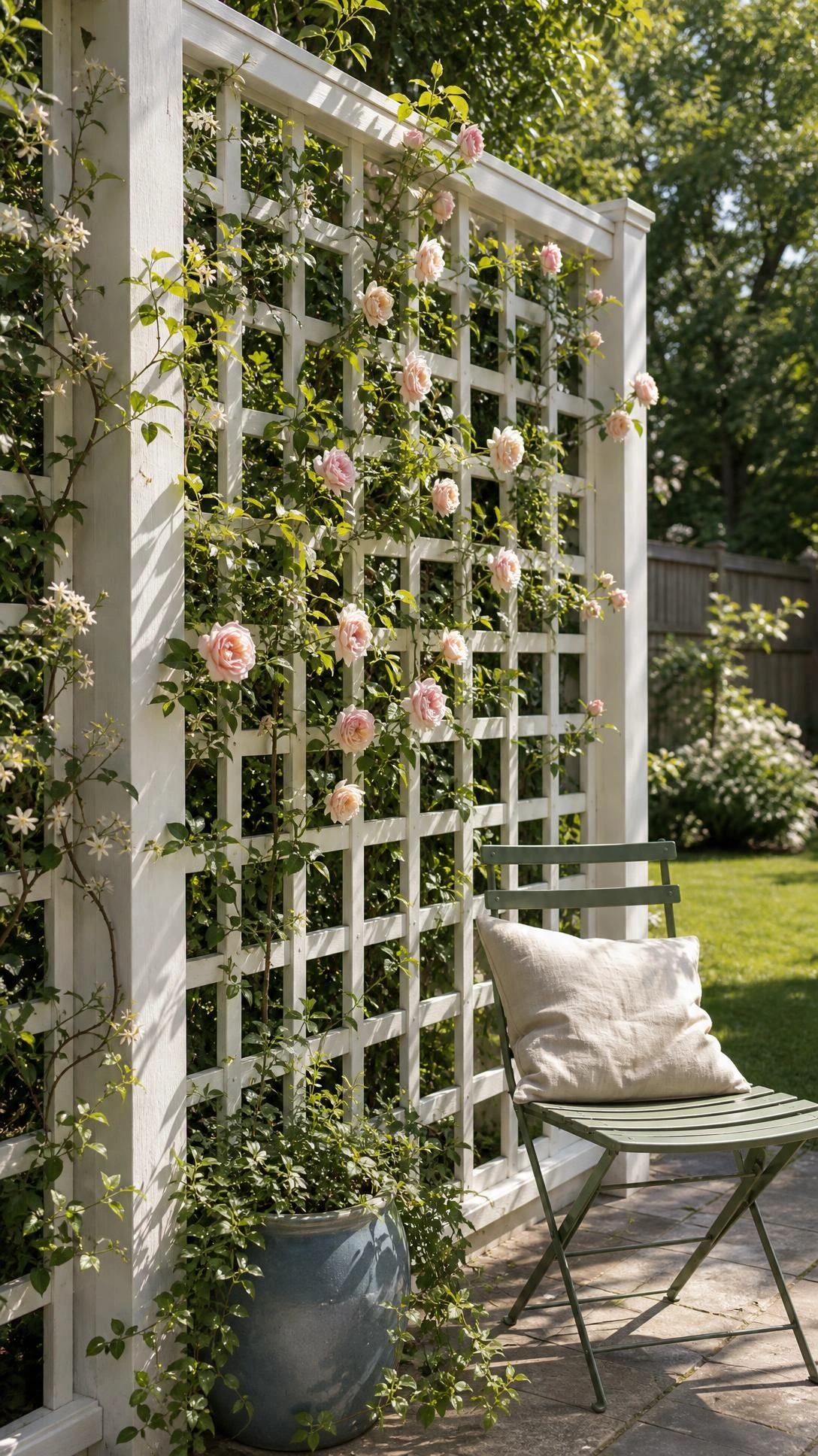
Small gardens often feel exposed in a way that makes spending time in them slightly uncomfortable, which is a problem people rarely name but always feel.
A freestanding trellis screen placed at one end of the patio creates a sense of enclosure without blocking light or making the space feel smaller — which a solid wall would absolutely do.
A 6-foot cedar or pressure-treated pine trellis panel from most garden centers runs between $40 and $80 and can be planted with a fast-growing annual climber like black-eyed Susan vine for almost immediate coverage.
This works best when the screen is positioned to frame a seating area rather than just plopped in the middle of the lawn without context.
The goal is to make one corner of the garden feel like a room, and even a partial screen does that job well.
8- Simple Color Palette With Greens and Cool Tones
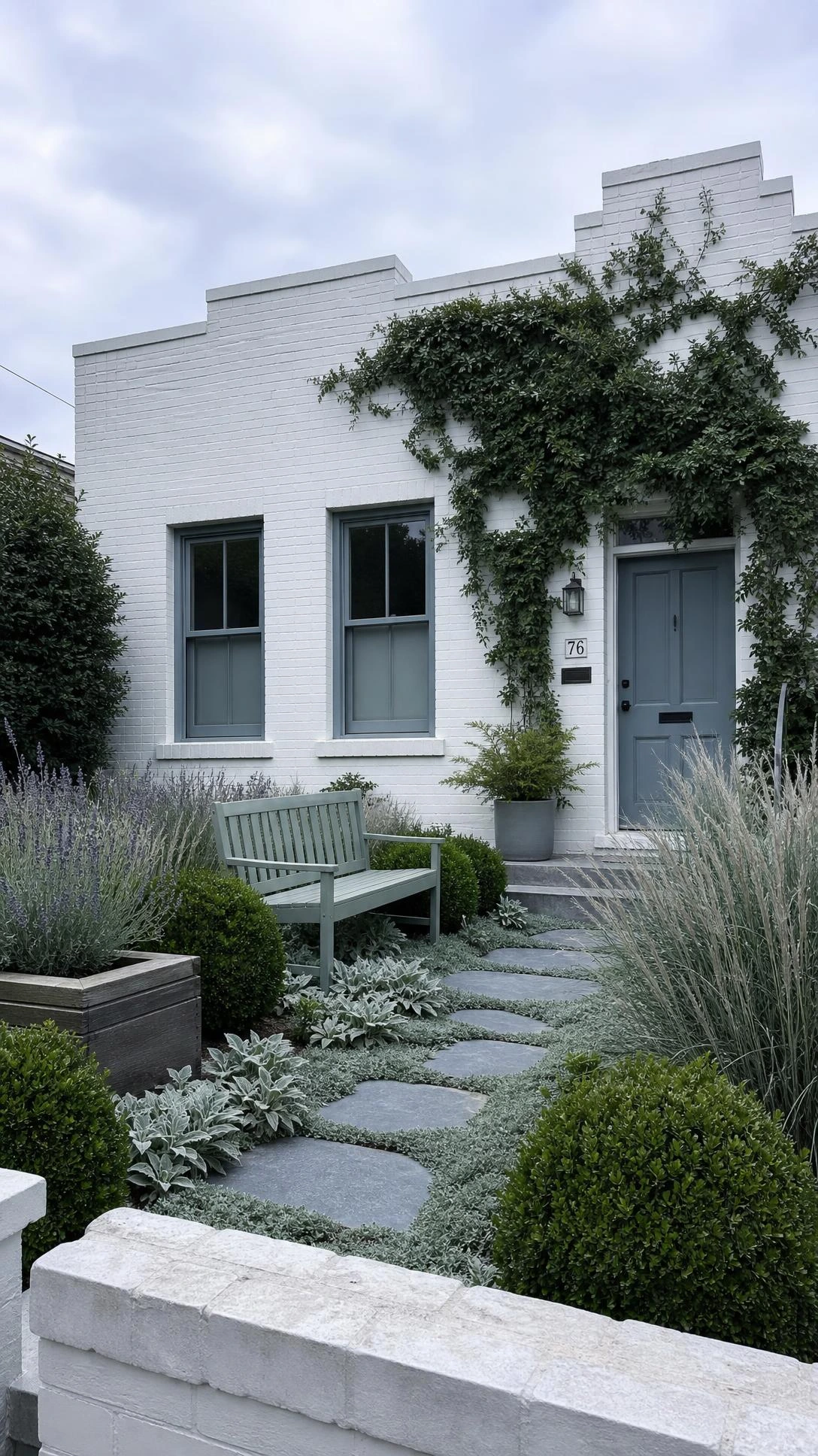
Small gardens with too many flower colors going on at once end up looking busier than the space can handle, and busy reads as small.
Sticking to a palette of greens, whites, soft blues, and lilacs pulls the whole planting together and makes even a tiny border look considered rather than chaotic.
Salvia nemorosa in a blue-purple like Caradonna, white alliums, and silvery lamb’s ear is a combination that looks intentional and holds interest from spring through to late summer.
The cool tones also do something specific in small spaces — they appear to recede slightly, which makes the boundaries of the garden feel further away than they are.
It is one of those design rules that sounds a little abstract until someone actually tries it and then wonders why they planted hot orange dahlias next to neon pink begonias for so many years.
9- Hanging Containers and Wall-Mounted Planters
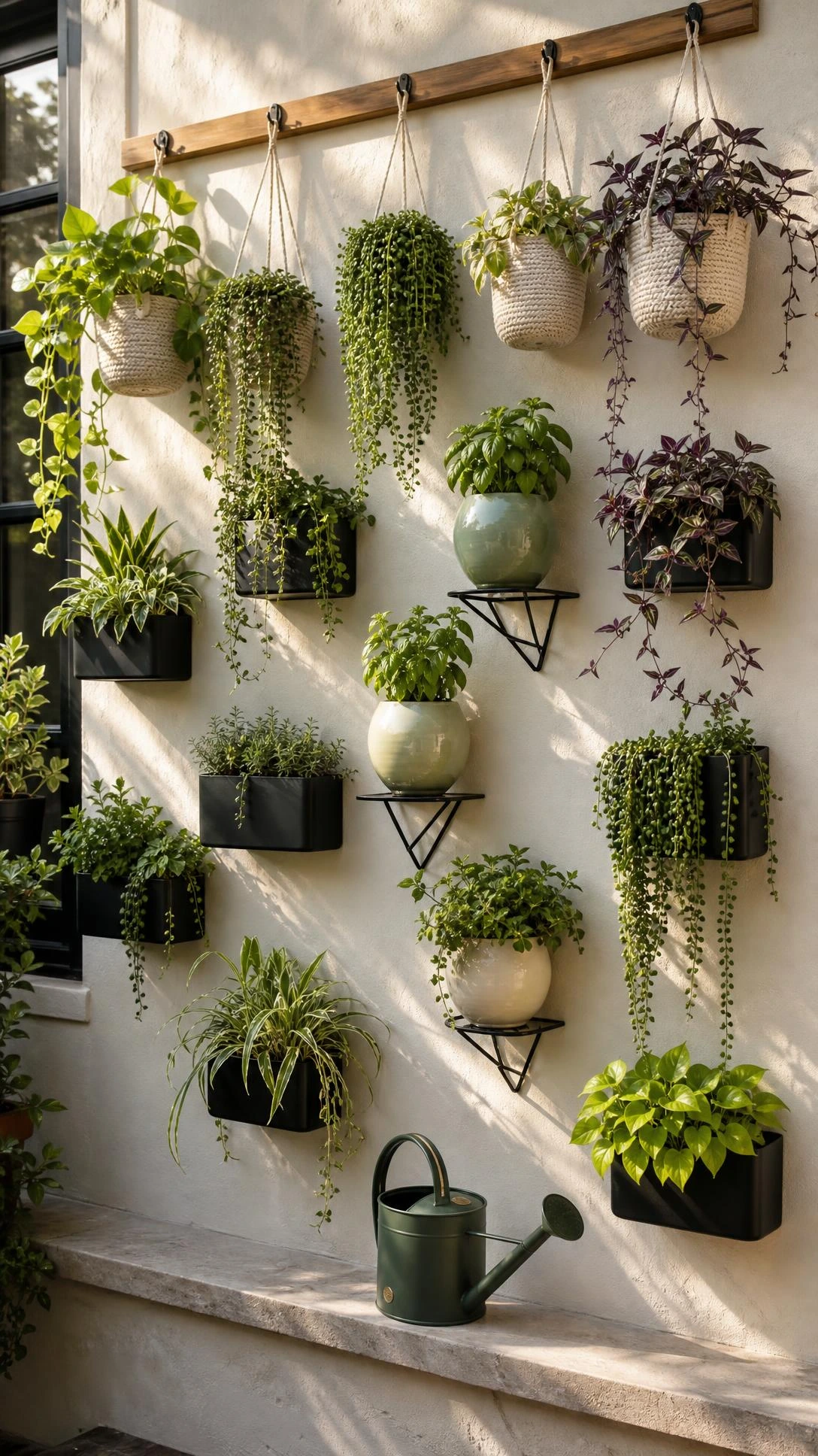
Vertical space is the most underused square footage in a small garden, and wall-mounted planters are the easiest way to start using it without any real commitment.
A row of wall-mounted metal planters at staggered heights on a fence or exterior wall adds greenery at eye level, which changes how the garden feels from inside the house when looking out.
Trailing plants like string of pearls, ivy, or cascading petunias in a soft coral or white spill downward and create movement that a flat garden planting rarely has.
The wall-mounted style also suits renters well since the planters attach to fence posts or wall anchors without permanent changes to the structure, which sidesteps most landlord restrictions neatly.
I think this is the tip most people skip because it feels fiddly, but once it is done it makes the garden look about twice as full as it actually is.
10- Mini Wildlife Patch With Wildflowers and a Bird Feeder
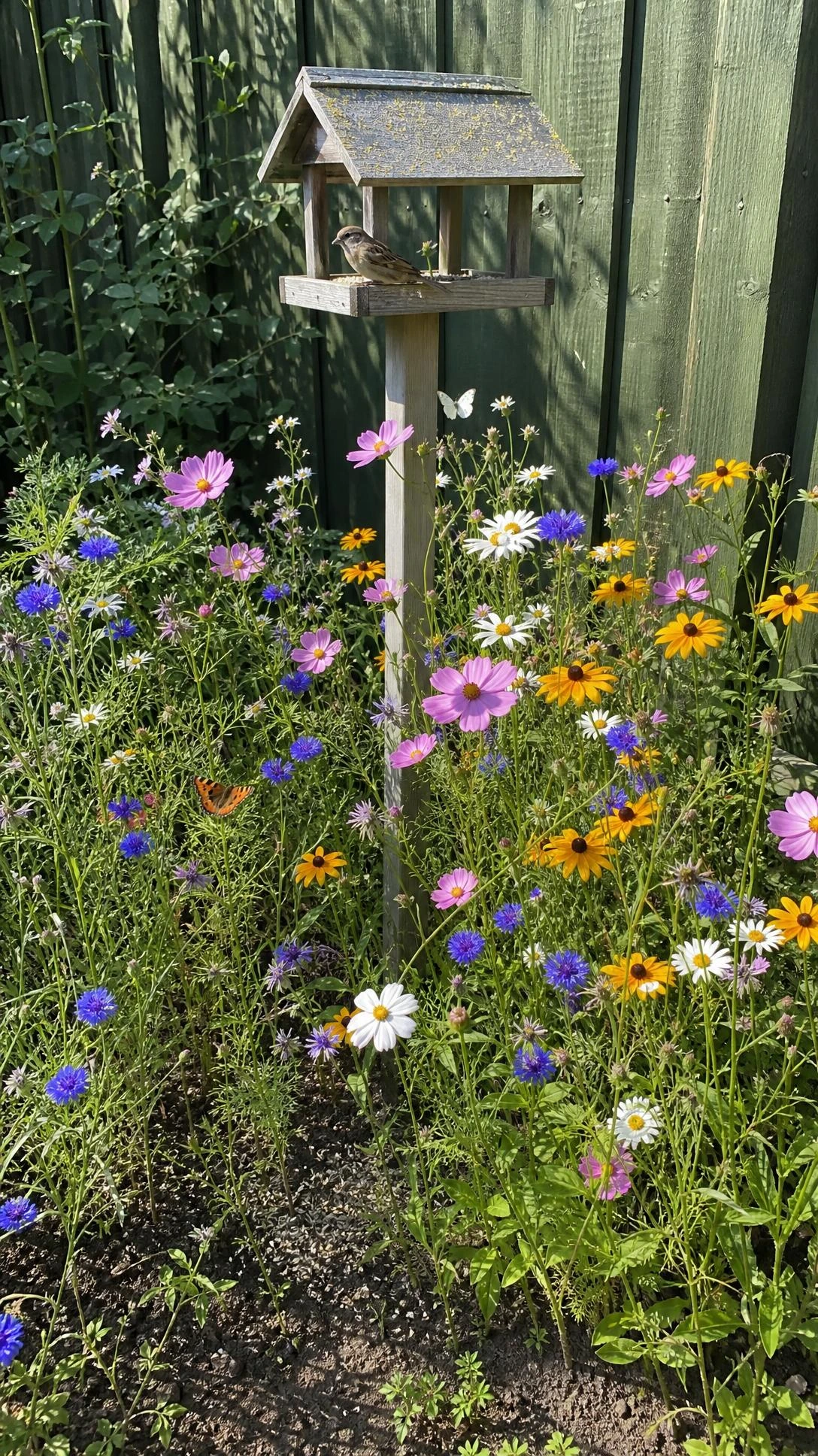
A small garden that has something happening in it always feels more alive than one that just looks neat, and a wildlife corner is the easiest way to get there.
Leaving a 2-foot-square patch of the lawn uncut and scattering a wildflower mix — something like Pictorial Meadows’ Annual Mix — creates a little bloom patch that attracts bees and looks genuinely lovely through summer.
A simple wooden bird feeder on a post costs around $15 to $25 and adds height, movement, and a reason to sit in the garden and actually pay attention to it.
This works especially well in corners that are awkward to plant properly because it turns an ignored area into a feature without requiring much effort at all.
Most small gardens benefit from having one spot that feels a little wild and uncontrolled — it makes the rest of the garden look more intentional by contrast.
Small Gardens Are Worth the Effort
A small patch of grass behind a house does not have to stay that way just because the space is limited.
Most of the ideas here cost between $10 and $80 to try, and none of them require digging up the entire yard or hiring anyone.
Starting with one change — a raised bed, a dark fence, a row of containers — is usually enough to make the rest of the space start to make sense.
A garden does not have to be big to be worth spending time in.

Hi, I’m Alizabeth, the creator of Pretty Home Hacks. I share practical home decor ideas, easy DIY projects, organization tips, and budget-friendly ways to make your home feel more beautiful and functional. From small room updates to everyday home hacks, my goal is to share approachable ideas you can actually use in your own space.