13 Home Office Organization Ideas for a Cleaner Desk
A messy desk is one of those things that sneaks up on people really fast.
One week everything is fine, and then suddenly there are three coffee mugs, a charging cable that belongs to nobody, a notepad from a meeting two months ago, and a pen that definitely does not work anymore all living together in one pile.
Most people assume getting a home office under control means a whole weekend project and probably some expensive furniture from a store that requires assembly instructions in four languages.
The reality is that most home office organization ideas are a lot smaller and more doable than that, and a few of them cost almost nothing.
These are the ones that actually make a difference on a real desk in a real house where real life happens.
1- Desktop Organizer With Tiered Shelves
The surface of a desk is not a storage system, even though most people treat it like one.
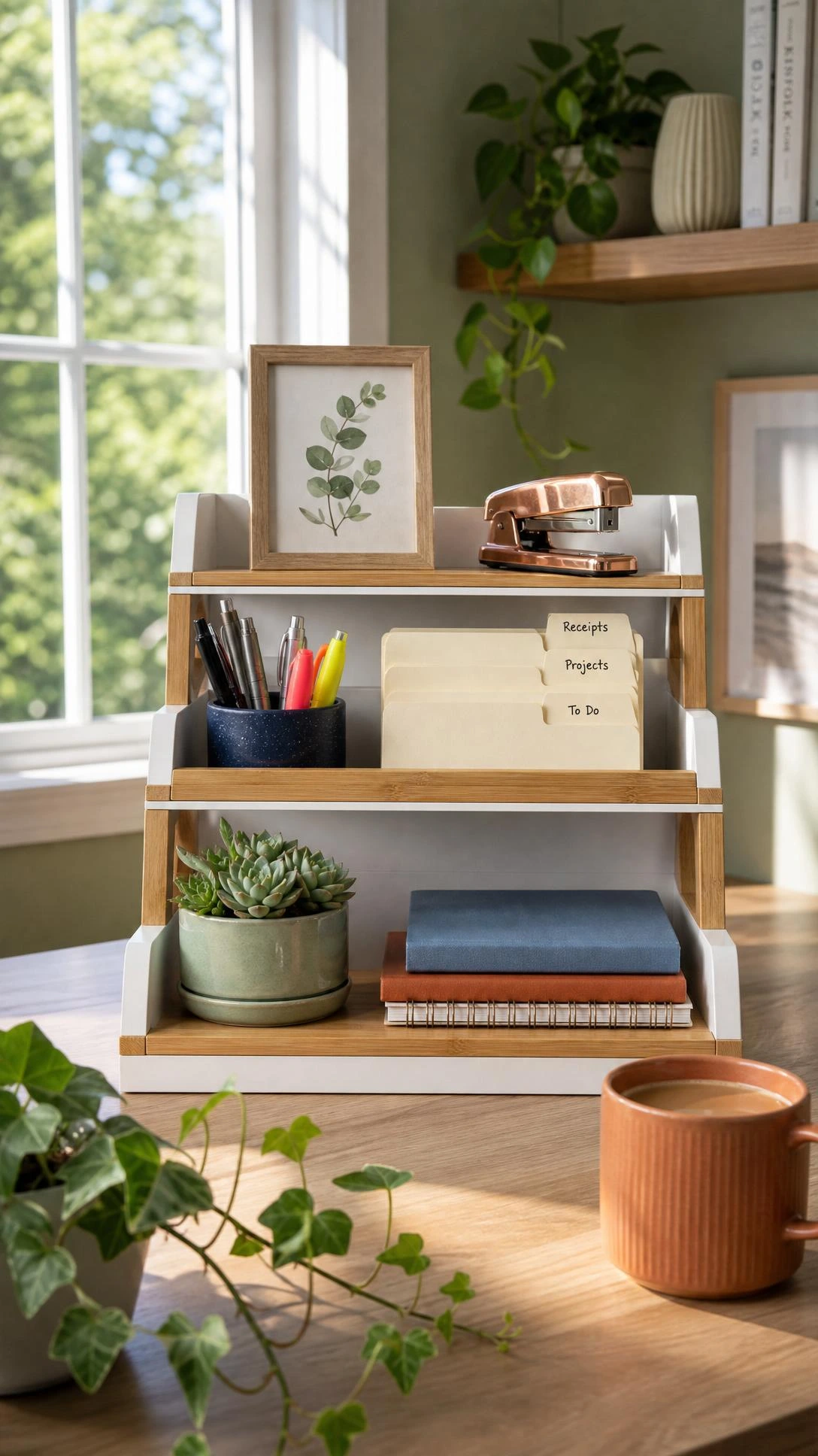
A tiered desktop organizer changes that immediately because it takes all the loose stuff sitting flat and gives it somewhere to actually live.
The ones with a combination of small drawers, open slots for files, and a top shelf for things like sticky notes or a small plant tend to work the best for a mixed home office setup.
Something like the SimpleHouseware mesh desktop organizer runs around $25 to $30 and handles papers, scissors, binder clips, and pens without turning the desk into a storage room.
The goal is just to get everything off the flat surface so there is actually room to work.
2- Drawer Organizer Inserts for Desk Drawers
Desk drawers have a way of becoming a black hole for everything that does not have an obvious home.
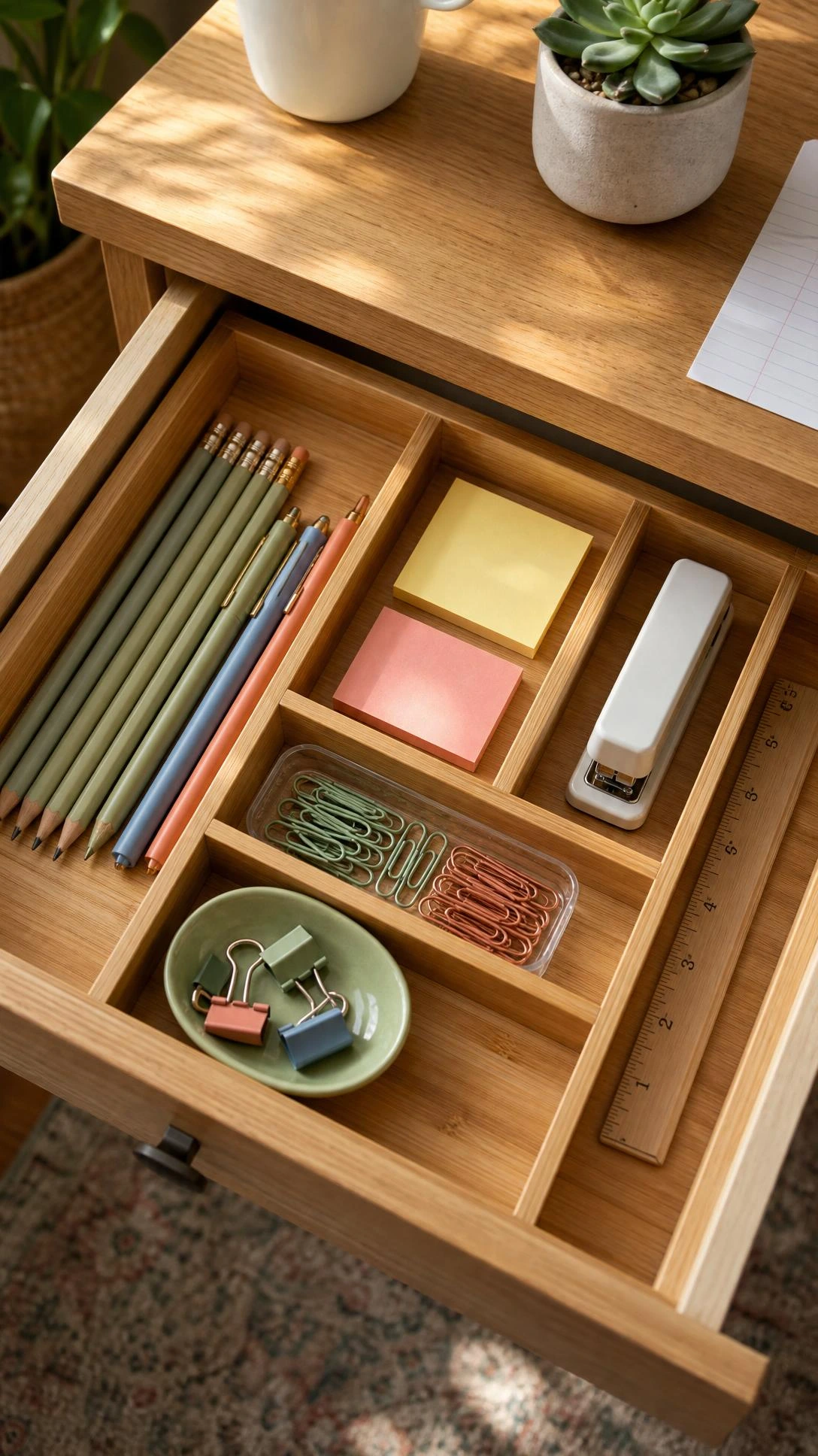
One of the most underrated home office organization ideas is using kitchen utensil drawer inserts inside desk drawers instead of buying actual office drawer organizers.
They come in bamboo or plastic, cost around $10 to $15, and the little compartments fit pens, tape, small notebooks, and chargers perfectly.
It sounds like an odd swap but it works really well, especially for narrower drawers where office-specific inserts tend to be too bulky.
Once the drawers are sorted, finding things during a work call stops being a whole stressful event.
3- Cable Management Box or Clips
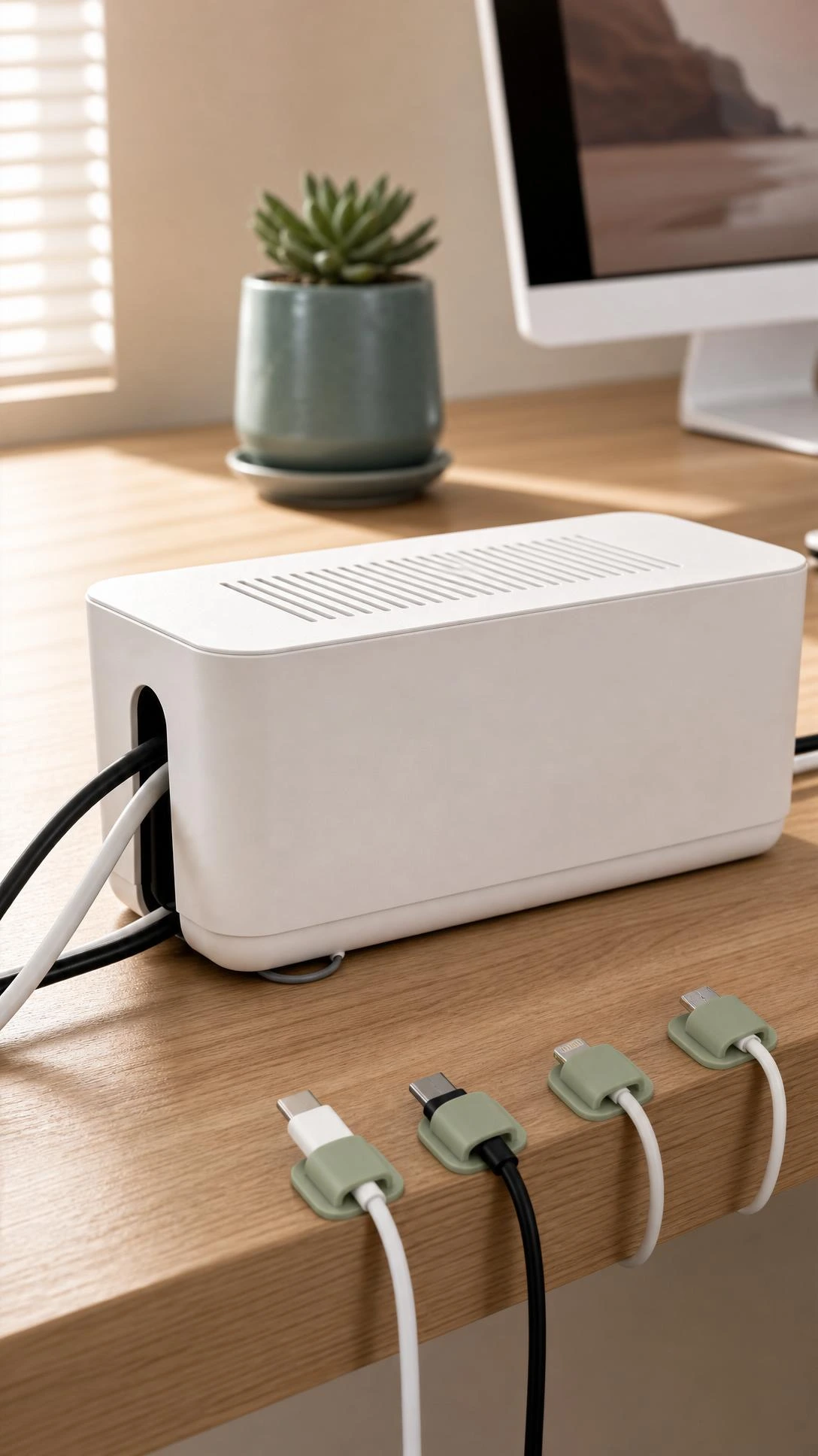
Cords are one of those things that make a desk look chaotic even when everything else is tidy.
A cable management box sits on or under the desk and hides the power strip and all the extra cord length inside it, so the only thing visible is a clean box and one cord going to the wall.
Cable clips that stick to the back edge of the desk keep individual cords routed neatly instead of falling behind the desk every time someone unplugs something.
The D-Line cable management box in white or black runs about $20 and genuinely makes the whole desk area look more intentional without doing anything else.
I think cords are responsible for at least 40 percent of why a desk feels messy, so fixing them first makes everything else feel easier.
4- Wall-Mounted Pegboard Above the Desk
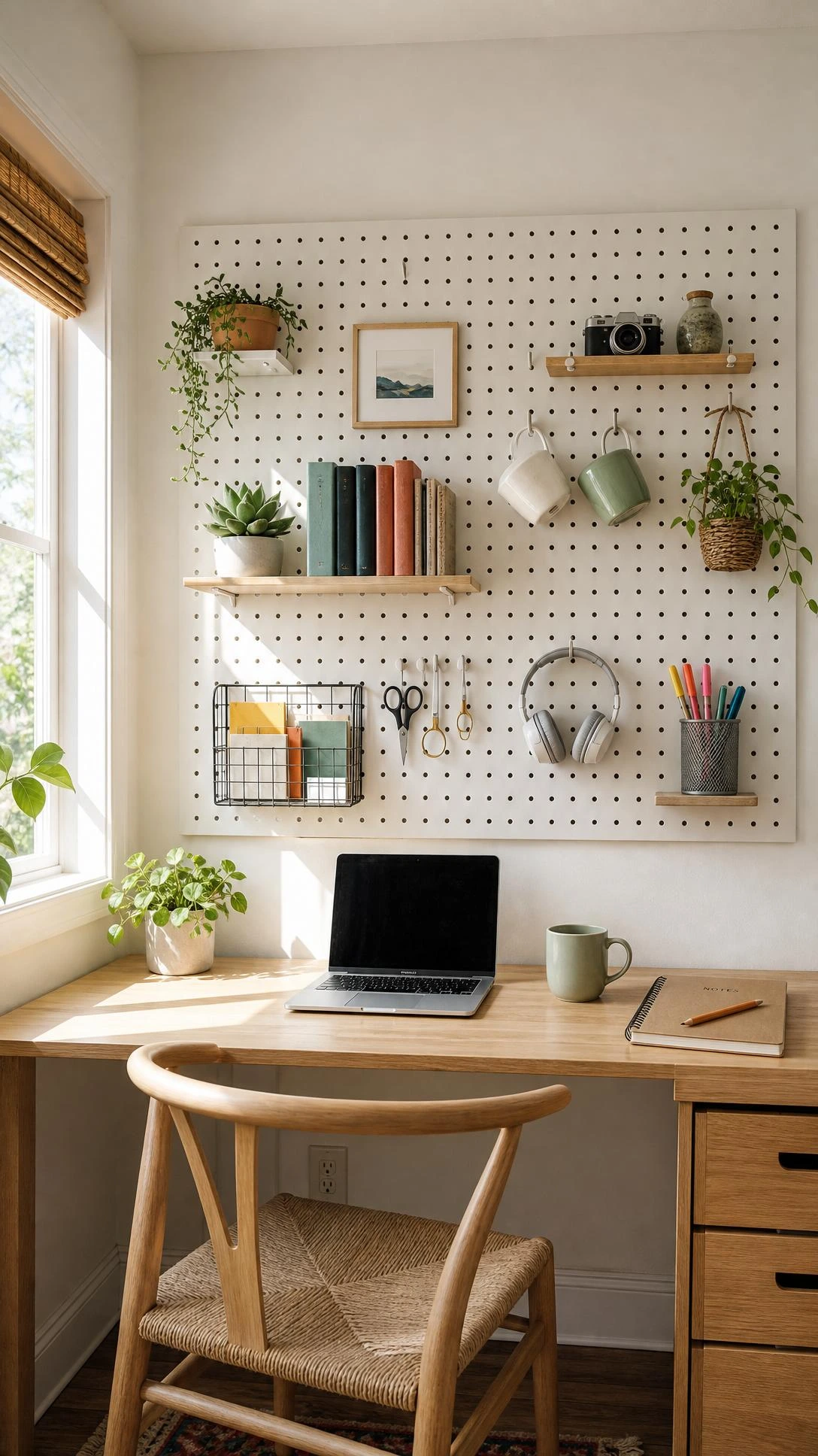
Pegboards are not just for garages, and once someone puts one up in a home office, it becomes obvious why people love them so much.
A small pegboard mounted above the desk takes everything that was sitting on the surface and moves it vertical, which frees up an enormous amount of workspace.
Scissors, tape, headphones, small shelves for notebooks, and even a little calendar can all live on the board with the right combination of hooks and accessories.
IKEA’s Skadis pegboard starts at around $15 and has a whole range of compatible accessories that clip in without any tools.
It works best when the pegboard is installed at eye level or just above, so reaching for things does not interrupt the work flow.
5- Floating Wall Shelves for Books and Binders
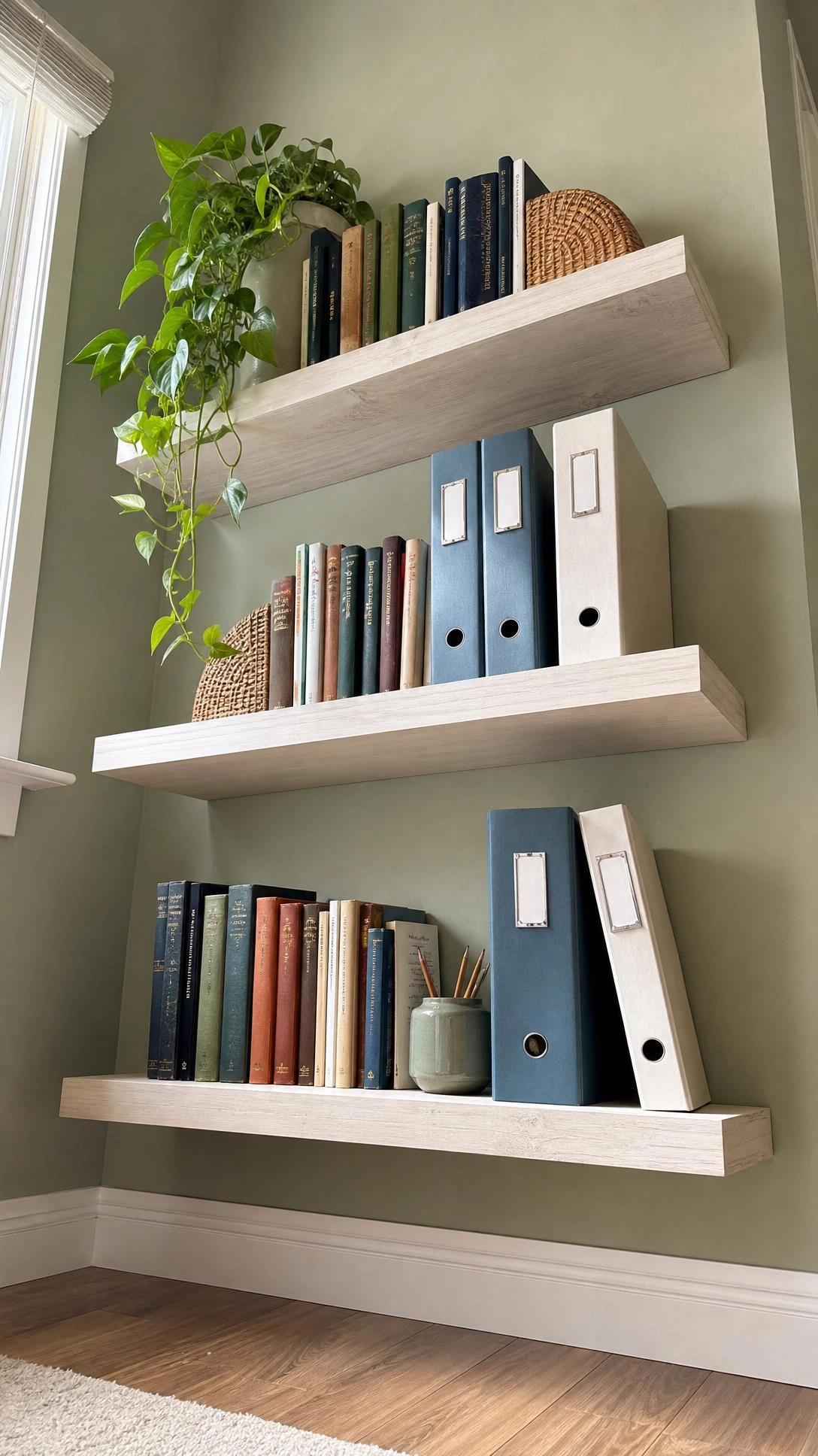
Bookshelves that sit on the floor take up a lot of room, which is a problem in a smaller home office where every square foot matters.
Floating shelves mounted directly on the wall behind or beside the desk keep books, binders, and reference materials close without eating into floor space.
A set of two shelves in a warm white or natural wood finish, each about 24 inches wide, is usually enough to clear a significant amount of stuff off the desk surface.
The key is actually using them for work things and not letting them slowly fill up with decorative objects, which happens faster than expected.
One shelf for active work materials and one for reference things that get used less often tends to be the most practical split.
6- A Dedicated Inbox Tray for Paper
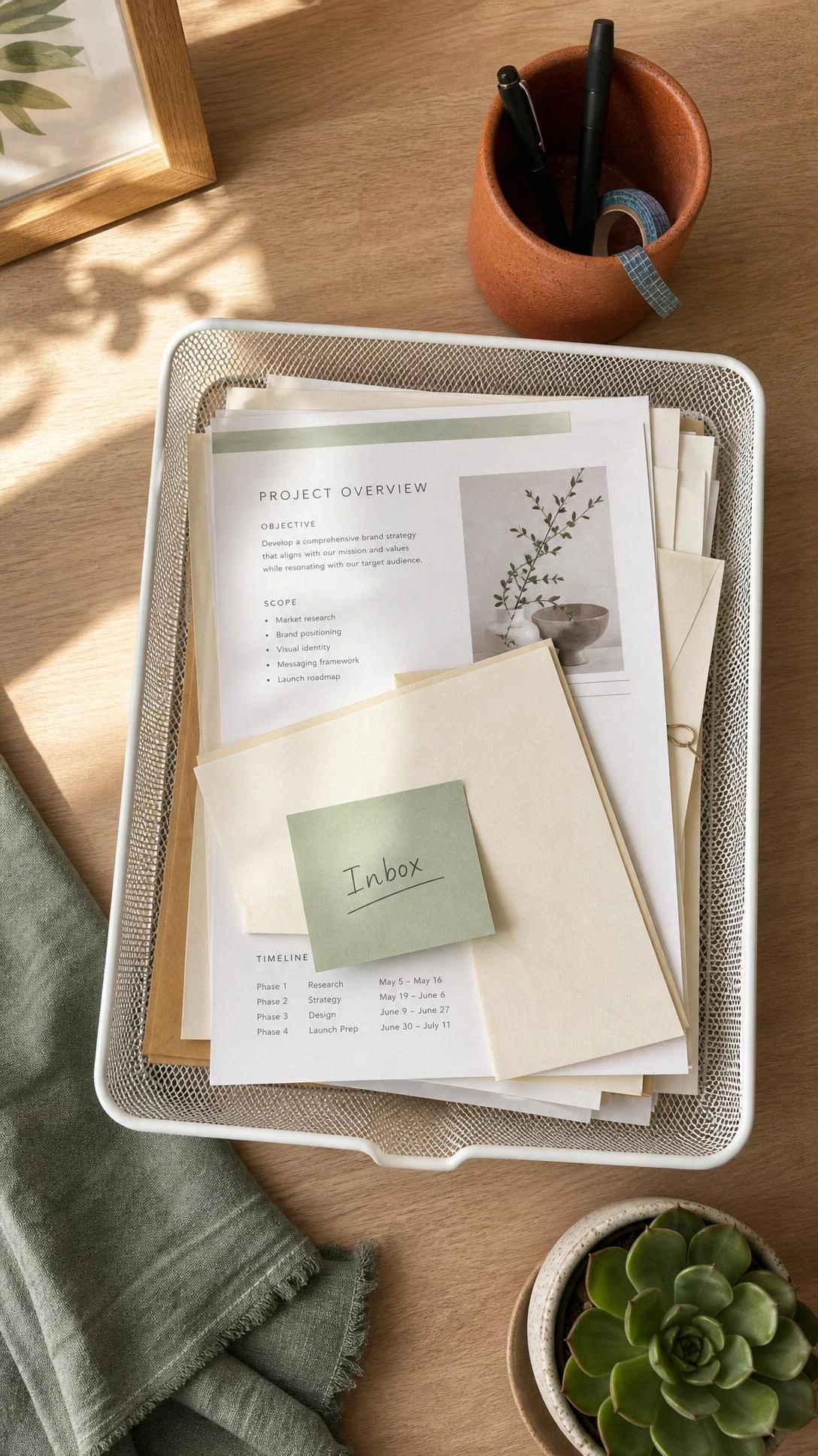
Paper is the thing most home office organization systems fail to deal with honestly.
A single vertical or stacked inbox tray gives paper one place to land instead of spreading across the entire desk over the course of a week.
The rule that actually works is one tray for things that need action and one tray for things waiting to be filed, and nothing else gets to sit on the desk surface at all.
A stacked two-tier metal tray in matte black or rose gold runs around $15 to $20 and looks decent enough that it does not feel like an office supply afterthought.
Most people find that once paper has a designated landing spot, the whole desk feels more manageable even if nothing else has changed yet.
7- Monitor Riser With Storage Underneath
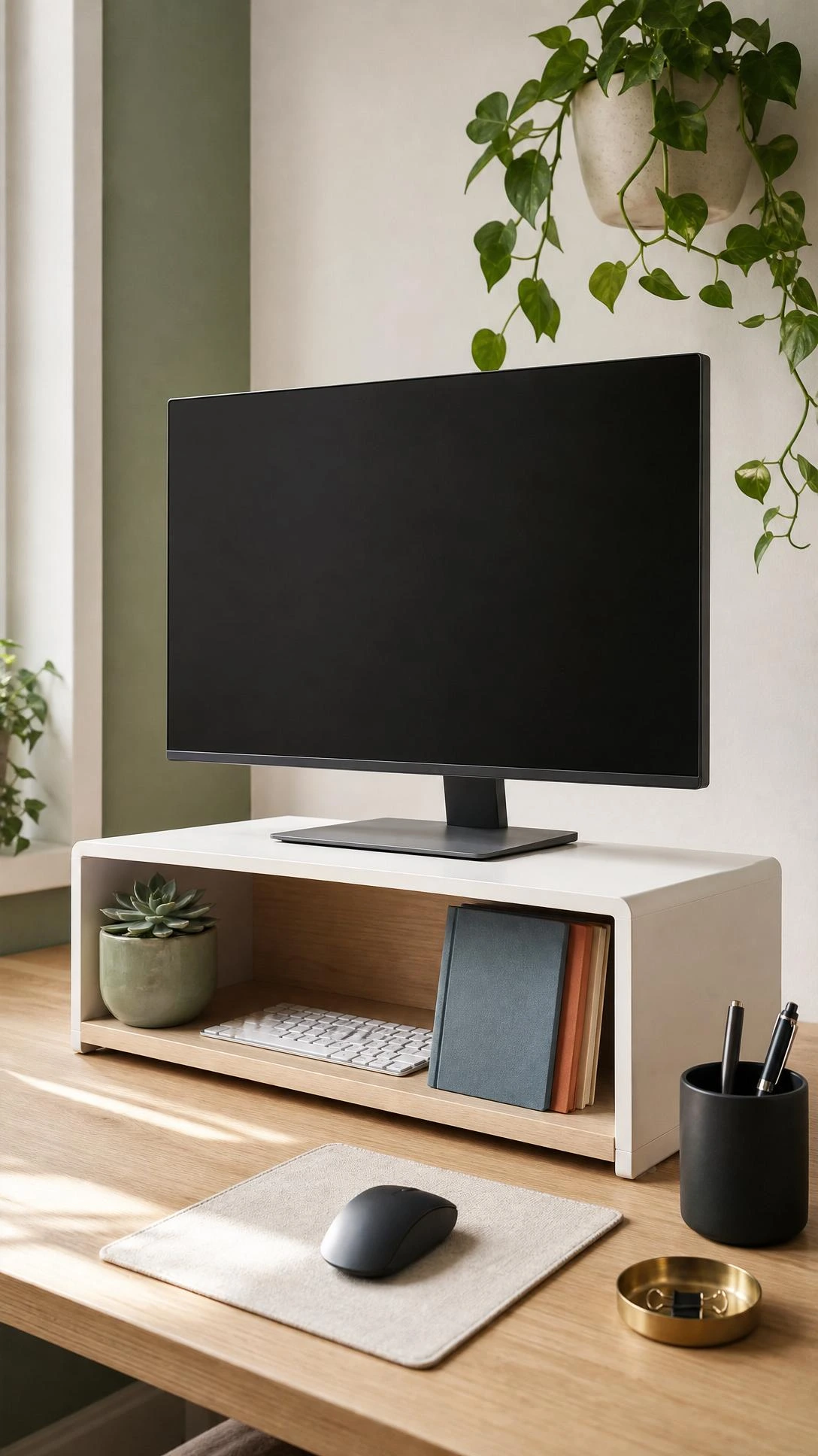
A monitor riser is one of those things that looks like a small upgrade but actually solves several problems at once.
Lifting the monitor to eye level is better for posture, which matters a lot when someone is sitting at a desk for six or eight hours, but the real bonus is the open storage space it creates underneath.
That space is perfect for a keyboard, a notebook, or a small tray for daily essentials that would otherwise be scattered across the surface.
Bamboo monitor risers with one or two small drawers built in are available for around $30 to $40 and feel much more intentional than a stack of old textbooks, which is what a lot of people use first.
It is one of those changes that makes the whole desk feel like it was designed on purpose.
8- Pen and Pencil Cup or Rotating Caddy
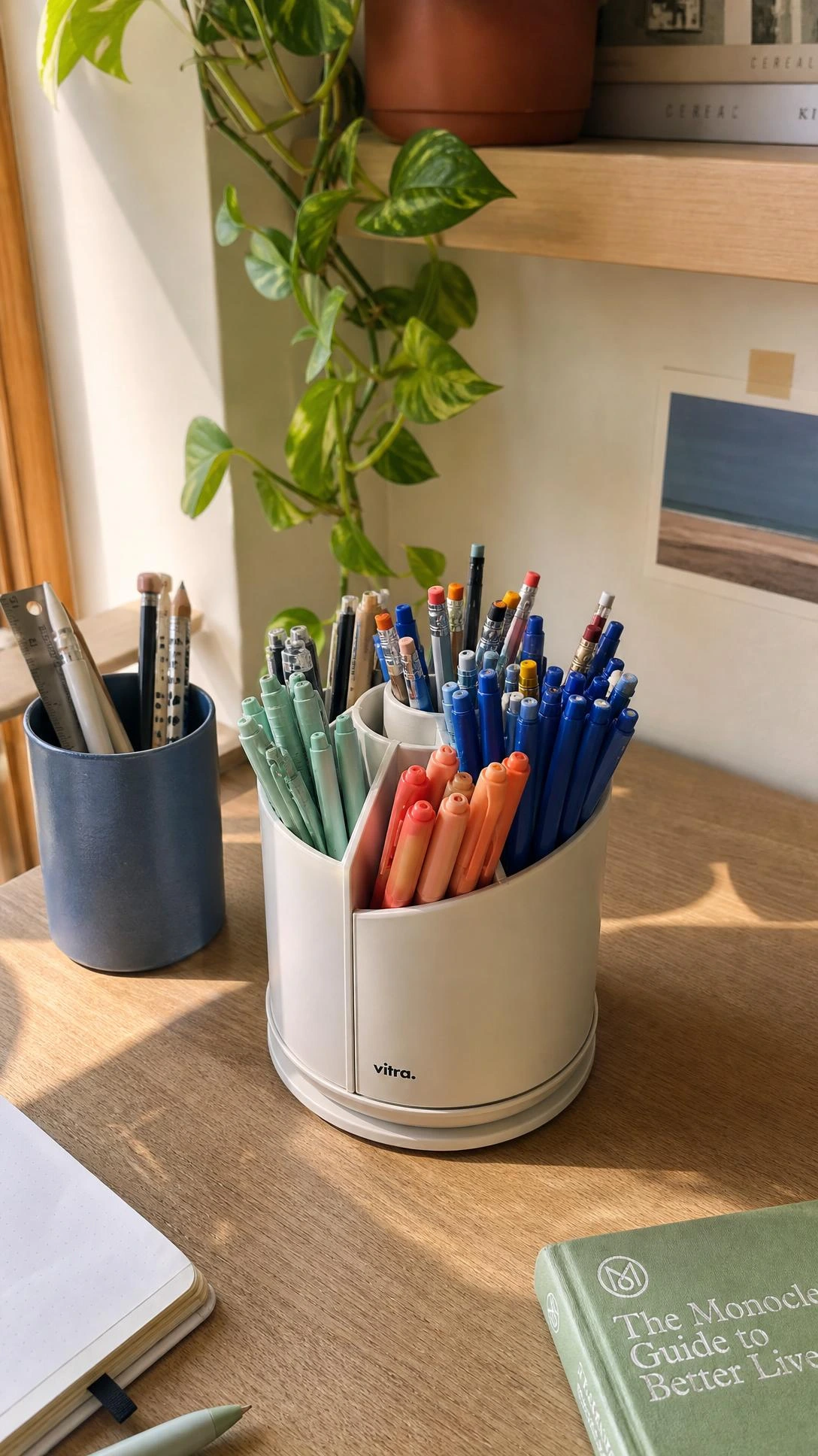
Loose pens rolling around a desk are a small annoyance but they add up to a surprisingly cluttered feeling over time.
A single cup or a small rotating caddy keeps pens, pencils, markers, and highlighters in one spot so they stop migrating across the entire workspace.
The rotating kind with multiple compartments is especially useful for people who use a mix of different tools regularly, since everything stays visible and accessible without taking up extra desk real estate.
Ceramic cups in a solid color like sage green or matte black tend to look intentional rather than purely functional, which is always a nice surprise for something so basic.
Keeping only the pens that actually work in the cup makes a bigger difference than it sounds like it should.
9- Weekly Planner or Desk Pad Calendar
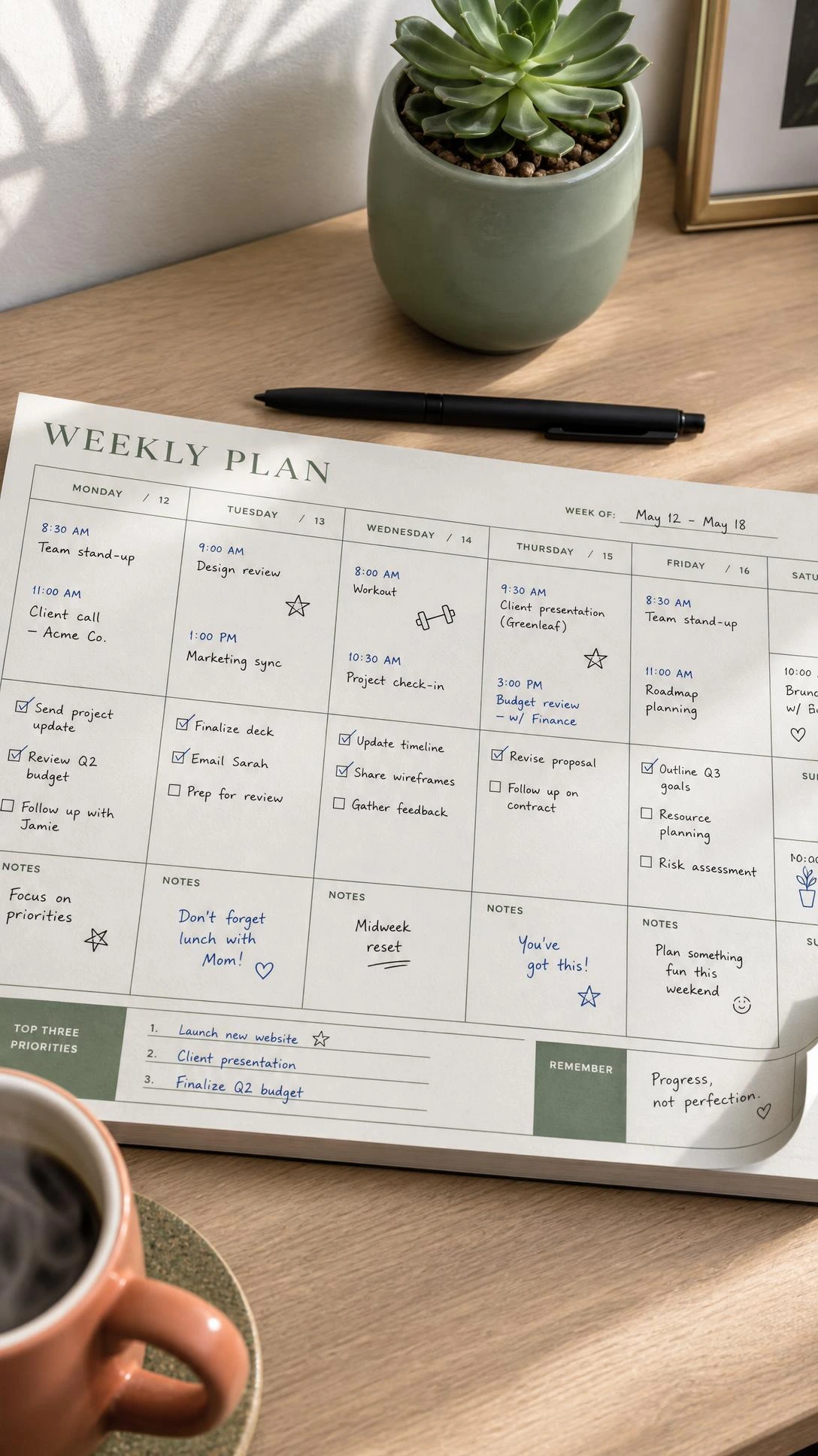
Digital calendars are useful but a lot of people still think better when they can see the week written out in front of them.
A large desk pad calendar or a weekly planner that sits flat on the desk surface works as both a schedule and a soft, clean base layer for the workspace.
The ones with a full week across two pages and a few lines for daily notes are the most practical format for a home office because they capture tasks and appointments in one glance.
Appointed and Poketo both make ones in the $18 to $28 range that look good enough to leave out without feeling like office supply overflow.
Having the week visible tends to reduce the number of times someone has to stop working to open a phone or laptop just to check what is next.
10- Small Utility Cart for Office Supplies
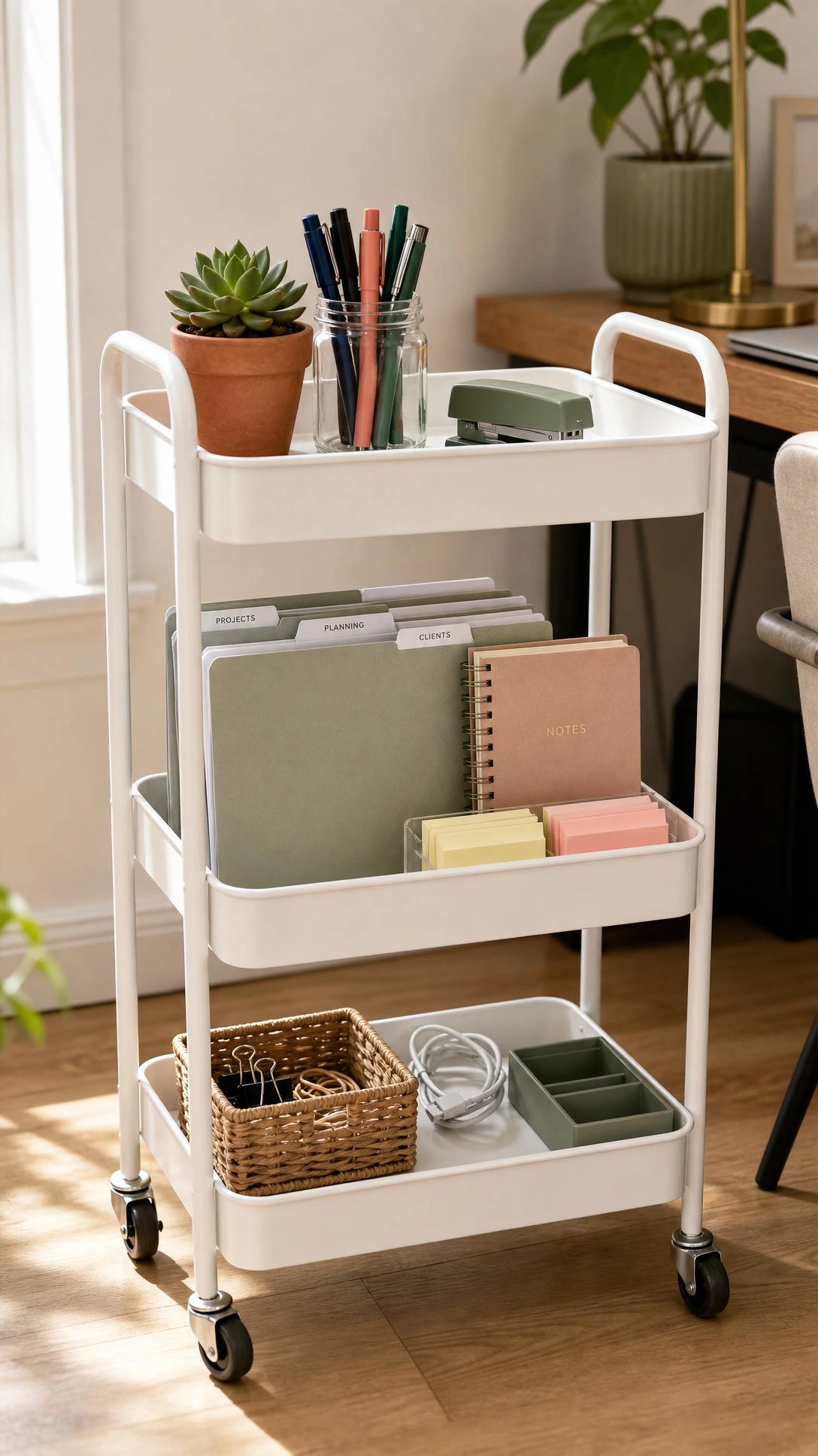
A rolling utility cart is one of the more flexible home office organization ideas because it can live beside the desk and move out of the way when it is not needed.
The top tier works well for things used every day like notebooks, a stapler, or headphones, and the lower tiers can hold backup supplies, files, or even a small printer if it is a lightweight one.
The ALEX rolling cart from IKEA and the Raskog cart are both popular choices in the $35 to $60 range and come in colors that blend into most office spaces without looking clunky.
The cart works best when each tier has a clear category so it does not become a rolling junk drawer within the first two weeks.
It is also genuinely useful for people who do not have a lot of desk drawer space to begin with.
11- Cord Labels or Cable Clips With Tags
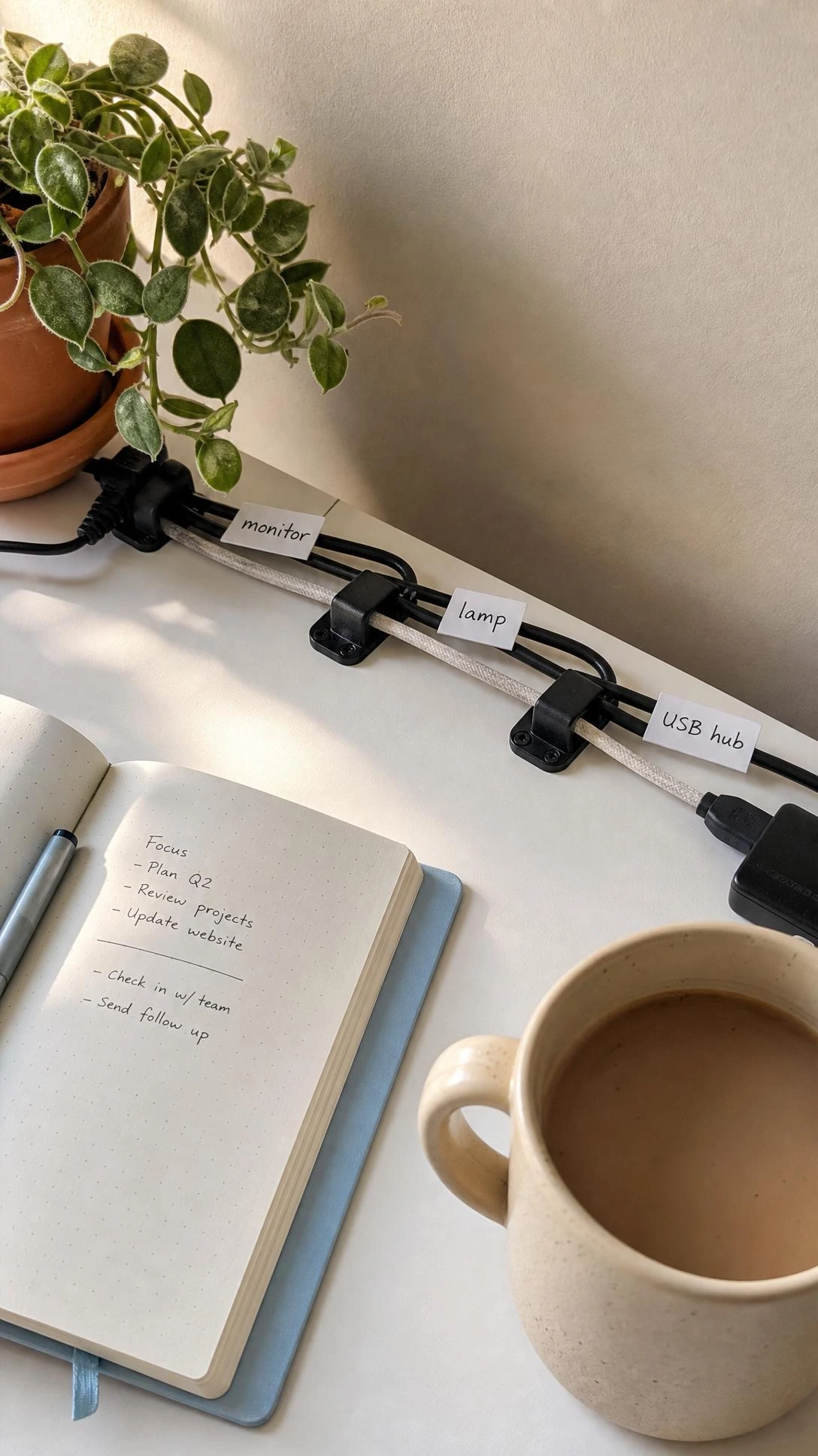
Unplugging the wrong cord and shutting down the wrong thing is one of those small but deeply annoying home office experiences.
Labeling cords with small adhesive cable labels or even strips of washi tape with the device name written on them solves this immediately and costs almost nothing.
Pre-printed cable label kits are available for around $8 to $12 and fit most standard cord widths, or a label maker set to a small font works just as well if one is already in the house.
It sounds like a very small thing but it is one of those fixes that quietly removes a recurring frustration from the workday.
This works best when done at the same time as any cord management setup, so everything gets organized and labeled in one go.
12- Printer Stand With Hidden Storage
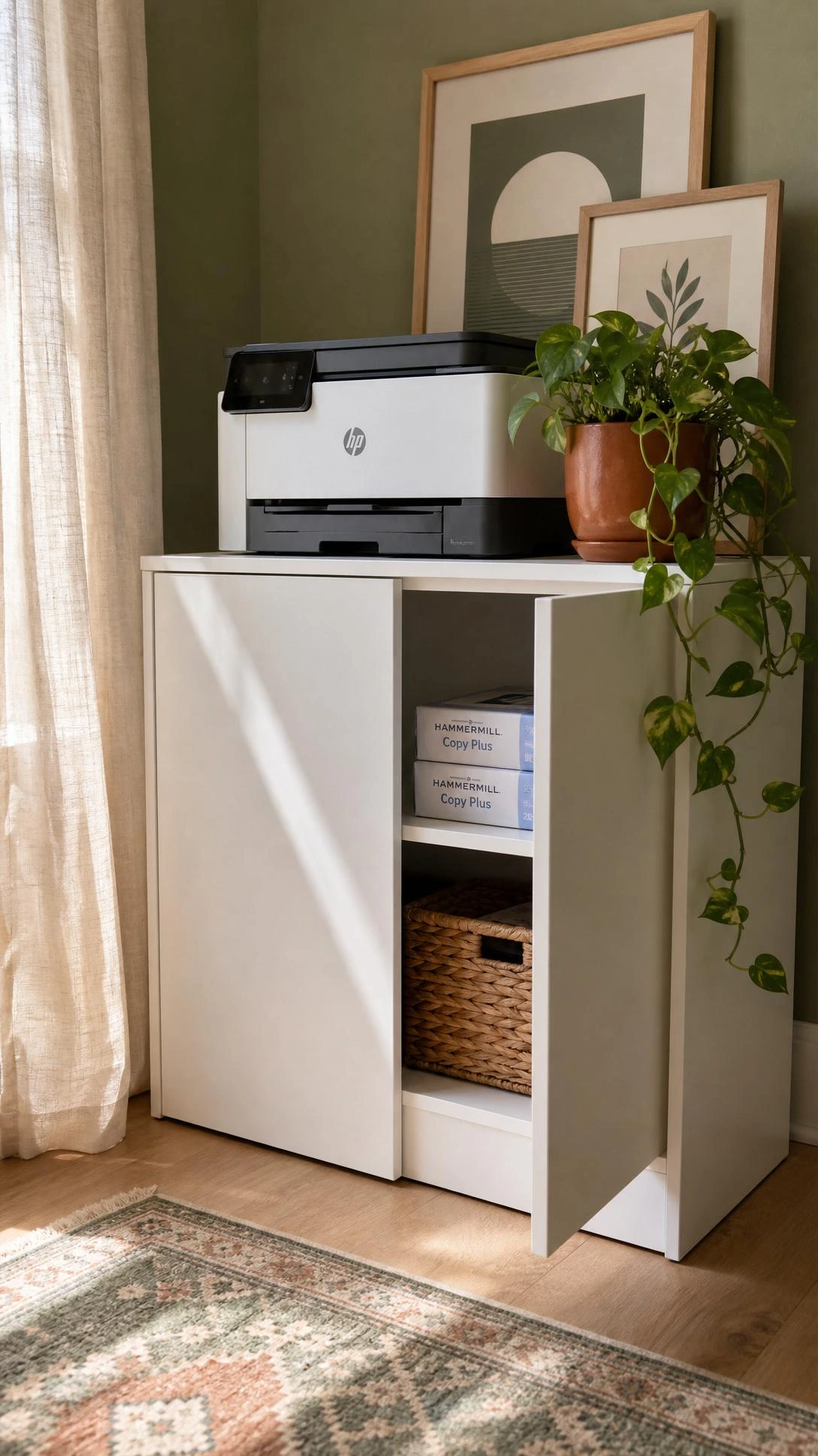
Printers are bulky and they take up desk space that most home office setups cannot really afford to give away.
Moving the printer to a dedicated small stand beside or below the desk immediately clears a significant portion of the surface and makes the whole workspace feel more open.
The best printer stands have a cabinet or shelf below where paper reams, ink cartridges, and other supplies can live out of sight instead of stacking up beside the printer.
A simple two-shelf printer stand in white or black runs around $40 to $60 and is a much cleaner solution than balancing the printer on a stack of file boxes, which is what tends to happen otherwise.
Once the printer is off the desk, it is surprising how much bigger the whole workspace feels.
13- Clear Acrylic Organizer for Daily Essentials
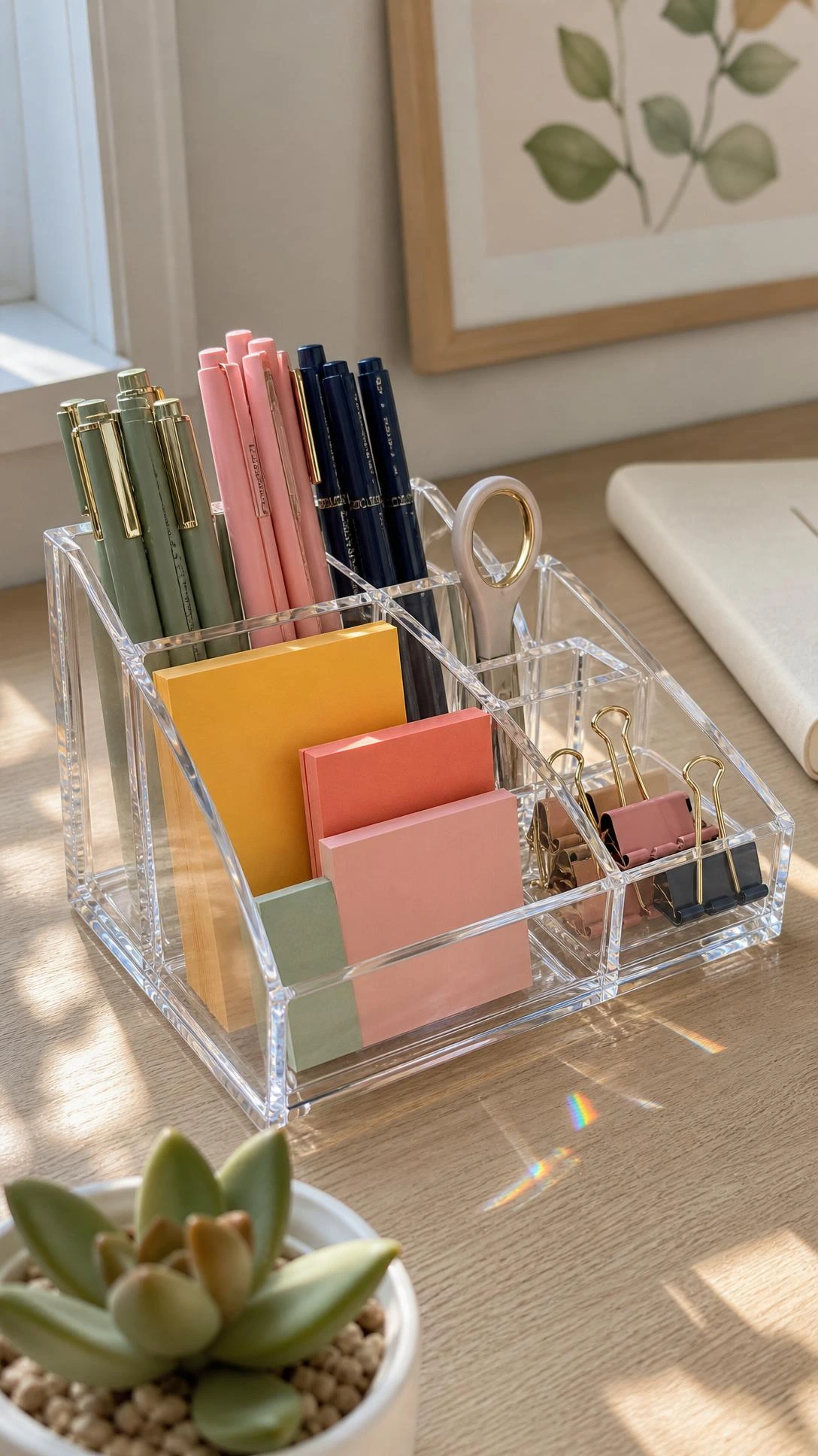
Some things need to stay on the desk surface because they get used constantly throughout the day, and a clear acrylic organizer gives those items a defined spot without adding visual noise.
A small multi-compartment acrylic tray works well for things like a phone, a USB hub, a few sticky note pads, and lip balm or hand cream, the kind of small daily-use items that otherwise scatter across the workspace.
Because it is clear, it does not visually add clutter the way a solid colored organizer can, which makes it a good choice for smaller or more minimal desk setups.
Most clear acrylic desk organizers run in the $15 to $25 range and are easy to wipe clean, which is more useful than it sounds given how often they get touched throughout the day.
I think having one designated spot for daily essentials is the kind of small habit that makes a desk feel consistently put together rather than clean only right after tidying.
A Cleaner Desk Starts With One Small Fix
Nobody needs to overhaul the entire office in one afternoon to feel a difference.
Most of the home office organization ideas that actually stick are the ones that solve one specific annoying problem rather than trying to redesign everything at once.
Picking the thing that bothers the most, the cords, the paper pile, the missing pens, and fixing just that one thing first tends to create enough momentum to keep going.
A calmer desk makes the whole workday feel a little less like fighting upstream, which is honestly reason enough to start.

Hi, I’m Alizabeth, the creator of Pretty Home Hacks. I share practical home decor ideas, easy DIY projects, organization tips, and budget-friendly ways to make your home feel more beautiful and functional. From small room updates to everyday home hacks, my goal is to share approachable ideas you can actually use in your own space.