


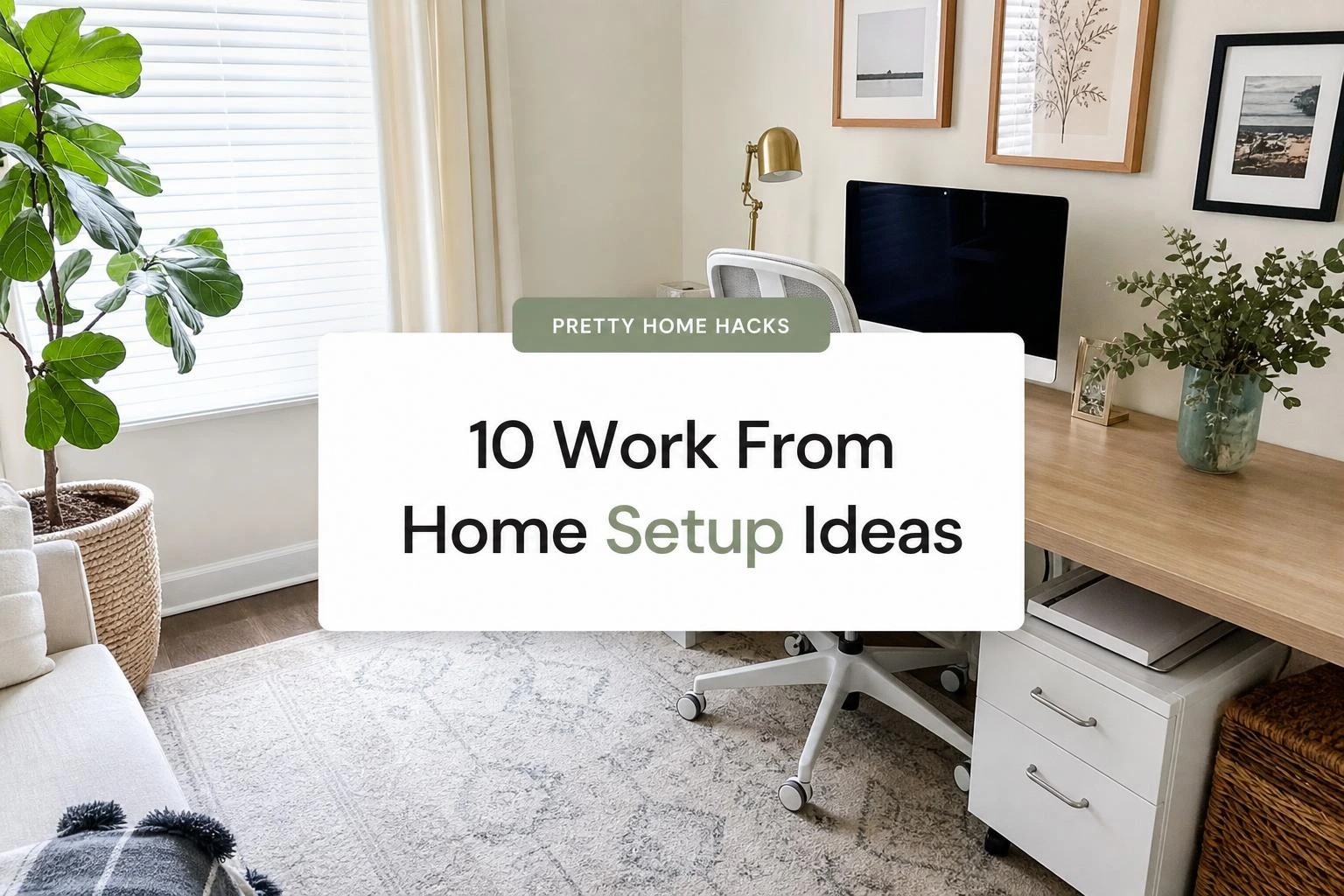
10 Work From Home Setup Ideas for Small Spaces That Actually Make You Sit Down and Work
Working from home in a small space is one of those situations that sounds fine in theory until the third week when the dining table is buried under chargers and notebooks and the “office” is just wherever the laptop happens to land.
Most people assume a proper setup requires a dedicated room, a real desk, and some kind of budget that isn’t happening right now.
The frustrating part is that the space isn’t usually the problem — it’s that nothing about the setup feels intentional, so sitting down to work feels like sitting down in the middle of the living room, which is exactly what it is.
Small work from home setup ideas don’t have to mean compromise — they just mean being smarter about what goes where and what actually earns its place in the space.
These ten ideas are the ones that genuinely change how a small space feels to work in, and most of them don’t cost much or take more than an afternoon.
1- Wall Mounted Fold Down Desk
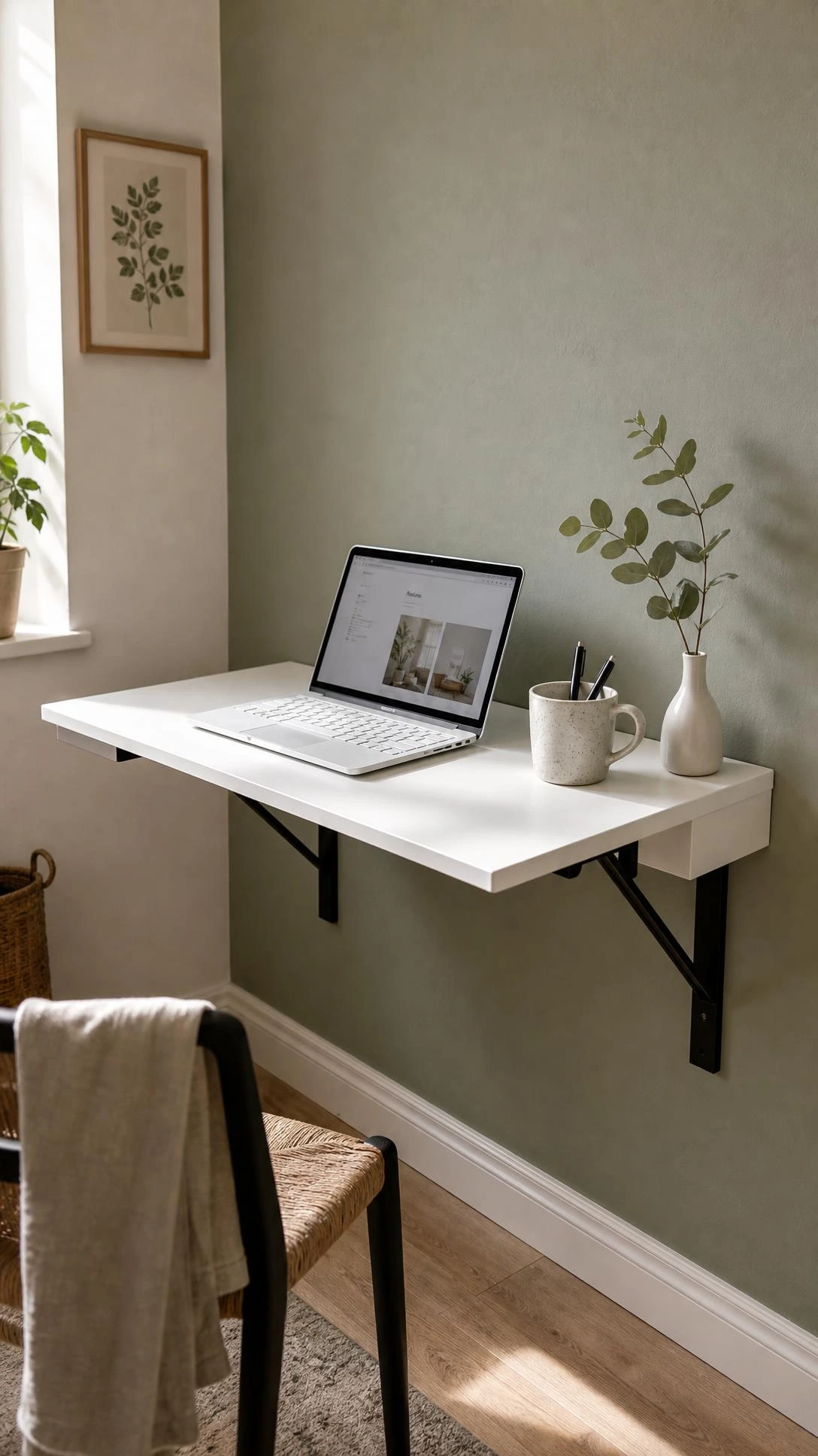
Nobody thinks about a fold-down desk until they’ve spent six months working at a kitchen table and finally hit their limit.
A wall-mounted desk folds flat against the wall when it’s not in use, which in a small apartment is the difference between having a home office and having a wall.
The key detail most people miss is the height — 73 to 75 centimetres is the standard ergonomic range for most adults, and getting this wrong makes the whole thing uncomfortable fast.
A small shelf mounted just above it keeps the surface clear without losing the storage.
This works best on a solid wall with studs, so a quick check before drilling saves a lot of frustration later.
Most rooms feel instantly tidier when the desk disappears at the end of the day, which is always a nice surprise.
2- Corner Desk Setup for Wasted Angles
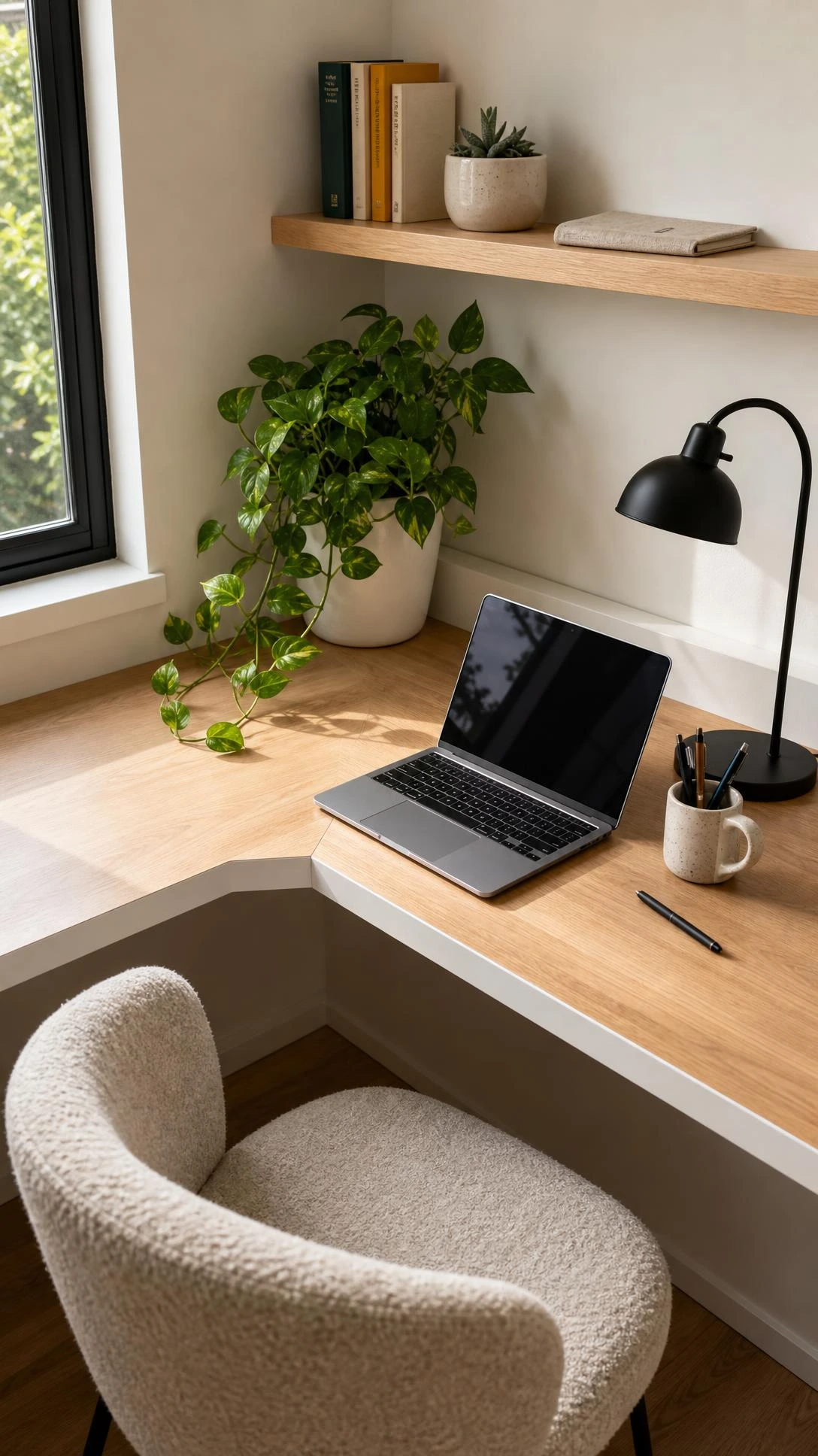
Corners are the most underused space in almost every small room, which sounds obvious once someone points it out.
A compact L-shaped or triangular corner desk turns dead space into a full working area without pulling the room in half.
A 100 by 100 centimetre corner desk fits comfortably in most bedroom corners and gives enough surface for a monitor, a notebook, and a coffee that isn’t dangerously close to the keyboard.
Positioning the desk so the wall is directly in front rather than a window on the side cuts down on visual distraction without sacrificing light entirely.
This setup works especially well in studios or one-bedroom apartments where the living space and the workspace are technically the same room.
3- Monitor Arm for a Cleaner Desk Surface
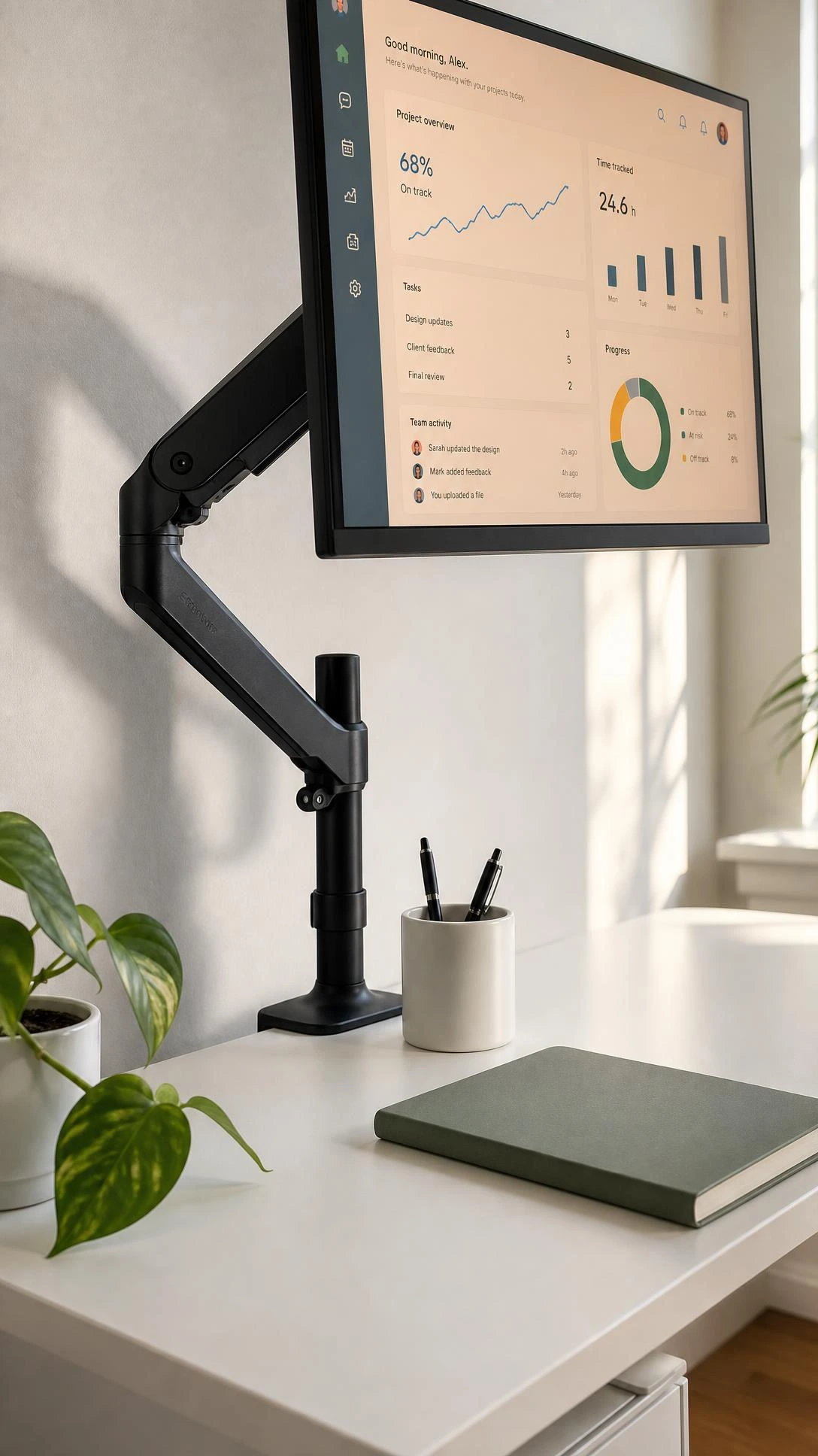
A monitor arm is one of those things that looks like a small upgrade but changes the feel of a desk completely.
Clamping the monitor to the desk edge and getting the stand out of the way frees up a surprising amount of surface space — easily 30 to 40 percent of the desk is suddenly usable again.
This is consistently one of the top tips from people who actually work from home full time, and once someone tries it they wonder why they waited.
A basic single monitor arm starts around $30 to $40 and handles most standard monitors up to 27 inches without any trouble.
The other benefit is getting the screen to the right eye height, which most people have never actually done with a fixed stand.
4- Vertical Shelving Instead of Desk Storage
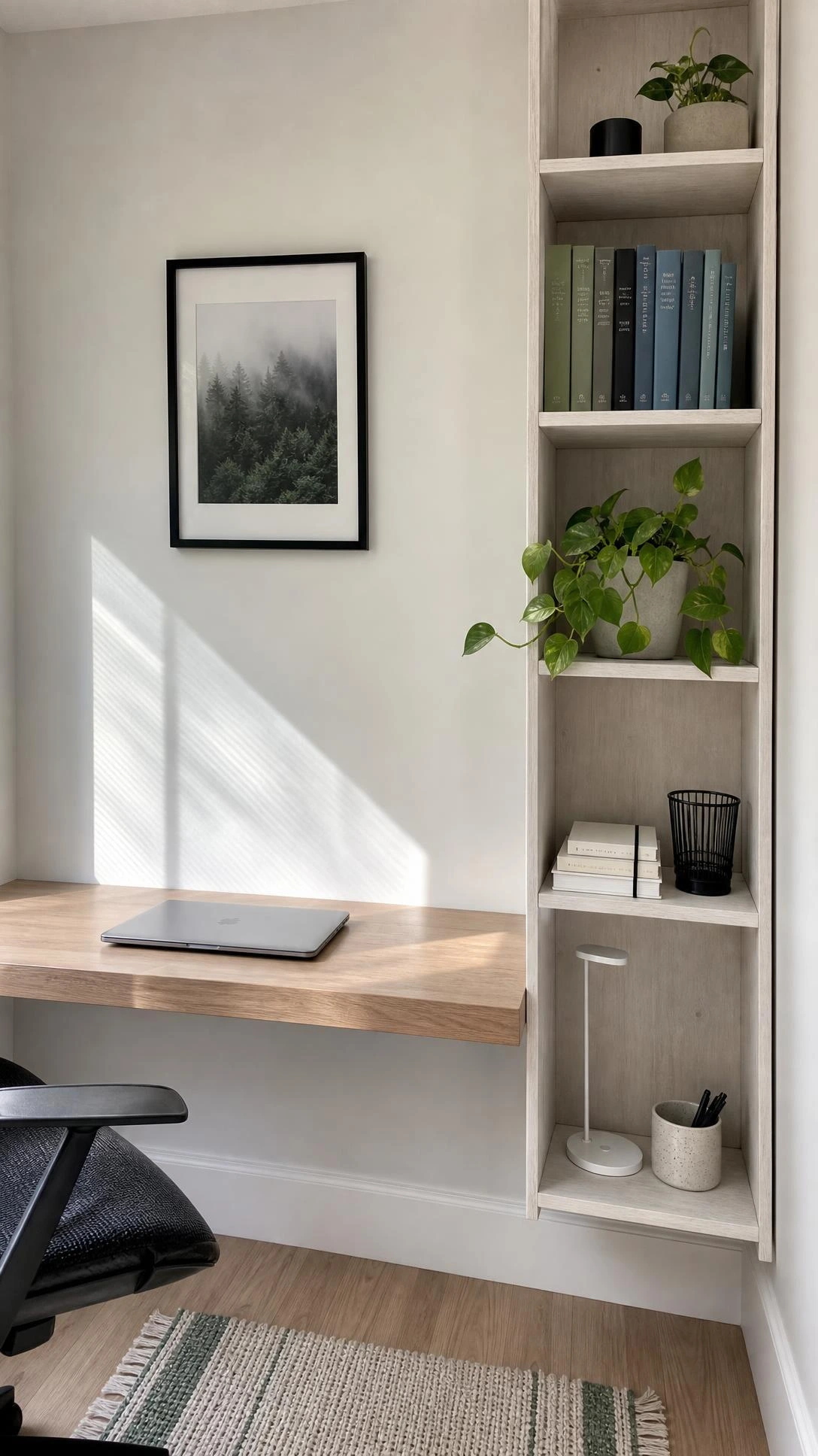
When desk space is limited, the instinct is to find smaller things to put on the desk, but the better move is to get storage off the desk entirely.
A narrow floating shelf or a slim wall-mounted shelving unit above the workspace keeps everything accessible without touching the surface.
A pegboard painted the same colour as the wall — white, warm cream, or sage green — is one of the most Pinterest-friendly and actually functional options for a small home office wall.
The goal is to keep the shelf minimal: a couple of books, a plant, and one small box for cables is plenty before it starts to feel cluttered again.
Vertical storage works best when each spot has a job — random items migrate back to the desk surface fast if the shelf has no real system.
5- A Chair That Actually Fits the Space
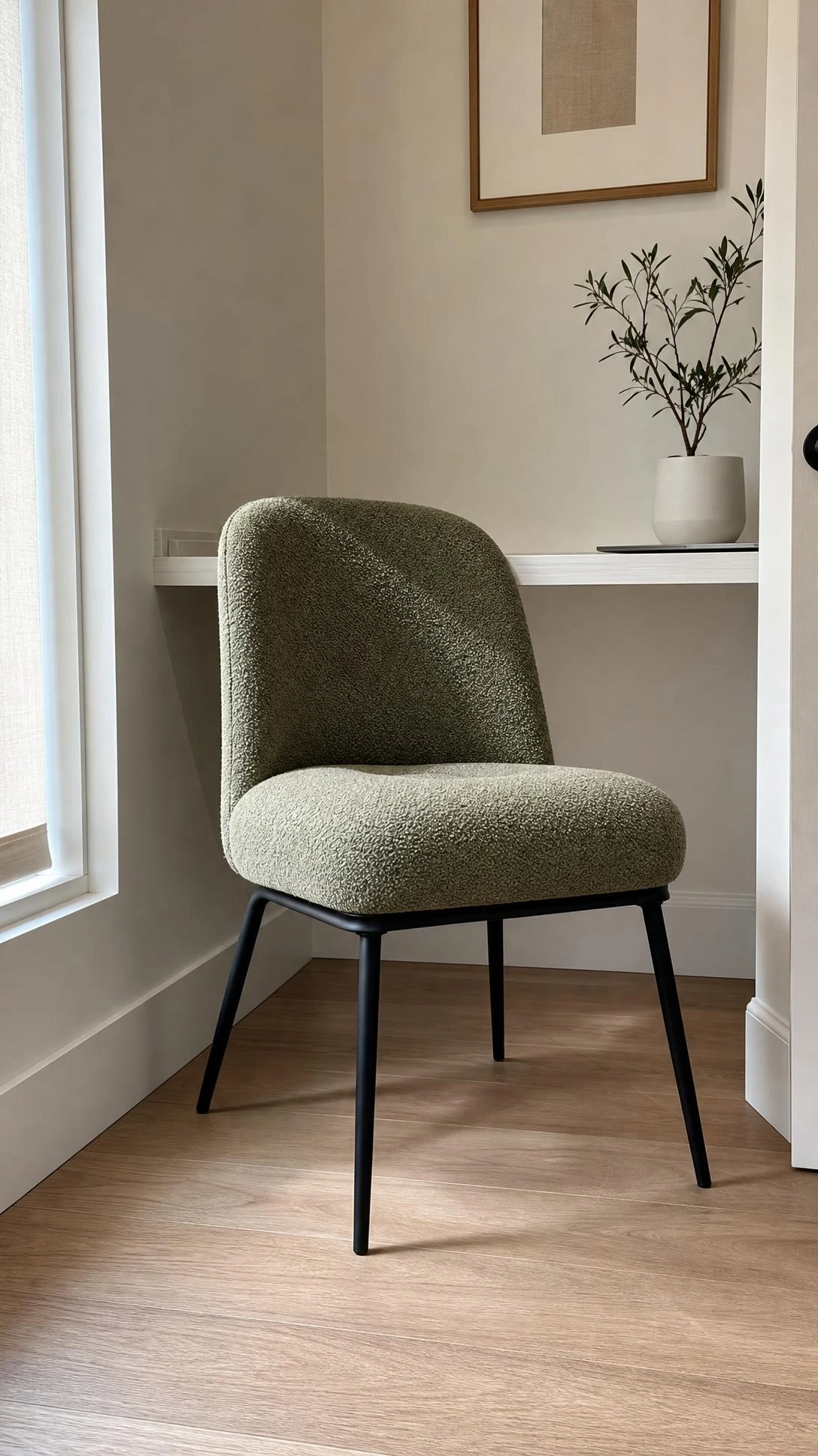
Most people either spend too much on a chair they don’t have room for or use whatever is already in the house and end up with a sore back by noon.
There is a middle ground, and it usually looks like a slim ergonomic task chair or a well-cushioned stool-height seat for people who prefer a more active sitting position.
I think the chair matters more than almost anything else in a small home office — it determines whether the space feels like work or feels like endurance.
For very tight spaces, armless chairs are worth considering since they slide fully under the desk and take up almost no visual space when not in use.
A chair in a neutral like oatmeal, charcoal, or black integrates into most rooms without looking like office furniture was dragged in from a supply closet.
6- Dedicated Lighting That Isn’t Just Overhead
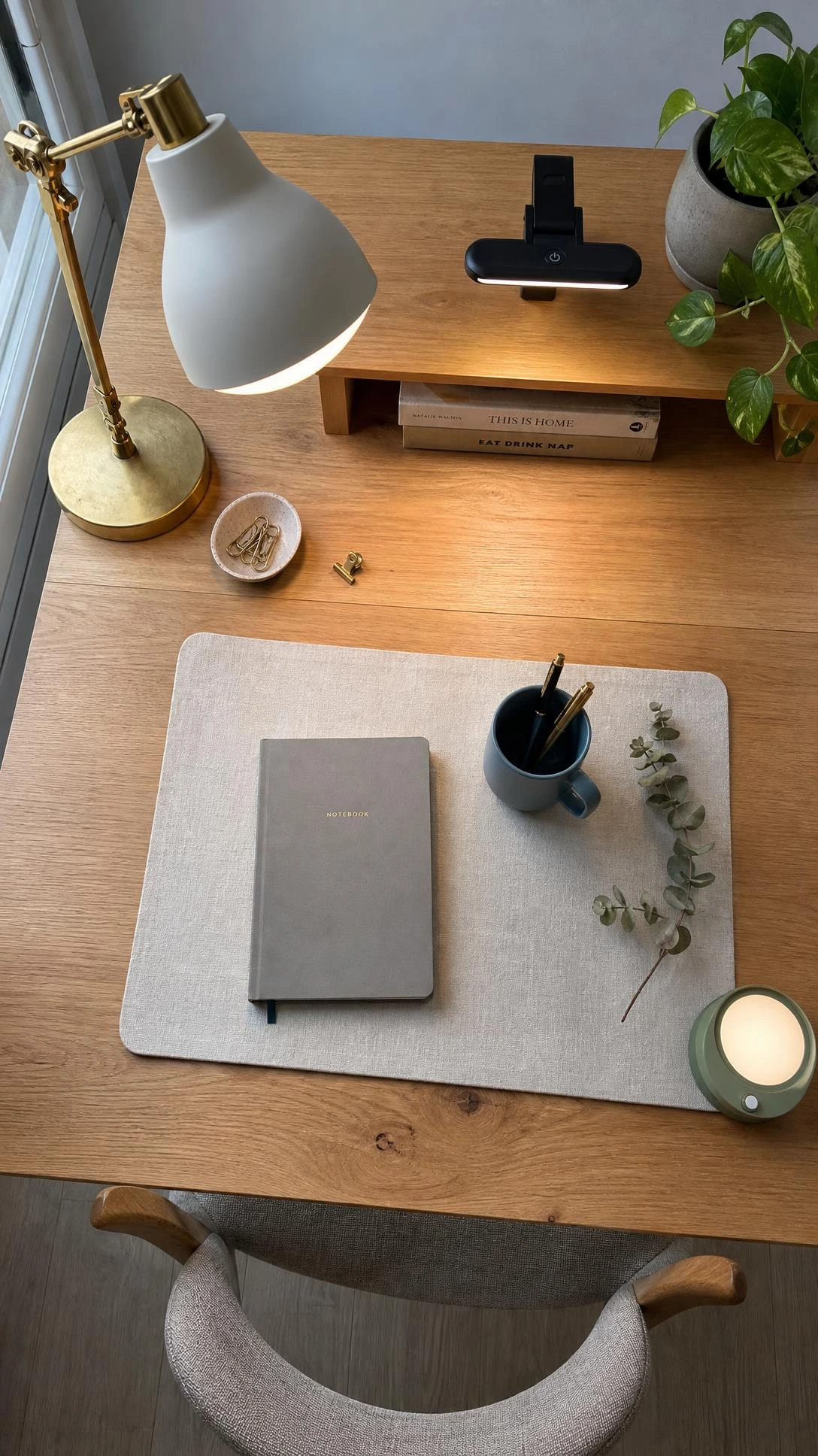
Overhead lighting in most apartments and small rooms is flat and uninspiring, and working under it for eight hours feels about as motivating as it sounds.
A small desk lamp with adjustable brightness makes the workspace feel intentional in a way that overhead lighting never quite manages.
A clip-on lamp is worth considering in very tight setups because it attaches directly to the monitor or shelf and adds zero desk footprint.
Warm white light in the 2700K to 3000K range is easier on the eyes during long sessions than the cooler daylight bulbs most people default to.
Separating the workspace light from the room’s general light also helps the brain settle into work mode, which sounds a little too wellness-y but genuinely does make a difference.
7- Cable Management With Longer Cables
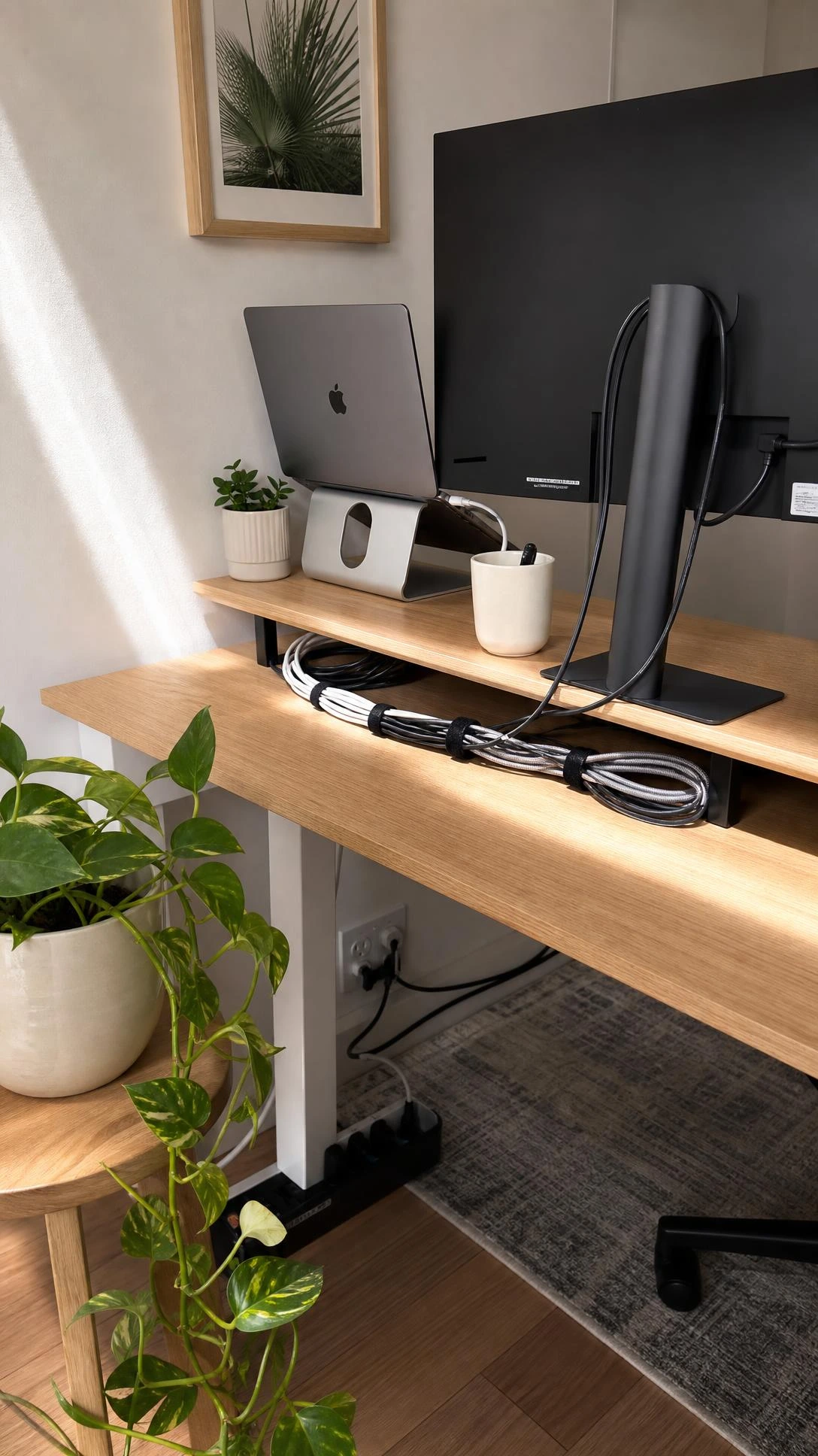
Cable chaos is one of those things that nobody notices is affecting them until the desk is finally clear and the whole space feels calmer for no obvious reason.
The counterintuitive fix that real remote workers keep recommending is using longer cables, not shorter ones — longer cables reach the nearest wall or floor outlet cleanly instead of pulling tight across the desk surface.
A simple cable box or a stick-on cable channel along the back of the desk keeps everything off the surface and out of sight for under $15.
Velcro cable ties beat zip ties for small setups because they’re reusable when something needs to change, which it always does.
The desk looks completely different once the cables are dealt with — it’s one of those before and after moments that actually lands.
8- A Small Rug to Define the Work Zone
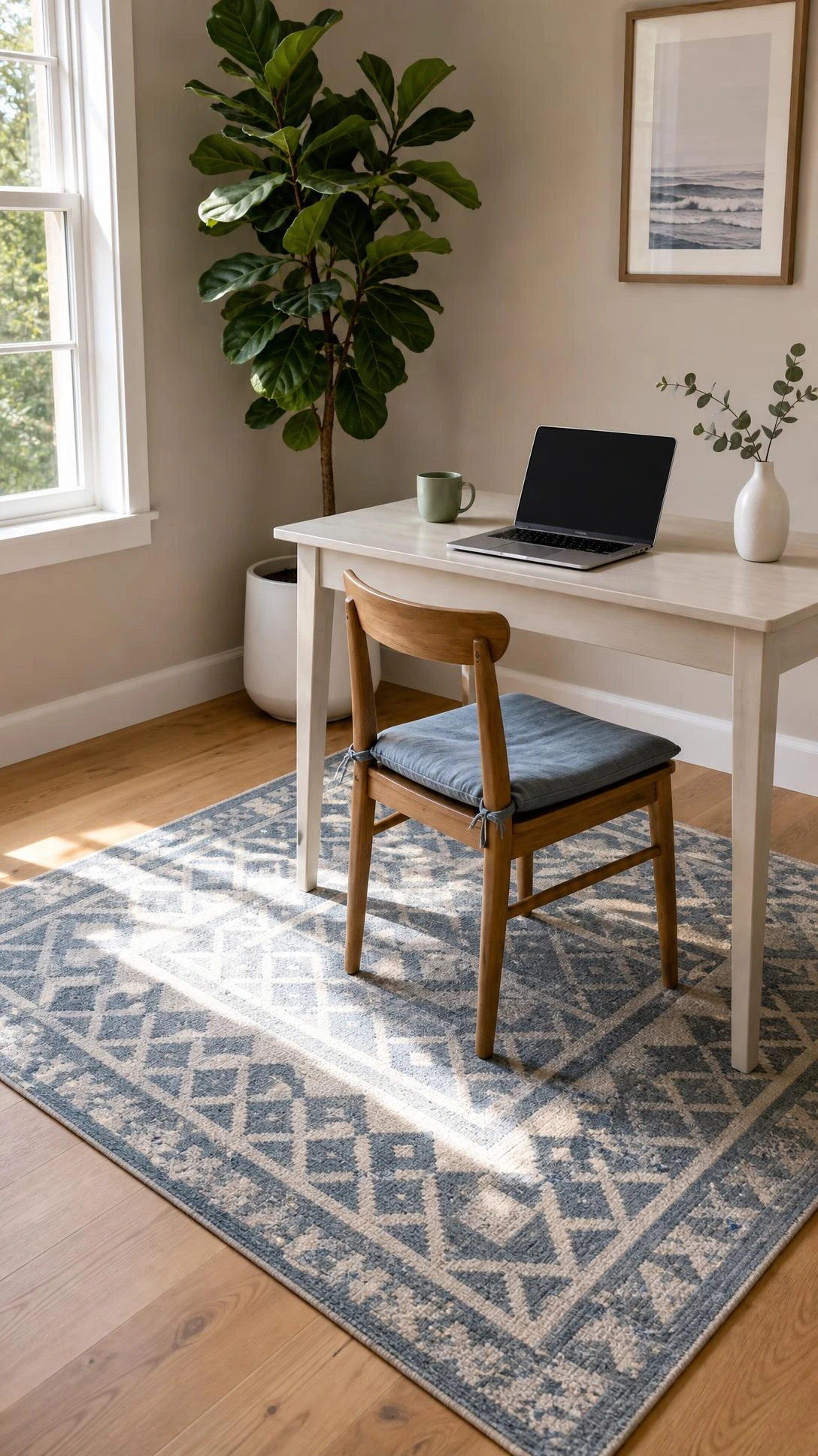
In a studio or open plan small space, the hardest part of working from home is that the workspace has no edges — it just bleeds into the rest of the room.
A small rug placed under the desk chair creates a visual boundary that tells the brain this specific patch of floor means work, which sounds overly simple but actually helps.
A 120 by 180 centimetre rug fits neatly under most compact desk setups without spilling into the surrounding space.
A low-pile rug in a neutral or a muted pattern works best practically since the chair rolls smoothly and the rug doesn’t bunch up every time someone stands.
This is also one of the lower cost upgrades at $40 to $80 for a decent basic option, and it changes how the corner reads from across the room in a way that is quietly satisfying.
9- Multi Purpose Furniture That Earns Its Place
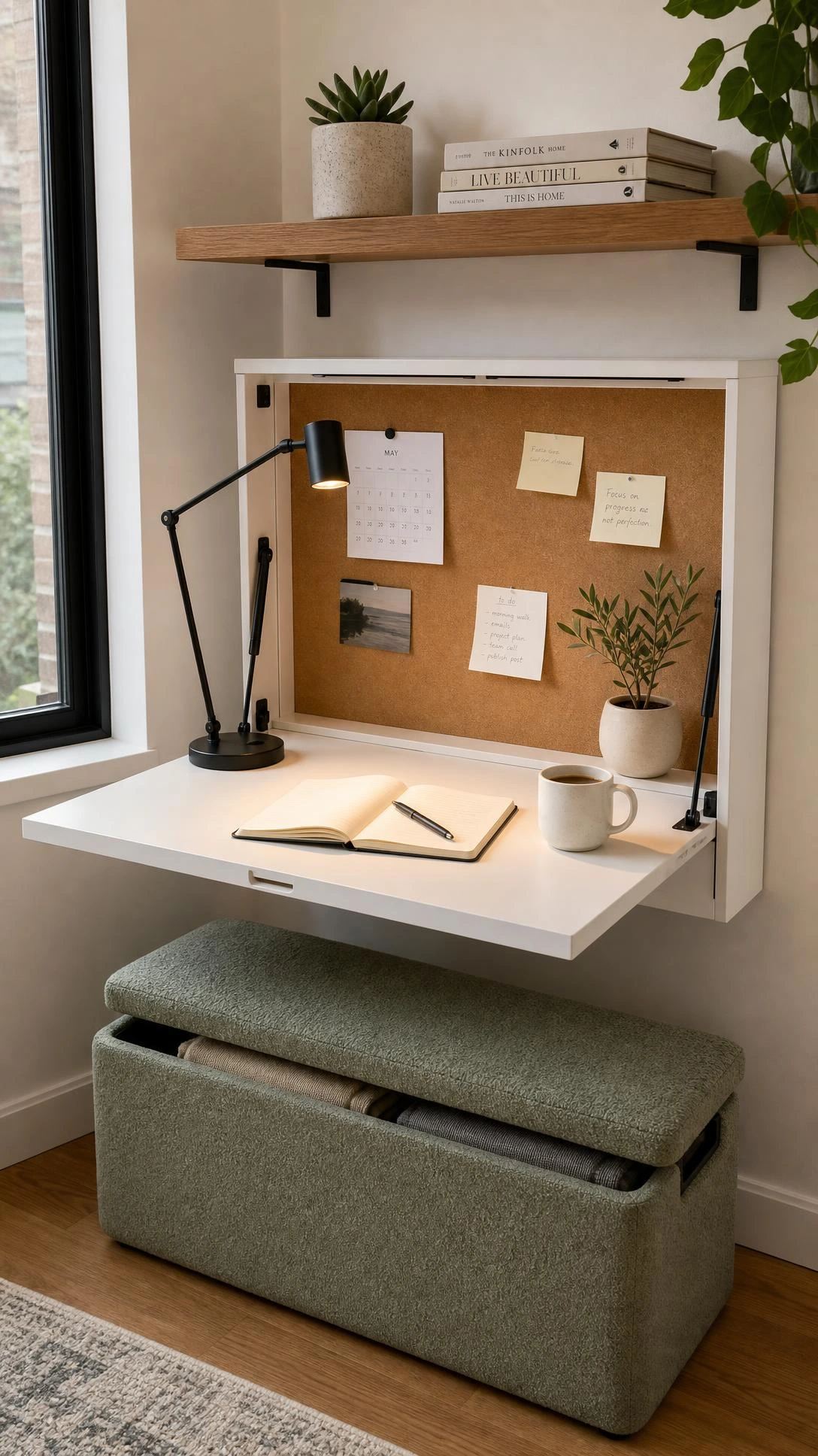
In a small space every piece of furniture has to do more than one thing or it doesn’t deserve to be there, and the home office corner is no exception.
A desk that doubles as a console table behind a sofa works surprisingly well in studios — it holds a lamp and a few books in the evening and becomes a full workspace in the morning.
A storage ottoman near the desk holds office supplies, extra cables, and notebooks, and then doubles as extra seating when the laptop closes at five.
The trick with multi-purpose furniture in work from home setups is choosing pieces that look like home decor first and office furniture second, so the room doesn’t feel like a co-working space that someone also sleeps in.
Brands like IKEA and Wayfair both have solid options in the $80 to $200 range that sit in the sweet spot between functional and actually nice to look at.
10- One Clear Surface Rule
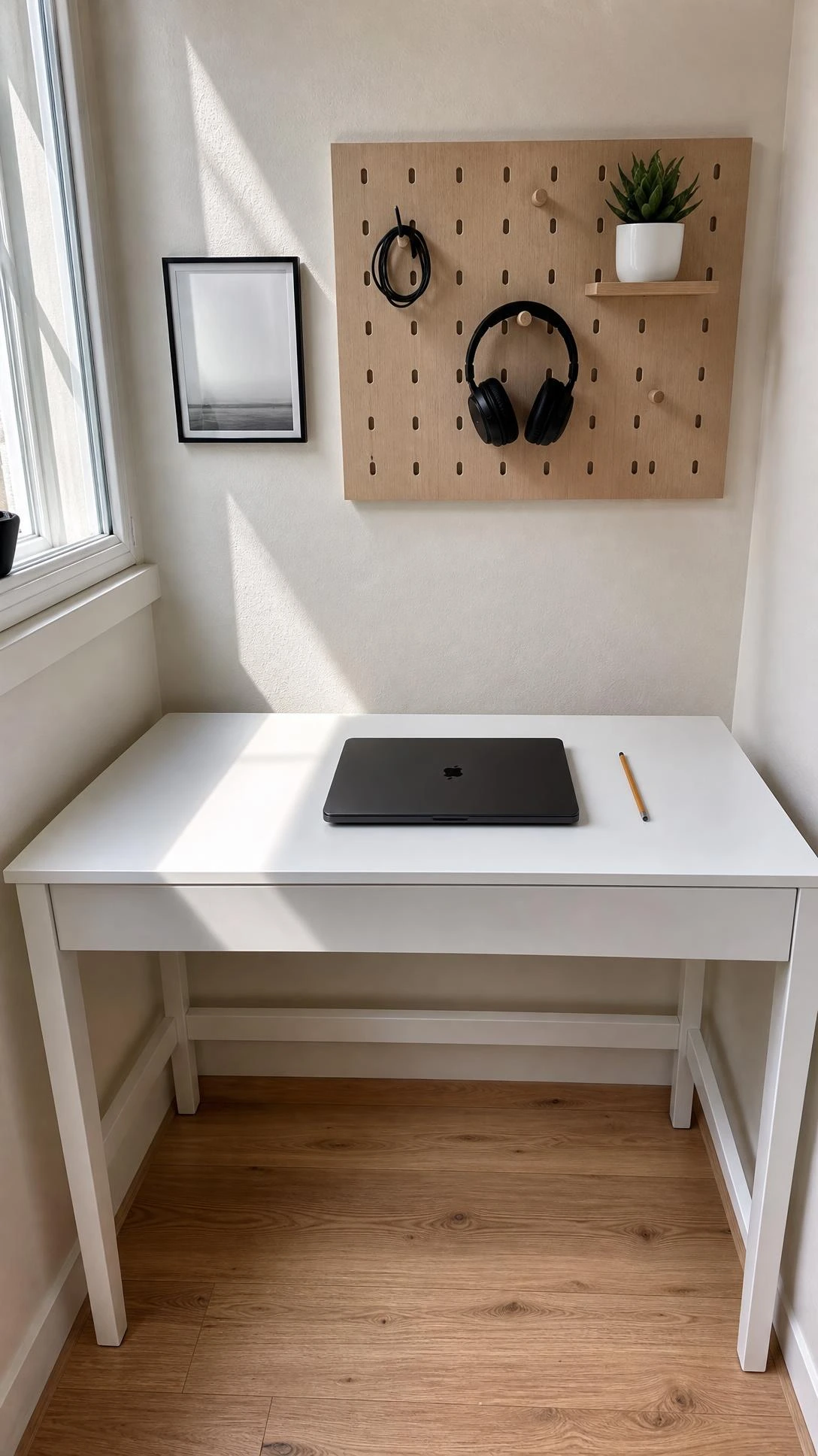
The single most effective work from home setup idea for small spaces is also the least exciting to talk about, which is keeping the desk surface almost completely clear.
One laptop or monitor, one notebook, one pen, and nothing else on the surface — everything else lives in a drawer, on a shelf, or in a box that is not on the desk.
A cluttered desk in a small space makes the whole room feel chaotic, and a chaotic room makes it very hard to convince yourself to sit down and actually start working.
The practical way to make this stick is a small tray or a single drawer unit under the desk where everything lands at the end of the day so the surface resets automatically.
It takes about three days to build the habit and then the clear desk starts to feel normal, which is the point where the setup actually starts working for you.
Where do you want to go next?
Explore by topic
Recently viewed
Small Space Home Office Ideas That Make It Click
None of these ideas require a renovation, a big budget, or a spare room that doesn’t exist.
The shift that actually helps in a small work from home setup is treating the space like it deserves to be a workspace — even if it’s a corner of the bedroom or a fold-down desk in the hallway.
Most people find that fixing two or three things from this list changes how the space feels completely, even when nothing else in the room changes.
A clear surface, a decent light, and a chair that doesn’t make everything hurt by lunch — that’s honestly most of the way there.

Hi, I’m Alizabeth, the creator of Pretty Home Hacks. I share practical home decor ideas, easy DIY projects, organization tips, and budget-friendly ways to make your home feel more beautiful and functional. From small room updates to everyday home hacks, my goal is to share approachable ideas you can actually use in your own space.