


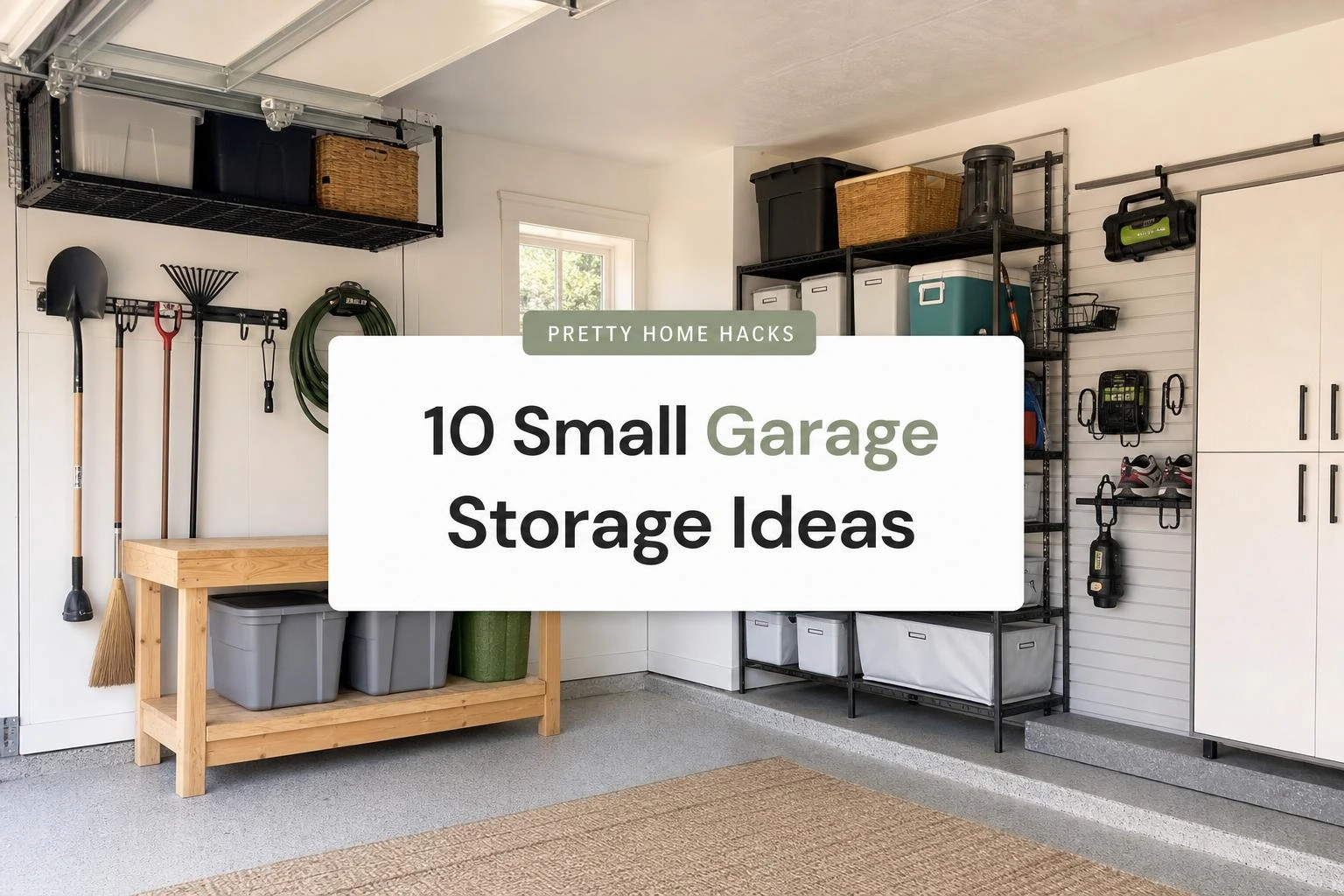
10 Small Garage Storage Ideas That Actually Work in an Embarrassingly Tiny Garage
Most garages start out with good intentions.
Then one season passes, then another, and suddenly there is a folding chair blocking the door, a rake leaning against the car, and nobody can find the extension cord because it got buried under a bag of potting soil sometime last spring.
The frustrating part is that most small garage storage advice assumes you have walls like a barn and ceiling height like a warehouse, which is not most people’s reality.
The thing is, a tiny garage does not need more space — it needs the space it already has used differently, which sounds simple but actually changes everything about how the garage functions day to day.
These ten small garage storage ideas are the kind that work even when square footage is genuinely limited, and none of them require a full weekend renovation to pull off.
1- PVC Slatwall Panels
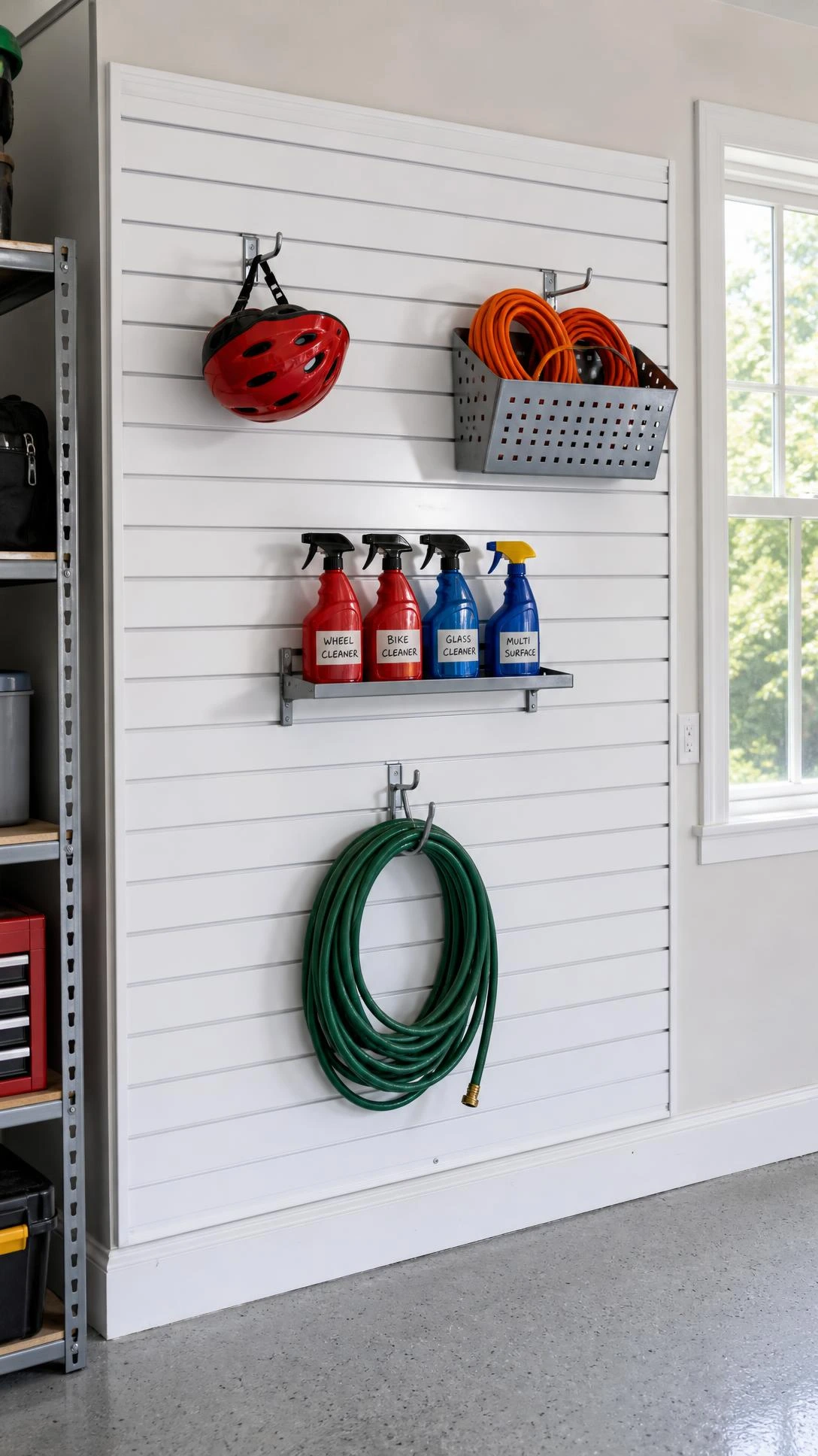
Most people with small garages spend a lot of time moving things off the floor just to get to other things on the floor, which is exactly the problem slatwall panels fix.
A single 4×8 foot PVC slatwall panel runs about $60 to $90 and replaces more than 20 square feet of floor storage by moving hooks, bins, and shelves up onto the wall instead.
The panels accept clip-on accessories without any tools, so rearranging things as the seasons change takes about five minutes instead of a whole afternoon.
They work best on a wall that gets regular use, like the wall closest to where people walk in, so the things people grab most often are right there.
I think slatwall is one of those purchases that feels slightly expensive until it is actually on the wall and suddenly the garage makes sense in a way it never did before.
2- Ceiling Overhead Storage Racks
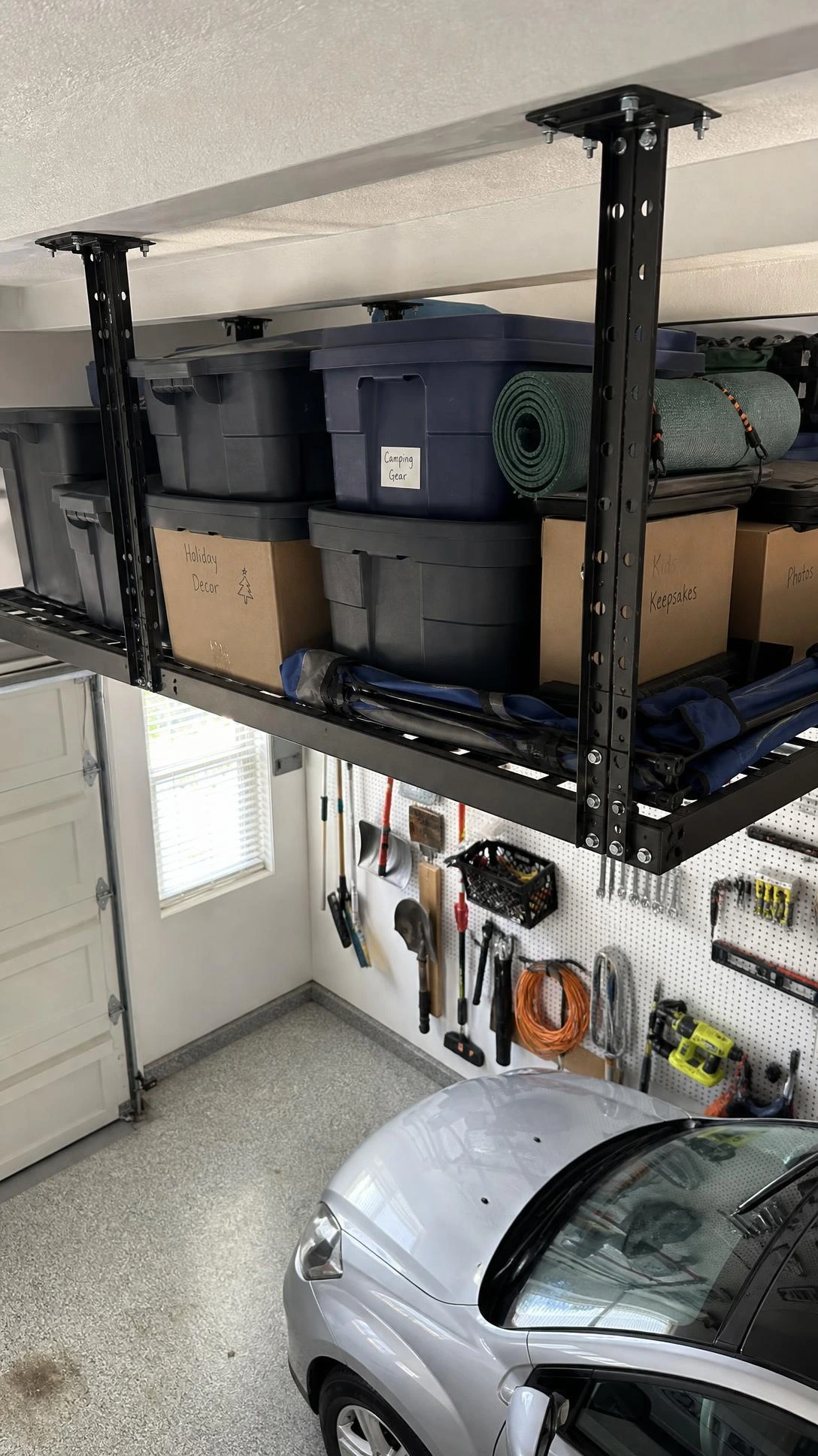
The ceiling is probably the most ignored surface in a small garage, which is interesting because it is usually the one area with the most open, usable space.
Overhead ceiling racks are ideal for anything that only comes down a few times a year — holiday bins, camping gear, extra coolers, off-season sports equipment, that kind of thing.
A standard ceiling rack that holds around 600 pounds and fits a two-car footprint runs between $100 and $150, and most mount directly into ceiling joists with lag bolts.
For heavier or more awkward items like kayaks or bikes, a pulley or crank lift system takes the effort out of getting things up and down without needing a second person.
The main thing to watch is ceiling clearance — most racks need at least seven feet of height to sit comfortably above a car roof, so it is worth measuring before ordering.
3- Galvanized Metal Pegboard for Tools
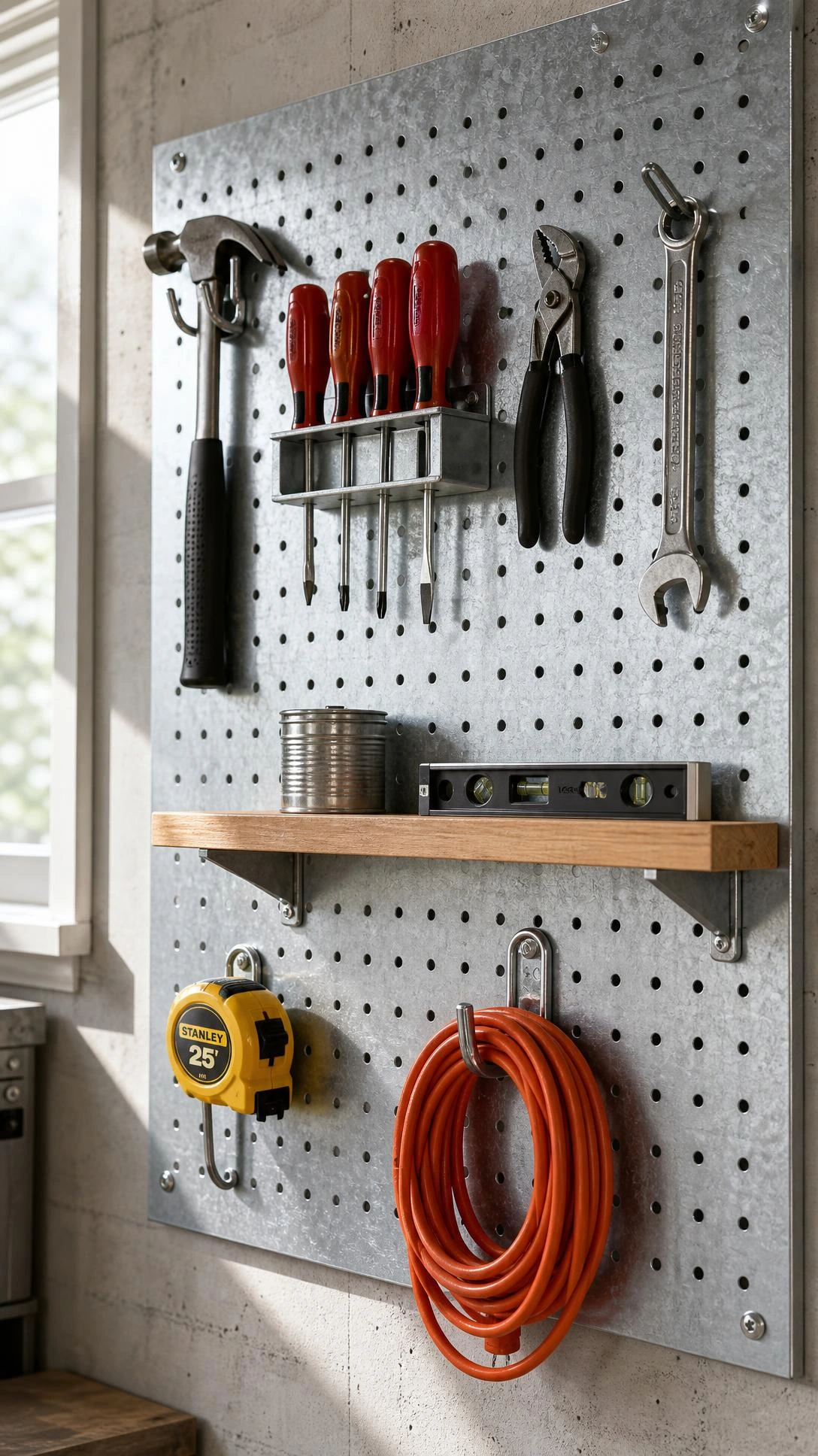
Tool organization is one of those things that looks fine until someone actually needs a specific wrench and ends up digging through a drawer for ten minutes before giving up.
Galvanized metal pegboard mounts flush to the wall at under one inch of depth, which matters a lot in a small garage where every inch of clearance counts.
The grid pattern accepts standard pegboard hooks in basically any configuration, so the layout can shift as the tool collection grows or changes without putting new holes in anything.
A 32×32 inch panel is usually enough to hold a solid collection of hand tools — hammers, screwdrivers, pliers, levels — and keeps everything visible so nothing gets lost in a pile.
Metal pegboard holds up better than the wood or pressed-board versions over time, especially in garages that deal with humidity or temperature swings.
4- Vertical Bike Storage Wall Hooks
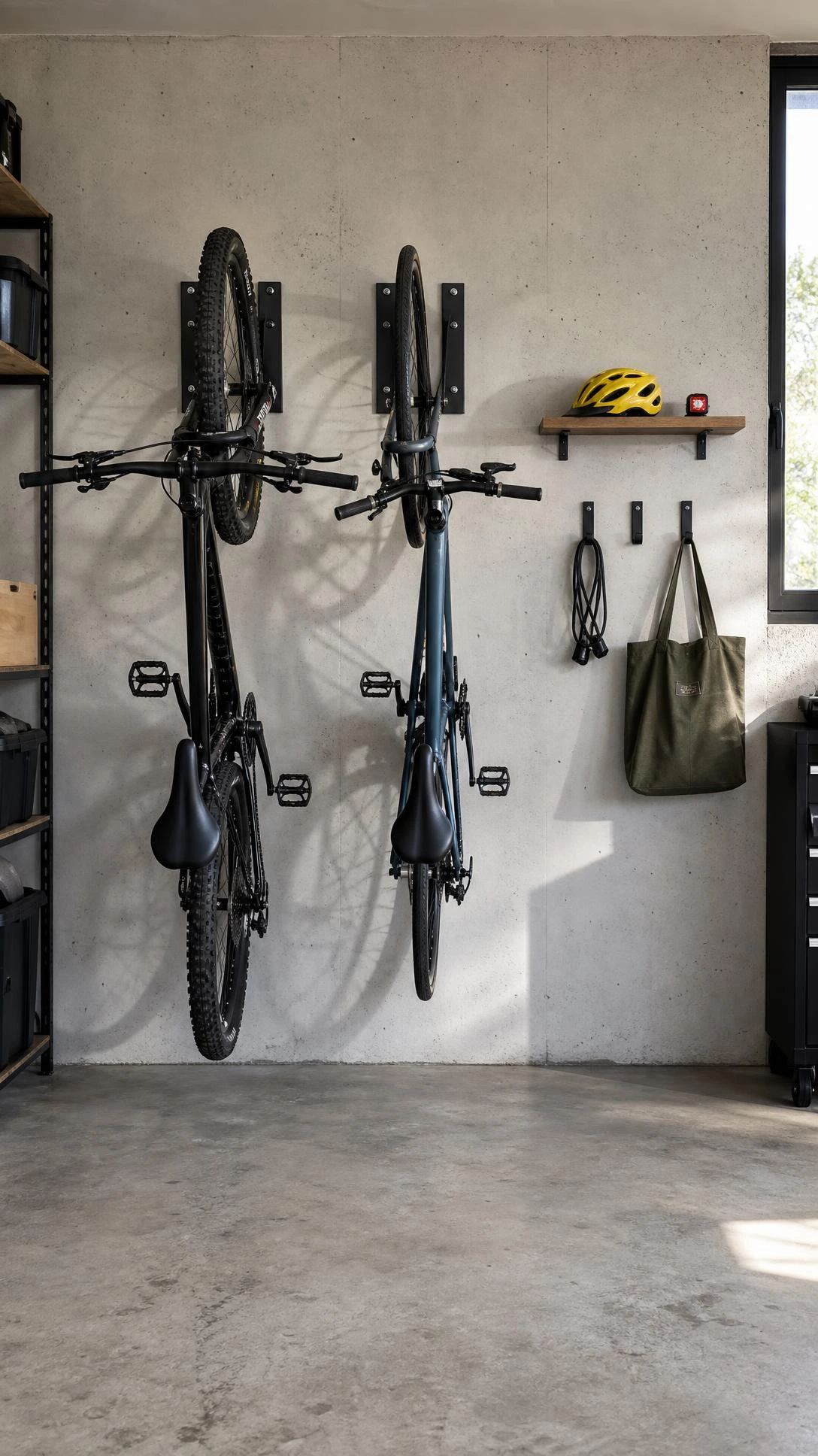
Bikes are one of the biggest space problems in a small garage because they are large, awkward, and take up a lot of floor real estate just leaning against a wall.
A single horizontal bike mount that hooks the wheel and hangs the bike vertically against the wall costs around $15 to $25 and frees up the floor space completely.
Two bikes mounted side by side on the same wall take up about four feet of linear wall space, which is a much better deal than two bikes parked on the floor.
The hooks work best when mounted into studs rather than just drywall, since a loaded bike puts real weight on the anchor point over time.
Most people are surprised how much floor space comes back once the bikes go up, which is always one of those small wins that makes the whole garage feel bigger immediately.
5- Louvered Rail Systems for Small Parts
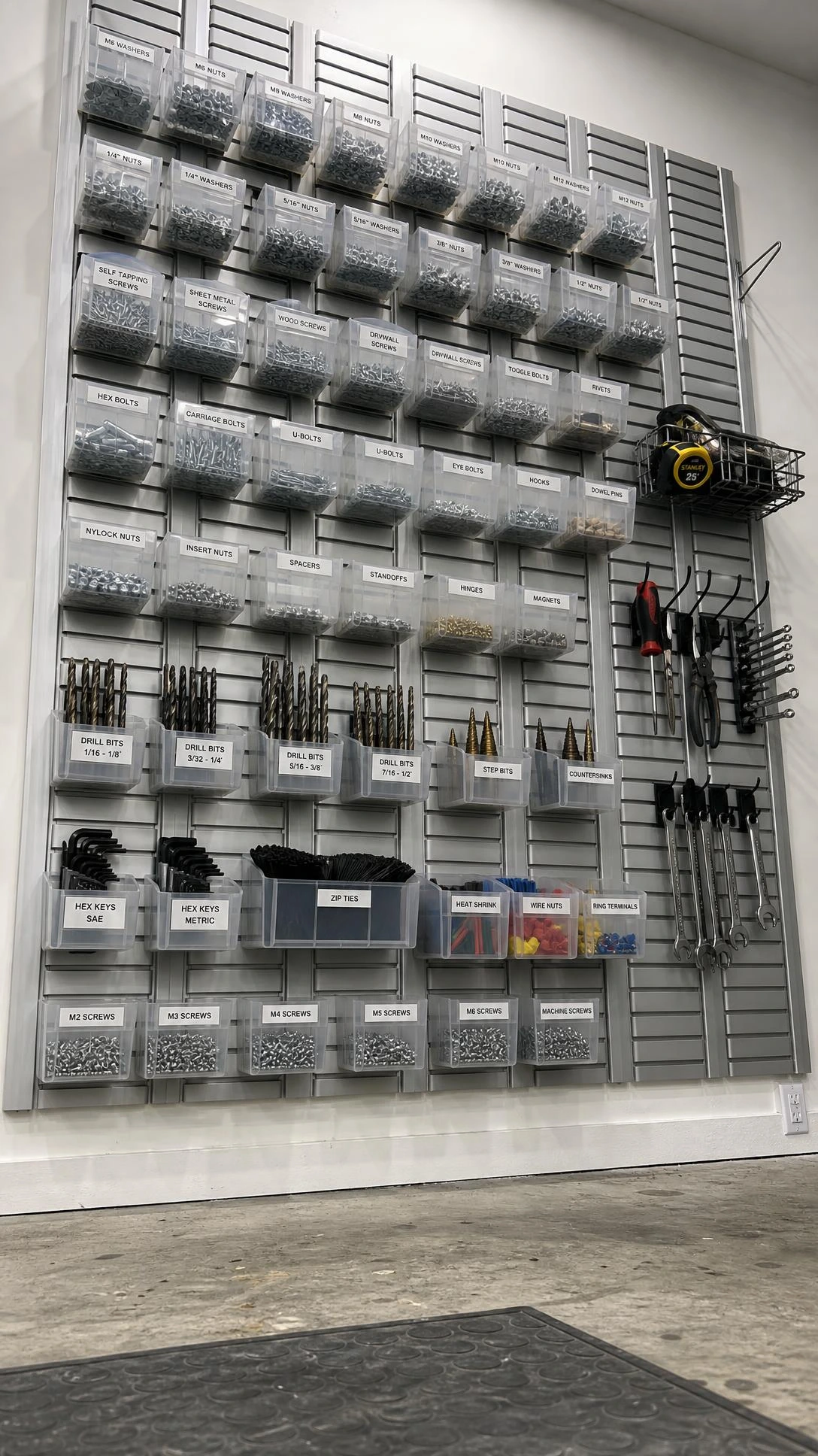
Screws, bolts, batteries, zip ties, garden chemicals, lightbulbs — all the small stuff that never has a home and always ends up scattered across a workbench or shoved in a random drawer.
Louvered wall rails with clip-on small parts bins are specifically designed for exactly this kind of clutter, and the bins come on and off without any tools at all.
A basic starter rail with twelve assorted bins runs about $30 to $50 and can mount on almost any wall surface, including the side walls of a narrow garage where space is really tight.
Clear-front bins are worth the slight extra cost because being able to see the contents without opening anything saves a lot of time, especially for hardware and small fasteners.
The rail system also leaves room to add more bins later without buying a whole new organizer, which is useful when the garage evolves over time.
6- Over-Door Long-Handled Tool Hooks
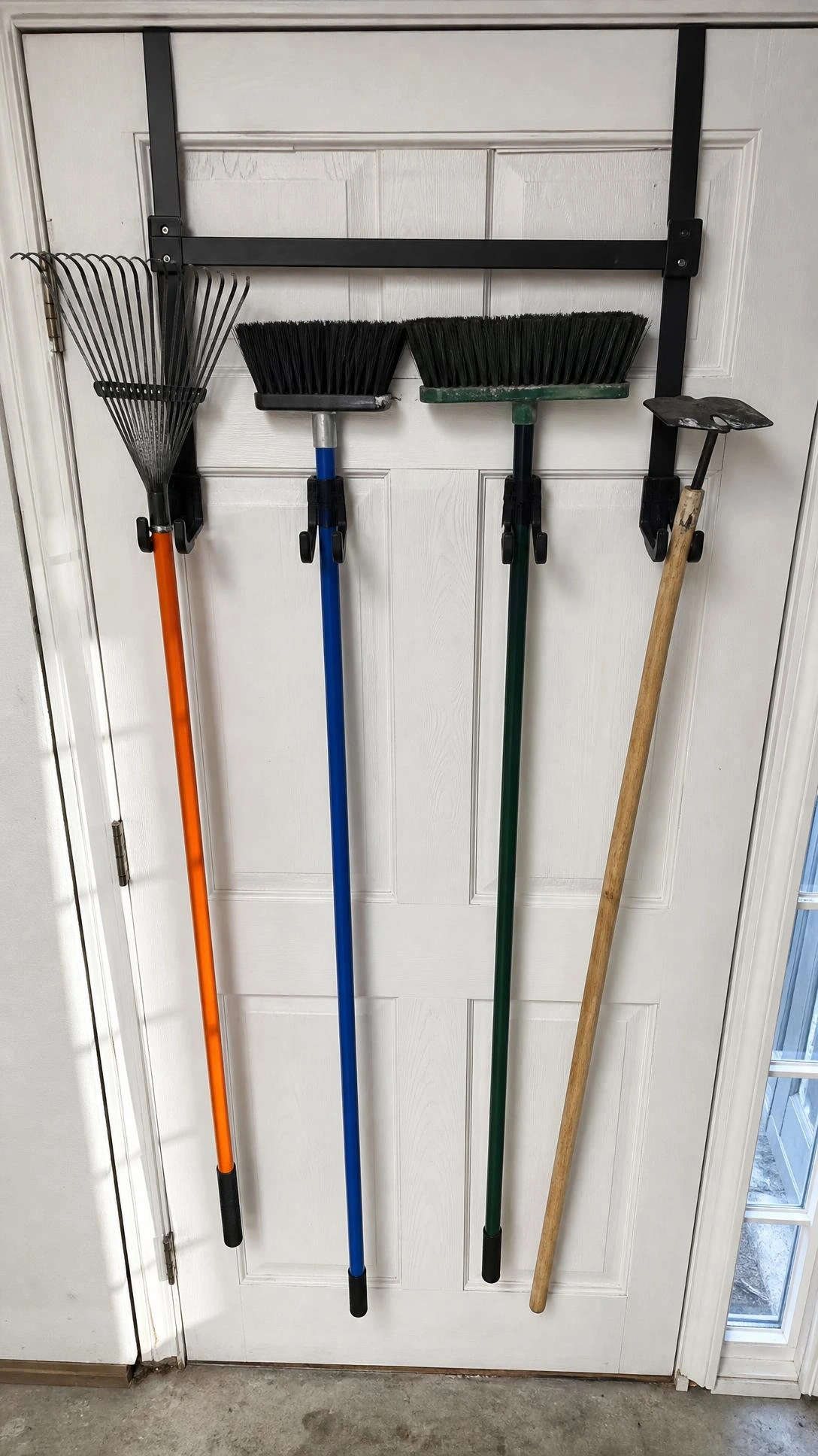
The back of the garage door or the wall beside it is almost always wasted space, and it is one of the easiest places to add storage in a small garage without touching anything else.
Heavy-duty hooks mounted on the inside of a door or beside the door frame can hold rakes, shovels, brooms, and mops vertically without those items ever touching the floor.
A set of four steel utility hooks that can each hold 50 pounds costs under $20 and installs in about fifteen minutes with basic wall anchors or screws into the door frame.
The trick is to mount them high enough that the handles clear the floor by a few inches, which keeps the bases from touching down and taking up floor space anyway.
This works especially well for long-handled tools that are awkward to store anywhere else — they are just hard to fit neatly into bins or cabinets, so vertical hanging is usually the better answer.
7- Freestanding Tall Shelving Units
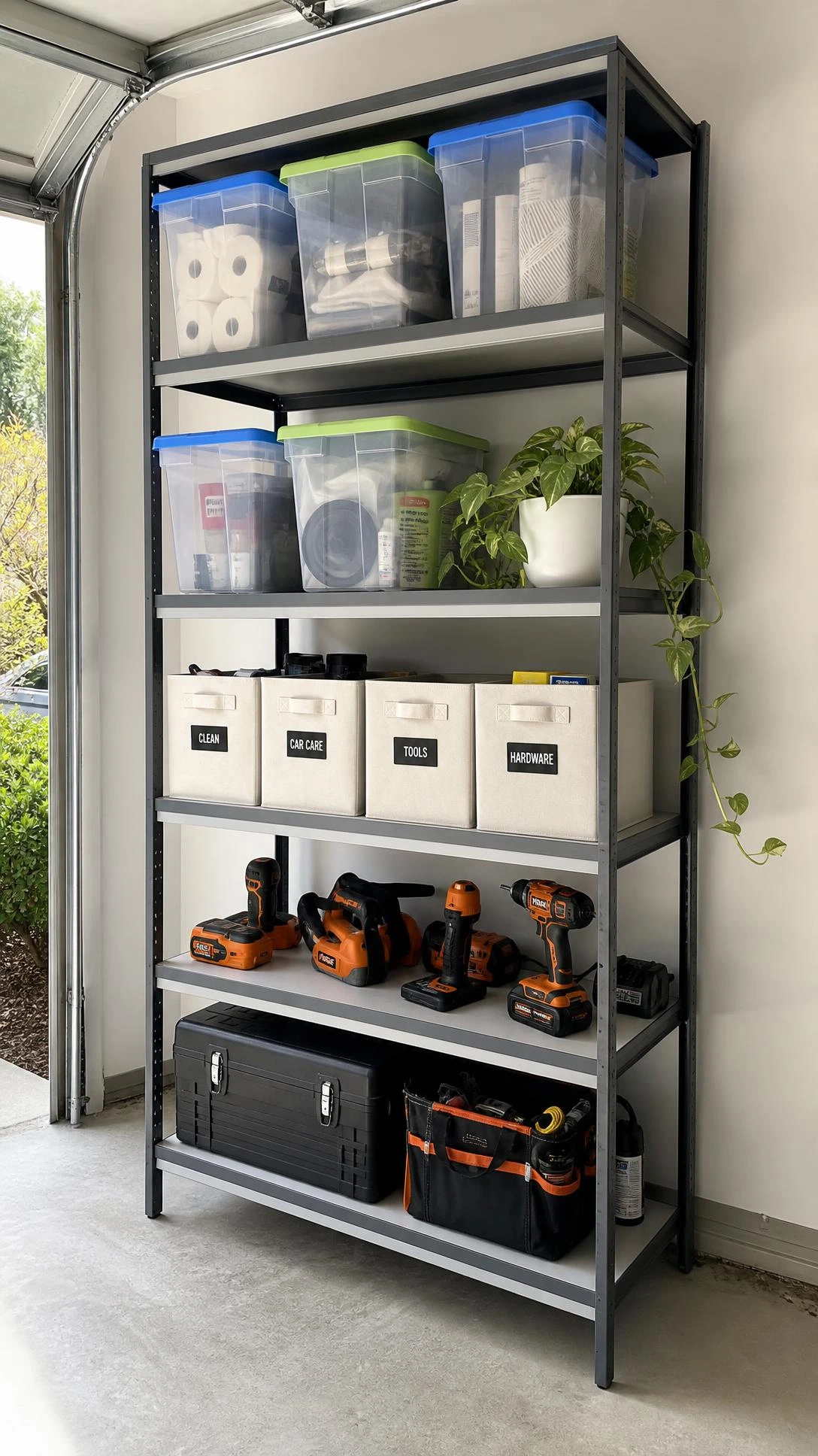
Not every small garage has walls that are easy to drill into, and renters in particular often need storage solutions that do not leave any damage behind when they leave.
A freestanding metal shelving unit that stands around 72 inches tall and 36 inches wide fits into most garage corners and holds a surprising amount without touching the walls at all.
Wire shelving in that size range runs about $60 to $80 at most hardware stores and holds between 200 and 350 pounds total when the weight is distributed evenly across the shelves.
The open wire design is actually useful in a garage because it lets air circulate around stored items and makes it easier to see what is on each shelf without pulling things out.
Putting the heaviest items on the lower shelves and the lightest at the top keeps the unit stable and also makes the most-used items easier to reach without climbing on anything.
8- Corner Storage Shelving Units
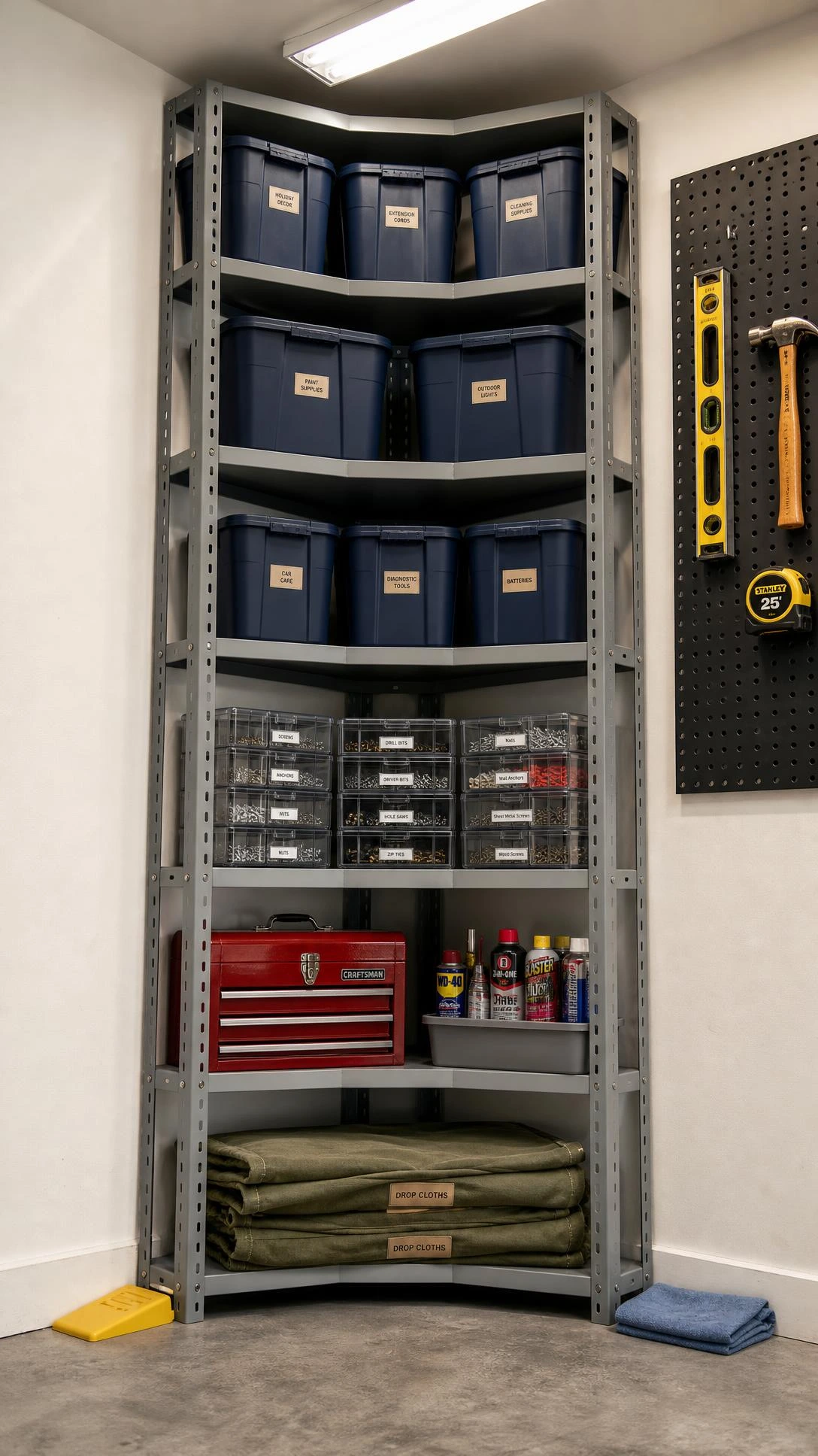
Corners in a small garage almost always become the spot where random things accumulate because nobody assigns them a purpose, and once that starts it is very hard to reverse.
A corner shelf unit designed specifically for the 90-degree angle of a garage corner uses that awkward space intentionally instead of letting it turn into a pile.
A basic corner shelving unit that mounts to both walls and holds about 100 pounds per shelf costs around $40 to $70, and the triangular footprint takes up almost no usable floor space.
Lawn care chemicals, car fluids, spray cans, and seasonal supplies work well in corners because they do not need to be grabbed constantly — they just need a dedicated, organized home.
Assigning the corner a specific category before installing the shelf makes a real difference, because once everything has a place it actually tends to go back there instead of drifting onto the floor.
9- Clear Labeled Bins for Seasonal Storage
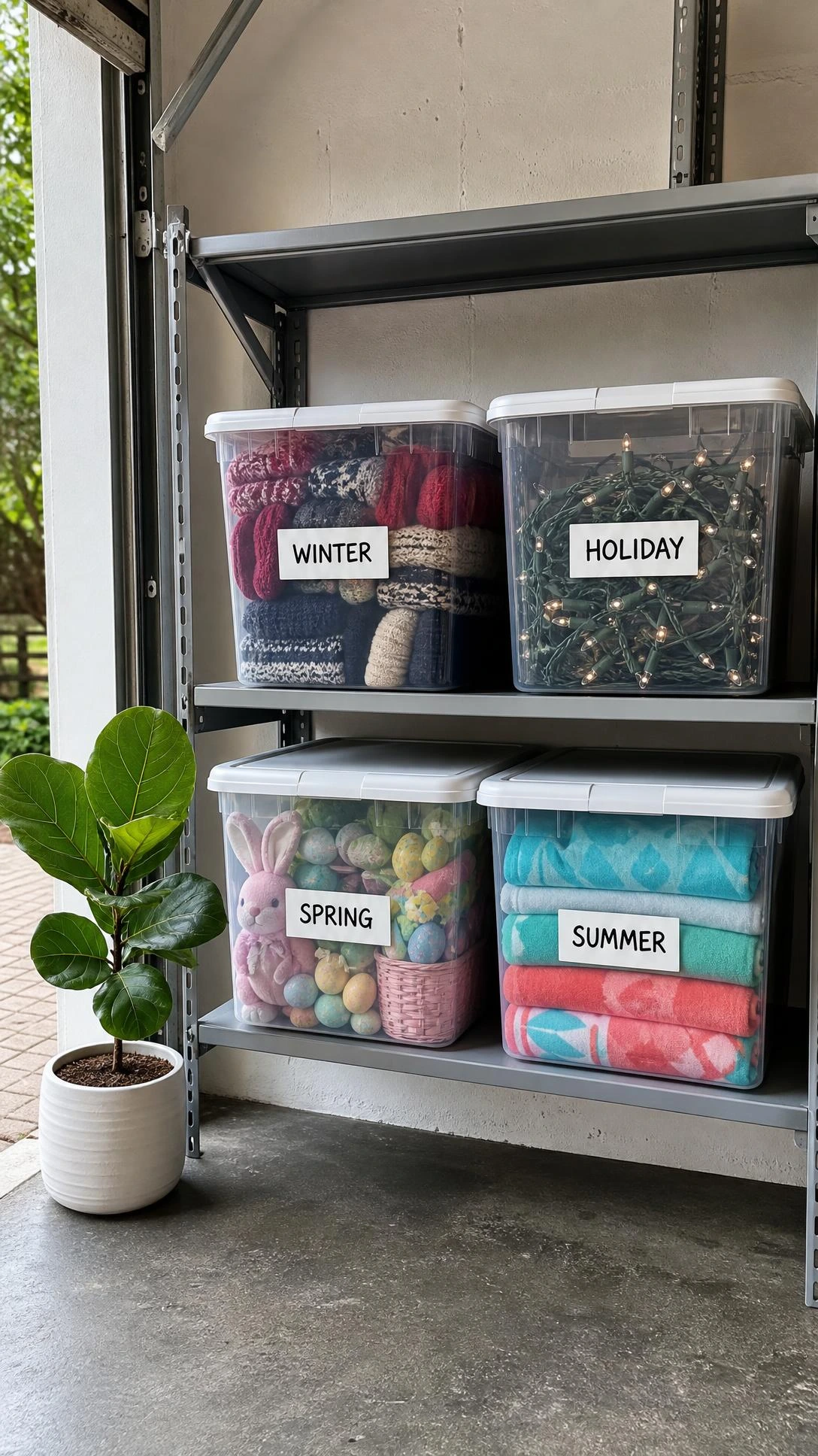
One of the most common small garage complaints is not actually a lack of storage — it is not being able to find anything, which is a different problem entirely.
Clear plastic bins with labels solve both the visibility and the organization problem at the same time, and they stack cleanly on shelves or overhead racks without wasting any vertical space.
Bins in the 27-quart size are usually the most practical for garage use — big enough to hold meaningful amounts of stuff, small enough to actually lift down from a high shelf without help.
Labeling by category works better than labeling by event or season, so something like “camping” or “car supplies” stays useful even when the contents shift slightly from year to year.
The clear part really does matter — opaque bins with labels work fine until someone ignores the label and puts something in the wrong bin, and then nothing is where it is supposed to be anymore.
10- Modular Rail-Based Wall Storage Systems
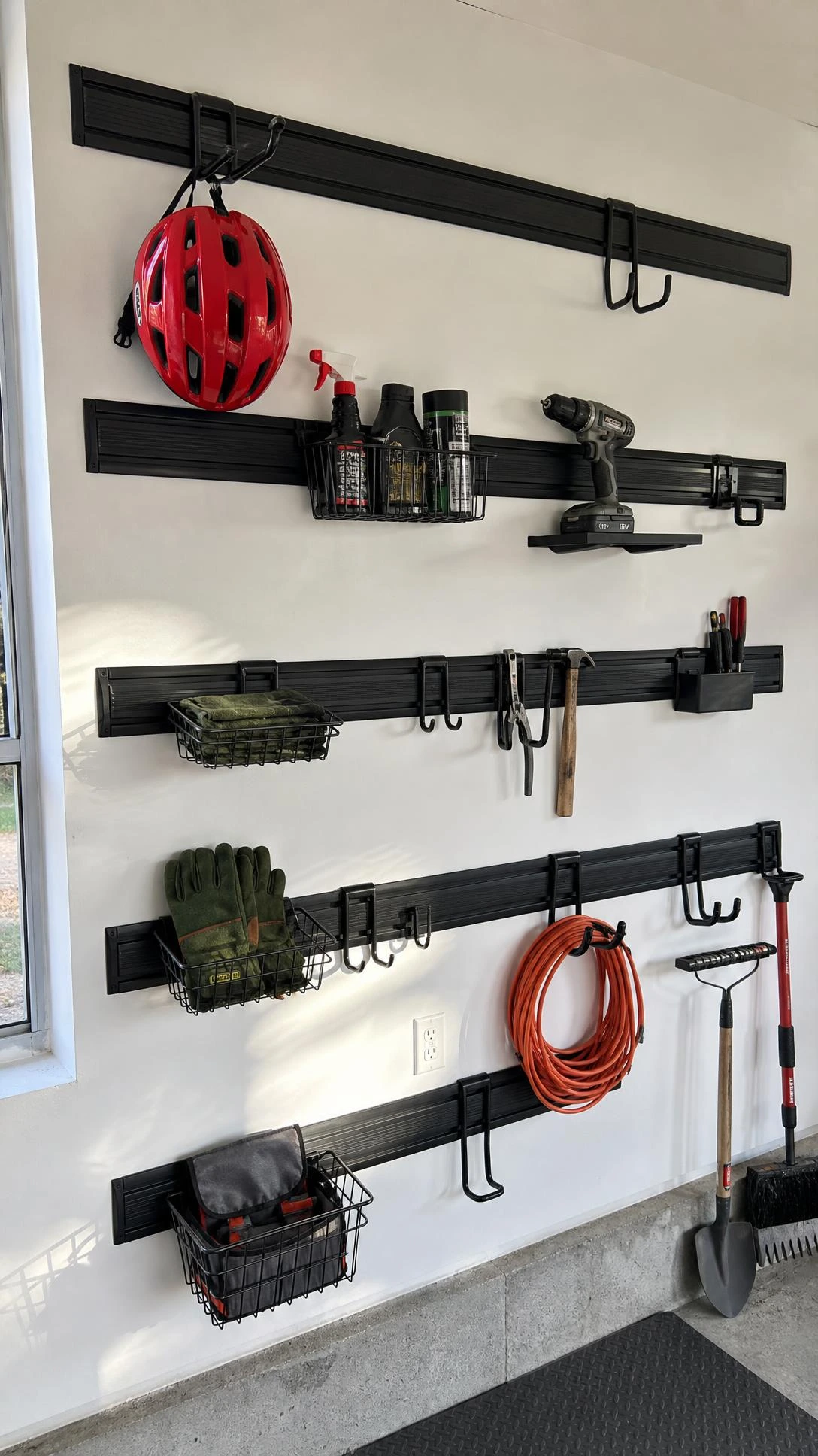
The thing about garage storage is that needs change — a new hobby, a kid who outgrows their bike, a seasonal shift — and a fixed system that cannot adapt becomes a problem faster than expected.
Rail-based modular wall systems use horizontal mounting rails that accept interchangeable hooks, baskets, bins, and shelves, all of which clip on and reposition without drilling new holes every time something changes.
A starter kit with two rails and a basic set of accessories typically runs $80 to $120 and covers enough wall space to organize tools, sports gear, and miscellaneous hanging items all in one section.
Low-profile hooks with a depth under three inches are worth looking for specifically, because in a small garage anything that sticks out too far starts cutting into the clearance around the car.
Starting with the modular system and leaving room to add more hooks and bins over time is almost always the smarter move than buying everything at once and realizing six months later that the layout does not actually match how the garage gets used.
Where do you want to go next?

Explore by topic
Recently viewed
A Small Garage That Actually Functions Is a Reasonable Goal
None of this has to happen all at once.
Picking one wall, starting with a slatwall panel or a basic rail system, and building from there is how most well-organized garages actually come together — gradually, not in one overwhelming weekend.
The goal is not a garage that looks like a showroom, it is just a garage where the things people need are easy to find and the car can actually fit inside.
Even the smallest, most embarrassingly cramped garage usually has more usable space than it looks like once the walls, corners, and ceiling get involved.

Hi, I’m Alizabeth, the creator of Pretty Home Hacks. I share practical home decor ideas, easy DIY projects, organization tips, and budget-friendly ways to make your home feel more beautiful and functional. From small room updates to everyday home hacks, my goal is to share approachable ideas you can actually use in your own space.