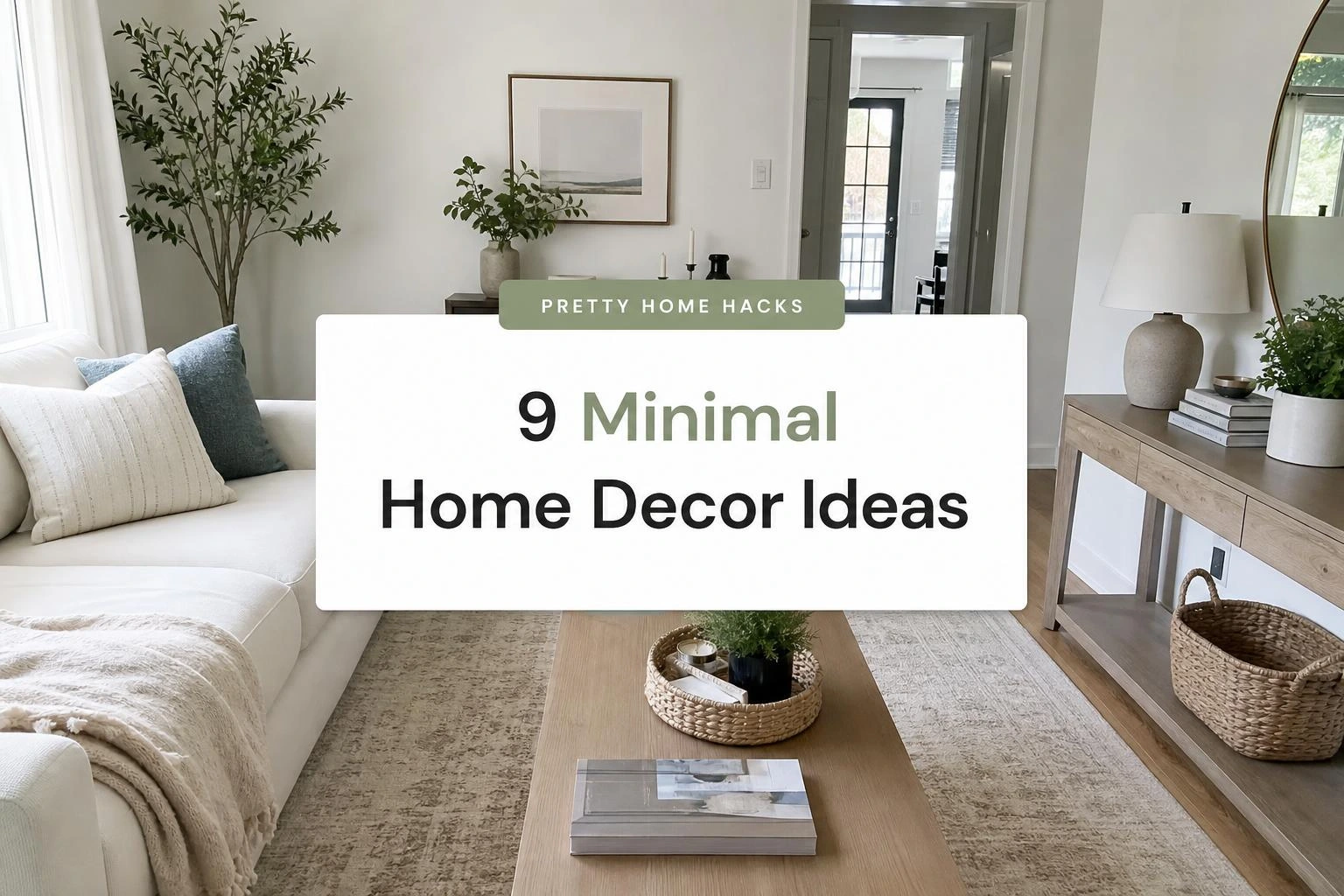
9 Minimal Home Decor Ideas That Actually Refresh Your Home Without Overspending
Most people reach a point where their home just stops feeling good to be in, and it is hard to explain why because nothing is technically wrong with it.
The furniture is fine, the walls are painted, everything has a place, but the whole space feels a little flat and kind of like nothing in it was chosen on purpose.
The usual assumption is that fixing that feeling requires a budget, a plan, and probably a full weekend of shopping, which is exactly why most people just leave it and learn to ignore it.
Minimal home decor ideas are actually the opposite of that because the whole point is doing less, spending less, and ending up with something that feels more intentional than what was there before.
None of this requires a redesign or a big investment, just a few small shifts that change how a room feels to be in every single day.
1- Declutter Before Adding Anything New
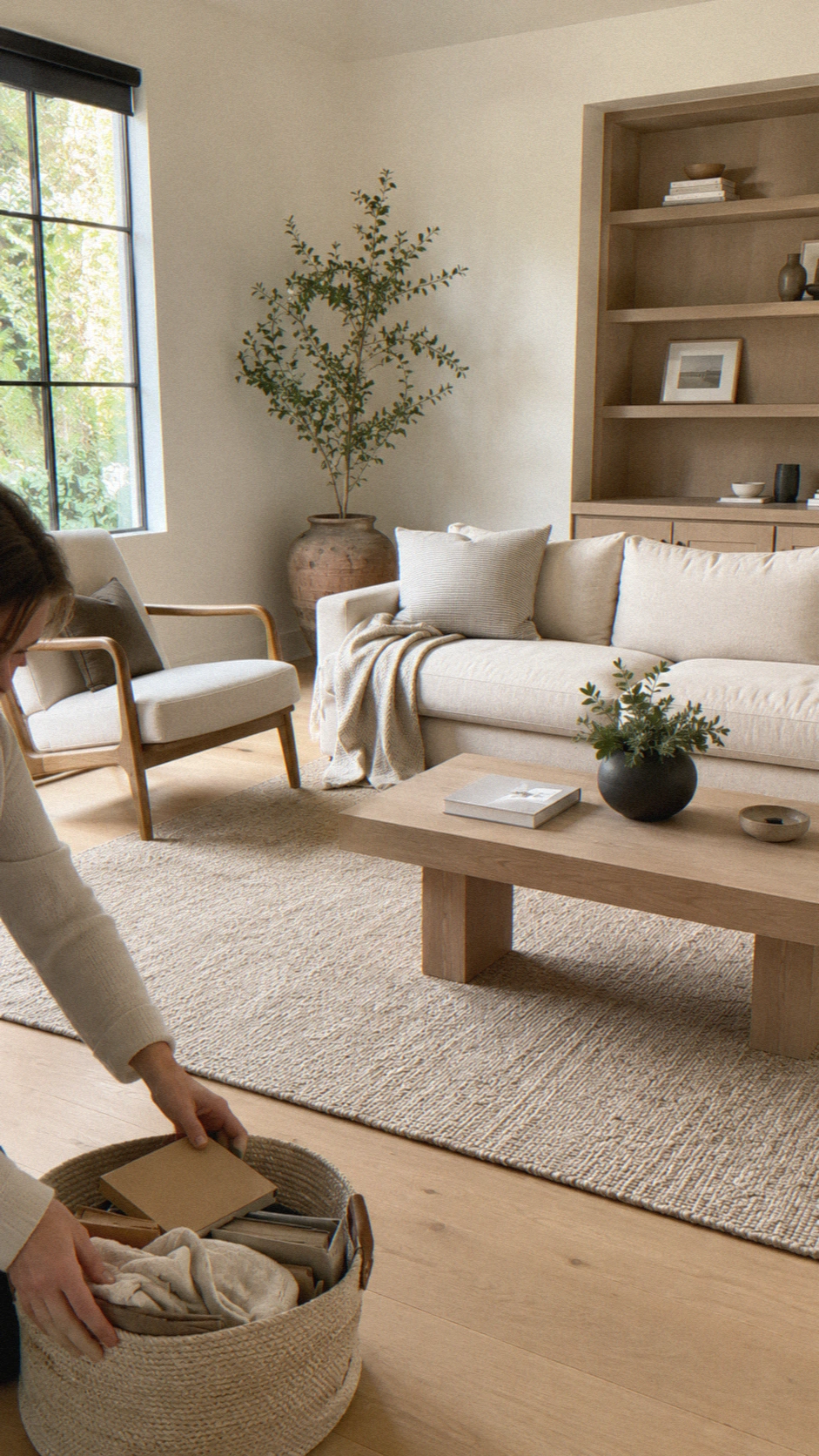
Most people skip this one because it does not feel like decorating, but it is genuinely the thing that makes every other change work better.
A room with too much in it always reads as busy and a little stressful, even when everything in it is nice.
The goal is not to strip the space down to nothing, just to remove the things that nobody looks at, uses, or actually likes anymore.
Surfaces especially collect a lot of stuff that ended up there by accident and never left, which is always where the most obvious visual noise lives.
Once the clutter is gone, the room usually already looks better without a single thing being added, which is a pretty good sign the rest of the ideas on this list are going to land well.
2- Swap Harsh Bulbs for Warm Light
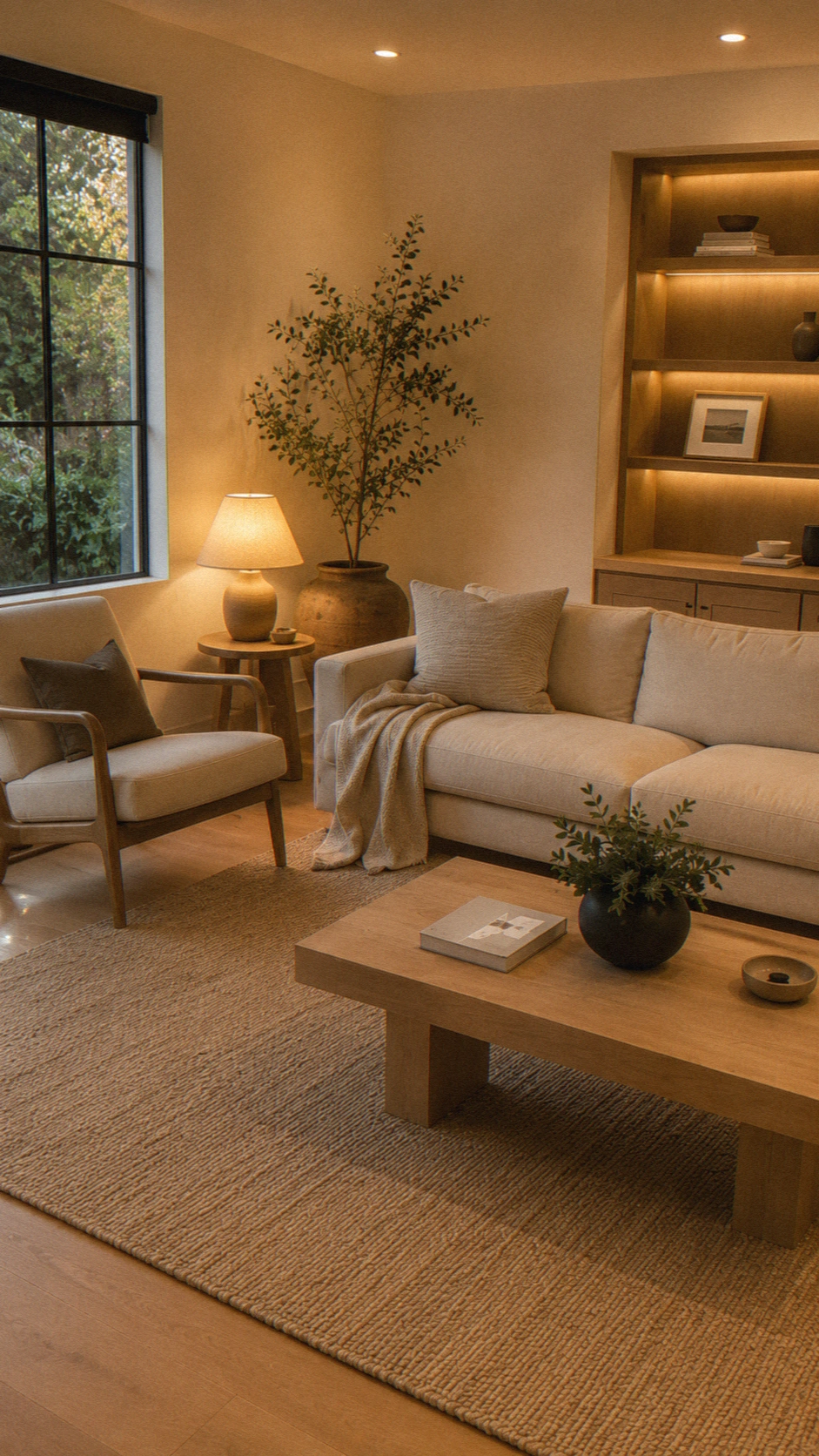
Lighting is one of those things nobody thinks about until they walk into a room that feels inexplicably cozy and realize the bulbs are doing a lot of the work.
Harsh white or cool-toned bulbs make spaces feel clinical, and no amount of nice furniture or careful decorating fully overcomes that.
Swapping to warm white bulbs, something in the 2700K to 3000K range, changes the whole mood of a room for a few dollars per bulb.
It works best in living rooms, bedrooms, and dining areas where people actually want to feel relaxed rather than like they are under office lighting.
I think this is the single fastest return on any small decorating investment, and most people are genuinely surprised at how different the same room looks after.
3- Use One Large Piece Instead of Many Small Ones
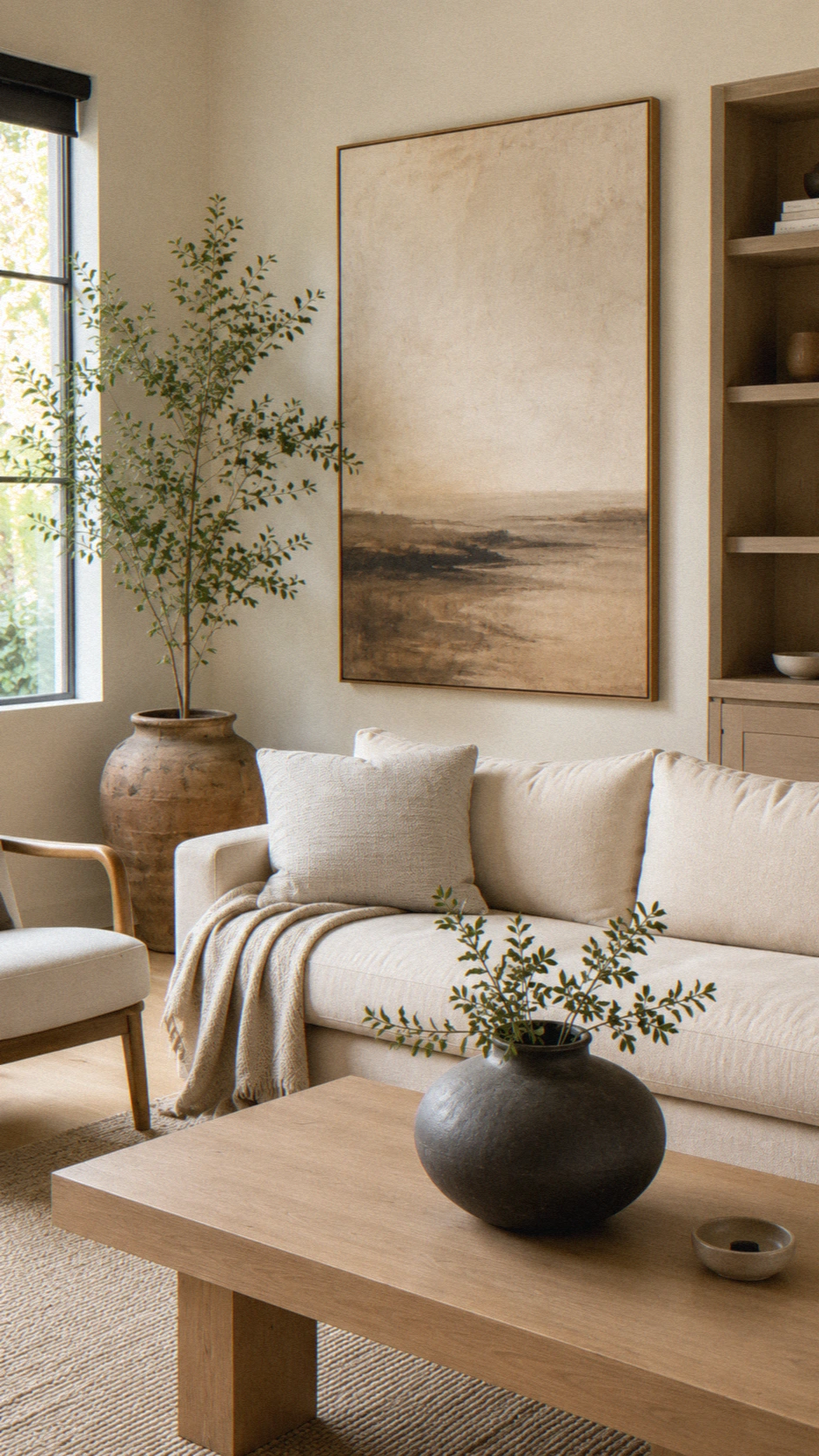
A wall covered in small frames, small objects, and small decorative things tends to read as cluttered even when everything on it is carefully arranged.
One oversized piece of art, a large mirror, or even a single big print does more for a wall than a dozen smaller things ever will.
The scale is what makes a room feel intentional, and bigger items naturally draw the eye in a way that feels calm rather than busy.
Thrift stores and secondhand shops are genuinely good places to find large frames and artwork without paying gallery prices, which is always a nice surprise.
The thing is, the piece does not have to be expensive or even particularly special, it just has to be large enough to hold its own on the wall.
4- Add LED Strip Lights to the Ceiling
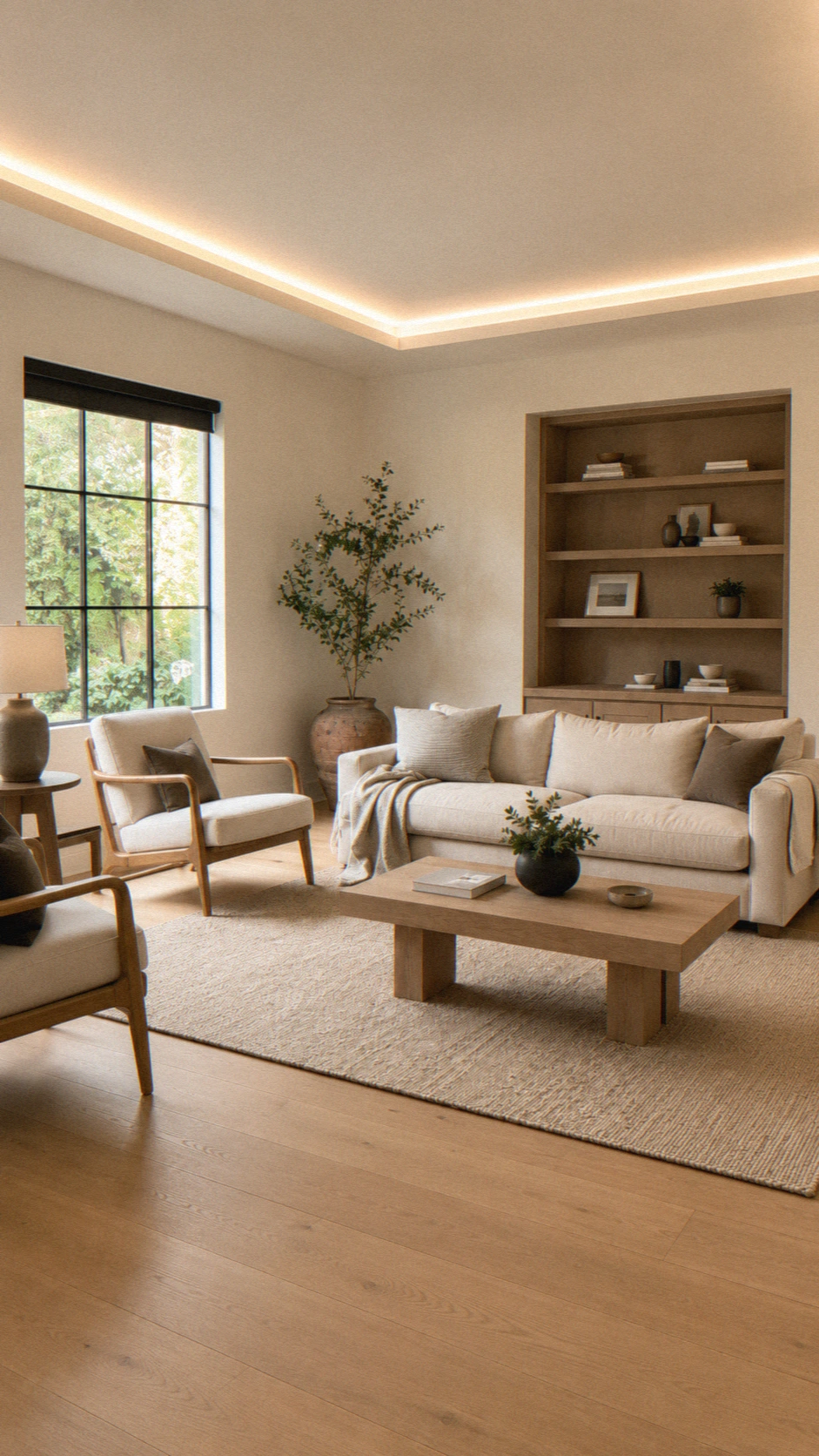
Ceilings are something most people never think about when decorating, which means they are usually just a flat white surface that nobody pays attention to.
LED strip lights tucked behind a ceiling cove, along a beam, or around the perimeter of a room add a layer of warmth and dimension that changes the whole feel of the space.
The lights themselves are inexpensive and most come with remote controls or app connectivity, so the color temperature and brightness are easy to adjust depending on the time of day.
This works especially well in living rooms and bedrooms where the goal is atmosphere rather than task lighting.
It sounds like something that would be complicated to install but most LED strip kits are adhesive-backed and take about twenty minutes to put up.
5- Paint One Wall a Warm Neutral
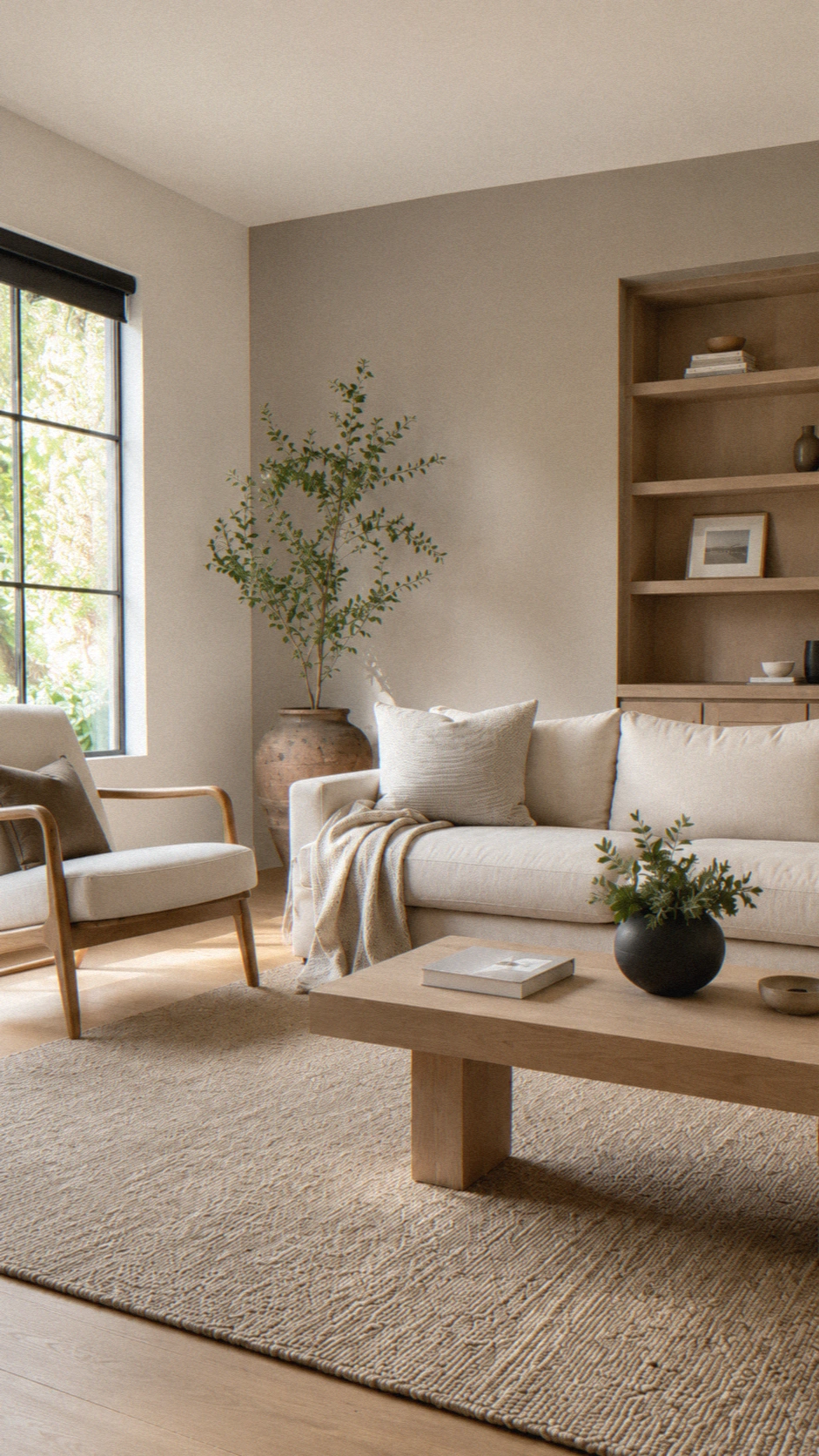
Repainting an entire room is a commitment, but painting one wall is a weekend afternoon at most.
A single accent wall in a warm neutral like a soft clay, warm white, or muted sage can shift how the whole room reads without the cost or effort of a full repaint.
Hardware stores often sell mis-tint paint at a significant discount, and those cans are worth checking because the colors are usually perfectly usable and the savings are real.
The wall that faces the doorway tends to have the most impact because it is the first thing people see when they walk into the room.
Neutral tones work better than bold ones for minimal home decor ideas because they add depth without pulling too much attention away from everything else in the space.
6- Choose Closed Storage Over Open Shelves
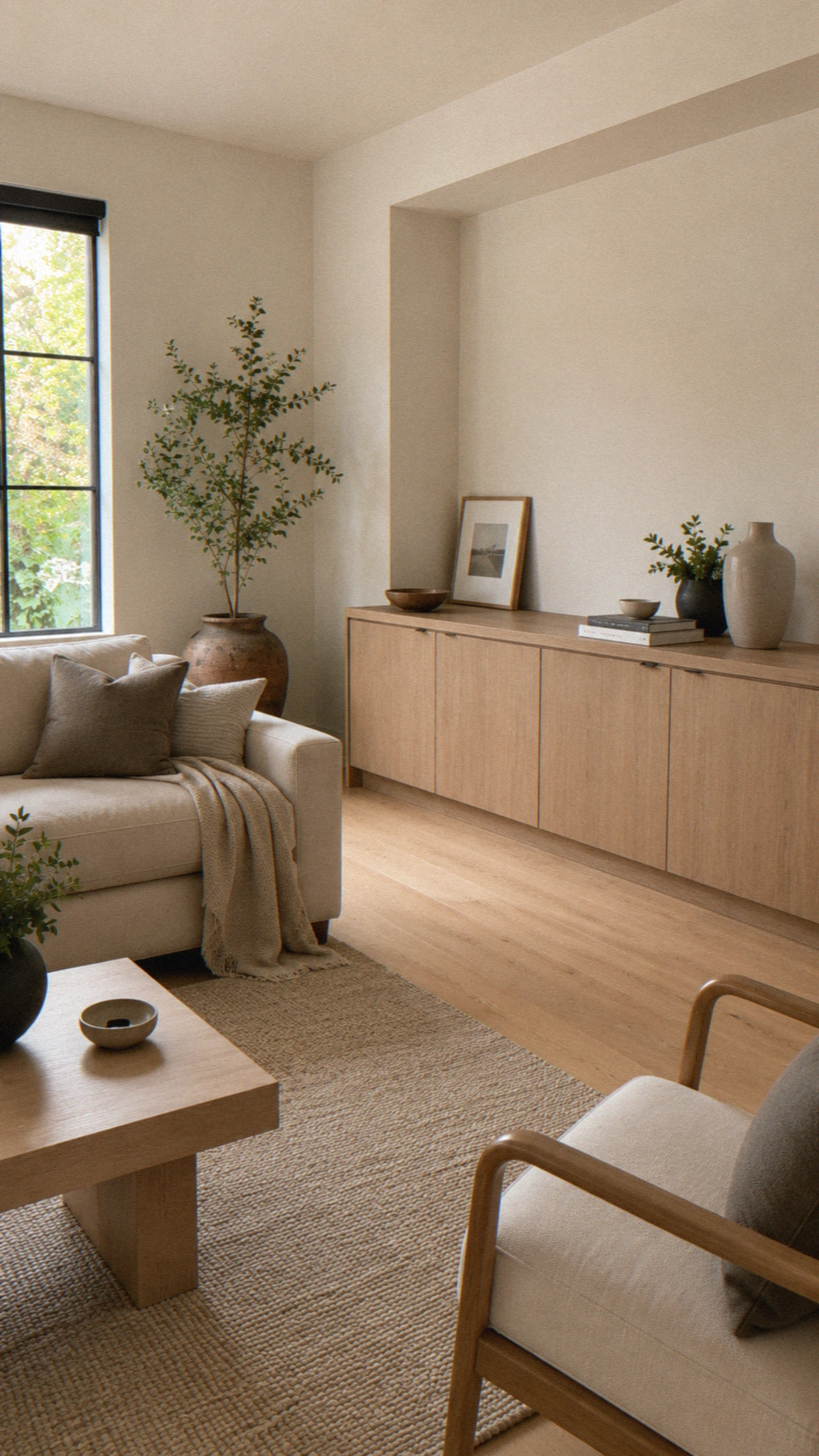
Open shelving looks great in photos and in practice it turns into a display of everything that does not have another home yet.
Switching to closed storage, even just adding baskets or boxes to existing shelves, cuts the visual noise in a room significantly without removing anything useful.
Clean-lined storage with doors or lids makes a space feel more considered and more restful, which is most of what minimal decor is actually trying to do.
Wicker baskets, fabric bins, and simple wooden boxes all work well and none of them are expensive to find at most home stores or secondhand shops.
The goal is just to reduce how much the eye has to process when moving through a room, and closed storage does that immediately.
7- Mix Textures Instead of Matching Everything
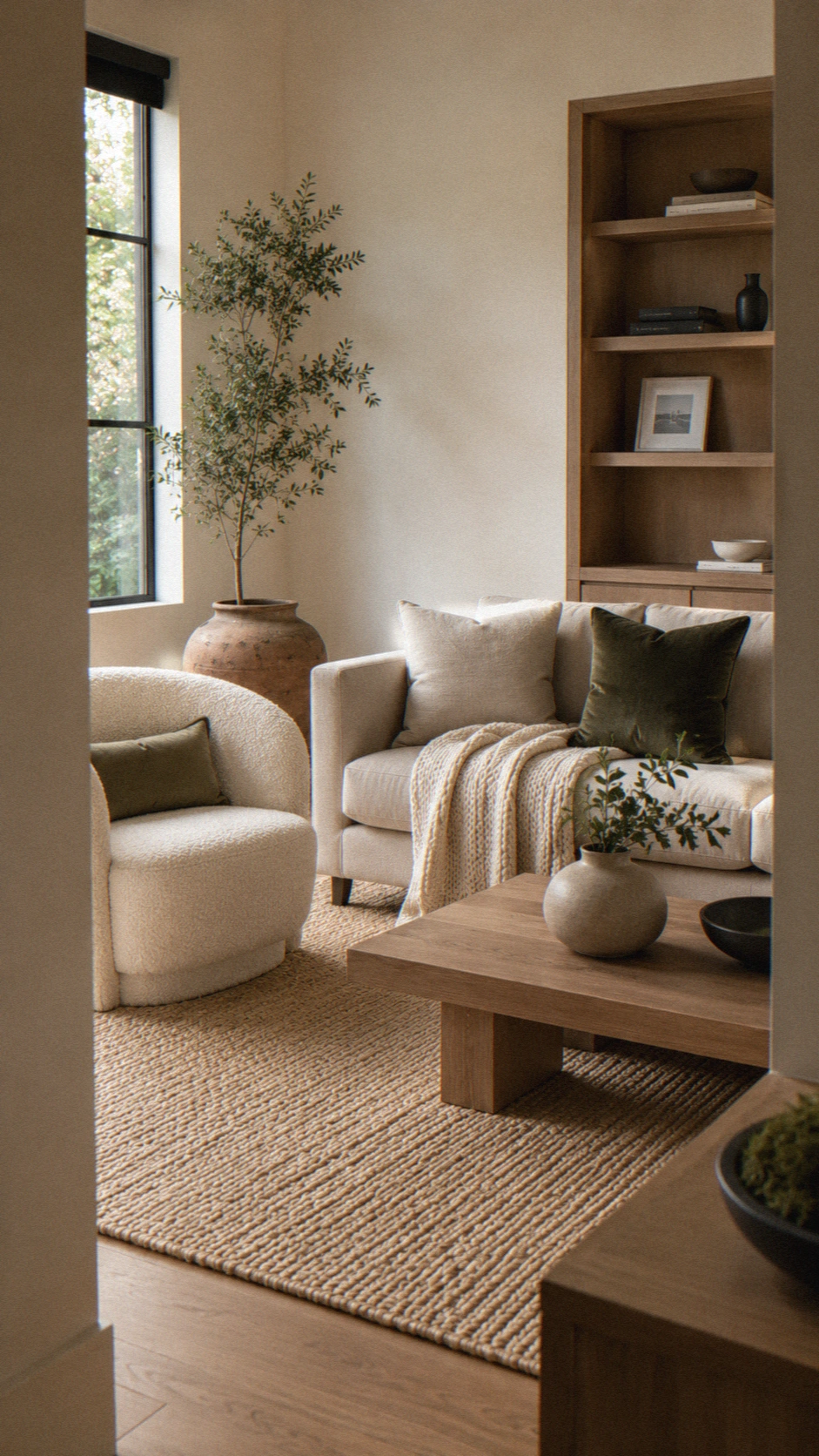
Rooms where everything matches tend to feel a little flat and more like a showroom than a place someone actually lives in.
Mixing textures like a linen throw on a wood bench next to a ceramic vase on a woven tray adds richness without adding clutter or color.
The combination of wood, fabric, metal, and natural materials is what makes a space feel layered and real, and none of those things have to be expensive to work well together.
This is one of those minimal home decor ideas that sounds obvious once someone says it but makes a noticeable difference in how finished a room looks.
The rule most designers seem to follow is to keep the color palette tight while varying the textures, which keeps everything cohesive even with a lot of different materials in one space.
8- Try Peel-and-Stick Wallpaper on One Small Area
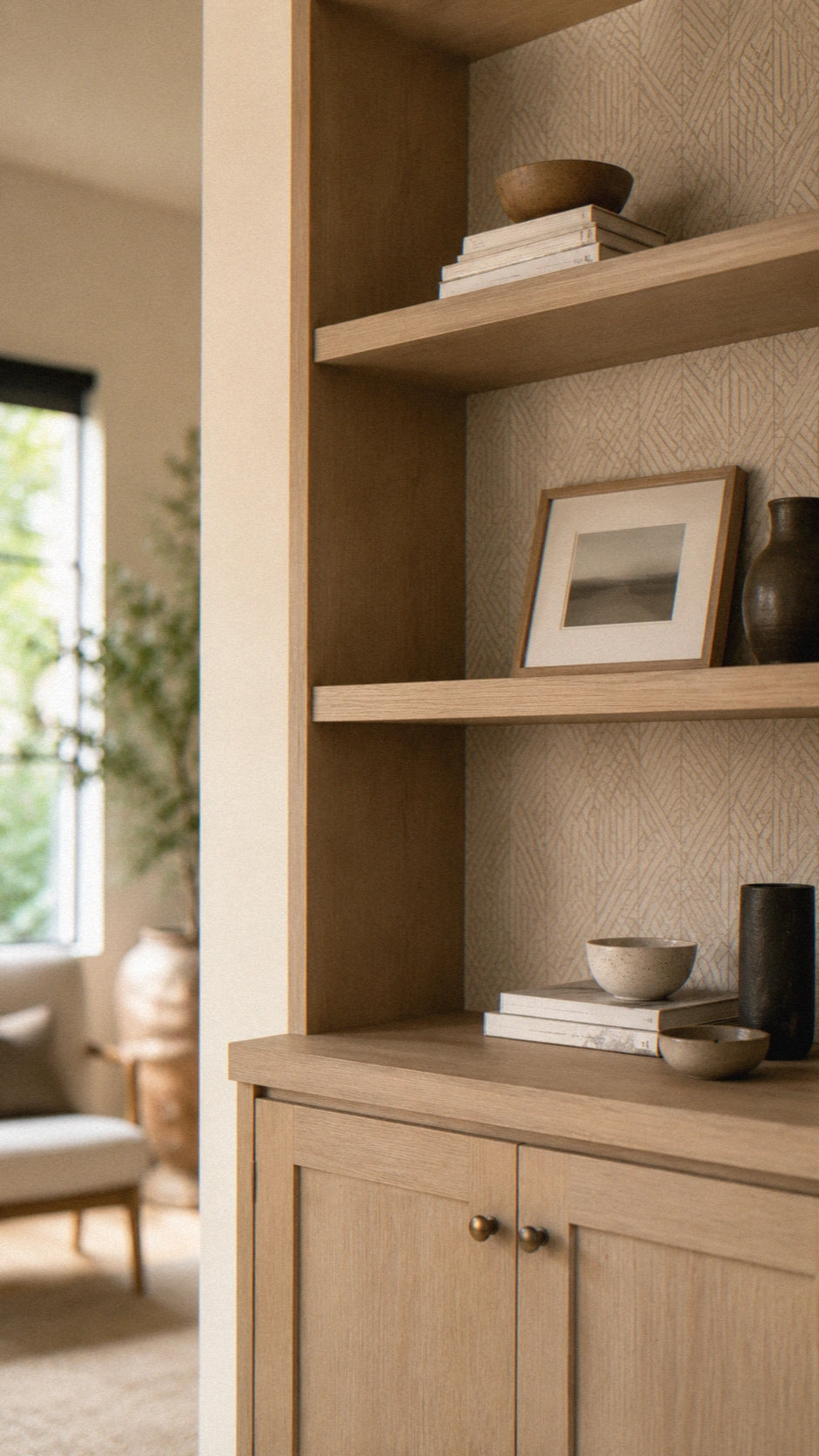
Full wallpaper is expensive, messy, and genuinely hard to reverse, which is why most people never bother with it even when they like the idea.
Peel-and-stick wallpaper applied to a small area like the back of a bookcase, a narrow entryway wall, or the space above a headboard gives a similar effect for a fraction of the cost.
Most peel-and-stick options come off cleanly without damaging paint, which makes it a realistic choice for renters or anyone who changes their mind about things regularly.
Simple patterns, subtle geometric prints, or soft textured looks tend to work better for minimal spaces than busy florals or high-contrast designs.
I think the back panel of a bookcase is the most underrated spot for this because it adds something unexpected without taking over the room.
9- Edit Your Surfaces Down to Three Items or Fewer
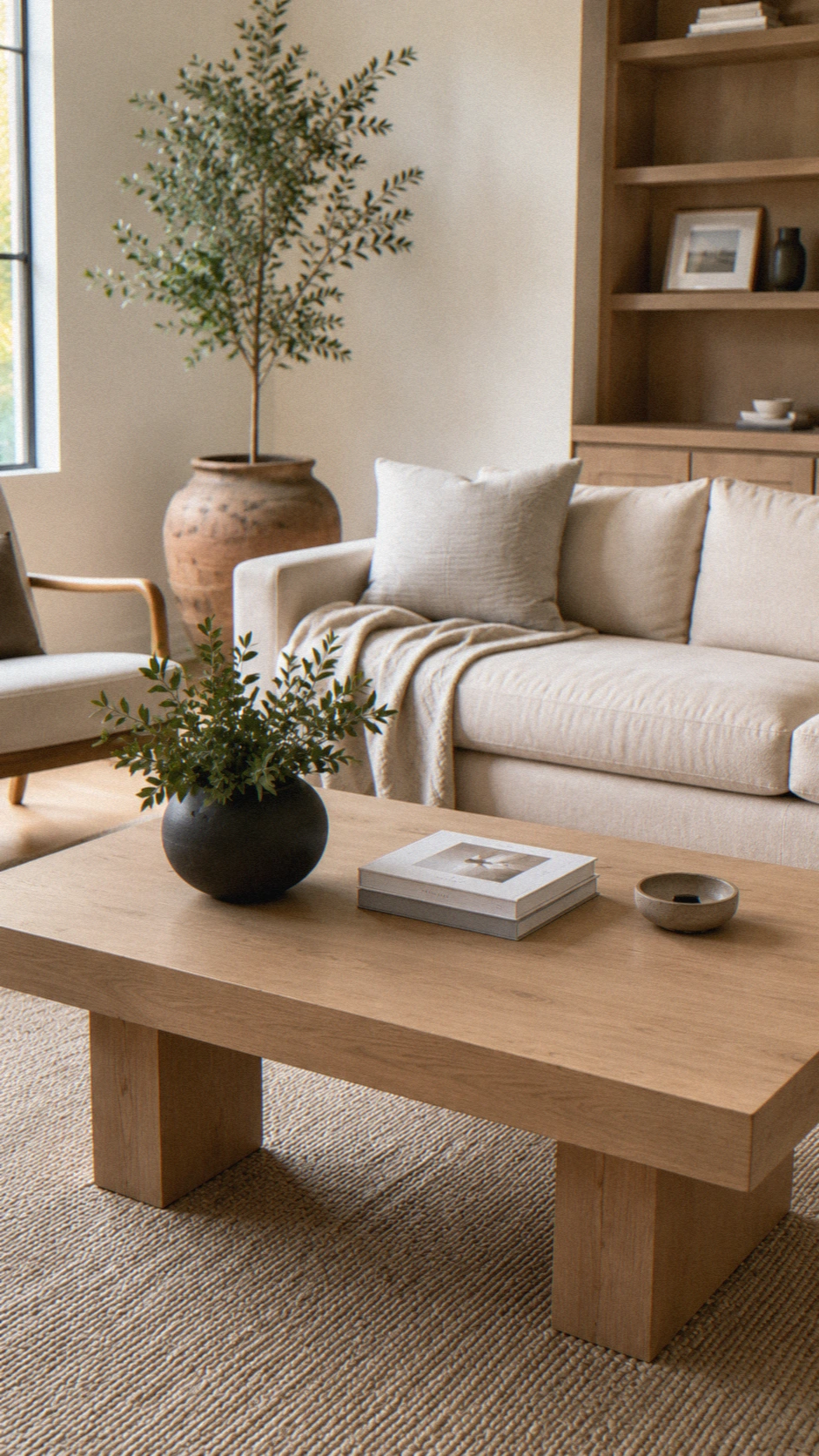
Most surfaces in a home end up as a catch-all for whatever landed there last, which is how a coffee table becomes home to four remote controls, a candle, two books, and a lip balm.
The three-item rule is a simple way to reset any surface without overthinking it: one functional item, one decorative item, and one natural element like a plant or a stone.
It is not a strict rule, more of a starting point that helps people see where a surface is working and where it has just become storage.
Doing this across the main rooms of a house takes maybe thirty minutes and the visual difference is immediate enough that it usually feels worth repeating every few weeks.
Edited surfaces are one of the fastest minimal home decor ideas to apply and they do not cost anything, which is a pretty rare combination.
Small Changes That Make a Whole House Feel Different
None of these ideas require a renovation, a large budget, or even a full day of effort to actually see results.
The thing about minimal home decor is that most of it is about removing and refining rather than buying and adding, which means the starting point is usually already sitting in the house.
A few of these done in one afternoon will change how the space feels to come home to, and that is the part that actually matters.
Anyone can do this, and most rooms feel noticeably calmer and more considered within an hour of starting.

Hi, I’m Alizabeth, the creator of Pretty Home Hacks. I share practical home decor ideas, easy DIY projects, organization tips, and budget-friendly ways to make your home feel more beautiful and functional. From small room updates to everyday home hacks, my goal is to share approachable ideas you can actually use in your own space.