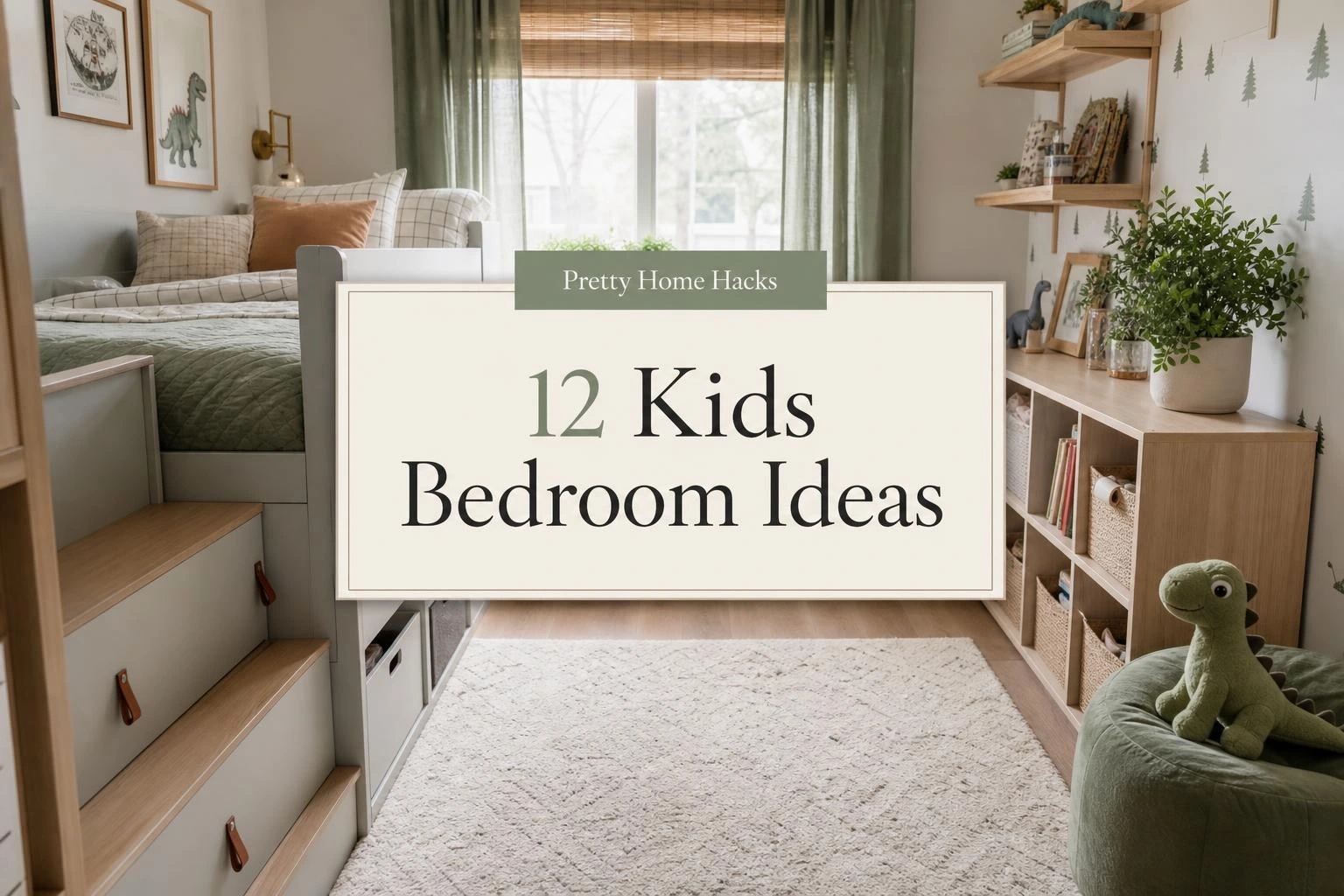
12 Kids Bedroom Ideas for Small Rooms That Free Up Space
Small kids bedrooms have a way of feeling fine until suddenly they really, really don’t.
One growth spurt, one birthday haul of new toys, one extra piece of furniture that seemed reasonable at the time, and the whole room tips into chaos.
Most people assume the only real fix is a bigger room, which is not exactly something you can add to a weekend to-do list.
The thing is, a lot of small rooms are not actually out of space, they are just using the wrong space.
These kids bedroom ideas for small rooms are the kind that make a real difference in how the room feels and functions day to day, not just how it looks in a photo.
1- Loft Bed With Desk Underneath
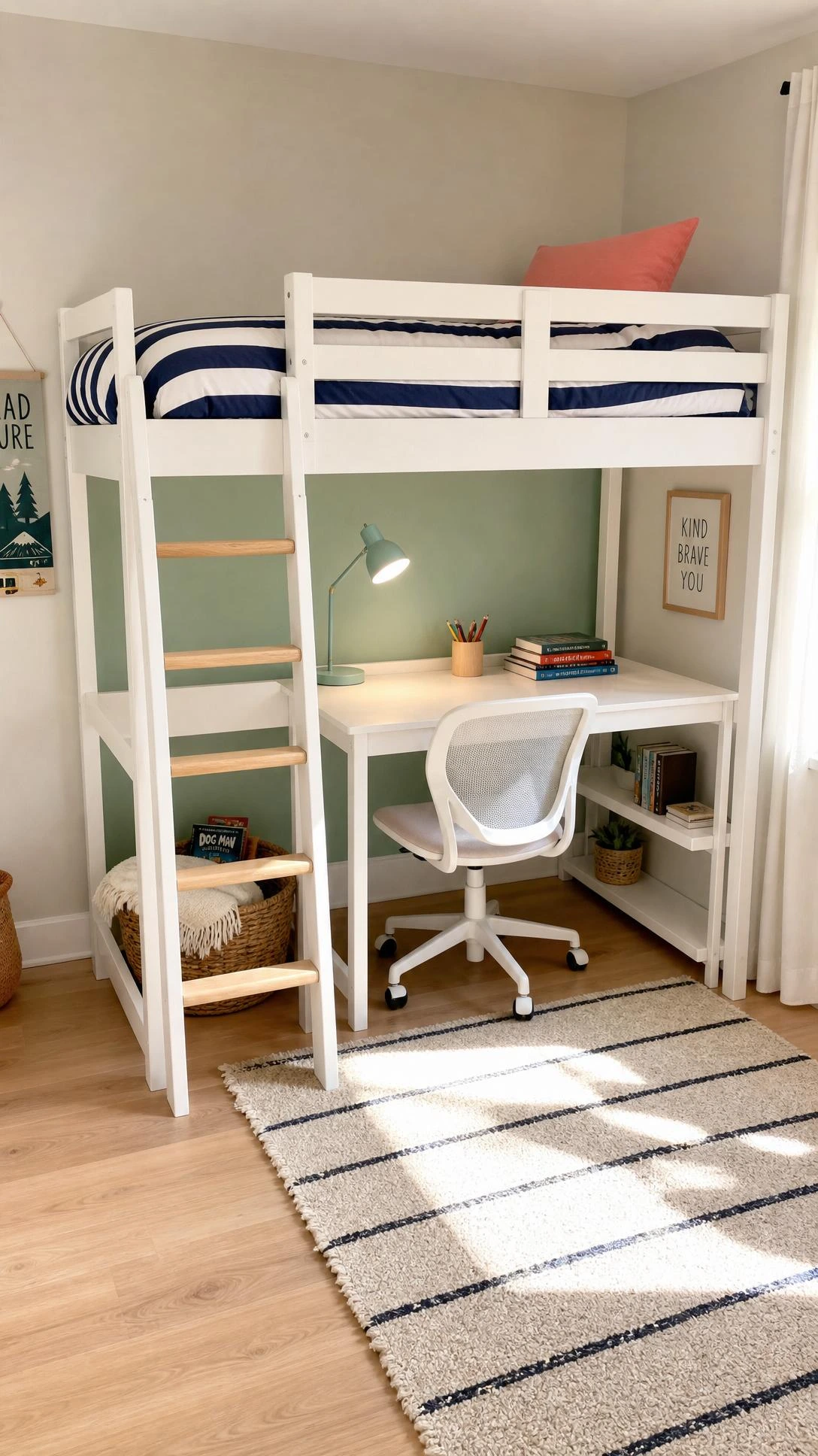
A loft bed is one of those ideas that sounds obvious once someone mentions it, but a surprising number of people never actually consider it.
Raising the bed up frees the entire floor area underneath for a desk, a reading nook, or just open floor space for playing.
Most standard loft beds sit about 5 feet off the ground, which leaves enough clearance below for a full-size desk chair and a child to sit comfortably at around age six or older.
IKEA’s KURA or STUVA loft beds are popular starting points and usually run between $200 and $400 depending on what is added.
This works best in rooms where ceiling height is at least 8 feet so the top bunk does not feel uncomfortably close to the ceiling.
Once the desk is tucked underneath, the room immediately has two distinct zones without adding any extra square footage.
2- Bunk Beds for Two Kids in One Room
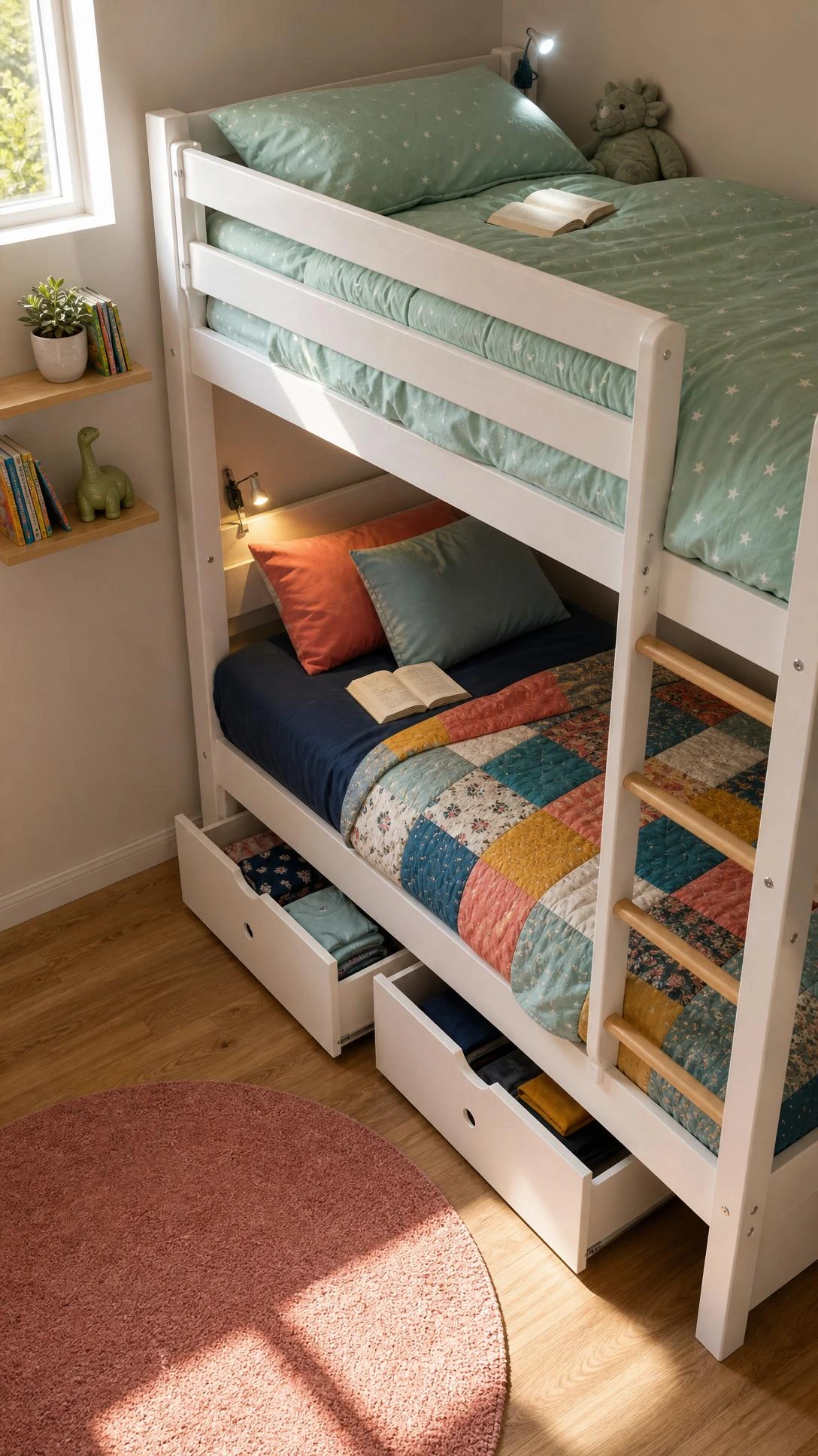
Fitting two kids into one small room without someone feeling like they got the bad deal is its own challenge.
Bunk beds solve the sleeping situation without doubling the footprint, which is the whole problem with putting two separate beds in a small space.
A standard twin-over-twin bunk takes up roughly the same floor space as a single twin bed, which is a pretty significant trade-off when the room is small.
Some bunk beds come with built-in drawers in the stairs, which is one of those details that feels minor until there is nowhere else to put anyone’s socks.
I think the ones with a staircase rather than a ladder are genuinely easier for younger kids to navigate safely, even though they take up slightly more space along the side.
The key is making sure each child has their own shelf or small area nearby so the sleeping arrangement does not start fights about territory.
3- Wall-Mounted Shelving Instead of Bookshelves
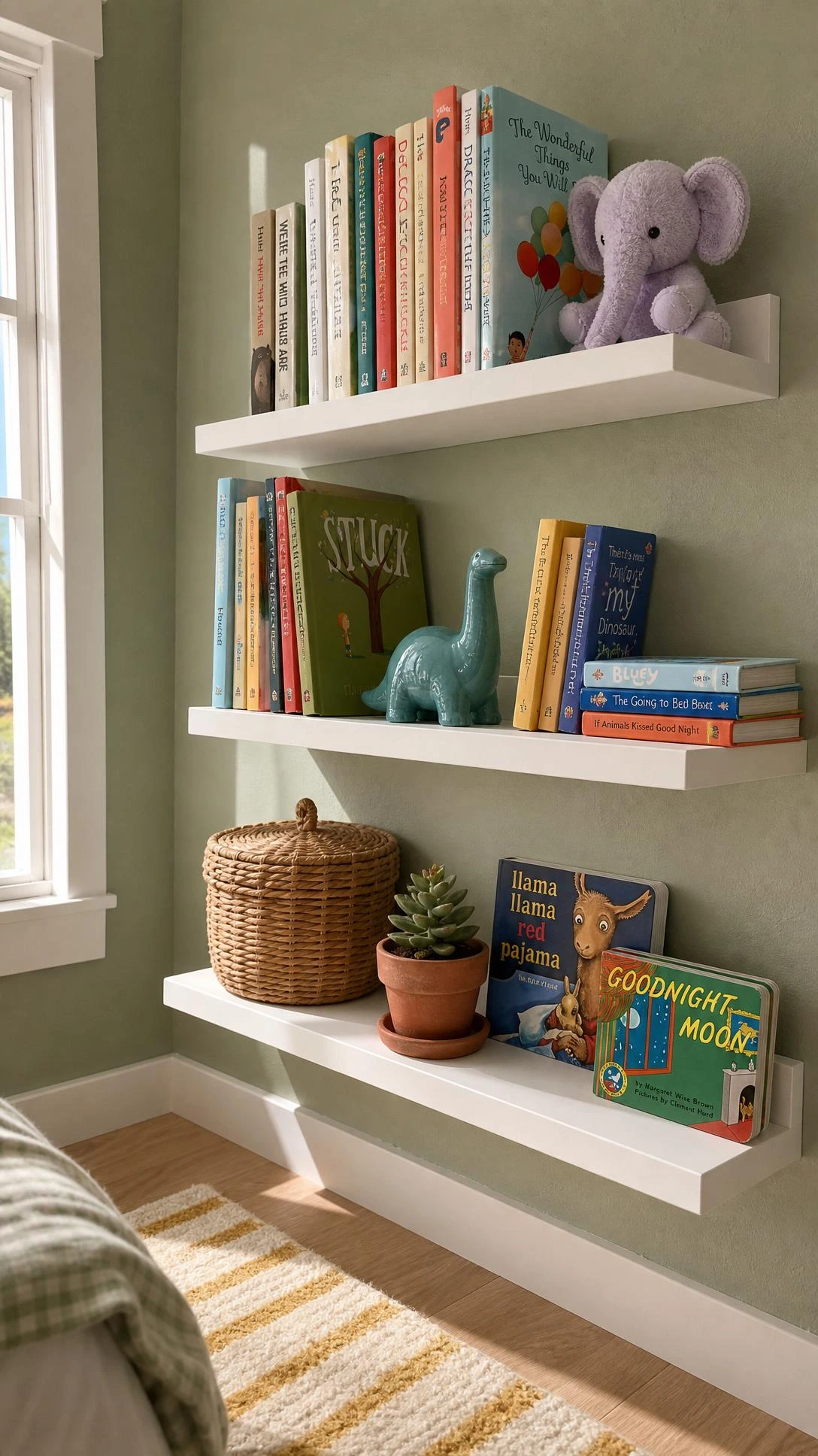
Freestanding bookshelves eat floor space and in a small kids room, floor space is everything.
Wall-mounted shelves do the same job and keep the floor clear, which makes the whole room feel less closed in.
Floating shelves at different heights along one wall can hold books, small toys, a lamp, and art supplies without any of it ending up on the floor.
IKEA LACK shelves in white are around $10 to $15 each and disappear against a light-colored wall, which is always a nice surprise given how much work they do.
The only thing to watch for is making sure they are anchored into studs, especially in a kid’s room where things are going to get grabbed at regularly.
Keeping the lower shelves for items used daily and the higher ones for things that only come down occasionally makes the whole system easier to maintain.
4- Murphy Bed for Flexible Floor Space
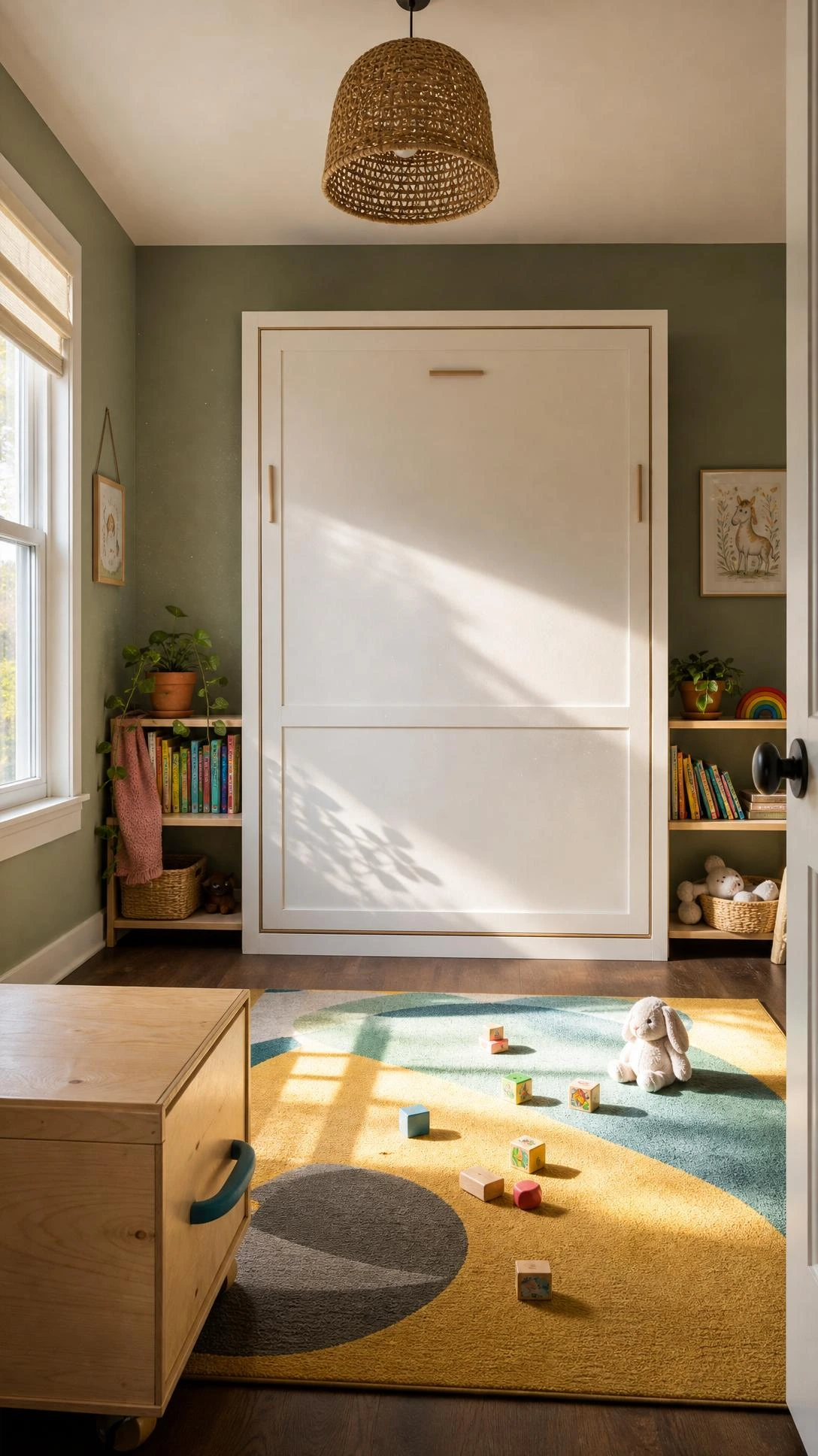
Murphy beds are not just for tiny apartments anymore, and they actually make a lot of sense in a kid’s room that needs to double as a play space during the day.
When the bed folds up, the room gets its full floor back, which for a child who needs space to spread out Legos or do art projects is genuinely useful.
Wall bed kits designed for kids often include a built-in desk or shelving that stays accessible even when the bed is down.
A basic Murphy bed cabinet setup starts around $500 to $700 for a twin size, which is not cheap but is a lot less than moving to a bigger house.
This works best for kids who are old enough to help fold it up themselves, roughly ages seven and up, otherwise the routine falls apart pretty fast.
5- Under-Bed Storage Drawers
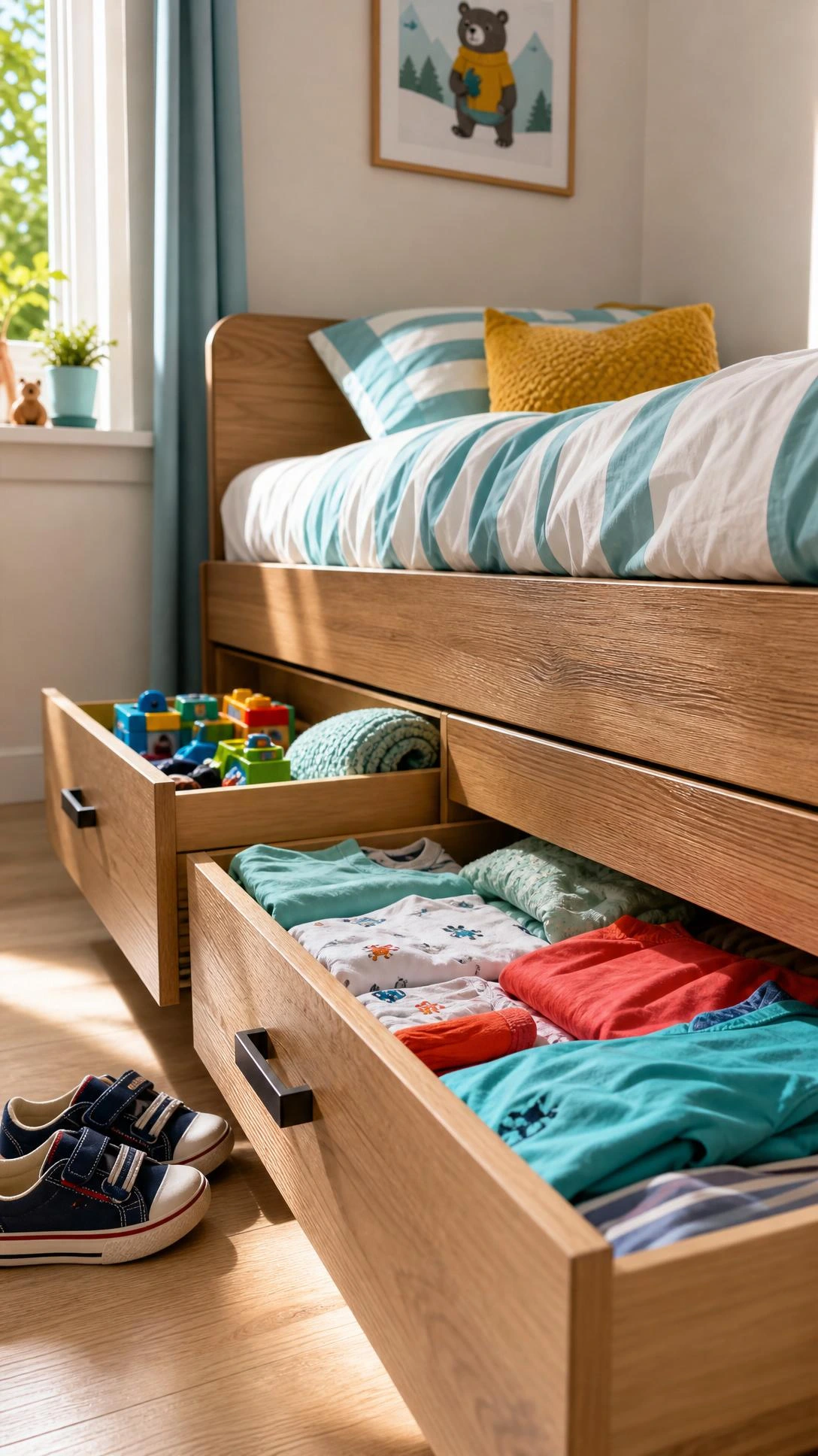
The space under a bed is one of the most wasted spots in a small bedroom, and it happens in almost every room where storage is a problem.
Beds with built-in drawers underneath can replace an entire dresser, which is usually one of the largest pieces of furniture taking up wall space.
A twin bed with two to three under-bed drawers can hold a full season of folded clothing without needing a separate chest of drawers in the room at all.
For beds that do not have built-in storage, low rolling bins or shallow containers with lids work well and can be pulled out easily by kids who are old enough to manage their own things.
The trick is actually sorting what goes under there so it does not just become a hidden pile, which defeats the whole point.
6- Light Wall Colors to Open Up the Space
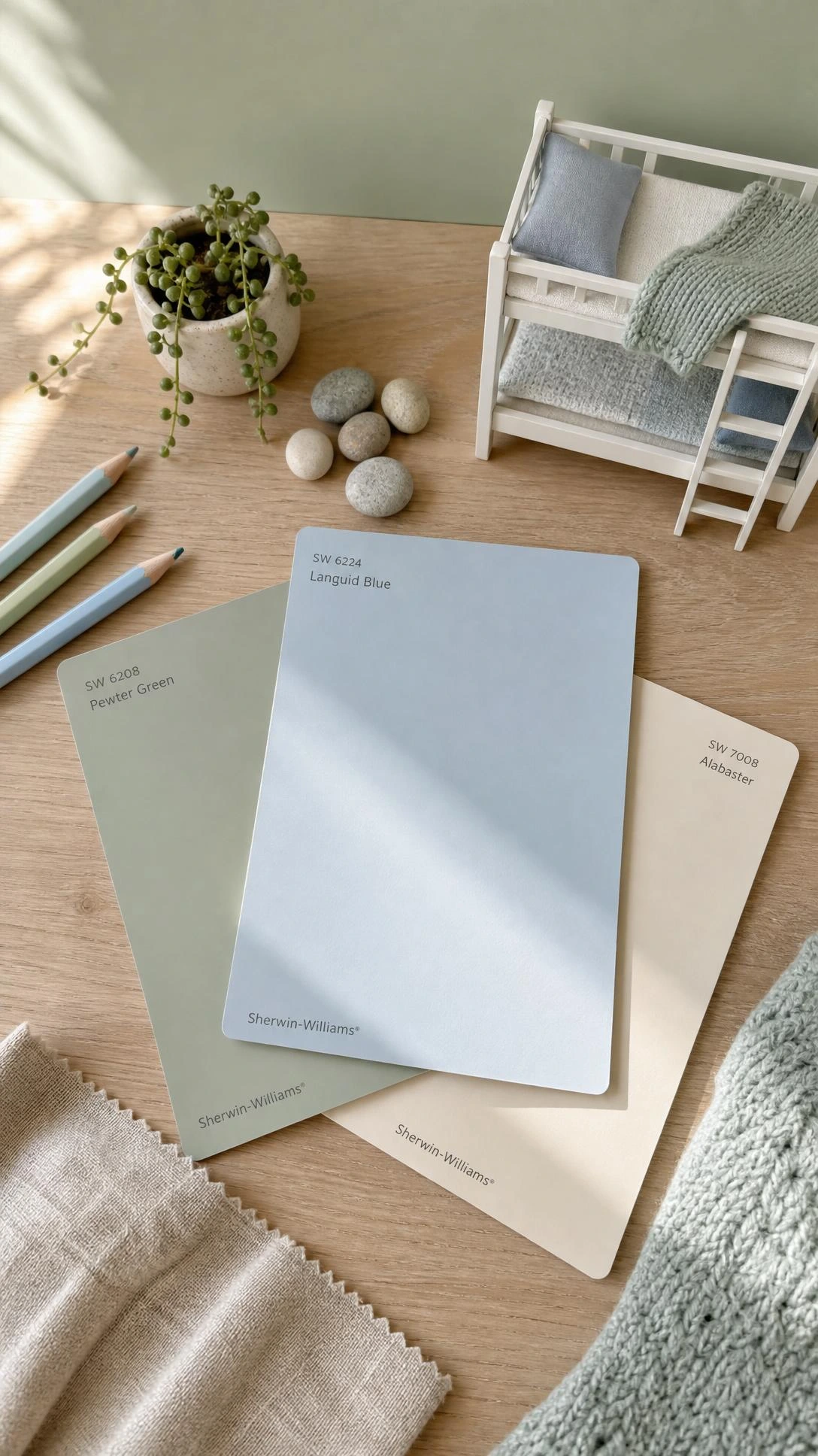
Nobody wants to paint a room just to feel like the room is bigger, but it actually does make a noticeable difference in a small space.
Light colors reflect more natural light and make walls feel further away, which is the whole reason designers keep recommending them for small rooms.
Soft white, pale sage, or a warm off-white like Benjamin Moore’s White Dove are all options that feel bright without looking like a blank wall.
The ceiling matters too, painting it the same light color as the walls or even one shade lighter makes the room feel taller than it actually is.
This is one of the easiest and cheapest changes in this whole list, usually under $50 for a small room, and it works immediately.
7- Built-In Storage Around the Bed
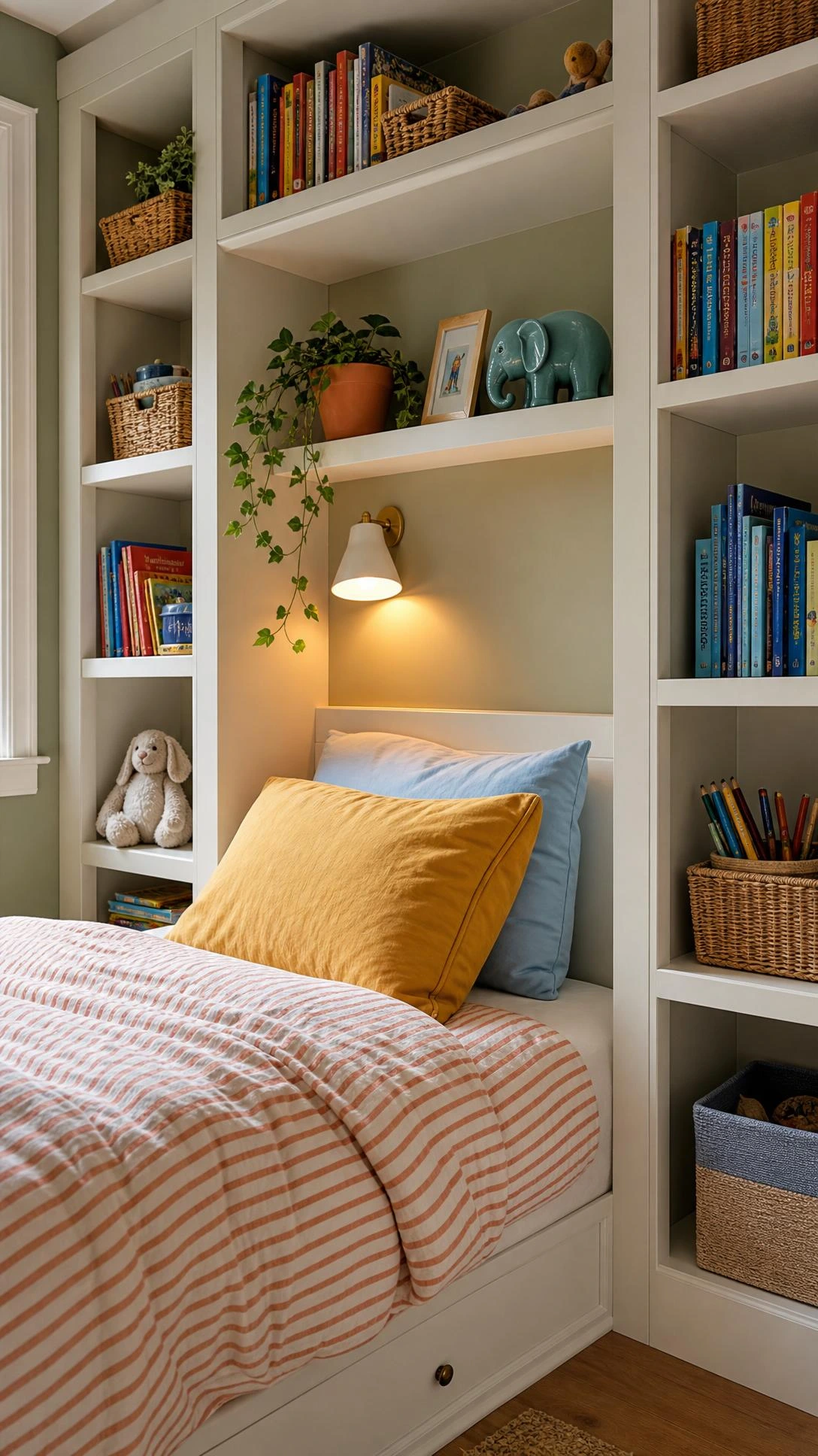
Built-in storage sounds like a renovation project, but it does not always have to be.
Even simple bookcases placed on either side of a bed and connected with a shelf across the top create the look and function of a built-in without any actual construction.
This set-up gives a child bedside surfaces, shelving, and a sense of their own defined sleeping area all at once, which in a shared room is especially valuable.
IKEA BILLY bookcases are often used for this kind of setup and can be secured to the wall for safety, with the whole project coming in under $200 for both sides.
It works best when the shelving is kept reasonably edited, a few books, a lamp, and a small bin rather than every toy and stuffed animal in the room.
8- Vertical Storage With Pegboards
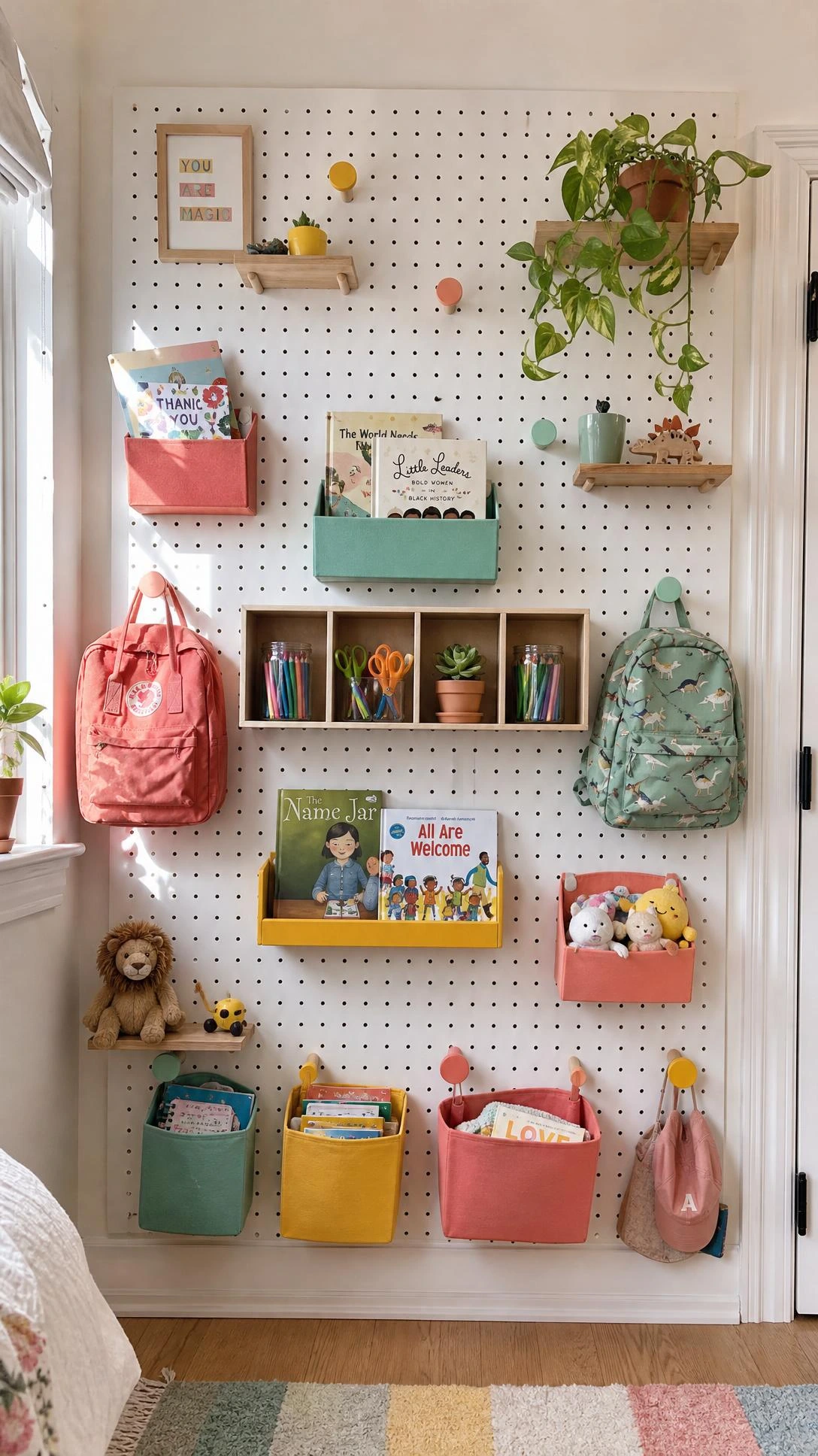
Pegboards have been in garages forever, but in a kid’s room they are one of the most flexible storage options available for a small wall space.
Because everything hangs rather than sits, the floor and desk surfaces stay clear, and the whole layout can be rearranged whenever the kid’s needs change.
Art supplies, small baskets, headphones, a calendar, and even a small shelf for a plant or figurine can all live on one pegboard panel.
A 24 by 48 inch pegboard in white painted to match the wall blends in and keeps the room looking intentional rather than chaotic.
The accessories that hang on it usually run around $15 to $30 for a starter set of hooks and bins, and the whole thing can grow over time.
I think this one is especially good for creative kids who like having their supplies visible and accessible without them ending up in a drawer they never open.
9- Mirrored Furniture or a Single Large Mirror
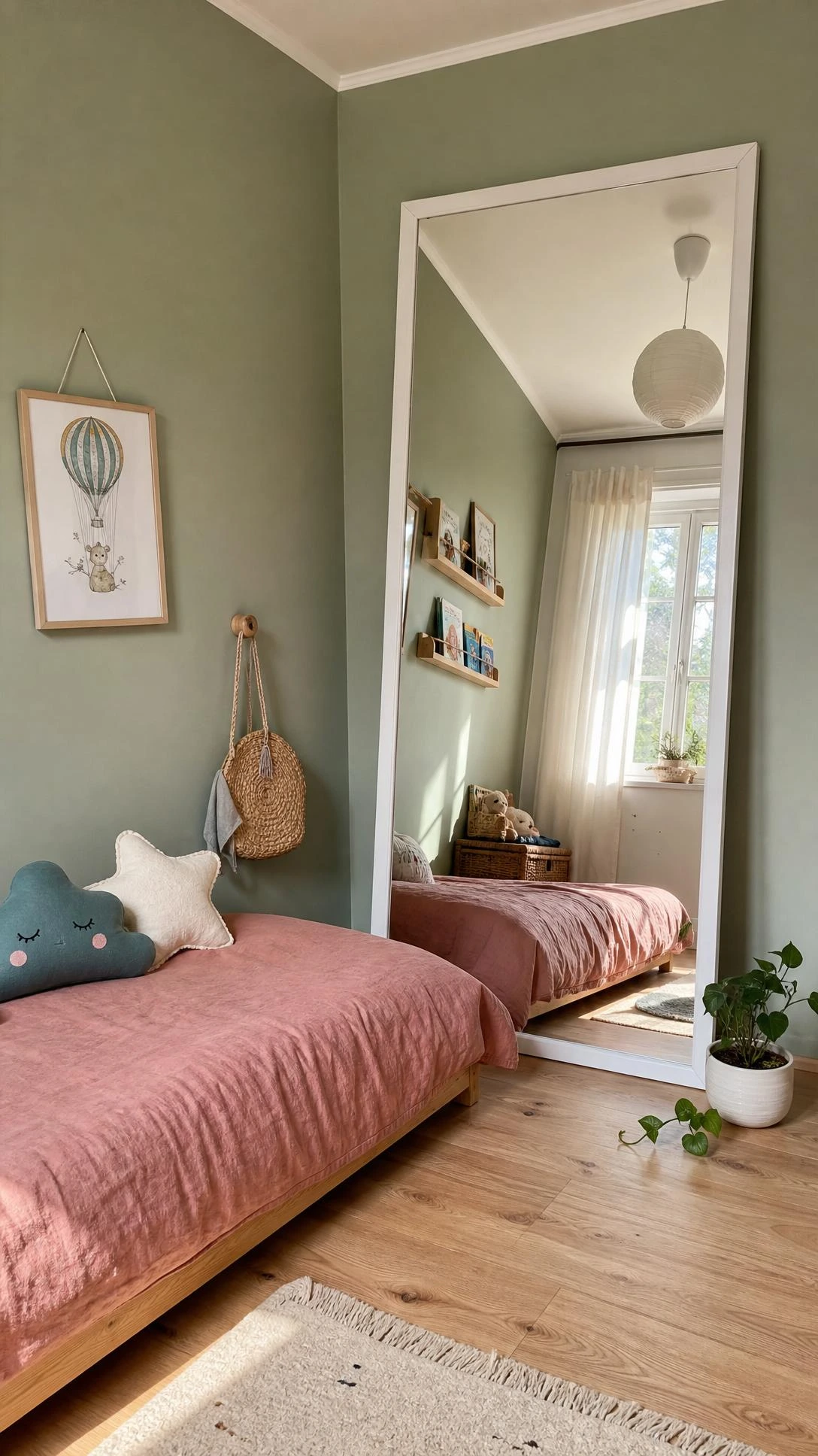
Mirrors make small rooms feel bigger and it is one of those tricks that sounds like something people just say until you actually try it.
A large mirror on one wall reflects the window light back into the room, which makes the whole space feel airier and less boxed in.
A full-length mirror leaned against a wall or mounted behind a door does the same job without taking up any floor space at all.
For a kids room, an over-the-door mirror is probably the most practical option since it is out of the way and adds function without being a hazard.
Mirrored wardrobe doors are another option that does double duty as both storage and the mirror effect, which is worth considering if the room needs a wardrobe anyway.
10- A Defined Reading Nook in a Corner
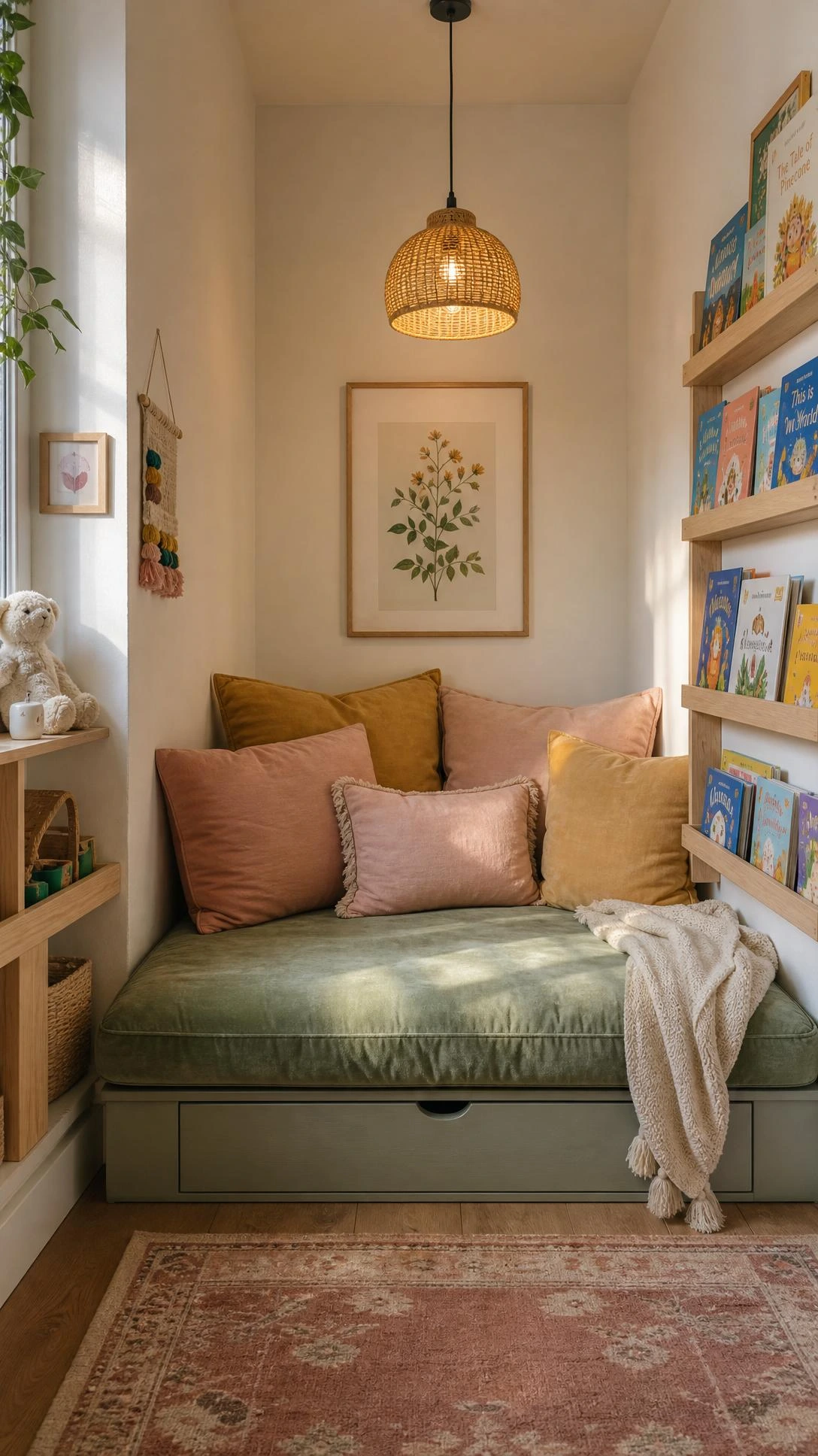
Small rooms actually have one advantage that bigger rooms do not, which is that corners and nooks feel cozy rather than wasted.
A simple reading nook in a corner, just a small cushion, a low shelf for books, and a wall-mounted light, gives a child their own quiet spot without taking up significant space.
Bean bag chairs or floor cushions in a 36 by 36 inch corner footprint are enough to create the feeling of a dedicated space without sacrificing much room.
Warm string lights above the nook or a simple plug-in wall sconce make it feel intentional and separate from the rest of the room, which kids tend to love.
The goal is just to make the corner feel like something rather than the spot where things end up when there is nowhere else to put them.
11- Toy Rotation to Keep the Room From Overwhelming Itself
This one is not a furniture idea but it might be the most practical thing on this list.
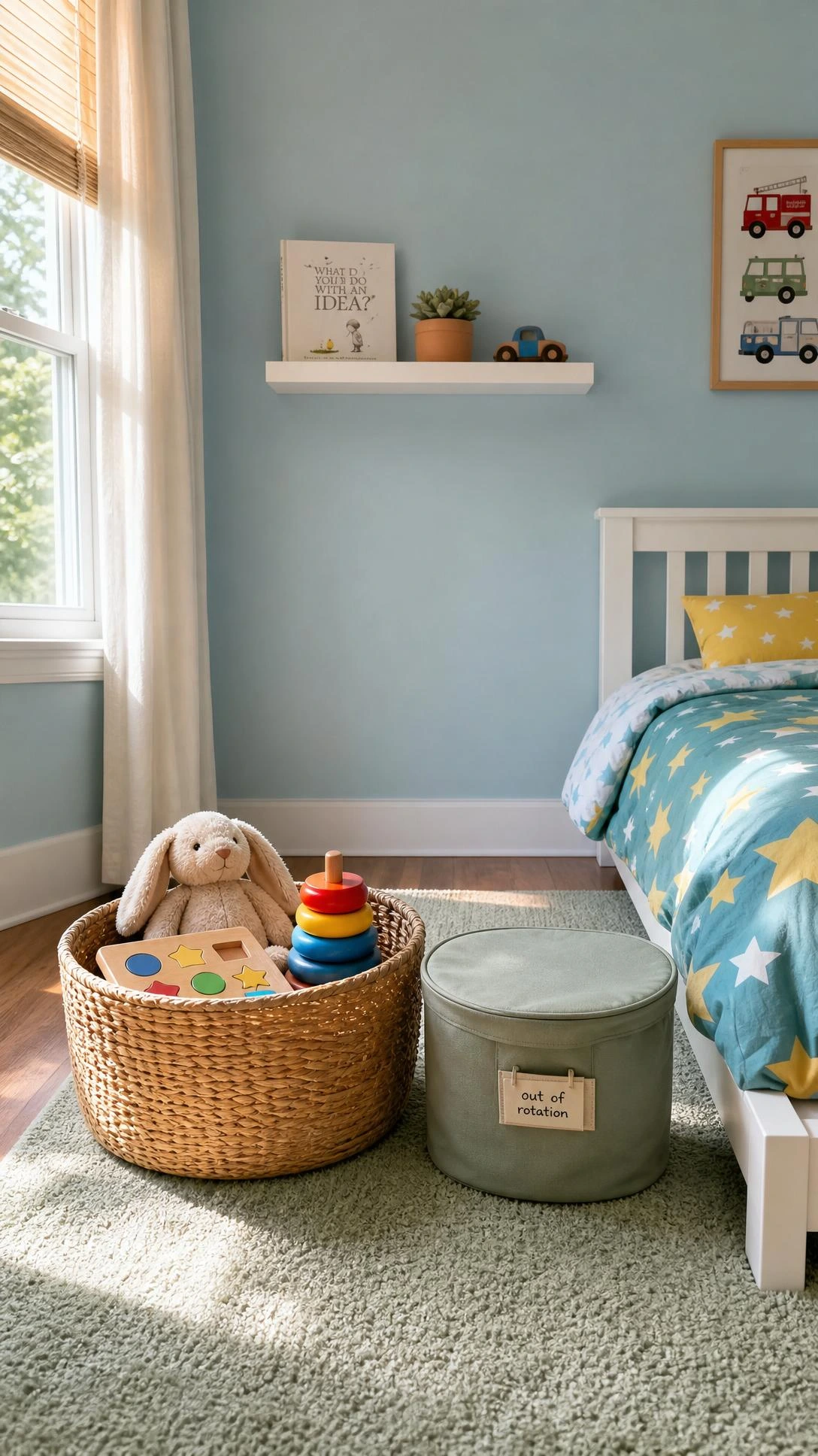
Keeping every toy a child owns accessible at once is one of the fastest ways to make a small room feel impossible, no matter how good the storage is.
Toy rotation means keeping only a portion of toys in the room at one time and storing the rest in a closet, a bin in another room, or under a bed.
Rotating every four to six weeks keeps things feeling fresh for kids, which also means they actually play with what is out rather than ignoring it all because there is too much to choose from.
The room stays manageable, the kid stays engaged, and nobody has to step on a Lego in the middle of the night, which feels like a win on all levels.
12- Curtain Room Divider for Shared Bedrooms
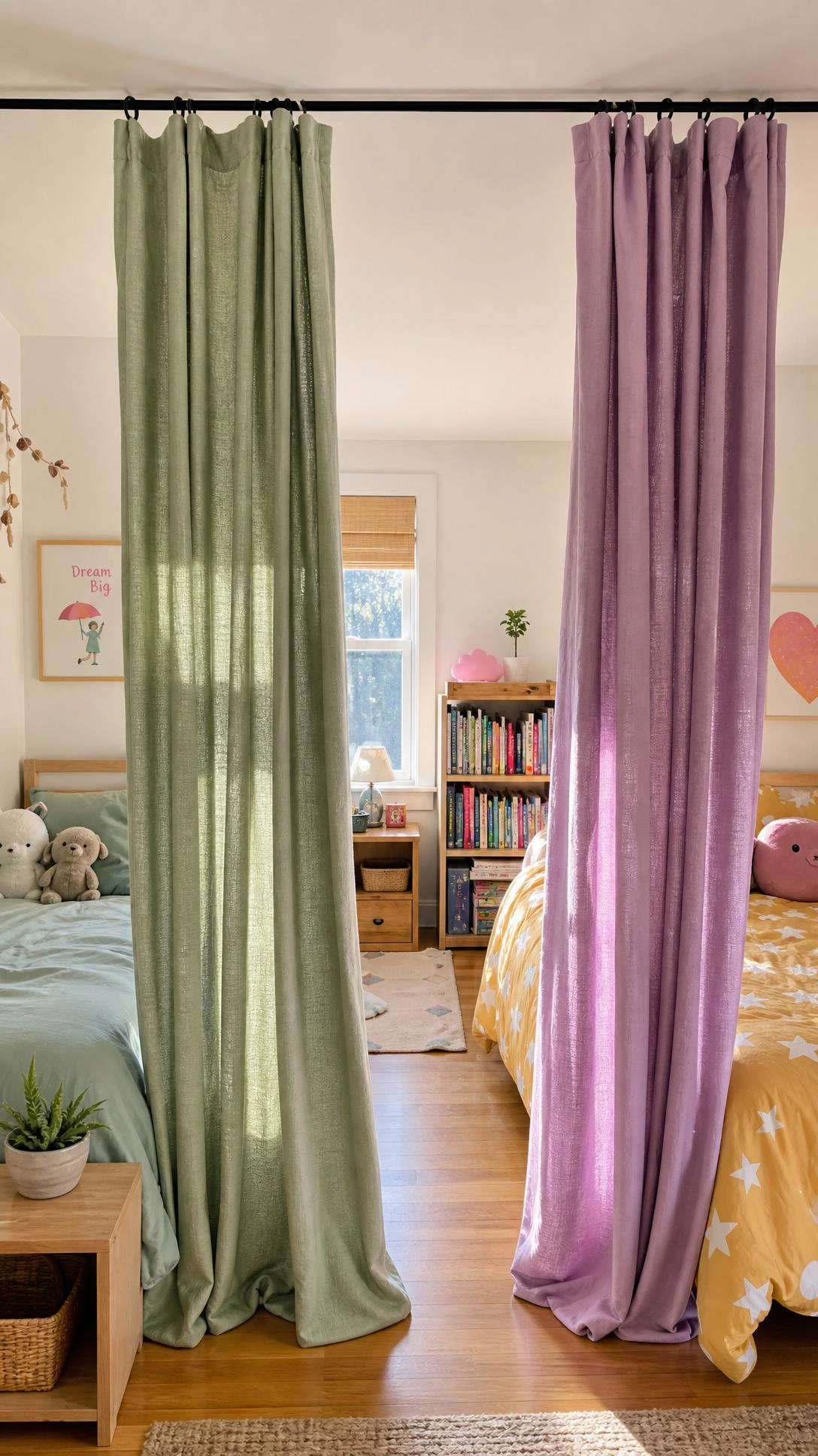
Shared small bedrooms are their own specific challenge because the issue is not just space, it is also the feeling of having any personal territory at all.
A curtain panel hung from a ceiling-mounted track gives each child a visual boundary without using any floor space or adding a wall.
Floor-to-ceiling curtains in a solid, calm color like dusty blue or soft grey make the division feel intentional rather than like a temporary fix.
IKEA’s ceiling track curtain systems are designed for exactly this kind of setup and run around $50 to $80 for a basic configuration across a mid-size room.
The curtain does not have to stay closed all the time, it just needs to be there as an option so each kid feels like their space is their own when they need it.
It is a small thing that tends to cut down on a lot of the daily friction that comes with two kids sharing one room.
Small Rooms Work Better Than Most People Expect
A small kids bedroom is not a problem to solve once and forget, it is something that needs a little attention as kids grow and their stuff multiplies.
Most of these ideas work best in combination rather than on their own, a loft bed plus wall shelves plus a toy rotation system does more than any one of them alone.
The rooms that feel the most livable are usually not the biggest ones, they are the ones where someone thought about how the space actually gets used day to day.
Start with the floor, clear it as much as possible, and the rest tends to fall into place from there.

Hi, I’m Alizabeth, the creator of Pretty Home Hacks. I share practical home decor ideas, easy DIY projects, organization tips, and budget-friendly ways to make your home feel more beautiful and functional. From small room updates to everyday home hacks, my goal is to share approachable ideas you can actually use in your own space.