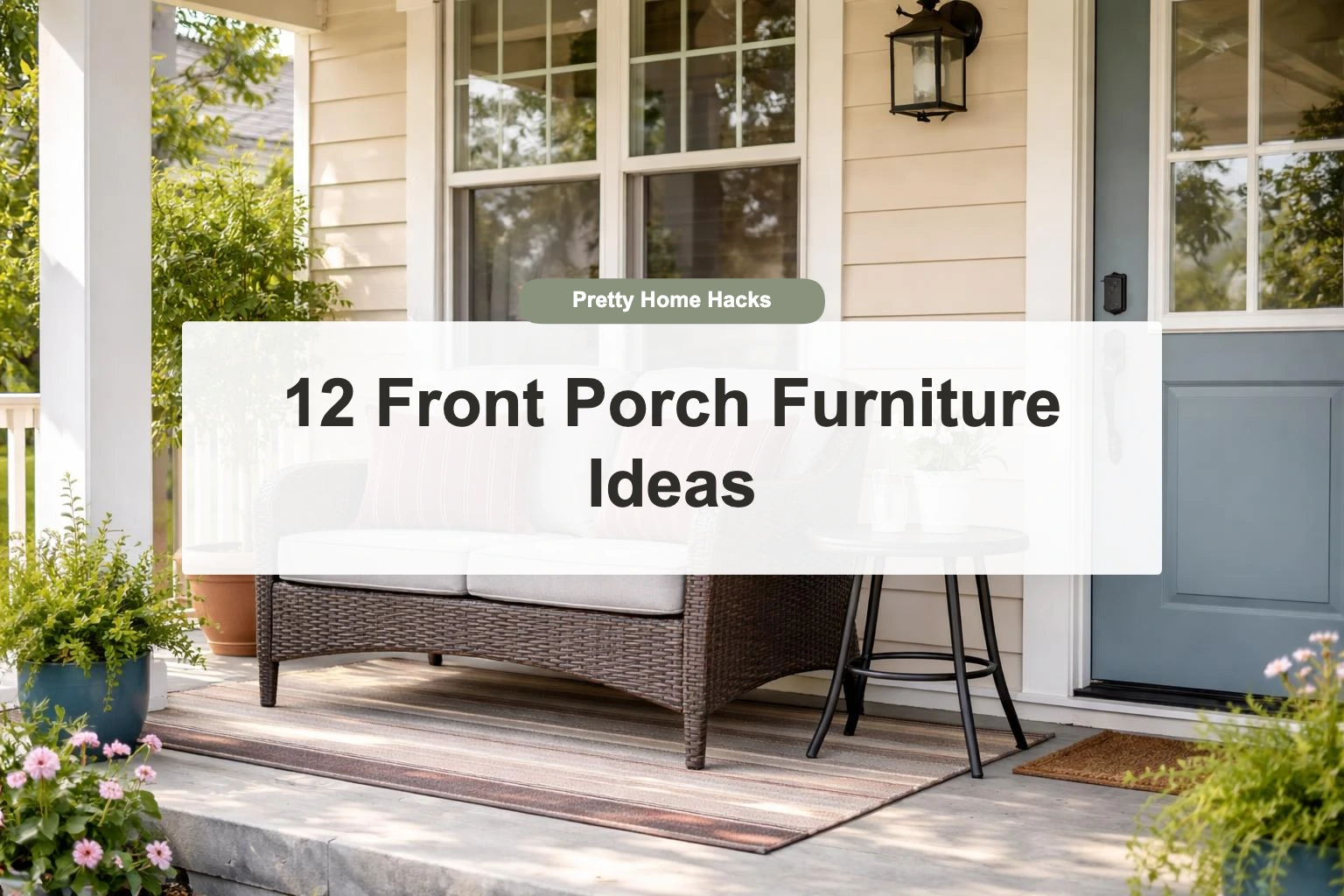
Front Porch Furniture Ideas That Fit Real Entryways
The mail lands by the door, shoes pause on the mat, and a porch can feel crowded fast.
Front porch furniture looks easy in photos, but real houses need room for doors, steps, and damp weather.
A chair that fits the wall can still block the latch, and a cute table can catch every grocery bag.
The calmer setups usually start with one useful piece and a clear walking path.
That keeps the porch usable on ordinary mornings, not just tidy for ten minutes.
1- Small Porch Bistro Set
A narrow townhouse porch often needs seating that almost disappears when nobody is using it.
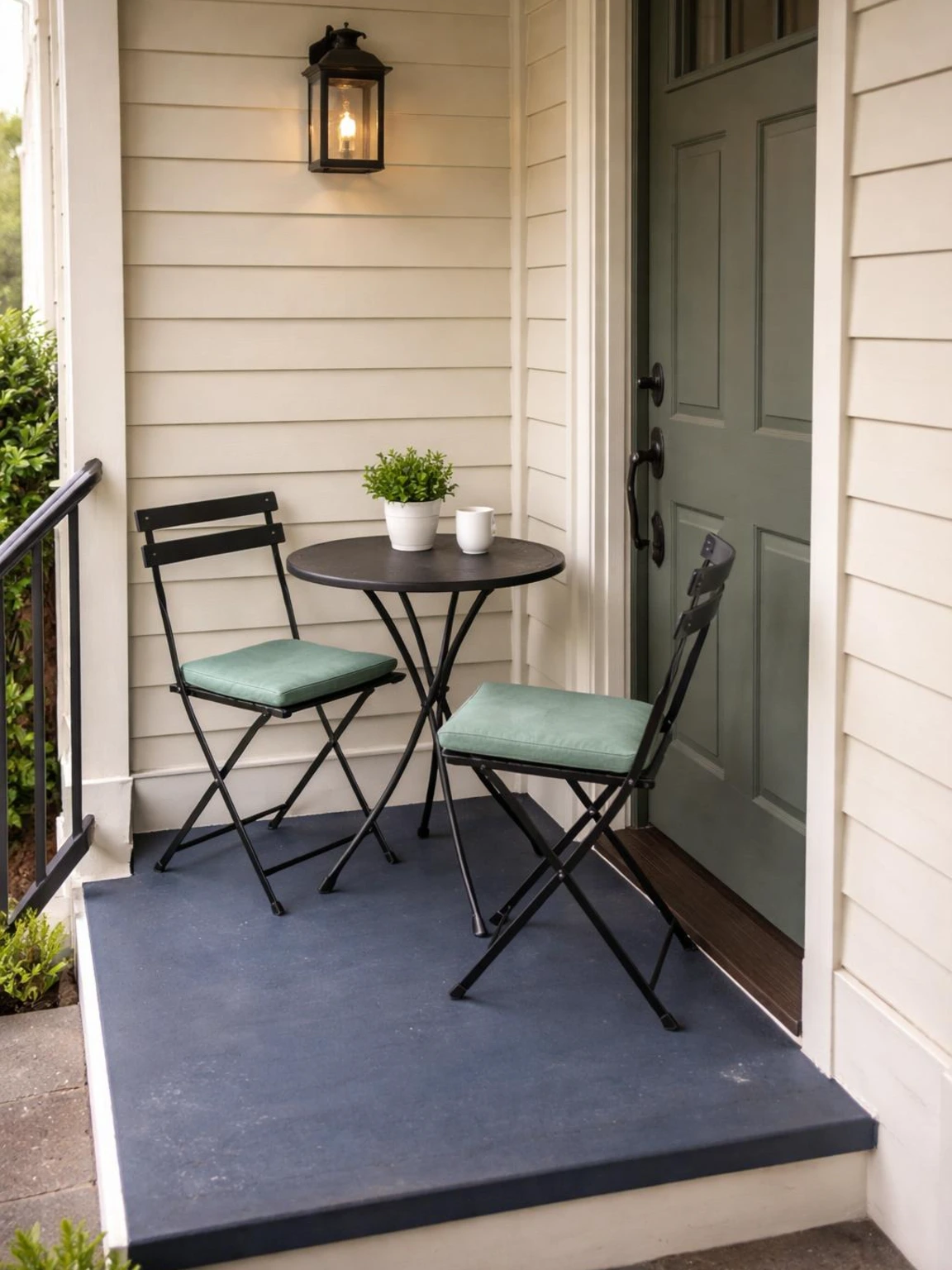
A round powder-coated steel bistro table with two slim chairs keeps the footprint light.
Set it beside the entry door on the latch side, not in the swing path.
Navy porch paint, ivory siding, and muted green seat pads give the small setup enough contrast to read clearly.
This works best when the porch is deep enough for seated legs without narrowing the route to the steps.
2- Wicker-Look Loveseat Porch
A medium-width porch can handle a loveseat better than a scatter of mismatched chairs.
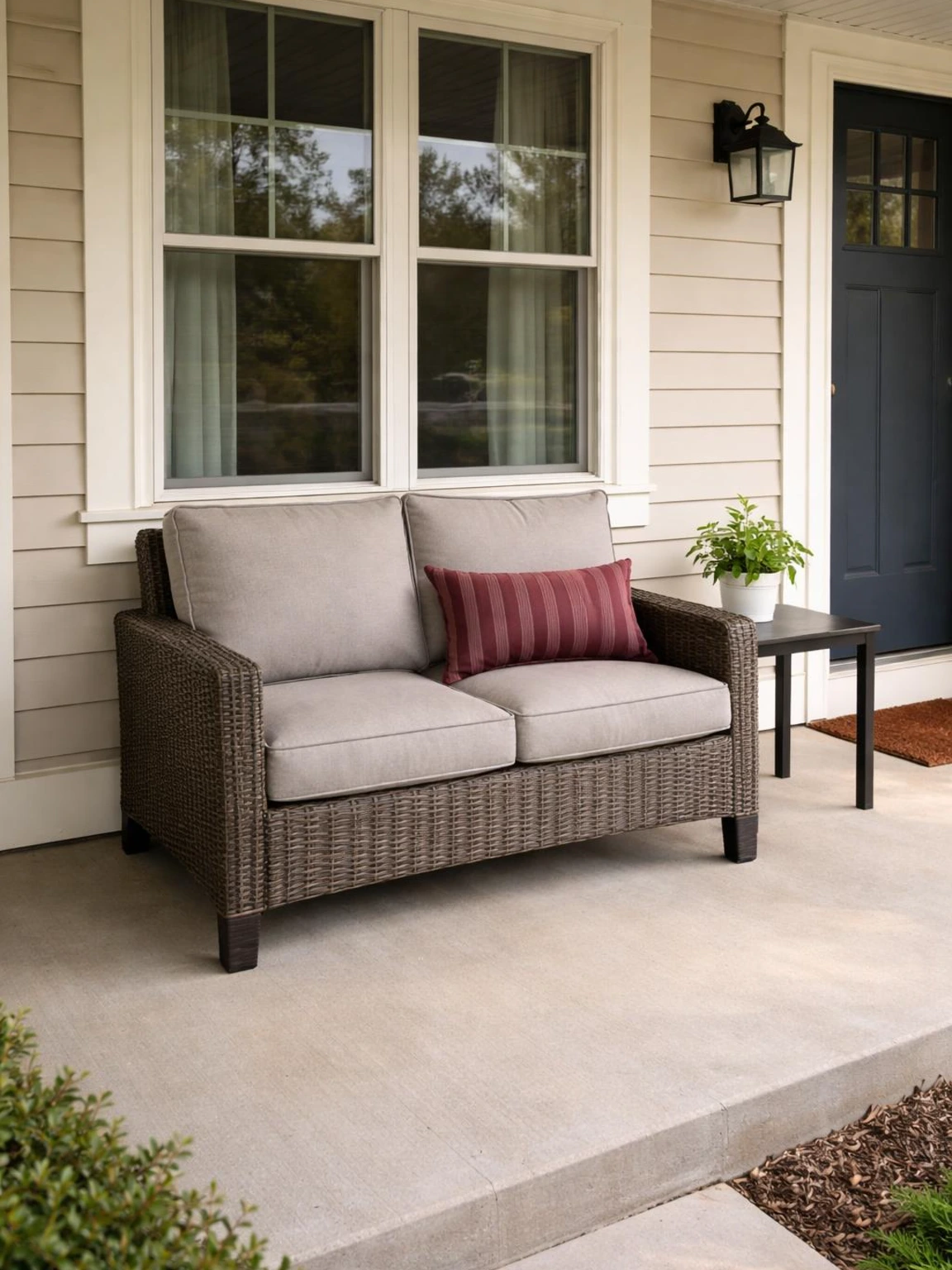
Center a two seat resin wicker-look loveseat under the front window to use the longest wall well.
Warm gray cushions keep the piece quiet, and a burgundy striped lumbar pillow adds a little shape.
A low metal side table is easier here than a coffee table because the front door zone stays open.
Bulky arms can eat up precious inches, so this suits porches with moderate depth rather than shallow slabs.
3- Rocking Chairs by the Door
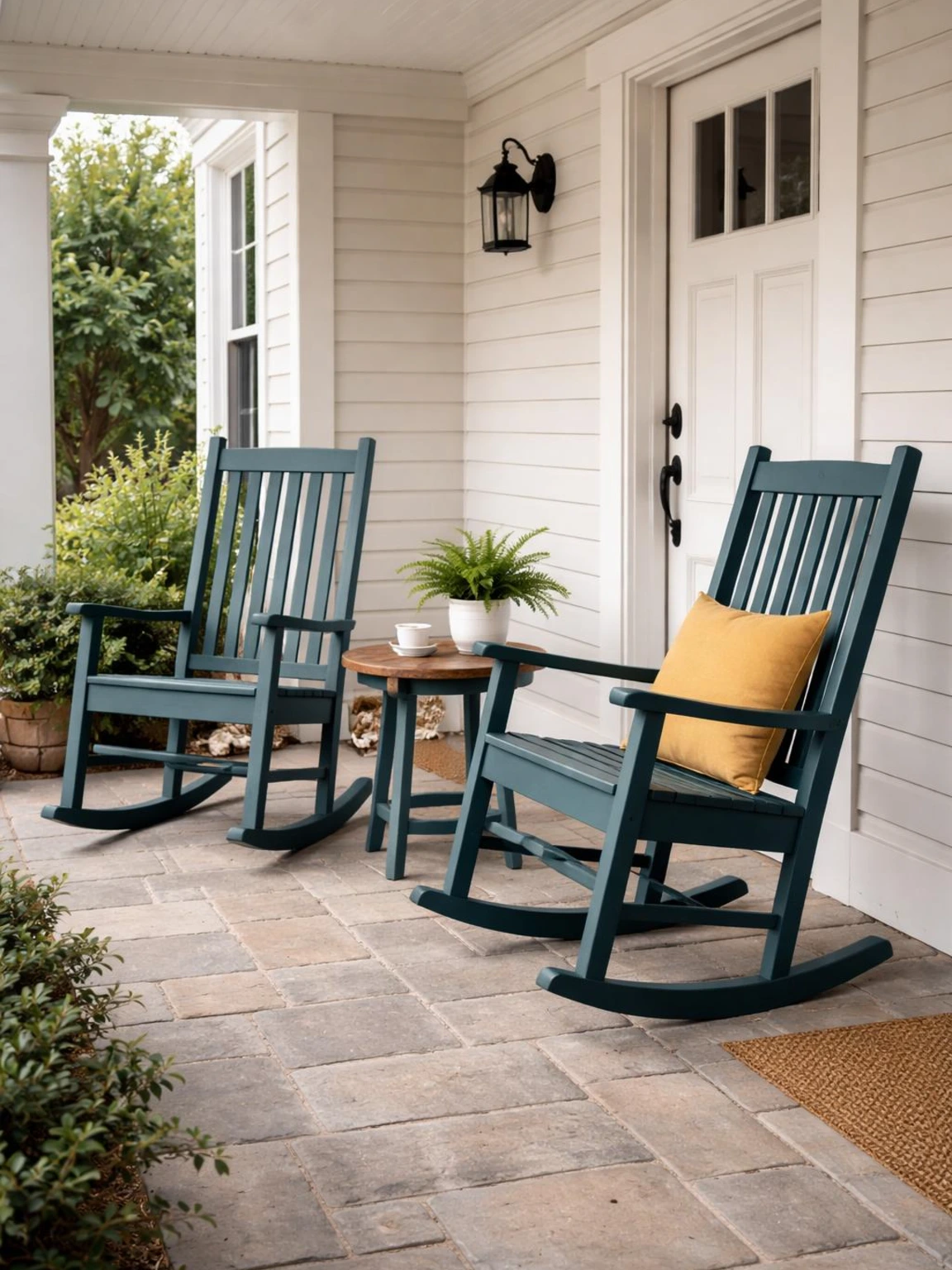
Older porches often look right with rockers because the house already has some visual weight.
Use two painted wood rocking chairs near the door with a small shared table between them.
Deep teal paint, warm white trim, and one restrained mustard cushion keep the setup from drifting into theme-park porch territory.
Angle the chairs inward slightly so conversation feels natural without pushing the runners into the main path.
Rockers need extra clearance front and back, so they are a poor fit for tight little landings.
4- Bench Under Front Window
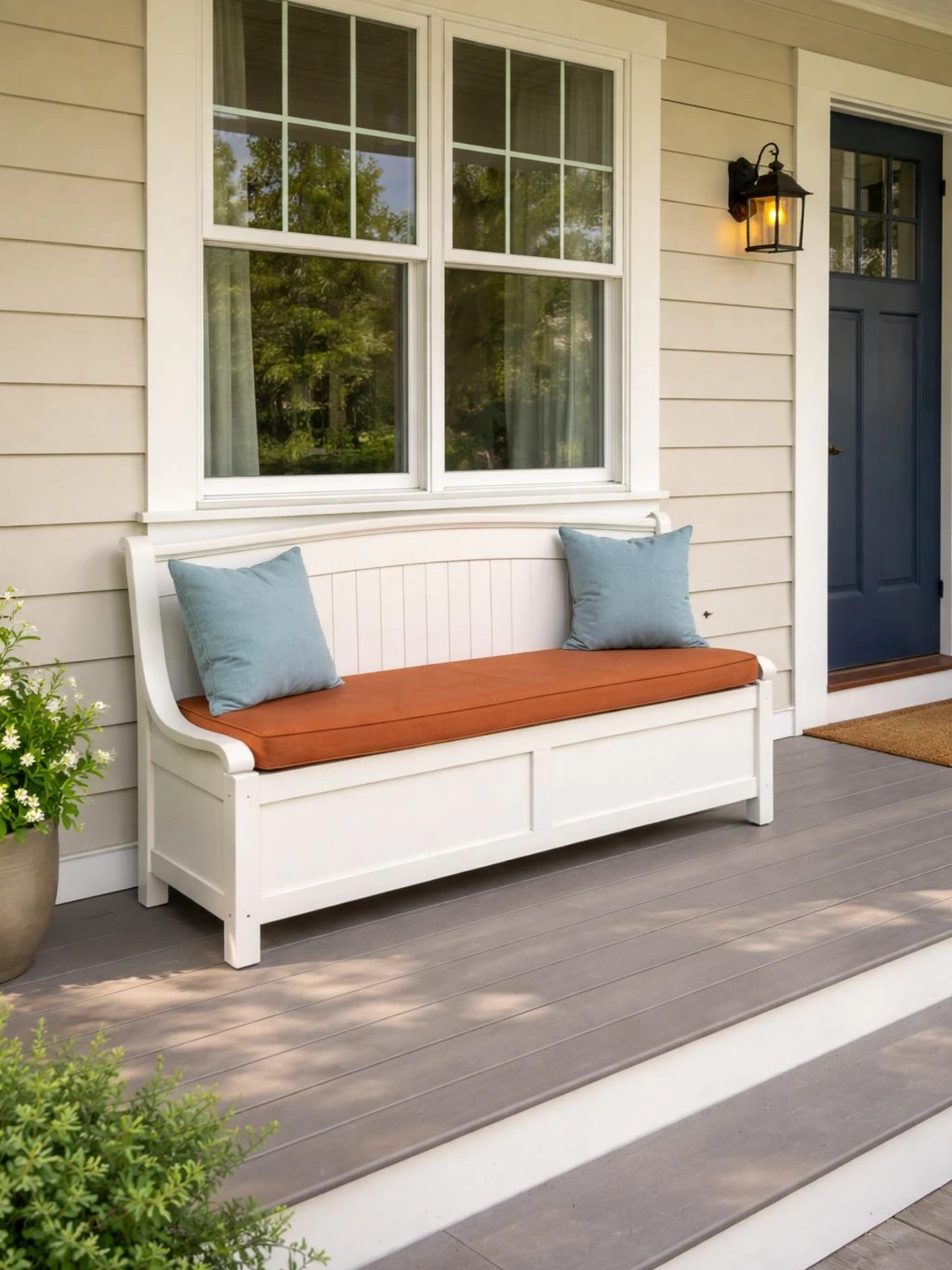
A front window often creates the best straight wall for a longer seating piece.
Place a bench parallel to the house under that window so traffic stays closer to the steps and door.
Painted hardwood with a rust seat cushion and soft blue accent pads feels grounded against neutral siding.
A storage bench can be handy, though lids and cushions need to stay dry and easy to lift.
Check the sill height before buying, because a low window can make the back feel awkward and look crowded.
5- Black Metal Glider Seating
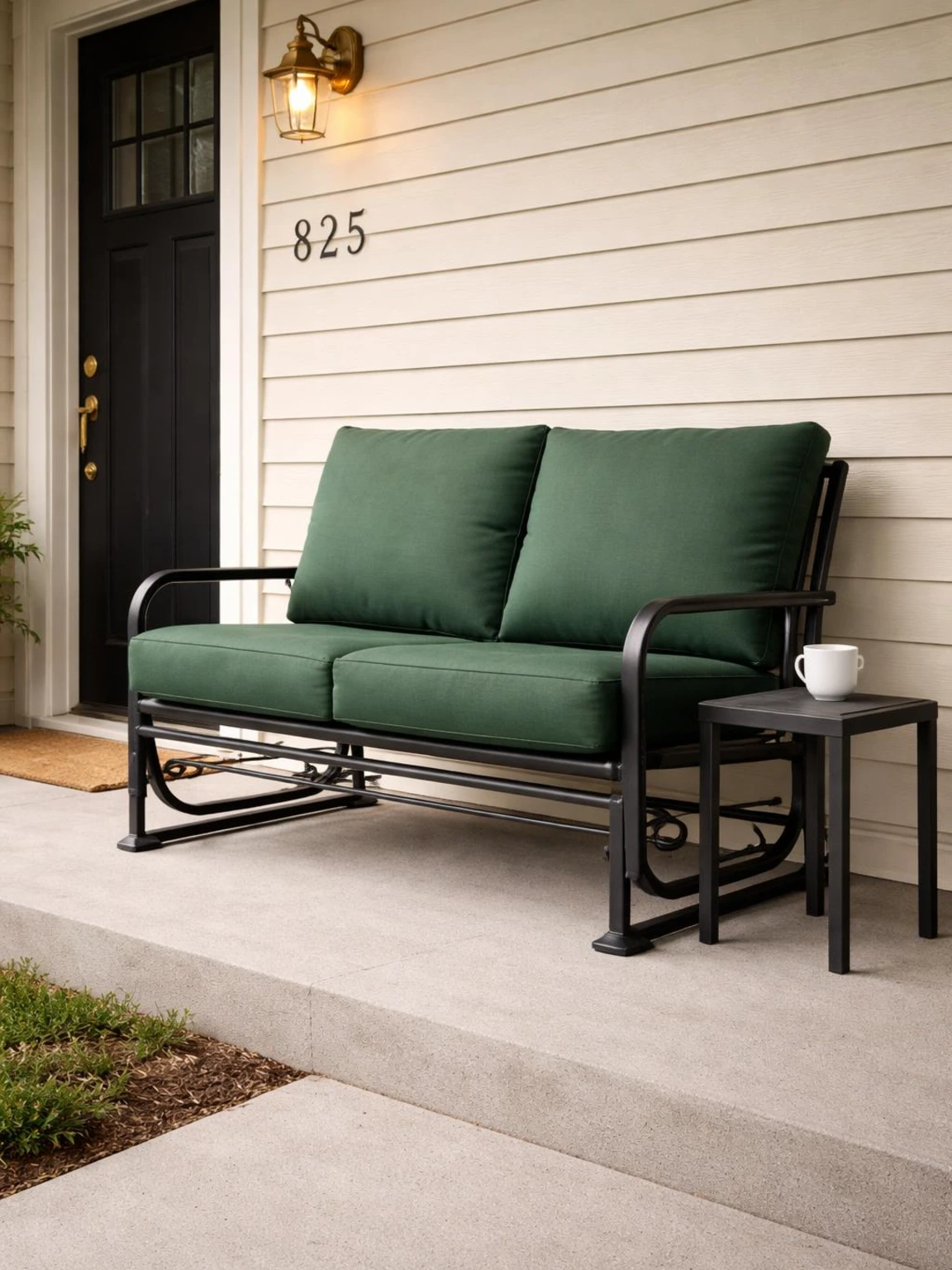
A porch glider gives movement without the larger sweep that rockers need.
Set a black metal glider on one side of the entry, parallel to the house wall.
Forest green cushions soften the frame, and a compact side table gives a place for a cup or keys.
Warm neutral siding and a brass finish wall light make the dark frame look intentional instead of heavy.
The glide mechanism needs a stable, fairly level surface, or the seat will wobble and complain every time it moves.
6- Porch Daybed-Style Swing
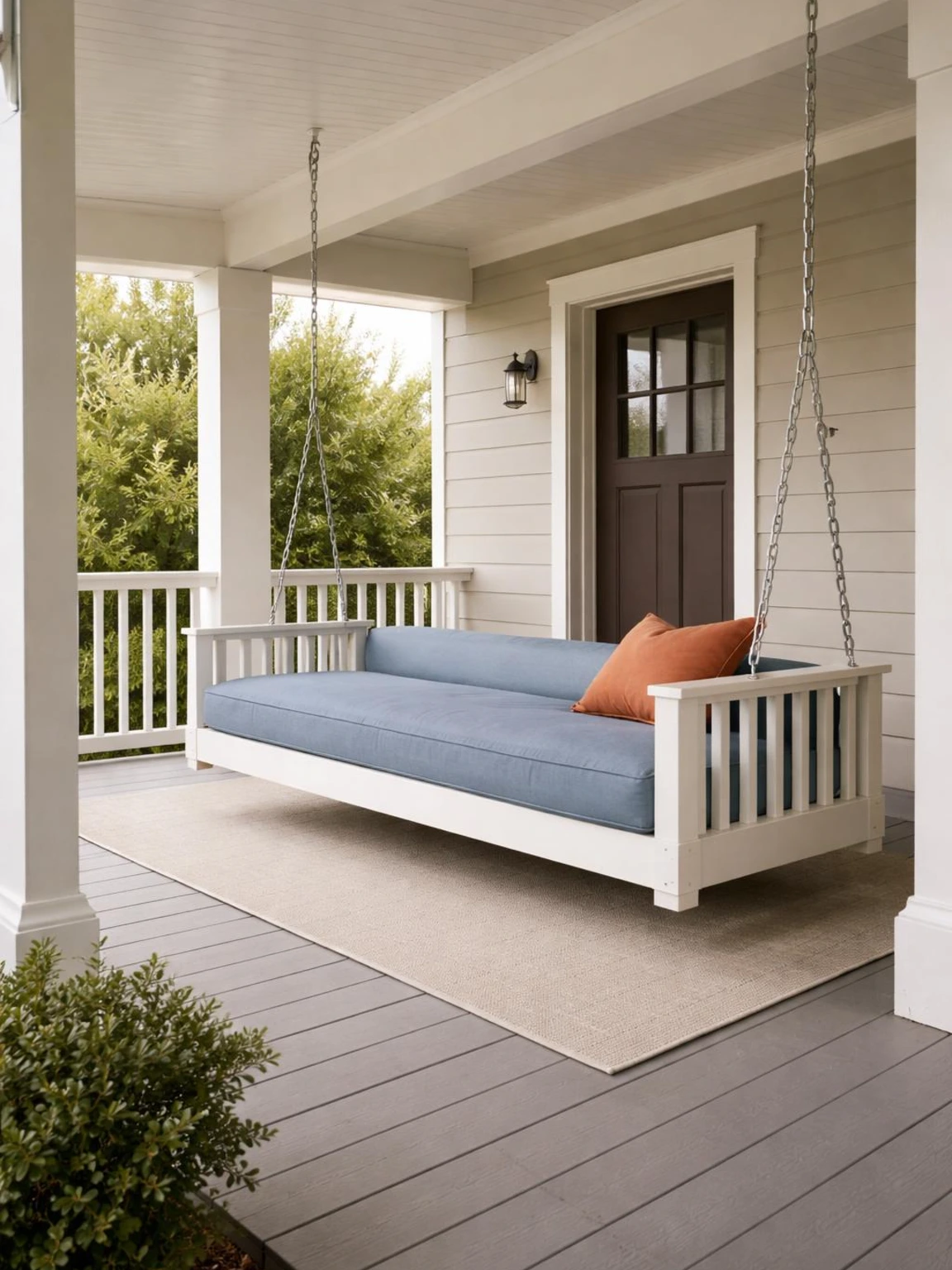
A deep farmhouse porch can carry a bigger focal piece without swallowing the walkway.
Center a daybed-style swing between structural posts so the side clearances look balanced.
A warm white frame with dusty blue mattress-style cushions and one terracotta pillow keeps the swing from feeling bulky.
A plain polypropylene rug underneath helps define the spot without fighting the motion overhead.
This only belongs where the porch structure is built for a hanging seat, so any doubt calls for qualified help.
7- Straight Bench With Dining Chairs
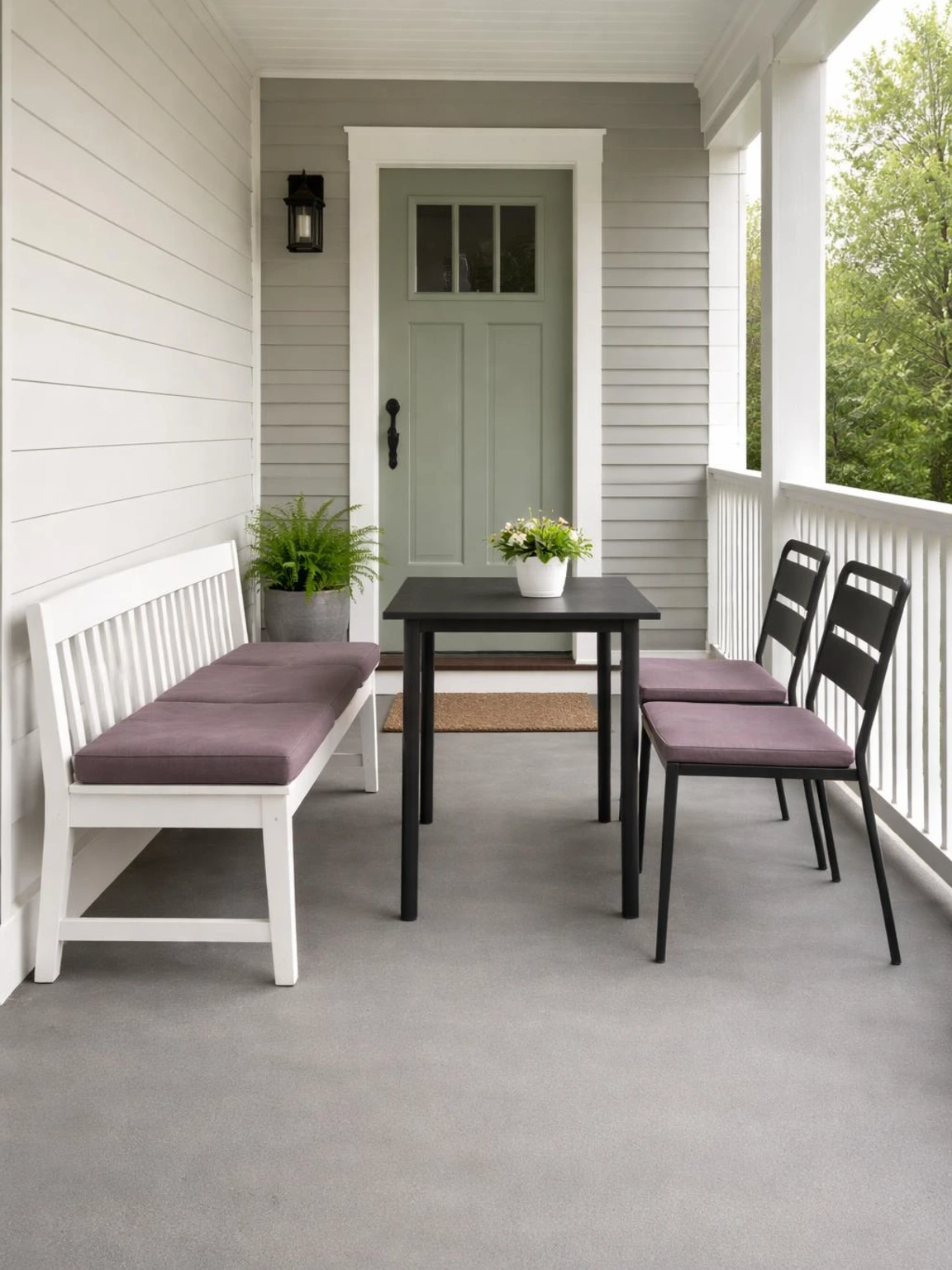
A long porch sometimes needs flexible seating more than one large sofa.
Put a painted bench on one side of a small square table and two matching dining chairs opposite.
That mix adds seats without the full footprint of a loveseat and still feels tidy near a railing.
Muted plum cushions against a stone gray floor and soft green door keep the layout from looking flat.
Leave enough width to pull chairs in and out, or the conversation zone turns into an obstacle course.
8- Adirondack Chairs on Open Porch
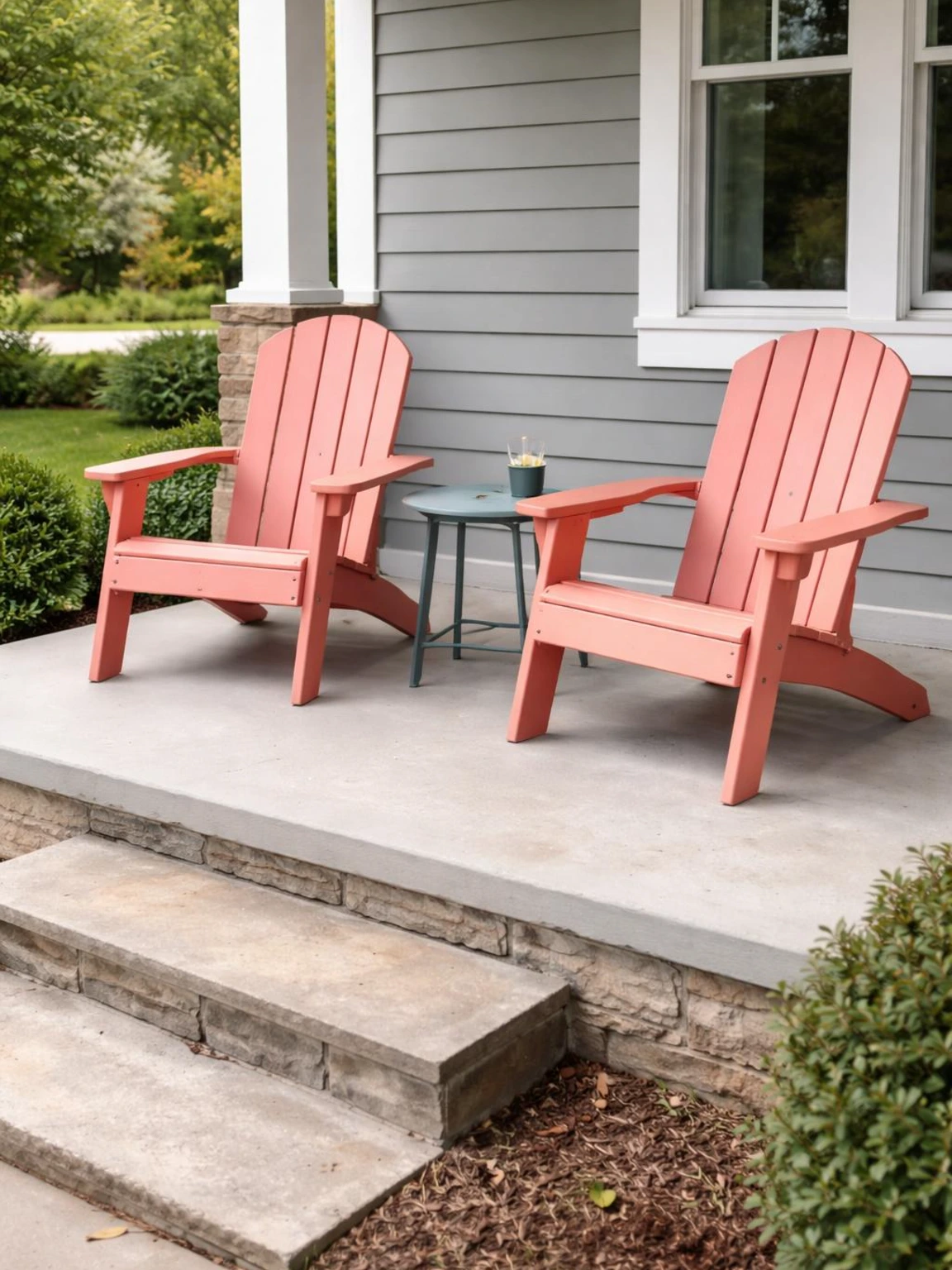
An uncovered porch needs furniture that does not panic every time the weather changes.
Choose two Adirondack chairs in recycled plastic lumber with stainless hardware for easier outdoor wear.
Soft coral chairs with a muted blue round table add color that still sits nicely with stone steps.
Face them slightly outward toward the yard since open porches often work better for watching the street than formal chatting.
The deep recline can be hard for older knees or quick sits, so comfort depends on who uses the porch most.
9- Narrow Porch Two-Chair Layout
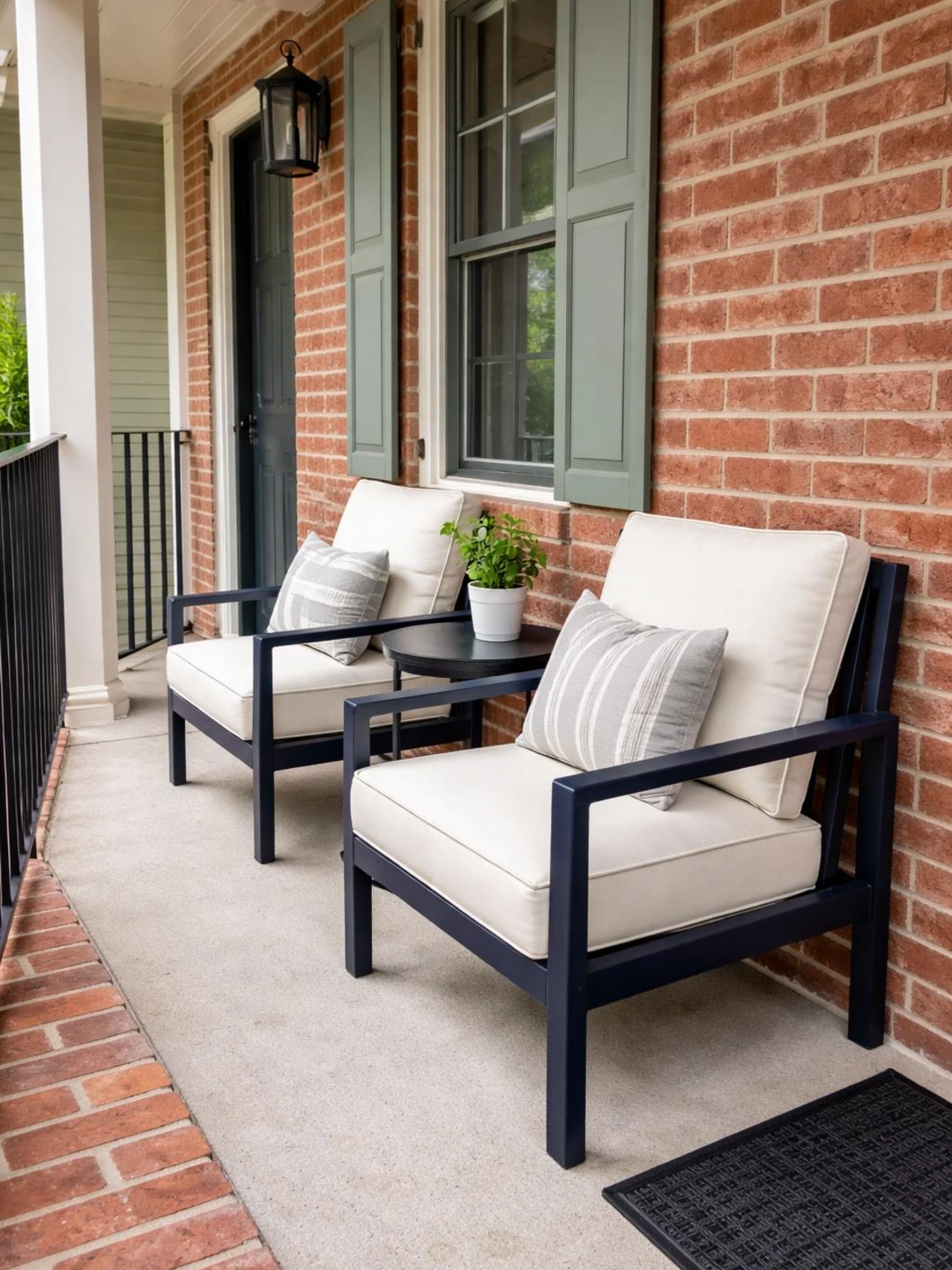
Some porches are too slim for furniture facing furniture, no matter how hopeful the measuring tape feels.
Line up two upright armchairs along the wall instead, leaving an uninterrupted route from steps to front door.
Navy frames with ivory cushions look crisp against brick, and muted green shutters tie the wall side together.
This single-line layout uses available length rather than fighting limited depth.
It favors short visits over long catch-up sessions, since side-by-side seating is not exactly built for secrets.
10- Corner Sectional Porch Seating
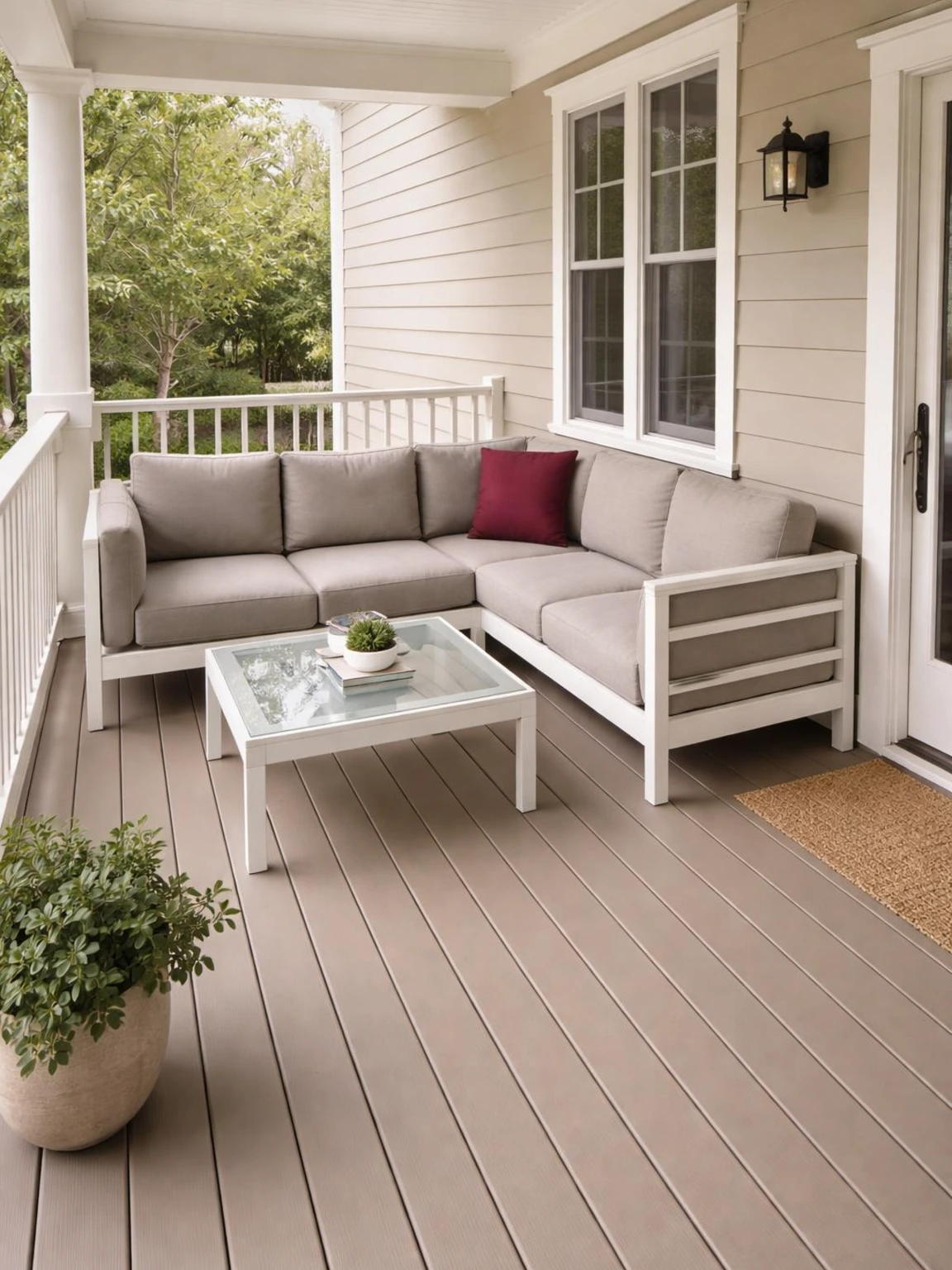
A wraparound porch corner can absorb a sectional better than the main entry zone can.
Tuck a compact L-shaped outdoor sectional against two walls so the route to the door stays direct.
Warm gray base cushions, an ivory frame, and one burgundy accent keep the larger piece from looking too blocky.
A square coffee table anchors the group, but choose a size that still leaves easy leg room around it.
Sectionals suit larger porches only, and they are not much fun to rearrange when seasons or habits shift.
11- Porch Conversation Set With Fire Table Look
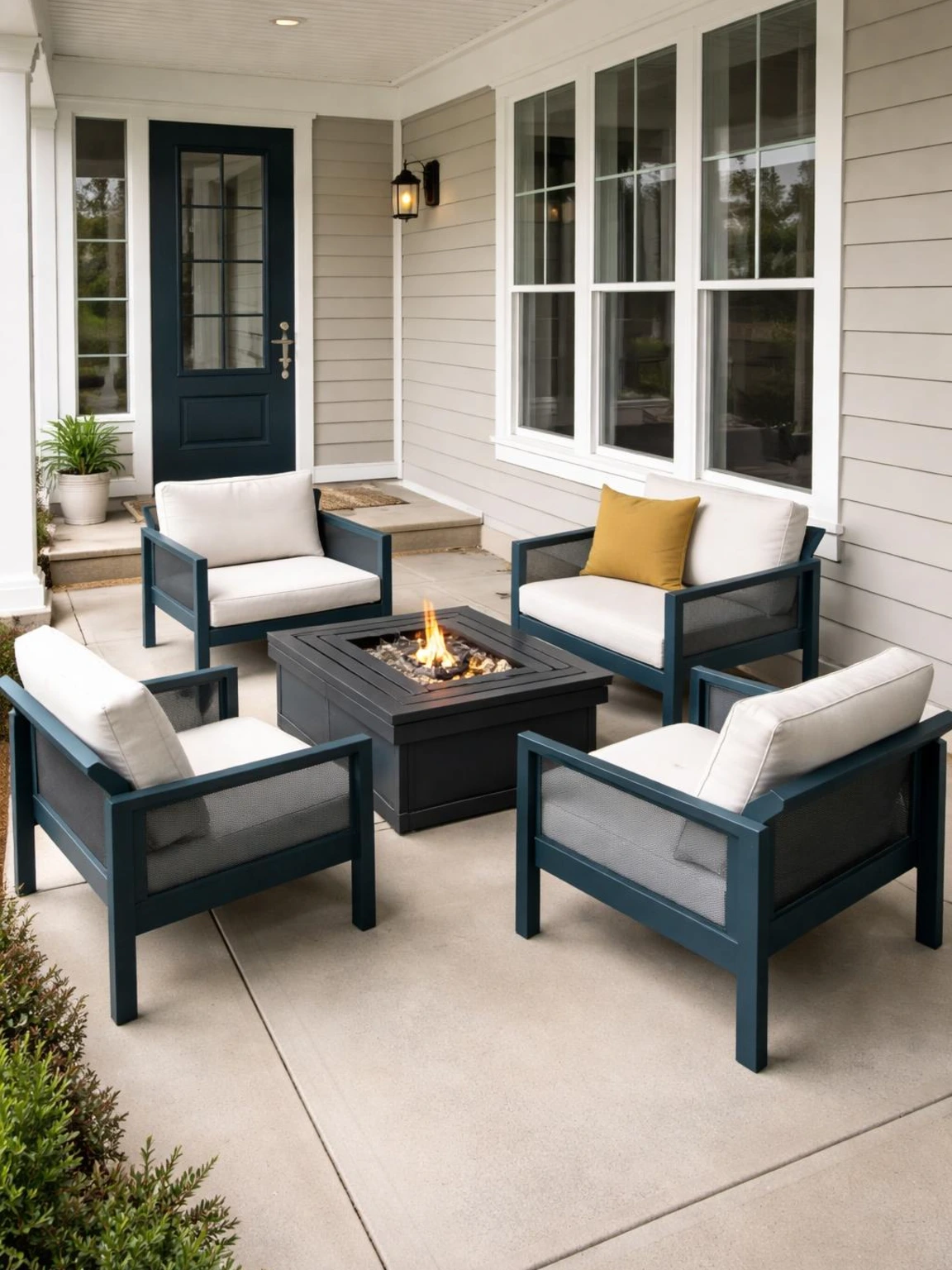
A covered porch with decent width can handle a full seating group if the entry lane stays clear.
Arrange four low profile chat chairs around a square slatted coffee table, keeping the group compact.
Deep teal frames and warm white cushions look fresh, and one mustard accessory is enough color for the set.
Set the grouping to one side rather than centered on the front door, because the porch still has a job to do.
Standard builder-grade porches can feel cramped with four chairs fast, so measure the walkway before committing.
12- Porch Bench and Planter-Free Entry
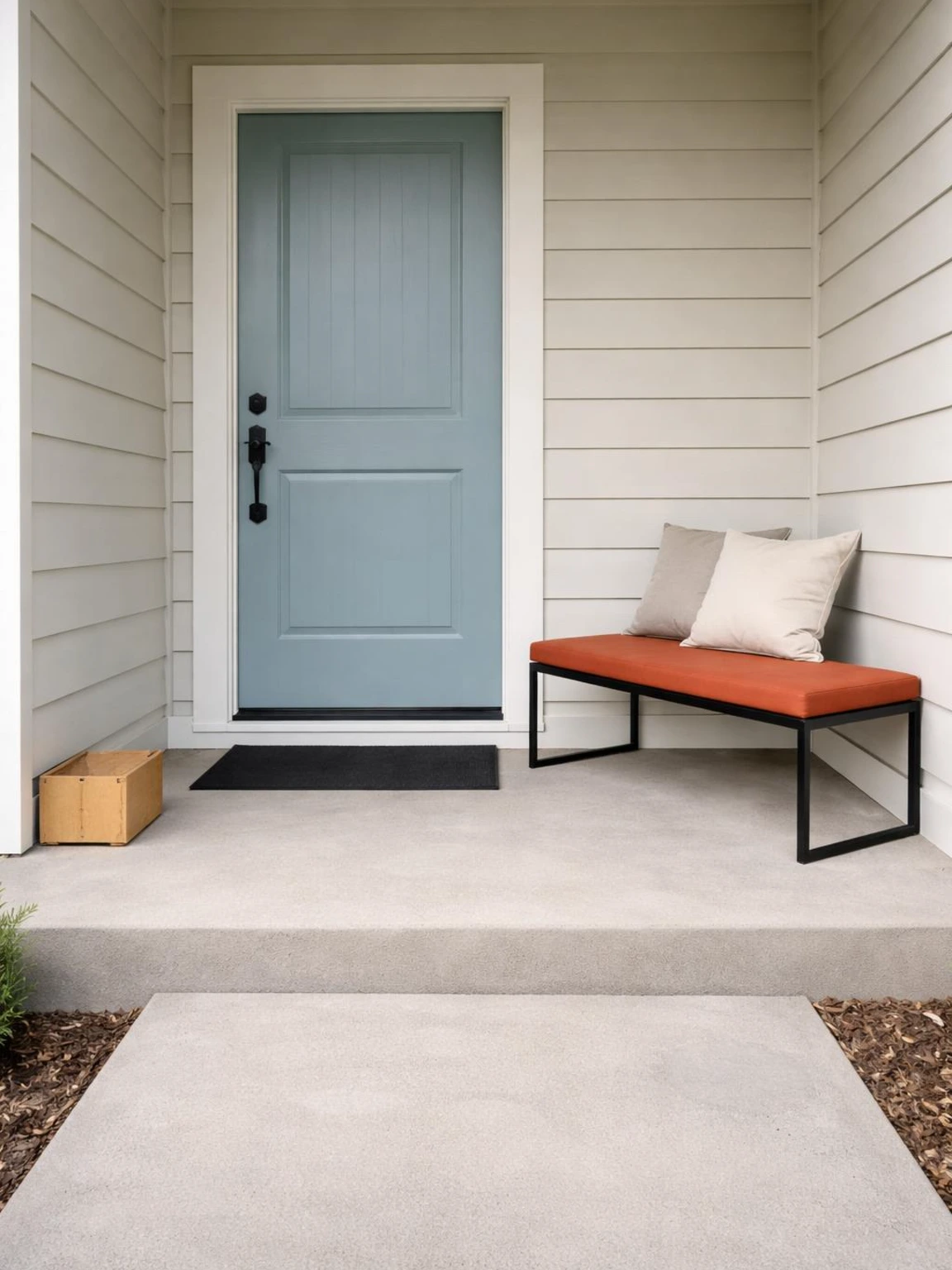
Some daily entry porches work best when the furniture count stays almost stubbornly low.
Use one clean-lined bench opposite the door and skip extra stools, tables, and filler planters.
A rust-toned cushion with a soft blue door and neutral surroundings gives the bench enough presence on its own.
This approach keeps open circulation for grocery trips, school bags, and the usual parade of parcels.
A single bench offers less face-to-face seating than paired chairs, but it makes a practical front porch furniture choice for busy homes.
Choosing Front Porch Furniture Without Crowding the Door
The best front porch furniture usually follows the shape of the wall, not the fantasy of a larger porch.
Depth matters as much as style, especially once door swing, steps, and daily traffic enter the picture.
Even one bench or two well-placed chairs can make front porch furniture feel settled instead of squeezed in.
A clear path to the knob and a dry seat cushion is often all a porch really needs.

Hi, I’m Alizabeth, the creator of Pretty Home Hacks. I share practical home decor ideas, easy DIY projects, organization tips, and budget-friendly ways to make your home feel more beautiful and functional. From small room updates to everyday home hacks, my goal is to share approachable ideas you can actually use in your own space.