11 Victorian Fireplace Ideas That Work in Real Homes
There is something about a Victorian fireplace that makes a room feel like it actually means something.
Not in a stuffy, museum-piece way, but in that specific way where a room has a center, a focal point, something people naturally walk toward.
Most people either inherit one buried under layers of paint and plaster or spend a long time trying to find a reproduction that does not look like it came from a furniture catalog.
The good news is that Victorian fireplace design is actually more workable than people assume, whether the goal is restoring an original or building the look from scratch.
These ideas cover both ends of that, with enough specifics to actually be useful.
1- Cast Iron Insert With Arched Opening
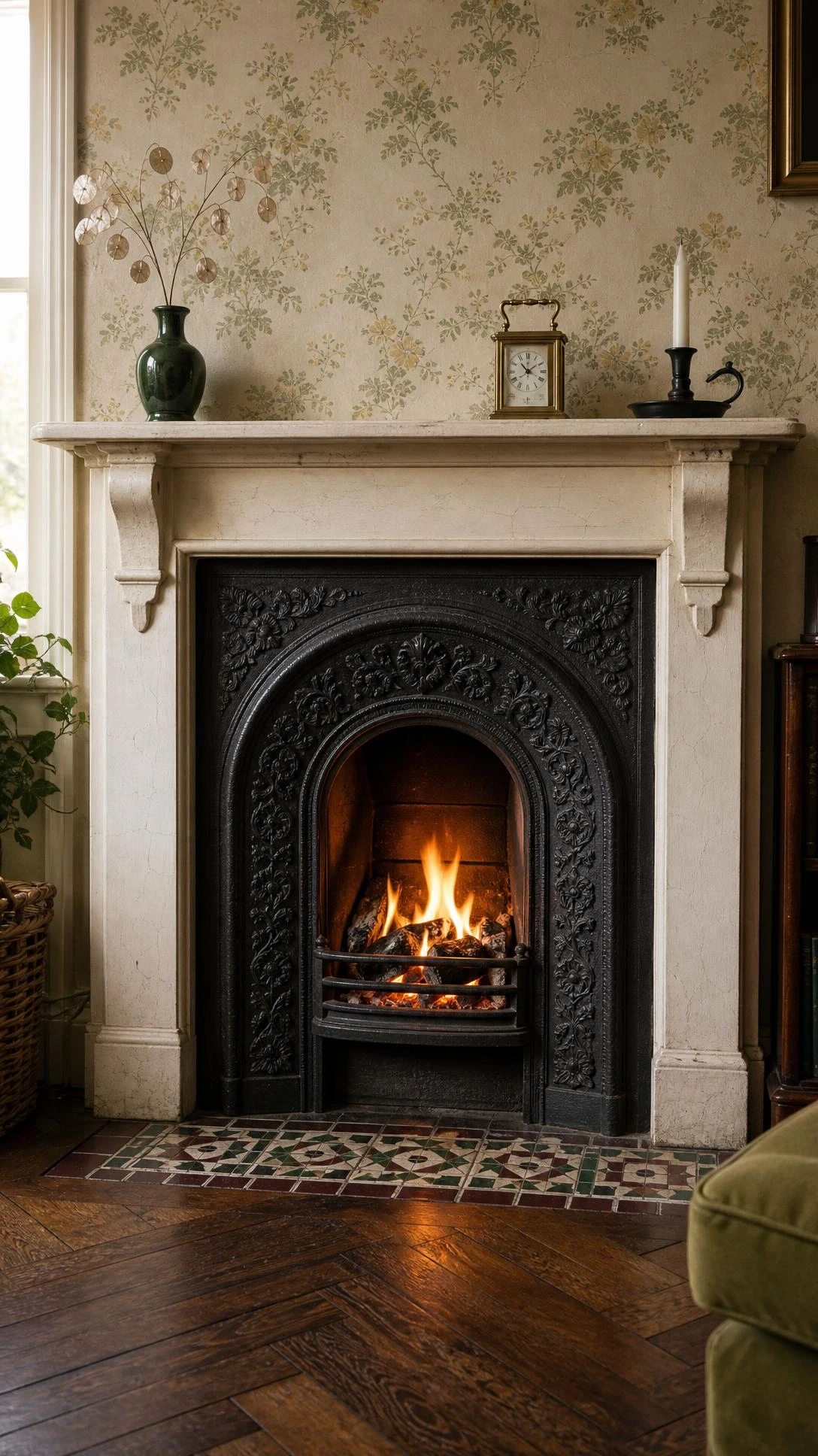
Cast iron inserts are where most Victorian fireplace restorations start, and for good reason.
The arched opening is the most recognizable detail, and it does a lot of visual work without needing anything else around it.
The Carron Victorian Large Cast Iron Combination Fireplace is one of the most referenced options for this look, available in classic black or a polished finish, and it can be fitted with a gas fire so the aesthetic is period-correct without the actual mess of solid fuel.
Cast iron also reflects heat back into the room better than a plain brick surround, which is something people on the practical side of this project always appreciate.
It works best in a living room or parlor-style space where there is enough visual breathing room around it for the detailing to read properly.
2- Decorative Fireplace Tiles in Floral Patterns
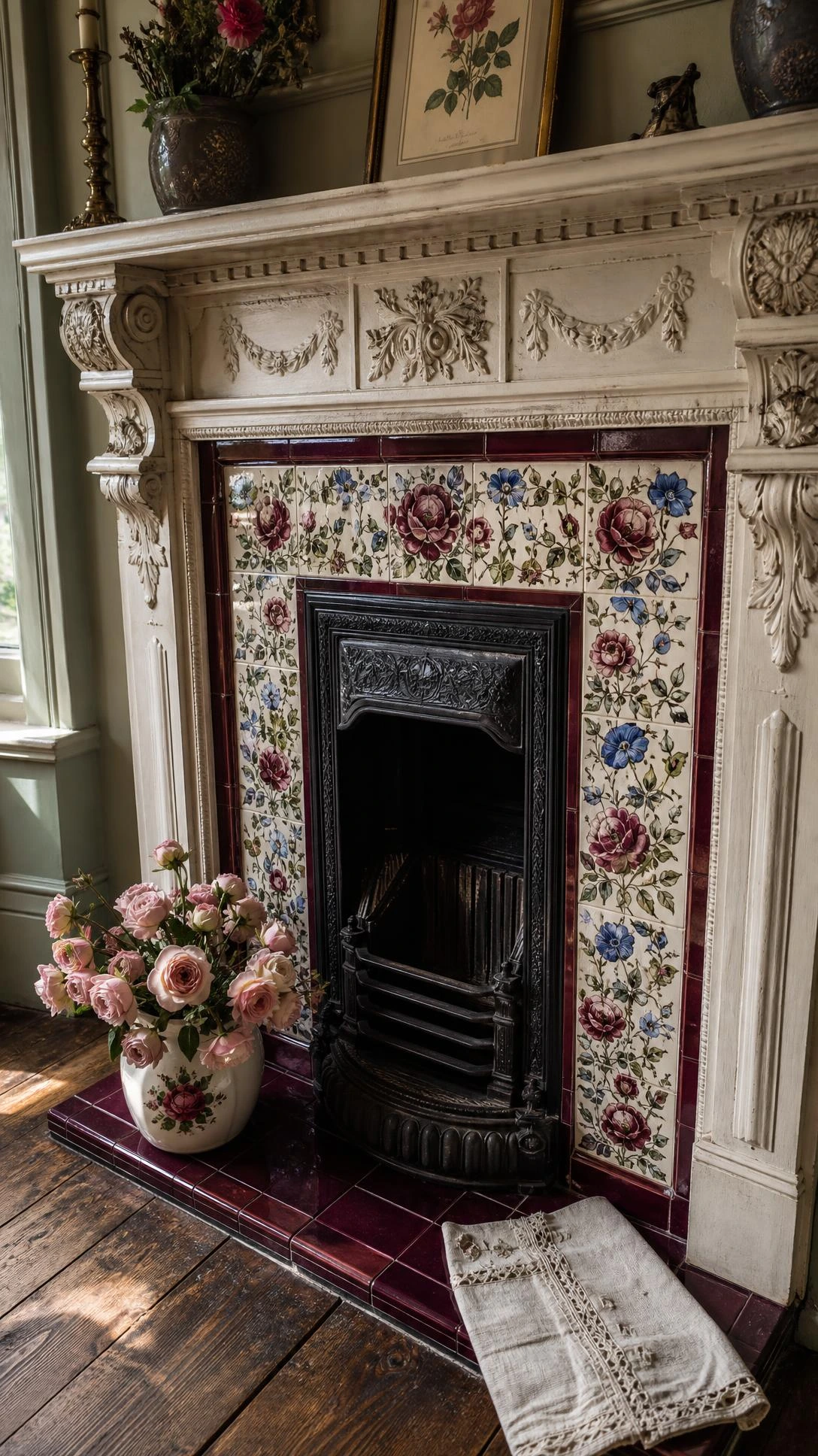
Victorian decorative tiles are one of those details that most people overlook until they see them done well, and then they cannot stop noticing their absence everywhere else.
Floral patterns were the most popular choice in the original era, typically running in panels down either side of the cast iron insert in deep blues, greens, or terracotta tones.
Reproduction tiles in the Minton style are still widely available, usually around 6 inches square, and a pair of six-tile panels per side is the standard format for most Victorian inserts.
The tiles do not need to be antique originals to look right, the pattern and glaze finish matter far more than provenance.
That said, if someone is restoring an original fireplace and the tiles are intact, cleaning rather than replacing them is almost always the better call.
3- Marble Mantel With Carved Corbels
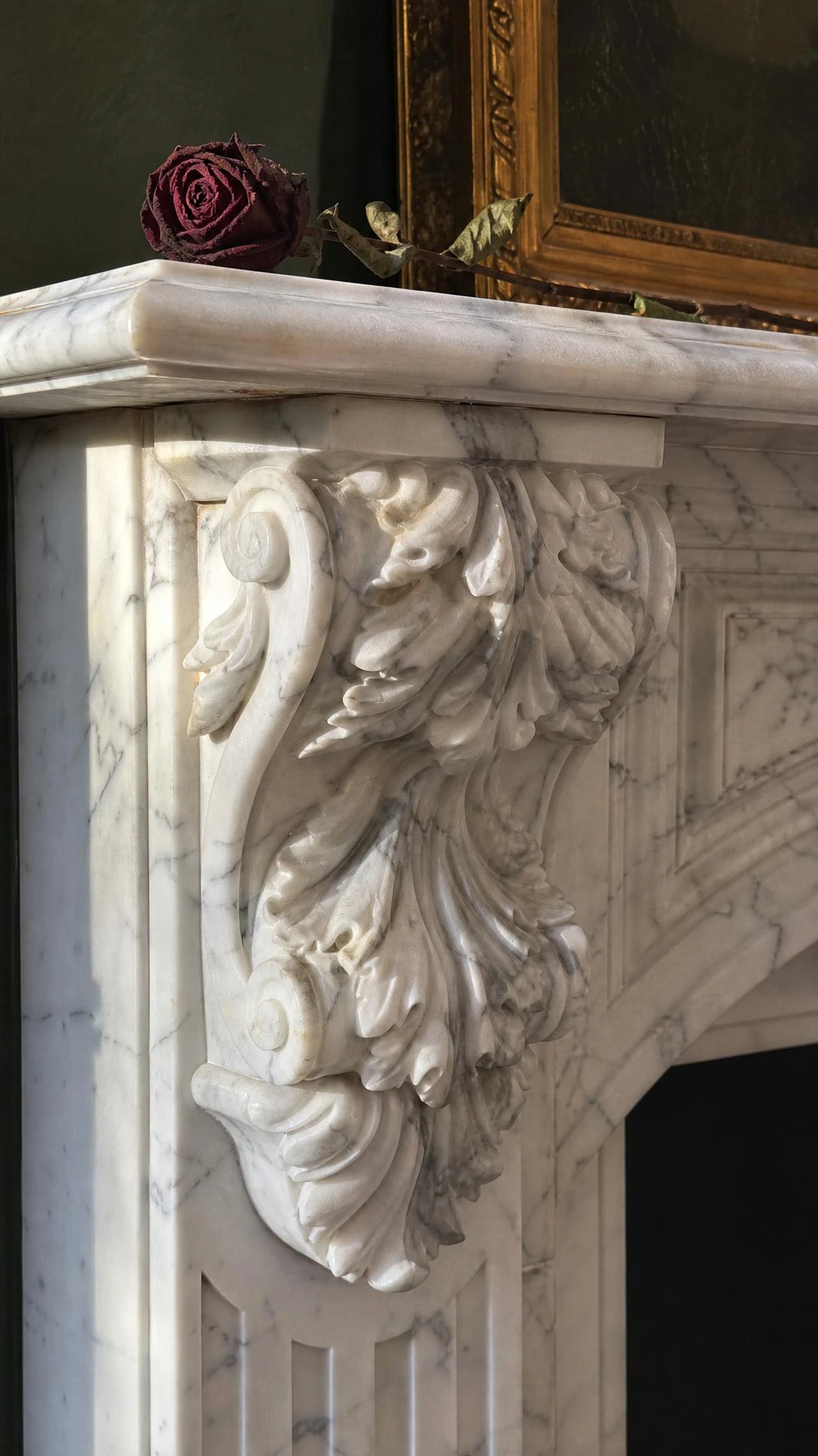
In Victorian homes, the mantel was a direct signal of status, and marble was at the top of that hierarchy.
White Carrara marble with simple carved corbels is the most versatile option because it reads as period-correct without overwhelming a modern room.
The corbels are the detail that really sells it, those bracketed supports on either side of the mantel opening that give the whole structure that slightly architectural, slightly formal feeling that is very specifically Victorian.
A marble mantel surround in this style typically runs between 800 and 2,000 pounds or dollars depending on the source, with reclaimed options from architectural salvage yards often landing at the lower end of that range.
I think the reclaimed route is almost always worth the extra searching because the patina on original marble is genuinely difficult to replicate.
4- Slate Surround for a Simpler Victorian Look
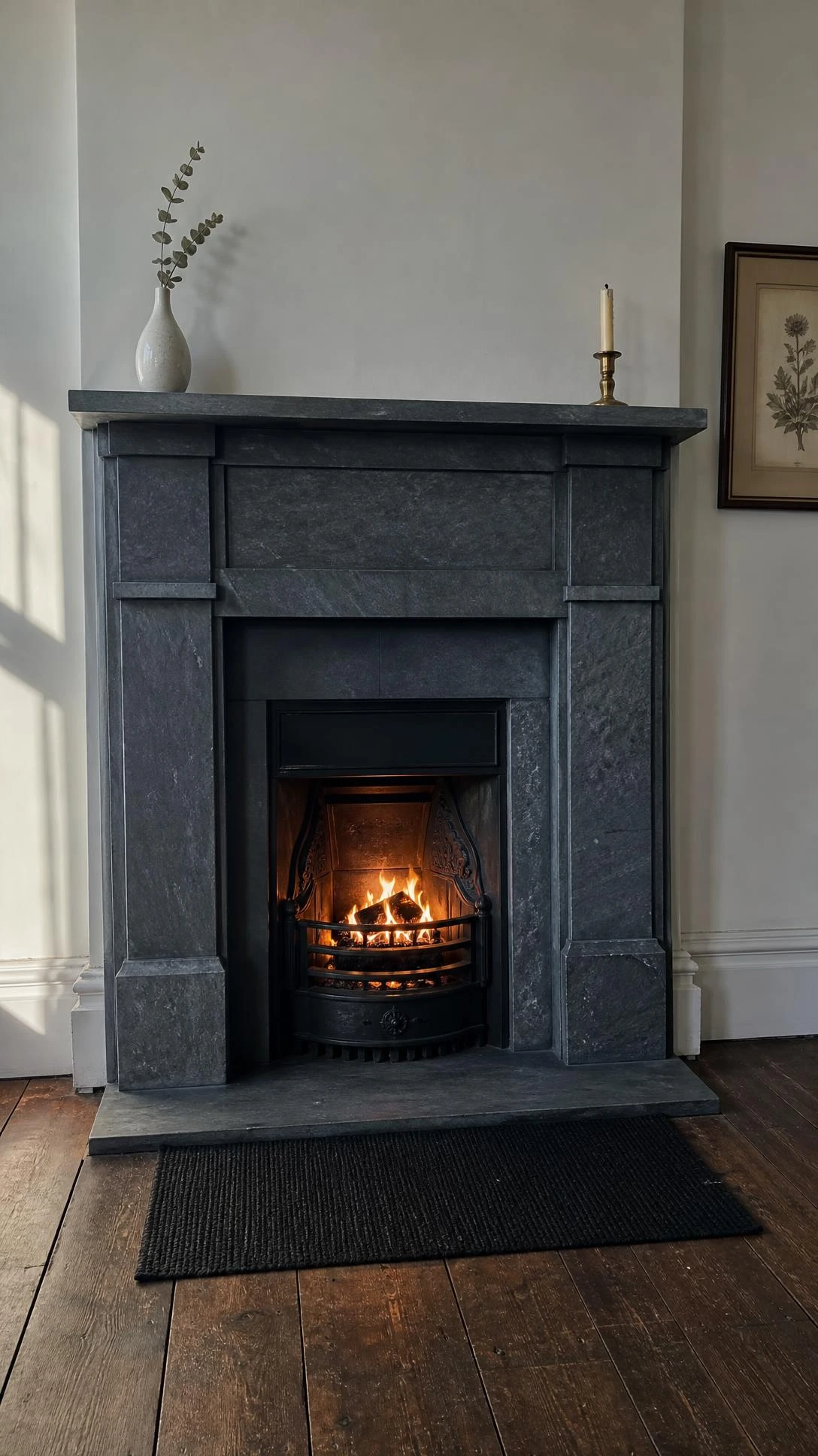
Not every Victorian fireplace was grand, and slate surrounds were extremely common in middle-class homes throughout the era.
Slate has a quiet, serious quality that works especially well in rooms with darker walls or heavier furniture, and it does not compete with anything else going on in the space.
A honed black slate surround with a simple stepped profile is the most authentic version of this look, and it tends to photograph beautifully against both light and dark paint colors.
Slate also ages in a way that looks intentional rather than worn, which is always a nice surprise for people who were nervous about going with a darker material.
This is a good option for anyone who wants the Victorian character without the formality of marble or the heaviness of a heavily carved wooden surround.
5- Tiled Hearth in Geometric Patterns
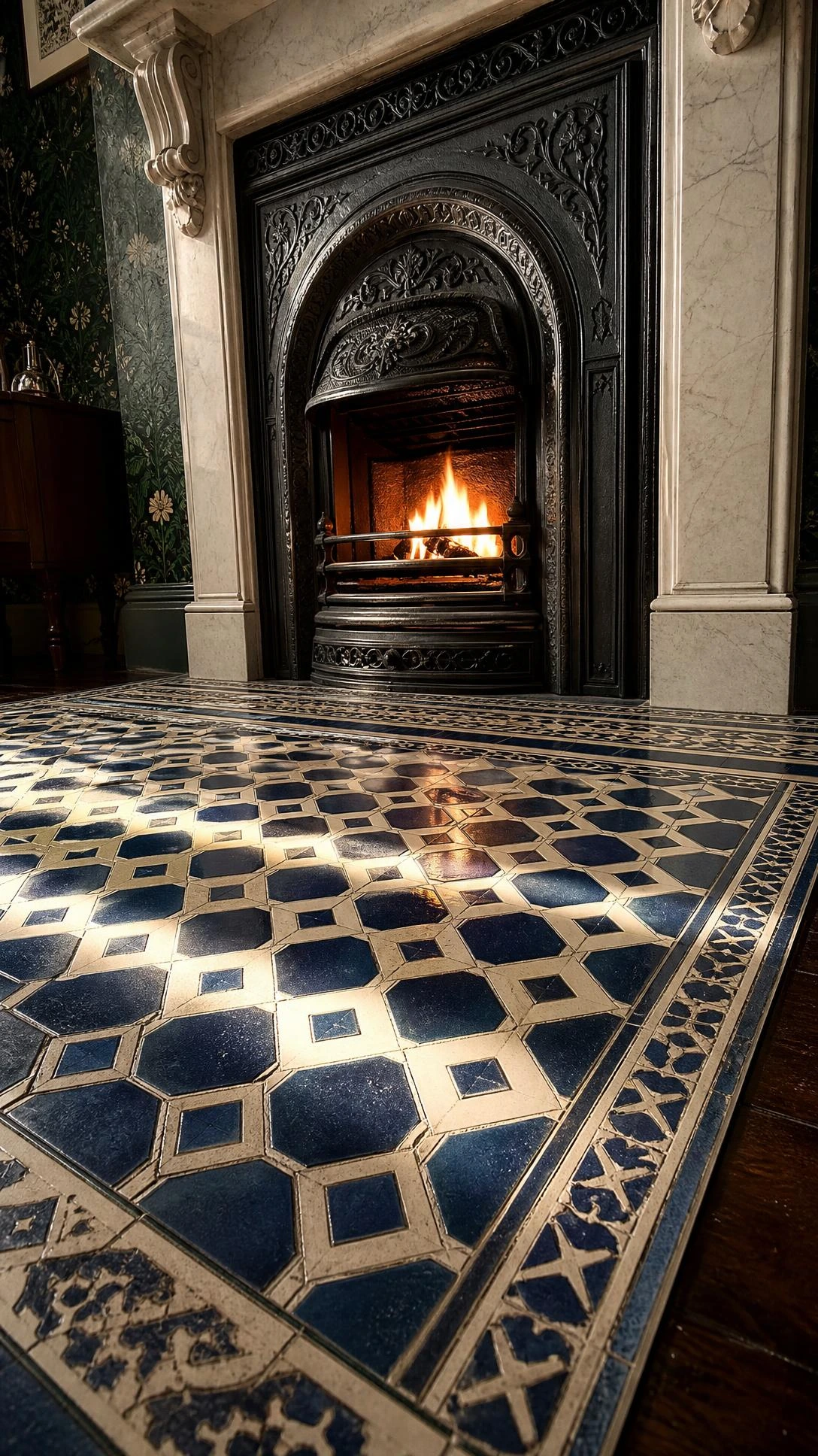
The hearth tiles are the part of a Victorian fireplace that most renovations either get exactly right or completely miss.
Original Victorian hearths used encaustic tiles with geometric patterns, often in black, cream, rust, and navy, and the combination of those four colors still reads as period-correct without feeling dated.
A standard hearth size runs roughly 48 inches wide by 18 inches deep, and keeping the tile scale small, around 4 inch tiles, is what gives the geometric pattern enough detail to register from across the room.
Fired Earth and Original Style are two tile companies that both carry Victorian-accurate encaustic ranges if sourcing feels like the hard part.
The hearth is also a practical surface that takes a lot of wear, so the density of encaustic-style tiles is genuinely useful, not just decorative.
6- Original Victorian Fireplace Restoration
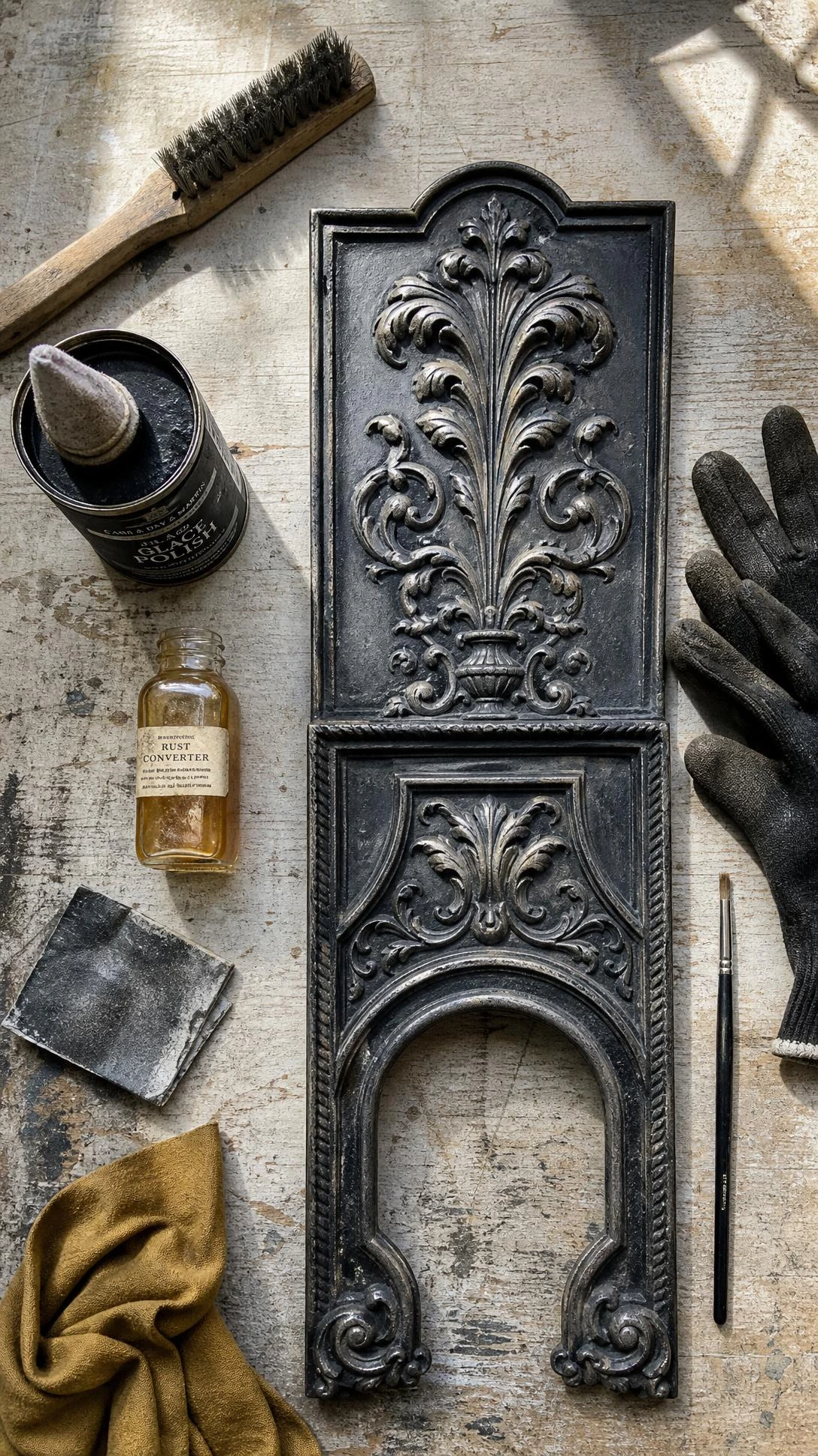
A lot of Victorian fireplaces are still sitting behind plasterboard that was put up at some point in the 1970s, just waiting to be found again.
The restoration process involves removing the covering, clearing out the original firebox, and then assessing what survived, which can range from a completely intact cast iron insert to just the outer surround with everything else stripped out.
Removing all ash buildup before doing anything else is one of those steps that sounds obvious but makes a real difference to airflow once the fireplace is back in use, and a chimney sweep inspection should happen before any test fire regardless of condition.
The Victorian era ran from 1837 to 1901, so an original fireplace in a home built during that period will likely have period details worth preserving, and a local architectural salvage dealer can usually help date the style based on the casting or tile patterns.
Most restorations end up being more satisfying than people expect once the first layer comes off and the original ironwork starts to appear.
7- Cast Iron Fireback for Better Heat Output
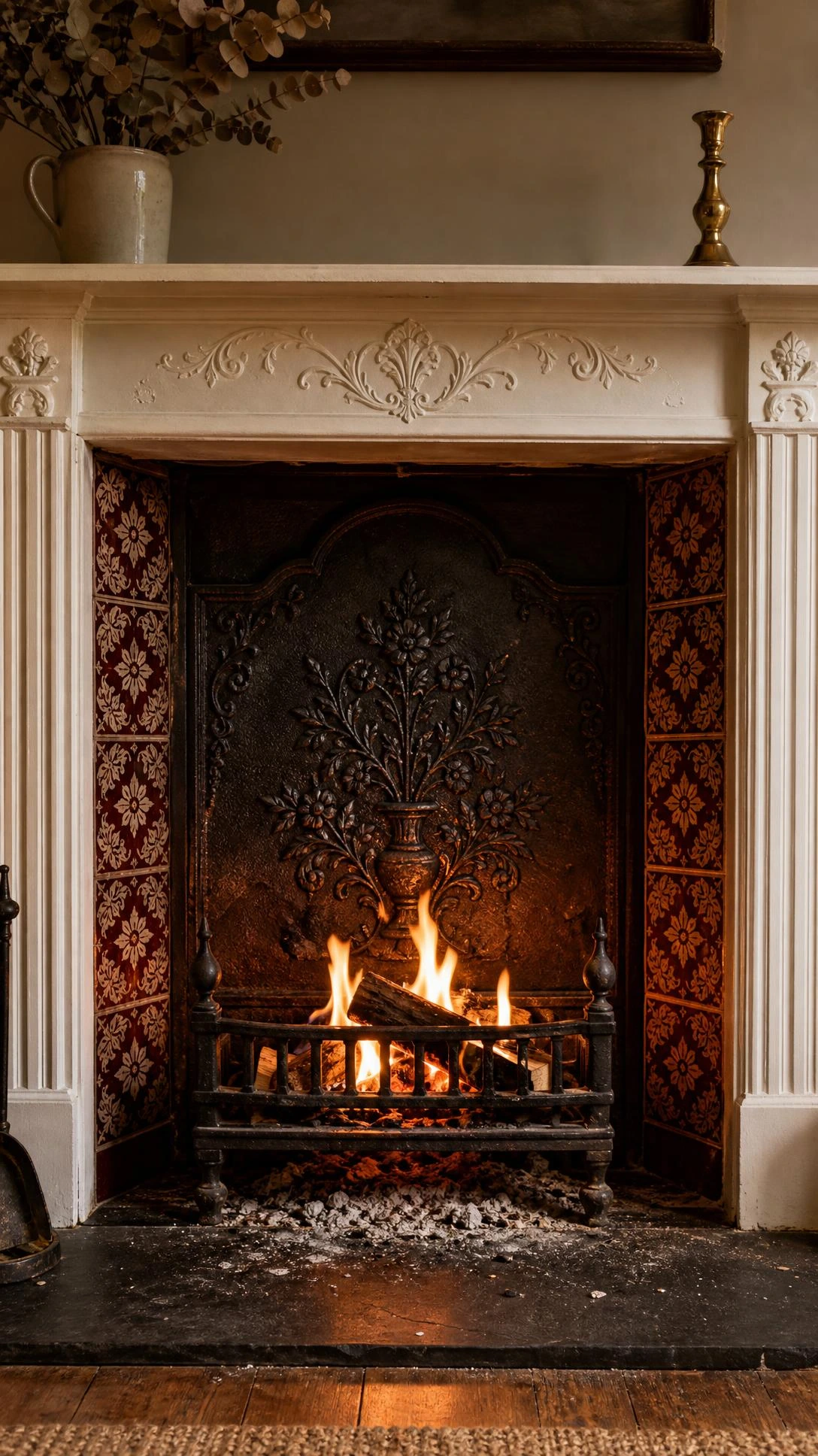
Open fireplaces are genuinely not that efficient at heating a room, which is the complaint that comes up most often among people who use theirs regularly.
A cast iron fireback mounted against the rear wall of the firebox reflects heat forward into the room instead of letting it escape up the chimney, and it also protects the back wall from heat damage over time.
Plain cast iron firebacks start around 60 to 80 dollars and the decorative versions with period-appropriate motifs like heraldic shields or vine patterns run closer to 150 to 200 dollars.
The difference in warmth with a fireback in place is noticeable, especially in a room that is already difficult to heat.
It is one of those small additions that pays for itself fairly quickly in comfort if the fireplace is used through winter.
8- Victorian Overmantel With Mirror and Shelves
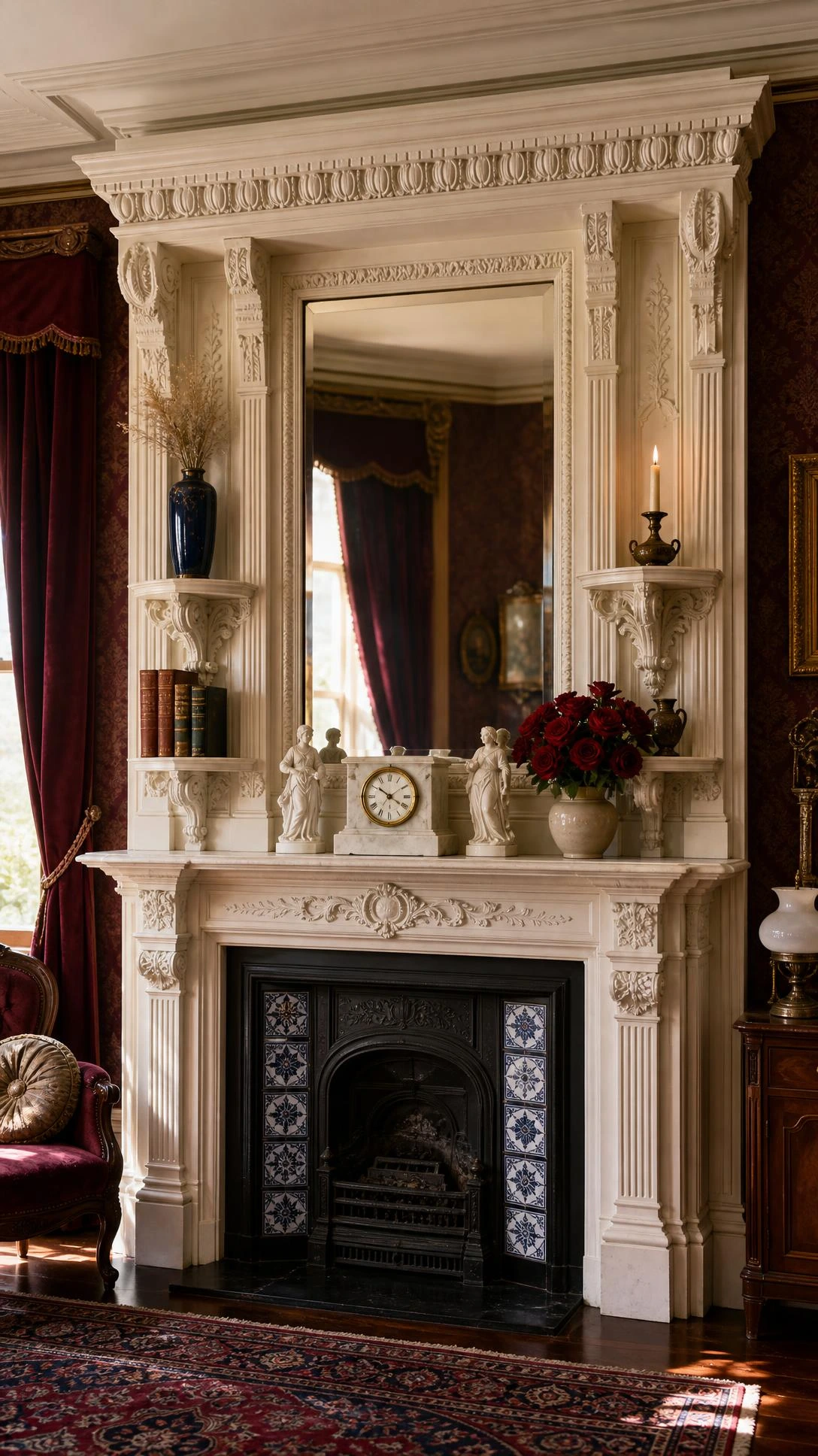
The overmantel is the structure above the mantel shelf, and in Victorian homes it was taken very seriously as a display surface and decorative statement.
An 1883 issue of Demorest’s Monthly Magazine specifically called the fireplace “the center-piece” of the room and argued that decorating it well was the most important thing a homeowner could do for the overall feel of the space, which is a very Victorian attitude but also not wrong.
The classic overmantel format is a large central mirror flanked by smaller shelves for displaying objects, and this structure works equally well in a restored Victorian home or a contemporary apartment trying to get the feel right.
The DIY version that was popular in period home magazines involved pine boards covered with cloth for the shelves and wooden thread spools used as decorative column supports, which sounds like a craft project but actually looked quite good in practice.
For a modern take, a reclaimed pine overmantel painted in Farrow and Ball Railings or Pitch Black keeps the drama without looking like a stage set.
9- Summer Fireplace Covering With Fabric
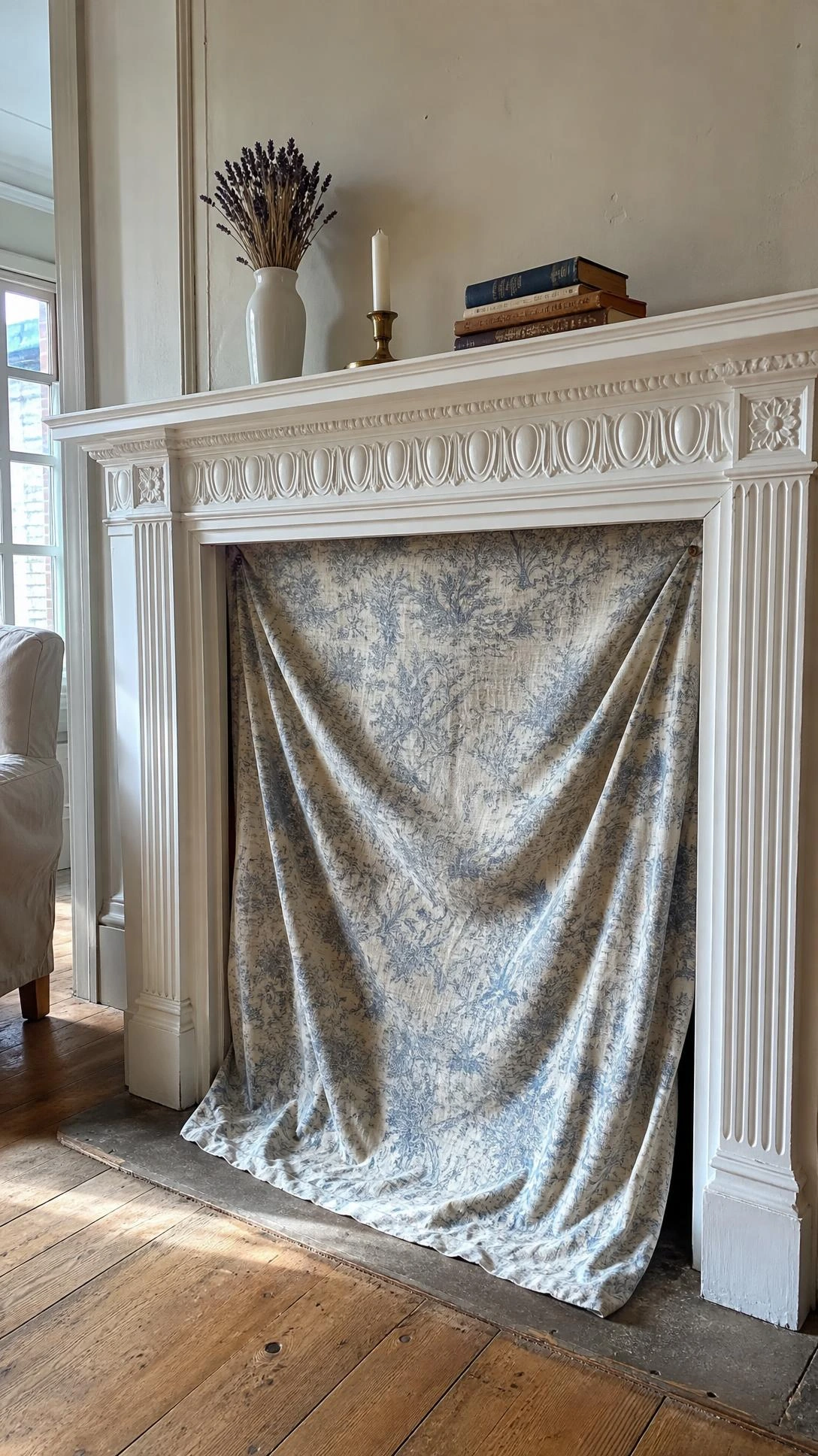
Decorating an empty fireplace opening in summer is one of those things that Victorian homeowners were actually much better at than most people are today.
The original approach was silk curtains in a color that matched the dominant tone in the room’s upholstery, drawn across the opening to hide the firebox entirely during the months it was not in use.
A simple linen panel hung from a tension rod inside the firebox opening works just as well now, and a dusty sage or deep navy reads as intentional rather than makeshift.
The practical reason this matters is that an empty fireplace opening in summer looks unfinished, and the dark cavity can visually swallow a whole wall if nothing is done about it.
Candles grouped on a small tray inside the firebox are the other popular option, and a cluster of three pillar candles in varying heights costs almost nothing and fills the space naturally.
10- Wood Stove Insert for Modern Heating Efficiency
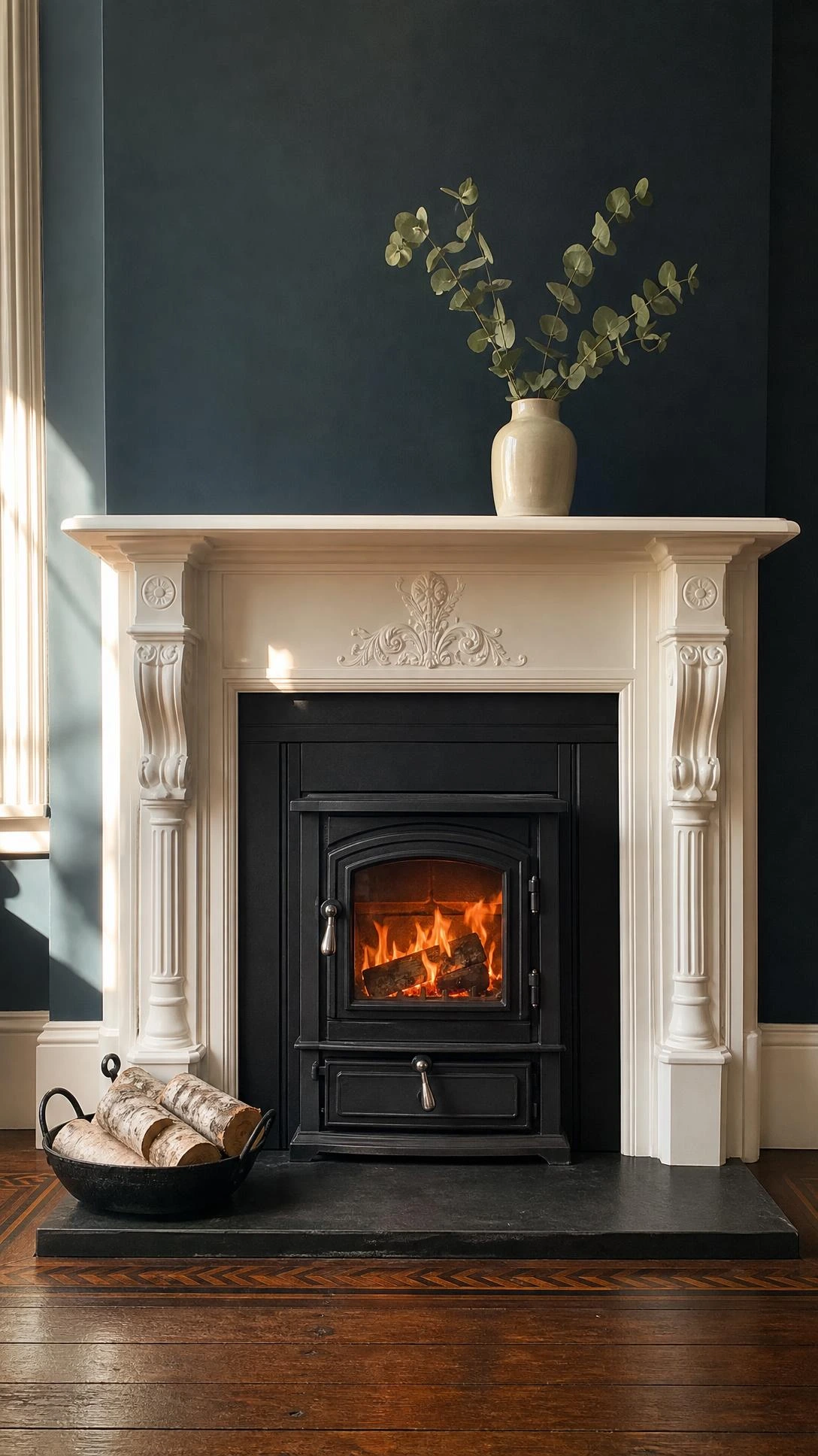
For anyone who wants real, reliable heat from a Victorian-style fireplace, a wood stove insert is the most practical upgrade available.
It fits inside the existing firebox opening, seals the chimney connection properly, and delivers significantly more warmth per piece of wood than an open fire ever would, which is the main thing people are looking for when they ask how to make a fireplace actually useful.
Cast iron stove inserts in a classic arch or rectangular profile can be found that sit sympathetically within a Victorian surround without looking like a renovation mistake, and brands like Stovax and Mendip both make models designed with period-style homes in mind.
The door gasket is worth checking and replacing if it is not sealing tightly, because a loose seal is what lets heat escape and makes combustion noticeably less efficient.
Most stove insert installations cost between 1,500 and 3,500 dollars depending on whether the flue liner needs replacing, and the heat difference compared to an open fire is not subtle.
11- Bric-a-Brac and Mantel Display Styling
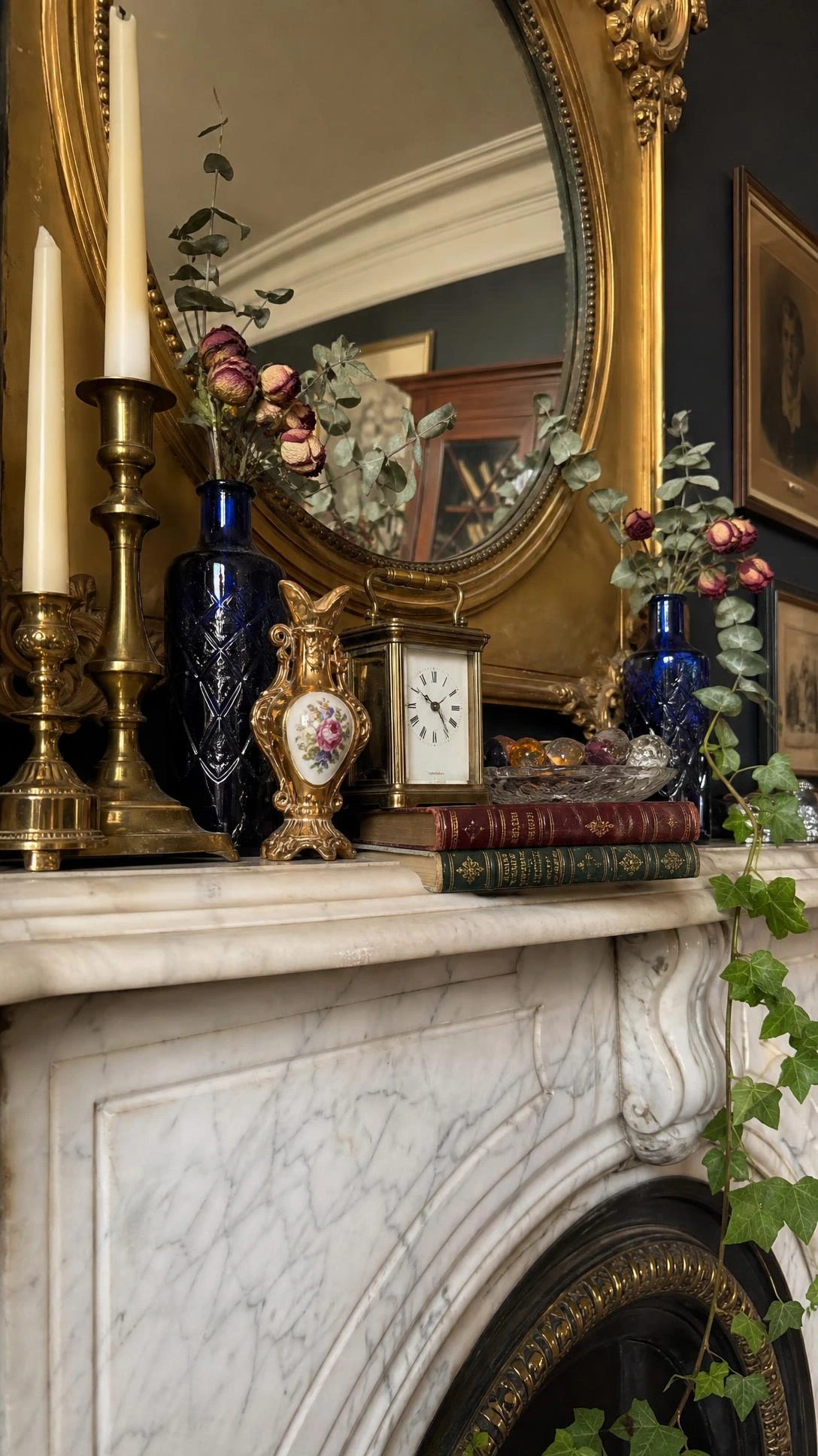
Victorian mantel styling was never minimal, and understanding that upfront makes the whole thing much easier to get right.
The mantel shelf was meant to hold a collection of small objects, a clock in the center, matching candlesticks or vases on either side, and then a scattering of smaller decorative pieces filling in the gaps.
Period-correct objects to look for include brass candlesticks, ceramic figurines, small framed prints, and glass domes over pressed flowers or natural specimens, all of which are still relatively easy to find at estate sales for under 20 dollars each.
The rule that makes Victorian-style mantel displays work is layering height rather than spreading everything flat, so taller pieces at the back and smaller objects in front is the format that reads as intentional rather than cluttered.
I think the most common mistake people make is going too sparse because they are afraid of the maximalist feeling, when actually the mantel looks more finished and more period-correct the more deliberately layered it is.
The Victorian Fireplace Details Worth Getting Right
A Victorian fireplace does not need to be a full period room to feel right, it just needs the core details to be honest.
The cast iron, the tiles, the mantel shelf with something on it, those three things together do most of the work.
Everything else, the overmantel, the hearth tiles, the summer covering, those are layers that make it feel more complete over time rather than things that need to happen all at once.
A single good cast iron surround in a room that is otherwise modern will still hold the space in a way that nothing else really does.

Hi, I’m Alizabeth, the creator of Pretty Home Hacks. I share practical home decor ideas, easy DIY projects, organization tips, and budget-friendly ways to make your home feel more beautiful and functional. From small room updates to everyday home hacks, my goal is to share approachable ideas you can actually use in your own space.