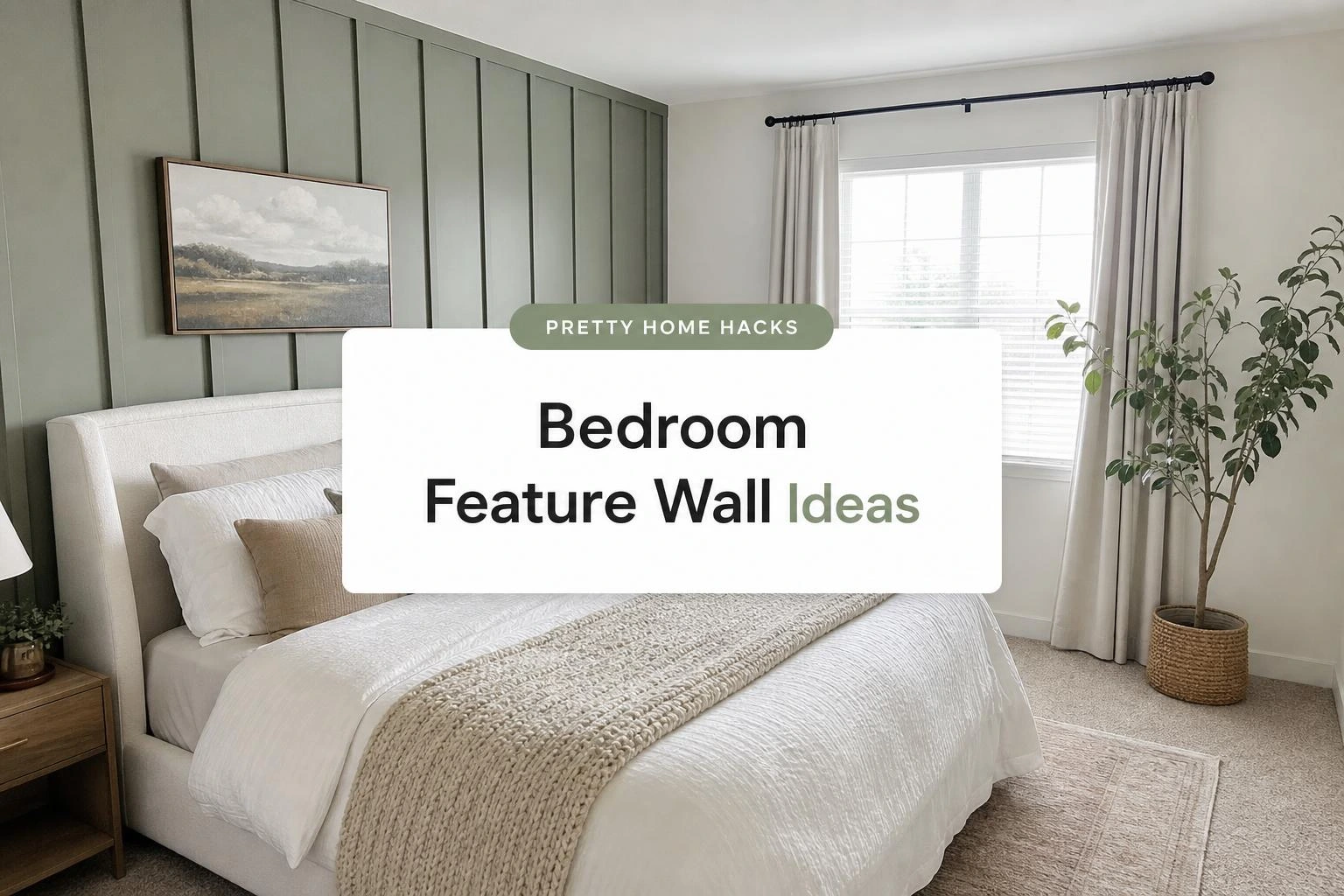
10 bedroom Feature Wall Ideas That Actually Look Good
A bedroom can have perfectly nice furniture and still feel like something is missing, and most people cannot quite put their finger on what it is.
Usually it comes down to the walls being one flat color across every single surface, which makes the room feel more like a hotel room in a budget chain than an actual space someone lives in.
The thing is, bedroom feature wall ideas get talked about like they require a huge renovation budget or a designer on speed dial, which puts most people off before they even start.
A single wall treated differently from the rest of the room is genuinely one of the most impactful changes a bedroom can get, and most options are more affordable and doable than the Pinterest results make them look.
These ten ideas cover a range of budgets, styles, and skill levels so there is actually something here for most bedrooms, not just the ones with cathedral ceilings and unlimited time.
1- Limewash Paint Behind the Headboard
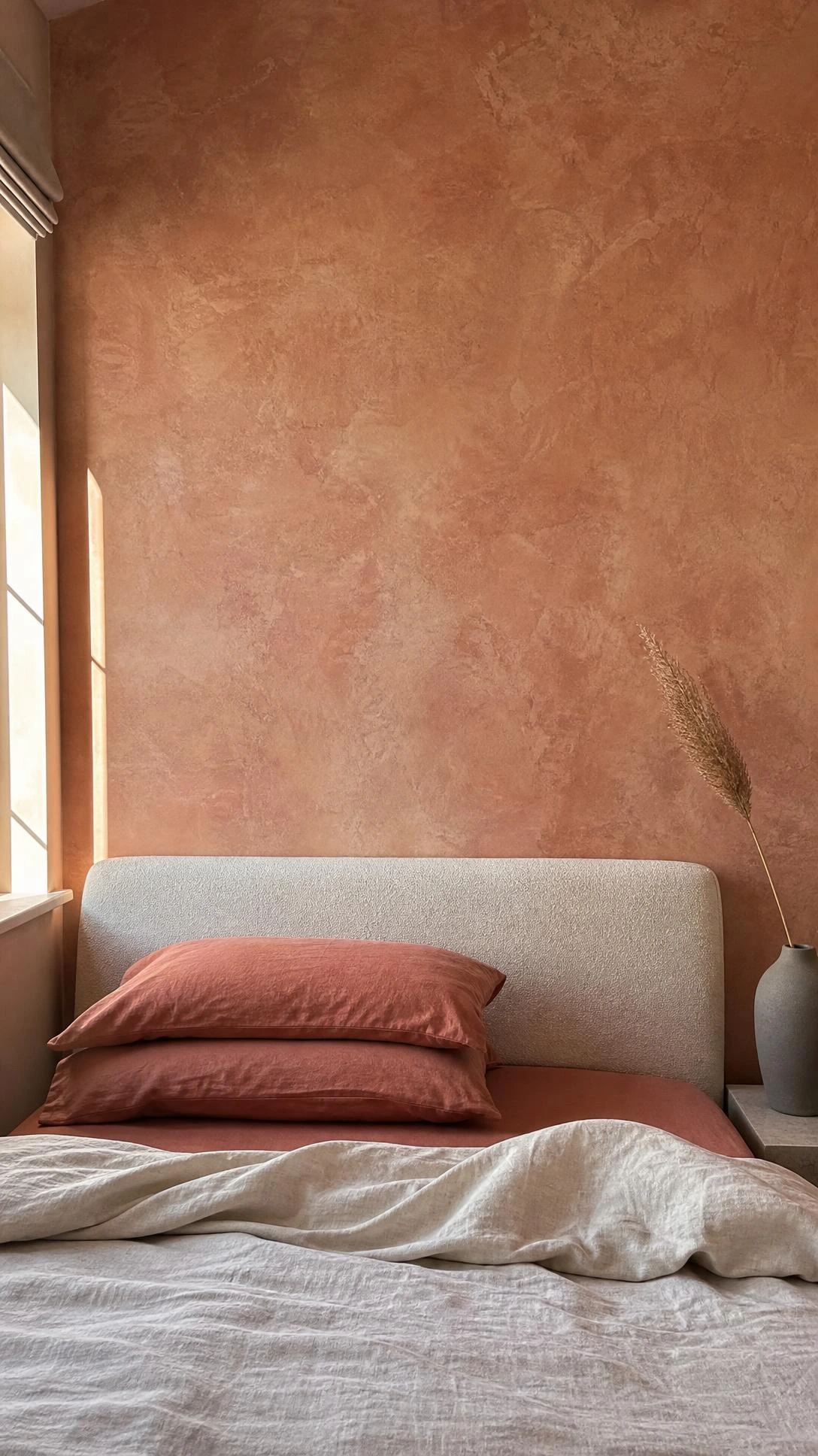
Limewash paint has been everywhere lately and it is one of those trends that actually deserves the attention it is getting.
The texture it creates looks almost like aged plaster, which adds warmth and depth to a wall without adding any actual dimension or weight to the room.
Most limewash paints come in earthy tones like warm white, terracotta, and dusty sage, and the Portola Paints Lime Wash in Roman Clay is one of the most popular options people keep coming back to.
The technique involves layering it on with a wide brush and working in circular strokes, which means the imperfections are part of the finish and there is very little pressure to get it perfect.
It works best on smooth or lightly textured drywall and looks especially good when the rest of the room is kept fairly neutral so the wall gets to be the thing the eye lands on first.
2- Vertical Wood Slat Panel Wall
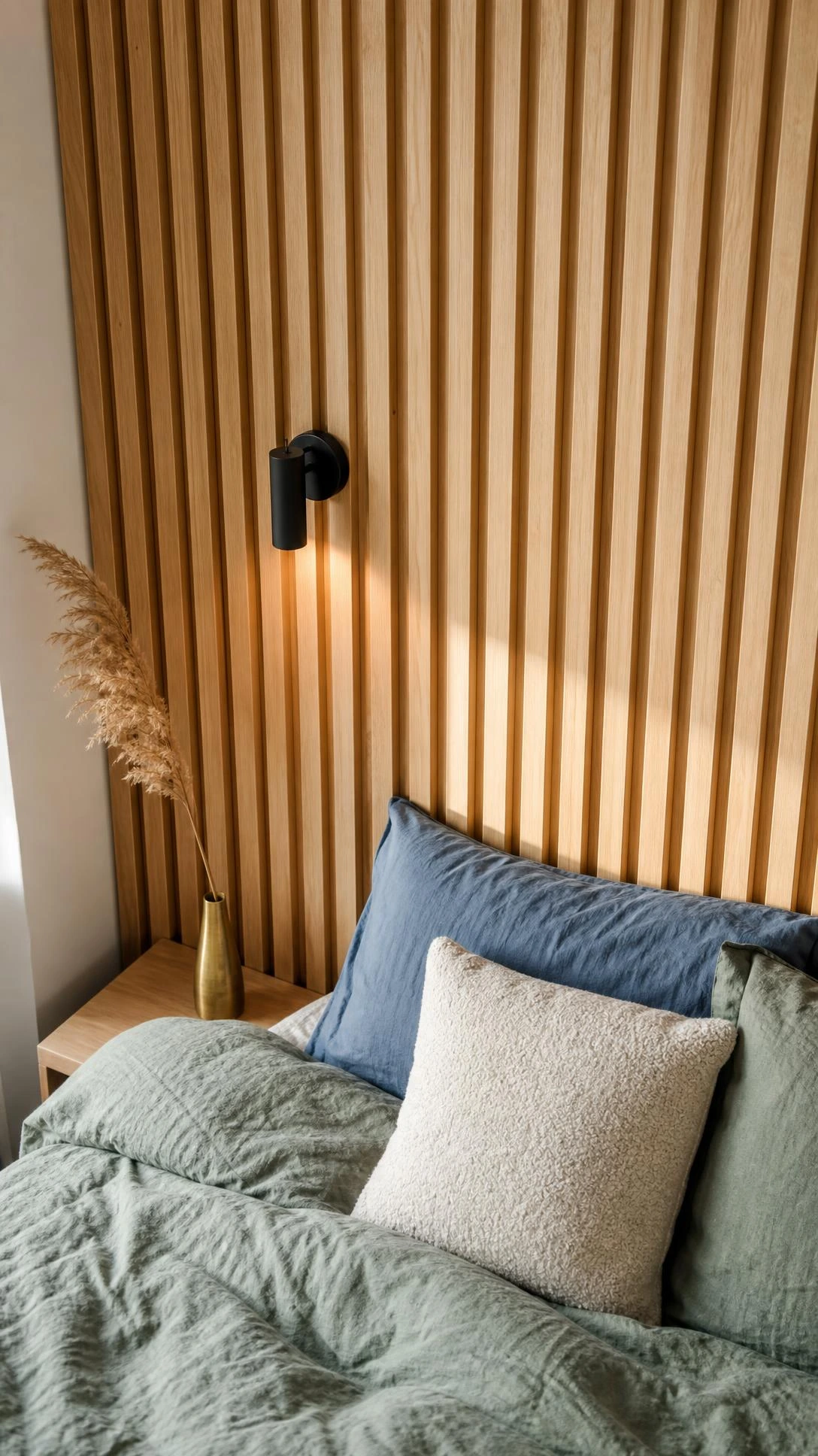
Wood slat panels have moved well past the trend phase at this point and settled into the category of things that just look good in almost any bedroom.
The vertical lines draw the eye upward, which makes the ceiling feel higher, and that is a genuinely useful trick in rooms that feel a little boxed in.
Pre-made MDF slat panels from suppliers like Furnished come in at around $80 to $150 per panel depending on size, which makes a full feature wall achievable for under $400 in most bedrooms.
They can be left natural wood, stained, or painted the same color as the wall behind them for a tonal effect that feels very current without being loud.
I think the painted-to-match version in a deep color like charcoal or forest green is the most striking option, especially in a room that already has warm lighting.
3- Botanical Wallpaper on the Bed Wall
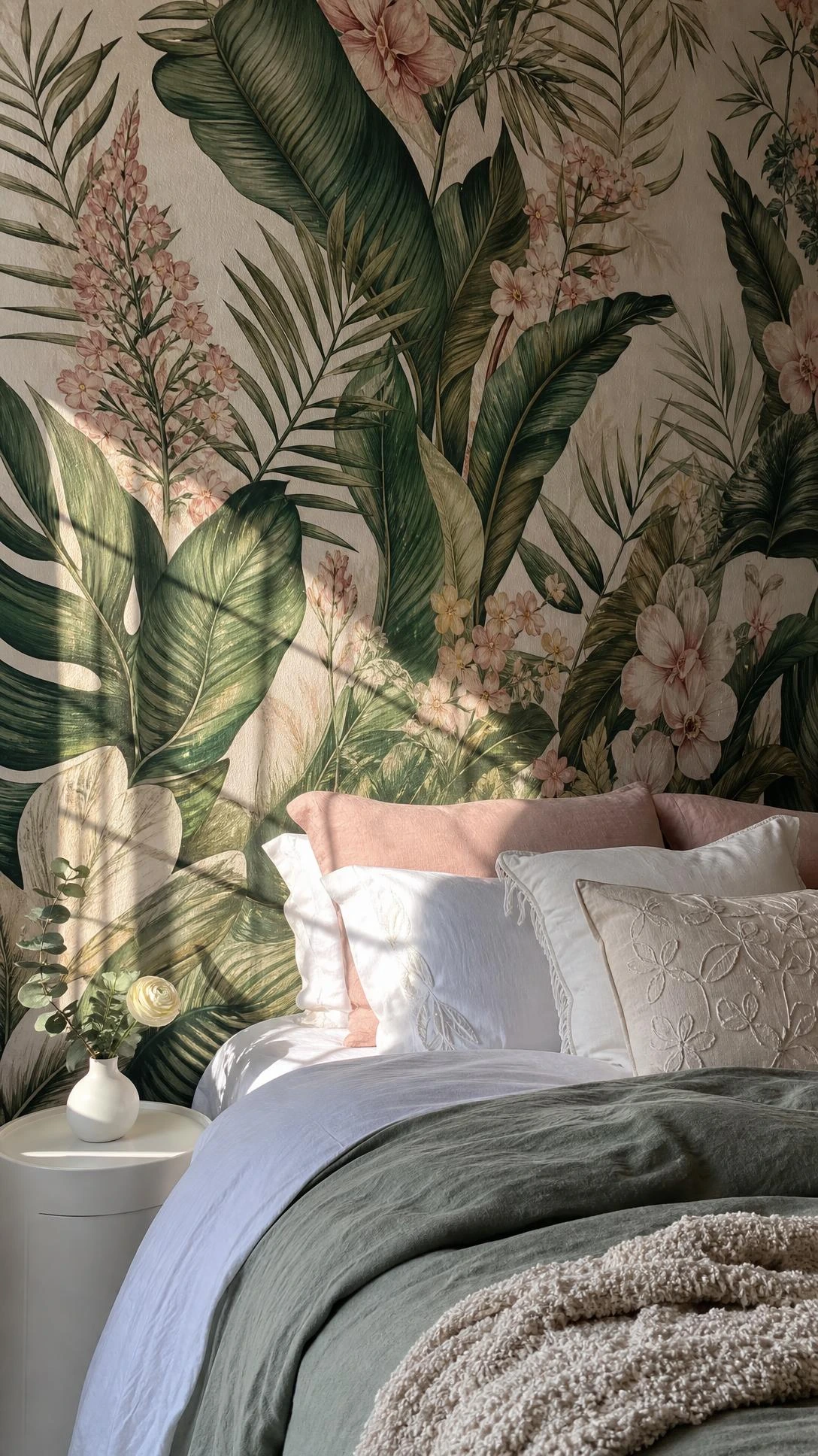
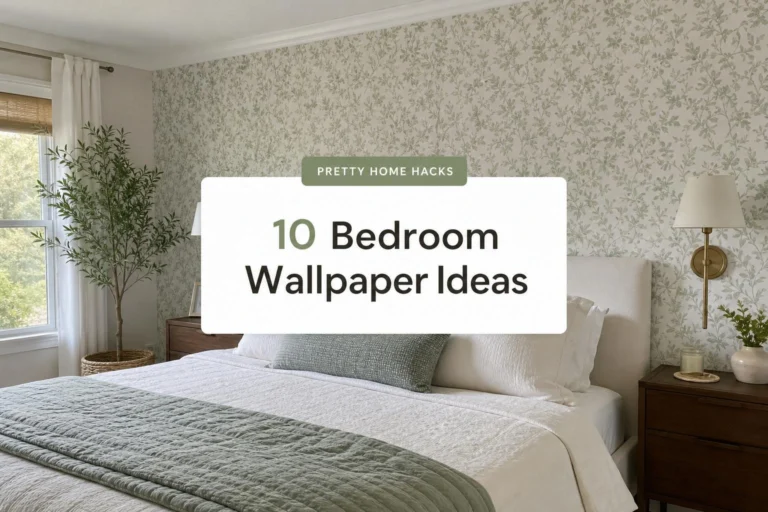
Wallpaper has fully come back and the botanical prints specifically are doing a lot of heavy lifting in bedrooms right now.
A large-scale leaf or branch pattern on just the wall behind the bed gives the whole room a sense of being somewhere intentional rather than just assembled.
Brands like Graham and Brown and Rifle Paper Co. both have botanical options that land in the $60 to $100 per roll range, and most standard bed walls need between three and five rolls.
The pattern scale matters a lot here because small-scale botanical prints can feel a bit busy and wallpaper-sample-ish, while larger scale prints look like an actual design decision.
Peel and stick versions exist for renters and they have gotten genuinely good, though they do work better on very smooth walls than on textured ones.
4- Color Blocked Two-Tone Wall
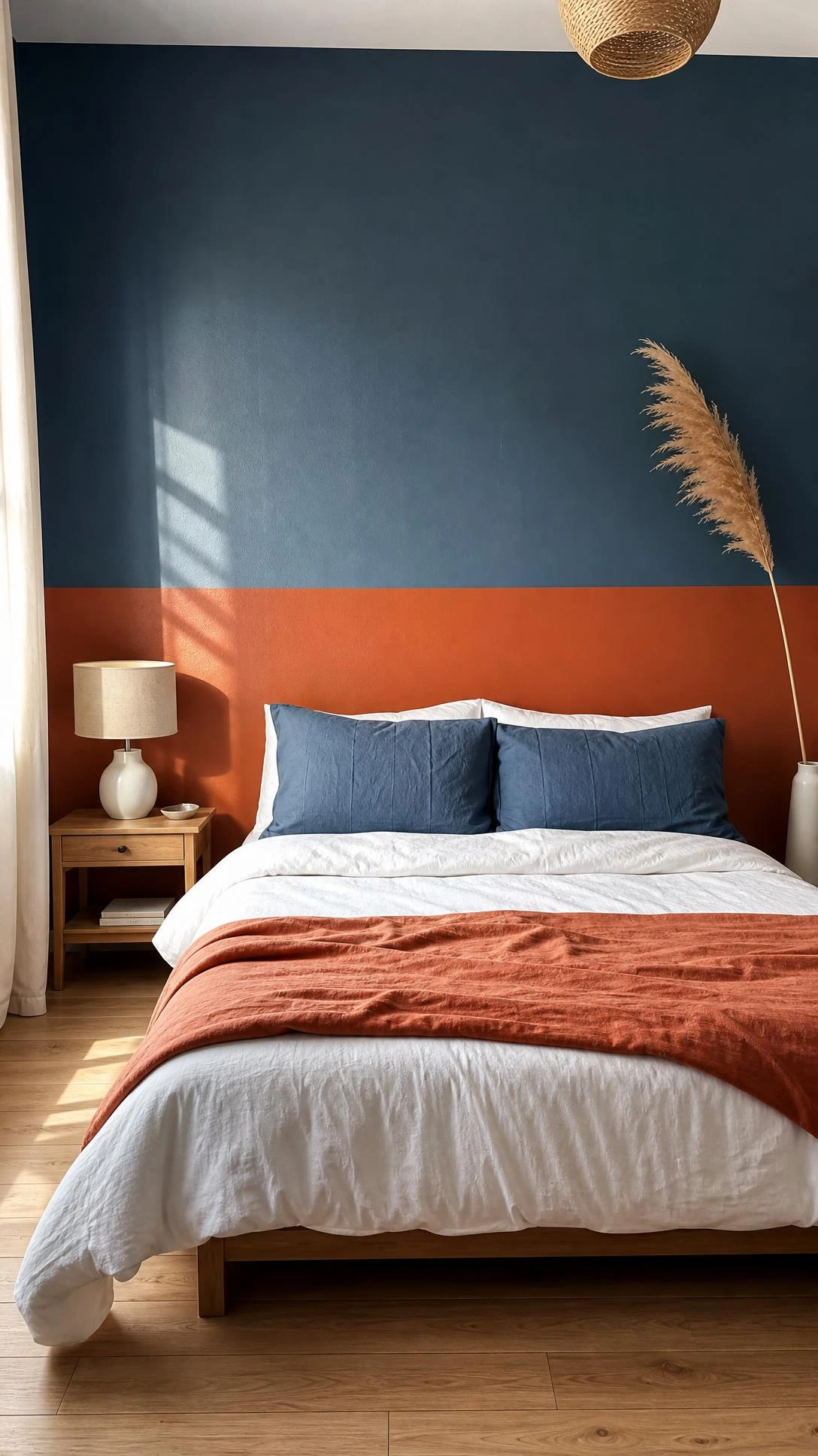
Color blocking a wall is one of those ideas that sounds like it might look like a mistake but almost never does when the colors are chosen carefully.
The most common version is painting the bottom third or half of the wall in a deeper shade and leaving the top portion in a lighter complementary tone, separated by a clean horizontal line.
A combination like soft warm white on top with a dusty terracotta or muted olive on the bottom works in a lot of bedroom styles without committing to a single bold color across the full wall.
The dividing line can be left as a clean paint edge using a level and painter’s tape, or a thin strip of wood trim can be added along the joint for a slightly more finished look.
This is a good option for people who want some color in the room but are not quite ready to commit to a full wallpaper or heavily textured finish.
5- Board and Batten Panelling in a Deep Color
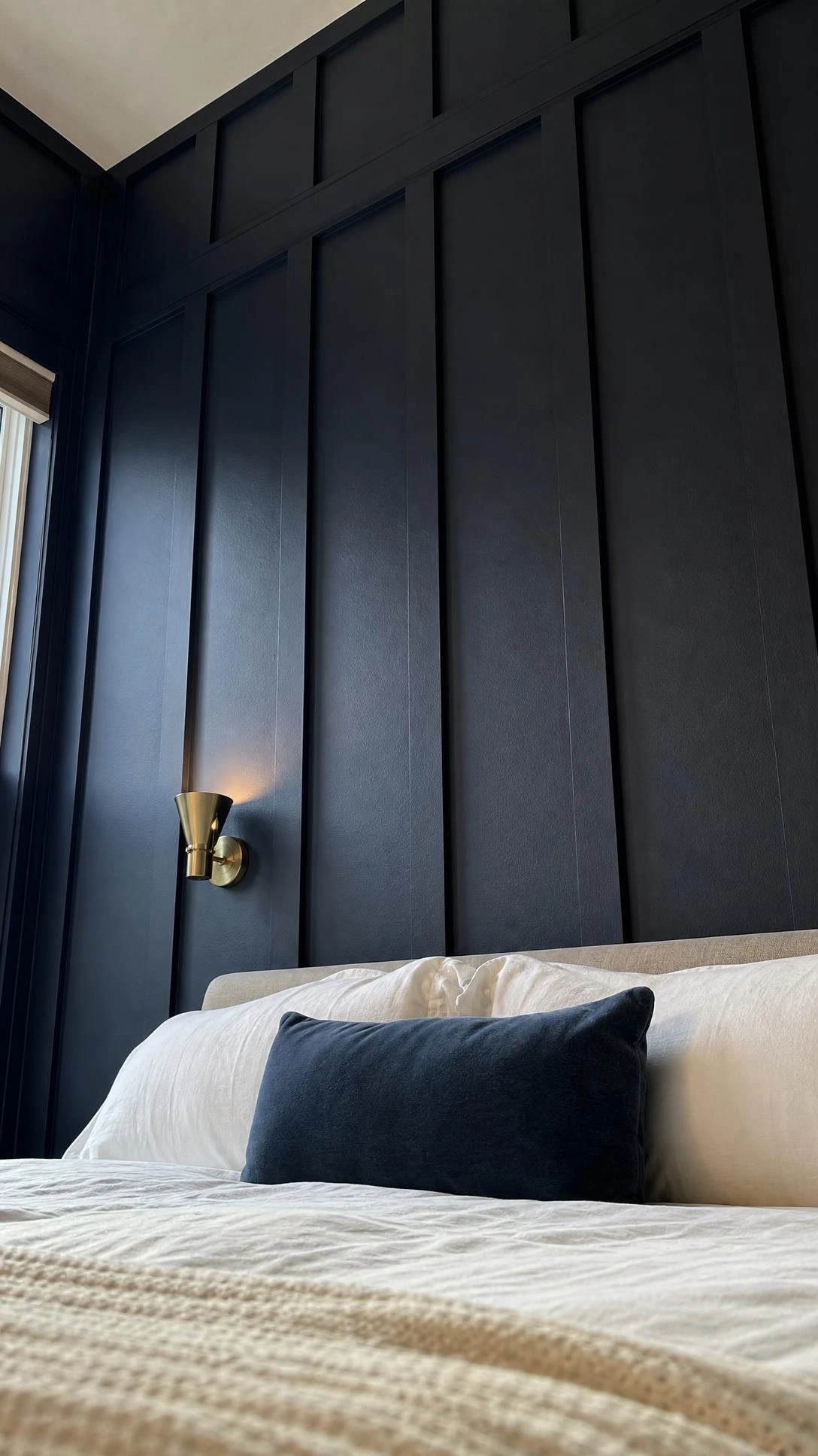
Board and batten has been a classic for a long time but the version showing up in bedrooms now is painted in moody, saturated colors rather than crisp white, which makes it feel completely different.
Deep sea green, inky navy, and warm charcoal are the colors people keep landing on, and something like Farrow and Ball’s Hague Blue or Studio Green works especially well for this treatment.
The panels themselves are made from basic MDF strips attached directly to the wall in a grid or vertical pattern, and the whole feature wall can usually be done for around $100 to $200 in materials.
The trim gets painted the exact same color as the wall behind it so everything reads as one cohesive dark surface rather than a contrast pattern.
It works best in rooms with decent natural light because the darker color absorbs a lot of light and a very dim room can start to feel more cave-like than cozy if the balance is off.
6- Grasscloth or Textured Wallcovering
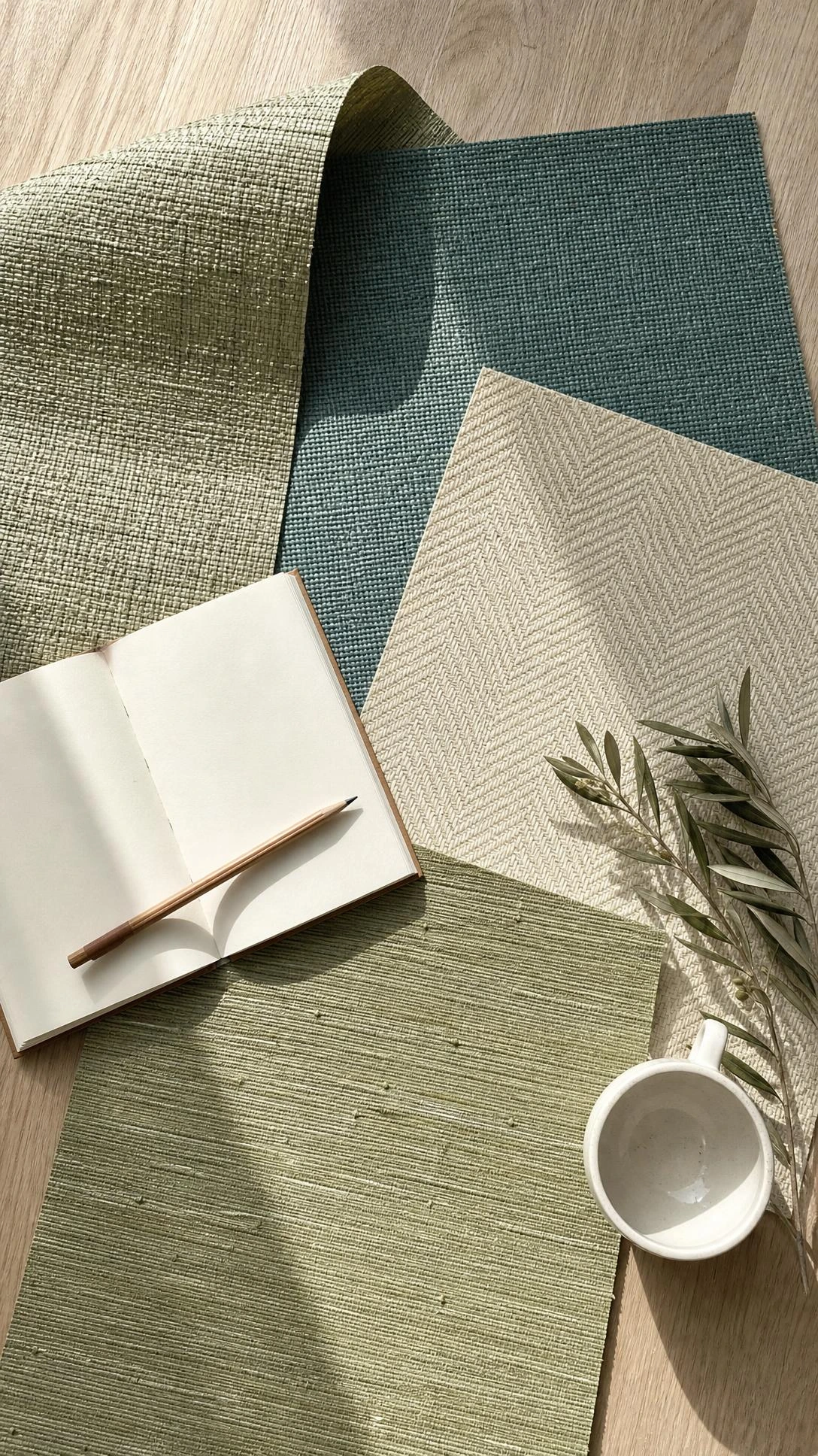
Grasscloth is one of those materials that nobody thinks about until they see it in a finished room and then they cannot stop thinking about it.
The texture it adds to a wall is subtle from across the room but up close it has a woven, almost tactile quality that makes the space feel layered and considered rather than flat.
It comes in natural tones like warm oat, sandy beige, and soft grey and the Serena and Lily Balboa Wallpaper is a popular version that sits around $250 per roll, making it one of the more investment-level options on this list.
Grasscloth is not a DIY project for most people because the seams need to be carefully matched and the material is less forgiving than standard paper-backed wallpaper.
That said, hiring a wallpaper installer for just one feature wall is usually a half-day job and far less expensive than most people assume it will be.
7- Mural Wallpaper With a Nature Scene
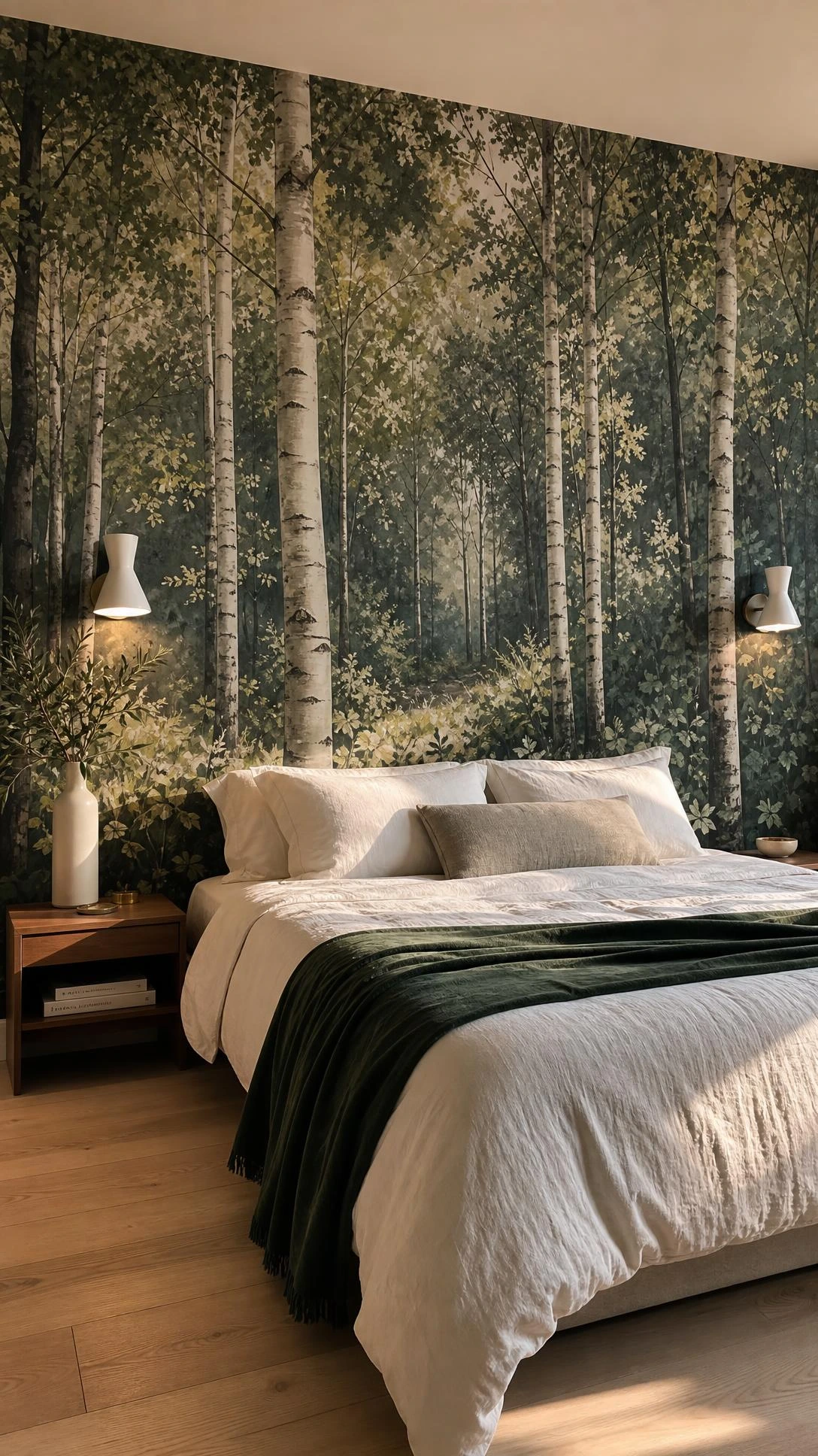
A mural wallpaper is basically one large-format image that covers the entire wall, and the right scene can genuinely make a bedroom feel like a completely different room.
Mountain landscapes, misty forests, and abstract watercolor scenes are the styles that work best in bedrooms because they feel calm rather than stimulating, which matters in a room people are trying to sleep in.
Companies like Photowall and Murals Wallpaper offer custom-size murals starting around $120 to $200 for a standard bed wall, and the panels are numbered so installation is more manageable than it looks.
The wall needs to be smooth and primed before installation or the seams between panels will show up more than they should.
A mural works best when the rest of the room stays very simple because the image is already doing a lot of work and adding more pattern or color elsewhere starts to compete with it.
8- Upholstered Fabric Panel Wall
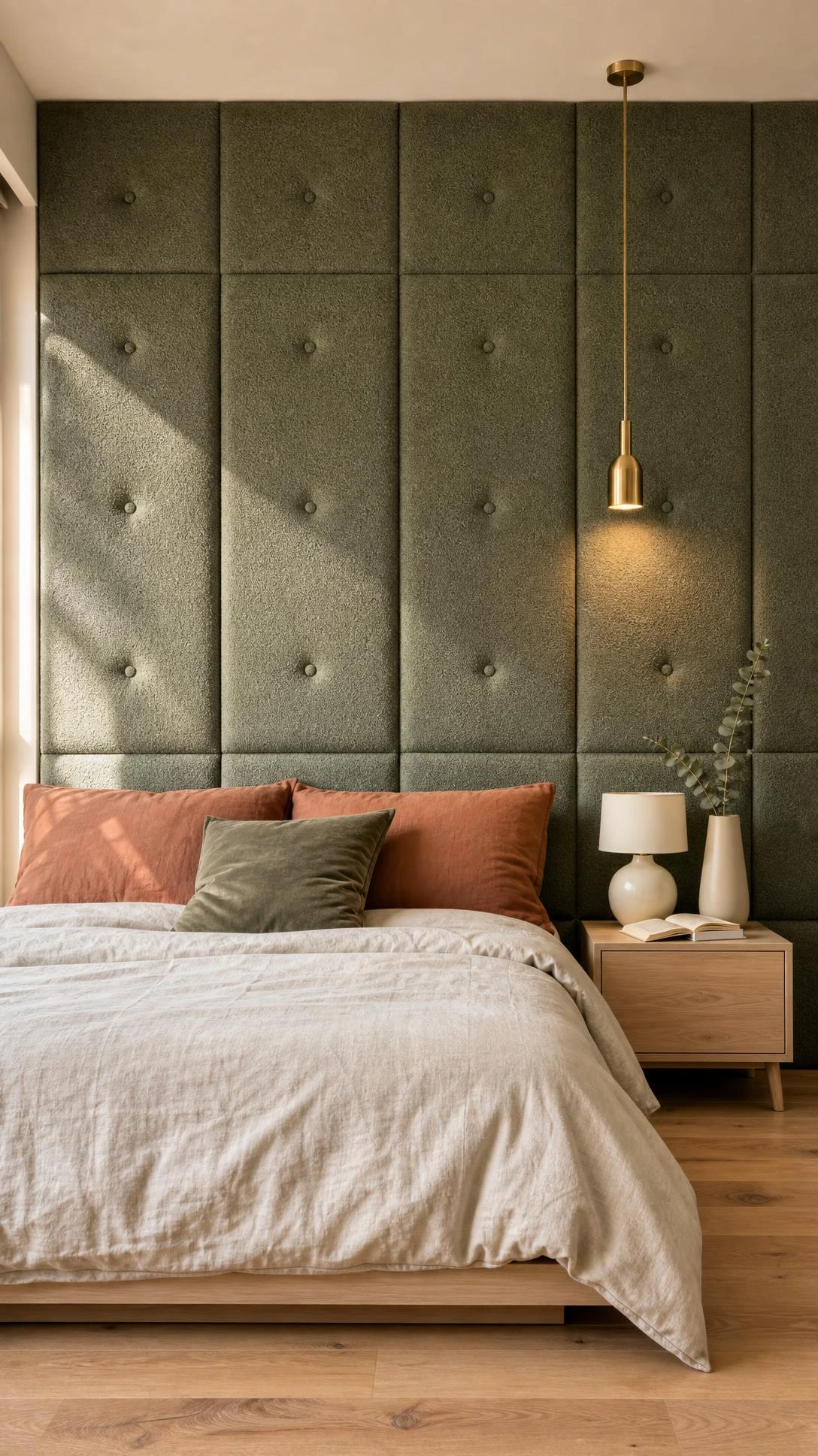
An upholstered wall panel behind the bed is one of those ideas that looks genuinely expensive even when it is not, which is always a nice surprise.
The basic version involves mounting padded panels covered in fabric directly onto the wall in a grid or single large panel arrangement, and it doubles as sound absorption which is an underrated bonus.
Boucle, velvet, and linen are the fabrics that show up most often for this treatment, with boucle in a warm cream or oatmeal tone being the most popular choice right now.
A single large panel centered on the bed wall and flanked by wall sconces is probably the most effortless version of this idea and requires the least precision to look good.
It works best in rooms with a relatively simple overall palette because the texture of the fabric adds enough visual interest on its own without needing pattern or contrast around it.
9- Ombre or Gradient Paint Effect
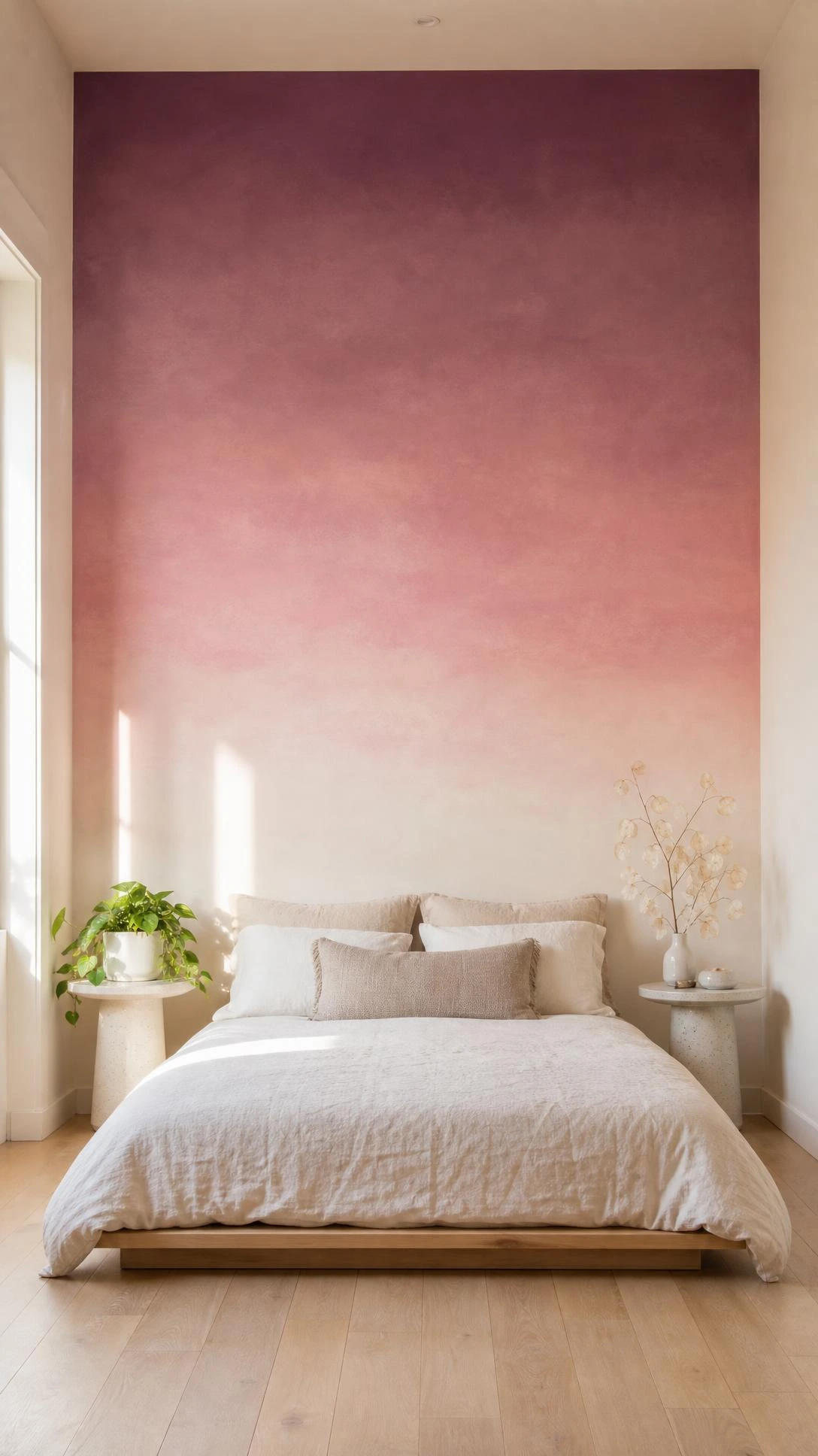
An ombre wall is one of those things that sounds like a lot of effort but is actually one of the more forgiving paint techniques once someone understands the basic method.
The idea is to blend two or three shades of the same color family from light at the top to deeper at the bottom, or the reverse, so the wall transitions gradually rather than sitting at one flat tone.
A soft sage to deep forest green gradient, or a pale blush to dusty rose, both work really well in bedrooms and create a painted sunset effect that photographs beautifully for anyone who cares about that sort of thing.
The blending is done while both colors are still wet using a dry brush or a damp roller to soften the joint between shades, and the whole wall typically takes about two to three hours.
Most paint brands sell sample pots for around $5 to $8 each so it is easy to test the two chosen shades side by side on the actual wall before committing to full cans.
10- Reclaimed Wood or Textured Timber Planks
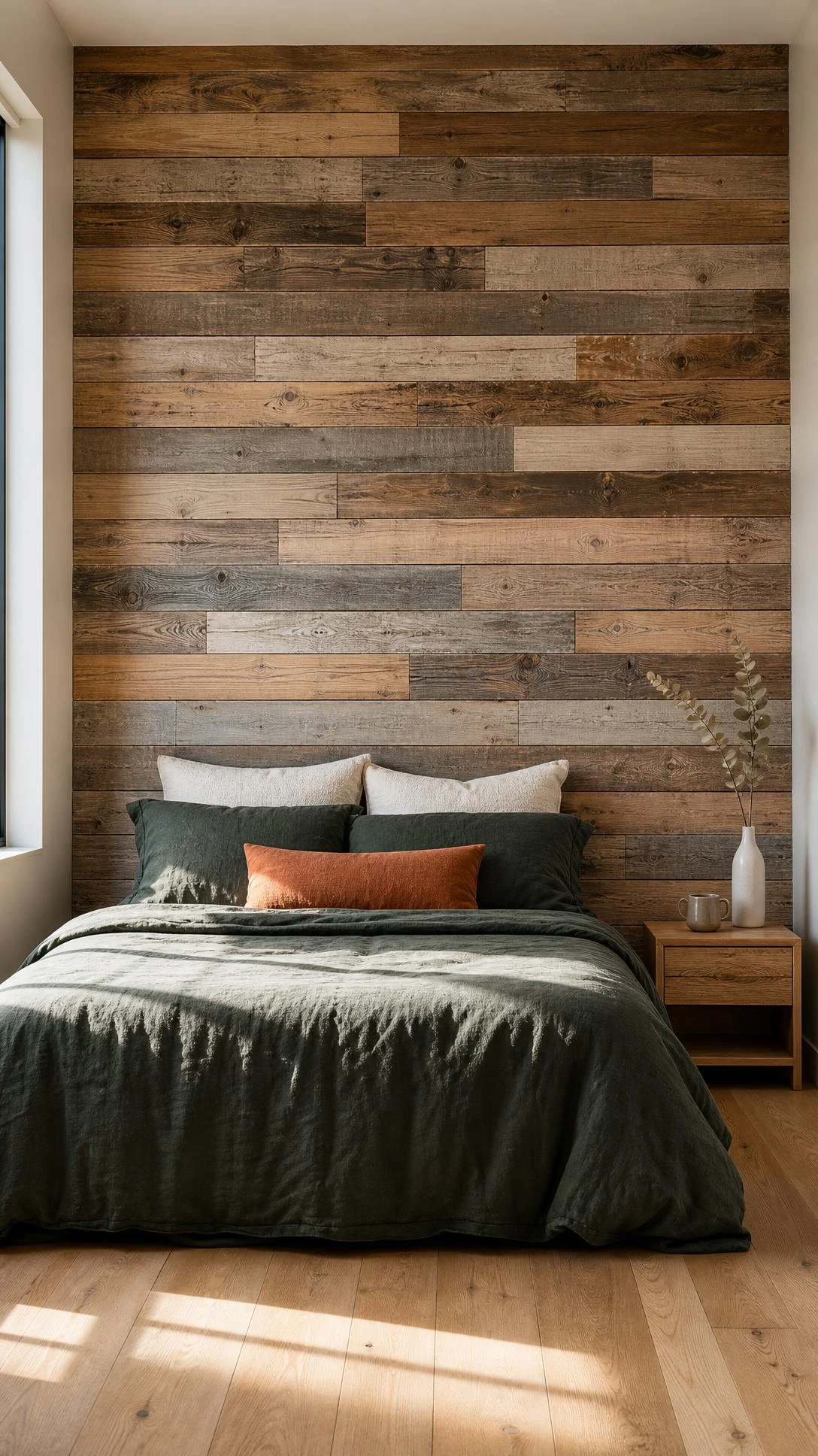
A reclaimed wood accent wall brings a warmth into a bedroom that is difficult to replicate with paint or wallpaper alone because the material itself has variation and texture built into it.
Real reclaimed timber works beautifully but it is also heavy and requires proper wall anchoring, so many people opt for thin timber veneer planks or laminate wood-look panels that install with adhesive and are a fraction of the weight.
Stikwood is one of the more well-known options for peel-and-stick timber planks and their Reclaimed Natural Weathered Wood style runs around $14 per square foot, making a typical bed wall around $500 to $700 total.
The planks can be installed in a horizontal stagger for a more rustic cabin feel or in a vertical configuration for something that reads more modern and gallery-like.
It is worth mentally preparing for the fact that natural wood tones vary between boxes so mixing planks from different boxes as you install keeps the variation from clumping in one spot and looking unintentional.
The Simplest Way to Start a Bedroom Feature Wall
Most people overthink the first step, which is really just picking the wall directly behind the bed and deciding on one treatment that fits the budget and the energy they want in the room.
The wall does not need to be dramatic to be effective, it just needs to be different enough from the other three walls that the eye lands on it and the room feels considered rather than accidental.
Starting with paint is always the lowest-risk entry point, and something like a limewash finish or a color-blocked two-tone wall can be done over a weekend for under $100.
A bedroom that has one intentional wall just feels more finished, which is a small shift that somehow makes the whole room feel like somewhere worth spending time.
Hi, I’m Alizabeth, the creator of Pretty Home Hacks. I share practical home decor ideas, easy DIY projects, organization tips, and budget-friendly ways to make your home feel more beautiful and functional. From small room updates to everyday home hacks, my goal is to share approachable ideas you can actually use in your own space.