
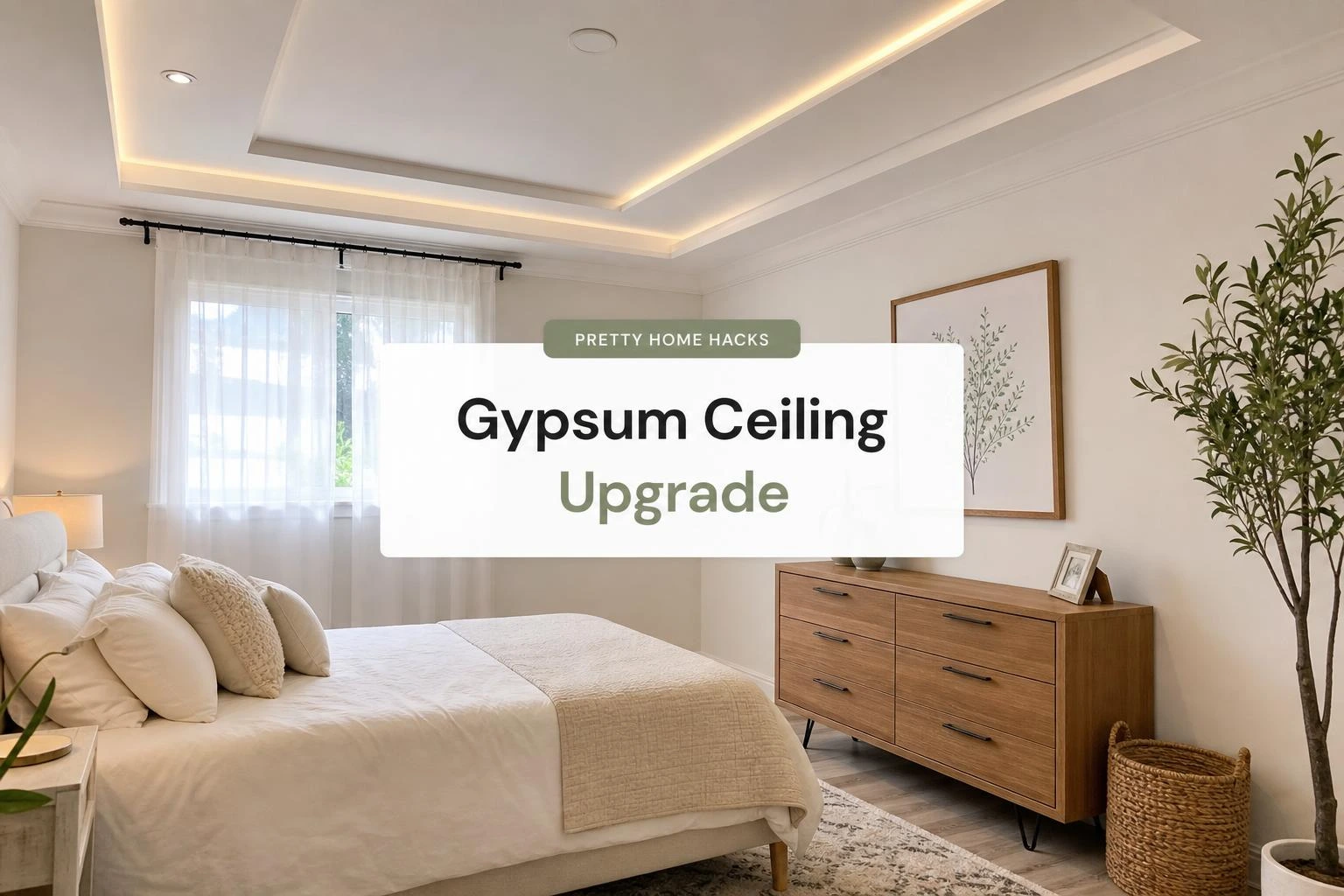
Why a Gypsum Ceiling Is the Bedroom Upgrade Most People Never Think to Try
Bedrooms get a lot of attention when it comes to upgrades, but almost all of it goes to the same four walls and whatever is sitting on the floor.
New bedding, a fresh coat of paint, maybe a rug if someone is feeling ambitious, and the ceiling just sits there completely ignored the whole time.
The thing is, the ceiling is the one surface everyone actually looks at while lying in bed, which makes it one of the strangest things to skip over entirely.
Most people assume ceiling upgrades mean expensive contractors, structural work, and weeks of disruption, which is exactly why a gypsum ceiling never makes the list.
It is much simpler than that, and what it does to a bedroom, both visually and practically, is worth knowing about before the next round of updates begins.
1- What a Gypsum Ceiling Actually Is
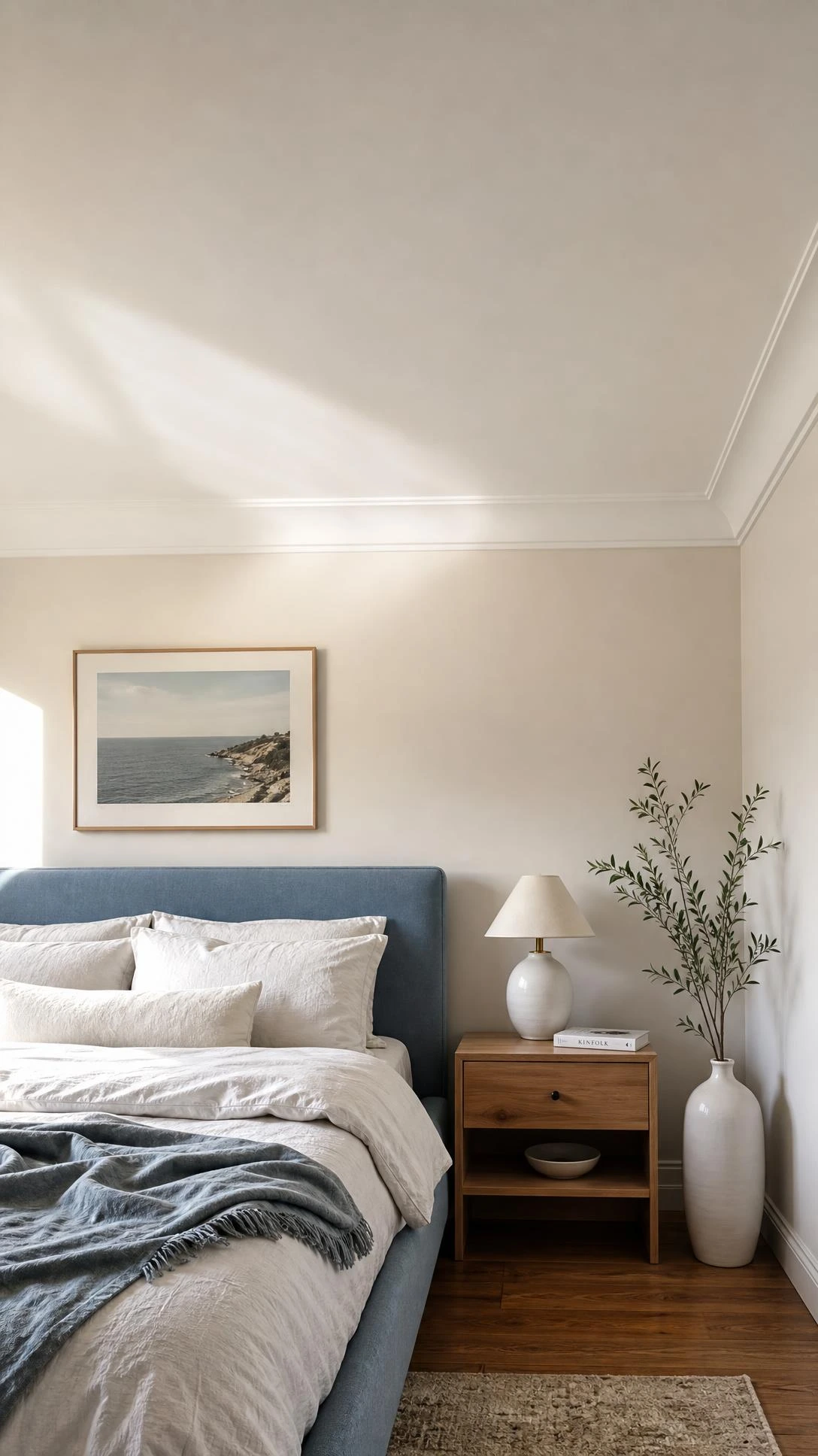
A lot of people hear “gypsum ceiling” and picture something industrial or complicated, when really it is one of the cleaner and more accessible ceiling finishes available.
Gypsum board is made from pressed natural gypsum mineral sandwiched between two layers of paper, and it is installed directly onto a ceiling frame to create a smooth, seamless surface.
The result looks like a polished, unbroken expanse overhead, which is a completely different feeling from a textured popcorn ceiling or one with visible seams and patches.
It is the kind of finish that makes a room look like it belongs in a newer build, even if the house itself is decades old.
Most standard gypsum boards come in 12.7mm thickness for interior ceilings, which is thin enough not to affect ceiling height in any noticeable way.
2- Why Bedrooms Specifically Benefit From This
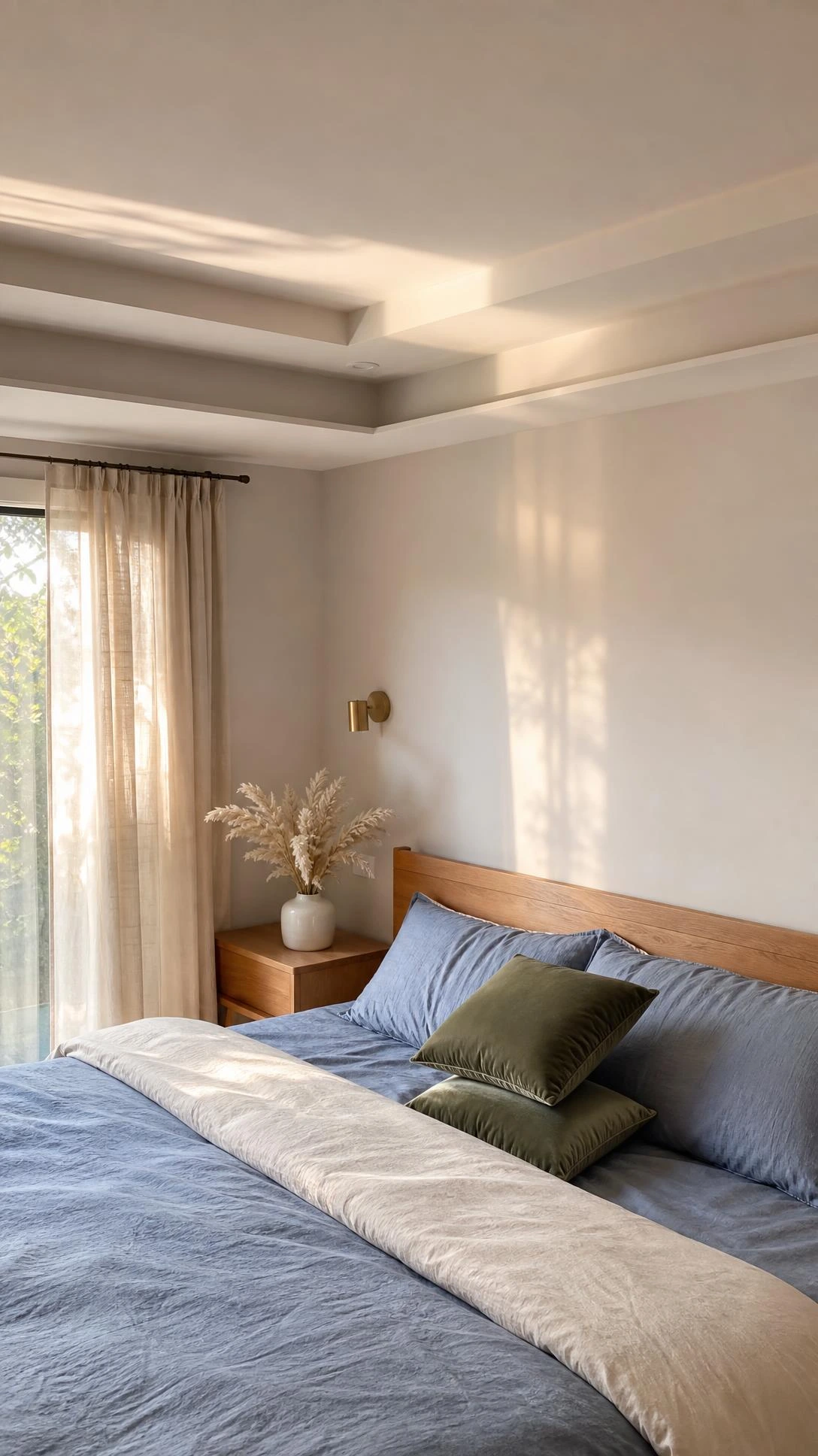
Gypsum ceilings work especially well in bedrooms because bedrooms are dry spaces, which is exactly where gypsum performs at its best.
Unlike kitchens or bathrooms where moisture is constantly present, a bedroom gives gypsum the stable, dry environment it needs to stay looking good for years without warping or any moisture-related issues.
The smooth surface also changes the light quality in the room in a way that softer, textured ceilings simply cannot do.
Light from a ceiling fixture or even a lamp bounces off a flat gypsum surface more evenly, which makes the whole room feel brighter without adding a single new light source.
I think that light quality shift is actually one of the most underrated parts of the whole upgrade, because it changes the feel of the room morning and night.
3- Gypsum Ceiling Sound Insulation for Bedrooms
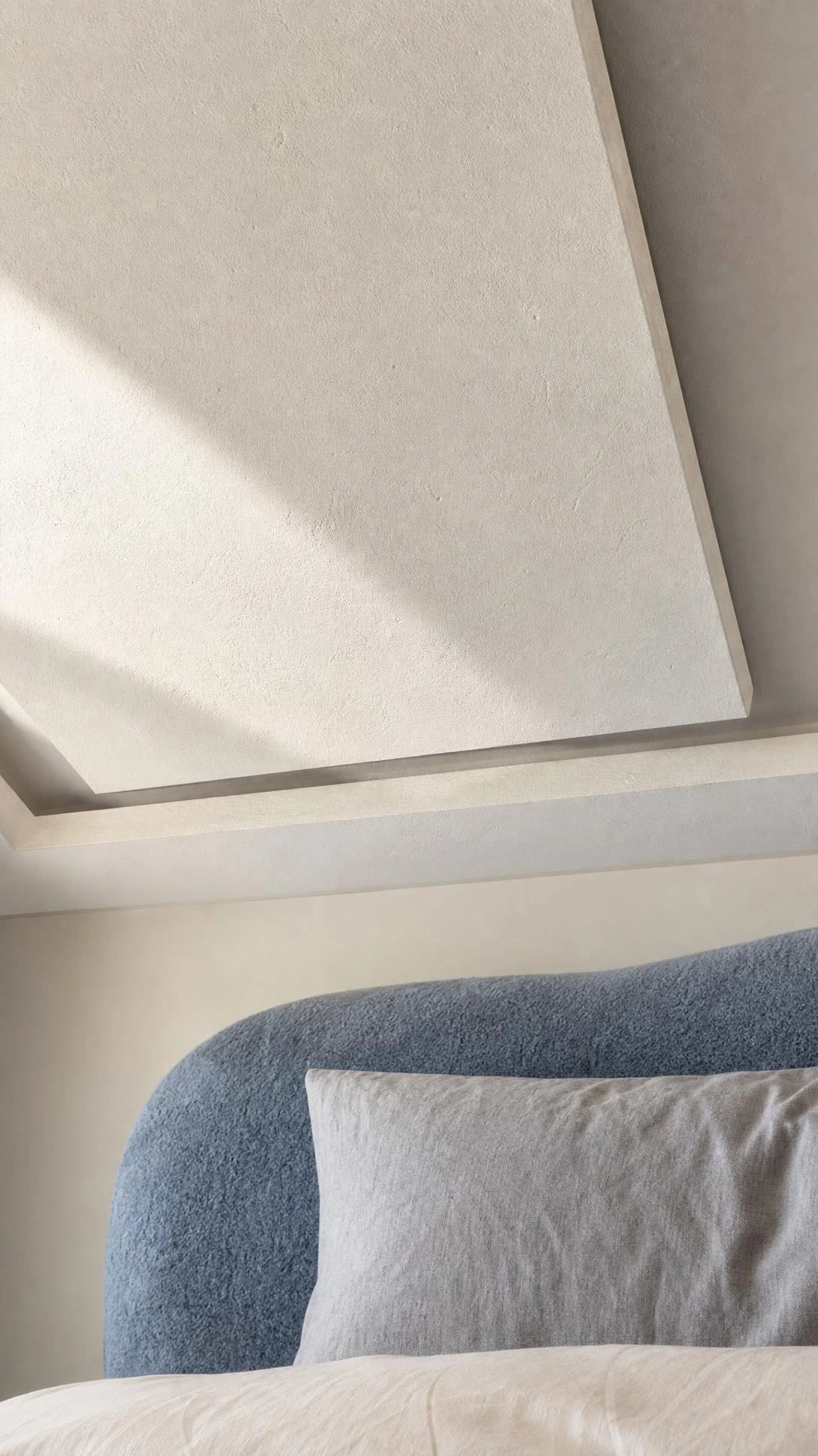
Sound insulation is not the first thing that comes to mind when people think about a ceiling upgrade, but it is one of the most genuinely useful things a gypsum ceiling adds to a bedroom.
The density of the gypsum board absorbs sound differently than a standard drywall ceiling, reducing the amount of noise that travels through from above, which makes a noticeable difference in multi-storey homes or apartments.
For anyone who has ever been woken up by footsteps from a floor above or the low hum of a neighbour’s television, that alone is worth paying attention to.
Double-layered gypsum installation with an acoustic compound between the two sheets can reduce sound transmission by up to 40%, which is a real number, not a marketing estimate.
It does not make a bedroom completely soundproof, but it moves it noticeably in that direction, and for a bedroom that is a genuinely meaningful change.
4- Tray Ceiling Design With Gypsum for a Bigger Feel
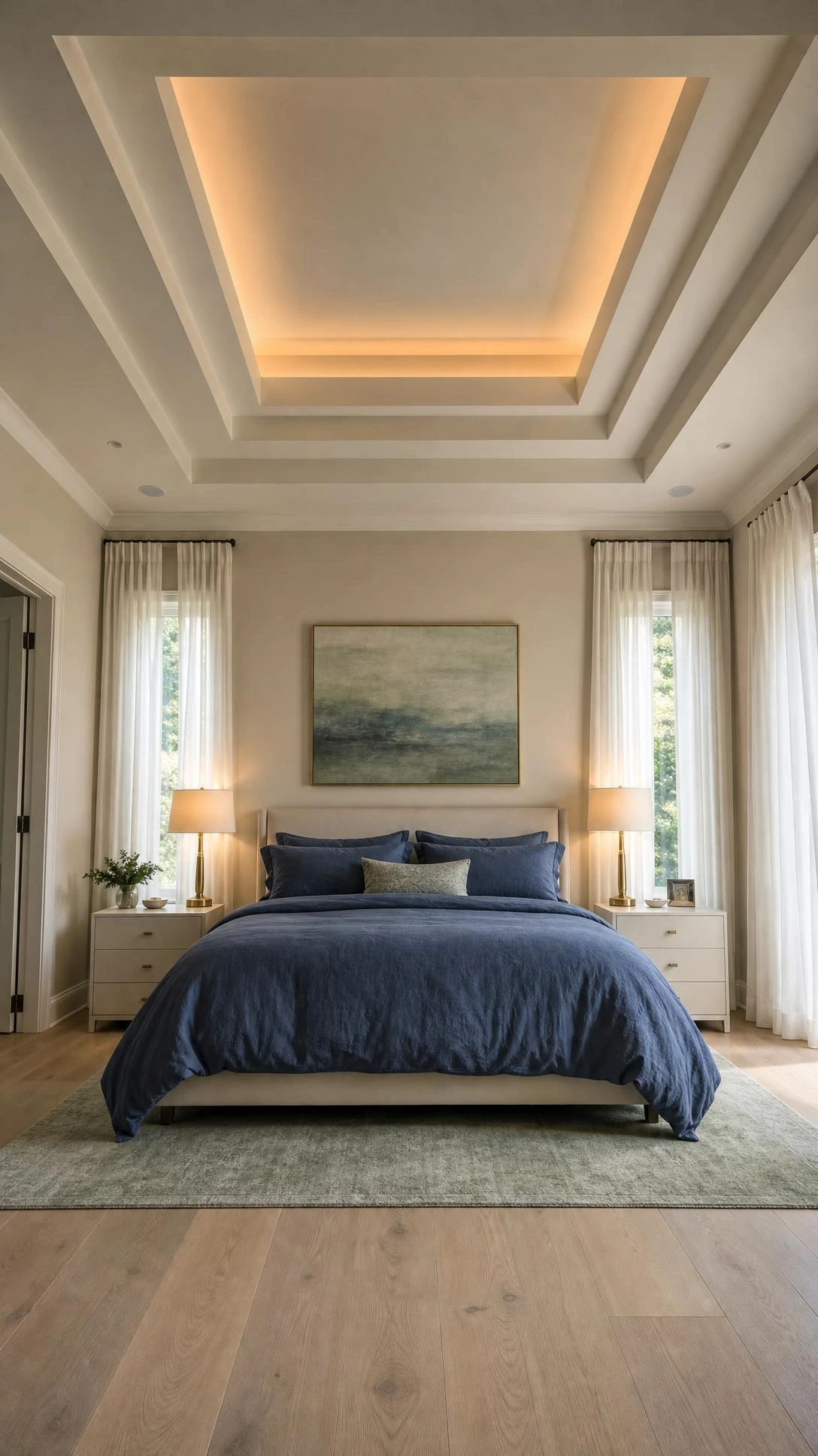
One of the most popular gypsum ceiling designs for bedrooms right now is the tray ceiling, and it is much more achievable than it looks in photos.
A tray ceiling creates a recessed centre section that sits a few inches higher than the surrounding border, which immediately adds depth and makes the room feel taller without actually raising the roof.
For bedrooms with ceilings between nine and ten feet, a simple single-level tray with a 150mm to 200mm border works really well and avoids making the design feel overdone.
The shadow line where the tray meets the border is what creates that visual effect of height, and it works even in relatively modest sized rooms.
Most people who see a tray ceiling in person for the first time are surprised by how much quieter and more deliberate the room feels compared to a flat ceiling.
5- Hidden LED Lighting Inside a Gypsum Ceiling
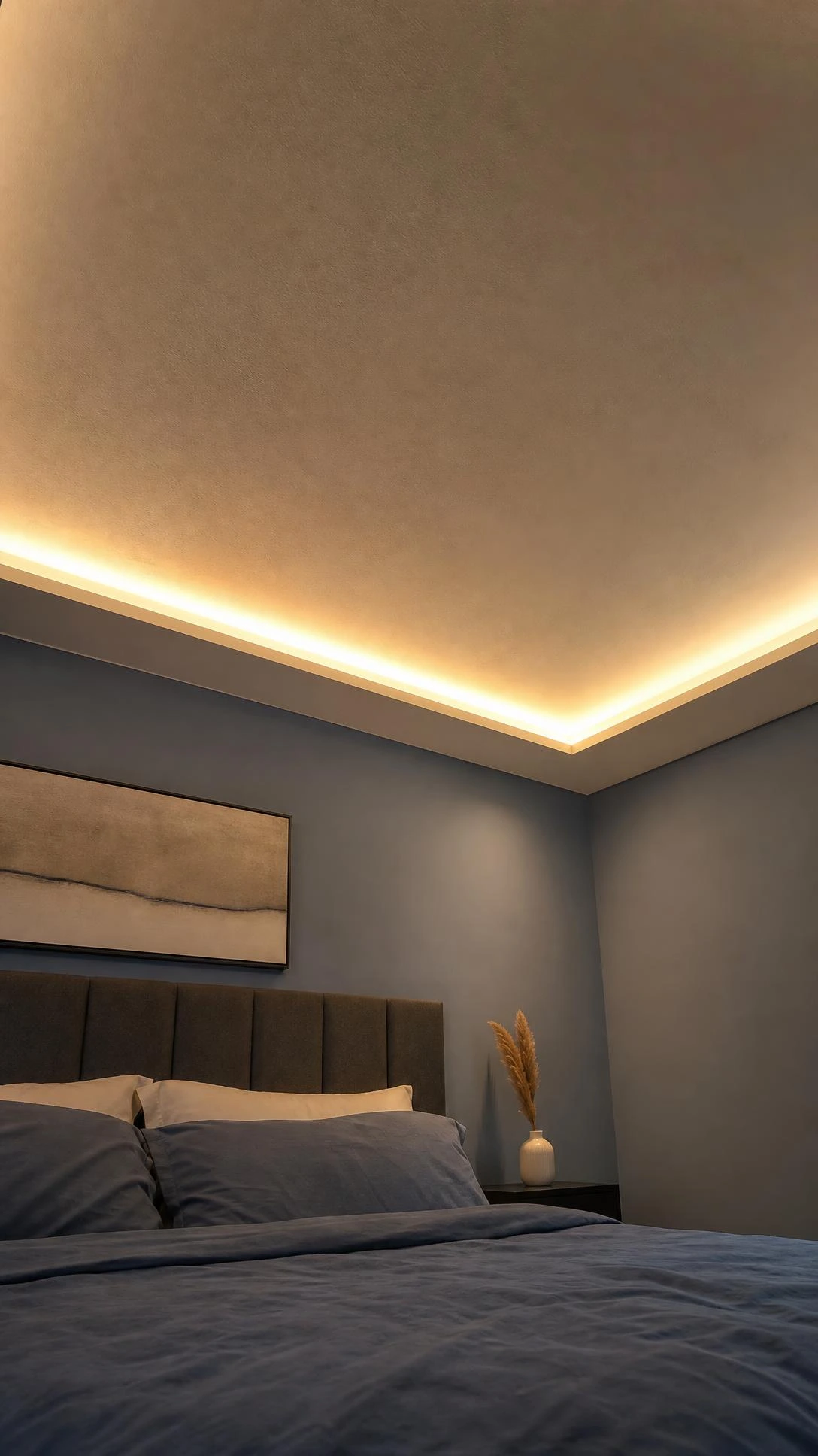
Hidden lighting is one of those details that looks expensive and complicated but is actually built directly into the gypsum ceiling design from the start, not added as an afterthought.
A recessed channel or cove is created within the gypsum structure before installation is complete, and LED strip lighting sits inside that channel so the light source itself is never visible.
Warm white LED strips around 2700K to 3000K are the most common choice for bedrooms because the tone stays soft and relaxed rather than bright and clinical.
The effect is a soft glow that wraps around the perimeter of the ceiling or traces the edge of a tray, which does something completely different to the room than overhead lighting ever could.
It also means the bedroom has a proper ambient lighting option that does not require buying lamps or rearranging furniture to make the light feel right.
6- Flat Gypsum Ceiling for Low Ceiling Bedrooms
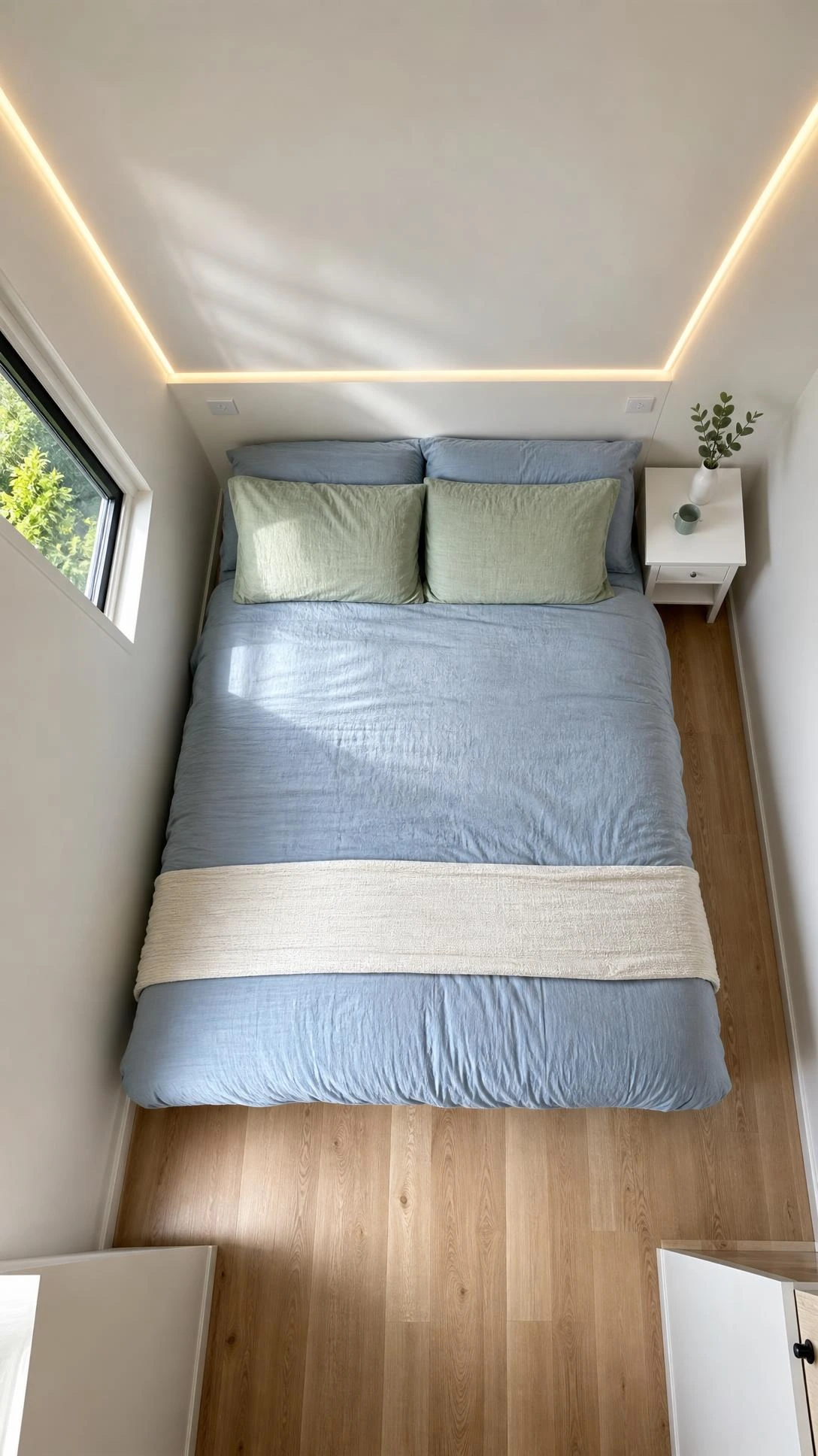
Not every bedroom has the ceiling height to pull off a tray design, and that is actually fine because a clean flat gypsum ceiling does its own very specific thing.
For bedrooms with ceilings under 8.5 feet, a flat gypsum installation with a thin border detail, usually around 50mm to 80mm, gives a finished look without pulling the ceiling any closer.
The seamless surface makes the eye move across the ceiling rather than stopping at textured patches or visible joints, which keeps the perception of space more open than it actually is.
Painting a flat gypsum ceiling the same colour as the walls, or just one shade lighter, is a trick that makes low-ceiling rooms feel taller without any structural work at all.
It sounds like a small thing but the difference between a patchy, textured ceiling and a smooth flat gypsum surface in the same room is genuinely striking once the work is done.
7- Gypsum Ceiling Fire Resistance Benefit
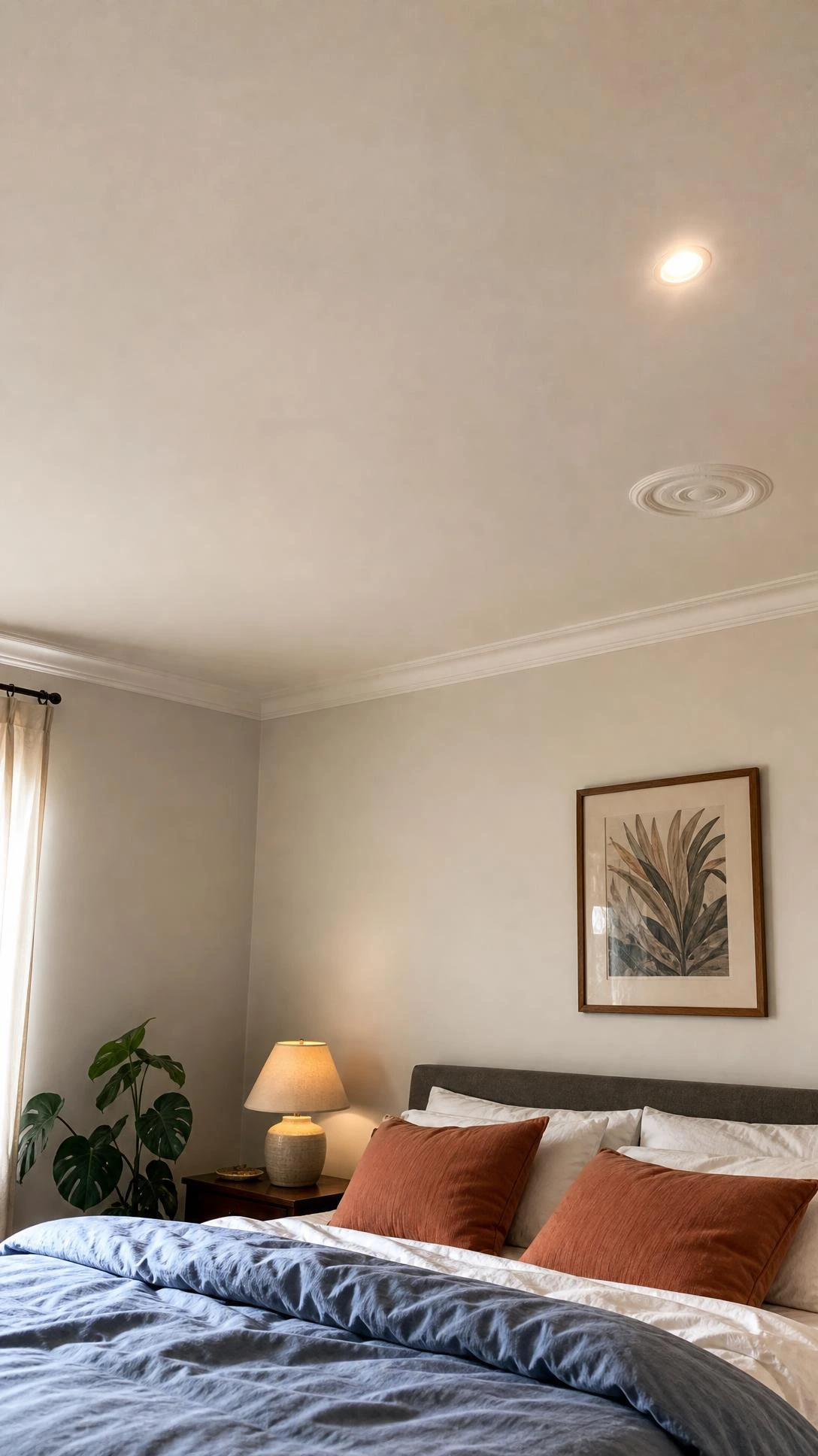
Fire resistance is not a glamorous selling point but it is one of the most practical reasons a gypsum ceiling makes sense in a bedroom specifically.
Gypsum contains chemically bonded water within its structure, and when heat is applied, that water releases as steam, which slows the spread of fire through the ceiling material.
Standard gypsum board provides approximately 30 to 45 minutes of fire resistance, and Type X fire-rated gypsum board extends that to 60 minutes, which is the version often required in multi-unit buildings.
For a bedroom, where people are asleep and response time to a fire is slower, that kind of passive protection is not a small consideration.
It does not replace smoke detectors or any other safety measure, but it is a real, measurable benefit that most ceiling materials simply do not offer.
8- Minimalist Gypsum Ceiling Design for Modern Bedrooms
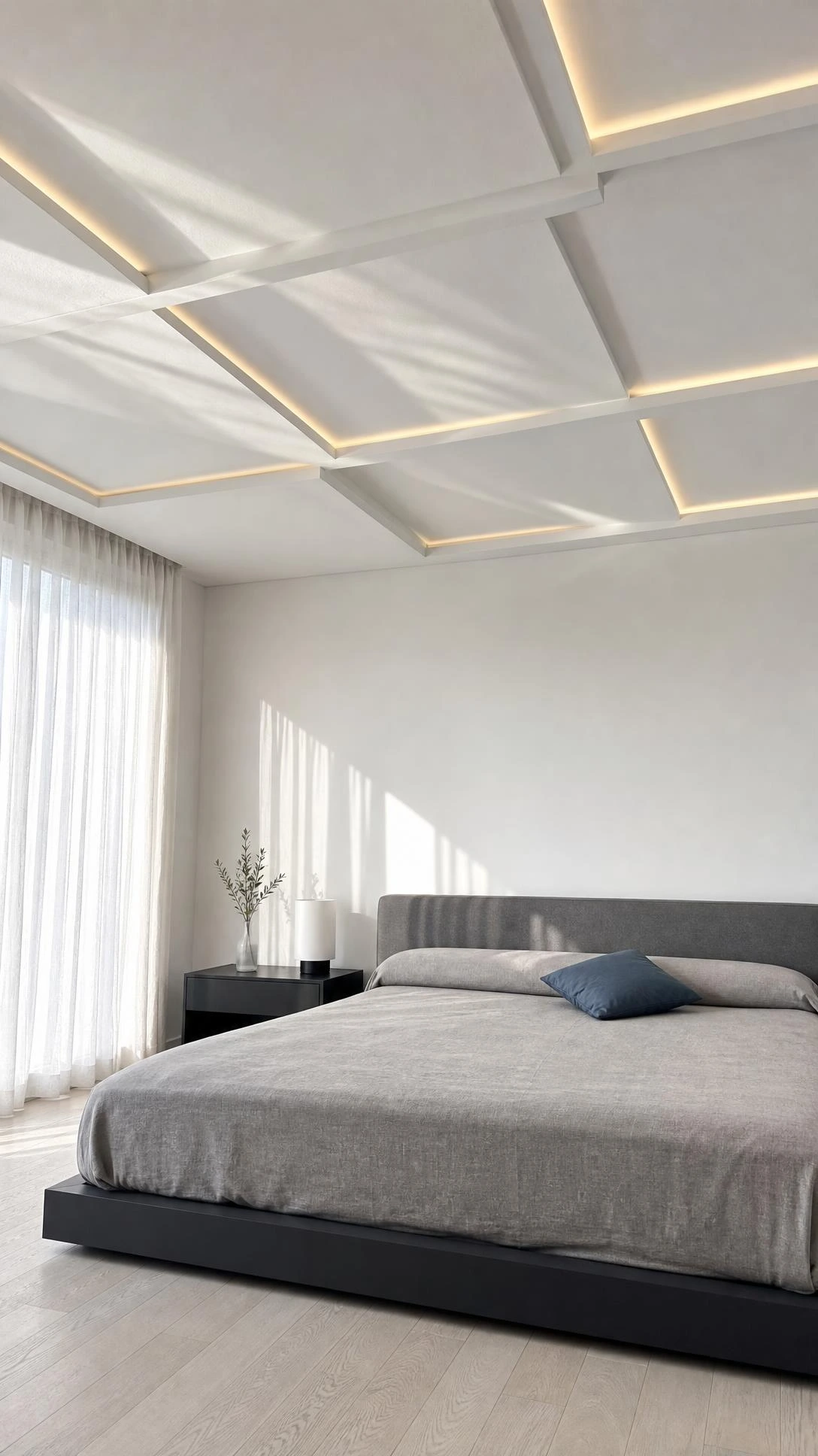
The direction most new builds and modern apartment renovations are going right now is away from heavy, ornate ceiling patterns and toward cleaner, quieter gypsum designs with fewer cuts and details.
A minimalist gypsum ceiling usually means a flat or very gently framed surface with one simple border groove, nothing more, which is exactly what works in bedrooms where the goal is calm rather than drama.
The fewer the design cuts in the gypsum, the more the ceiling recedes visually, meaning the eye stays at eye level and the room feels more spacious and less busy.
In white or very pale grey, a clean gypsum ceiling reads as almost invisible in the best possible way, which is really what a bedroom ceiling should be doing.
It is the kind of design that looks like nothing until someone walks into a room that does not have it, and then the difference is immediately obvious.
9- Gypsum Ceiling Installation Time and Cost Range
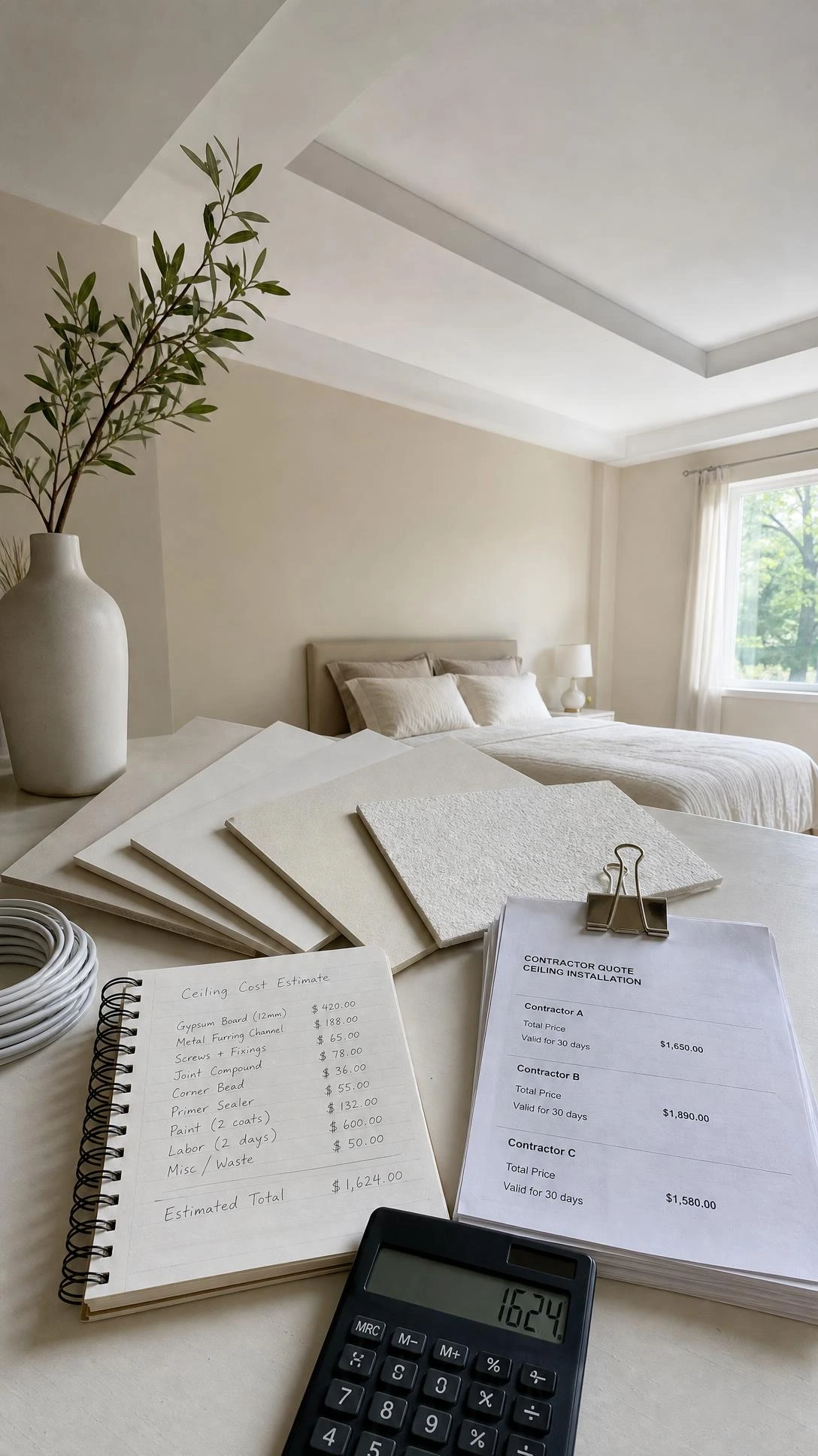
One of the reasons people never get around to a gypsum ceiling is the assumption that the installation process will take over the house for longer than it actually does.
A standard bedroom ceiling install typically takes one to two days for a professional team, which includes framing, board installation, jointing, and the first stage of finishing before painting.
Cost varies by region and ceiling size, but for a typical master bedroom, a flat or simple tray gypsum ceiling generally falls somewhere between $800 and $2,500 installed, depending on the complexity of the design.
That range drops significantly in areas where labour costs are lower, and it goes up when hidden lighting channels or multi-level tray designs are added to the scope.
Compared to what most people spend on furniture updates or a feature wall, the cost-to-impact ratio is one of the better ones in the bedroom upgrade category.
10- Moisture Resistant Gypsum for Bedroom Ensuites
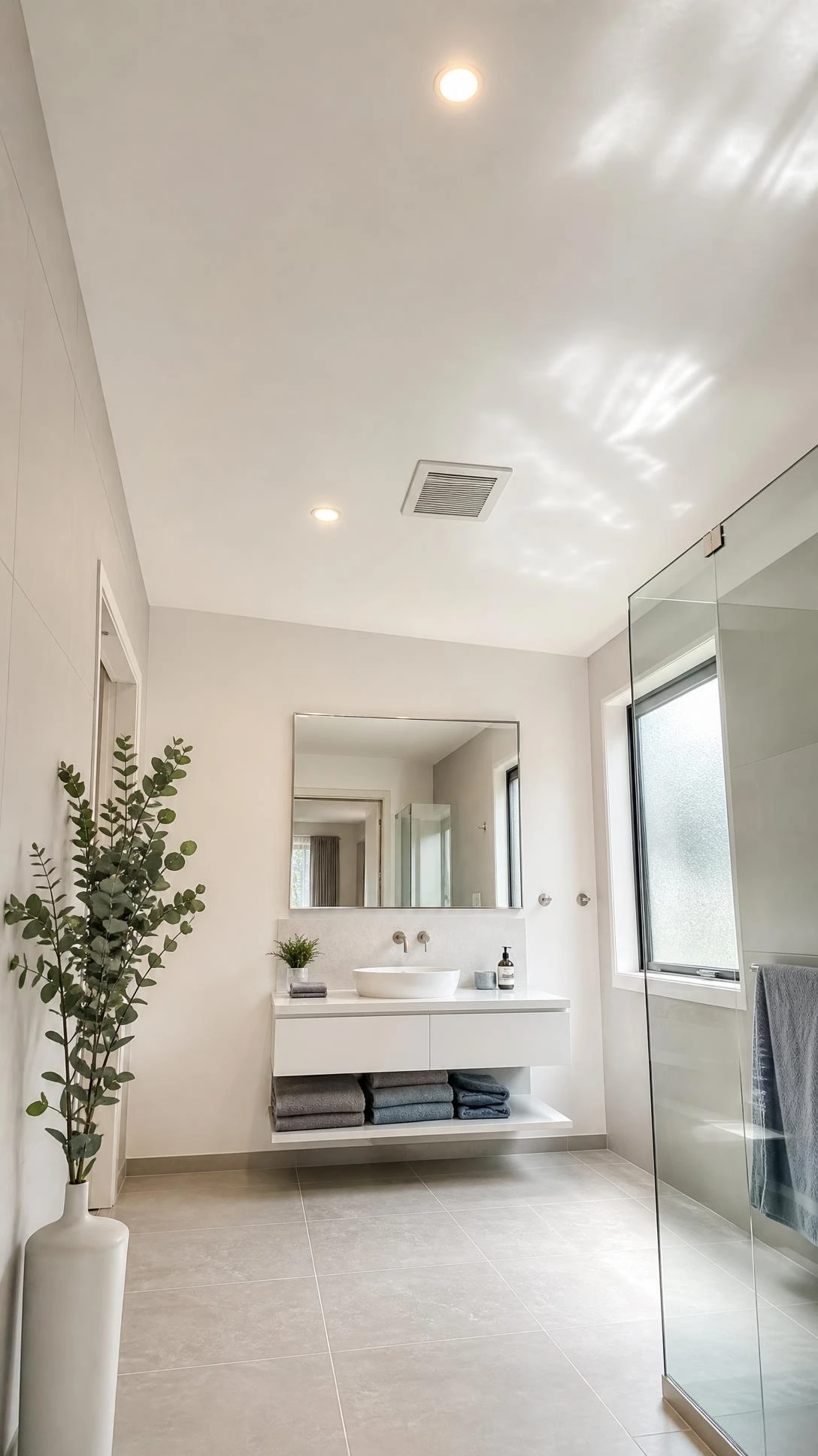
If the bedroom connects directly to an ensuite or a walk-in area with any humidity, standard gypsum is not the right choice for that zone, and it is worth knowing that before installation starts.
Moisture-resistant gypsum board, sometimes sold under brand names like Aquaboard or listed as MR grade, uses a treated core and water-repellent face paper that holds up in higher-humidity conditions.
It is typically green or blue in colour before it is painted, which is the easiest way to tell it apart from standard board on a job site.
Using moisture-resistant gypsum in an ensuite-adjacent ceiling area prevents the mold, warping, and soft spots that standard gypsum develops when it gets damp repeatedly over time.
The main bedroom area can use standard gypsum with no concerns, and the two types can be used side by side, which means the design stays consistent even where the materials shift.
A Bedroom Ceiling Worth Actually Looking At
Most bedroom upgrades focus on what is at eye level or below, and the ceiling keeps getting skipped because it feels like the harder, more disruptive option.
A gypsum ceiling is actually one of the quieter installations a bedroom can go through, and the result sticks around for decades without needing much attention.
The combination of a smoother finish, better light, and the option to add hidden LEDs makes it the kind of change that affects how the room feels every single day.
It is not a dramatic renovation, it is just a ceiling that finally looks like it belongs in the rest of the room.

Hi, I’m Alizabeth, the creator of Pretty Home Hacks. I share practical home decor ideas, easy DIY projects, organization tips, and budget-friendly ways to make your home feel more beautiful and functional. From small room updates to everyday home hacks, my goal is to share approachable ideas you can actually use in your own space.