
10 Minimal Front Yard Landscaping Ideas That Look Professional
Front yards are one of those things people ignore completely until they pull up to the house one day and actually look at it.
Not in a proud way, either, more like noticing the lawn has gone a little patchy, the mulch has faded to gray, and the whole thing just looks like nobody made a single decision about it.
Most people assume a polished front yard requires a landscape designer, a big budget, and several weekends of hard labor to pull off.
The thing is, minimal landscaping is actually the easiest kind to do well, because the whole point is doing less on purpose and making it look intentional.
These are the ideas that tend to get the most comments from neighbors, and almost none of them cost what people assume they do.
1- Fresh Mulch in Every Bed
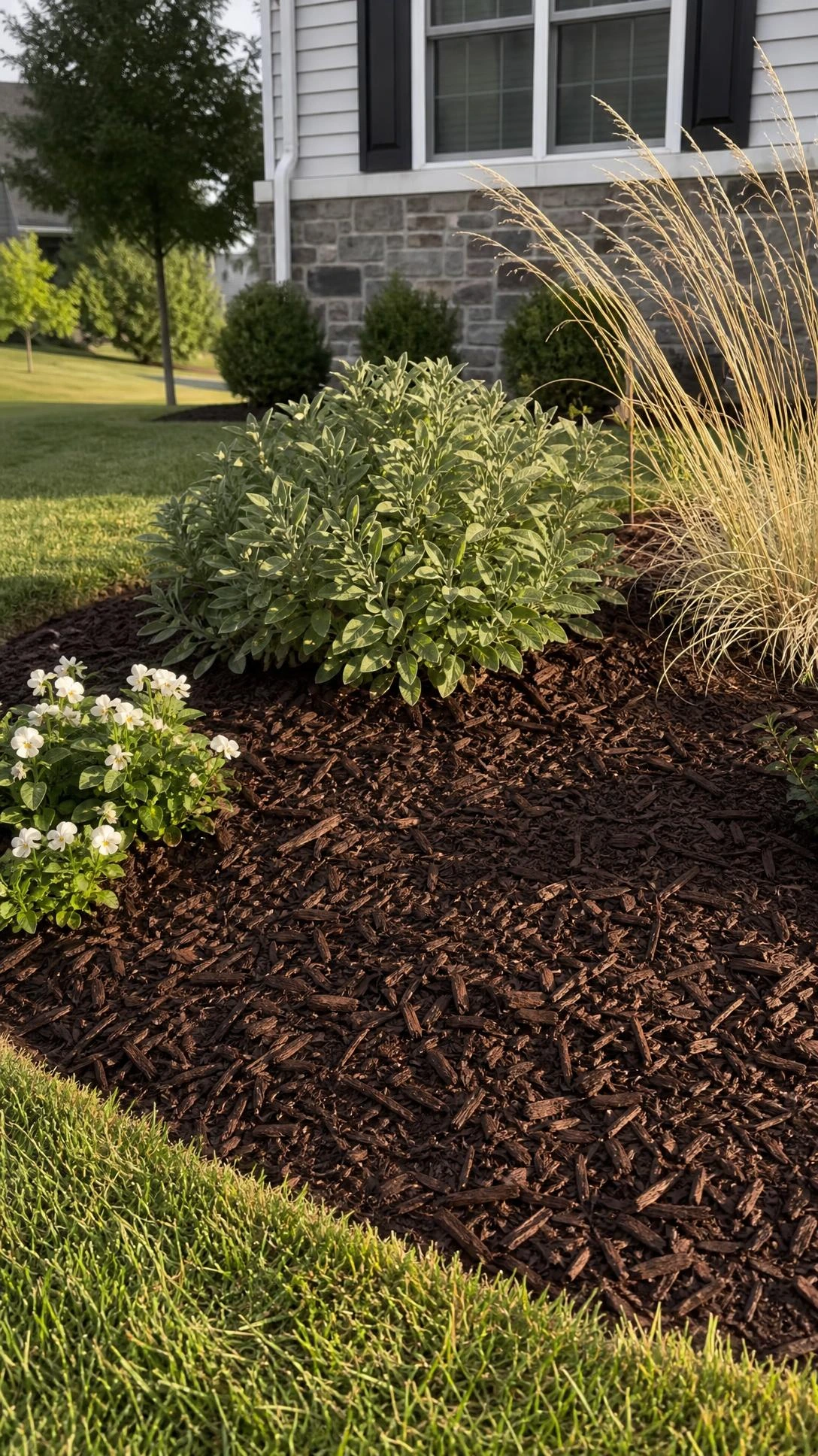
Nothing makes a front yard look more neglected than old mulch that has faded to a washed-out brown or started to break down into a thin, patchy layer.
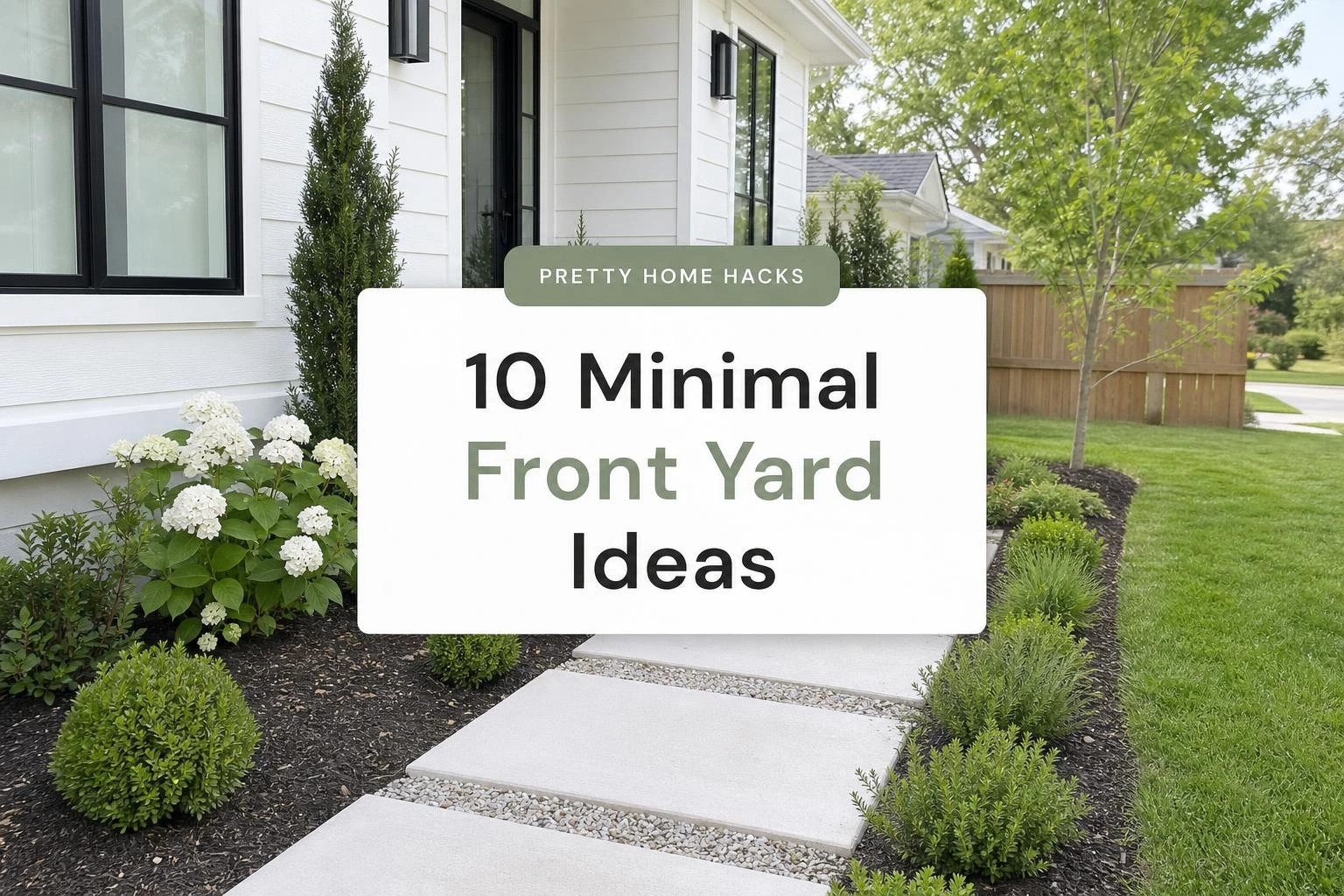
A fresh application of dark brown or black dyed mulch at 2 to 3 inches deep makes every single plant in the bed look like it was just planted on purpose.
Black mulch in particular works really well with modern minimal yards because it reads as a design choice rather than just ground cover.
A standard bag covers about 6 square feet at the right depth, and most small to medium front yard beds run around 10 to 15 bags total, which usually comes in under $80.
The change is one of those things that genuinely shocks people because it costs almost nothing but looks like a professional just left.
2- Steel Edging Along Every Bed
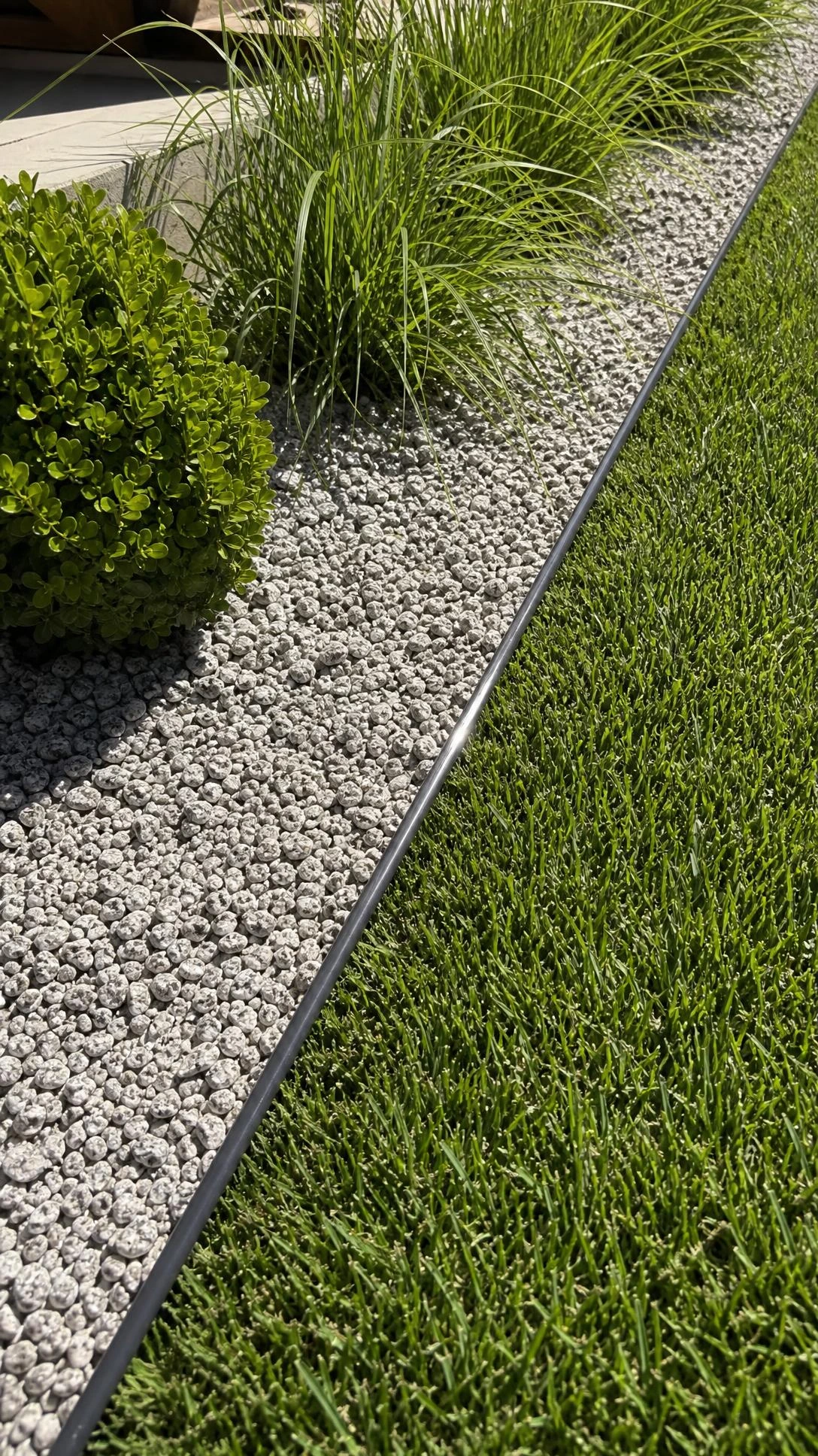
Lawn edging is probably the single most underrated thing in residential landscaping, and almost nobody does it.
A clean 3-inch vertical cut where the grass meets the bed, held in place with flexible steel or aluminum edging, is what separates a yard that looks designed from one that just sort of happened.
The line does not have to be perfectly straight either, a gentle curve along a bed looks intentional as long as the edge is crisp and consistent all the way around.
Steel landscape edging runs about $1 to $2 per linear foot and sits almost flush with the ground so it is barely visible but makes everything around it look sharper.
Most people walk past yards like this and assume someone comes weekly to maintain it, when really the edging just does all the visual work.
3- Gravel or Decomposed Granite Instead of Mulch
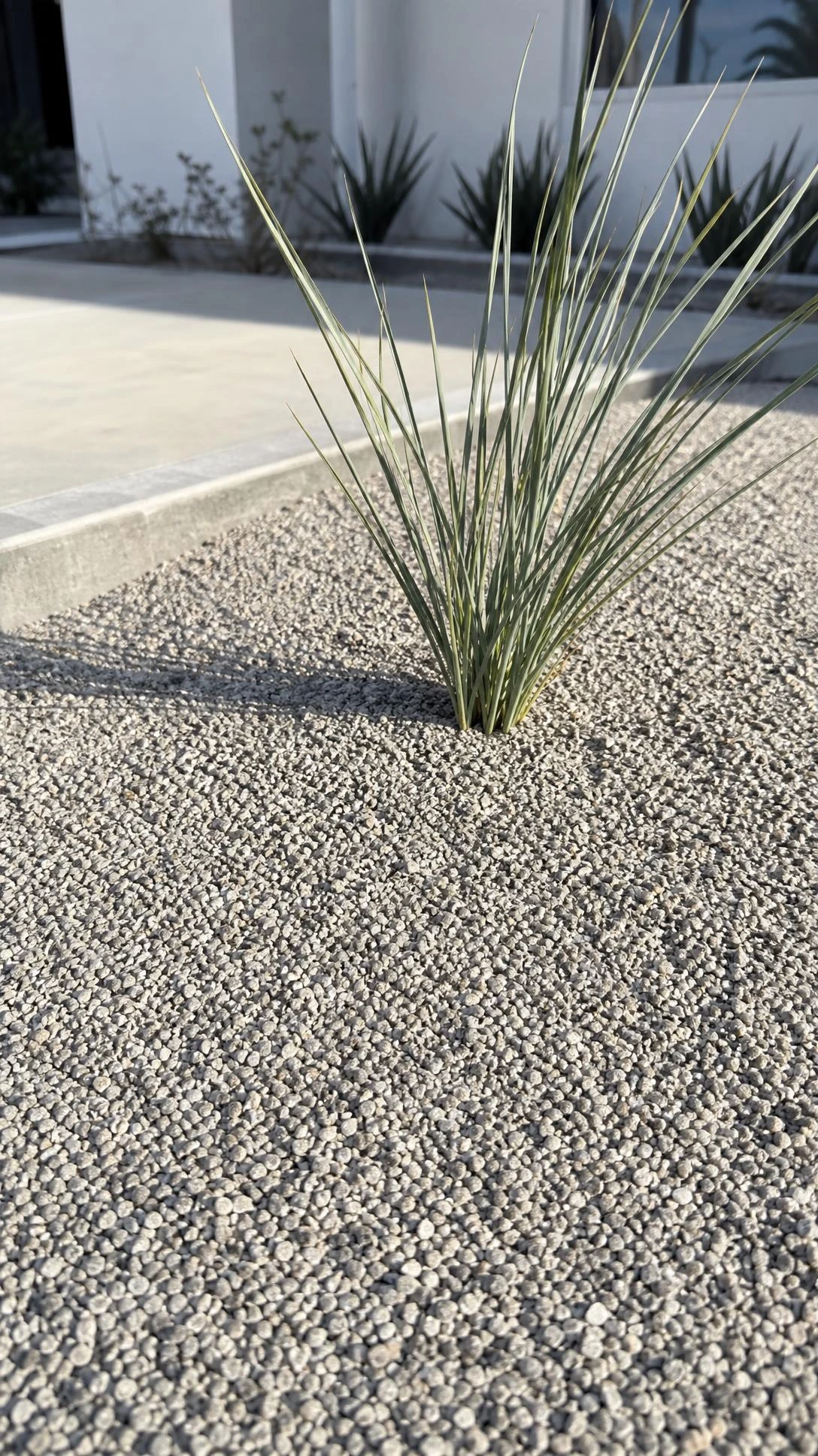
Swapping mulch for fine gravel or decomposed granite is one of those moves that sounds like a big project but is actually just a material choice.
Decomposed granite in a warm tan or pale gray gives a front yard that clean, almost Mediterranean look that photographs well and holds up better than mulch over time.
It works especially well in drier climates or in beds where the plants are already architectural, like agave, ornamental grasses, or a sculptural olive tree.
The main thing to do right is lay a good permeable weed barrier underneath first, otherwise the gravel just becomes a place where weeds feel very confident about themselves.
Decomposed granite runs around $40 to $50 per cubic yard, and for a typical front yard bed it usually takes less than one yard to cover the whole thing.
4- One Architectural Statement Plant as the Focal Point
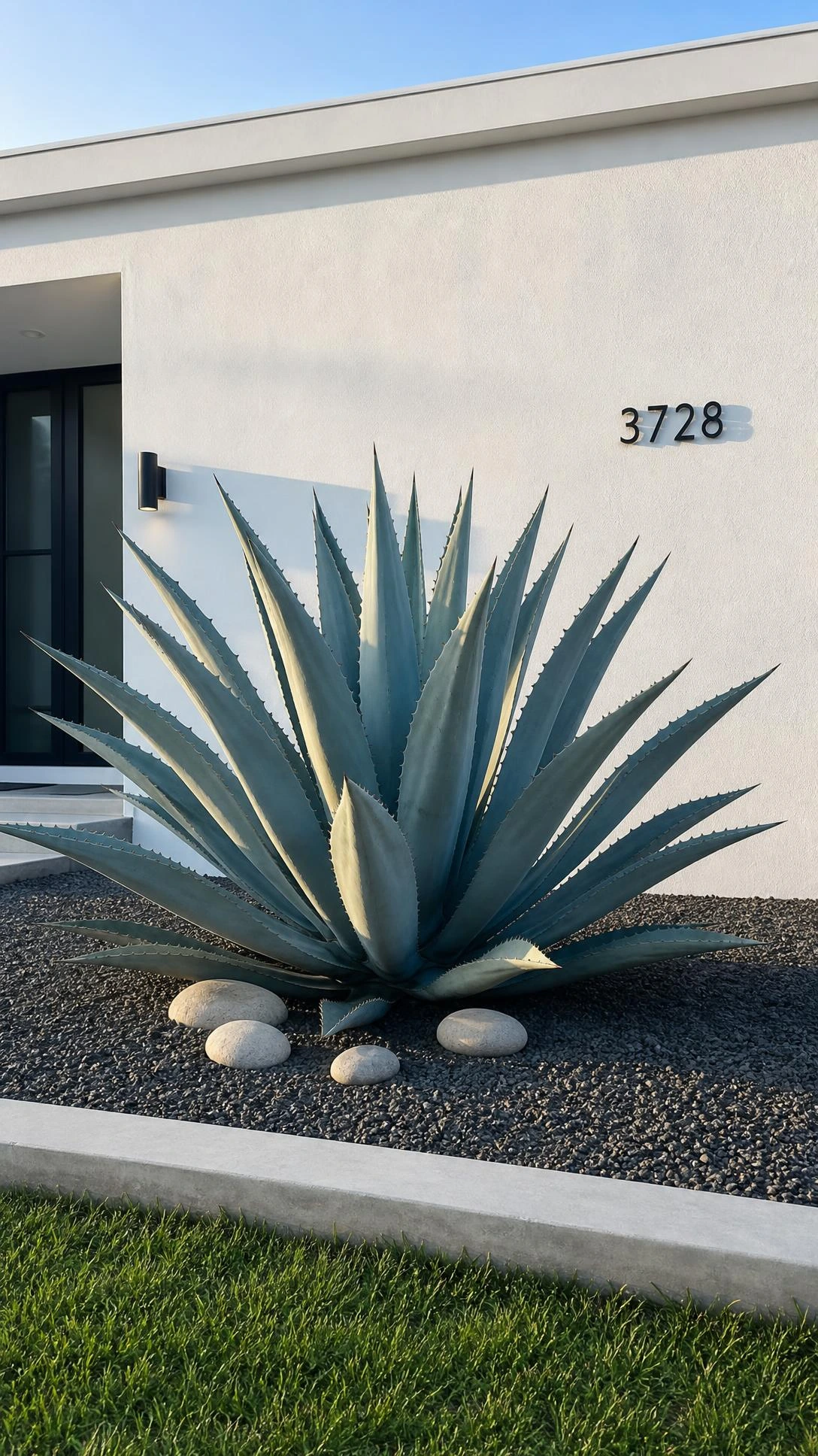
Most front yards fail visually because there is no focal point, just a collection of random plants at slightly different heights that do not relate to each other at all.
Choosing one real statement plant and building the rest of the bed around it is the simplest version of what a landscape designer actually does.
A large agave in a warm dry climate, a phormium in a coastal yard, or a single columnar cypress flanking the front path in a colder region all do this job well.
The plant does not need to be expensive, a 5-gallon agave is usually around $25 to $40 and looks substantial from the street within the first season.
I think the reason this works so well is that one strong plant with clear structure makes the whole yard look like someone thought it through.
5- Low Dwarf Hedges Along the Front Path
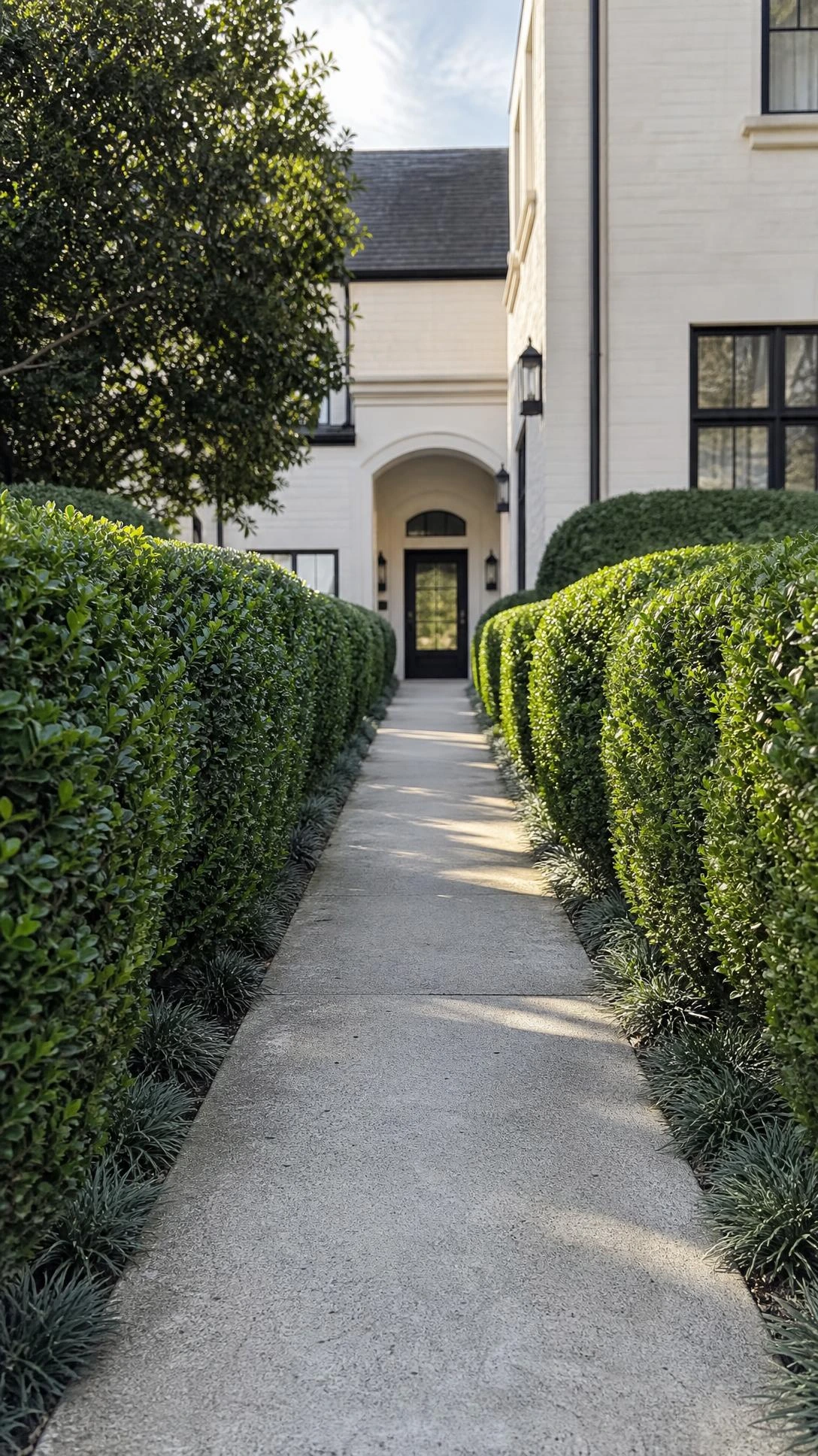
Framing a front path with a low hedge is one of those things that immediately makes a house look cared for, even if nothing else in the yard has changed.
Dwarf boxwood, rosemary clipped into a low mounding shape, or Korean hornbeam all work well and stay under about 18 inches without constant pruning.
The key is keeping them trimmed to the same height on both sides, which sounds obvious but is the part people skip and then wonder why it looks a little off.
Rosemary is probably the most forgiving option because it smells good, handles heat and drought well, and clips into a clean edge without much fuss.
A path that goes from the driveway to the front door lined with a simple low hedge reads as intentional design every single time.
6- Monochromatic Planting in One Consistent Color Family
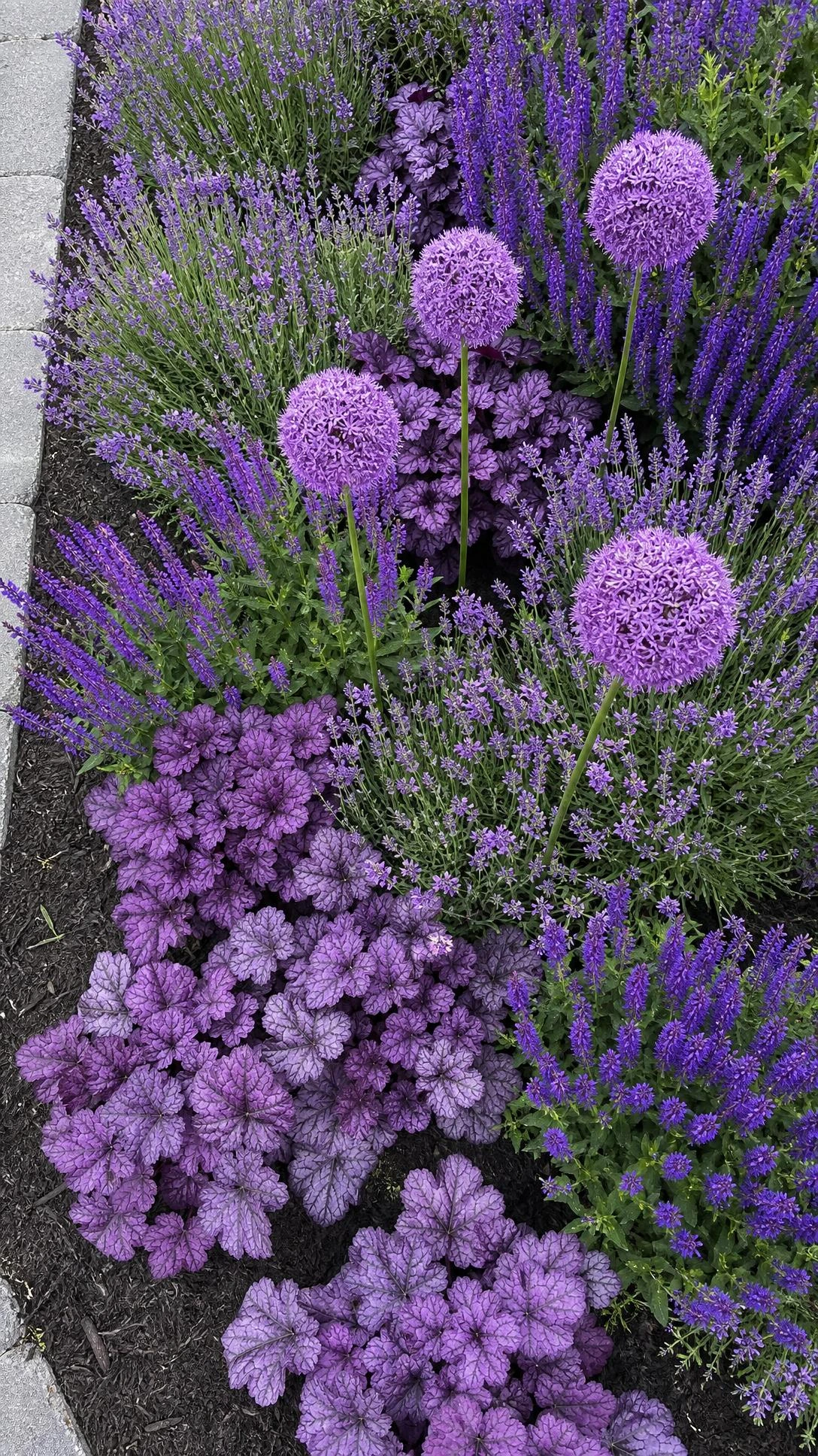
A front yard full of plants in five different colors and textures with no relationship to each other looks busy even when it is technically tidy.
Choosing one color family and planting everything within it, even just two or three varieties, creates that curated look that makes people assume a professional chose everything.
A silver and blue palette works particularly well for minimal yards, something like blue fescue grass, society garlic with its pale purple blooms, and a dwarf olive with silver-green leaves reads as genuinely composed.
The plants do not all have to be the same species, they just need to feel like they belong in the same sentence.
Most of the time a two-color planting scheme is actually easier to maintain because there are fewer decisions to make when something needs replacing.
7- Large Format Pavers for the Front Path
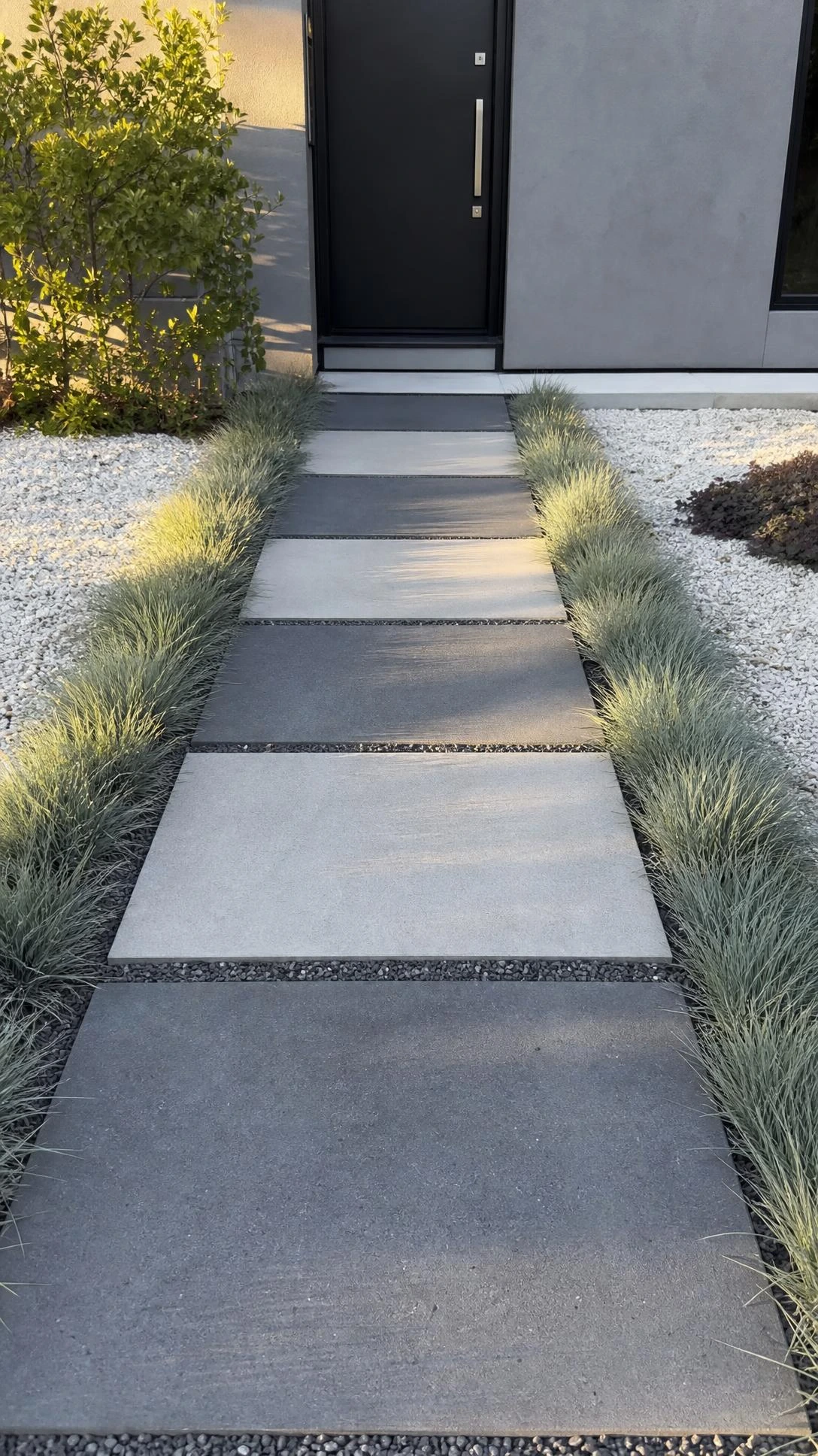
A narrow concrete path that looks like it came standard with the house is one of the things that ages a front yard more than people realize.
Replacing it or laying large format concrete or stone pavers alongside the existing path changes the whole scale of the entry and makes the house feel more deliberate.
Pavers in a 24 by 24 inch format or larger, set slightly apart with ground cover growing between the joints, is the look that gets the most attention for minimal investment in materials.
Creeping thyme between the joints is a classic choice because it handles light foot traffic, spreads on its own, and smells good when people walk across it.
The path is the first thing anyone walks up to, so it tends to carry more visual weight than the planting on either side of it.
8- Ornamental Grasses for Low Maintenance Texture
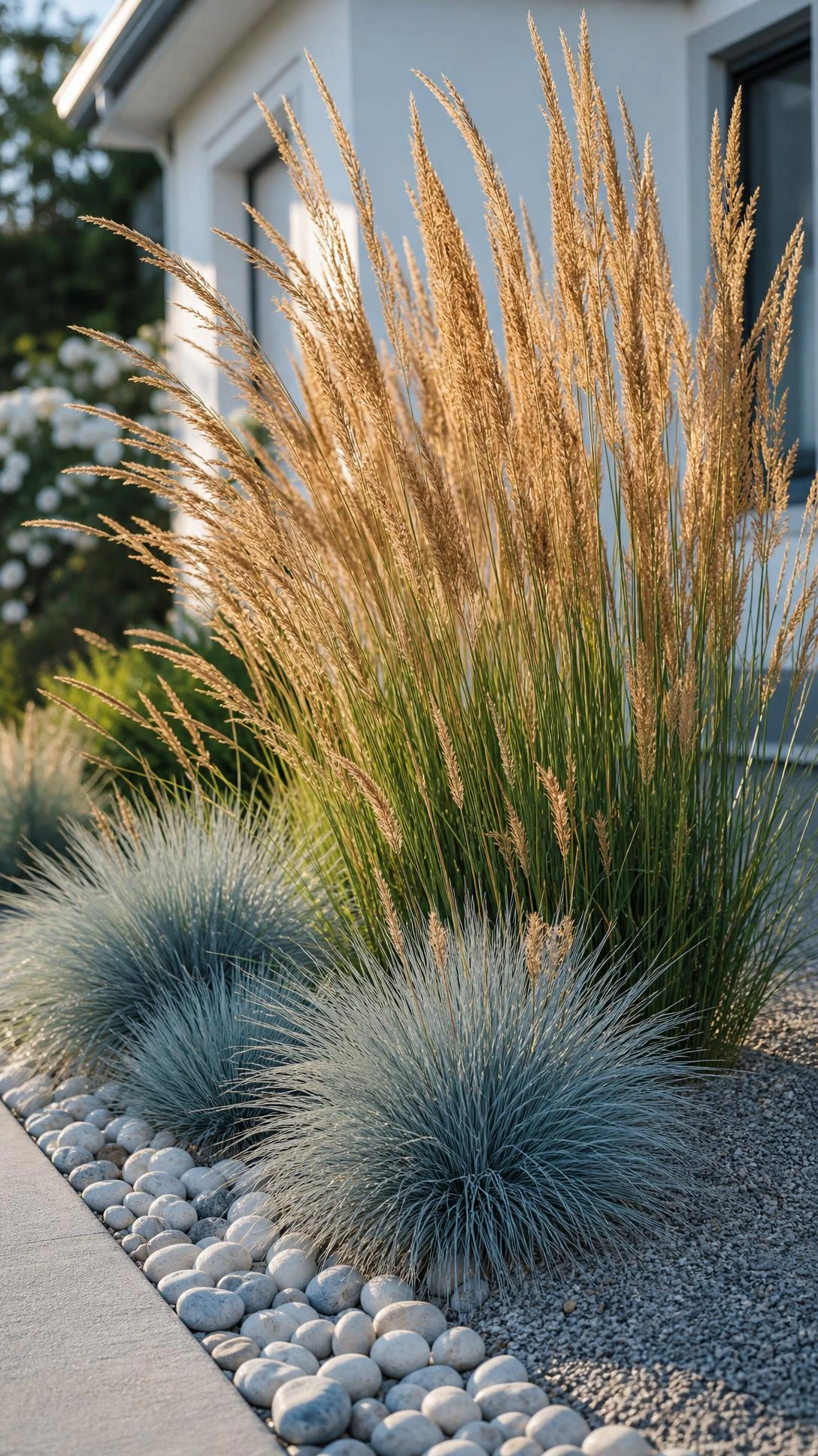
Ornamental grasses are one of those plants that look expensive and high effort but are actually some of the most hands-off things to grow in a front yard.
Blue fescue, little bluestem, or switchgrass all bring movement and texture without needing much water once they are established, and they look good through multiple seasons without intervention.
Little bluestem in particular turns a warm copper-red in fall and holds that color into winter, which means the yard looks interesting even when most other things have gone dormant.
The one thing to do is cut them back hard once a year in late winter before new growth starts, which takes about ten minutes per plant.
Planting three of the same grass in a loose cluster rather than spacing them individually is what makes them read as a design choice rather than filler.
9- A Freshly Painted Front Door in a Considered Color
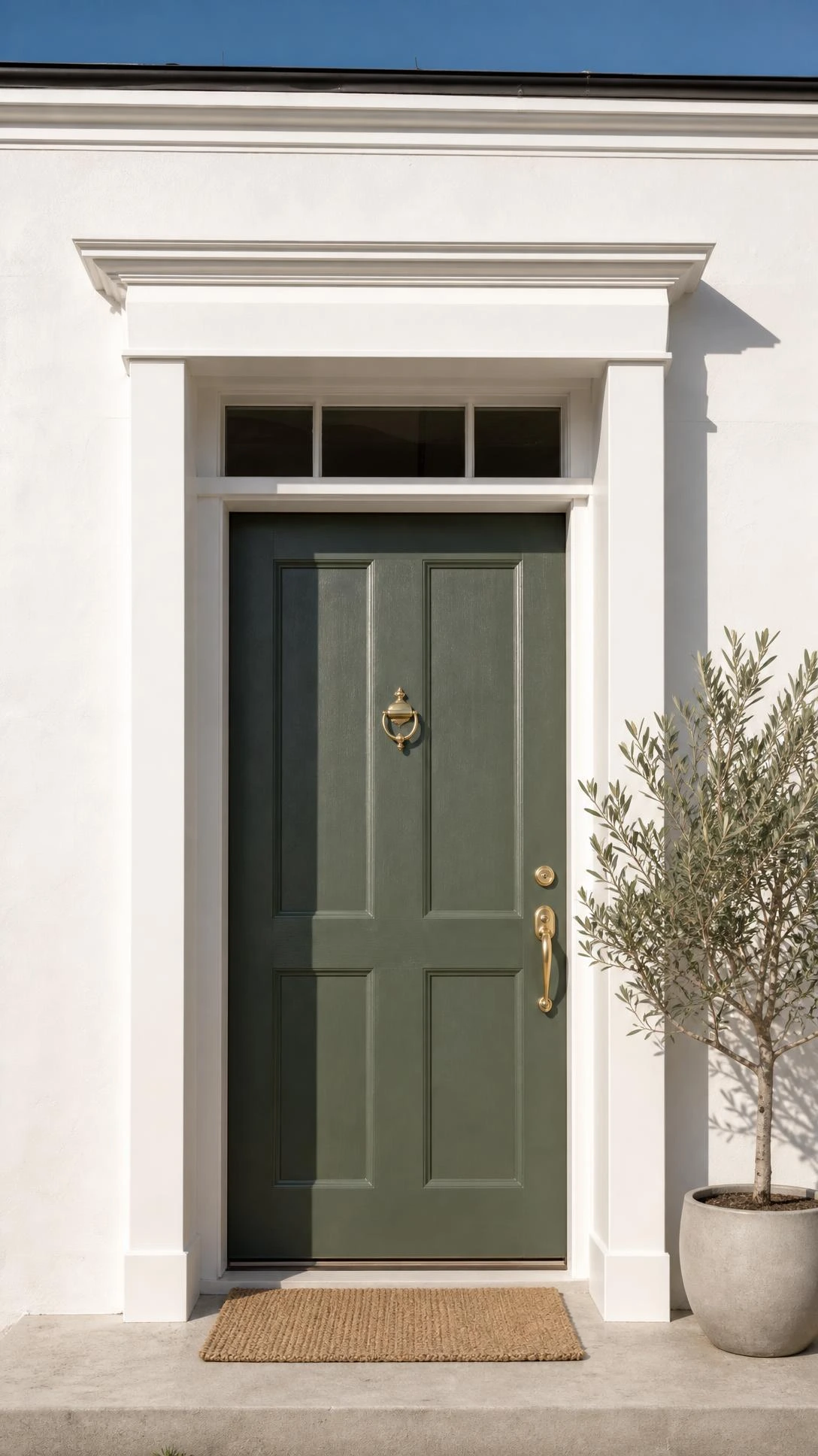
The front door is the thing everyone looks at when they approach the house, and a door that is the same color it was when the house was built in 2003 tends to just disappear.
Painting it a considered color, something that works with the exterior material and the landscaping, pulls the whole entry together in a way that plant choices alone cannot always do.
Deep green, soft black, dusty terracotta, and muted navy all tend to work well with minimal modern landscaping because they feel grounded rather than decorative.
A quart of exterior paint is usually around $20 to $30, which makes this one of the highest return changes anyone can make to a front yard for almost no money.
It is one of those updates that makes people look at the whole house differently even though technically nothing in the yard changed.
10- Consistent Simple Containers by the Front Door
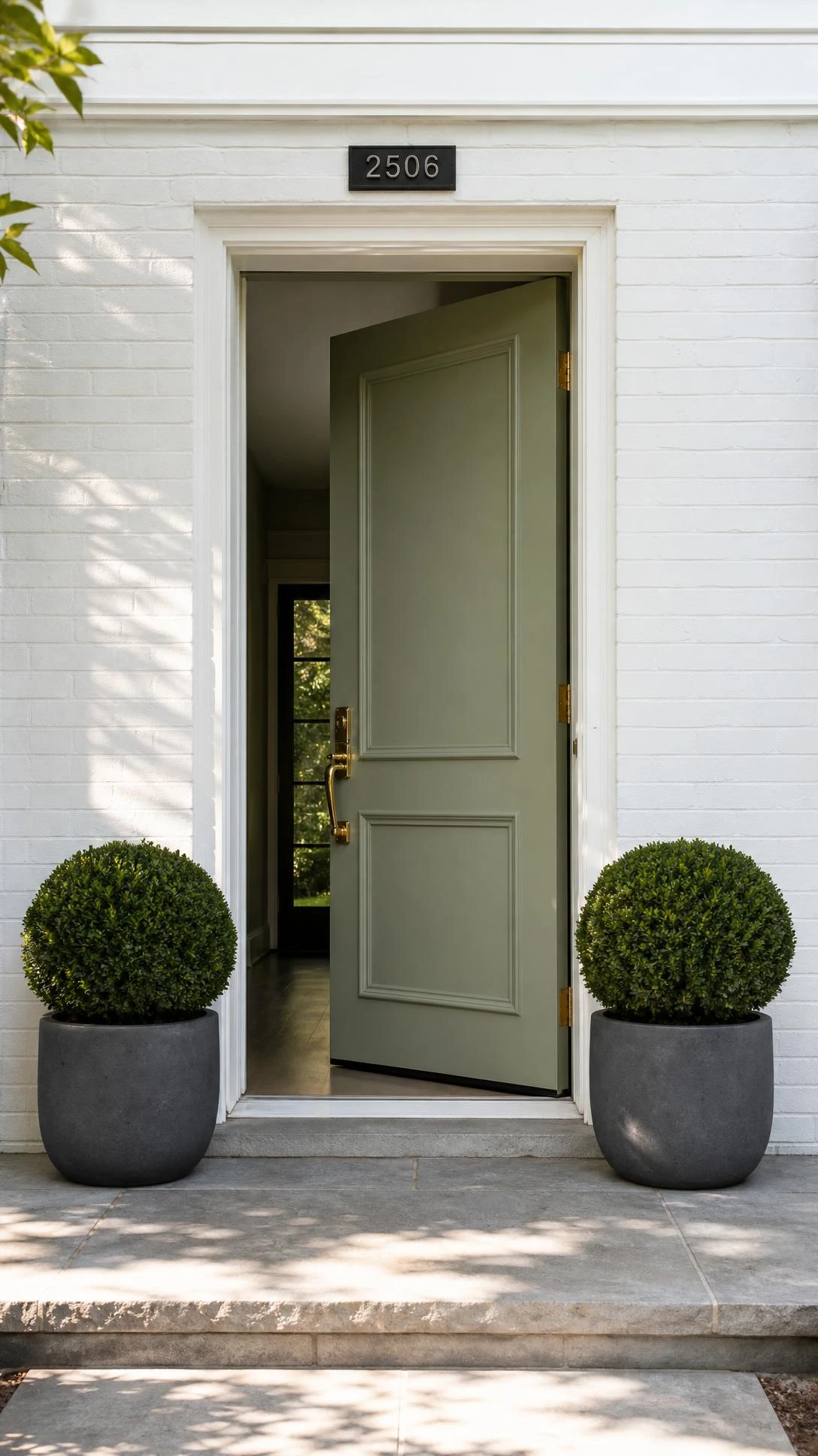
Two matching containers flanking the front door is a detail that sounds small but does a lot of work in making an entry feel finished.
The key word is matching, because two identical pots in a simple shape and a neutral color like concrete gray, matte black, or terracotta read as intentional while two mismatched pots just look like whatever was on sale.
Planting them with something structural rather than seasonal, like a single upright grass, a clipped round boxwood, or a small columnar plant, keeps the look clean and means there is no replanting every season.
Containers in the 12 to 16 inch range work well for most front entries and sit at a proportion that is visible from the street without looking overdone up close.
I think this one detail changes how a house reads more than almost anything else because it signals that someone actually made decisions about this space.
Where do you want to go next?
Explore by topic
Recently viewed
A Front Yard That Looks Looked After
None of these ideas require a landscape designer, a big weekend project, or a budget that feels unrealistic for a front yard.
Most of them come down to one or two small decisions made on purpose, a material choice, a plant with some structure, an edge that is kept clean.
The yards that get the most comments are almost never the ones with the most plants or the most color, they are the ones where it is obvious someone cared about the details.
Fresh mulch, a crisp edge, and one plant that actually means something is a better starting point than most people think it is.

Hi, I’m Alizabeth, the creator of Pretty Home Hacks. I share practical home decor ideas, easy DIY projects, organization tips, and budget-friendly ways to make your home feel more beautiful and functional. From small room updates to everyday home hacks, my goal is to share approachable ideas you can actually use in your own space.