9 Easy DIY Home Improvement Ideas That Add Real Value Without a Major Renovation
Most people assume adding value to their home means tearing something apart, hiring a contractor, and living in chaos for three weeks straight.
That assumption is what keeps a lot of really simple, genuinely impactful projects from ever getting started.
The thing is, the improvements that move the needle most are almost never the dramatic ones — they are the small, visible, well-executed ones that make a home feel cared for.
A fresh front door, cleaner landscaping, a bathroom that does not look like it was last updated when flip phones were popular — these are the details people actually notice.
None of the ideas below require a contractor, a permit, or a weekend full of regret.
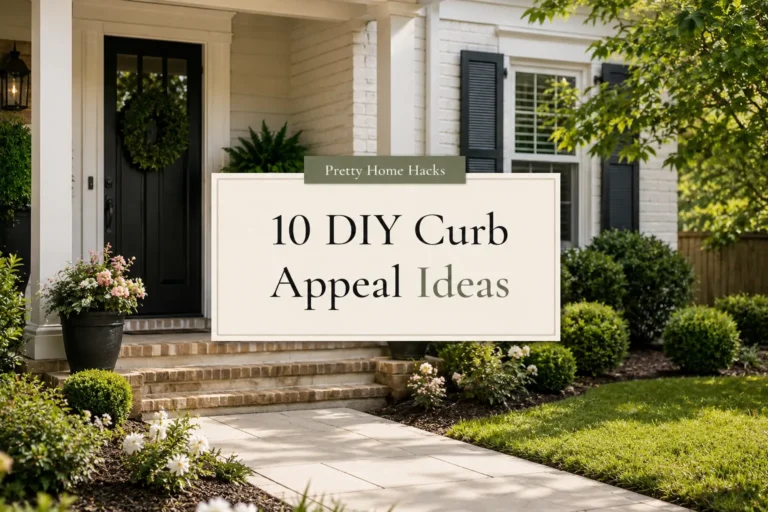
1- Paint the Front Door a Real Color
Nobody thinks about the front door until they are trying to sell the house, and then suddenly it is the only thing they can see.
A fresh coat of exterior paint is one of the highest-return DIY projects a homeowner can do, and it costs somewhere between $30 and $80 per gallon for a quality acrylic or latex exterior paint.
The color does not have to be safe and forgettable — a deep navy, a warm black, or even a dusty red can make the whole front of a house look intentional instead of tired.
Primer is worth buying separately, especially on older doors, and it usually runs around $20 to $50 per gallon.
The whole project takes an afternoon once the door is sanded, primed, and ready to go.
2- Refinish the Kitchen Cabinets
Replacing kitchen cabinets is expensive and completely unnecessary most of the time, because the bones of the cabinets are usually fine — it is just the finish that has seen better days.
Refinishing is the most popular partial kitchen upgrade homeowners make, according to the Houzz annual Kitchen Trends Report, and it can cost as little as $200 in paint and supplies if someone does it themselves.
The prep work is the part most people skip, and it is the part that determines whether the result looks polished or like a DIY project gone sideways.
Cleaning the cabinet surfaces, sanding them lightly, and applying a good bonding primer before the topcoat makes a significant difference in how long it lasts.
I think this one single project changes how the entire kitchen feels more than almost anything else at this price point.
3- Swap Out Cabinet and Drawer Hardware
Old hardware is one of those things people stop seeing after a while, but a buyer walking in for the first time will absolutely clock it.
Replacing builder-grade knobs and pulls with something with actual weight and finish to it takes maybe two hours for an average-sized kitchen.
Brushed brass, matte black, and unlacquered brass are all landing well right now without feeling too trend-dependent.
The only thing worth measuring carefully is the center-to-center distance on the existing pulls so the new ones drop right in without patching holes.
It is not a huge project but it reads as a much bigger update than the effort involved.
4- Add Landscaping That Actually Does Something
Curb appeal is one of those things buyers decide before they ever walk through the door, sometimes before they even get out of the car.
A Virginia Tech study found that thoughtful landscaping can add roughly 5% to 12% to a home’s perceived value, which is a meaningful return on a bag of mulch and a few hours on a Saturday.
The goal is not a botanical garden — it is just making the yard look like someone lives there and pays attention.
Trimming overgrown hedges, edging the lawn, pulling weeds, and adding a fresh layer of dark mulch to the beds does most of the work.
Path lighting is worth adding too, and sets of simple solar garden lights cost just a few dollars per lamp.
5- Seal the Air Leaks Around Windows and Doors
This one sounds like a purely practical fix, which it is, but it also has a real effect on home value because energy efficiency is something buyers ask about now more than they used to.
Caulking gaps around windows and doors is one of the easiest sealing projects a homeowner can do, and according to EnergyStar, it can cut utility costs in a meaningful way depending on how drafty the house is.
A tube of paintable caulk costs a few dollars, and the process is mostly just running a bead along gaps and smoothing it with a finger.
Weatherstripping on exterior doors is worth checking at the same time — it compresses and fails over time and most people never replace it until it is obviously gone.
The upfront cost is almost nothing and the combination of lower bills and better insulation makes the house feel tighter and more considered.
6- Update Bathroom Fixtures and Mirrors
Bathrooms are the room buyers weigh most heavily, and the gap between a bathroom that feels dated and one that feels updated is usually just a few fixtures.
Swapping out a builder-grade mirror for one with a frame, replacing a vanity light bar with something that has actual style, and updating the faucet can shift the entire feel of the room without touching a single tile.
Most faucet swaps are genuinely DIY-friendly as long as the shut-off valves under the sink are working and someone is comfortable with basic plumbing.
Vanity lighting matters more than people expect — a warm-toned light bar does a lot of work in a small space.
None of these are dramatic changes individually, but together they make the bathroom read as intentionally updated rather than left behind.
7- Install a Smart Thermostat
Smart thermostats show up on a lot of buyer wishlists now, and they are one of the easier smart home upgrades to install without any technical background.
A Nest thermostat or similar device lets someone control their home’s heating and cooling from a phone, which is a practical feature that also reads well during a showing.
Most installs take under an hour as long as the existing wiring includes a common wire — which it usually does in homes built after the mid-nineties, though older homes occasionally need a small adapter.
The energy savings over time are a real selling point, and most smart thermostats will show usage data that makes the efficiency case clearly.
It is one of those upgrades that feels slightly more modern than its price tag suggests.
8- Declutter and Deep Clean the Whole House
Decluttering does not feel like a home improvement project but it absolutely functions as one, especially when a home is being prepared to sell or show.
A professionally cleaned four-bedroom home runs somewhere between $200 and $225 on average according to HomeAdvisor, which is a small number for the return it provides in how a space reads.
The specific areas most people underestimate are the baseboards, the insides of windows, the light switches, and that stretch of wall near the kitchen that has gathered a mysterious film over the years.
Mentally prepare for whatever is living along the bottom of the walls in the hallway — that is always the reality check moment.
A clean, uncluttered space photographs better, shows better, and gives buyers the mental space to picture themselves in it rather than just cataloguing someone else’s stuff.
9- Patch and Paint Interior Walls
Fresh interior paint is one of the highest-ROI projects in the entire list of easy DIY home improvement ideas, and most rooms go faster than people expect once they get the first wall done.
The patching part trips people up sometimes, especially on ceilings where small holes or cracks need a cleaner finish than a basic skim coat provides.
FibaFuse mesh tape combined with two or three extra coats of joint compound gets a much better result on ceiling patches than standard paper tape alone — this is a Reddit crowd favourite for good reason.
Neutral wall colors still read best for resale: warm whites, soft greiges, and pale taupes give buyers a blank slate without feeling clinical.
The goal is just to make the walls feel like they belong to a home that has been maintained, not ignored.
These Projects Add Up to More Than Their Parts
None of these ideas require a major renovation budget or a contractor on speed dial.
What they require is a Saturday, some basic supplies, and a realistic look at which parts of the house are doing the most damage to how it reads.
Most of the value in a well-maintained home comes from the accumulation of small, visible improvements that signal someone has been paying attention all along.
Pick the two or three that make the most sense for the space right now, and the rest will follow naturally from there.

Hi, I’m Alizabeth, the creator of Pretty Home Hacks. I share practical home decor ideas, easy DIY projects, organization tips, and budget-friendly ways to make your home feel more beautiful and functional. From small room updates to everyday home hacks, my goal is to share approachable ideas you can actually use in your own space.