11 Landscape Ideas for the Side of Your House That Make Every Foot Useful
The side of a house is usually where hoses, bins, and patchy grass quietly collect without anyone making a real plan.
Mine always looked fine from the driveway, but walking through it meant stepping around mud and one shrub that grabbed every sleeve.
Most people treat this narrow strip like leftover yard, especially when it stays shaded or needs a clear route to the gate.
Good landscape ideas for the side of a house start with how the space drains and how people actually move through it.
Once those two things work, a path and a few well-placed plants can make the whole area feel intentional.
1- Stepping Stone Side Yard Path
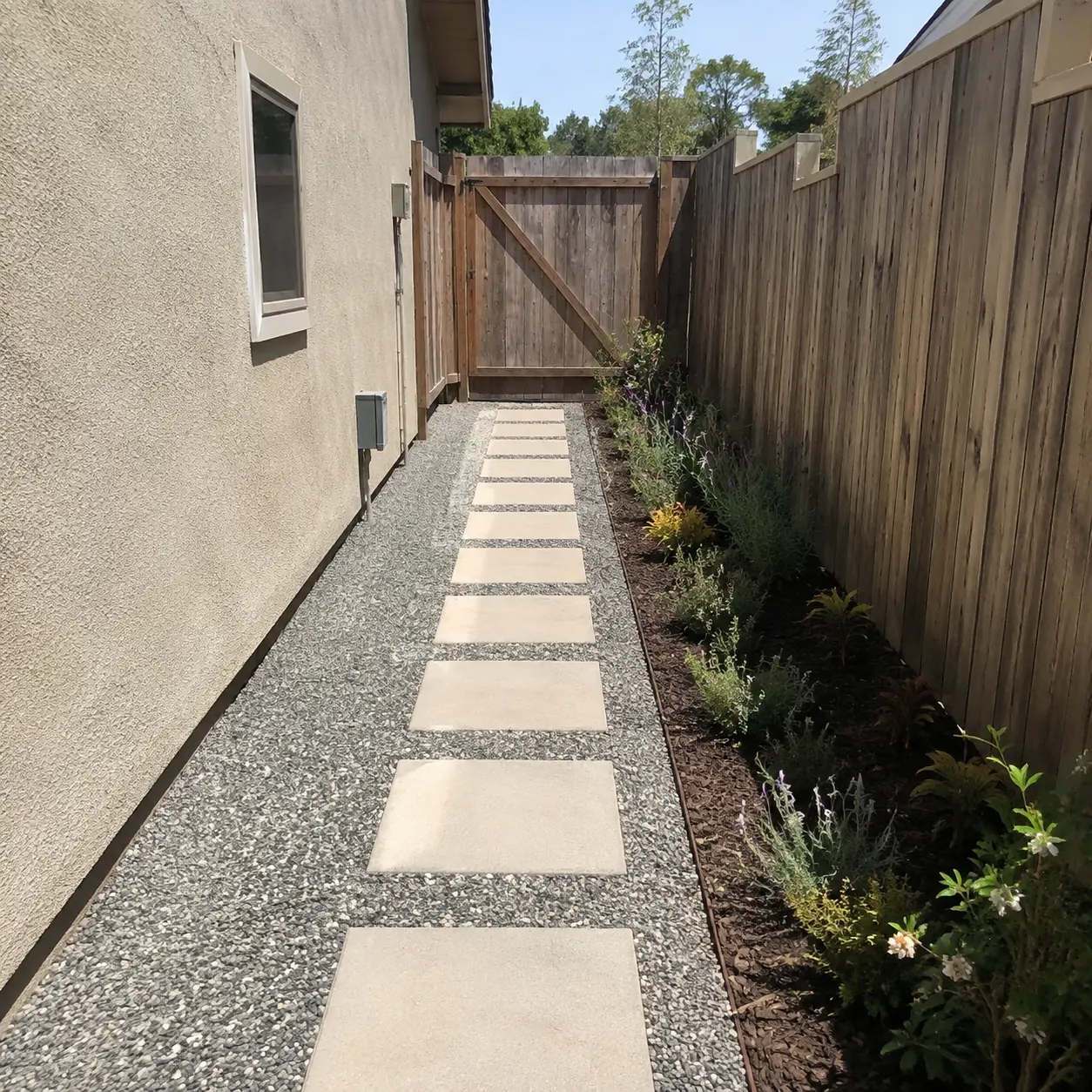
A simple path fixes the awkward feeling of walking through grass that never quite recovers from regular foot traffic.
I like 18 to 24 inch square concrete pavers because they feel steady underfoot and still leave room for planting along one edge.
Set the stones roughly two inches apart over compacted gravel and leveling sand so they do not rock after the first heavy rain.
Low groundcover between widely spaced stones looks good, but plain gravel is easier near a gate that gets used every day.
This works best when the path follows the route people already take instead of forcing a decorative curve into a narrow passage.
2- Gravel Strip Along the Foundation
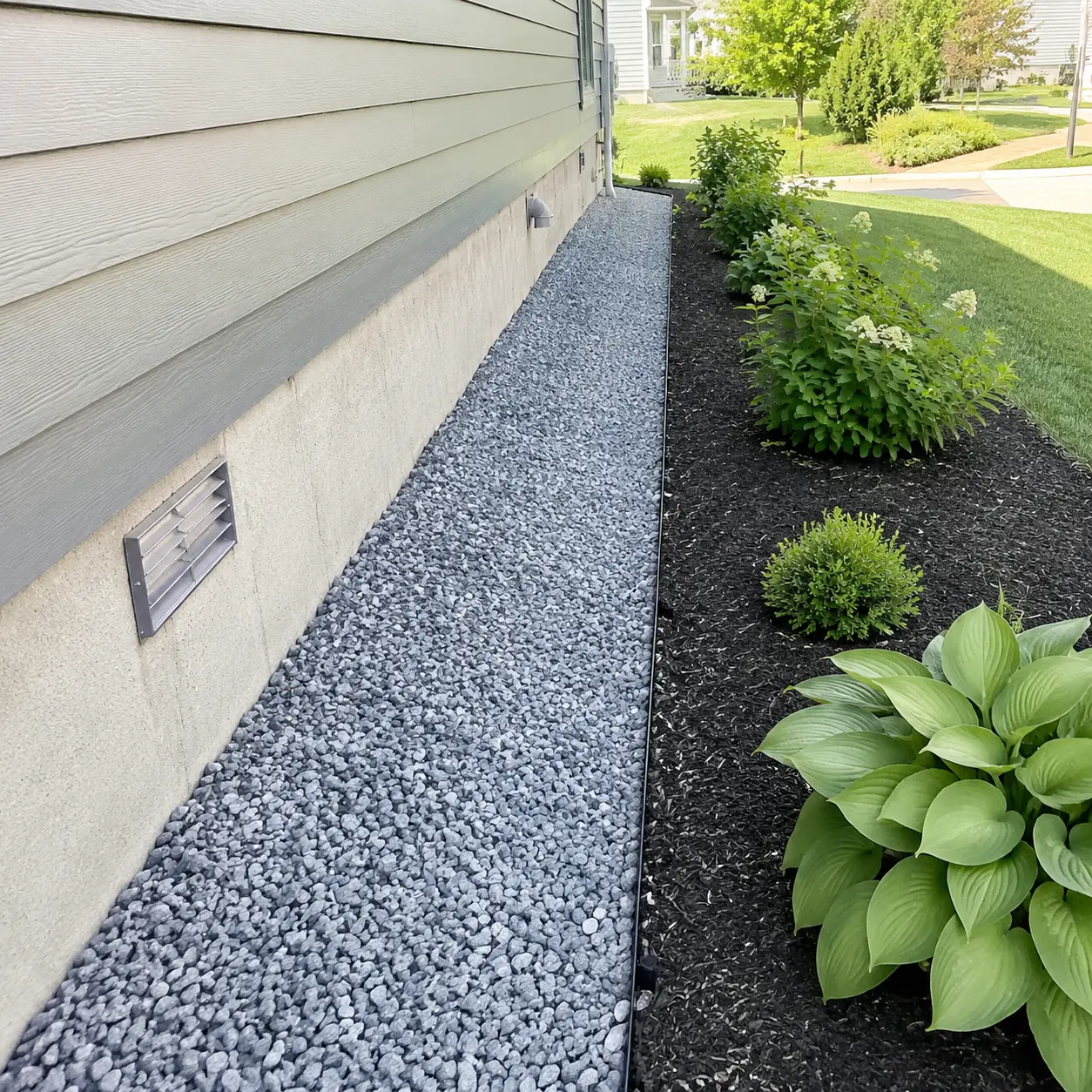
Soil and mulch pressed against siding can hold moisture where nobody wants it.
A 12 to 18 inch strip of washed gravel creates a cleaner edge and keeps plants from crowding vents, brickwork, or exterior cladding.
I use metal edging between the gravel and planting bed because the line stays neat without a thick plastic border showing.
The ground should still slope away from the house, and gravel should never cover drainage openings or rise above the foundation line.
It is a quiet detail, but it makes the side yard look maintained even before anything blooms.
3- Shade Loving Plants Beside the House
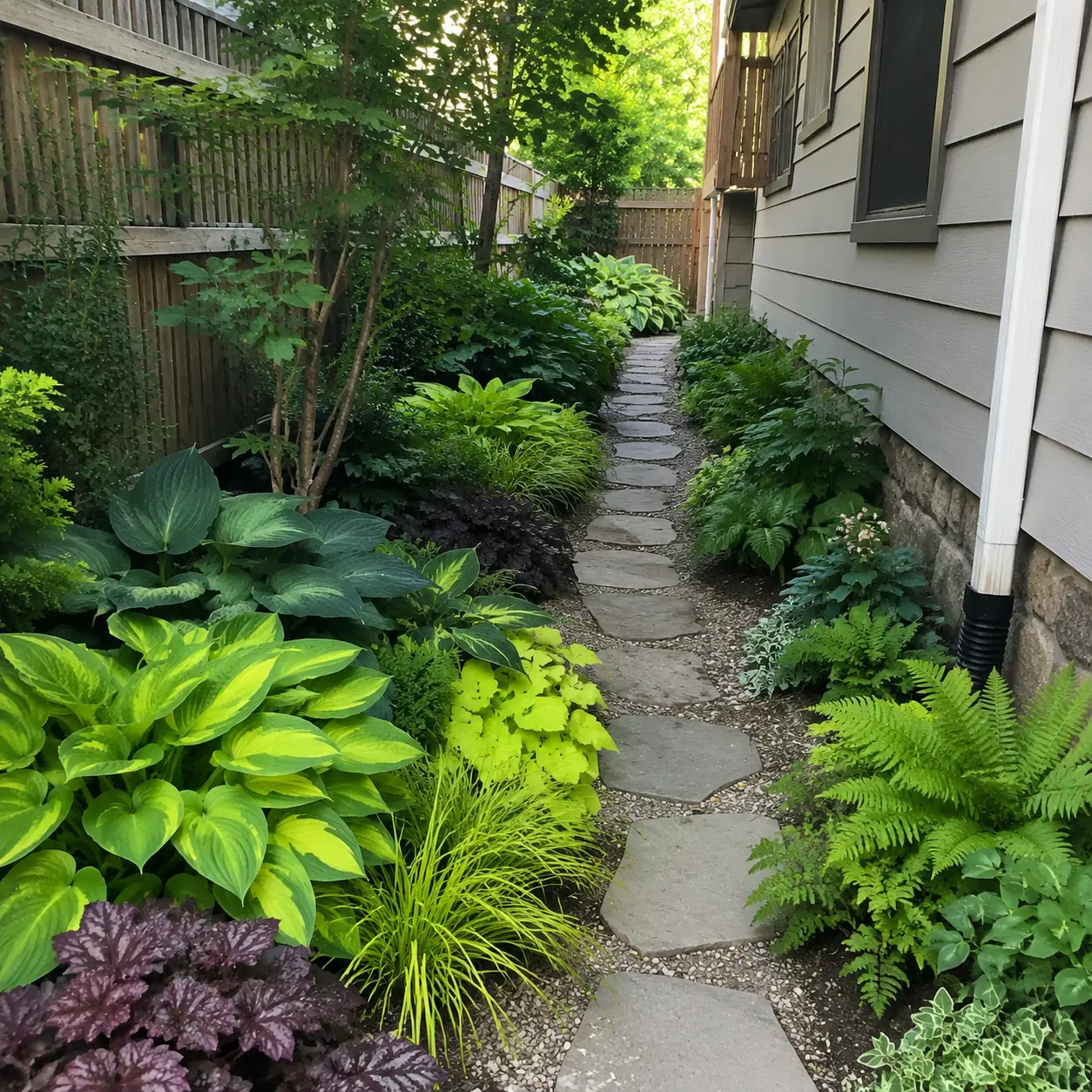
Side yards often receive bright light without enough direct sun for the plants people first imagine using.
Hostas, heuchera, Japanese forest grass, and compact ferns handle partial shade while giving the bed different leaf shapes and colors.
A group of three one-gallon plants usually looks more settled than one lonely plant from every variety at the nursery.
I check the mature width on the label because a two-foot path gets uncomfortable fast when leaves eventually spread another 18 inches.
Choose plants for the actual light and moisture there, and the narrow garden stops feeling like a problem area.
4- Narrow Trellis With Climbing Plants
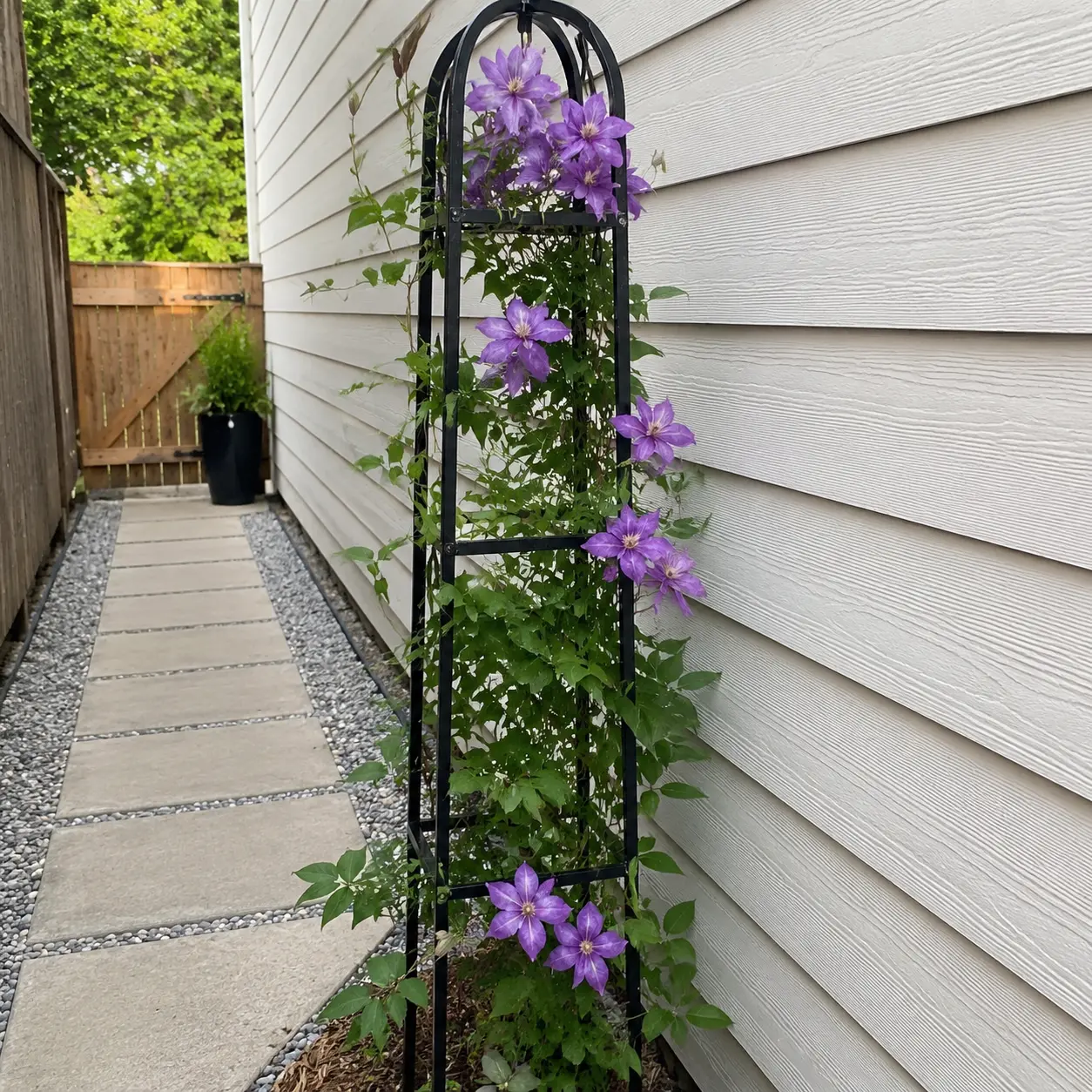
A fence or blank side wall can carry greenery without taking much usable width from the ground.
A slim metal trellis with clematis or star jasmine adds height and softens a long corridor-like view.
Leave at least three inches between the trellis and wall for airflow, then confirm the vine is suitable for the local climate.
Freestanding supports are safer beside siding because aggressive climbers can work into joints, gutters, and small gaps over time.
I prefer one strong vertical feature near the middle rather than covering every surface and making maintenance difficult.
5- Dry Creek Bed for Side Yard Drainage
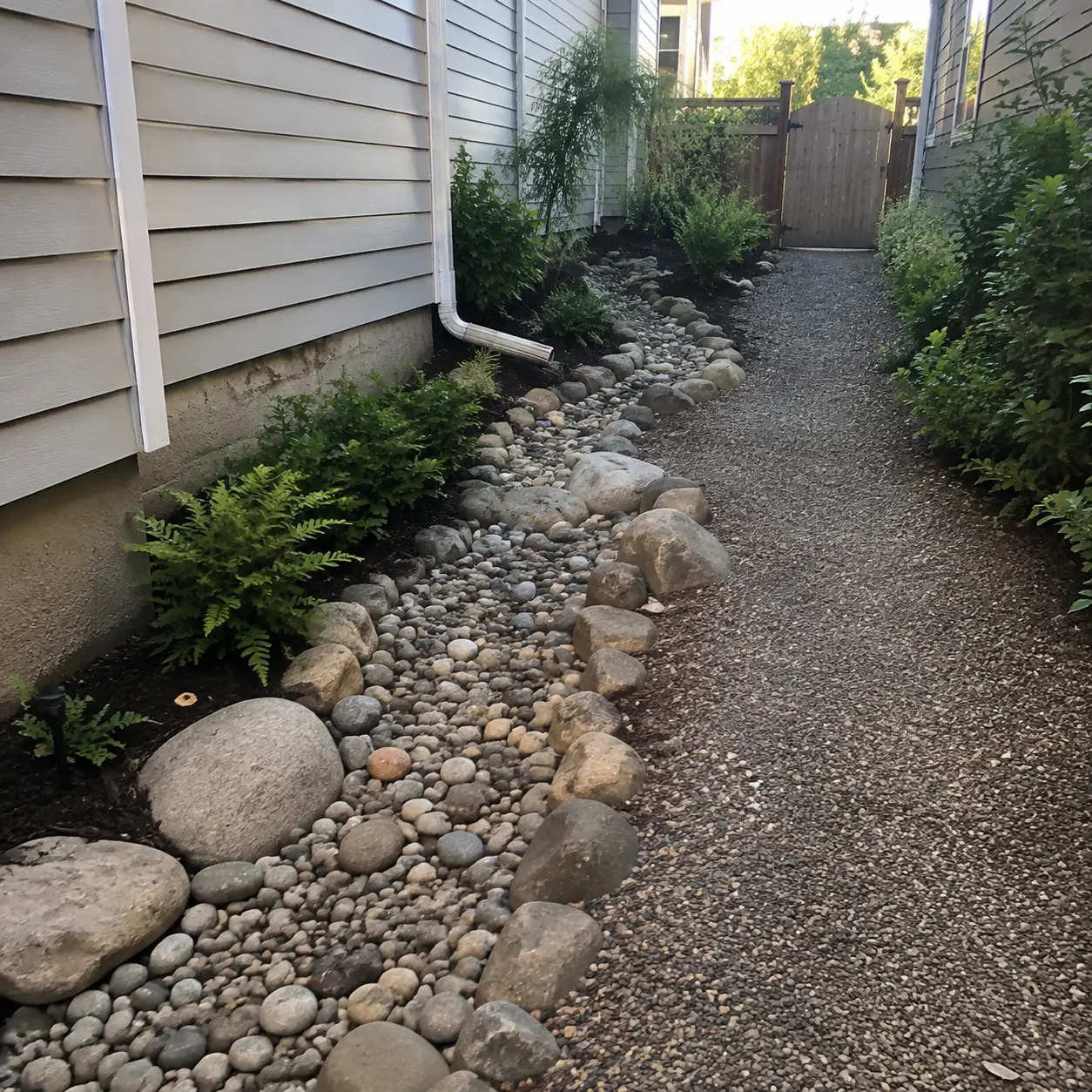
A low side yard can turn into a muddy channel whenever roof runoff and compacted soil meet.
A shallow dry creek bed can guide surface water while looking like part of the landscape instead of an exposed drainage ditch.
Use a mix of two to six inch rounded stone over the correctly prepared channel, with larger rocks placed where the direction changes.
The outlet needs a legal and safe destination, so standing water or foundation problems should be checked by a drainage professional first.
When the grading is right, the stone bed gives rain somewhere sensible to go and keeps shoes much cleaner.
6- Slim Evergreen Privacy Screen
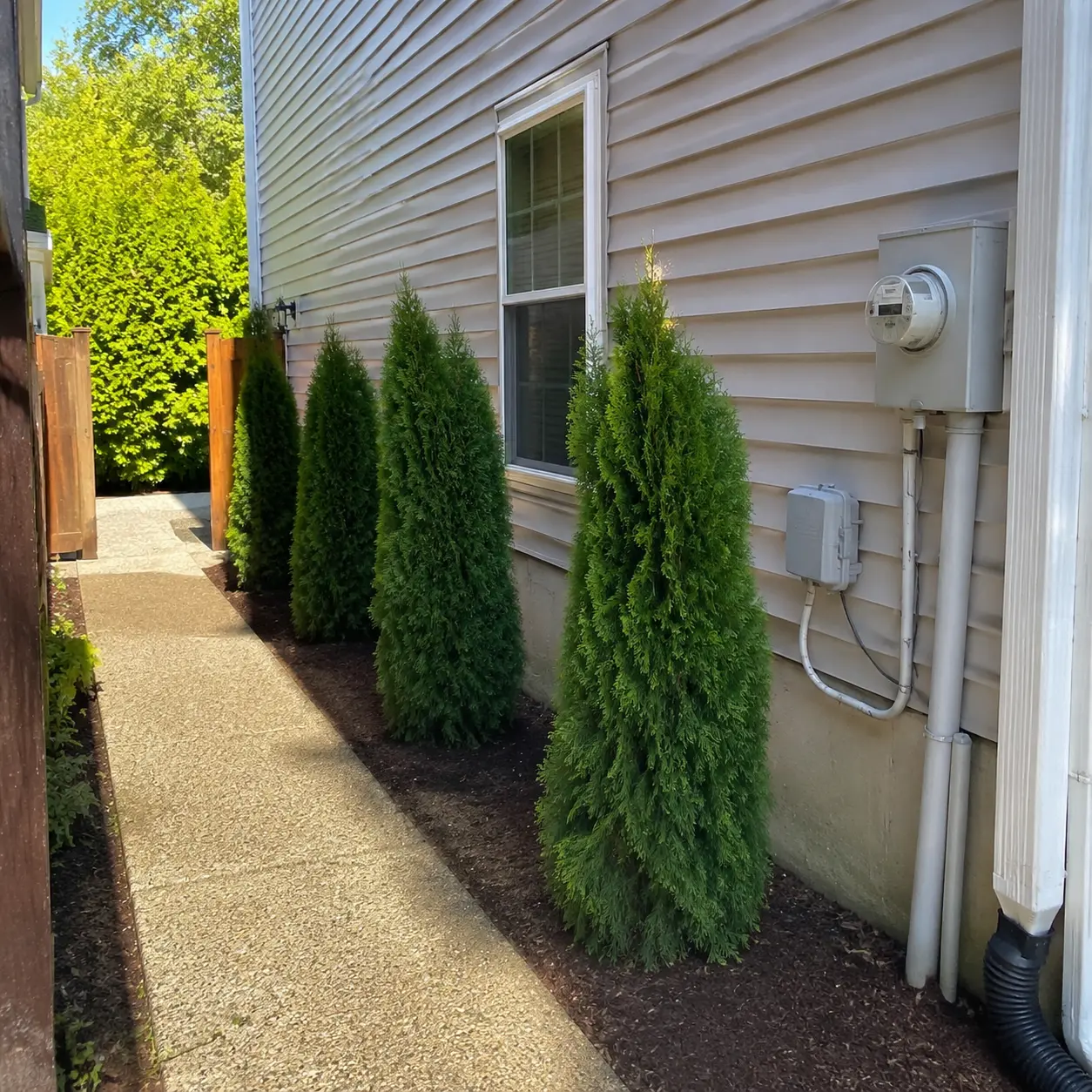
Windows facing a neighbor can make a side yard feel exposed even when the gap between houses is small.
Narrow upright evergreens such as compact arborvitae or columnar yew can screen the view without growing across the entire path.
Choose a variety by its mature width, not the size in the nursery pot, and keep it clear of meters, vents, and service access.
Spacing plants too tightly gives instant coverage but creates thinning and airflow problems a few seasons later.
A short screen placed directly across the sightline often works better than planting a hedge from one end of the property to the other.
7- Mulched Side Garden With Curved Edging
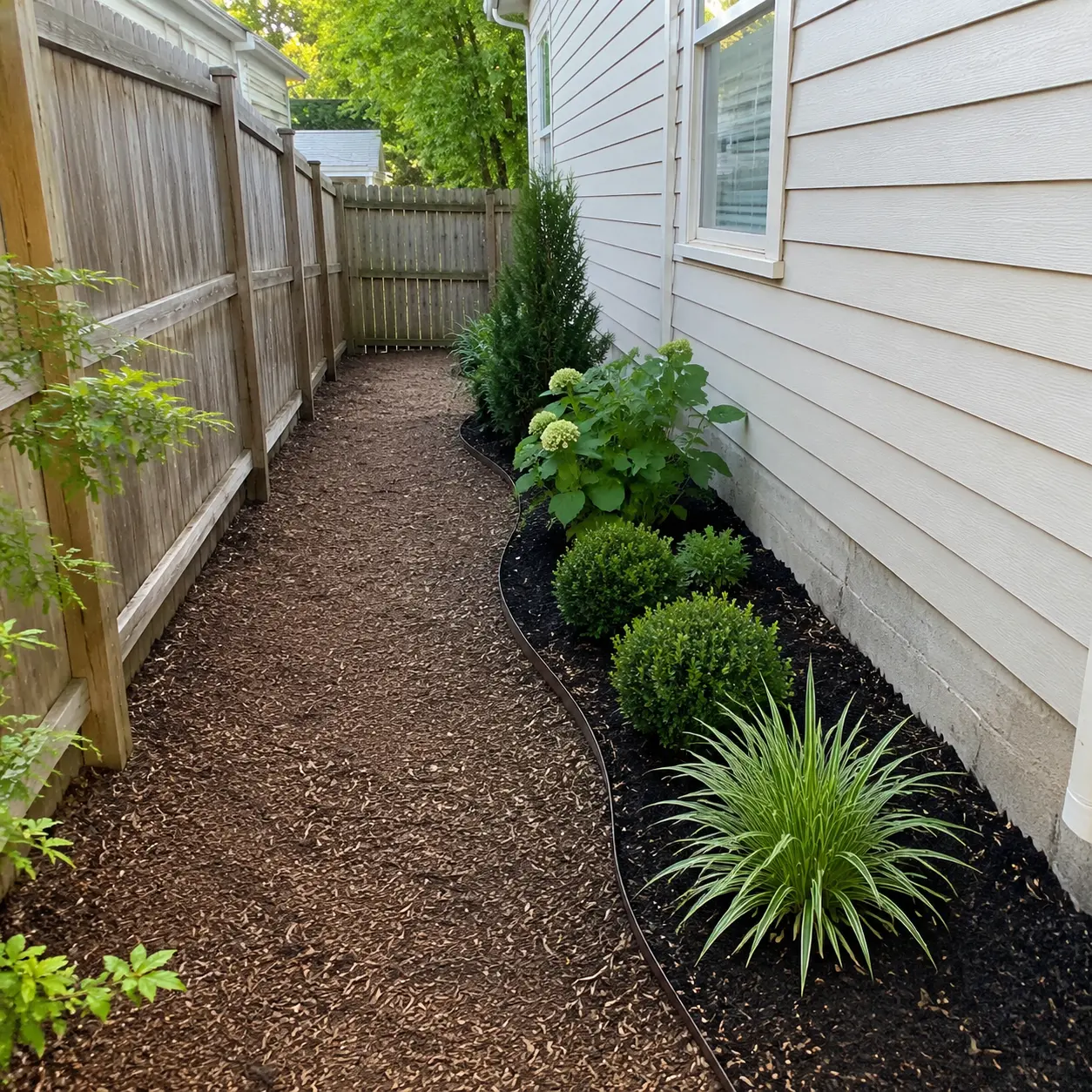
A narrow planting bed can still feel relaxed when the edge moves gently instead of following one stiff straight line.
A two to three inch layer of shredded bark helps slow weeds and keeps soil from splashing onto the siding during rain.
I keep mulch a few inches away from plant stems because piling it against the crown holds too much moisture.
Use one broad curve near the entrance rather than several tiny waves, which tend to make a small area look fussy.
The finished bed should leave enough path width for a wheelbarrow, trash bin, or anything else that regularly passes through.
8- Side Yard Lighting Along the Path
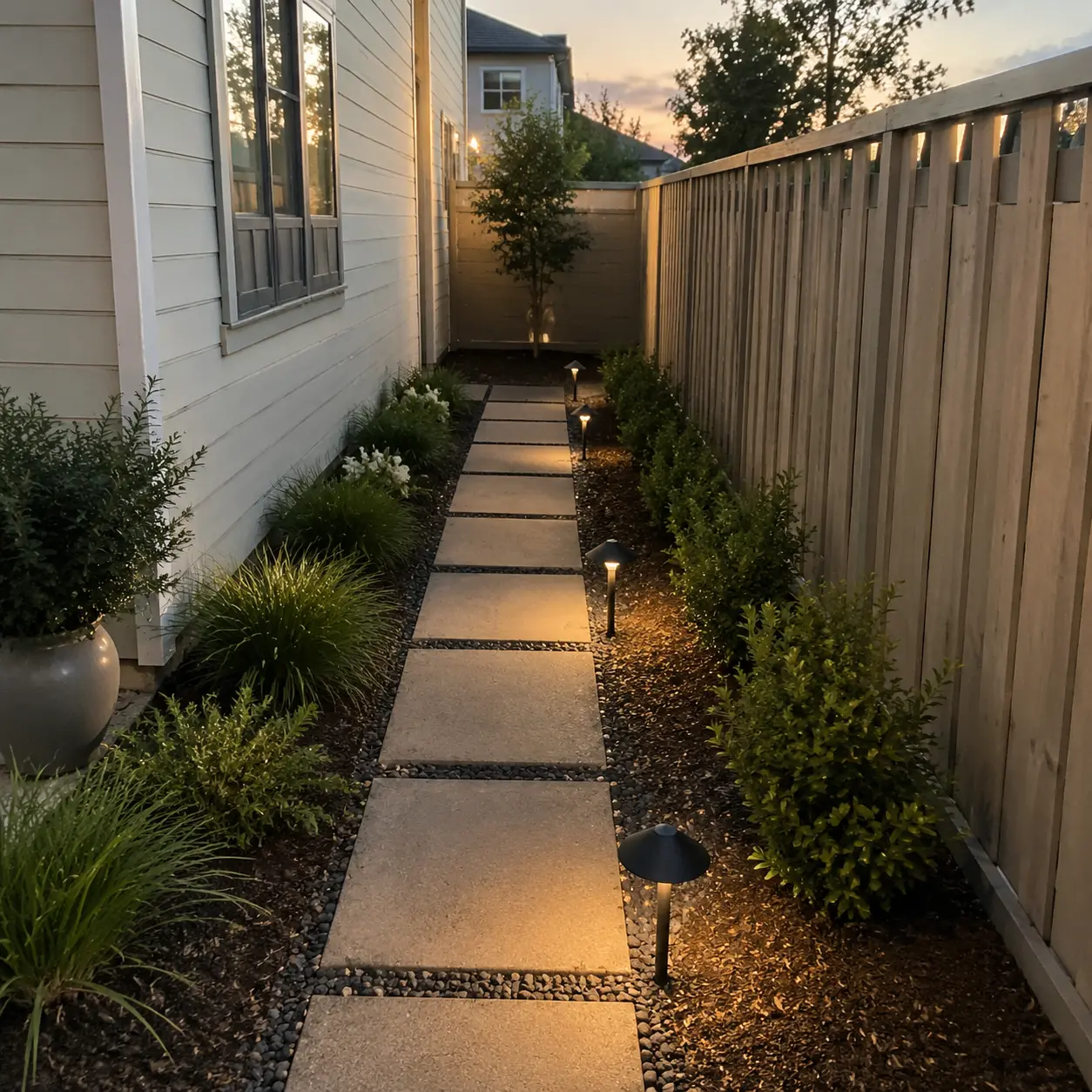
The route beside a house can become surprisingly dark once fences and rooflines block nearby porch lights.
Low-voltage path lights spaced about six to eight feet apart usually provide guidance without turning the passage into a runway.
Warm 2700K light feels comfortable near planting and avoids the harsh blue cast that makes wet paving look cold.
Place fixtures just outside the walking line so bags, bins, and garden hoses do not knock them sideways.
I would rather use four well-positioned lights than ten weak ones scattered wherever the cable happened to reach.
9- Hidden Trash Bin Screen
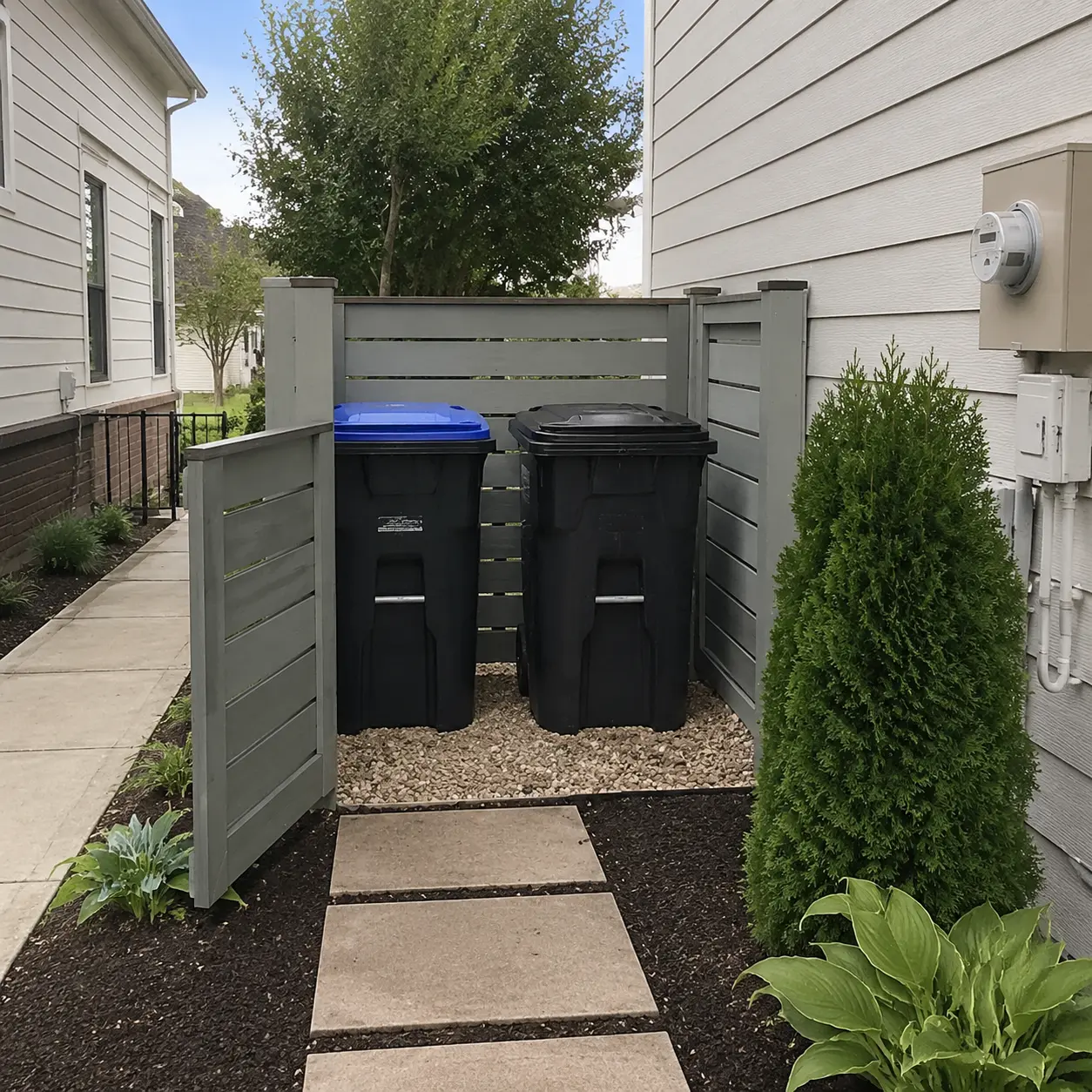
Trash and recycling bins often need to live beside the house, but they do not need to be the first thing visible from the street.
A simple slatted screen around four feet high hides the containers while allowing air to move around them.
Leave at least 36 inches for the access opening and test the turning space with a full bin before fixing posts permanently.
Painted wood or powder-coated metal usually looks cleaner here than a bulky enclosure with a heavy lid.
A small screen paired with one evergreen plant can make the utility area feel connected to the rest of the yard.
10- Compact Herb Garden Near the Kitchen
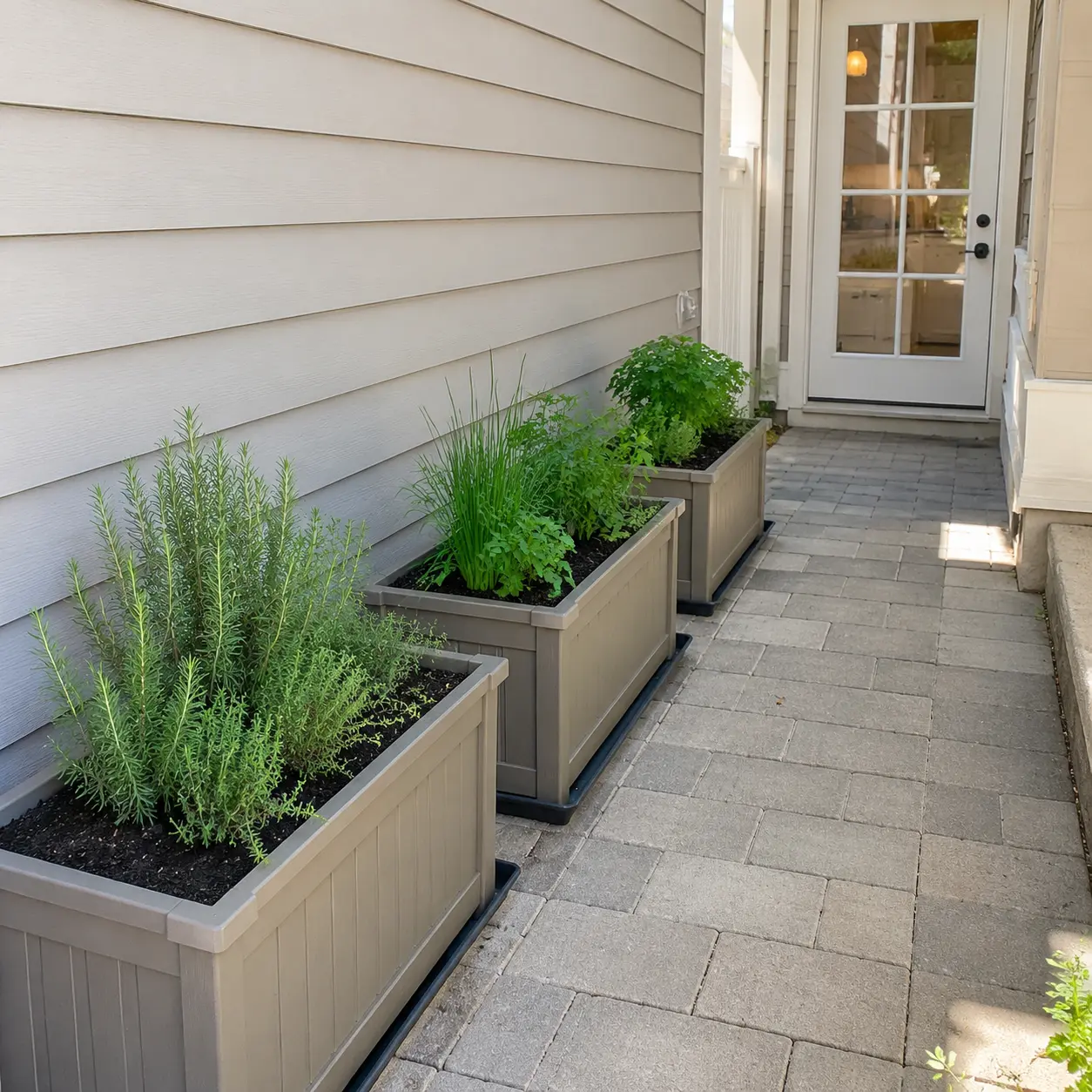
A sunny side passage near the kitchen is a practical place for herbs that get ignored when they sit at the back of the yard.
Three slim planters can hold rosemary, thyme, chives, and parsley without narrowing the walking path too much.
Most culinary herbs need at least six hours of sun, while parsley and chives cope better when the area gets some afternoon shade.
Use containers with drainage holes and keep them on level pavers so water does not stain siding or wash soil across the path.
I find herbs get used far more often when they are visible from the door instead of planted somewhere technically perfect but inconvenient.
11- Small Bench at the Side Garden Entrance
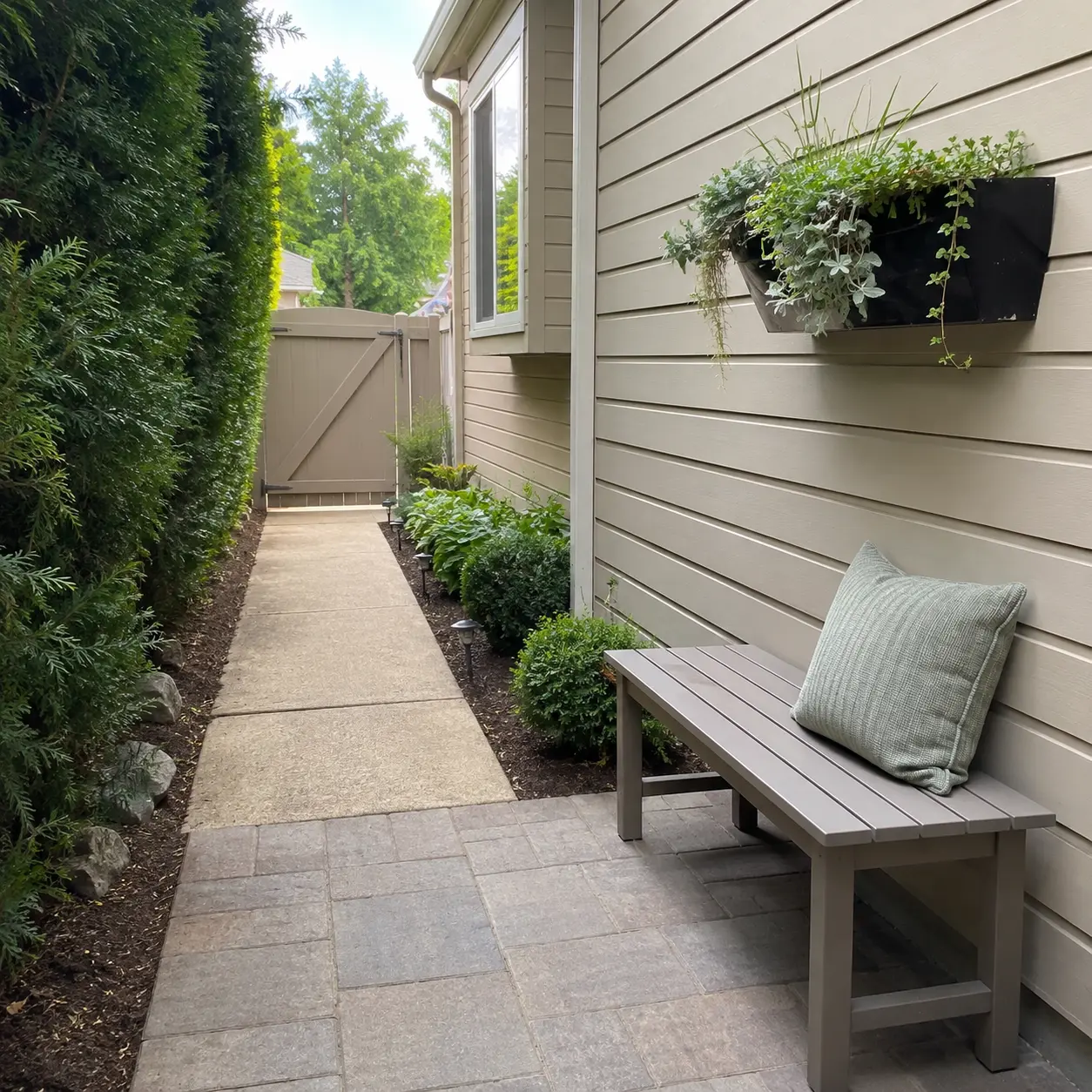
The wider end of a side yard can become a useful pause point instead of an empty patch between the gate and backyard.
A compact 36 to 48 inch bench gives people somewhere to remove muddy shoes or set down a basket while opening the gate.
Place it on a level paver pad and keep at least three feet of clear walking room in front.
A wall-mounted planter above the bench adds color without using more ground space, though it should sit high enough to avoid bumped heads.
This little landing works best when it supports the way the entrance is already used rather than pretending to be a full outdoor room.
A Side Yard That Finally Has a Purpose
The most useful landscape ideas for the side of a house solve an ordinary problem before adding decoration.
A dry route, enough clearance, and plants suited to the light will do more than filling every inch with features.
Start with the muddiest or most awkward part, then let the rest of the plan grow from that fix.
The space feels finished when walking through it no longer requires thinking about where to step.

Hi, I’m Alizabeth, the creator of Pretty Home Hacks. I share practical home decor ideas, easy DIY projects, organization tips, and budget-friendly ways to make your home feel more beautiful and functional. From small room updates to everyday home hacks, my goal is to share approachable ideas you can actually use in your own space.