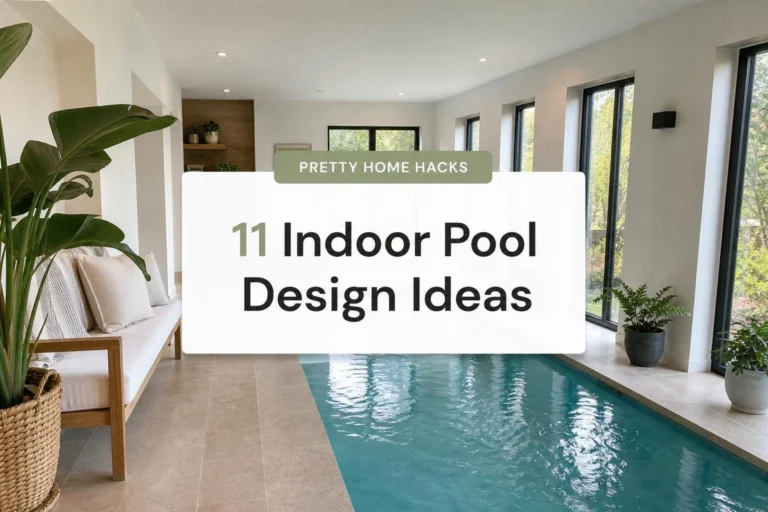
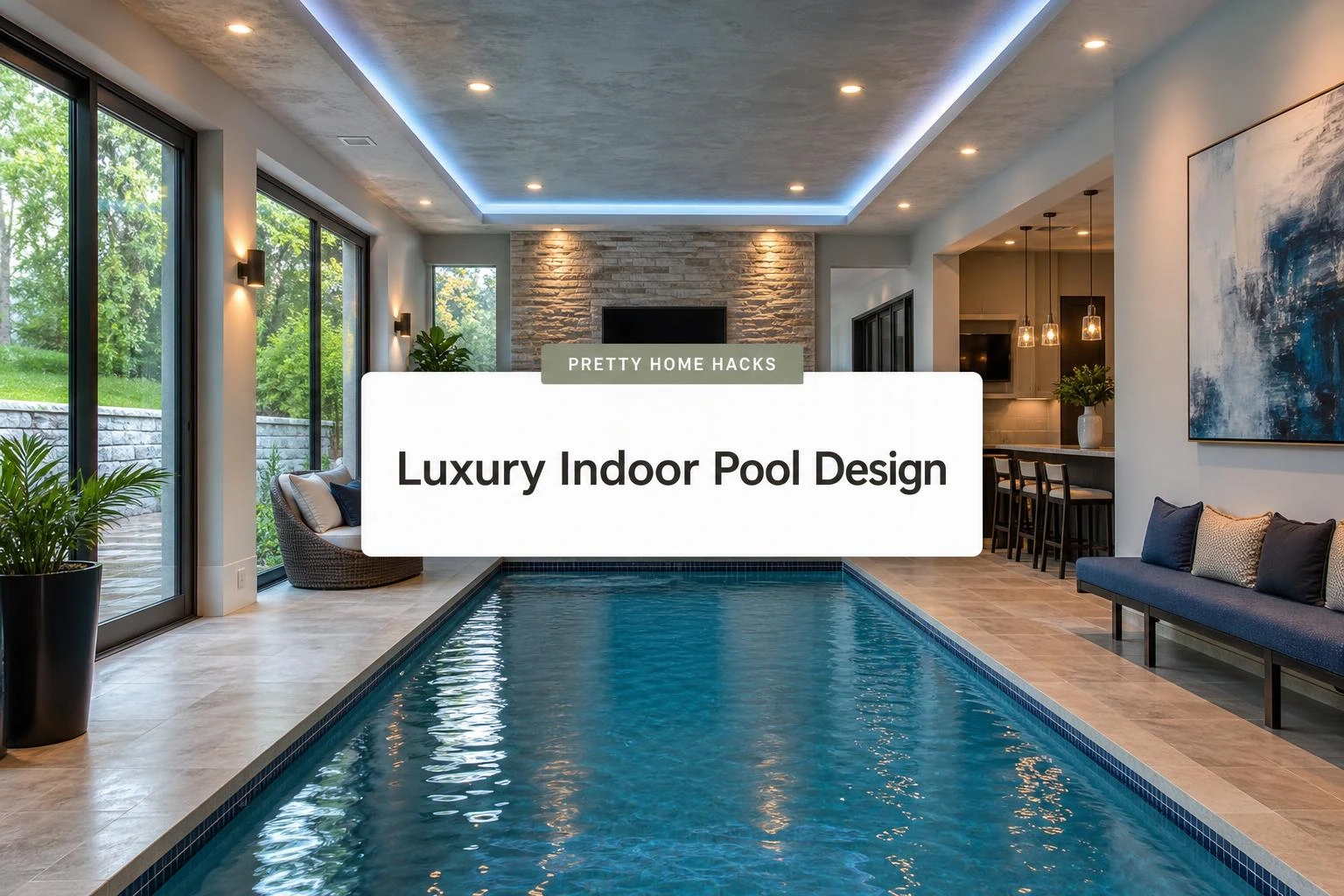
11 Indoor Swimming Pool Design Luxury Ideas That Feel Warm and Usable
Indoor pools are one of those spaces that can look expensive on paper and still feel weirdly cold in real life.
People picture glossy tiles and big glass walls, then end up with echo, chlorine smell, and a room that feels more basement gym than spa.
Most people assume indoor swimming pool design luxury is all about finishes, but the annoying part is the hidden stuff matters just as much.
The easier approach is planning comfort first, then layering in the good-looking details that actually hold up around water.
That is usually where the room starts feeling calm instead of complicated.
1- Spa style pool lighting
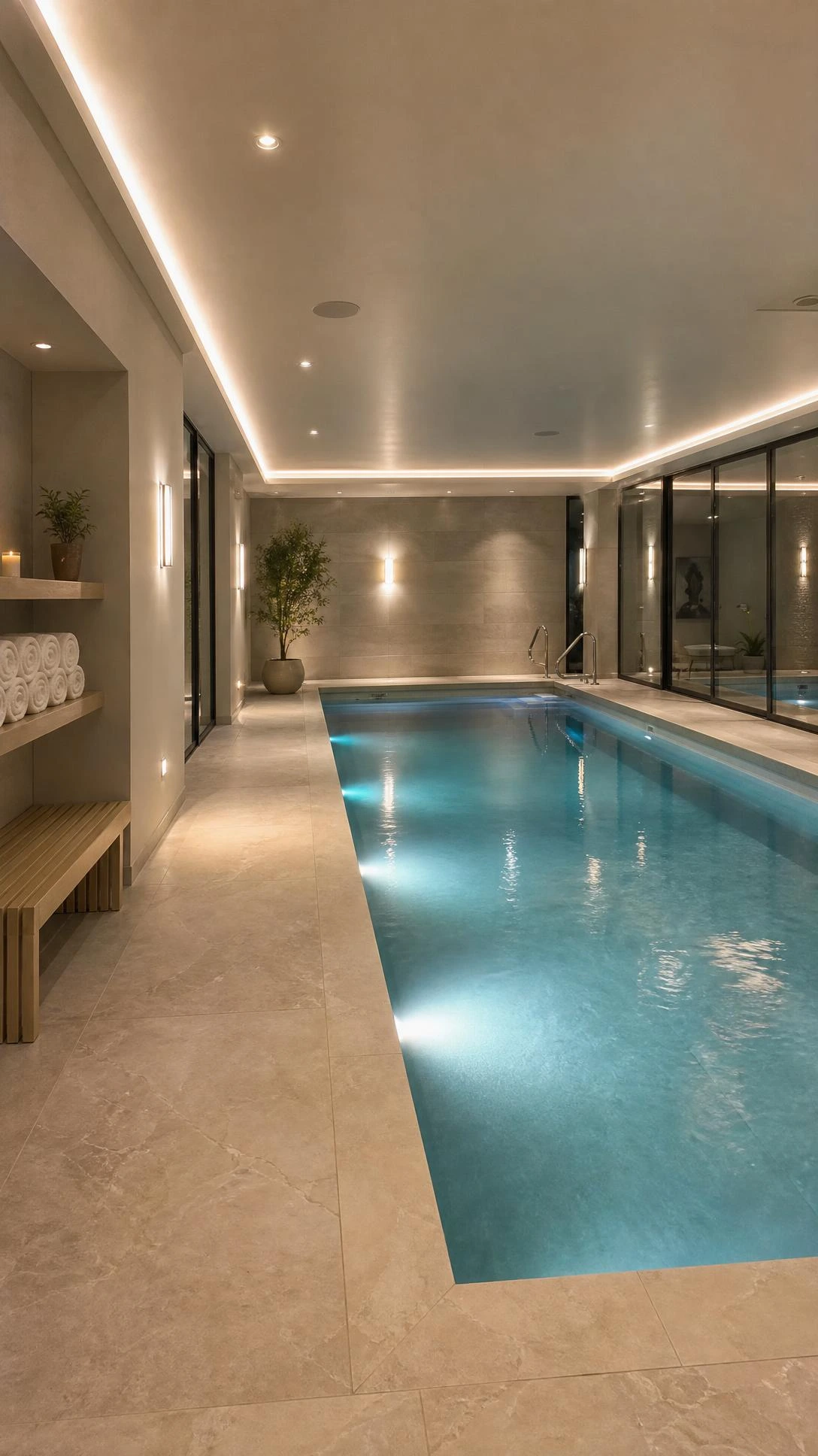
Lighting is one of the first things that decides whether an indoor pool feels relaxing or slightly haunted.
A layered setup works best, with underwater lights, soft perimeter sconces, and dimmable ceiling lighting on separate switches.
Tunable white LEDs around 2700K to 3000K usually make the room feel warmer than icy blue pool lights.
I think color changing lights are fine in small doses, but all purple all the time starts feeling like a hotel lobby from 2009.
Once the lighting is soft at eye level, even simple tile starts looking more expensive.
2- Large glass wall indoor pool
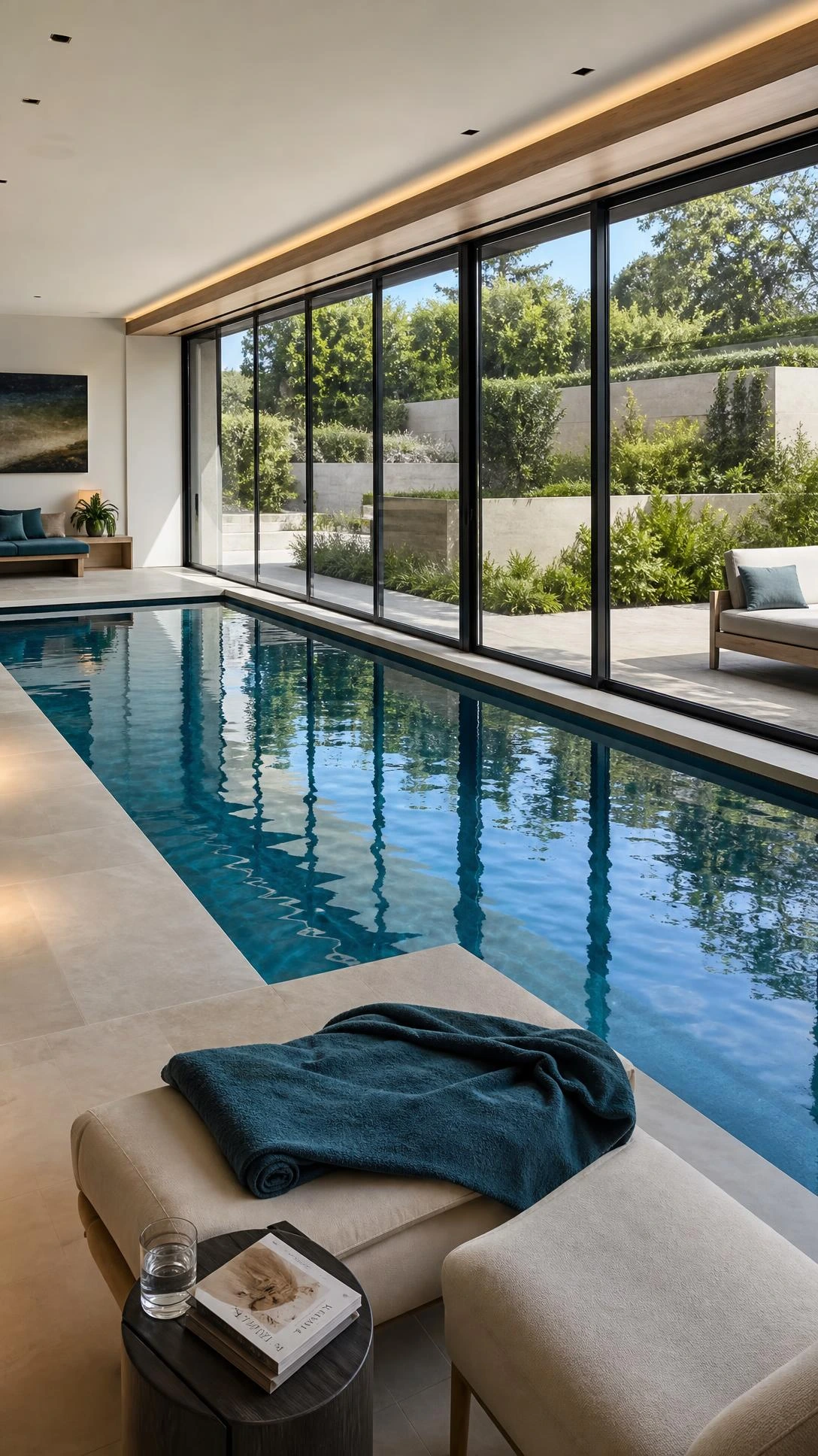
Big glazing keeps indoor pools from turning into dark boxes, which is a problem people mention constantly for a reason.
Floor to ceiling glass works best when the floor level inside and outside lines up so the whole space feels connected.
Thermally broken aluminum frames with double pane low E glass are worth asking for, and colder climates usually do better with triple glazing.
Supply air should run across the glass to stop that annoying sheet of condensation that makes the whole room feel damp.
If the budget stretches to sliding systems like NanaWall or LaCantina, the room feels less sealed off even when the doors stay shut.
3- Luxury lap pool layout
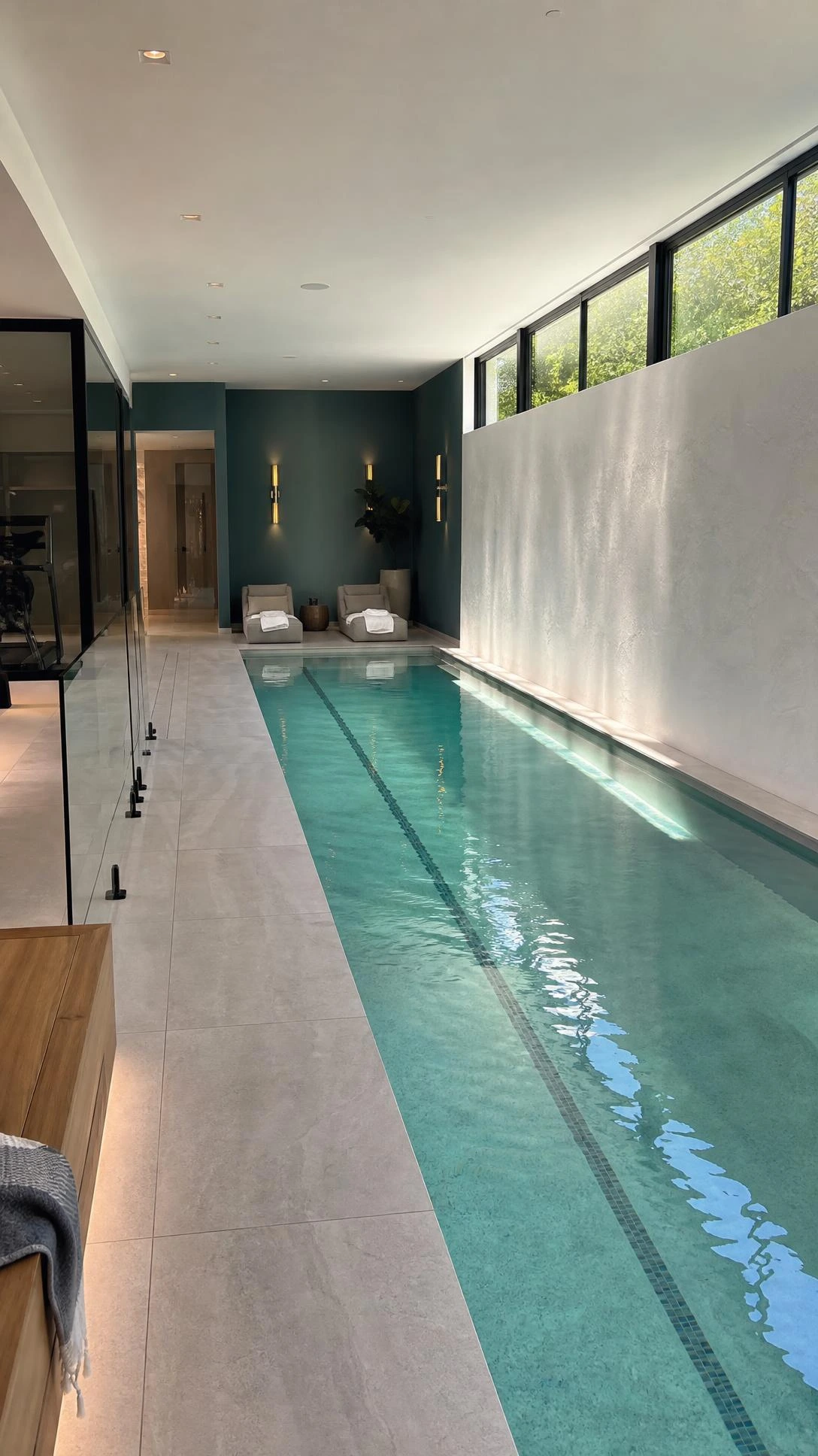
A lot of so called luxury pools look nice in photos and are not that useful once someone actually wants to swim.
If function matters, a clean lap shape with at least a 40 foot swim line makes more sense than lots of fussy curves.
Some people add a resistance current so the pool can stay smaller without giving up real exercise.
This works best when the entry steps stay tucked to one side instead of eating up the whole shallow end.
The goal is just to make the pool feel good to use, not only good to photograph.
4- Indoor pool humidity control
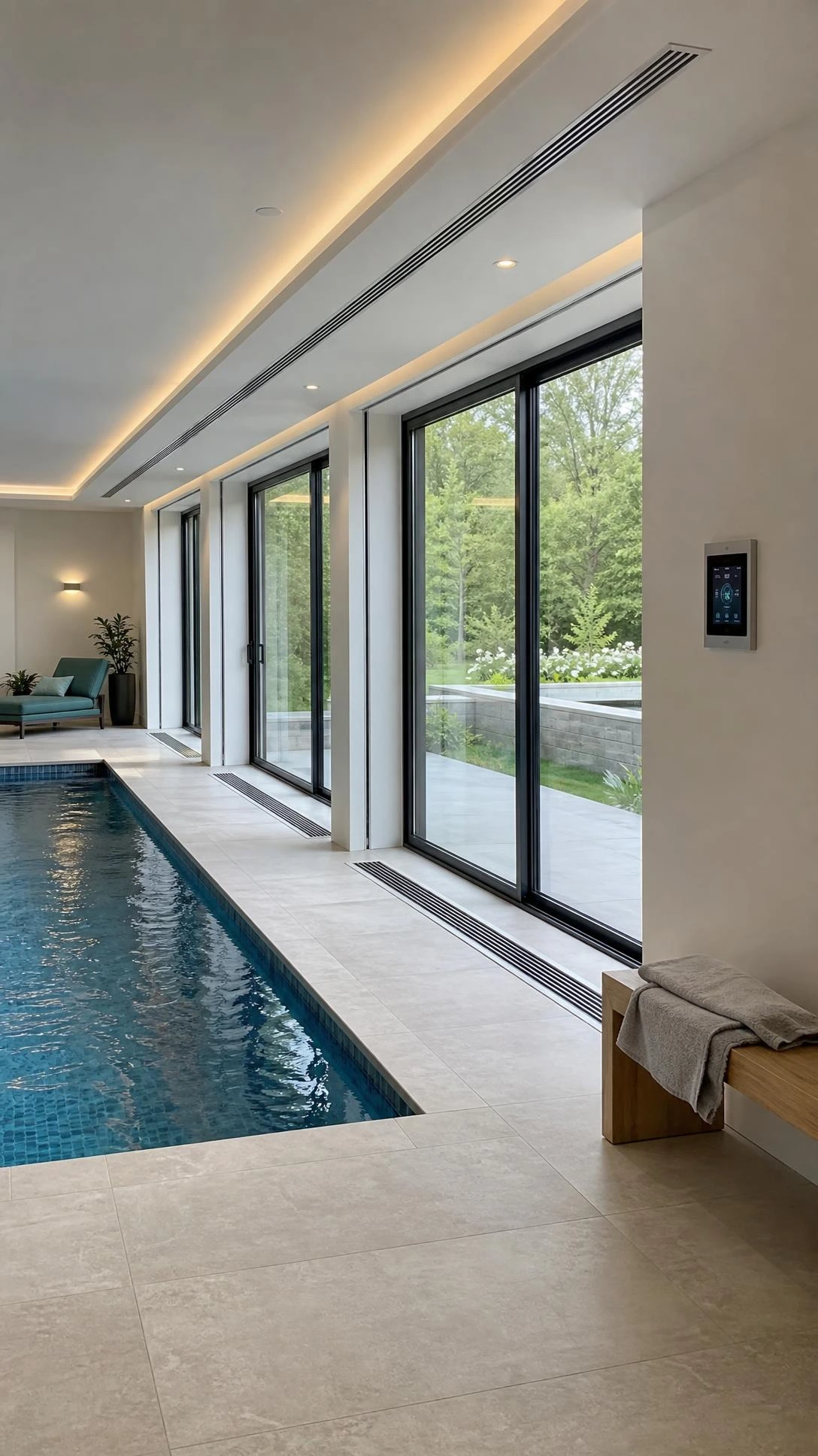
Humidity is the thing nobody sees in pretty photos, but it is usually what makes or breaks the room.
An indoor swimming pool design luxury setup really needs a dedicated dehumidification system sized to the water surface and room volume.
Most pool rooms do best around 50 to 60 percent relative humidity, with the air kept a little warmer than the water.
Portable dehumidifiers and basic bath fans sound cheaper at first, but they are usually not enough for this much moisture.
When the air feels balanced, the whole room gets more comfortable fast.
5- Slip resistant pool surround tile
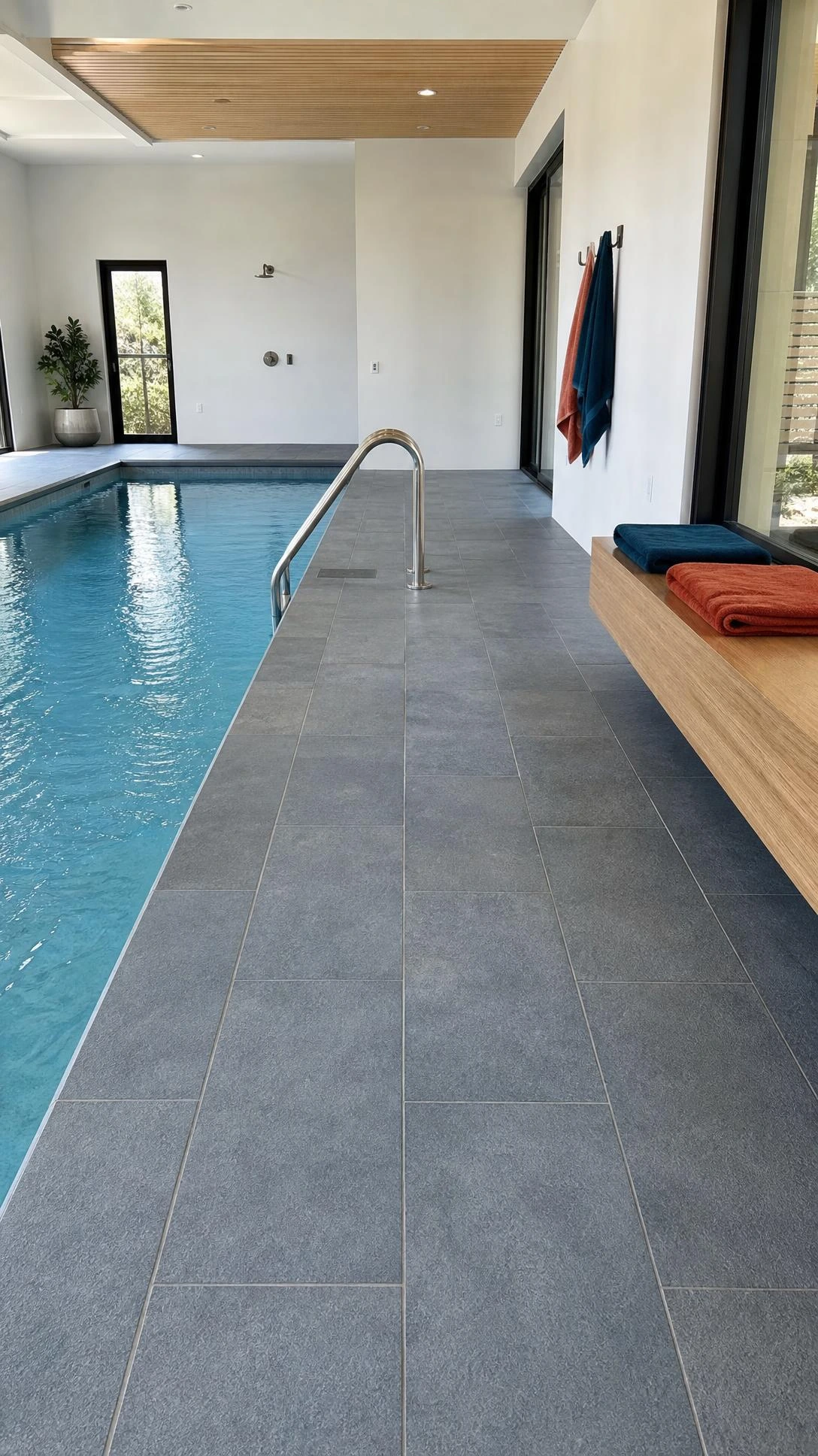
Pool flooring has to survive wet feet every day, which is why shiny finishes tend to disappoint.
Textured porcelain tile is usually the safest bet because it is non porous, durable, and easier to maintain than delicate stone.
A DCOF wet rating of at least 0.42 is a good number to look for if people want real traction.
Soft taupe porcelain in a 24 by 48 inch format gives that sleek luxury look without turning slippery.
Natural stone can work too, but it needs sealing and a little more patience.
6- Warm indoor pool materials
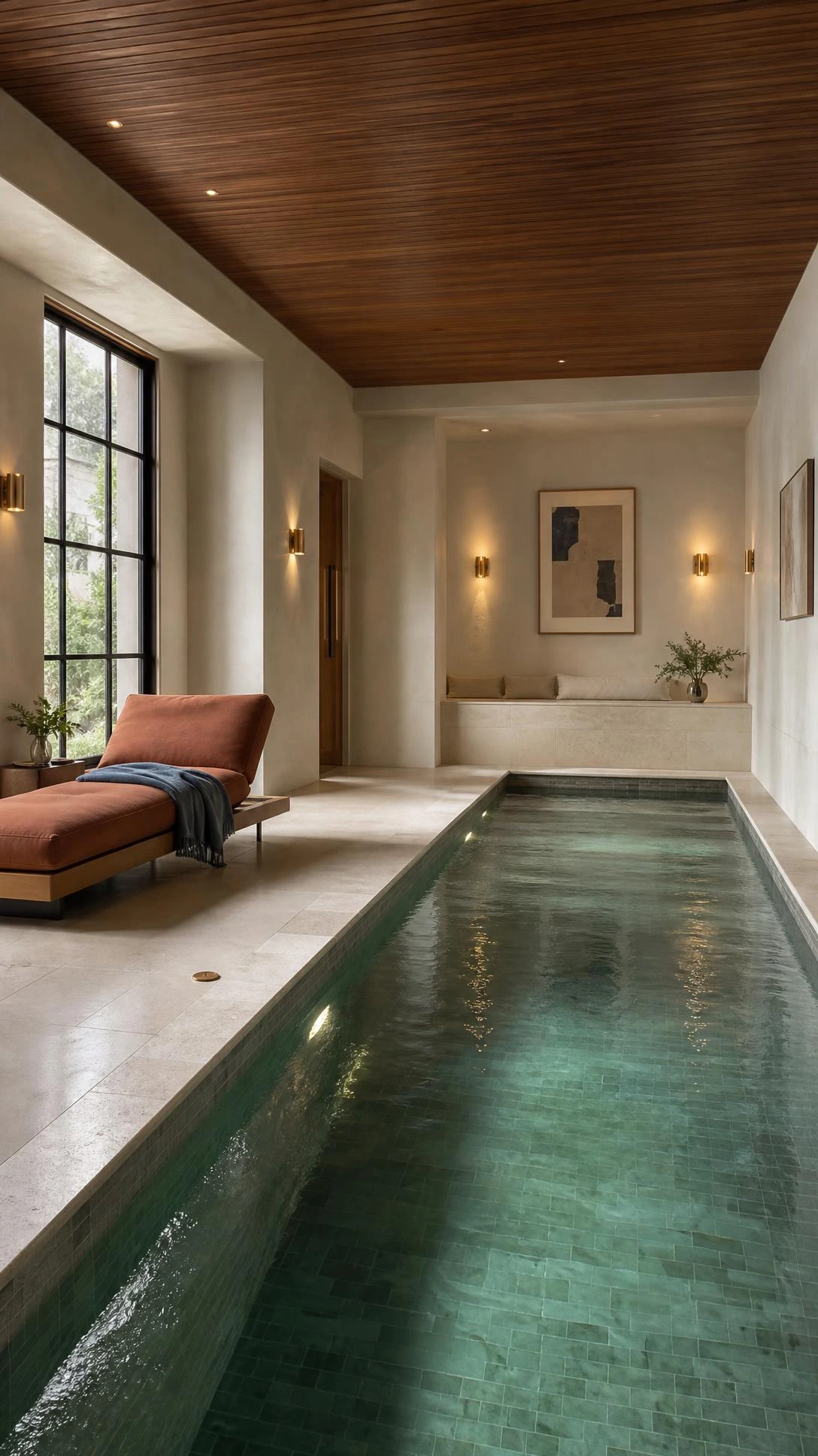
Luxury indoor pool rooms feel better when the finishes have some warmth instead of all hard gloss and white paint.
Honed travertine, Basaltina, sealed teak accents, and hand cut glass mosaic tile all soften the space without getting fussy.
Deep navy or charcoal pool interiors can look especially rich, and they hide the flat hotel pool vibe that lighter finishes sometimes have.
This works best when the material palette stays tight, like two main surfaces and one accent instead of six competing ideas.
Even one warm material can keep the room from feeling industrial.
7- Pool room ventilation and sealed doors
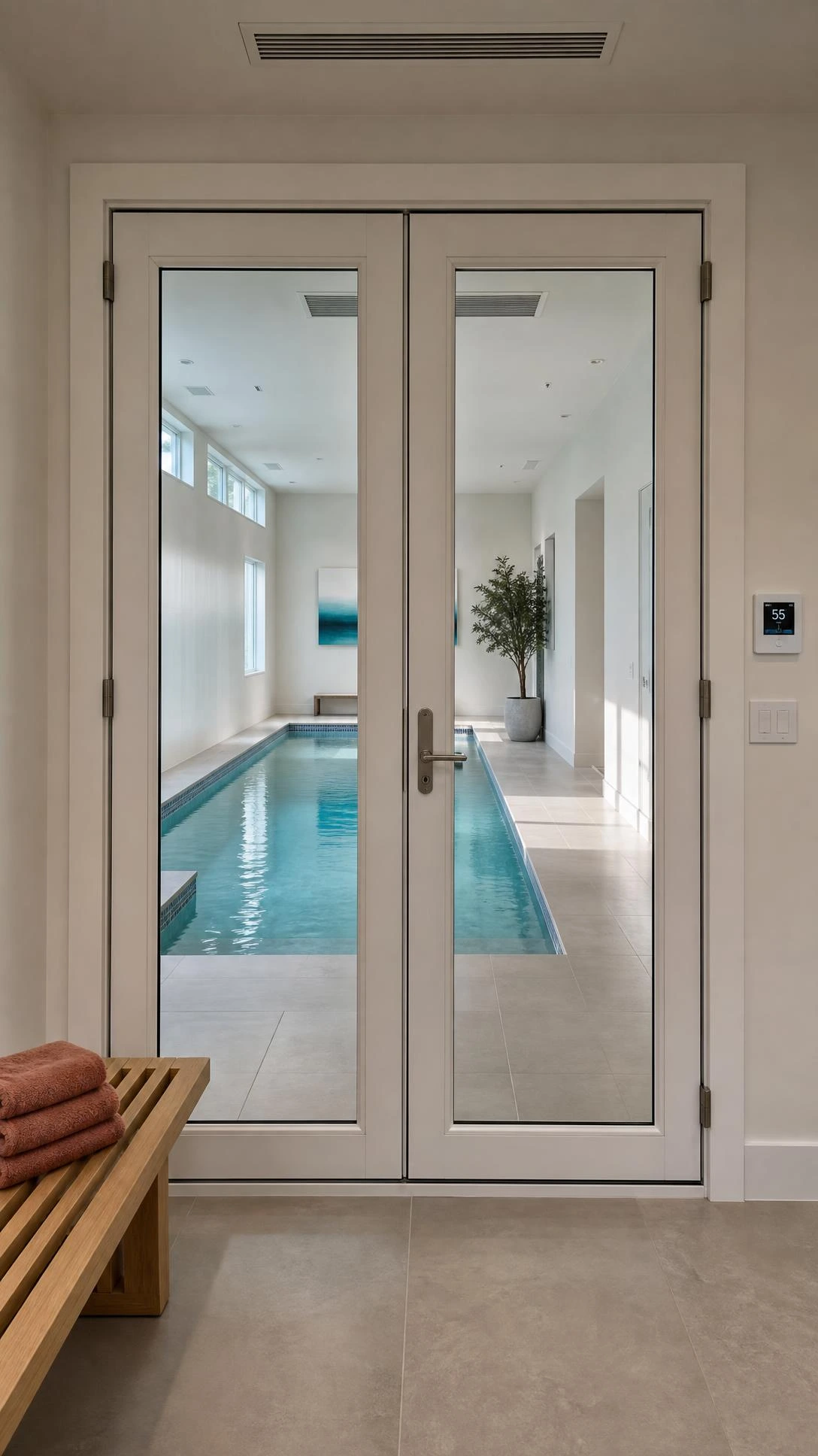
One of the biggest mistakes is letting humid pool air wander into the rest of the house like it pays rent there.
The pool room should have sealed doors and windows, plus slightly negative air pressure so moisture and chlorine stay contained.
A continuous vapor barrier in the walls and ceiling matters here too, even though nobody ever calls that the fun part.
Corrosion resistant stainless hardware is worth the small upgrade because regular metal starts looking rough pretty fast.
When the enclosure is planned properly, the rest of the house stays normal.
8- Indoor pool acoustic wall panels
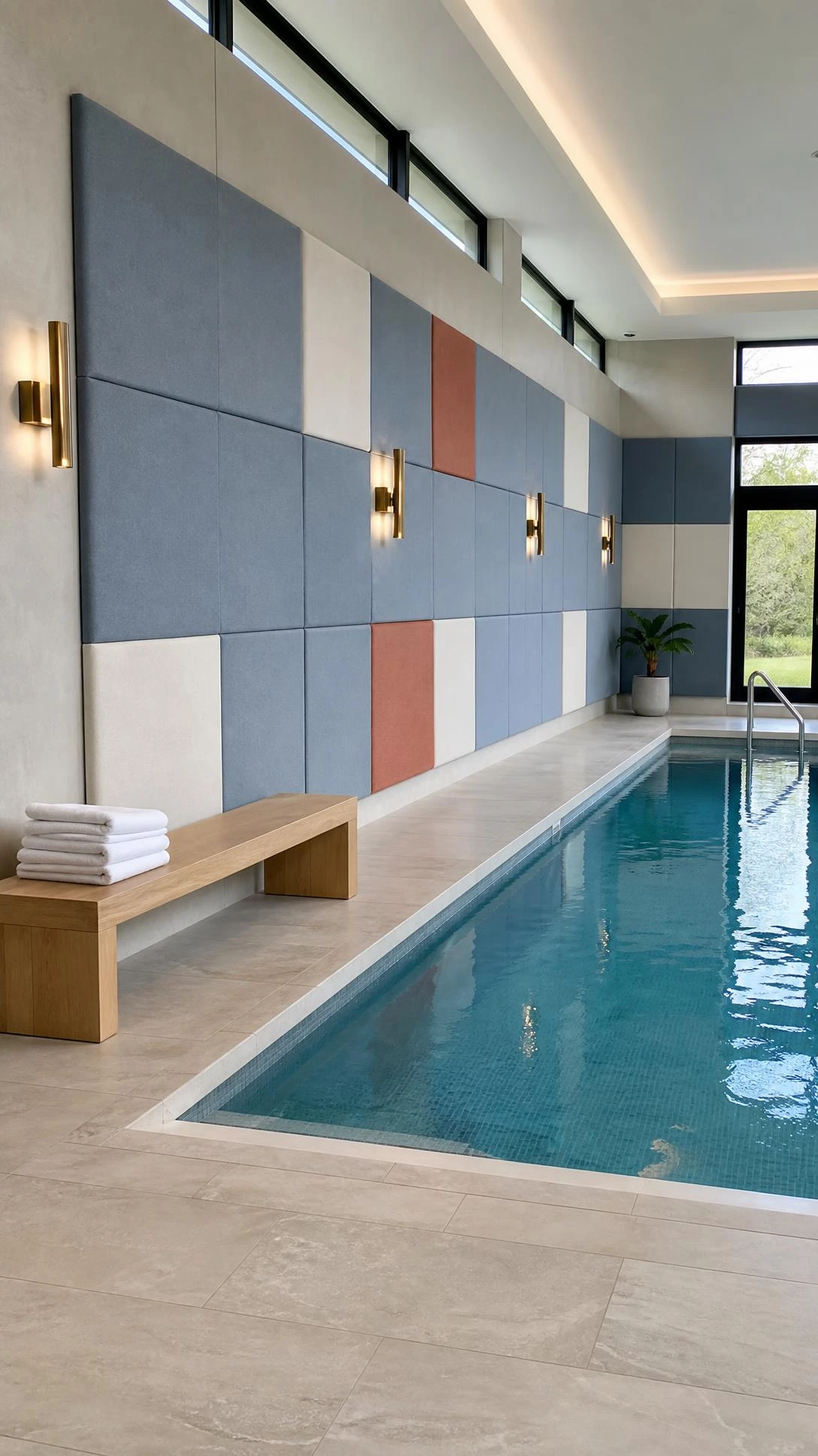
Echo is such a common indoor pool problem, and it gets worse the minute someone adds speakers or a projector.
Acoustic wall panels, slatted wood treatments with moisture stable backing, and fabric look ceiling panels made for humid spaces help absorb all that bounce.
Even adding a few large upholstered benches outside the splash zone can soften the room more than people expect.
This is one of those details that sounds extra at first, but it changes how the room feels every single day.
Quiet spaces usually read more luxurious than loud ones anyway.
9- Indoor pool plants and waterproof decor
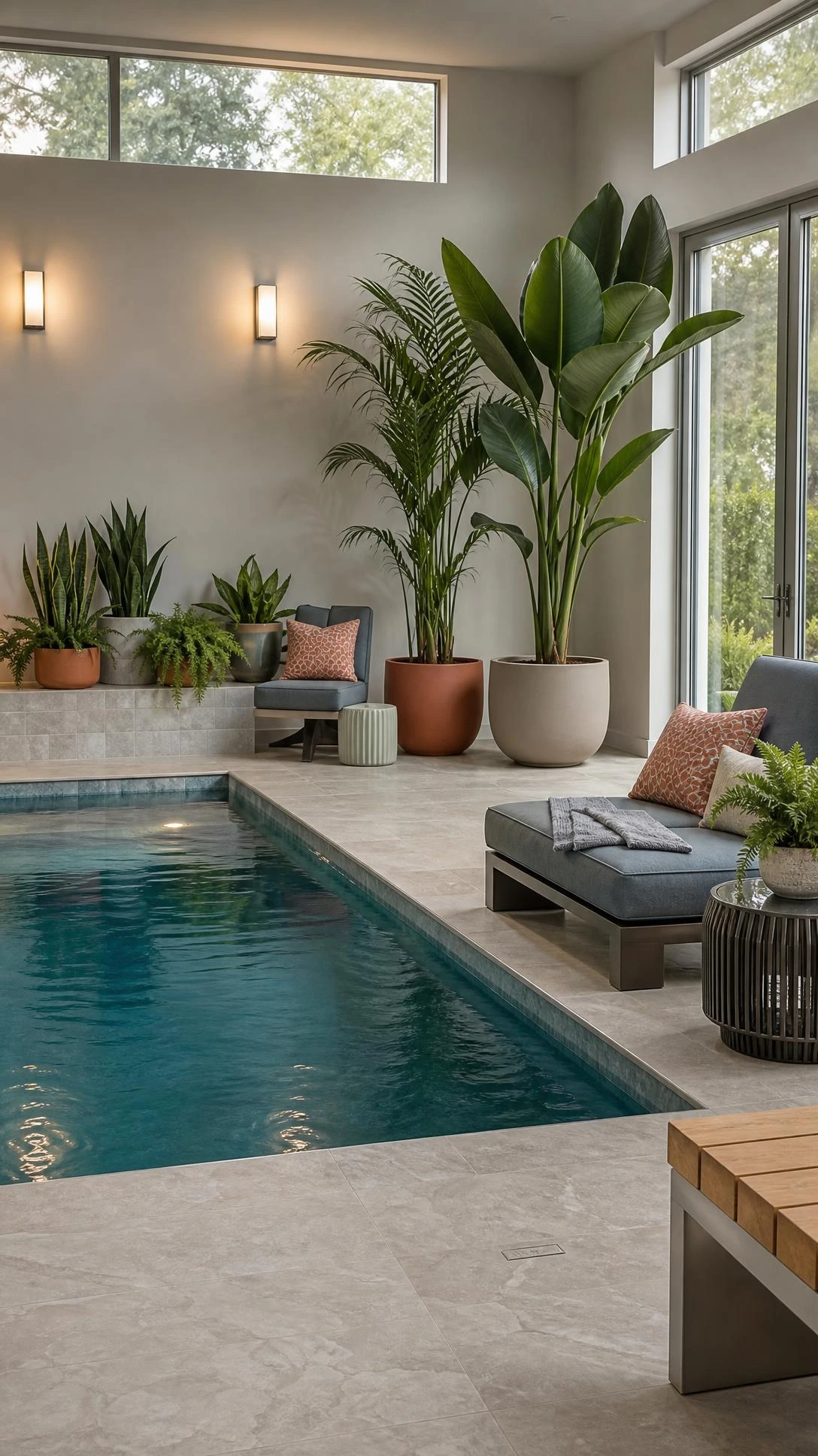
Plants do a lot of heavy lifting in indoor pool rooms because hard surfaces can start feeling cold really fast.
Tall palms, bird of paradise, and even oversized faux olive trees in sealed planters help fill awkward corners without crowding the walkway.
Waterproof art, outdoor rated sconces, and a couple of washable loungers in a sandy linen color make the space feel finished.
Most of the time people only need two or three big decorative moves here, not a whole resort theme situation.
The room feels warmer once something living or at least plant shaped shows up.
10- Indoor pool heating and cover system
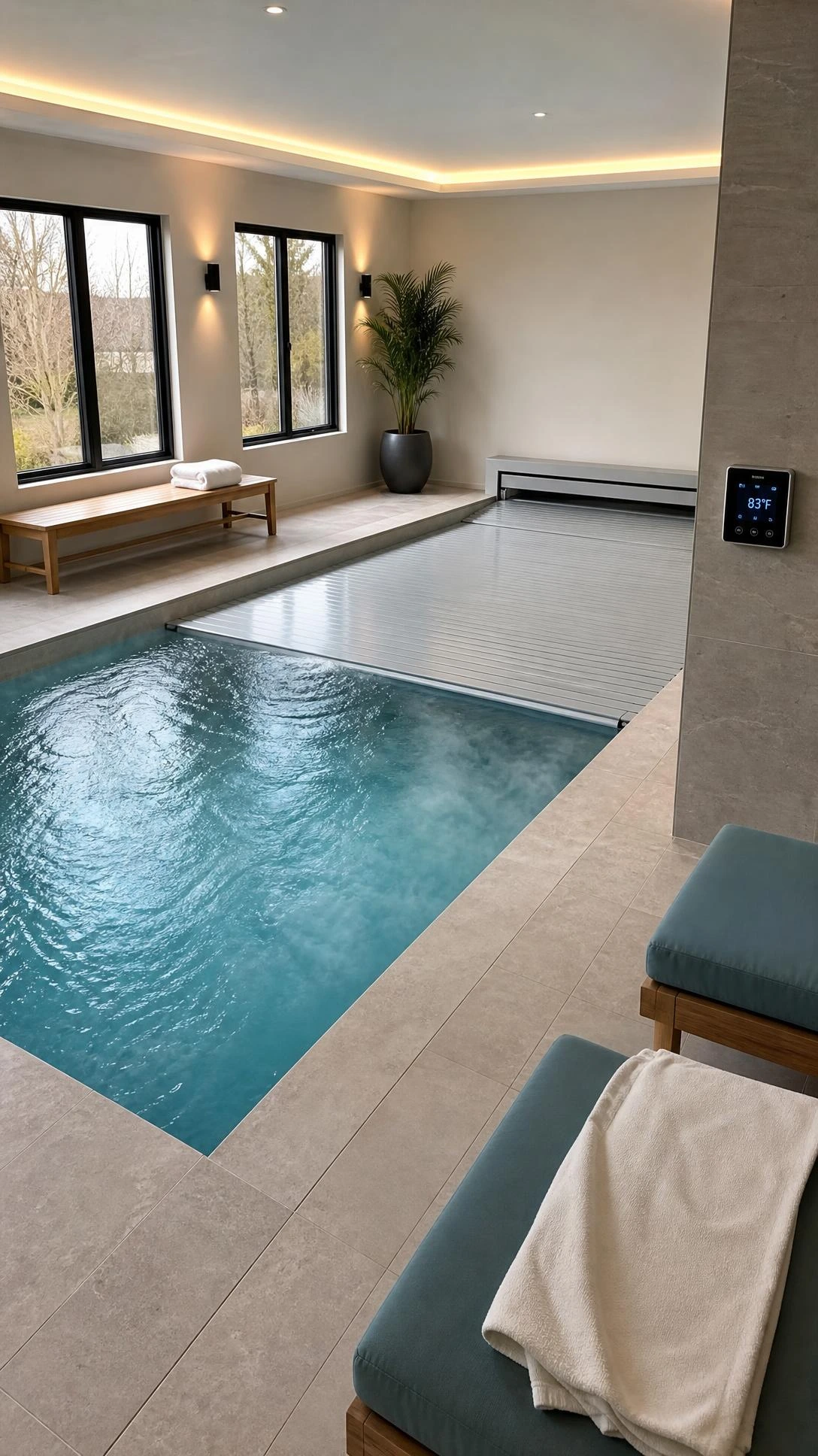
Heating costs are where indoor pools stop feeling dreamy for a lot of people.
An automated pool cover can cut heat loss by up to 70 percent, which is always a nice surprise considering how simple it looks.
Heat pumps and heat recovery systems tied to the dehumidifier are also worth discussing early because some setups cut heating bills by 30 to 50 percent.
For a real world number, people often see monthly heating costs around $90 to $220 with an electric heat pump, depending on size and climate.
Luxury usually feels better when the operating costs are not quietly chaotic.
11- Indoor pool planning before construction
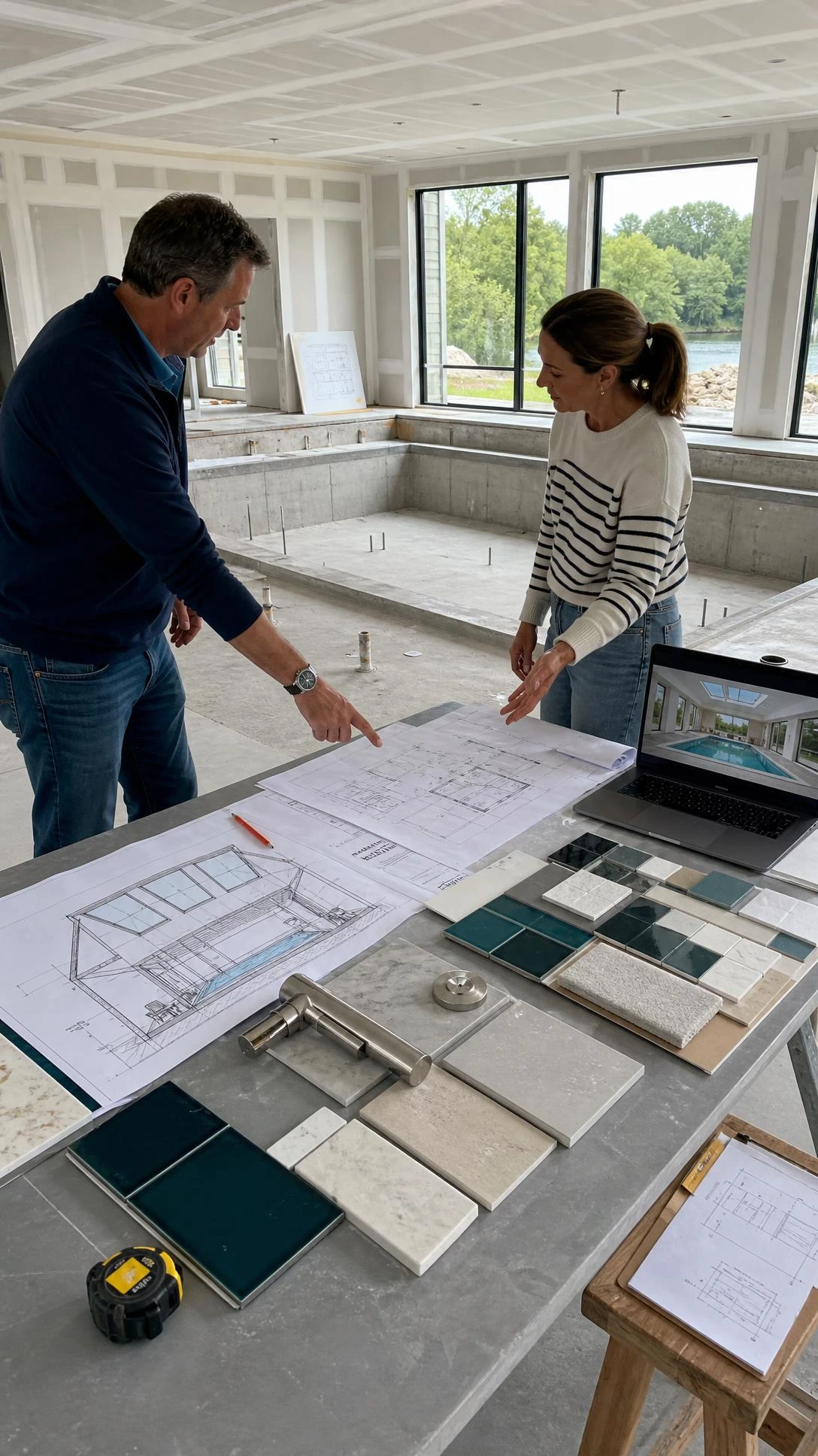
Indoor pool projects get expensive fast when the technical decisions show up late.
Bringing in a pool consultant, HVAC designer, and builder early helps sort out sightlines, structure, drainage, and equipment space before walls go up.
New builds often take eight to fourteen months, and some dehumidification systems have lead times of 12 to 16 weeks by themselves.
Indoor swimming pool design luxury works best when people decide early if the room is for laps, kids, hydrotherapy, or mostly relaxing.
That one decision affects almost everything else, from depth to lighting to seating.
11- A Pool Room That Actually Feels Good
The nicest indoor pools usually get the basics right before the fancy details show up.
Warm lighting, controlled humidity, quieter surfaces, and usable layout choices do more than another expensive finish ever could.
Indoor swimming pool design luxury is really about making the room pleasant to be in when nobody is taking photos of it.
Once those pieces are in place, even a simple pool starts feeling like somewhere people want to stay awhile.

Hi, I’m Alizabeth, the creator of Pretty Home Hacks. I share practical home decor ideas, easy DIY projects, organization tips, and budget-friendly ways to make your home feel more beautiful and functional. From small room updates to everyday home hacks, my goal is to share approachable ideas you can actually use in your own space.