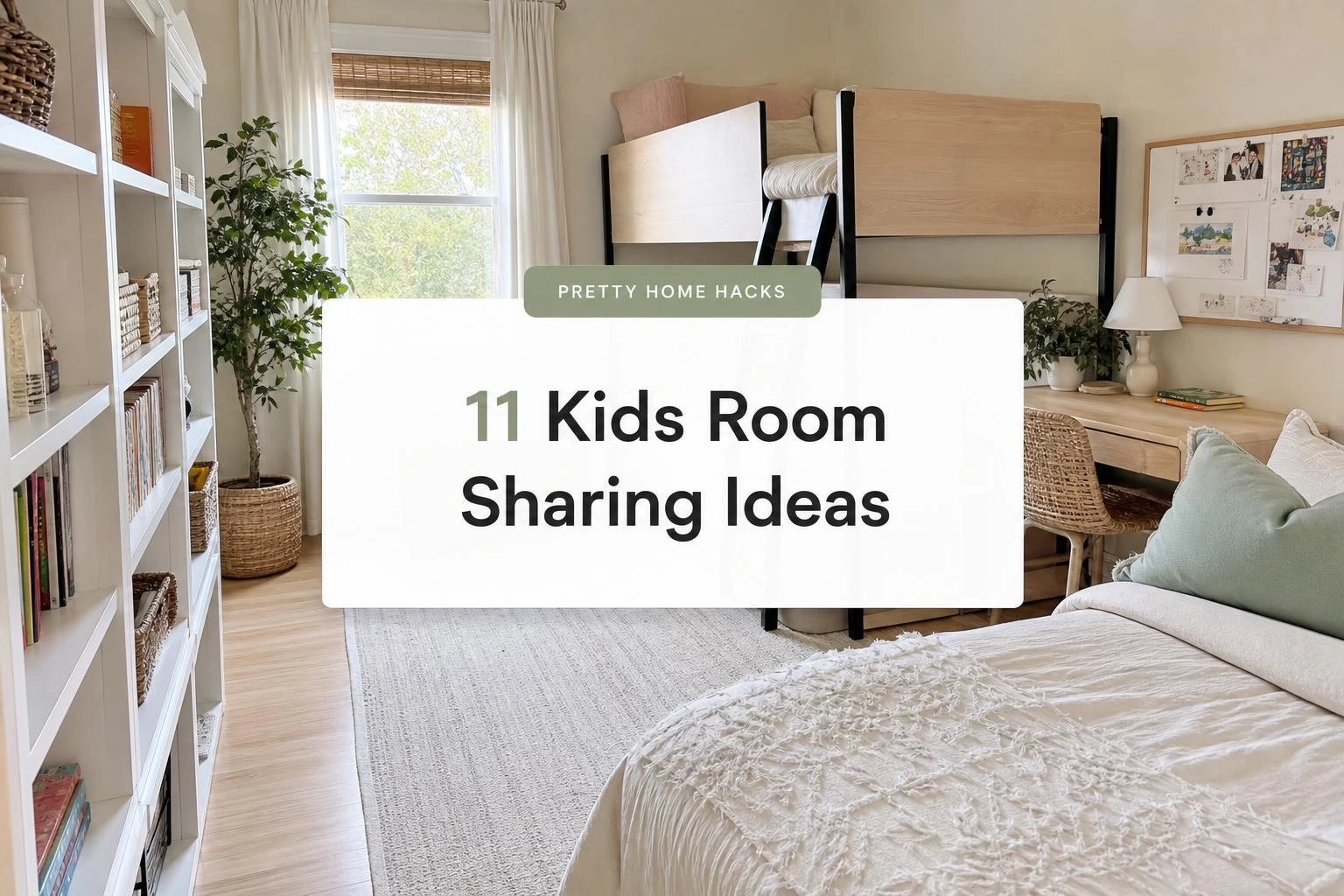
11 Ways to Share a Room With Your Kids That Still Let the Adults Feel Like Adults
Sharing a room with your kids is one of those situations that sneaks up on people, usually because of a move, a new baby, a tight floor plan, or a season of life that nobody planned for in advance.
The part that nobody really talks about is how fast a room can start feeling like it belongs entirely to the child and not at all to the adult who also sleeps there every night.
Most people assume the only options are full kid chaos or a weirdly sterile space where nothing fun is allowed, and neither of those actually works for anyone living in the room.
The real goal is just finding small, specific ways to carve out zones and maintain a little visual calm without making the whole setup feel like a compromise nobody is happy with.
These ideas are practical, most of them are low cost, and they work in real rooms where the square footage is not generous and the kids are not always cooperative.
1- Neutral Base Color on the Walls
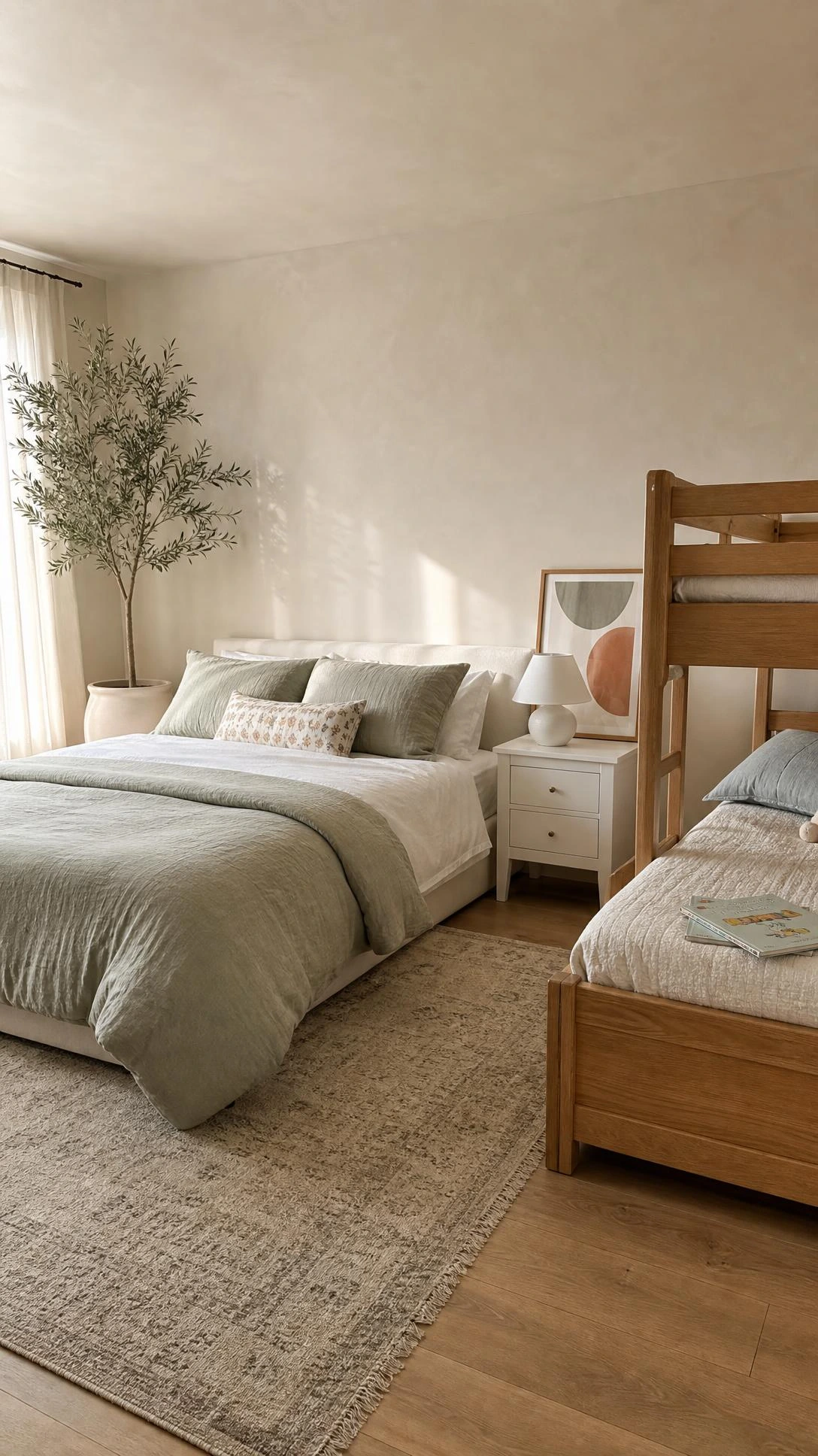
Starting with a neutral wall color is one of those things that sounds obvious but makes a bigger difference than most people expect once it is actually done.
A warm white like Benjamin Moore White Dove or a soft greige like Sherwin-Williams Accessible Beige gives the room a calm backdrop that does not read as either a kids’ room or a boring adult room.
The kids’ personality can still come through in bedding, artwork, and small accessories without the walls screaming playroom from the moment someone walks in.
Neutral walls also make the adult side of the room feel more intentional, because the furniture and linens get to do the talking instead of competing with a bold painted accent wall.
This works best when the kids are old enough to have a real opinion about their space, because giving them control over the softer details makes the neutral base feel like a fair trade.
2- Area Rugs to Define Each Zone
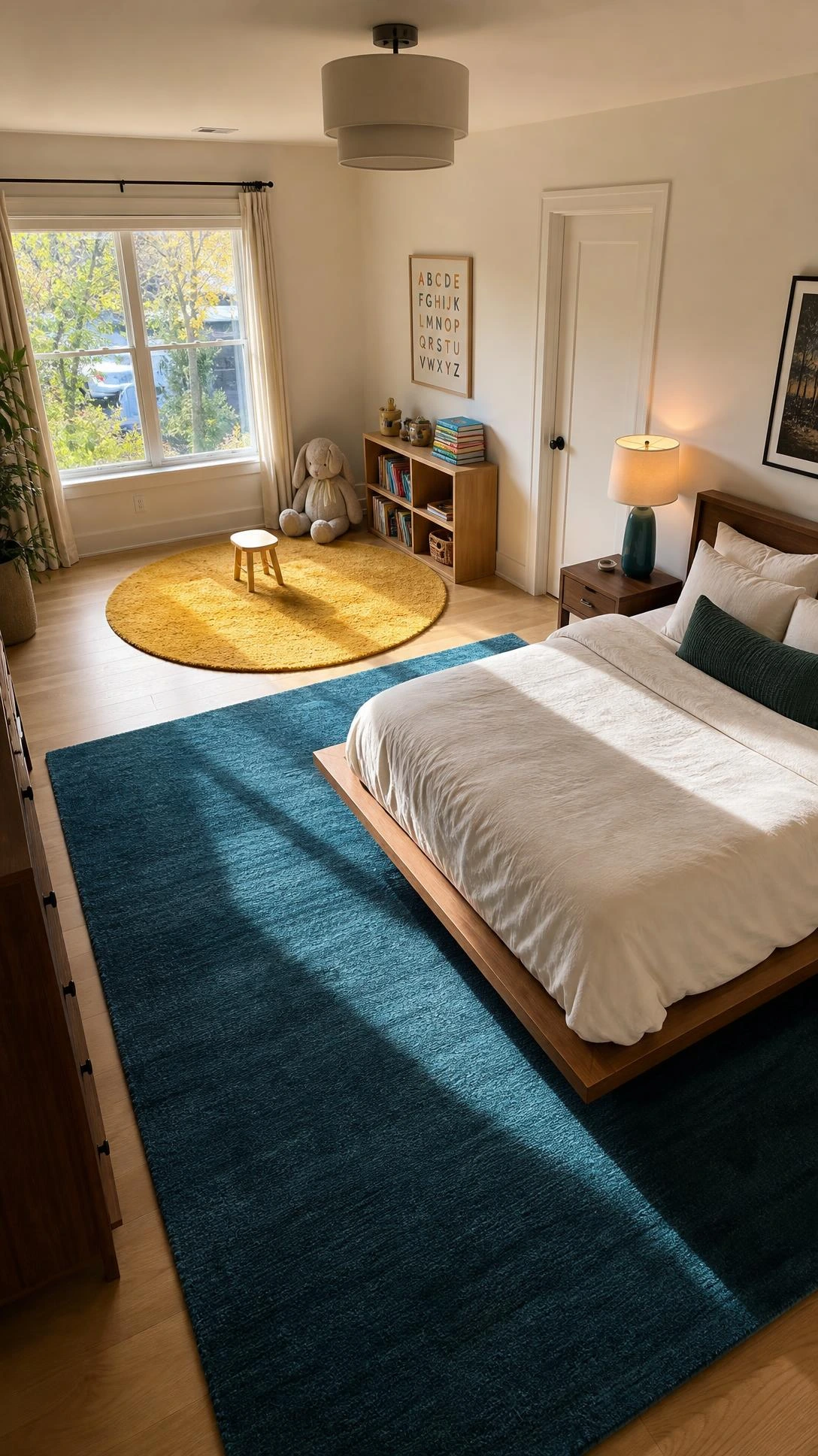
Two distinct area rugs, one anchoring the adult sleep area and one anchoring the child’s side, do more visual work than most people give them credit for.
The key is sizing them properly, so each rug extends at least 18 inches beyond the bed on both sides, which makes each zone feel like it has real boundaries instead of just floating in the middle of the room.
A jute or wool rug in a simple natural weave on the adult side keeps that area grounded and calm, while a patterned or brighter rug on the kid’s side gives them the fun and color they want.
Nobody has to look at the other person’s rug and feel like it belongs in their zone.
This trick works especially well in open plan spaces or studio setups where there are no walls to help create separation naturally.
3- Ceiling Mounted Curtain Track as a Divider
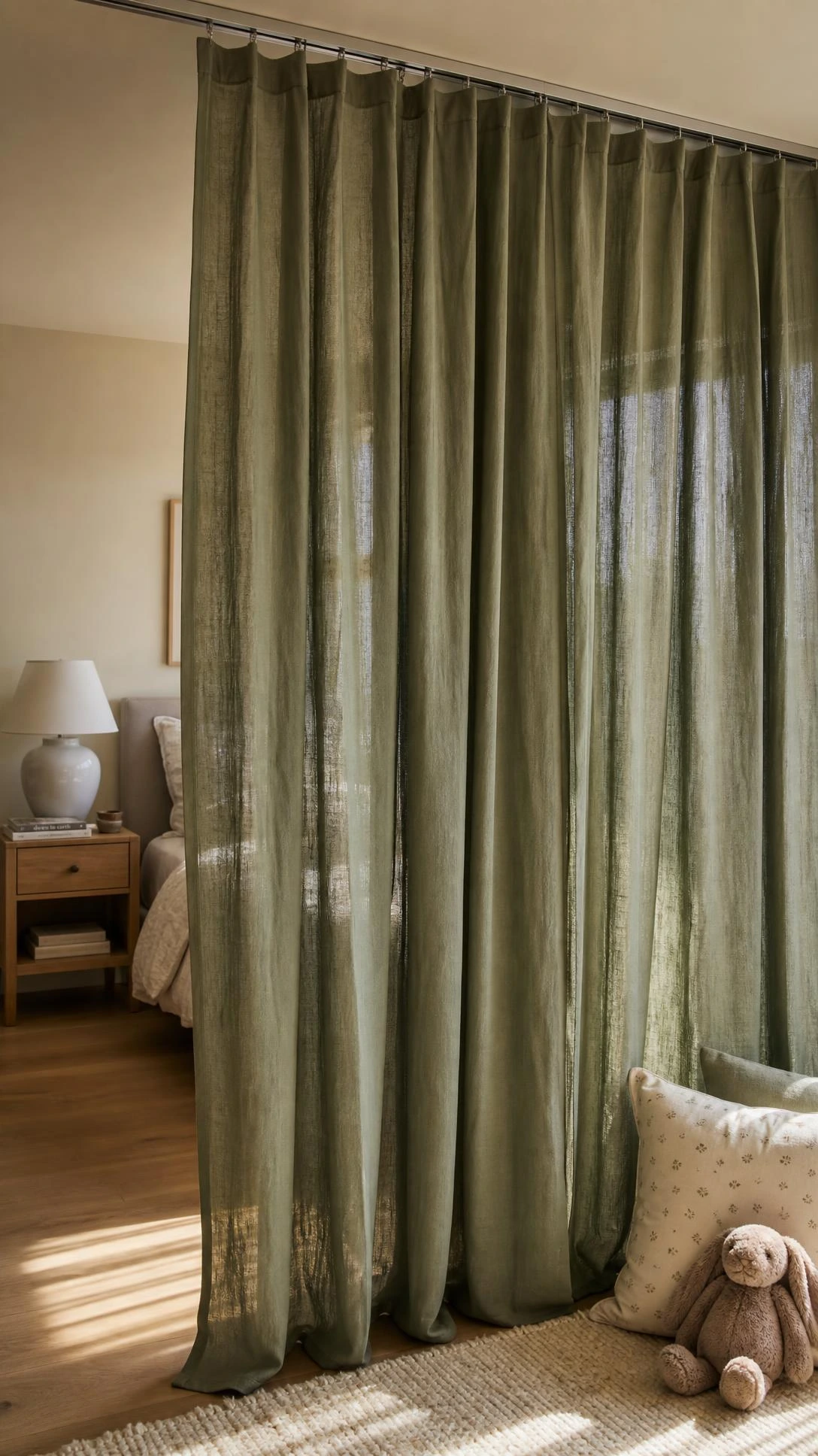
A ceiling-mounted curtain track is probably the most flexible room divider option available, and it costs a fraction of what any kind of built-in partition would.
The IKEA KVARTAL system is the one most people go to first, and for good reason, because it works smoothly and the curtain panels are easy to swap out as the kids get older and tastes change.
Choosing a blackout fabric on the child’s side of the divider is worth doing if one person goes to bed earlier than the other, which in a shared adult-child room is almost always the case.
The curtain can be pulled fully open during the day so the room feels like one connected space, and then closed at night to give both sides a sense of separation.
It is not a perfect soundproofing solution, but it creates enough visual privacy that the adult side stops feeling like it is on display at all hours.
4- A Tall Bookshelf Used as a Room Divider
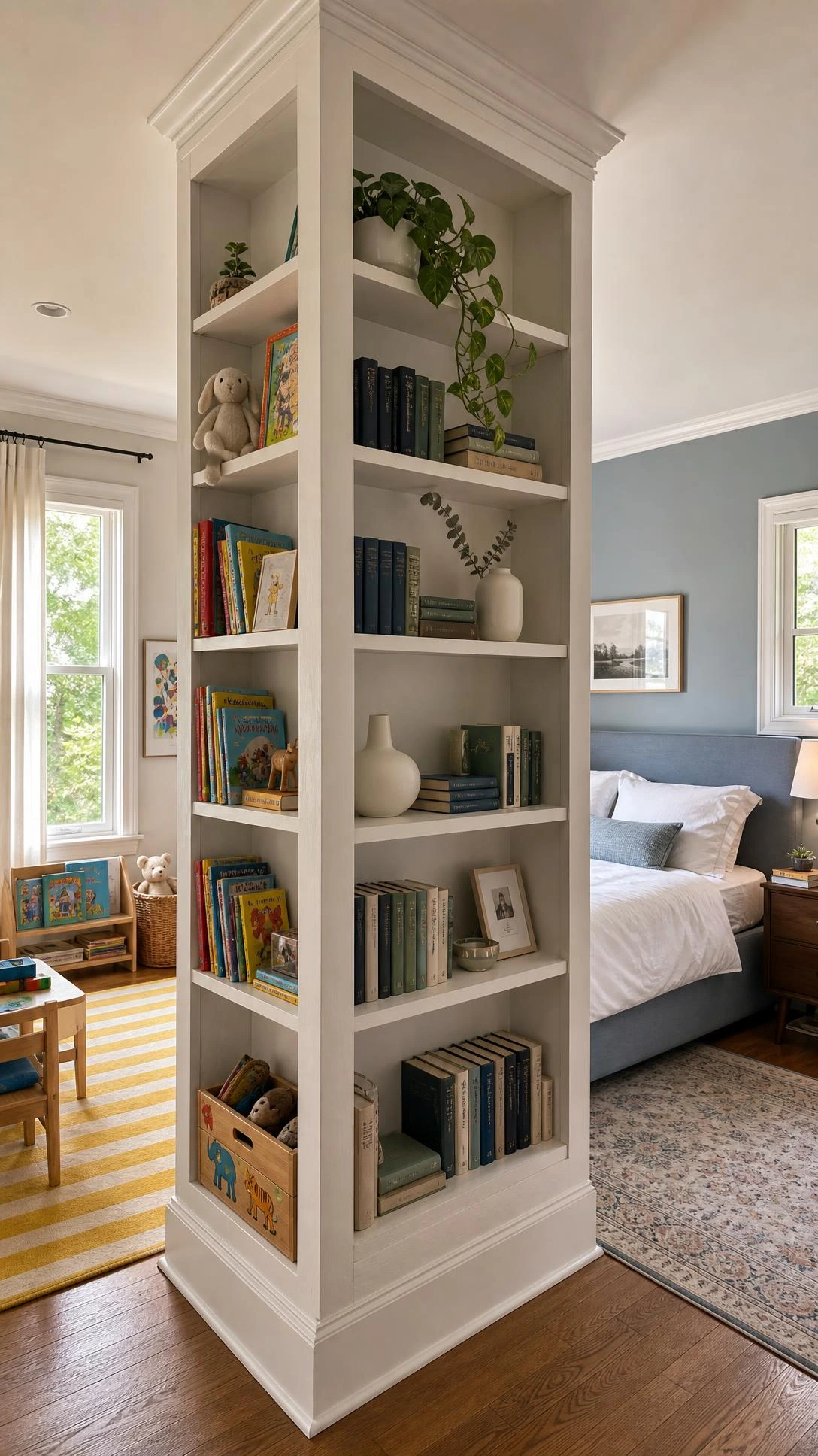
A tall open bookshelf positioned between the adult sleep area and the child’s zone is one of the few divider options that actually adds storage instead of just taking up space.
The IKEA KALLAX or Billy series both work well for this, because they are tall enough to create a real visual break without completely blocking light or airflow across the room.
The adult side of the shelf can hold books, a small plant, and a few objects that feel personal and calm, while the child’s side holds baskets of toys, their books, and whatever small things they want to keep close.
Always anchor tall shelves to the wall with an anti-tip strap, especially in a room where a child sleeps and plays, because it is not optional safety-wise.
The shelf does not eliminate every visual connection between the two zones, but it creates enough of a boundary that both sides start to feel like they belong to different people in a good way.
5- Matching Bedding That Does Not Look Like a Kid’s Room
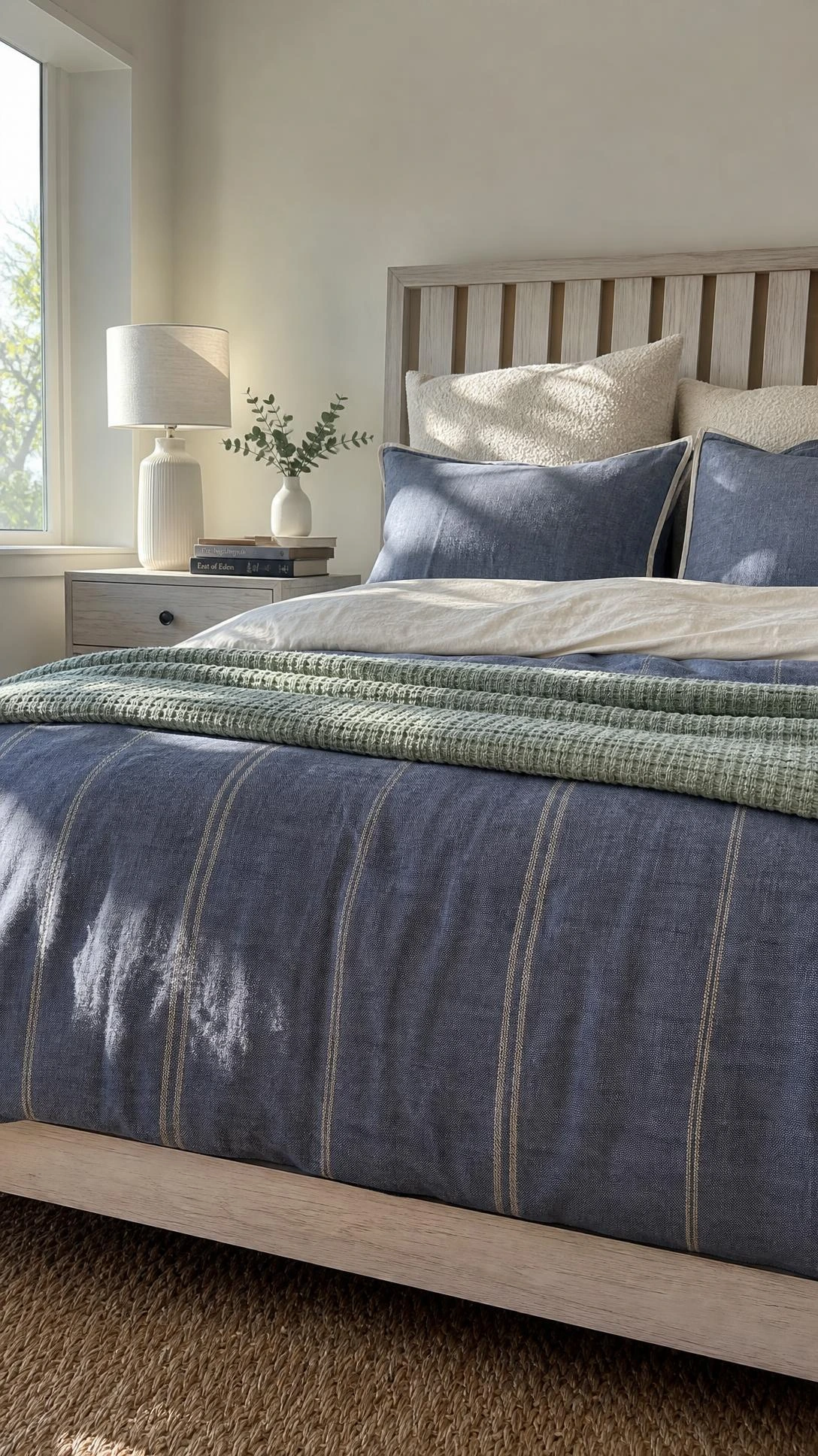
The bedding is almost always what tips a shared room from feeling like an adult space into feeling like it belongs entirely to the child.
Choosing bedding for the child that uses a pattern or color rather than a character print keeps the room from reading as a cartoon set, which tends to be what most adults are quietly bothered by.
A simple gingham, a classic stripe, or a color-block duvet in a shade like dusty blue or soft terracotta looks intentional and age-appropriate without being babyish or chaotic.
On the adult side, keeping the bedding simple and textured, like a waffle-weave throw or a linen duvet cover in oat or white, creates an immediate visual anchor that grounds the whole room.
I think this one single change does more work than almost anything else on this list, because bedding is the first thing anyone sees when they look at a bed.
6- A Small Adult-Only Nightstand Setup

Having one corner of the room that is purely for the adult is something that gets overlooked a lot when people are focused on making the shared setup work for the kids.
A nightstand with a real lamp, a book, a glass of water, and maybe one small plant creates a pocket of adult calm that signals this side of the room belongs to a grown person.
Keeping that surface clear of toys, snacks, and small plastic figurines requires some ongoing enforcement, but the payoff is a spot in the room that feels genuinely restful to look at before bed.
A lamp with a warm bulb in the 2700K range makes a bigger difference than expected because it changes the whole mood of that corner in the evening when overhead lights are off.
It sounds like a small thing, but having one surface that stays tidy and intentional makes the whole room feel more manageable for the adult sharing it.
7- Canopy or Bed Curtains Around the Child’s Bed
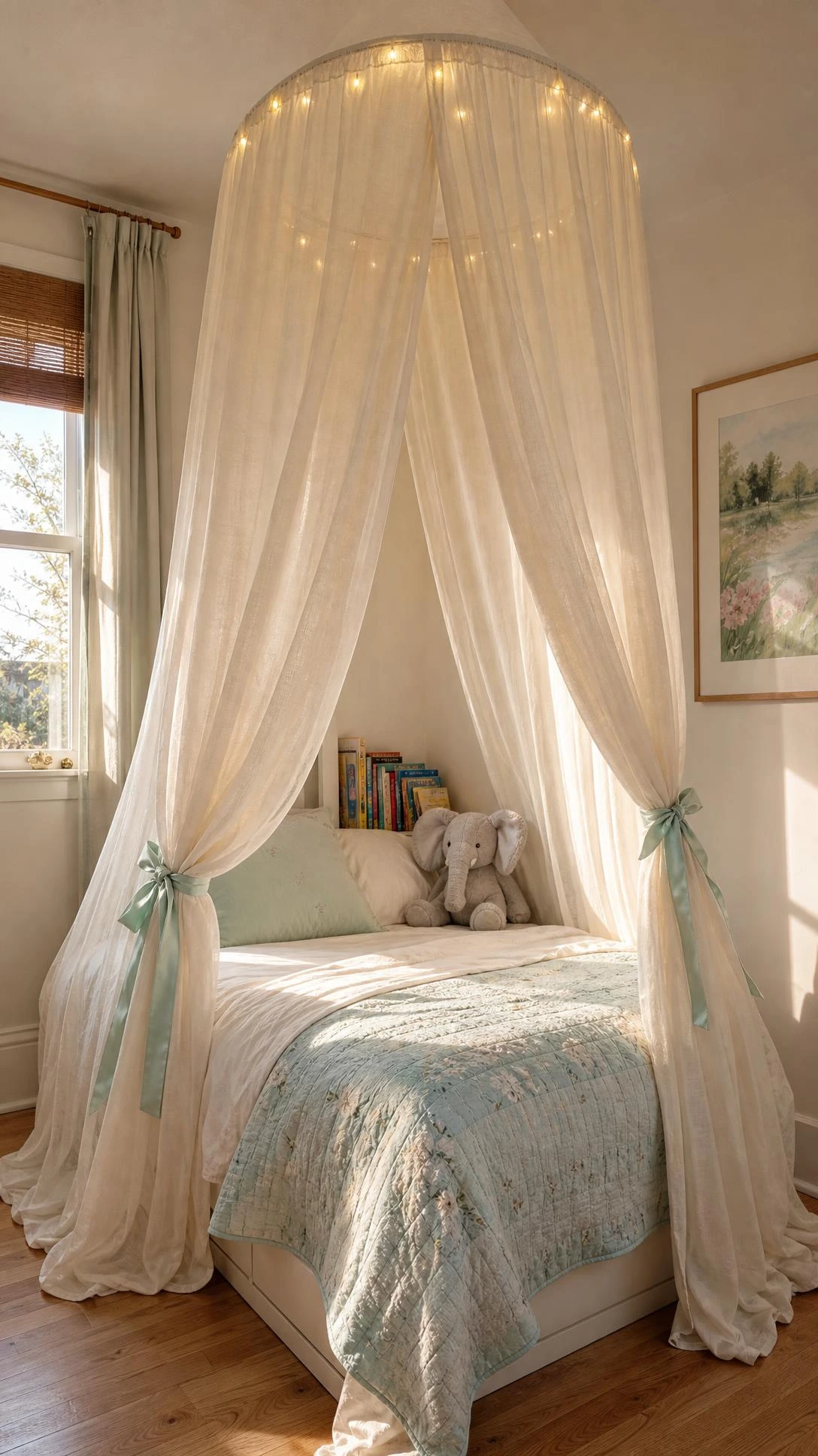
Giving the child their own canopy or a set of curtains around their bed is one of the more clever tricks for shared rooms, because kids love the cozy den feeling and adults get visual separation in return.
A simple canopy frame over a twin bed with sheer white panels or a cotton fabric in a solid color gives the child a sense of their own enclosed world without requiring any permanent installation.
Thicker panels work better if the child needs a darker sleep environment or tends to be distracted by activity on the adult side of the room after lights out.
The child’s side starts to feel like their own little room within the room, which tends to make them more agreeable about staying in their zone in the evenings.
Most people are surprised by how much this one change reduces the feeling of chaos in a shared space, because the visual noise of the child’s bed and toys gets tucked behind the curtains when the panels are closed.
8- Smart Toy Storage That Closes
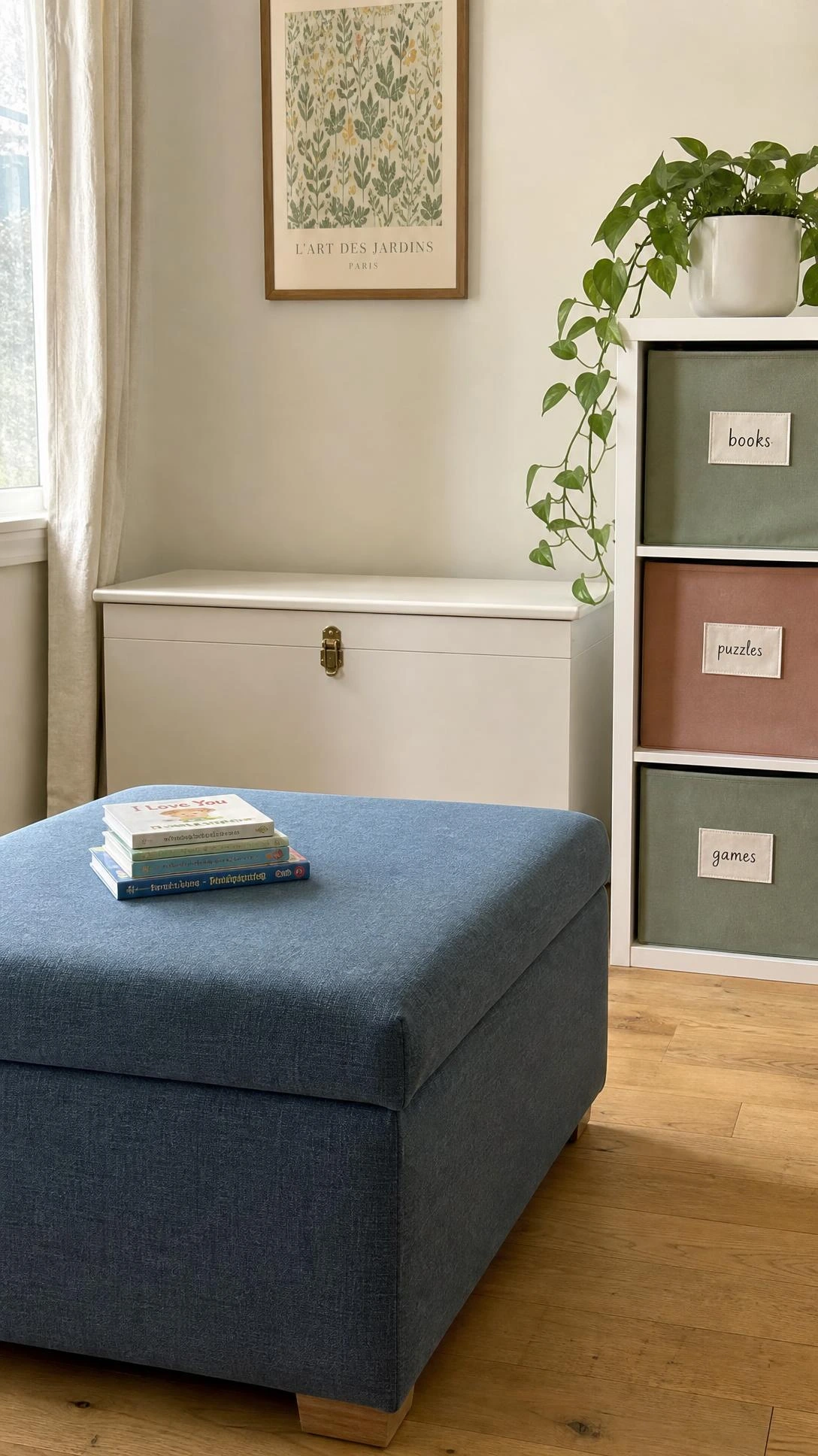
Open toy storage in a shared adult-child room almost always makes the adult feel like they are living in a daycare, even when the room is actually reasonably tidy.
Storage that has lids, doors, or baskets with covers makes an enormous difference because toys disappear from view instead of sitting out and visually cluttering the entire space.
A few large woven baskets in a natural material, around the 12 to 14 inch size, can hold a surprising amount of small toys and still look like intentional decor rather than overflow storage.
The goal is just to make sure that at the end of the day, the child’s belongings have a place to go that is out of sight from the adult’s line of view when lying in bed.
This works best when the storage is positioned on the child’s side of whatever divider or zone system is already in place, so the tidying is contained to one area of the room.
9- Consistent Lighting Zones for Day and Night
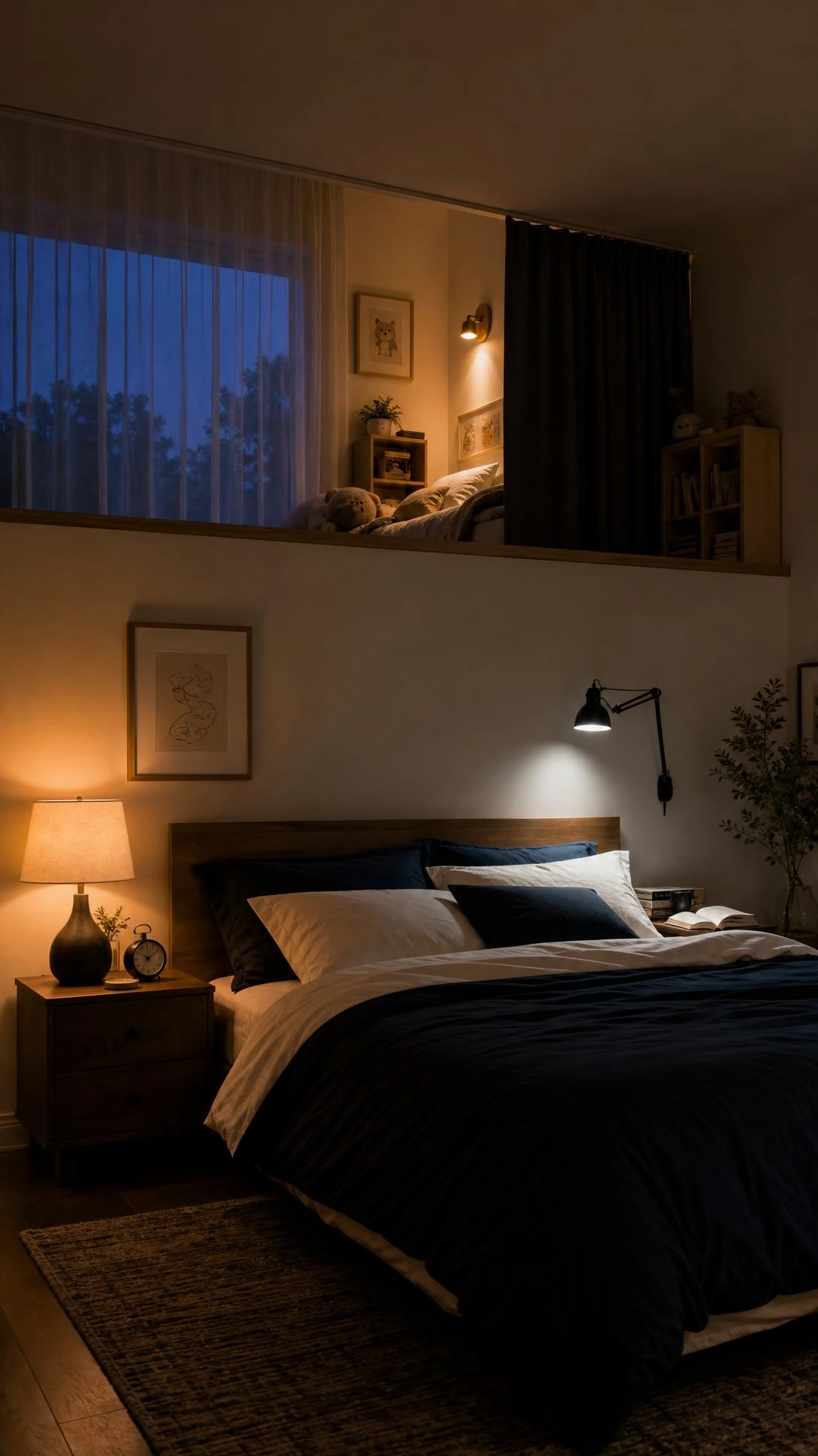
Most shared rooms have one overhead light and one lamp, and that setup makes it almost impossible to have the adult side feel calm while the child’s side is still active.
Adding a dedicated reading lamp or plug-in sconce above the child’s bed means they can have light for books or quiet play without the overhead light flooding the whole room.
On the adult side, a dimmable lamp, something in a warmer tone like a brass or linen shade, creates a completely different atmosphere than a bright ceiling light and signals a wind-down moment without any announcement.
Smart bulbs with an app-controlled dimmer are worth the roughly $12 to $15 per bulb investment in a shared room, because being able to dim just one zone without getting up changes bedtime routines significantly.
The room starts to feel like it has two different moods available, which is a small thing that makes a real difference when two very different people are sharing the same four walls.
10- A Gallery Wall That Mixes Both Worlds
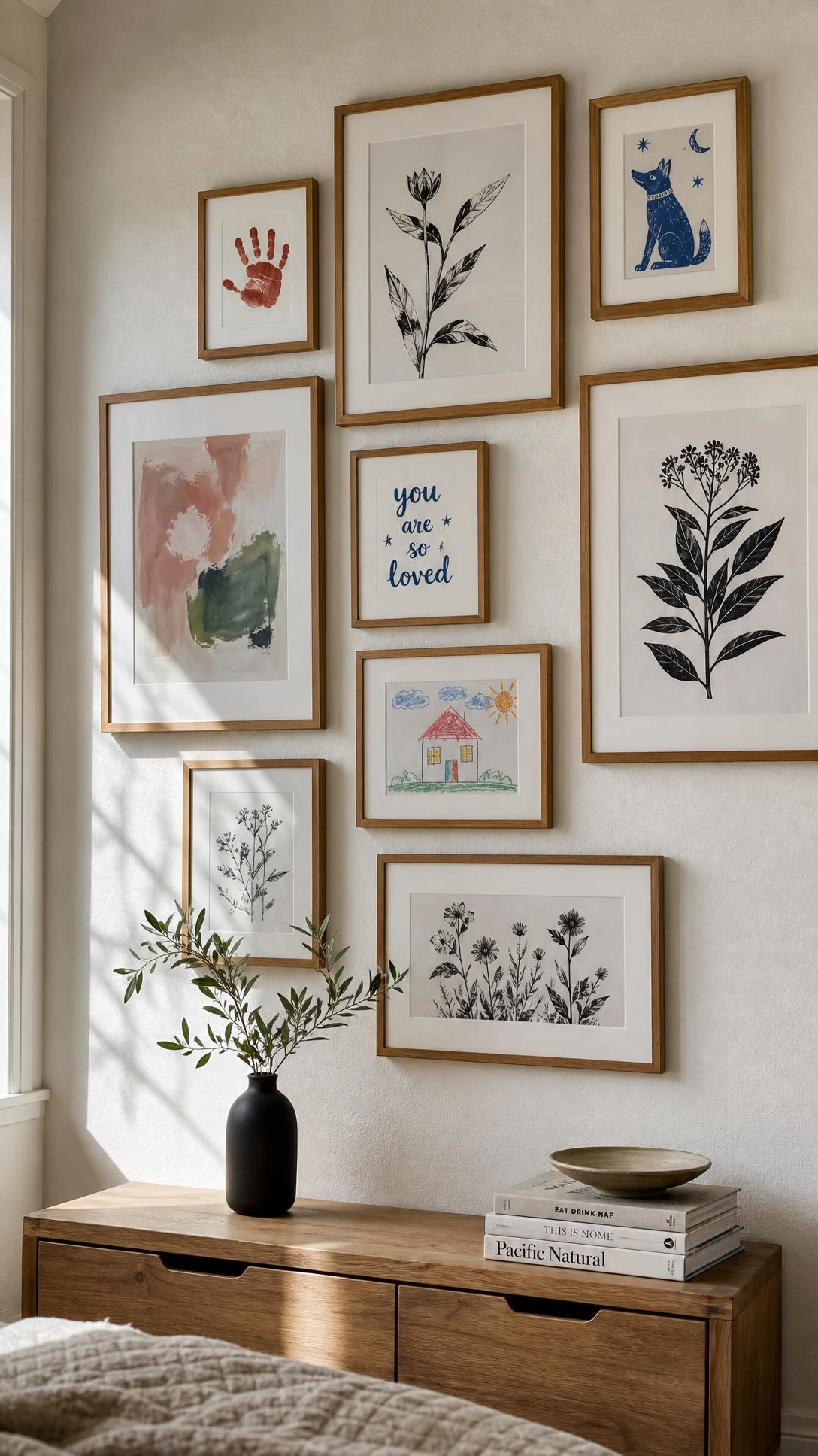
A shared gallery wall is one of the better ways to make a room feel like it genuinely belongs to everyone in it rather than being decorated for one person while the other just tolerates it.
Mixing the child’s artwork with a few simple framed prints, a small mirror, and a photo or two creates a wall that is personal and layered without reading as a craft project gone rogue.
Using consistent frame colors, all black, all natural wood, or all white, is what keeps a mixed gallery wall from looking messy even when the content is a combination of kids’ crayon drawings and adult prints.
The child feels genuinely seen because their work is up on the wall alongside real art, and the adult gets a wall that actually looks curated instead of covered in tape and sticky tack.
Limiting the kid’s artwork to two or three pieces at a time and rotating them out regularly keeps the wall from becoming overwhelming as the collection grows.
11- A Clear End-of-Day Tidy Routine for the Shared Space
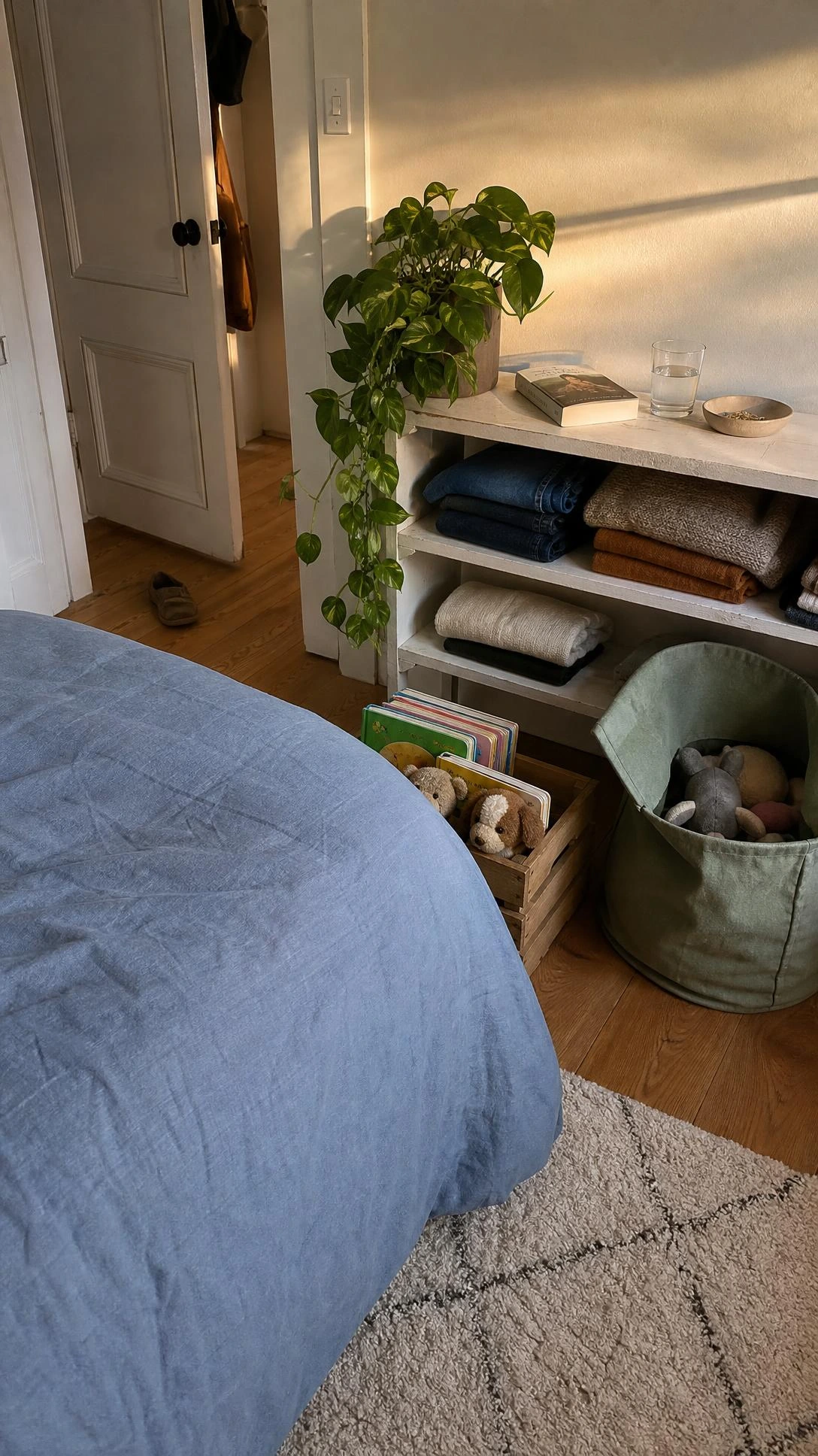
None of the physical setups on this list work long term without some kind of daily reset built into the routine, and in a shared adult-child room that reset matters more than in almost any other space.
A simple 10-minute tidy before bed, where toys go back to their storage, the child’s side gets a quick reset, and the adult’s nightstand gets cleared of any daytime spillover, keeps the room from slowly drifting back toward chaos.
Making it a routine rather than a reaction to mess is the part most people skip, and it is also the part that makes everything else on this list actually stick over time.
Kids who are around 5 and up can usually handle putting their own things away with a little guidance, which means the adult is not doing all of the daily maintenance alone.
The room does not have to be perfect at the end of the day, just calm enough that the adult can walk in and feel like they are going to bed in their space and not the aftermath of an afternoon playdate.
A Shared Room That Actually Works for Everyone in It
Sharing a room with a child is a season, not a forever, and keeping that in mind makes the whole setup feel much less permanent than it might on a hard day.
Most of these ideas cost very little, use what is already in the room, or involve one small purchase that shifts how the whole space feels to the adult living in it.
The things that tend to make the biggest difference are the ones that give each person a clear zone, even a loosely defined one, so the room does not feel like it belongs entirely to one person at the expense of the other.
Starting with just one or two of these changes is enough to notice a real shift, and the room tends to get easier to manage from there.

Hi, I’m Alizabeth, the creator of Pretty Home Hacks. I share practical home decor ideas, easy DIY projects, organization tips, and budget-friendly ways to make your home feel more beautiful and functional. From small room updates to everyday home hacks, my goal is to share approachable ideas you can actually use in your own space.